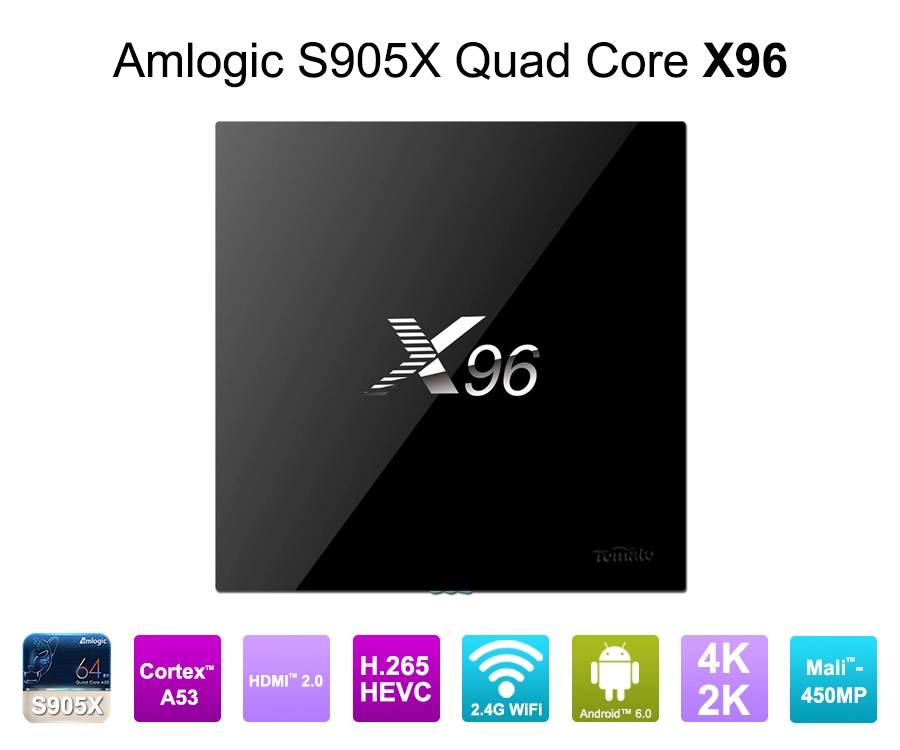
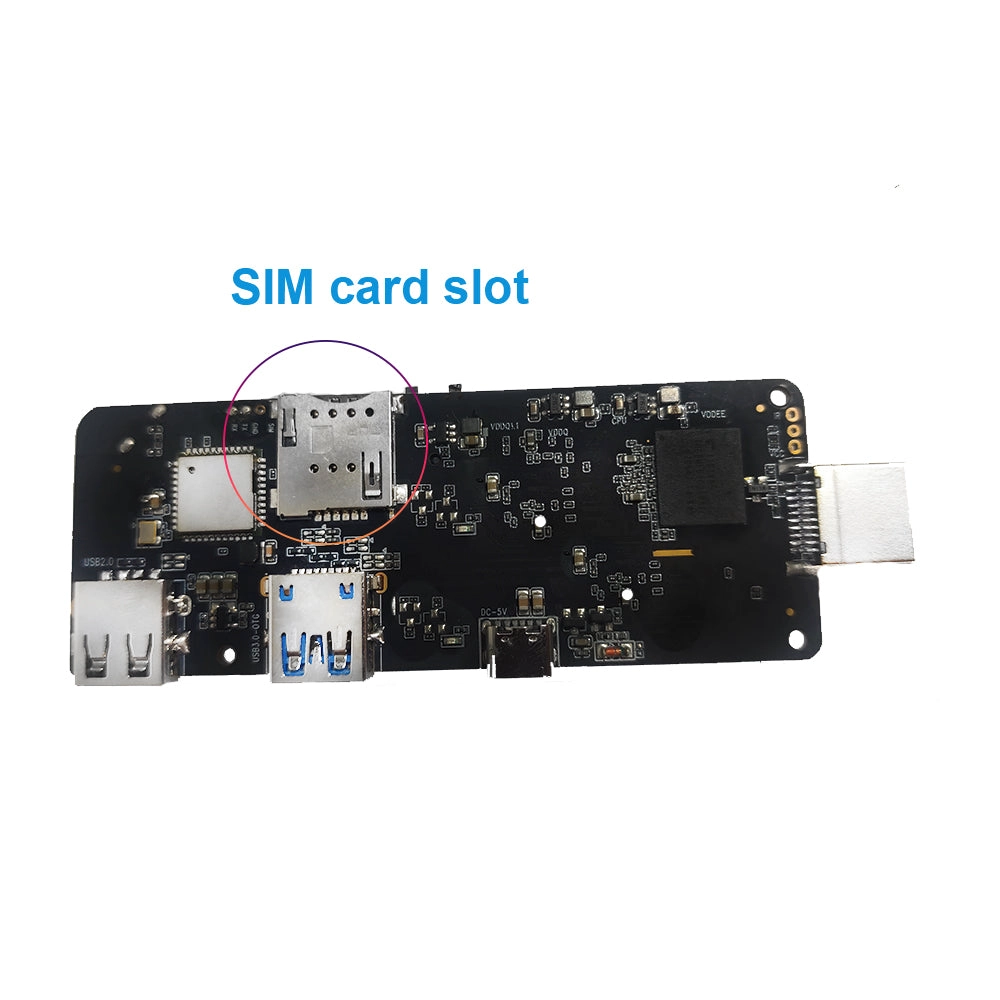
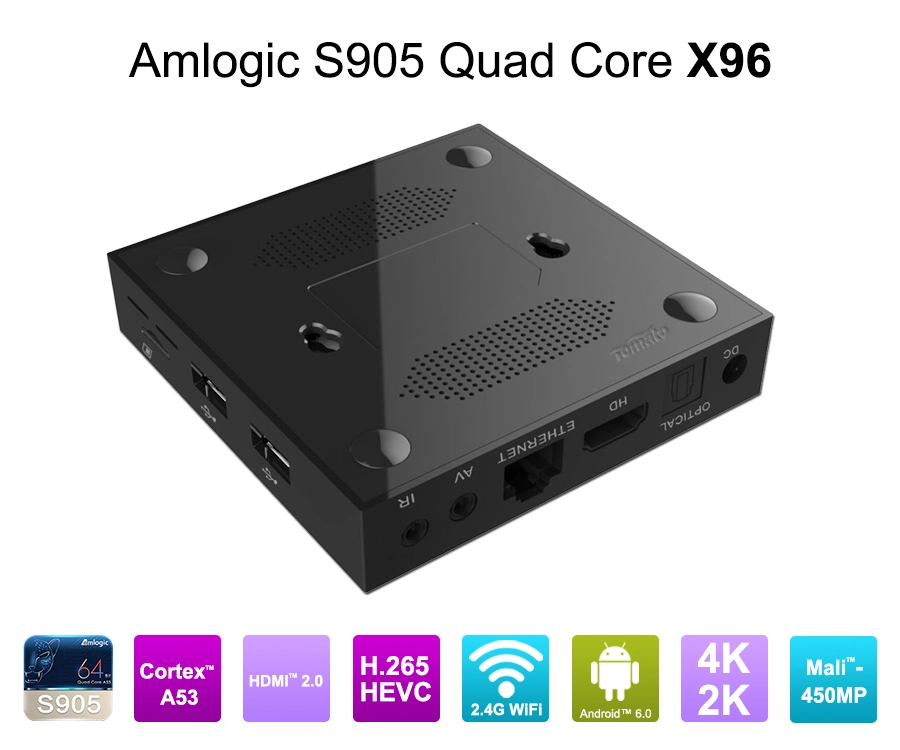
Is there a monthly fee for a Streaming Media Player?
Is There a Monthly Fee for a Streaming Media Player? The Enterprise TCO & Architecture Breakdown
The rapid adoption of AV1 video codecs alongside hardware-accelerated 4K/8K decoding has accelerated the transition from legacy cable/broadcasting infrastructure to IP-based visual endpoints. When procurement managers, system integrators, and venue operators evaluate hardware deployment models, a fundamental question emerges: Is there a monthly fee for a streaming media player?
At the hardware layer, the answer is a definitive no. A streaming media player is an endpoint computing node—purchasing the physical hardware confers full operational ownership without mandatory recurring hardware usage fees. However, at the system deployment layer, commercial operators often incur unexpected recurring operational expenditure (OpEx) through proprietary software licenses, cloud content management systems (CMS), forced middleware subscriptions, and third-party remote device management platforms.
To minimize long-term total cost of ownership (TCO), B2B decision-makers must distinguish between zero-recurring-fee hardware platforms and subscription-locked commercial ecosystems.
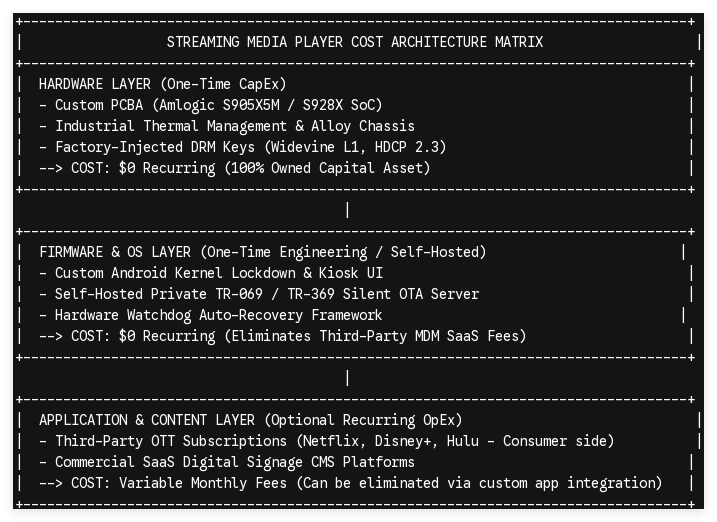
1. Dissecting the Cost Architecture: CapEx vs. OpEx in Media Hardware
Understanding media player economics requires separating the physical computing engine from the software services that run on it.
Consumer vs. Commercial Fee Structures
In retail consumer environments, buying a media player involves a one-time hardware purchase. The device provides free access to ad-supported channels and OS navigation. Monthly charges only arise if the end-user subscribes to third-party streaming content providers (e.g., Netflix, Amazon Prime, or live TV apps).
In enterprise deployments—such as hospitality IPTV, corporate communication networks, and multi-location digital signage—the financial dynamic shifts significantly:
-
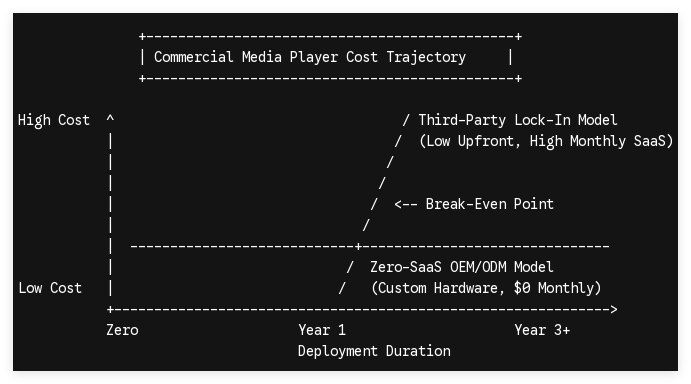
The SaaS Trap (Subscription-Locked Hardware): Many commercial display vendors sell low-cost or subsidized media player hardware bundled with mandatory cloud-management software subscriptions. These SaaS fees typically range from $10 to $35 per screen per month. Over a 3-year deployment cycle for a 500-screen network, software OpEx can exceed $300,000—dwarfing the initial hardware cost.
-
The Zero-SaaS OEM/ODM Alternative: By procuring open-architecture Android Mini PCs or specialized set-top boxes directly from an OEM/ODM hardware manufacturer, system integrators deploy proprietary, self-hosted, or local-network management applications. The hardware, custom operating system, and remote management infrastructure remain 100% owned without monthly recurring licensing fees.
2. Technical Evaluation: Hardware Architecture vs. Recurring SaaS Dependency
To eliminate monthly software maintenance fees without sacrificing remote control, board-level security, or device monitoring, the underlying hardware and firmware architecture must support low-level native customization:
| Architecture Component | Standard Commercial Subscription Model | Open B2B OEM/ODM Hardware Model (SZTomato) |
|---|---|---|
| Hardware Ownership | Subsidized or locked lease model | Direct CapEx ownership; no hardware activation fees |
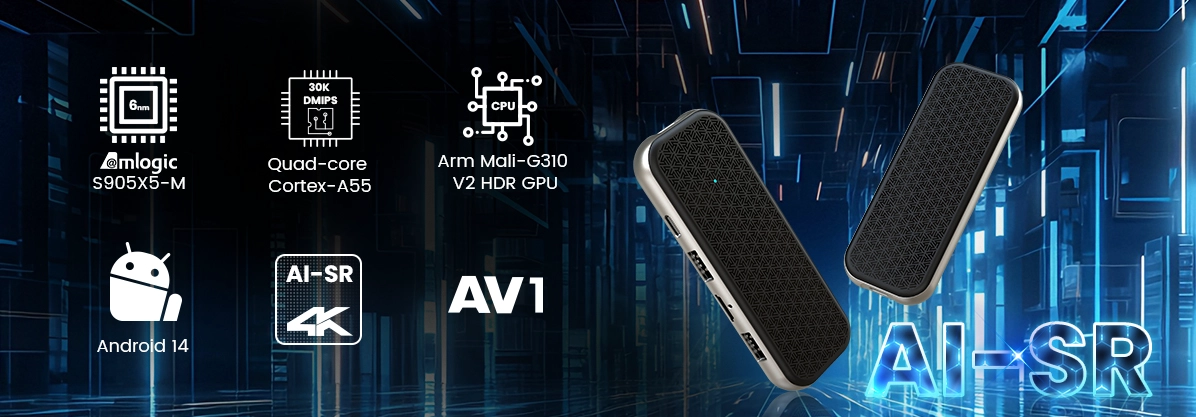
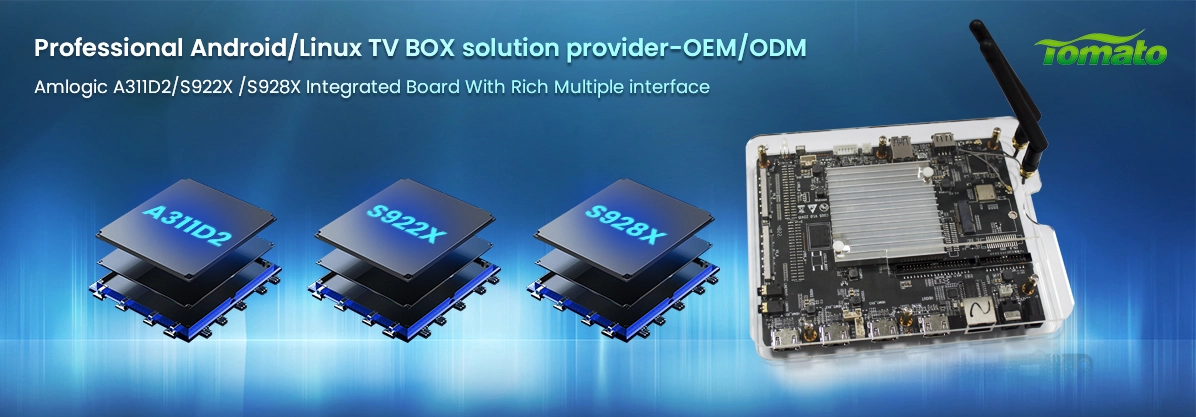
| System On Chip (SoC) | Proprietary/closed silicon with limited access | Amlogic S905X5M (6nm, AV1) / Amlogic S928X (8K) |
| Remote Fleet Management | Proprietary cloud MDM ($5–$15/device/month) | Self-hosted, private TR-069 / TR-369 silent OTA system ($0/month) |
| OS Lockdown & Kiosk Mode | Requires monthly third-party Kiosk app license | Firmware-level Android kernel lockdown & boot-to-app launch ($0/month) |
| Content Management | Vendor-locked SaaS CMS software | Native SDK/API integration for custom/in-house playback apps |
| Fault Recovery & Uptime | Manual power cycling or remote technician callouts | Onboard physical Hardware Watchdog IC & auto-reboot kernel loop |
| Hardware Thermal Rating | Plastic housing; prone to overheating & failure | Industrial aluminum/zinc-alloy chassis rated for 24/7 duty cycle |
3. Engineering Out the OpEx: How Custom Firmware & PCBA Eliminate Monthly Fees
System integrators can eliminate monthly operational fees by transferring system management capabilities down to the hardware and firmware layers during factory production.
Silicon Selection & Thermal Engineering
Custom hardware utilizes high-efficiency SoCs, such as the Amlogic S905X5M (built on a 6nm node with quad ARM Cortex-A55 cores and hardware AV1 decoding) or the Amlogic S928X (pairing Cortex-A76 and Cortex-A55 cores for 8K decoding).
To operate 24/7 without thermal throttling or hardware crashes that mandate costly on-site servicing:
-
Thermal Dissipation Matrix: Standard consumer plastic enclosures trap heat. Industrial PCBA layouts link the CPU/GPU directly to anodized aluminum heat spreaders within a fanless alloy chassis, maintaining thermal equilibrium under 100% sustained load.
-
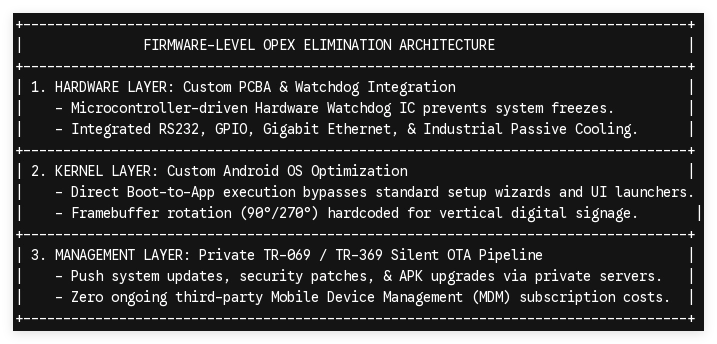
Hardware Watchdog IC: An independent hardware timer circuit monitors system execution. If the OS freezes or memory leaks halt application output, the watchdog hardware triggers a hard reset, restoring operational state in seconds without human intervention.
Firmware Lockdown & Private TR-069 OTA Systems
Instead of paying monthly for cloud-based MDM (Mobile Device Management) software to manage deployed fleets, OEM/ODM engineering embeds remote management protocols into the Android kernel:
-
Private TR-069 / TR-369 Integration: Implementing standard broadband forum management protocols allows operators to point field devices to their own private update servers. Firmware updates, app updates, and configuration pushes execute silently in the background with zero recurring vendor software fees.
-
Kernel Lockdown & Custom Kiosk UI: By modifying the Android TV OS source code, the device boots directly into the client's proprietary application within seconds. Navigation bars, system notification shade, and settings menus are fully suppressed, preventing unauthorized local tampering without requiring paid third-party lockdown apps.
-
Hardware DRM Provisioning: Pre-injecting Widevine L1, PlayReady, and HDCP 2.3 cryptographic keys into secure hardware enclaves at the factory ensures native support for encrypted, high-definition IPTV streams without ongoing security middleware licenses.
4. Eliminate Recurring Costs with SZTomato OEM/ODM Solutions
For system integrators, telecom operators, and digital signage network owners, relying on subscription-locked media players creates unsustainable long-term operational costs. Building a high-margin, reliable visual infrastructure requires direct ownership of fully customized hardware.
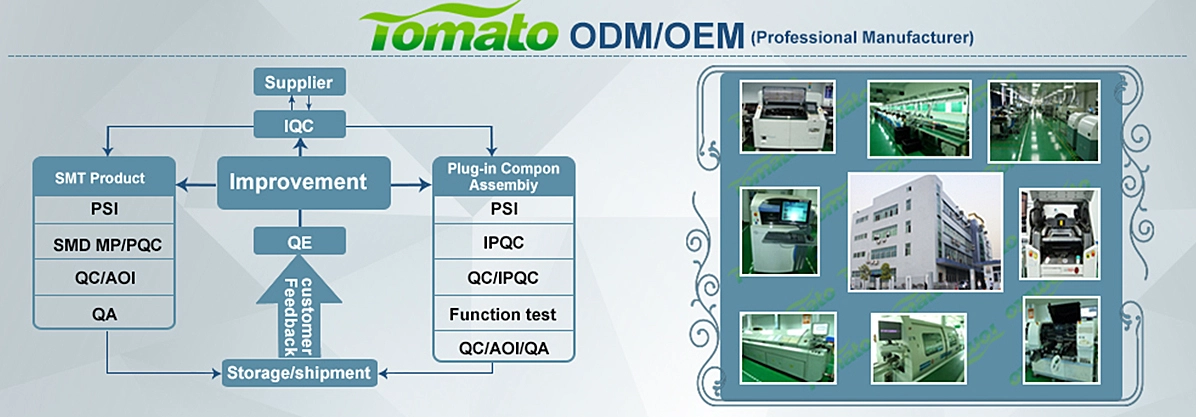
With over 16 years of expertise in the cross-border B2B electronics industry, SZTomato delivers tailored OEM/ODM manufacturing and engineering solutions designed to eliminate recurring software overhead:
-
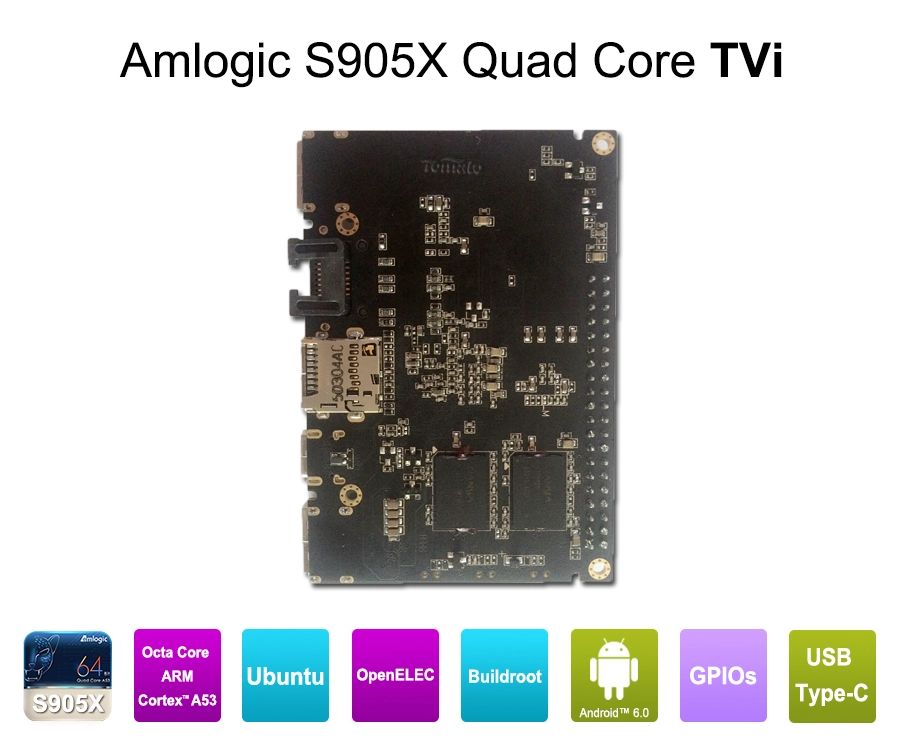
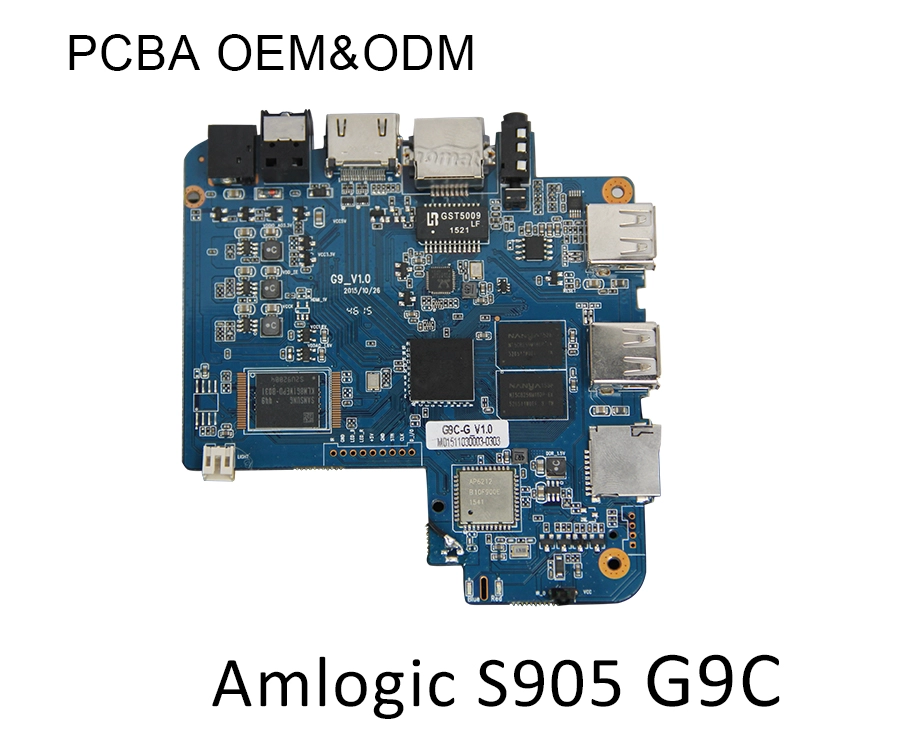
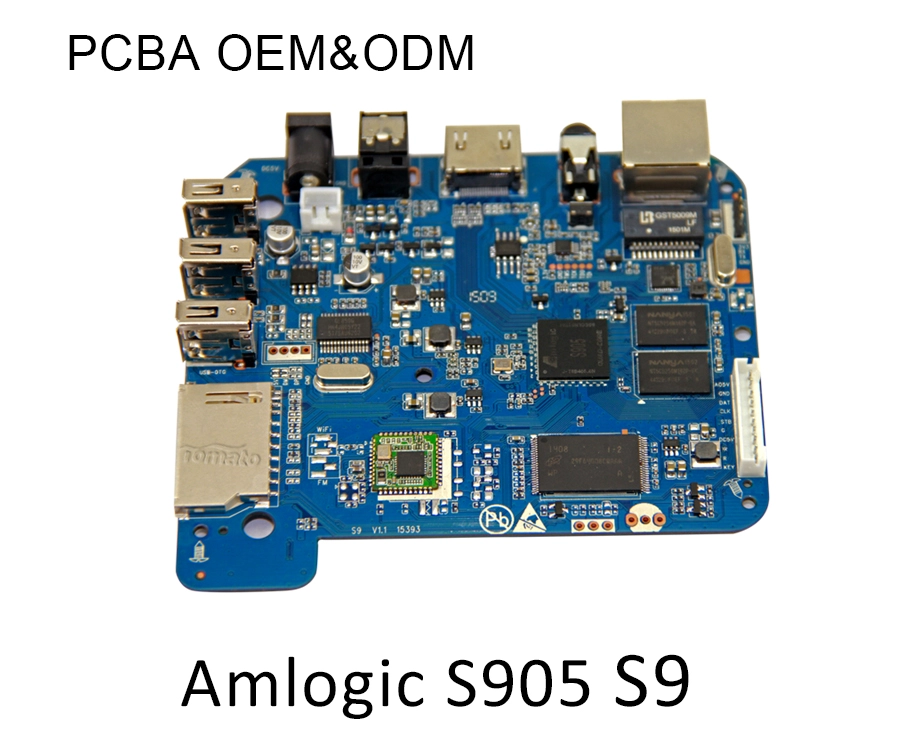
Custom PCBA & Hardware Architecture: Board-level modifications including custom I/O ports (RS232, GPIO, Dual RJ45), expanded eMMC/RAM options, PoE support, and heavy-duty industrial thermal design.
-
Firmware & OS Engineering: Deep Android kernel optimization, boot-to-app kiosk launchers, hardcoded screen rotation, and pre-configured system APIs.
-
Zero-SaaS Remote Management: Integration of private TR-069/TR-369 silent OTA update architectures that give you total fleet control on your own private infrastructure.
-
Industrial Validation: Extended environmental burn-in testing and guaranteed 5+ year component lifecycle availability for enterprise continuity.
Take Control of Your Hardware Architecture
Ready to eliminate monthly SaaS fees and own your streaming hardware infrastructure? Contact SZTomato's B2B engineering team today to review PCBA schematics, evaluate firmware customization options, and request hardware evaluation units.
Official Website: www.sztomato.com
Core Capabilities: Custom PCBA Layout | Enterprise Android Firmware Engineering | Zero-OpEx Digital Signage Hardware | Private TR-069 OTA Architectures
Want to review custom PCBA schematics or private OTA firmware specs?