
Leading Smart TV Box Supplier for Global Telecommunication Brands
A telecom operator deploying a Smart TV Box across multiple markets faces a more demanding engineering problem than selecting a consumer streaming device. The hardware must support the required video formats, network conditions, middleware, content-protection systems, and remote-management architecture without creating an unmanageable maintenance burden after shipment.
A chipset that decodes 4K video successfully in a laboratory is not automatically suitable for a commercial IPTV or OTT deployment. Sustained thermal performance, memory availability, wireless stability, firmware compatibility, and controlled software updates all affect the end-user experience.
For procurement managers, the key decision is therefore not simply which Smart TV Box offers the strongest specification sheet. It is which manufacturing partner can translate service requirements into a reliable, maintainable hardware and software platform.
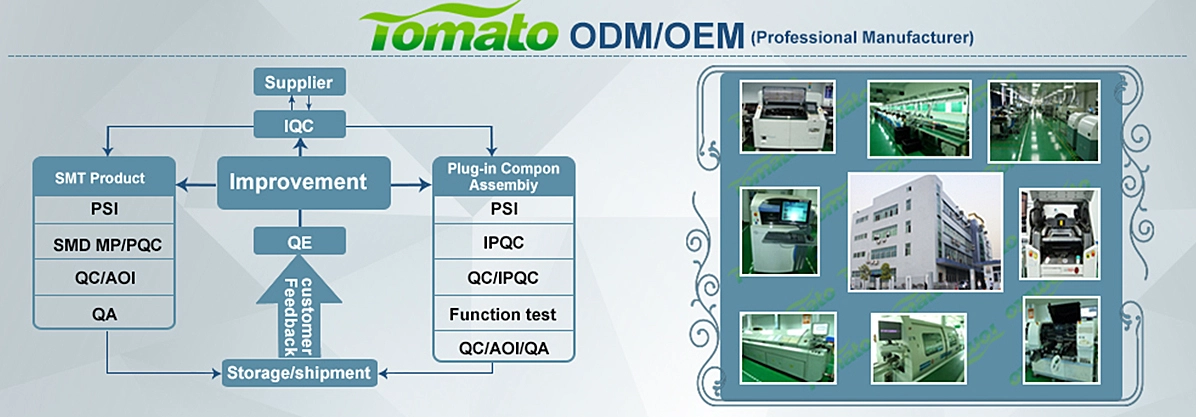
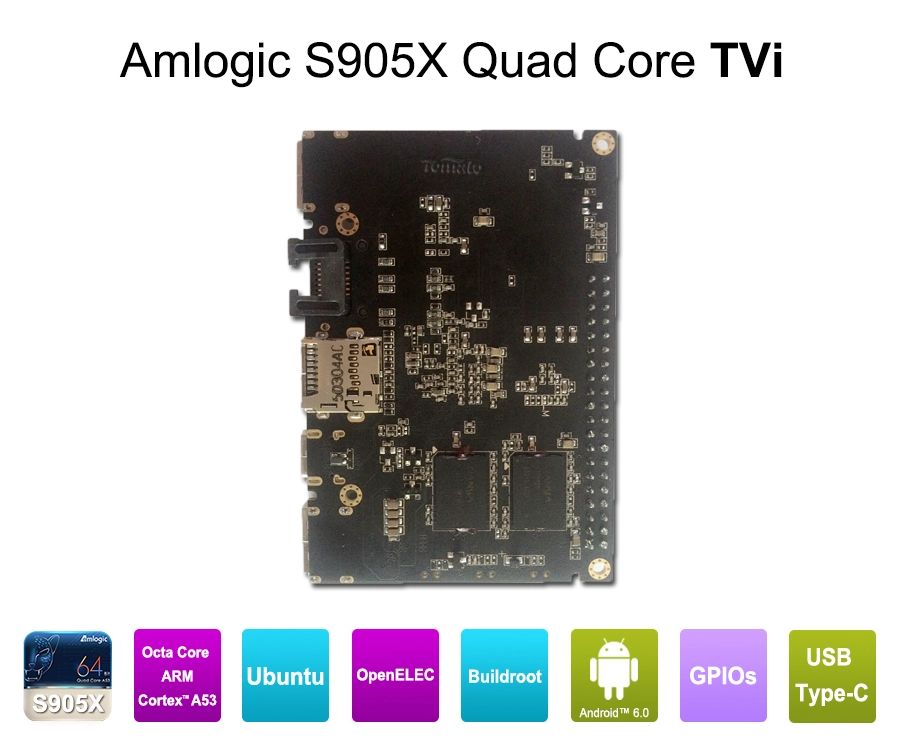
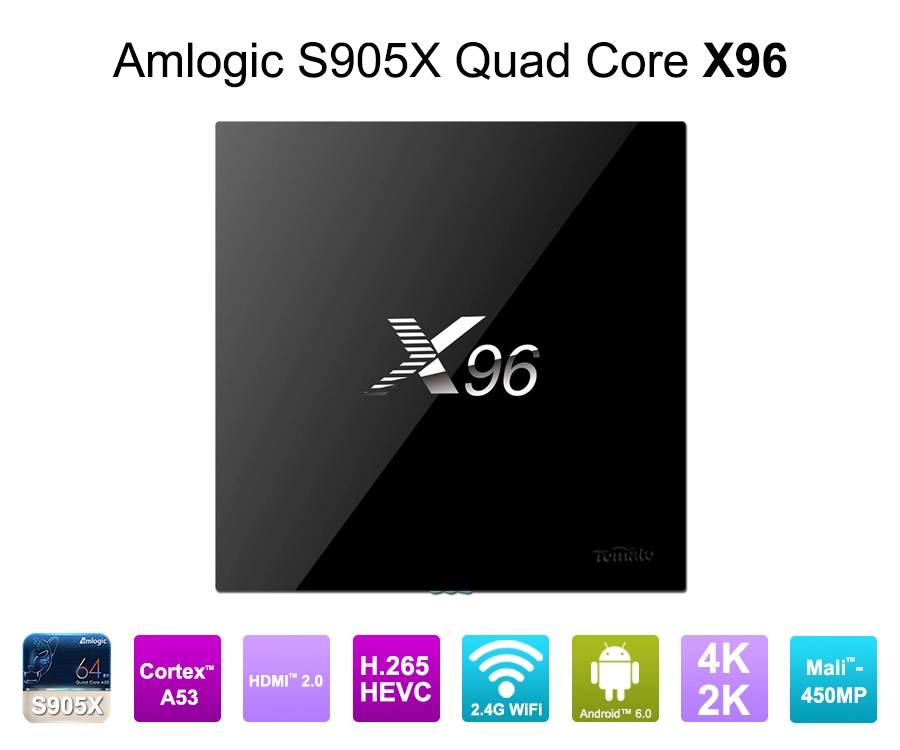
SZTomato, operated by Shenzhen Tomato Technology Co., Ltd., supports OEM/ODM development involving hardware modification, customized firmware, UI/UX development, and system integration. The appropriate engineering scope depends on the selected SoC, available software development resources, licensing requirements, and the operator's deployment specifications.
1. Engineer the Smart TV Box Around Telecom Deployment Requirements
The first engineering task is to establish the deployment specification before choosing a chipset or adapting a reference design.
A telecommunications brand may require a conventional IPTV device for managed broadband subscribers, an OTT player for multiple regional markets, or a customized terminal integrated with its own subscriber-management and content-delivery systems. Each scenario places different demands on the hardware platform.
Select the right SoC, memory, and video architecture
The system-on-chip determines much of the device's processing capability, codec support, graphics performance, peripheral connectivity, and software compatibility.
During platform evaluation, engineering teams should verify:
-
Video decoding: Confirm hardware support for the target combination of H.264, HEVC/H.265, AV1, resolution, frame rate, chroma format, and HDR profile.
-
Memory and storage: Size RAM and eMMC according to the operating system, middleware, application footprint, background services, and planned firmware updates.
-
Network interfaces: Select Ethernet and Wi-Fi capabilities according to expected network conditions, installation requirements, and traffic patterns.
-
Display connectivity: Validate the required HDMI output resolution, refresh rate, HDR behavior, audio formats, and content-protection requirements.
-
Software support: Confirm that the chipset vendor's BSP, drivers, Android or Linux version, and required APIs support the intended product lifecycle.
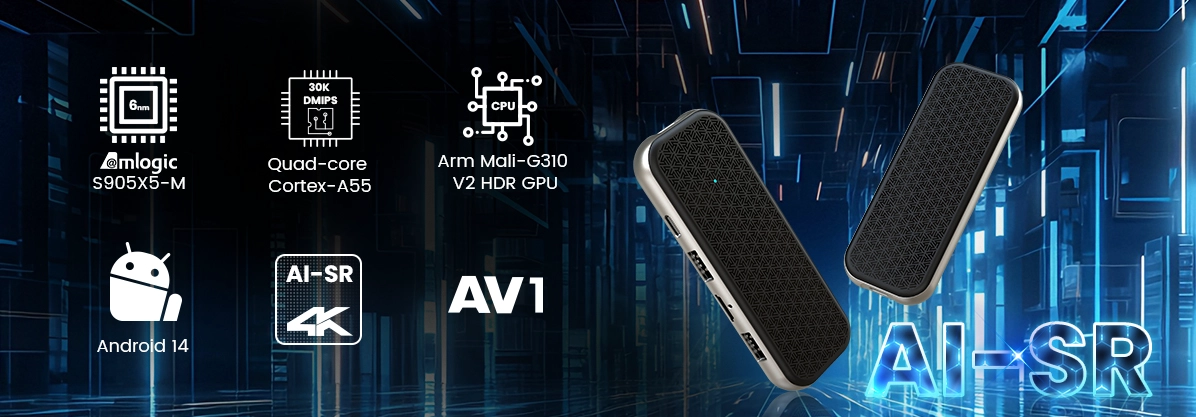
AV1 is one example of a capability that should be specified precisely. The codec has a published technical specification, but procurement teams must independently confirm that a proposed SoC supports the required hardware decoding profiles and that the complete playback software stack can use them. Codec support at the silicon level alone does not establish end-to-end compatibility.
Customize the PCBA for the installation environment
A standard reference board can be a useful development starting point, but it may not match an operator's final industrial design, peripheral requirements, or thermal constraints.
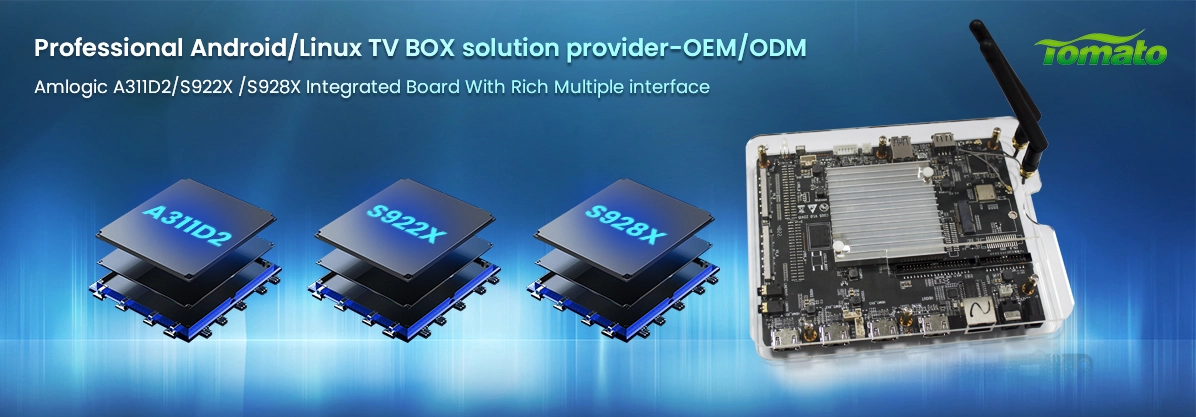
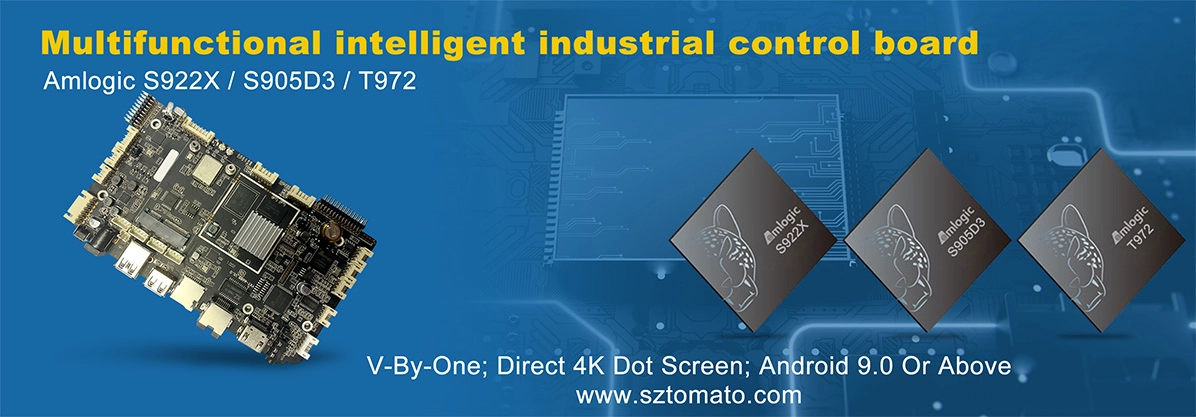
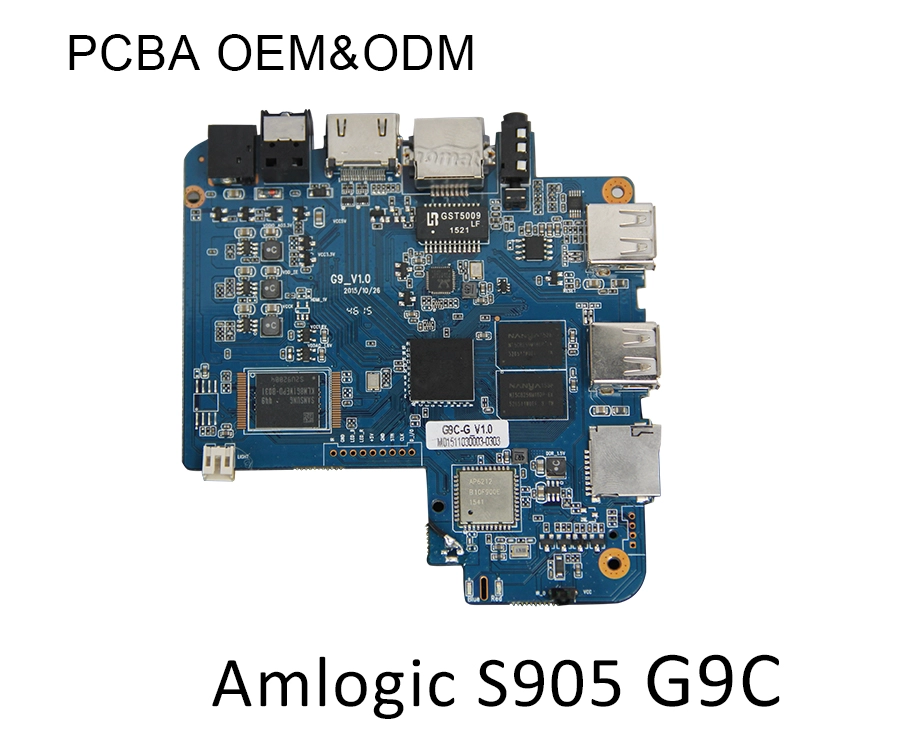
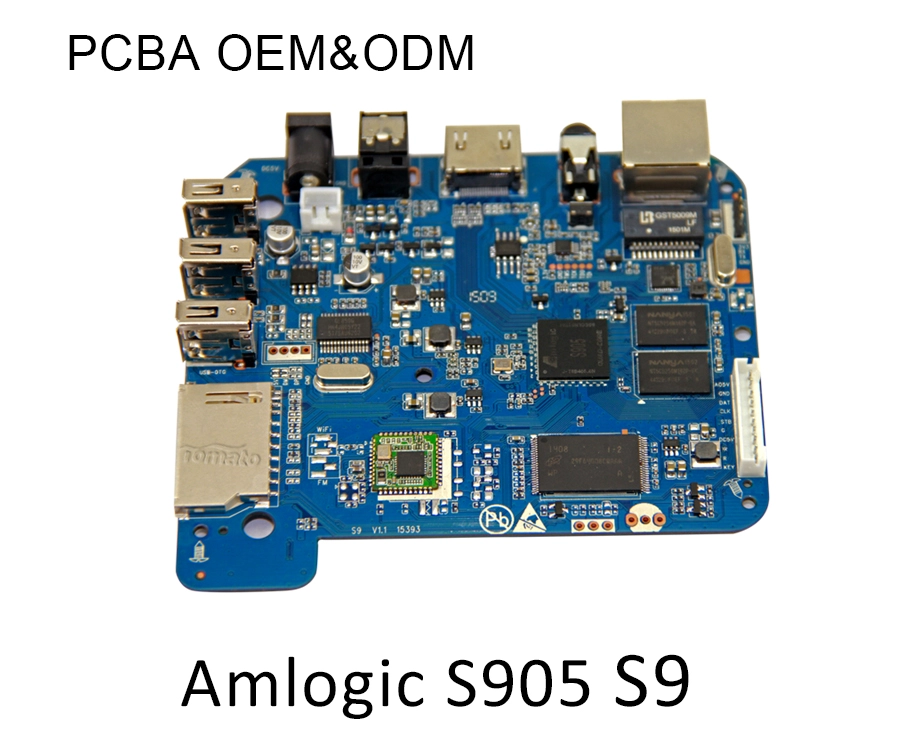
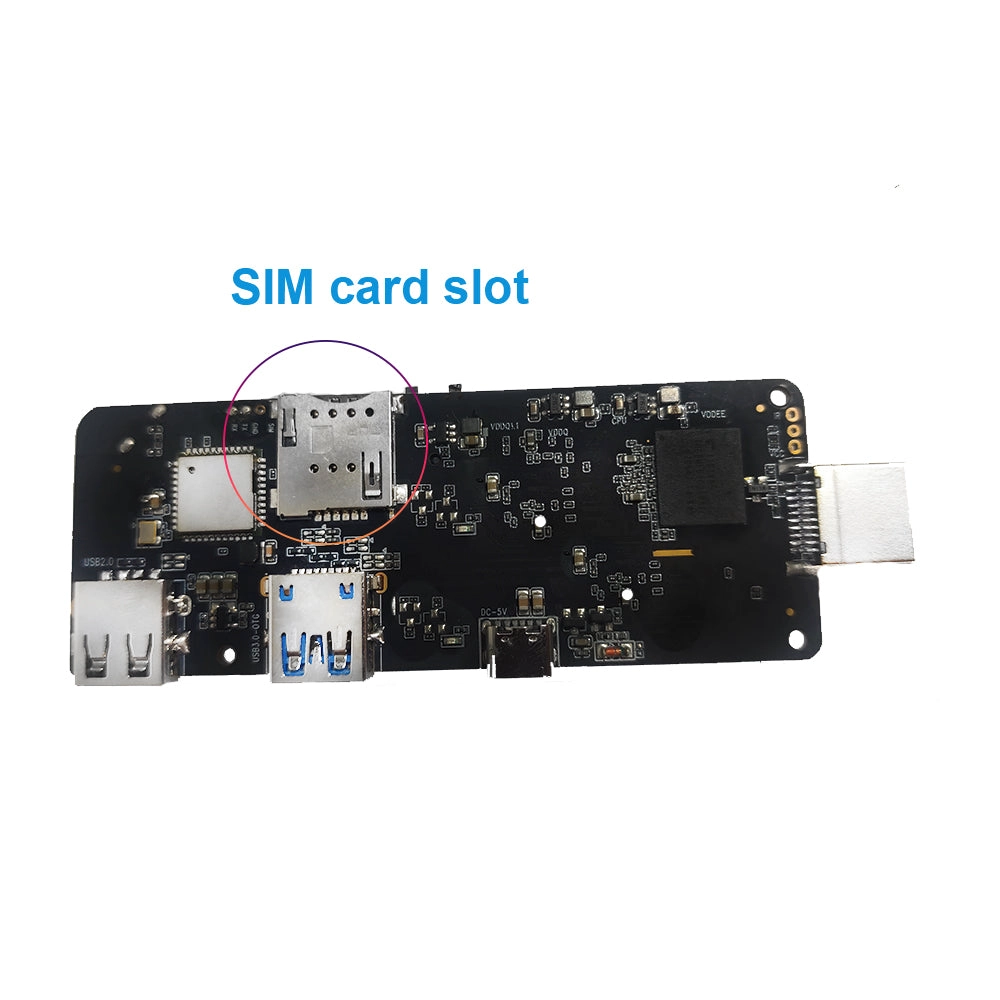
PCBA-level engineering can address board layout, power delivery, component placement, antenna positioning, interface configuration, and mechanical integration. Depending on the application, the design may also require additional USB connectivity, serial communication interfaces, GPIO, or other project-specific peripherals.
Thermal management deserves equal attention. A compact enclosure can restrict heat dissipation, particularly during sustained high-resolution decoding or simultaneous application workloads. Specialized cooling solutions for industrial or continuous-use deployments may include optimized heat-sink geometry, thermal interface materials, chassis heat transfer, and airflow improvements.
The correct design must be verified under representative operating conditions. Relevant tests include sustained playback, peak ambient temperature, network activity, enclosure temperature, and long-duration operation. These tests help expose thermal throttling and instability that short functional checks may miss.
For a global Smart TV Box supplier, the goal is not to maximize component specifications indiscriminately. It is to establish a stable hardware platform that meets the operator's requirements at an acceptable manufacturing cost.
2. Integrate Operator Middleware Through Firmware-Level Engineering
Hardware determines the available capabilities of a Smart TV Box. Firmware determines how those capabilities behave within the operator's service environment.
For telecom brands, this is often the difference between a device that works during initial testing and one that integrates successfully into a commercial deployment.
Customize the operating system and user interface
A stock Android launcher may be suitable for retail distribution, but an operator-branded device often requires a different startup sequence, application environment, permission model, and user experience.
Custom firmware development can address the following requirements:
-
Custom UI/UX and launcher: Display the operator's branded interface, integrate approved applications, and define a consistent navigation experience.
-
Boot-flow customization: Configure the startup process to launch the appropriate application or service interface.
-
System configuration and lockdown: Restrict access to specified settings, control application installation, and limit unauthorized changes according to the deployment's security model.
-
SDK/API integration: Connect device functions with middleware, remote-control applications, device-management platforms, and other authorized services.
-
Kernel and driver optimization: Investigate boot delays, peripheral incompatibilities, audio/video synchronization problems, and resource-management issues at the appropriate software layer.
For example, an IPTV provider may need its middleware client to start automatically after boot and communicate with an existing backend. A hospitality operator may need a customized interface, controlled access to system settings, and reliable integration with television power-management functions.
These requirements should be documented before firmware development begins. Application teams, hardware engineers, and the operator's backend developers need a shared understanding of interfaces, permissions, error handling, and expected behavior when network services become unavailable.
Validate DRM, HDMI, and application compatibility
Content protection requires particular care because compatibility involves more than installing a playback application.
HDCP requirements must be validated across the HDMI output path, connected display equipment, and applicable content-distribution policies. DRM systems such as Widevine may impose platform-specific security, certification, provisioning, and licensing requirements.
A supplier should not treat an HDMI connector, a compatible chipset, or an Android firmware image as proof that every protected streaming service will work. The selected hardware and software configuration must be validated against the actual operator requirements and relevant authorization processes.
The same principle applies to third-party IPTV middleware. Integration should cover supported APIs, authentication, session handling, playback controls, error recovery, and compatibility with the exact firmware build intended for production.
SZTomato's OEM/ODM service scope includes custom firmware, UI/UX adaptation, SDK/API integration, and hardware customization, subject to project requirements and platform feasibility.
3. Build OTA Management and Long-Term Reliability Into the Product
Telecom deployments create a lifecycle-management problem. A device may pass its factory inspection and work correctly at installation, yet become difficult to maintain when applications change, vulnerabilities are discovered, or the operator modifies its backend services.
A deployment-ready Smart TV Box should therefore include an update strategy and a defined maintenance process before mass production.
Design a controlled OTA update architecture
Over-the-air updates can reduce the need for manual servicing, but only when the update system is designed to manage risk.
A suitable architecture should address:
Firmware authenticity and integrity. Establish controlled build access, signing procedures, version identification, and verification of update packages before installation.
Staged deployment. Test releases on a limited device group before expanding to larger fleets. Separate development, validation, pilot, and production release stages.
Recovery planning. Where supported by the platform, use a validated rollback mechanism or A/B system-update architecture to recover from failed installations. Recovery behavior must be verified on the actual hardware and firmware build.
Fleet segmentation. Allow update policies to reflect regional differences, hardware revisions, application versions, or operator-specific configurations.
Monitoring and diagnostics. Record update outcomes and relevant error information so engineering teams can identify recurring failures without relying entirely on device returns.
Operators should also clarify who controls the update server, who signs the software packages, who maintains the build environment, and who authorizes production releases. These decisions are essential when a product is jointly maintained by a telecom brand and an ODM manufacturer.
Validate the complete device, not just individual components
Factory acceptance should cover the interactions between hardware, operating system, applications, network connectivity, and update mechanisms.
A practical validation plan includes cold and warm boot tests, extended video playback, Ethernet and Wi-Fi stability, HDMI output compatibility, audio synchronization, memory pressure, application recovery, and OTA interruption scenarios.
The test matrix should reflect the intended regional markets, power conditions, target displays, firmware versions, and expected usage patterns. Where the operator specifies continuous operation, prolonged stress testing should be incorporated into the acceptance criteria.
Quality control must also extend into production. Approved component specifications, firmware versions, configuration records, and test procedures should remain consistent between pilot batches and mass production. Any approved component substitution should trigger an appropriate compatibility assessment.
For procurement teams, this approach helps reduce avoidable field failures, software fragmentation, and costly maintenance interventions. It also provides a clearer basis for evaluating the total cost of ownership rather than comparing suppliers on unit price alone.
4. Choose a Smart TV Box Supplier With Verifiable OEM/ODM Engineering Capability
Selecting a supplier for a telecom project requires a different evaluation framework from purchasing off-the-shelf consumer electronics. A manufacturer may offer branding and packaging customization without having the engineering resources to modify hardware or maintain a customer-specific software platform.
Procurement managers should assess the supplier against four areas.
Hardware engineering and production consistency
Request evidence that the supplier can evaluate the required SoC, memory, storage, interfaces, PCB layout, power design, and cooling architecture. Confirm which changes can be implemented on an existing platform and which would require a new board or enclosure.
Establish an approved bill of materials, component-substitution policy, sample-validation process, and production acceptance criteria. These controls help protect consistency as order volumes increase.
Software ownership and integration responsibilities
Define the division of responsibilities between the operator and manufacturer before development begins. Clarify who provides middleware and API documentation, who maintains customized firmware, how source-code access is handled, and who manages update signing and release approval.
For Android-based products, confirm the available BSP and platform support rather than assuming every Android version or third-party application can be ported to every SoC. Linux-based projects require equivalent attention to kernel compatibility, drivers, libraries, and application dependencies.
Compliance, certification, and content authorization
Build a requirements matrix covering the destination markets and intended service model. Depending on the project, it may include applicable product safety and electromagnetic compatibility requirements, radio requirements for wireless devices, environmental obligations, and platform-specific DRM or content-protection approvals.
Distinguish between certifications already held by a particular model, approvals that can be supported by the manufacturer, and approvals that remain outstanding. Certification scope should be confirmed for the actual hardware configuration and target market before commercial launch.
Pilot production and lifecycle support
A supplier's engineering capability should remain available after the initial sample approval. Agree on procedures for firmware defect resolution, engineering changes, component obsolescence, security updates, and production-version control.
Before releasing a mass-production order, test representative samples against agreed acceptance criteria and confirm that the production firmware matches the validated build. For operators managing large device fleets, a documented lifecycle process is more valuable than a one-time promise of technical support.
Partner With SZTomato for Your Next Smart TV Box Project
Global telecommunications brands need Smart TV Box platforms that fit their service architecture, branding requirements, network environment, and long-term operational objectives. Achieving that outcome requires coordinated hardware engineering, firmware development, integration testing, and controlled manufacturing.
Shenzhen Tomato Technology Co., Ltd. supports B2B OEM/ODM projects for telecom operators, IPTV providers, distributors, brand owners, and system integrators. Depending on the project scope, customization can include PCBA hardware modification, Android/Linux firmware adaptation, custom UI/UX, SDK/API integration, kernel and driver optimization, OTA update architecture, and specialized thermal solutions.
To start a technical assessment, provide your target SoC or performance requirements, operating system, video and connectivity specifications, middleware documentation, content-protection requirements, proposed enclosure, target markets, and expected order volume.
Visit SZTomato to discuss your Smart TV Box OEM/ODM requirements. The objective is to develop a product platform that can be validated, manufactured consistently, integrated into your service ecosystem, and maintained throughout its commercial lifecycle.
