
Low-Latency Streaming Media Player with Gigabit Ethernet and Wi-Fi 6
1. Why Low-Latency Streaming Requires More Than Network Speed
A Gigabit Ethernet port and Wi-Fi 6 connectivity provide a strong hardware foundation, but neither guarantees low end-to-end streaming latency. Actual performance depends on the entire video pipeline, from content encoding and server delivery to network transport, buffering, hardware decoding and final display output.
This distinction matters for IPTV operators, OTT service providers, interactive media platforms and commercial AV deployments. A player can achieve high network throughput while still suffering from slow channel changes, excessive buffering or delayed application responses.
Identify the source of latency before selecting hardware
A practical engineering assessment should separate four sources of delay:
-
Network latency: Routing, congestion, packet loss, retransmissions and wireless interference.
-
Streaming pipeline latency: Encoder configuration, CDN delivery, segment duration and player buffer settings.
-
Processing latency: Demultiplexing, video decoding, synchronization and rendering.
-
Application latency: Middleware response, channel-switch logic, memory pressure and background processes.
These components require different remedies. Upgrading Wi-Fi cannot fix an overloaded CDN, and a faster processor cannot compensate for a poorly configured streaming buffer.
For live sports, interactive applications and low-latency IPTV, the engineering target should therefore be a defined end-to-end latency budget rather than an isolated network speed specification.
Match the hardware platform to the workload
The selected System-on-Chip (SoC) must provide suitable hardware video decoding, CPU capacity, memory bandwidth and software compatibility. Depending on the application, requirements may include H.264, H.265/HEVC, AV1, 4K playback, HDR processing and particular audio-output formats.
Hardware-accelerated decoding can reduce CPU overhead, leaving system resources available for the user interface, streaming application and background management services. However, codec support must be verified against the exact profile, resolution, frame rate and firmware implementation required by the project.
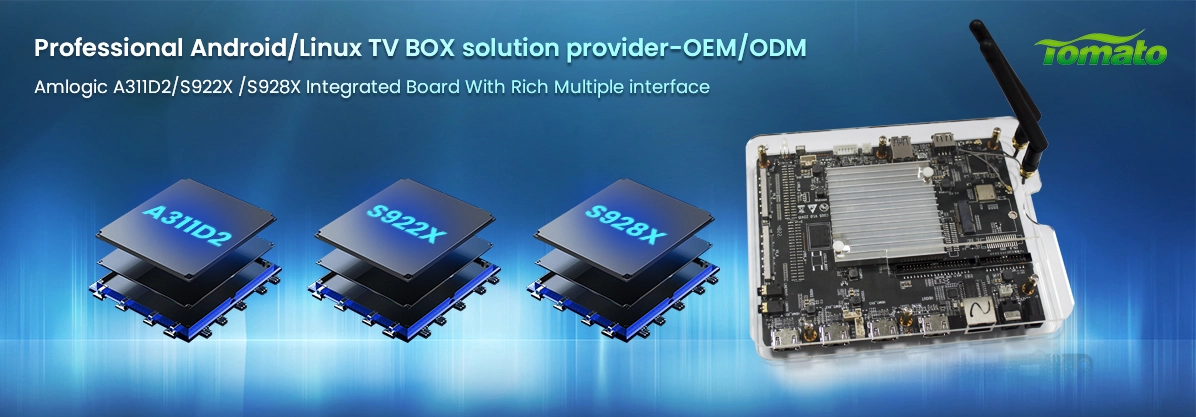
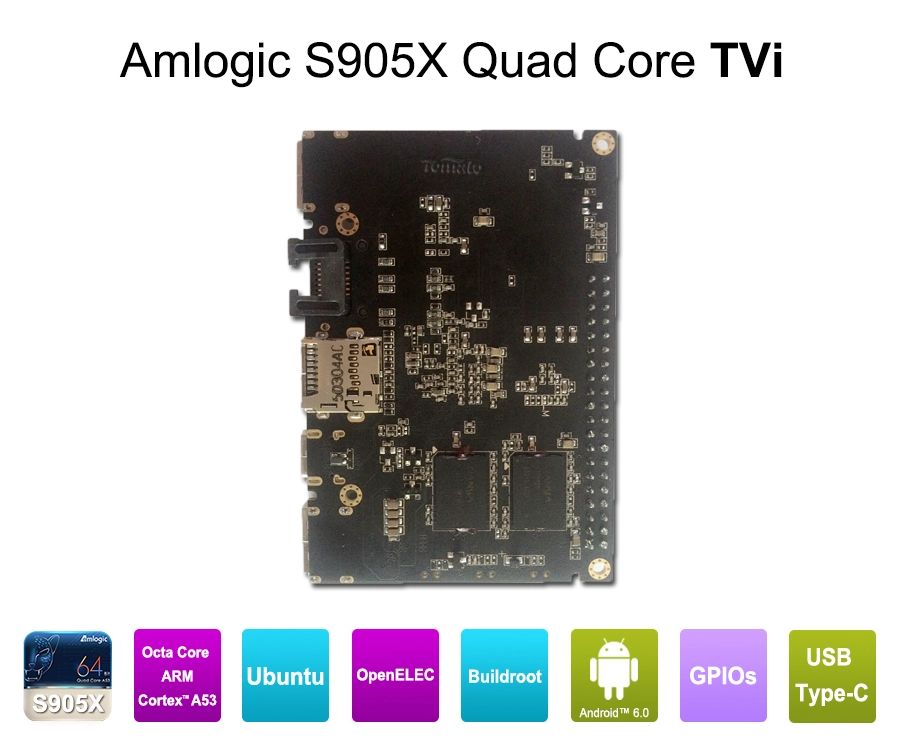
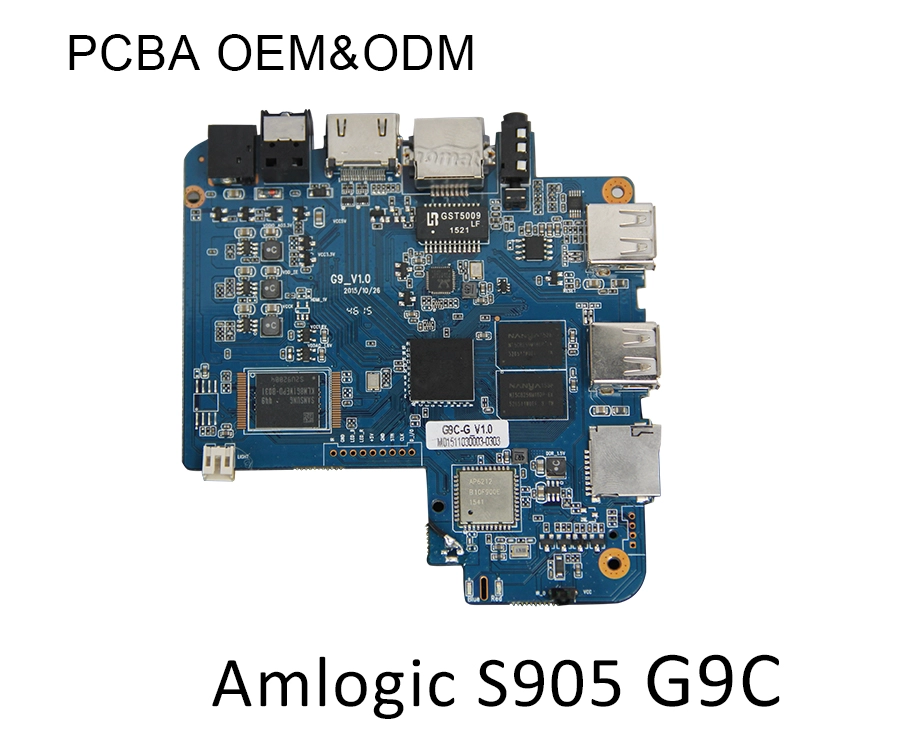
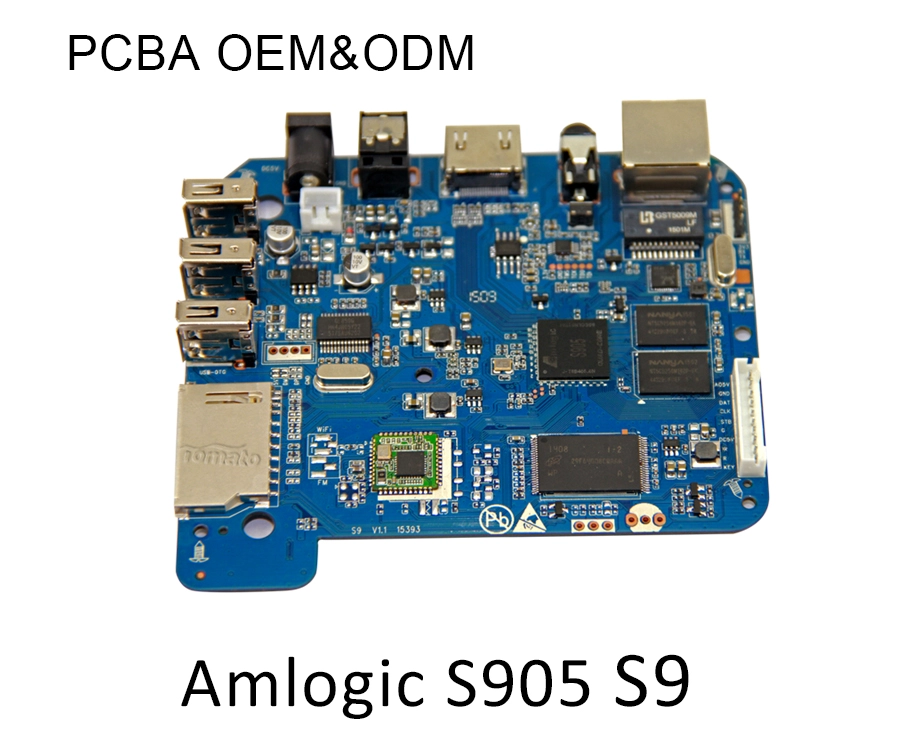
For interactive or specialized streaming applications, SZTomato can evaluate suitable Amlogic or Rockchip platforms and adapt the hardware configuration to the intended workload. PCBA modification and firmware optimization can then address the actual bottlenecks rather than relying on processor specifications alone.
2. Gigabit Ethernet and Wi-Fi 6: Designing for Stable Connectivity
Wired and wireless interfaces serve different deployment needs. Gigabit Ethernet is generally the preferred starting point where a stable physical connection is available. Wi-Fi 6 provides installation flexibility and improved wireless efficiency, particularly in networks carrying traffic from many connected devices.
The Wireless Broadband Alliance identifies Wi-Fi 6 features such as OFDMA and MU-MIMO as important to network efficiency and performance in demanding, high-density environments. The benefit in a specific installation still depends on access-point capability, radio conditions and network configuration.
Gigabit Ethernet: Prioritize predictable throughput
An Ethernet interface rated at 1 Gbps gives the Streaming Media Player a high-capacity wired connection to the local network. Actual application throughput will be lower than the nominal link rate and depends on the complete network path.
For professional deployments, engineering teams should verify:
-
Ethernet link stability, cable quality and compatibility with installed network equipment.
-
Sustained throughput during high-bitrate playback and concurrent network activity.
-
Recovery from link interruption and DHCP lease renewal.
-
Packet loss, jitter and performance under network congestion.
-
Compatibility with VLANs, QoS policies and multicast requirements where applicable.
For managed IPTV networks, multicast handling and IGMP compatibility may be important. OTT applications generally use HTTP-based adaptive streaming, where sustained throughput and buffer management influence playback quality.
A wired interface removes many of the variables associated with wireless interference, but it does not eliminate congestion elsewhere in the network.
Wi-Fi 6: Manage wireless contention and interference
Wi-Fi 6, based on IEEE 802.11ax, introduces mechanisms including OFDMA and multi-user MIMO that help compatible equipment use wireless airtime more efficiently.
For a Streaming Media Player installed in a home, hotel, meeting room or digital signage environment, this can improve connectivity when neighboring devices are competing for airtime. Actual results depend on signal strength, channel utilization, access-point configuration and the capabilities of both the player and router.
The wireless design should consider:
Antenna and PCBA layout. Antenna placement, RF trace routing, shielding and component positioning influence signal quality. A well-planned enclosure and PCBA layout can help reduce interference from other electronic components.
Driver and firmware optimization. Wireless roaming, power-saving settings, connection recovery and driver stability can affect application responsiveness. On Android platforms, Wi-Fi low-latency behavior may require coordinated support from the framework, WLAN driver and vendor hardware abstraction layer.
Installation-specific qualification. Test the actual router, access point, antenna configuration and operating environment. A Wi-Fi 6 label alone does not establish a particular latency, range or throughput under real-world conditions.
For OEM/ODM projects, SZTomato can support wireless configuration and PCBA customization around the target enclosure, chipset and deployment requirements.
3. Firmware and Video-Pipeline Optimization for Faster Response
The processor and network interfaces establish the hardware capability. Firmware determines how efficiently the device uses those resources.
For operators and system integrators, the most useful optimization work begins with a reproducible performance baseline. Measure channel-change time, startup time, buffering frequency, decoder utilization, application response and recovery after network interruptions.
Optimize Android or Linux for the intended streaming service
Android and Linux platforms have different integration requirements, but both need coordinated interaction among device drivers, media frameworks, the network stack and application services.
For Android-based players, the engineering scope may include media-framework configuration, hardware decoder integration, application lifecycle management, background service control and memory allocation. Low-latency Wi-Fi settings may also be relevant to specific latency-sensitive applications when the platform supports them.
For Linux-based platforms, kernel configuration, network-buffer behavior, device-driver stability and media-pipeline scheduling can influence performance. These changes require platform-specific validation; indiscriminate kernel tuning does not automatically improve streaming quality.
SZTomato supports custom UI/UX firmware, SDK/API integration and platform-level optimization for OEM/ODM projects. Depending on the selected SoC and software architecture, development can address:
-
Branded launchers and simplified navigation.
-
Integration with IPTV middleware, OTT applications and backend APIs.
-
Startup behavior, application supervision and watchdog recovery.
-
Resource allocation for video decoding and interactive applications.
-
Network reconnection and error-recovery logic.
The priority is to remove measurable bottlenecks while preserving system stability and compatibility with the operator's applications.
Configure the streaming buffer for the application
Buffering involves a deliberate engineering trade-off. A larger buffer can absorb network fluctuations and reduce interruptions, but it can also increase the delay between a live event and its display.
For conventional on-demand video, playback continuity may be more important than minimizing every fraction of a second. For live events, interactive services and remote-control scenarios, lower buffer targets may be appropriate if the CDN, encoder, delivery protocol and network are configured to support them.
Procurement teams should request testing with the actual streaming protocol and service configuration, rather than treating low latency as an intrinsic property of the hardware.
Useful performance indicators include startup delay, channel-change time, rebuffering ratio, live-edge distance and recovery time after packet loss. Acceptance thresholds should be agreed upon before pilot production.
4. OEM/ODM Customization for Continuous and Industrial Deployment
A Streaming Media Player designed for a living room may not meet the requirements of a commercial display, hospitality system, transport installation or industrial environment. Continuous operation introduces additional demands on board design, power stability, cooling and firmware maintenance.
SZTomato's OEM/ODM approach allows procurement teams and system integrators to define these requirements before finalizing the production design.
PCBA modification and thermal engineering
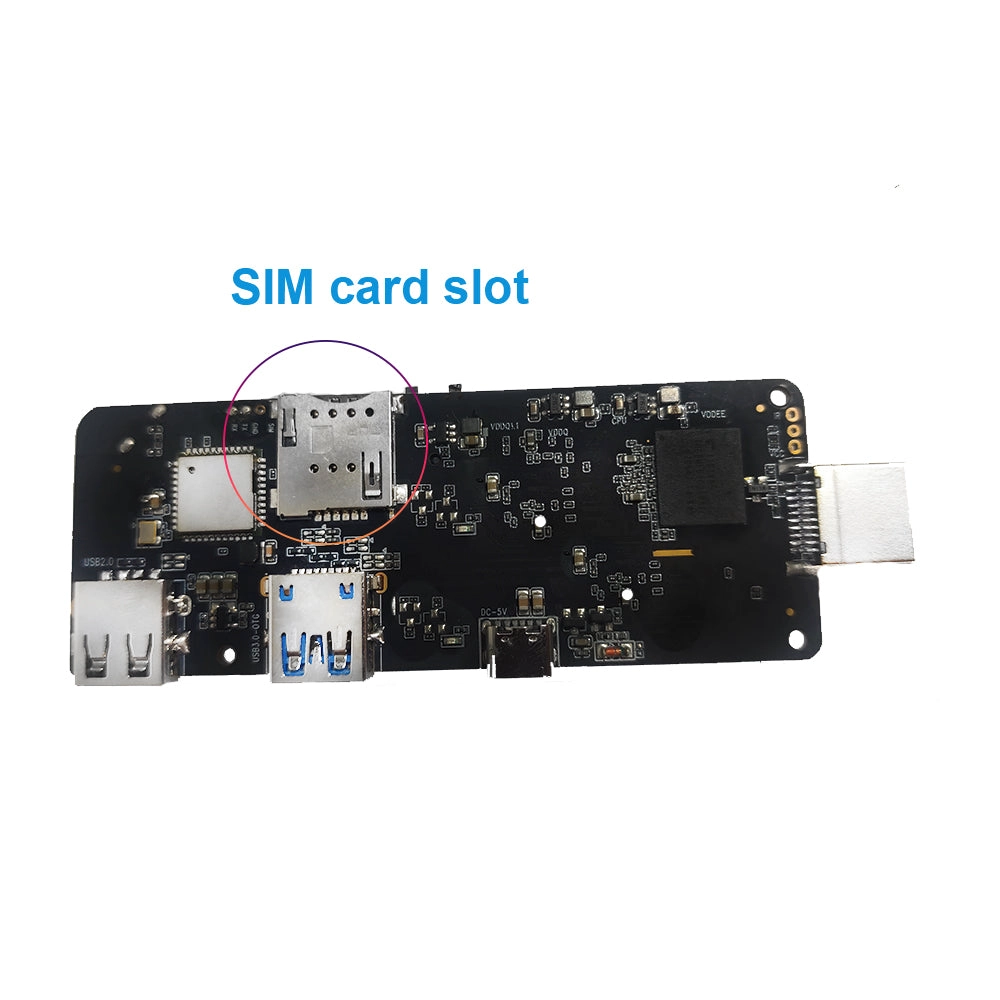
Custom hardware work can address interface placement, memory and storage configuration, antenna positioning, power input and external control interfaces, subject to the chosen platform's capabilities.
Where equipment is installed in an enclosed cabinet or operates continuously, thermal design also deserves attention. Sustained video decoding, wireless activity and application processing can generate enough heat to trigger processor throttling if the enclosure and heatsink are poorly matched.
SZTomato can evaluate specialized cooling solutions for industrial use, including heatsink design, thermal-interface materials, enclosure heat transfer and airflow requirements where applicable.
Validation should combine sustained video playback with realistic ambient conditions, network activity and peripheral use. Temperature, clock-frequency behavior, decoder errors and system stability should be monitored over an agreed test period.
Power-supply quality, component selection and electromagnetic compatibility should also be included in the design review. These factors help determine whether the finished device can maintain consistent performance beyond a short demonstration.
Secure firmware updates and lifecycle management
Long-term operation requires a software maintenance plan as well as suitable hardware. An Over-the-Air (OTA) update system can support remote firmware deployment, version management, staged releases and recovery procedures.
For large device fleets, the update design should establish package authentication, release approval, rollback behavior where supported, device-group targeting and a process for monitoring failed installations.
HDCP content protection and the required DRM mechanisms should also be confirmed when the player handles protected content. Compatibility depends on the exact hardware, firmware, licensing and service requirements; a particular Ethernet or Wi-Fi specification does not imply DRM certification.
Custom firmware should be tested against the operator's application stack, display devices, content-protection requirements and deployment policies before mass production.
Validate performance before scaling deployment
A structured qualification program should cover the complete device:
|
Validation area |
Key engineering checks |
|---|---|
|
Network performance |
Ethernet stability, Wi-Fi throughput, latency, jitter and recovery |
|
Video playback |
Codec profiles, resolution, frame rate, synchronization and buffering |
|
Software stability |
Startup, channel switching, memory utilization and application recovery |
|
Thermal performance |
Sustained-load temperature, throttling and long-duration playback |
|
Fleet management |
OTA deployment, version reporting, failed-update recovery and provisioning |
|
Manufacturing quality |
PCBA inspection, interface testing and production-batch consistency |
A pilot deployment should confirm that the design performs under the intended network, software and environmental conditions. Passing a nominal throughput test is useful, but it is not a substitute for end-to-end streaming validation.
Develop a Custom Streaming Media Player with SZTomato
For B2B buyers, the most effective low-latency solution is not necessarily the product with the highest processor specification or the fastest advertised wireless rate. It is the platform that meets the service's latency targets, sustains the required video workload and remains manageable throughout its operating life.
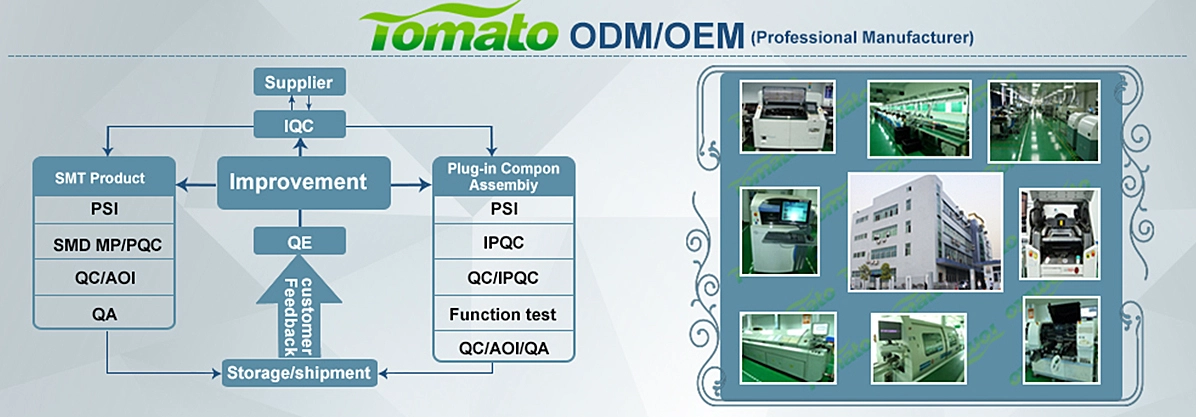
SZTomato supports OEM/ODM development for Android TV Boxes and Streaming Media Players, including PCBA hardware modification, SDK/API integration, custom UI/UX firmware, Linux/Android platform optimization and specialized thermal engineering.
For telecom operators, IPTV/OTT providers, digital signage integrators and enterprise AV buyers, the development process should begin with a concrete technical specification: target codec and resolution, acceptable latency, Ethernet and Wi-Fi requirements, middleware compatibility, DRM and HDCP requirements, thermal conditions, OTA policy and production volume.
Contact SZTomato through www.sztomato.com to discuss a customized high-performance Streaming Media Player with Gigabit Ethernet and Wi-Fi 6, engineered around your application, network environment and OEM/ODM deployment requirements.
