Next-Gen Amlogic A311Y3 Octa-Core Platform Powers Advanced AIoT and Edge Computing Applications
Next-Gen A311Y3 Octa-Core Platform Powers Advanced AIoT and Edge Computing Applications
Hardware engineers deploying industrial digital signage and localized AIoT vision systems currently face a rigid thermal and latency bottleneck. Cloud-dependent AI frameworks suffer from unavoidable bandwidth constraints and latency spikes, while legacy edge processors hit critical thermal throttling when subjected to sustained, concurrent video decoding and neural network workloads. The introduction of the Amlogic A311Y3 octa-core platform fundamentally restructures this hardware constraint, providing a localized silicon solution designed specifically for high-load, 24/7 commercial operation.
Architectural Breakdown: Processing Power and Dedicated NPU
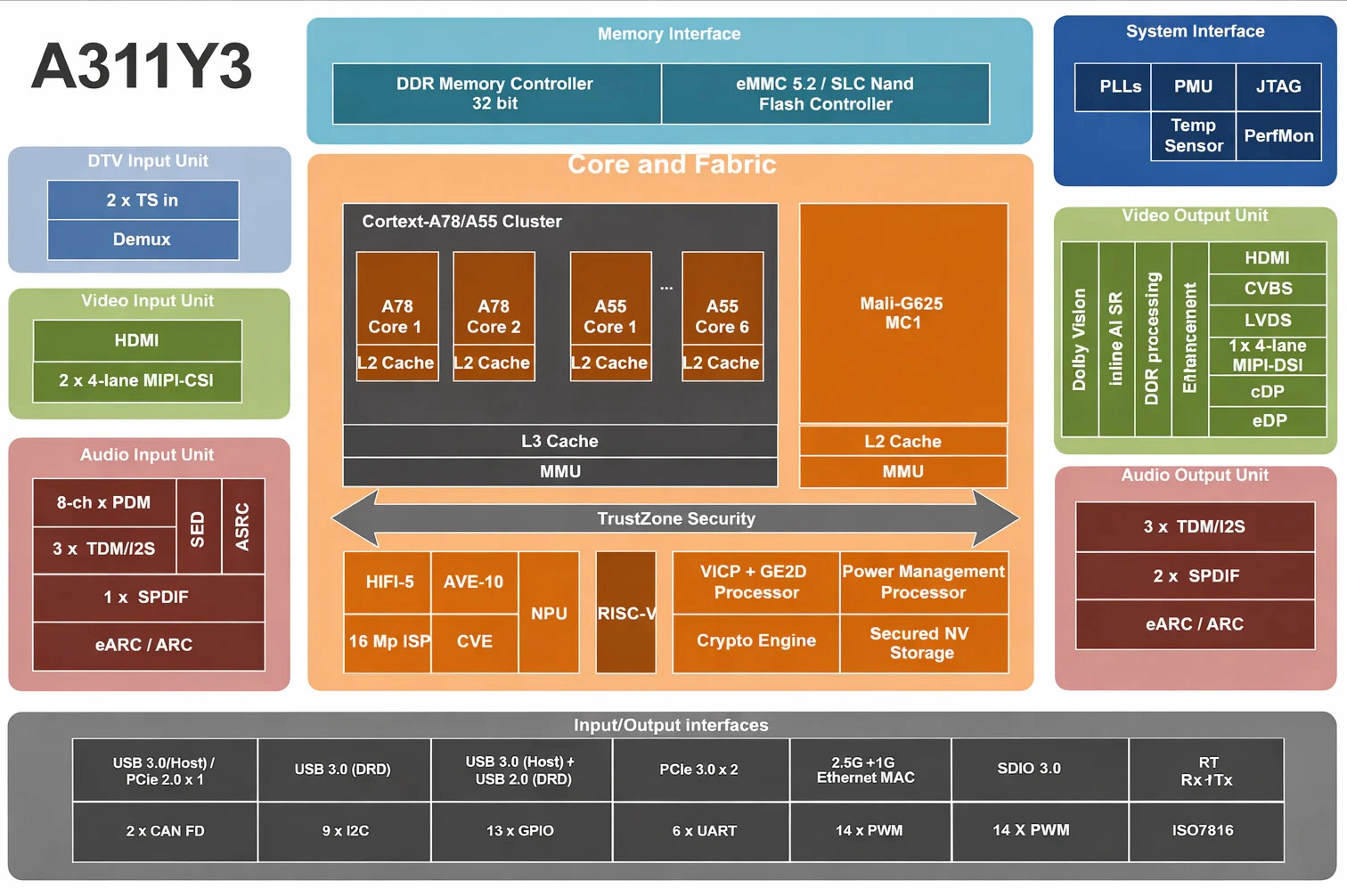
The Amlogic A311Y3 operates on a highly optimized heterogeneous computing architecture. Utilizing a big.LITTLE octa-core CPU configuration, it efficiently delegates background OS tasks to power-efficient cores while reserving high-clock cores for demanding application threads. However, the core differentiator for AIoT applications lies in its integrated Neural Processing Unit (NPU).
Unlike traditional general-purpose SoCs that force the CPU or GPU to handle machine learning inference—resulting in massive heat generation—the A311Y3’s dedicated NPU offloads tensor operations natively. This means object detection, facial recognition, and retail heat-mapping algorithms can execute at the edge with millisecond latency. Paired with an advanced Video Processing Unit (VPU) capable of native AV1 and H.265 decoding, the chipset easily drives multiple 4K displays concurrently without consuming CPU cycles, making it an optimal silicon foundation for next-generation digital signage.
Overcoming Deployment Hurdles: PCBA Customization and Firmware Modification
Standard reference boards rarely survive the spatial constraints and environmental rigors of industrial deployments. To fully leverage the Amlogic A311Y3, B2B hardware developers require extensive customization at both the hardware and firmware levels.
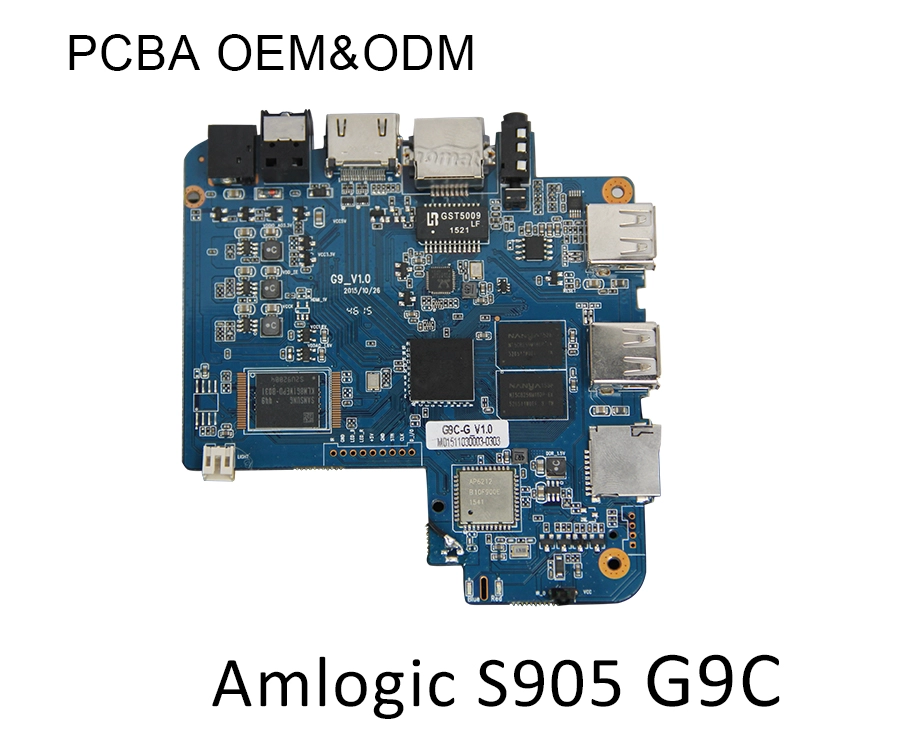
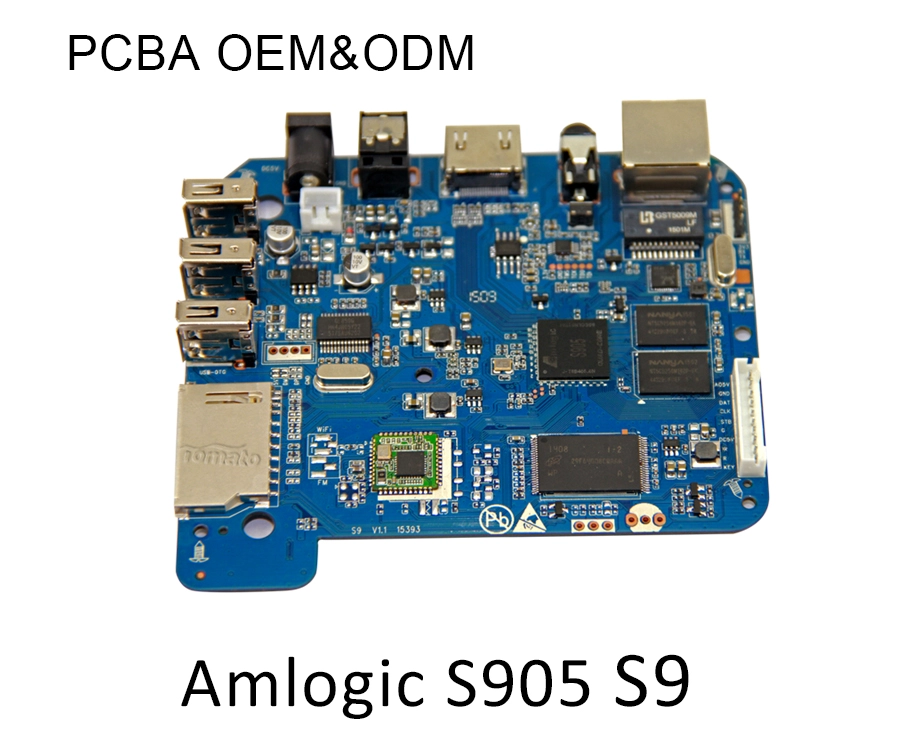
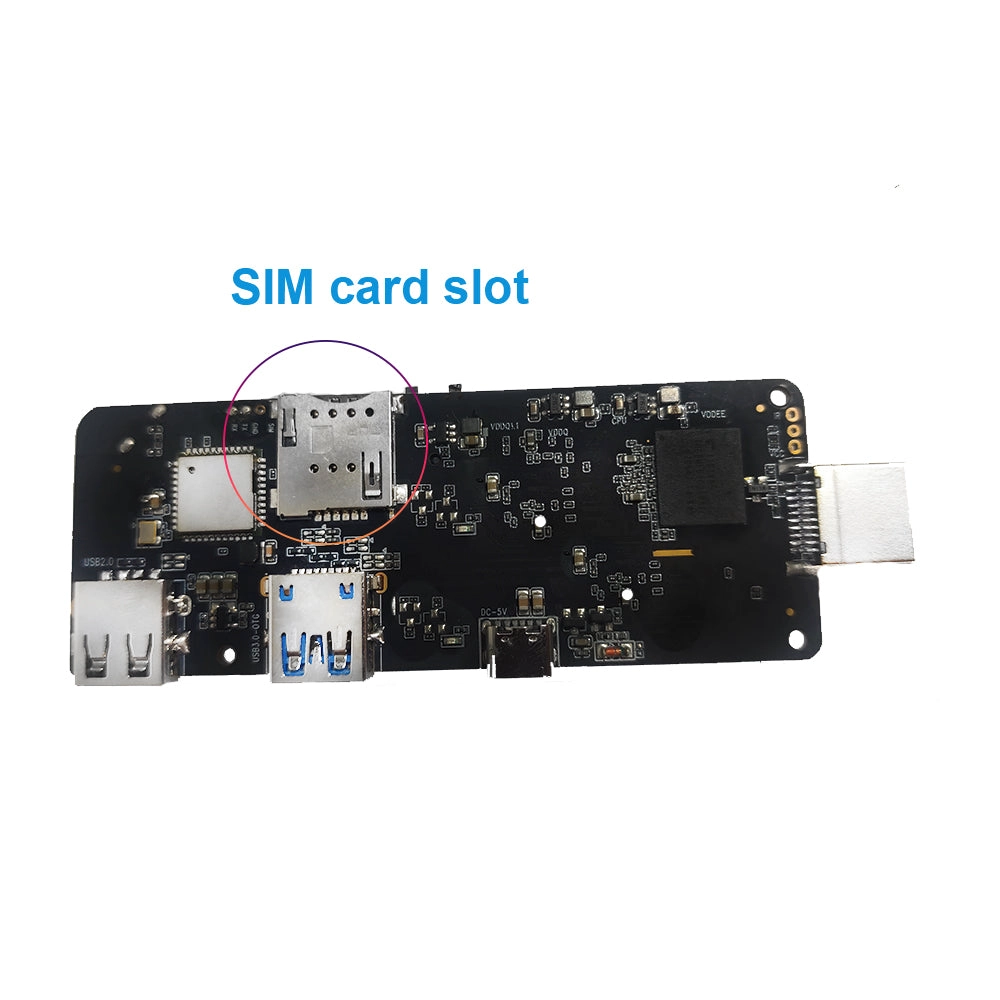
PCBA-Level Redesign: Industrial edge gateways and smart displays demand specific I/O routing that off-the-shelf Android TV boxes cannot provide. Deploying the A311Y3 effectively requires custom PCBA design to route MIPI-CSI/DSI interfaces for embedded cameras and screens, integrate industrial-grade Gigabit Ethernet PHYs, and engineer heavy-duty power delivery (PD) circuits to prevent voltage drops under peak NPU loads. Furthermore, customized thermal dissipation layers (such as strategic copper pouring and custom heat sinks) must be integrated into the PCB layer stack to ensure 0% thermal throttling over 50,000-hour lifespans.
Firmware and Kernel Tuning: Raw hardware is inert without low-level software optimization. Deploying an A311Y3-based solution requires kernel-level modifications—whether compiling a tailored Yocto Linux distribution or creating a deeply customized Android AOSP build. Firmware engineers must write custom drivers to ensure the OS correctly assigns AI inference threads to the NPU rather than defaulting to the CPU. Bootloader modifications are also critical to ensure secure boot protocols and implement seamless over-the-air (OTA) updates for remote digital signage fleets.
Problem-Solution Framework: Scaling Industrial Vision Systems
The Problem: A retail chain needs to deploy interactive, AI-driven kiosks that display 4K advertising while simultaneously analyzing foot traffic and viewer demographics in real-time. Cloud-based solutions violate data privacy regulations by transmitting raw video feeds, while standard media players overheat and crash when running localized computer vision models.
The Solution: By deploying a custom-engineered Amlogic A311Y3 hardware platform, the heavy lifting occurs strictly at the edge. The VPU handles the 4K advertising playback flawlessly. Simultaneously, the embedded camera feeds video directly via MIPI-CSI to the NPU, which processes the demographic data locally. Only anonymized text-based metadata (e.g., "Viewer: Male, 30s, Dwell Time: 12 seconds") is transmitted to the central server, solving both the thermal issue and the data privacy compliance mandate in a single hardware iteration.
Strategic OEM/ODM Integration for the B2B Supply Chain
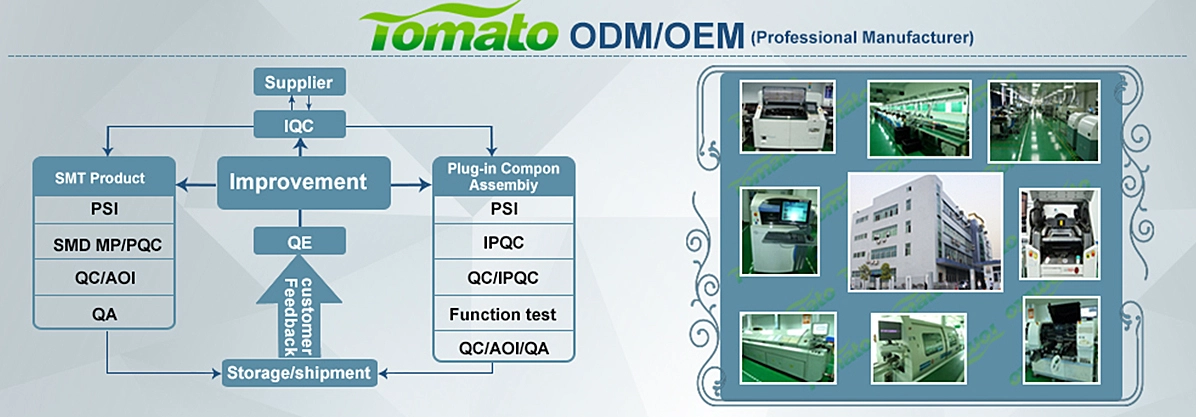
Transitioning from a prototype based on the Amlogic A311Y3 to a mass-produced, market-ready product requires an OEM/ODM partner with deep supply chain integration and direct SoC vendor relationships. Professional ODM partners provide strict BOM (Bill of Materials) control, component lifecycle management, and ISO-certified manufacturing protocols. This ensures that the custom PCBA designs and proprietary firmware images are flashed, tested, and assembled with zero variance, bridging the gap between raw silicon capability and commercial deployment.
Take the Next Step in Hardware Development Scaling your next AIoT or digital signage project requires more than standard hardware. It demands precision engineering from the PCB traces to the kernel layer. Partner with the firmware architects and hardware manufacturing experts at SZTomato to build, customize, and deploy your custom Amlogic A311Y3 platform. Contact our technical engineering team today to review your project schematics and establish a customized OEM/ODM roadmap.