
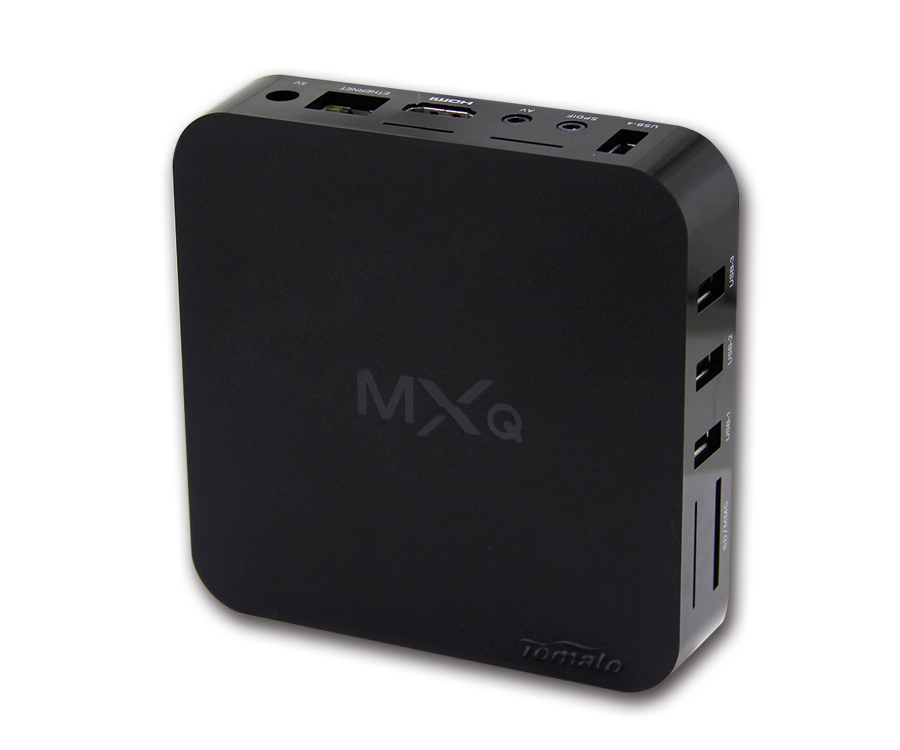
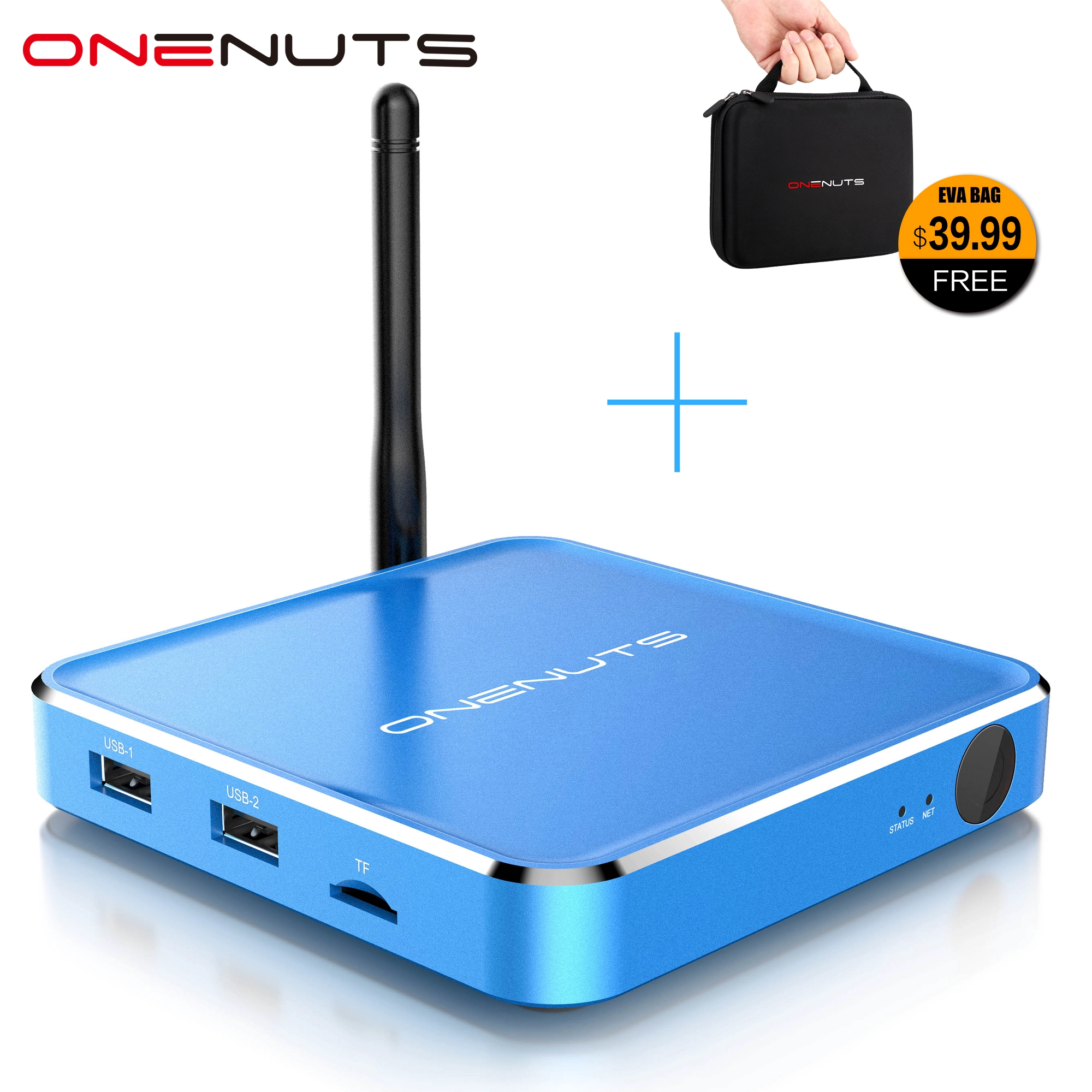
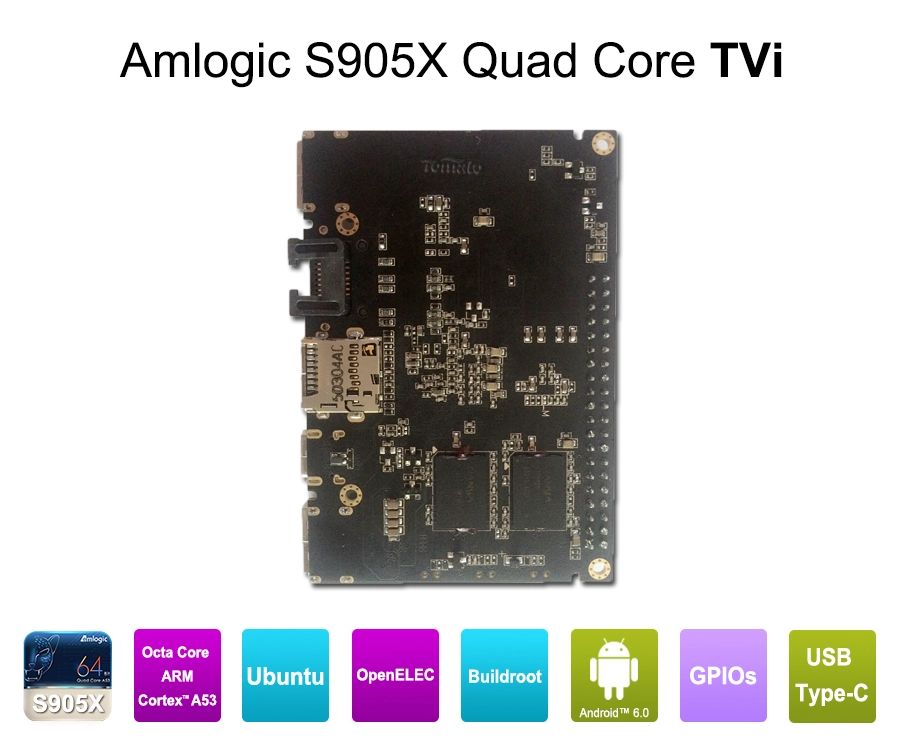
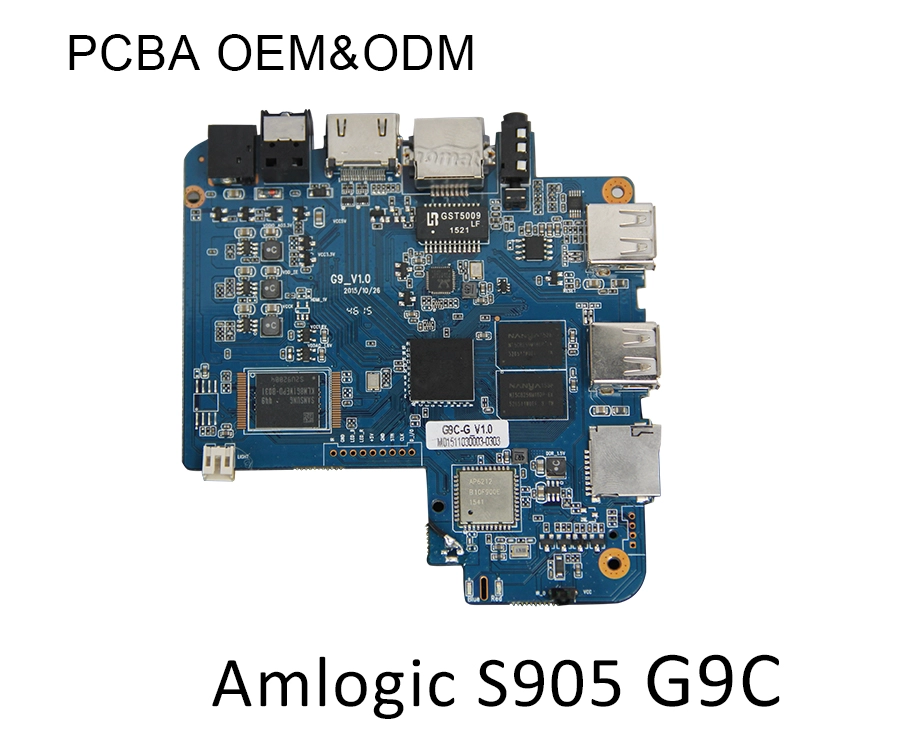
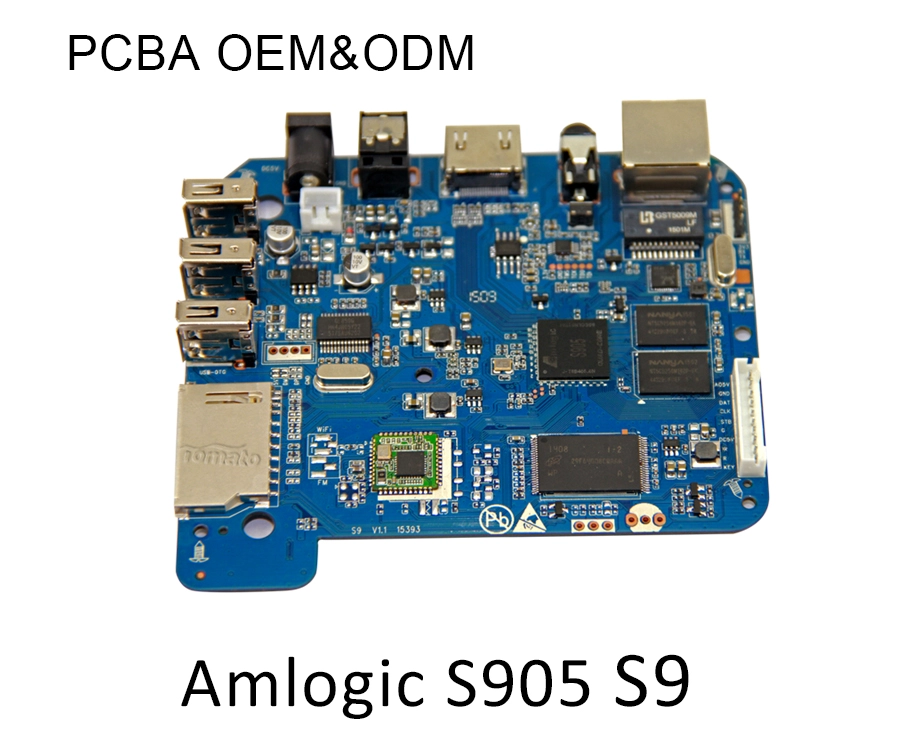
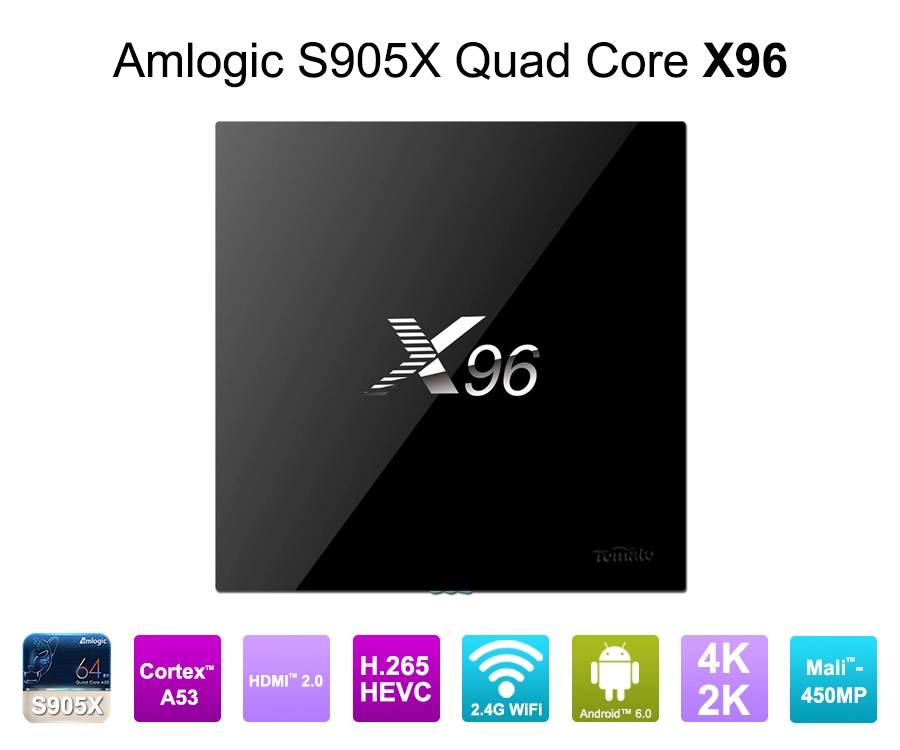
OTT TV Box for Hotels
Commercial OTT TV Box for Hotels: Enterprise Engineering and Integration Guide
Modern hospitality properties are facing a critical bottleneck in guest room technology: the breakdown of traditional coax-based linear cable distribution. Guests now expect an in-room media experience that matches or exceeds their domestic setups—specifically, frictionless access to subscription video-on-demand (SVOD) profiles, casting capabilities, and low-latency interactive guest services.
Deploying a commercial-grade OTT TV Box ecosystem across hundreds of guest rooms requires navigating serious architectural friction. Unlike consumer plug-and-play media players, a hospitality-grade Over-The-Top (OTT) set-top box must run specialized firmware that interfaces directly with localized Property Management Systems (PMS), isolates user data across rapid tenant cycles, and operates reliably over dense, multi-tenant enterprise network architectures.
1. The Data Security Challenge: Automated Token-Clearing and Privacy Compliance
The primary risk when introducing an OTT TV Box into a hospitality environment is user credential leakage. If a guest logs into an app like Netflix or Disney+ and checks out without their account being completely scrubbed, the property is in direct violation of basic data privacy mandates, including GDPR and CCPA regulations.
Consumer streaming hardware retains user tokens indefinitely within the /data/data/ application subdirectory until a manual factory reset is triggered. For hotel operations, this risk must be engineered out at the system firmware level.
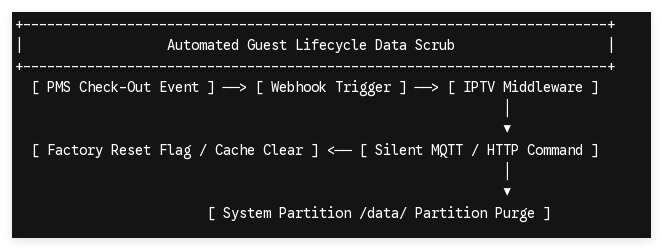
Firmware-Level User Scrubbing Mechanisms
To eliminate manual intervention by cleaning staff, the hardware vendor must customize the Android Board Support Package (BSP) to execute silent, automated credential clearing via two primary architectural pathways:
-
System-Level Factory Reset Partitioning: Upon receiving a checkout webhook from the hotel PMS, the centralized IPTV middleware sends an encrypted payload (via MQTT or secure HTTP) to the target room's OTT TV Box. The hardware intercept executes a silent recovery script, clearing the /data and /cache partitions and returning the device to its golden master state in under 60 seconds.
-
App-Specific Cache Invalidation: For setups where a full reboot takes too long, the custom Android OS launcher is compiled with elevated system permissions (android.permission.FORCE_STOP_PACKAGES and CLEAR_APP_USER_DATA). When the checkout command is received, the launcher programmatically wipes user directories for specific package targets without needing a full system power cycle.
2. Infrastructure Integration: Synchronizing the OTT System with Hotel PMS APIs
An unmanaged OTT device operates in an isolated silo. An enterprise hospitality OTT TV Box acts as an extension of the property’s operational layer by integrating directly with core Property Management Systems like Oracle Opera, Mews, or Cloudbeds.
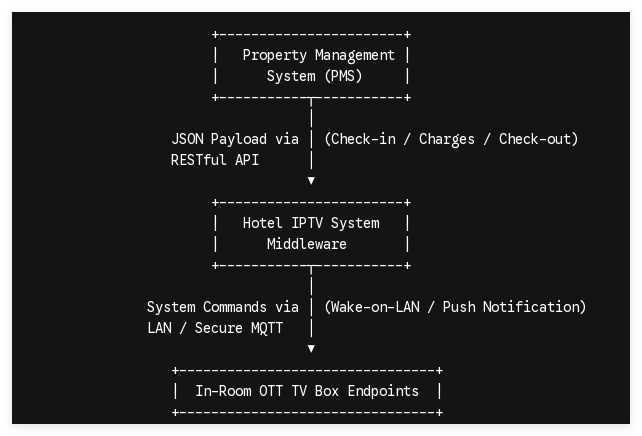
RESTful API Payload Structures
When a guest registers at the front desk, the PMS pushes a JSON payload to the hotel’s IPTV middleware. The middleware maps this data and immediately updates the in-room device profile.
An industry-standard integration payload typically follows this architectural structure:
JSON
{
"event_type": "GUEST_CHECK_IN",
"timestamp": "2026-06-08T18:05:00Z",
"reservation_data": {
"room_number": "412",
"guest_id": "9948215",
"last_name": "Valenzuela",
"language_preference": "es",
"checkout_date": "2026-06-12"
},
"provisioning_parameters": {
"profile_lockout": false,
"max_billing_limit": 150.00,
"casting_token_auth": "a7b8c9d0e1f2"
}
}
Upon ingestion, the OTT TV Box dynamically restructures its user interface. It updates the welcome interface to show the guest's name, changes the entire system language to match the profile, and configures the localized casting gateway (e.g., Google Cast for Hoteliers) to accept connections exclusively from the guest's verified MAC address during their stay.
3. Network Optimization: Calculating Concurrent Stream Capacities and Load Balancing
Streaming high-bitrate 4K content across hundreds of rooms simultaneously will quickly brings a standard enterprise network to its knees. System architects must calculate real-world load requirements rather than theoretical throughput maximums.
Bandwidth Calculation Formula
To determine the required external downstream bandwidth and internal local area network (LAN) capacity, engineers apply the following calculation model:
Total Downstream Bandwidth=(R×C)×(B×O)
Where:
-
R = Total guest room count.
-
C = Peak concurrency factor (typically 0.40 to 0.50 during peak evening hours of 8 PM to 11 PM).
-
B = Target stream bitrate (8 Mbps for compressed 1080p, 25 Mbps for uncompressed 4K H.265/AV1 streams).
-
O = Network headroom overhead factor (minimum 1.30 to account for burst traffic and IGMP signaling).
For a 150-room mid-tier hotel optimizing for 1080p rendering, the calculation looks like this:
(150×0.45)×(8 Mbps×1.30)=67.5×10.4 Mbps=702 Mbps
Architectural Takeaway: A 150-room hotel requires a minimum dedicated 1 Gbps synchronous fiber circuit simply to guarantee stable video playback during peak hours, assuming no local caching infrastructure is deployed.
Network Traffic Mitigation Strategies
To keep local access points from dropping packets under high load, the following network protocols must be enforced at the hardware switch level:
-
IGMP Snooping (v2/v3): Essential if the OTT box handles local linear multicast IPTV streams alongside internet-based OTT applications. IGMP snooping prevents the switch from flooding all ports with video traffic, routing packets only to active TV Box clients.
-
VLAN Isolation: Assign all in-room OTT hardware to a isolated, secured Media VLAN, completely separate from the public guest Wi-Fi and the operational PMS administrative network.
4. Hardware and Content Protection: DRM and Enclosure Engineering
Hospitality operations subject hardware to high physical wear and tear and continuous thermal stress inside enclosed television millwork.
Content Protection: Widevine L1 vs. Pro:Idiom
Premium content providers demand strict hardware-level security before allowing high-definition or 4K playback. The chosen OTT TV Box must feature a secure enclave within its silicon layer (ARM TrustZone) to process keys:
| Security Standard | Primary Deployment Function | Hardware Requirement |
|---|---|---|
| Widevine L1 (Google) | Required for premium consumer OTT apps (Netflix, YouTube 4K). | Secure bootloader + factory-provisioned Widevine cryptographic keys in the SoC. |
| Pro:Idiom (Zenith/LG) | Standard for commercial satellite/cable headend decryption. | Dedicated Pro:Idiom chip or hardware-level decryption engine within the silicon pipeline. |
Industrial Design for Hospitality Fail-Safe Operations
The physical layout of the set-top box must be ruggedized for commercial use:
-
Kensington Lock Slot: Built into the chassis to prevent physical device theft from guest rooms.
-
External IR Extender Port: Essential because boxes are frequently mounted out of sight behind the display or inside furniture. An external 3.5mm IR receiver jack allows the unit to process remote control inputs while hidden away.
-
Blown-Fuse USB Power Protection: Hardware-level self-resetting polyfuses on all external USB ports to prevent device failure if a guest connects a malfunctioning or short-circuited charging cable.
Engineering Predictable Hospitality In-Room Media
Deploying a reliable OTT TV Box infrastructure in a hospitality environment requires moving past the limitations of retail hardware. Success lies in balancing secure data isolation, deep software integration via PMS APIs, and precise network engineering. By addressing these foundational requirements during the system layout phase, hotel operators and system integrators can deploy an enterprise-grade entertainment platform that drives guest satisfaction while protecting asset security and network performance.
Architect Your Enterprise In-Room Entertainment Platform
Whether managing an independent boutique hotel group, deploying a multi-property brand upgrade, or engineering a hospitality IPTV platform, our technical team provides the specialized B2B hardware and firmware customization required for stable, long-term deployment.
Contact our Senior Hardware Solutions Engineering Team Today to request a technical schematic review, explore custom Android TV/AOSP firmware builds, or arrange a production sample evaluation.
