
TV Box OEM/ODM Full Guide
Commercial TV Box OEM/ODM: Architectural Guide to Hardware and Firmware Customization
Hardware procurement for enterprise-grade Android TV Box applications has moved past off-the-shelf retail solutions. Whether deploying thousands of digital signage endpoints, launching a localized IPTV/OTT service, or integrating edge-computing nodes, relying on generic consumer hardware introduces severe operational risks. These include unpatched firmware vulnerabilities, non-standard peripheral configurations, and unpredictable component lifecycles.
Achieving operational stability at scale requires moving upstream. This guide breaks down the technical execution of a professional TV Box OEM/ODM project, from silicone architecture up to the application layer.
1. Silicon and PCBA Architecture: Selecting the Core Infrastructure
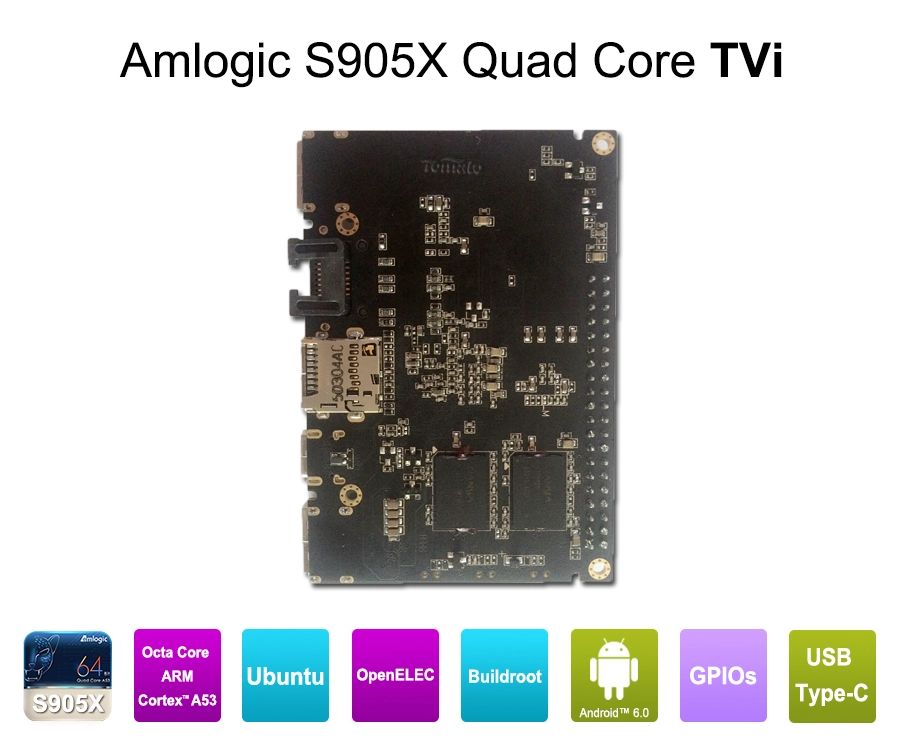
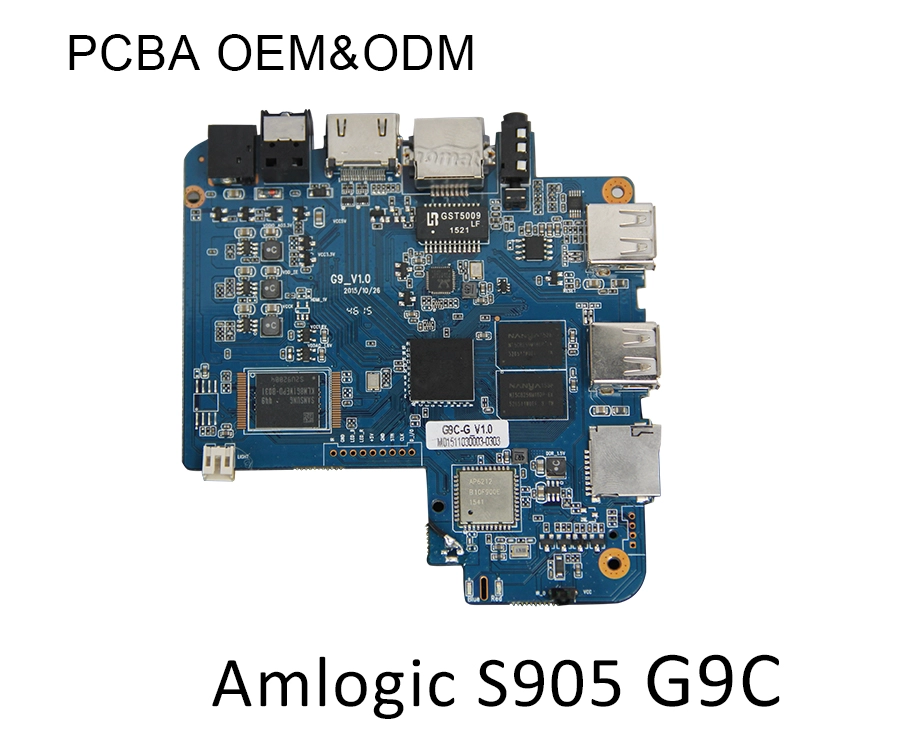
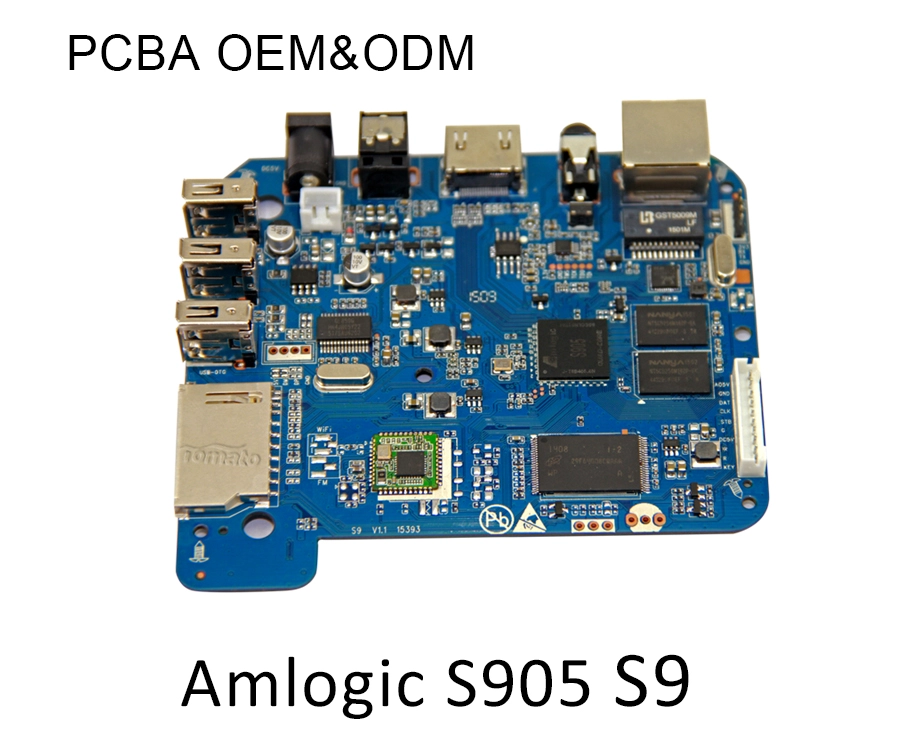
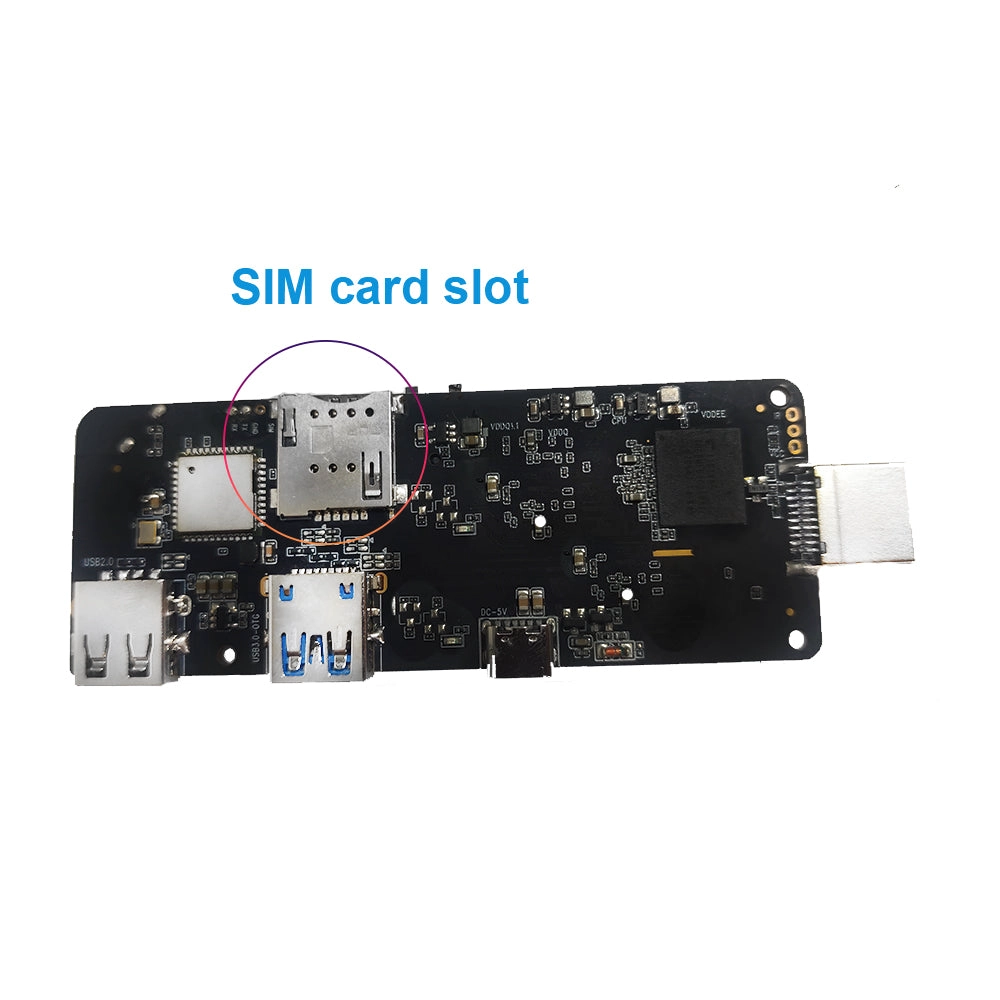
The foundation of any enterprise TV Box project is the System on Chip (SoC) and its corresponding Printed Circuit Board Assembly (PCBA). Selecting the right platform dictates your development overhead, thermal envelope, and unit cost.
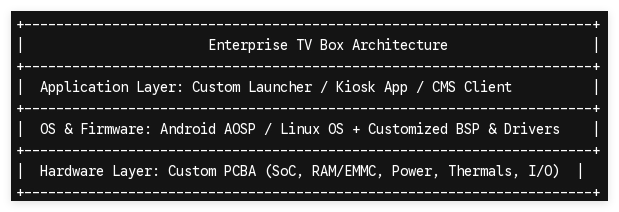
Chipset Selection Matrix
Commercial deployments typically diverge into two primary silicon ecosystems based on use-case requirements:
-
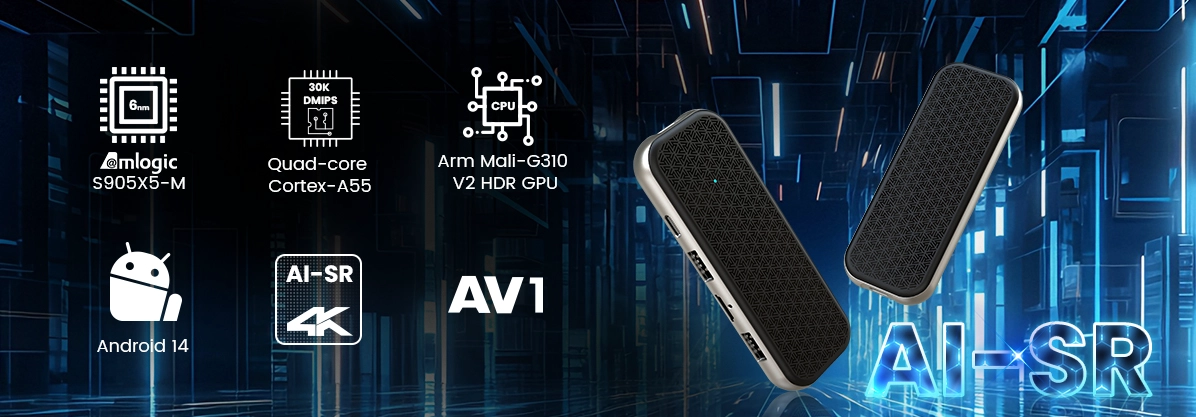
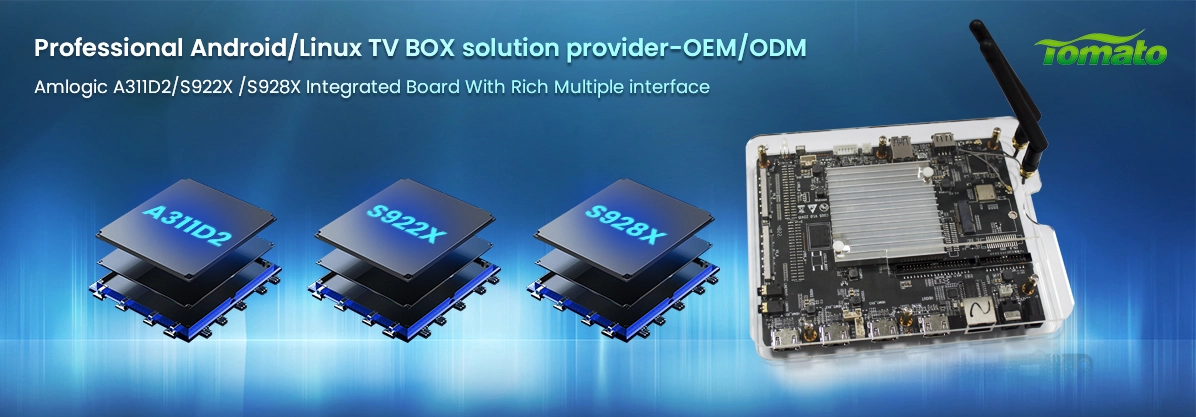
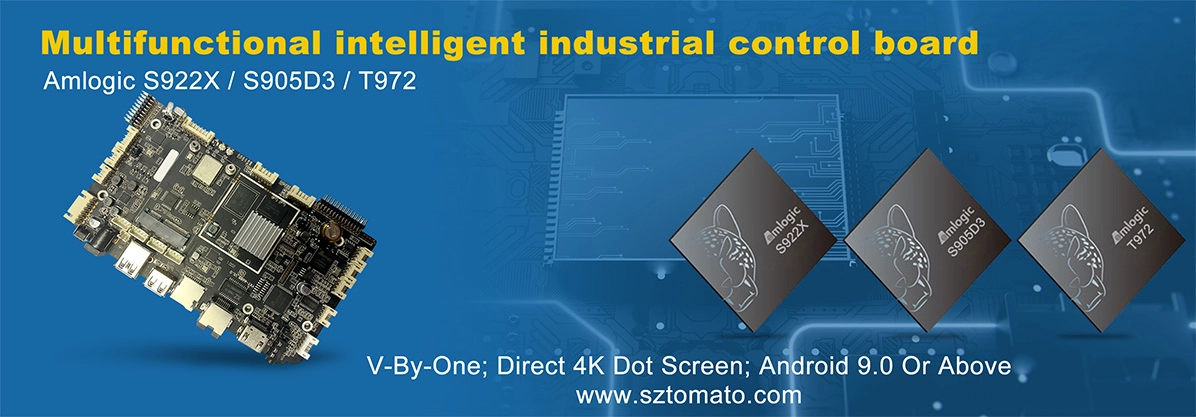
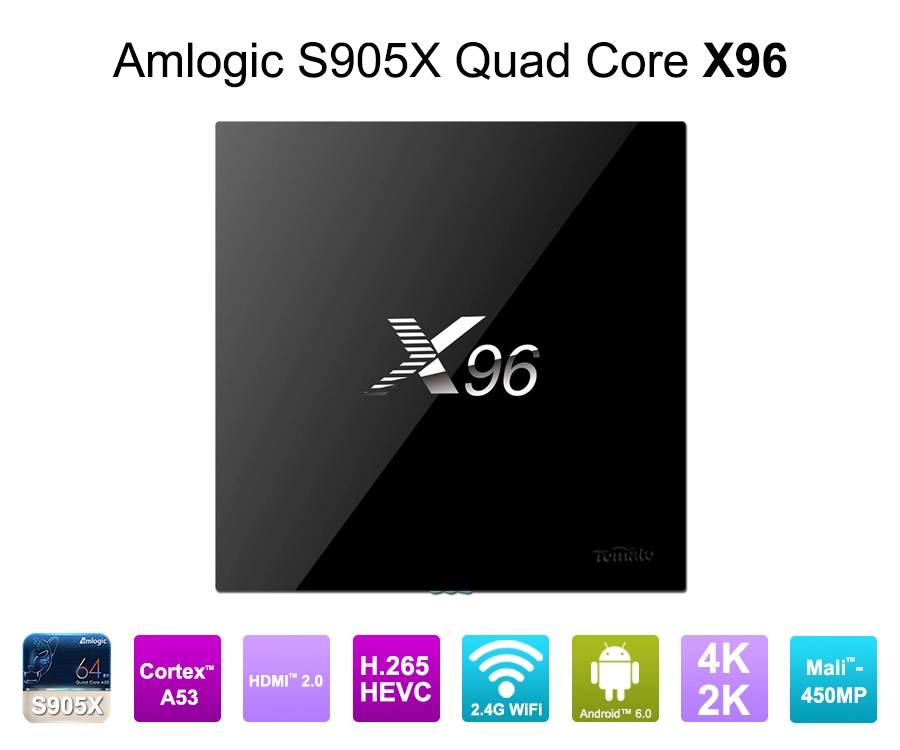
Amlogic (e.g., S905X4, S922X): The industry standard for media-centric deployments. These SoCs feature dedicated hardware decoding pipelines for AV1, HEVC, and VP9 codecs, alongside robust Digital Rights Management (DRM) extensions at the hardware level.
-
Rockchip (e.g., RK3568, RK3588): Optimized for edge computing, interactive kiosks, and complex digital signage. They offer extensive I/O capabilities, including native support for multiple display outputs (HDMI, eDP, LVDS), dual Gigabit Ethernet, and integrated Neural Processing Units (NPUs) for computer vision applications.
PCBA Component Specification
Standard retail PCBAs optimize strictly for component cost, often utilizing B-grade flash memory or volatile power delivery subsystems. For commercial-grade deployments, the specification must focus on durability:
-
Storage & Memory: Insist on eMMC 5.1 storage or higher with high endurance ratings (TBW) to handle continuous log writing, along with LPDDR4/4X RAM to minimize power consumption and thermal dissipation.
-
Power Management (PMIC): Implement independent, transient-protected PMIC circuits capable of handling voltage fluctuations, ensuring stable continuous operations (24/7/365).
-
Thermal Design: Ditch small, passive consumer heatsinks. Demand large-area aluminum or copper heatsinks paired with thermal interface materials (TIM) rated above 3.0 W/m⋅K to prevent thermal throttling under high ambient temperatures.
2. Firmware Engineering: BSP Customization and OS Hardening
A secure, scalable TV Box rollout depends entirely on your control over the Board Support Package (BSP) and operating system. Generic Android configurations expose unnecessary attack vectors and lack the granular controls required for remote fleet management.
Operating System Selection: AOSP vs. Android TV (Android TV OS)
-
Android Open Source Project (AOSP): Ideal for dedicated, closed-ecosystem applications like digital signage, medical monitors, and vending automation. It allows complete UI/UX replacement, requires no Google licensing overhead, and offers deep access to underlying system APIs.
-
Android TV OS (Google Broadcast Services / Operator Tier): Necessary if your deployment relies on premium consumer video applications (Netflix, Prime Video, Disney+) which require official Google Certification, Widevine L1 DRM, and integration with Google Assistant.
Key Firmware Modifications
During the ODM engineering phase, the factory's firmware team must inject specific configurations directly into the system image prior to mass production flashing:
[ Raw Android Source Code (AOSP) ]
│
▼
[ Inject Custom Hardware Drivers & Peripheral Configs ]
│
▼
[ Hardening: Strip GMS & Root Access ]
│
▼
[ System Integration: Enable Watchdog & Boot-on-Power ]
│
▼
[ Compile Production-Ready Signed Firmware Image ]
-
Boot-on-Power (Auto-Boot): Modify the bootloader (u-boot) to initialize the system immediately upon receiving AC power, eliminating the need for a physical power button or remote trigger after a power outage.
-
Hardware Watchdog Timer: Enable a kernel-level hardware watchdog that automatically reboots the SoC if the main application loop freezes or crashes.
-
Root Access Management & Security: For production environments, disable root access entirely and lock the bootloader via cryptographic keys. This prevents unauthorized firmware tampering via physical USB access.
-
Kiosk Mode & Custom Launchers: Set your custom APK as the default system launcher (android.intent.category.HOME) and compile it into the /system/priv-app/ directory to prevent uninstallation or user bypass.
3. Peripheral Integration and Enclosure Industrial Design
Commercial installations frequently require connection to non-standard external hardware. The ODM phase is where these physical and protocol-level integrations occur.
I/O Customization
Standard consumer boxes offer limited connectivity (typically one HDMI and a couple of USB ports). Industrial deployments often require a redesigned interface layout:
| Interface Type | Commercial Use Case | Technical Requirement |
|---|---|---|
| RS232 / RS485 | Legacy hardware control | Integrated UART-to-RS232 transceiver on the PCBA |
| PoE (Power over Ethernet) | Single-cable installation | IEEE 802.3at (PoE+) compliance on the Ethernet subsystem |
| External WiFi Antennas | High-interference environments | Dual-band Wi-Fi 6 modules with SMA antenna breakouts |
| GPIO Blocks | Interactive triggers, sensors, buttons | Exposed pin headers mapped within the Linux device tree |
Industrial Design & Enclosure Engineering
The physical housing must match the operational environment. While plastic injection molding is cost-effective for high volumes, industrial applications often leverage CNC-machined or stamped aluminum enclosures. Metal housings serve a dual purpose: they provide rugged physical protection against vandalism and act as a large, structural heatsink, drawing thermal energy directly away from the SoC without relying on failure-prone active cooling fans.
4. Quality Assurance, DFM, and Supply Chain Validation
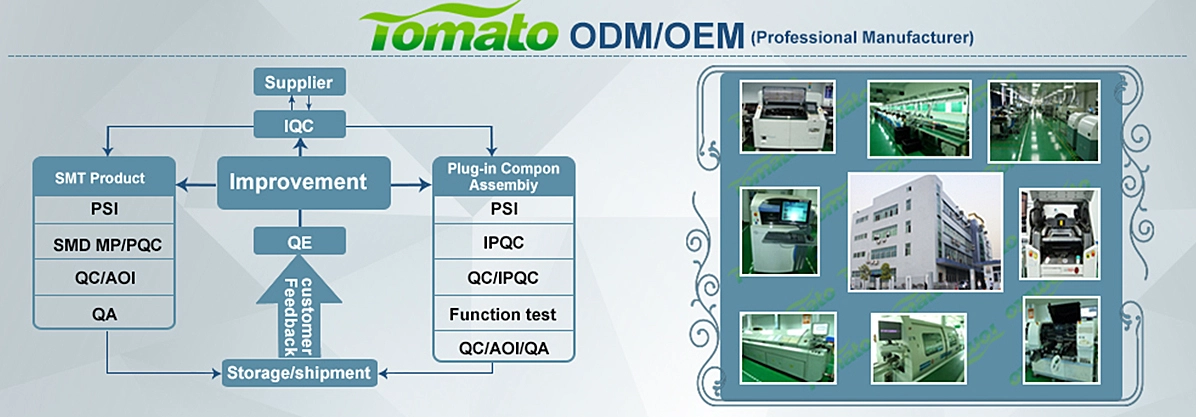
Transitioning from a working prototype to high-yield mass production requires strict Design for Manufacturing (DFM) reviews and structured quality control workflows. Working directly with an established B2B manufacturer ensures that component selection is optimized for a long lifecycle—typically 3 to 5 years of continuous production availability—preventing unexpected mid-project hardware redesigns.
Critical Quality Milestones
-
Engineering Validation Test (EVT): Verifies basic PCBA functionality, signal integrity across high-speed buses (DDR, eMMC), and initial BSP stability.
-
Design Validation Test (DVT): Testing of the complete assembly within its final enclosure. This stage includes comprehensive environmental chamber testing (operating at extreme temperatures ranging from −10∘C to +60∘C), electrostatic discharge (ESD) protection testing, and drop testing.
-
Production Validation Test (PVT): A small-scale pilot run utilizing final production tooling to validate the factory assembly processes, test jigs, and automated firmware flashing software.
Compliance and Certifications
Every market demands specific regulatory compliance. Your ODM partner must manage the application and testing processes for international standards, ensuring the final hardware is fully certified before deployment:
-
North America: FCC Part 15 Class B, UL/cUL safety certifications.
-
Europe: CE Mark (including RED for wireless components), RoHS, and WEEE directives.
-
Global Access: CB Scheme certification to streamline localized registration across various target regions.
Partnering for Long-Term Deployment Success
Executing a successful TV Box OEM/ODM project demands deep collaboration across hardware layout, low-level software customization, and strict supply chain oversight. By addressing these engineering and manufacturing vectors before tooling begins, operators can insulate themselves from the operational failures, security breaches, and component obsolescence common to consumer hardware.
Optimize Your Hardware Architecture
If you are designing a dedicated video delivery platform, digital signage network, or customized Android endpoint, our engineering team provides the technical framework to bring your specifications to market. We focus exclusively on high-reliability PCBA engineering, custom BSP firmware optimization, and end-to-end B2B manufacturing.
Contact our Technical Engineering Team Today to review your hardware specifications, schedule a schematics review, or request a customized prototype build.
