
What channels are free on a TV Box?
The Structural Shift to Ad-Supported Hardware Ecosystems
The connected television (CTV) market is undergoing a clear financial realignment. High subscription fatigue has broken the dominance of subscription video-on-demand (SVOD) models. Enterprise network operators and hardware distributors no longer need to bundle expensive, margin-eroding paid content packages to sell hardware.
The growth engine has shifted entirely to FAST (Free Ad-Supported Streaming TV) and AVOD (Advertising Video on Demand). Industry data notes the global FAST market value reached approximately $12.23 billion, driven by viewers opting for ad-supported tiers over subscription models.
For B2B stakeholders, a TV Box is no longer just a pass-through receiver for paid cable packages; it is a high-utility deployment platform capable of aggregating thousands of compliance-verified broadcast channels at zero content-acquisition cost to the end-user. Navigating this ecosystem requires an understanding of how these free feeds are structurally integrated into custom client firmware.
1. Native FAST App Ecosystems: Seamless Out-of-the-Box Content
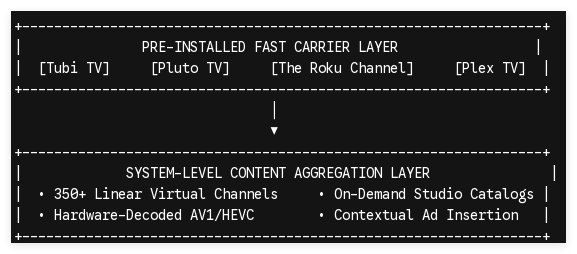
When provisioning an Android TV Box fleet, the most immediate tier of non-subscription content comes from pre-integrated, platform-level FAST aggregators. These platforms do not require user registration, credential authentication, or subscription validation layers.
Major Content Aggregators
-
Tubi TV & Pluto TV: These platforms function as default linear broadcast simulators. They deliver over 300 to 400 virtual channels encompassing live news, legacy studio syndications, and localized programming.
-
Plex & Xumo Play: Integrated directly into alternative launcher layouts, these services deliver live digital feeds utilizing Server-Side Ad Insertion (SSAI). This allows the ad stream to match the core video transport stream seamlessly.
Technical Integration Strategy
For hardware volume buyers (OEM/ODM), these services are not treated as secondary consumer downloads. Instead, they are embedded directly into the system image system partition (/system/app/) during factory-floor flashing. This ensures that the moment the media terminal initiates its first boot sequence, an institutional user has immediate access to live programming without touching the Google Play ecosystem.
2. Open-Source IPTV, Over-The-Air (OTA) Tuners, and M3U8 Stream Processing
Beyond commercial applications, enterprise clients regularly deploy custom, unencrypted video infrastructure using open standard network protocols.
Legal M3U8 Matrix Deployments
System integrators frequently utilize open-source playlists containing legally crowdsourced, unencrypted public broadcast streams (such as IPTV-org frameworks). These configurations utilize standard HTTP Live Streaming (HLS) or Dynamic Adaptive Streaming over HTTP (DASH) protocols.
The firmware client parses an .m3u8 index file, allowing the TV Box to fetch distinct video chunks dynamically based on real-time network bandwidth. This architecture permits a hospital, school, or multi-dwelling unit (MDU) to distribute hundreds of international news, educational, and cultural channels to every room with zero licensing fees.
ATSC 3.0 / DVB-T2 Tuner Integration
For absolute zero-bandwidth linear channel acquisition, advanced TV Box PCBA designs integrate physical demodulator hardware chips directly onto the board.
-
North American Deployments: Integrating an ATSC 3.0 (NextGen TV) tuner allows the box to decode over-the-air digital terrestrial broadcasts up to 4K resolution, including Dolby AC-4 audio streams.
-
European / LATAM Deployments: Utilizing a DVB-T2 or ISDB-T silicon configuration pulls local major network affiliates straight from an external RF antenna connection line.
This hybrid architecture pairs local hardware-decoded RF channels with network-driven FAST streams inside a unified Electronic Program Guide (EPG), providing a highly reliable failover configuration for emergency environments.
3. Comparative Technical Delivery Matrix
| Content Delivery Vector | FAST Applications (Pluto/Tubi) | Open IPTV (.m3u8/HLS) | Hardware OTA Tuners (ATSC 3.0) |
|---|---|---|---|
| Subscription Cost | $0.00 (Ad-Supported) | $0.00 (Public Domain / Free-to-Air) | $0.00 (Over-the-Air RF) |
| Transport Protocol | HLS / MPEG-DASH with DRM | Standard HLS (Unencrypted) | RF Terrestrial Broadcast |
| Bandwidth Overhead | 5-15 Mbps (Per 4K/1080p stream) | 3-8 Mbps (Varying bitrates) | 0 Mbps (No internet required) |
| Monetization Potential | Revenue Share via Platform SDK | Controlled Local Ad Insertion | None (Viewer passive) |
| Firmware Requirement | Widevine L1 + Certified OS Player | Native ExoPlayer / VLC Integration | Demodulator Driver + Hardware Tuner HAL |
| Channel Stability | High (Server-backed enterprise infra) | Variable (Links require regular cron verification) | Absolute (Dependent on local line-of-sight signal) |
4. Engineering Custom Content Provisioning onto OEM/ODM Hardware
To convert the availability of free channels into a sustainable business model, system architects must optimize the system software stack around content distribution:
System-Level App Injection
During the compilation of the Android kernel Open Source Project (AOSP) image, developers drop selected FAST and custom IPTV client APKs directly into the private system folder structure. Setting strict system privileges ensures these core applications cannot be uninstalled by field end-users, maintaining a baseline content experience across the entire fleet layout.
Launcher-Level EPG Aggregation
A standard, uncustomized UI forces users to open distinct apps to check what programming is available. Advanced B2B strategies utilize custom Leanback launchers that access a centralized system-level TV Input Framework (TIF).
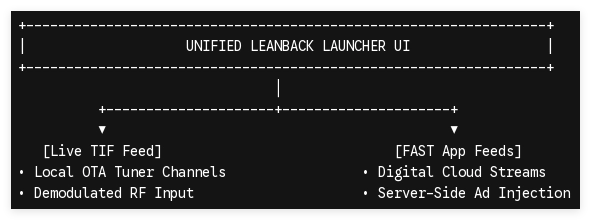
By mapping OTA tuner inputs, custom M3U8 streams, and partner FAST application hooks into a single database file, the user navigates a single, cohesive on-screen channel guide. This increases engagement metrics and unlocks direct programmatic ad-space monetization on the main home screen matrix.
Control Your Content Distribution Layer
Deploying connected media devices requires a hardware platform built to handle complex stream processing, hardware-level decoding, and deep system UI customization without stability degradation.
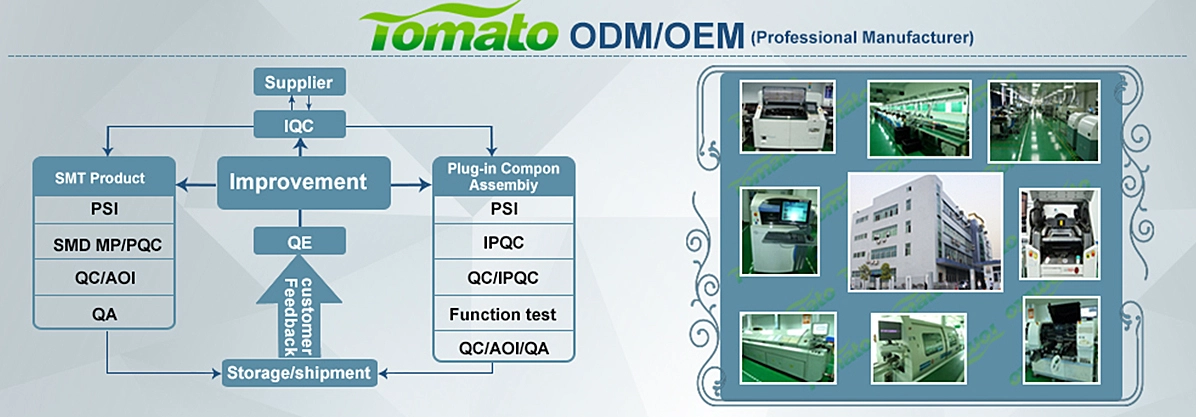
As a specialist B2B OEM/ODM partner in the cross-border electronics sector, SZTomato manufactures high-performance TV Box solutions and Digital Signage players designed from the PCBA layer up for enterprise deployment. We build custom firmware builds with pre-configured TIF layers, integrated ATSC 3.0/DVB-T2 tuner pipelines, and optimized AOSP launchers to help you deploy large-scale, fee-free content networks efficiently. Contact our hardware engineering team today to submit your RFQ and review our technical deployment schematics.
