
Rockchip RK3539 Deep Dive: Cost-Optimized 4K SoC Powering Next-Gen IPTV and Smart TV Boxes
Introduction: A Market Driven by Efficiency, Stability, and Cost Control
The global IPTV and OTT device market is undergoing a structural shift. While high-end AI-powered edge computing platforms are expanding rapidly, the majority of global shipments still depend on cost-efficient, stable, and long-lifecycle multimedia SoCs.
In this context, the Rockchip RK3539 emerges as a strategically positioned solution targeting mainstream 4K streaming devices, including:
- IPTV set-top boxes
- OTT streaming players
- Android TV Boxes
- Commercial digital signage systems
- Linux-based multimedia terminals
Why RK3539 Matters in 2026
Unlike flagship AI SoCs targeting edge computing or smart surveillance, RK3539 focuses on a more practical and commercially critical segment:
Delivering stable 4K multimedia performance at optimized cost for large-scale global deployment.
Its positioning reflects three key industry realities:
- Mass-market IPTV/OTT devices still dominate global shipments
- AV1 decoding is becoming a baseline requirement for streaming platforms
- Manufacturers are under increasing pressure to reduce BOM without sacrificing user experience
RK3539 sits directly in this intersection.
Official RK3539 Architecture Overview
The RK3539 is a 64-bit quad-core multimedia SoC based on ARM Cortex-A55 architecture, designed for efficient video processing and low-power operation in consumer and commercial streaming devices.
It integrates a balanced system architecture consisting of:
- CPU subsystem optimized for energy efficiency
- GPU engine for UI rendering and video acceleration
- Dedicated multimedia decoding pipeline
- Modern connectivity interfaces for streaming applications
CPU Architecture: Quad-Core Cortex-A55 Efficiency Core
At the core of RK3539 is a quad-core ARM Cortex-A55 CPU, a widely adopted architecture optimized for:
- Low power consumption
- Stable multi-tasking performance
- Long-duration video playback
- Background system services
Compared with previous-generation Cortex-A53 designs, Cortex-A55 provides:
- Improved IPC (Instructions Per Clock) efficiency
- Better thermal behavior under sustained workloads
- Higher performance-per-watt ratio
For IPTV and OTT devices, this translates into a critical advantage:
Stable 4K playback without thermal throttling during long operating cycles.
This is particularly important for:
- 24/7 digital signage systems
- Hotel TV systems
- Retail advertising players
- Home streaming boxes with continuous usage
GPU and UI Rendering Engine
RK3539 integrates a modern Mali-series GPU designed for:
- Smooth Android UI rendering
- 4K HDR video overlays
- Application animation performance
- Lightweight 3D acceleration
While not positioned as a gaming-focused GPU, it is optimized for:
- Media-centric UI frameworks
- Streaming application interfaces
- Digital signage UI systems
This ensures consistent visual responsiveness across Android-based and Linux-based deployments.
Multimedia Engine: AV1-Ready 4K Video Pipeline
One of RK3539’s most important features is its hardware video decoding pipeline, which supports modern compression standards including:
- AV1
- H.265 (HEVC)
- H.264
- VP9
This is critical because global streaming platforms are rapidly transitioning toward AV1 encoding to reduce bandwidth consumption.
For OEM manufacturers, AV1 support means:
- Lower bandwidth requirements for end users
- Better playback stability in low-network environments
- Longer product lifecycle compatibility
RK3539 is therefore aligned with the next generation of global streaming standards.
Memory, Storage, and System Flexibility
RK3539 supports modern memory architectures suitable for commercial devices:
- DDR3 / DDR4 / LPDDR4X support
- Flexible storage configurations via eMMC and NAND options
- Optimized memory bandwidth for 4K streaming workloads
This flexibility allows OEM/ODM manufacturers to design multiple product tiers:
- Entry-level IPTV boxes
- Mid-range Android TV streaming devices
- Commercial signage players with extended uptime
Connectivity and System Interfaces
RK3539 is designed for modern networked multimedia environments with:
- Gigabit Ethernet support
- Dual-band WiFi capability (platform dependent)
- Bluetooth connectivity support
- HDMI 2.1 output interface
- USB expansion for peripherals
These interfaces make it suitable for both:
- Consumer streaming devices
- Commercial embedded systems
Operating System Ecosystem
RK3539 supports multiple operating environments depending on OEM implementation:
- Android TV / Android AOSP
- Linux distributions (Ubuntu, Debian, Buildroot)
This dual ecosystem capability is critical for OEM/ODM manufacturers like SZTomato because it enables:
- Consumer entertainment products (Android-based)
- Industrial and commercial applications (Linux-based)
OEM/ODM Value Perspective (SZTomato Insight)
For SZTomato and similar OEM/ODM factories, its value lies in:
- Stable supply chain availability
- Predictable thermal performance
- Optimized BOM cost structure
- Flexible system customization (Android/Linux)
- Mature ecosystem support for IPTV/OTT applications
In real-world manufacturing, these factors often matter more than peak benchmark performance.
Performance Positioning: Built for Stable 4K Streaming, Not Theoretical Benchmarks
The Rockchip RK3539 is not designed to compete in the high-performance AI or gaming chipset category. Its engineering priority is very clear: stable, efficient, and scalable multimedia delivery at 4K resolution.
In real-world IPTV and OTT deployments, performance is not defined by peak CPU frequency alone. It is determined by:
- Frame stability during long playback cycles
- Thermal consistency under 24/7 operation
- Network streaming reliability under variable bandwidth
- Decoder efficiency for modern codecs such as AV1
- UI responsiveness in Android-based environments
RK3539 is optimized precisely around these operational conditions.
Thermal and Power Efficiency Advantage
Based on Cortex-A55 architecture and a refined multimedia pipeline, RK3539 demonstrates strong efficiency characteristics:
- Lower sustained power consumption compared to older A53-based platforms
- Reduced heat generation during continuous 4K playback
- More stable performance under enclosure-constrained designs (plastic TV boxes, slim signage players)
For OEM/ODM manufacturers like SZTomato, this translates into:
Fewer thermal redesign iterations, lower cooling costs, and higher production stability in mass manufacturing.
Competitive Landscape: RK3539 vs Mainstream IPTV SoCs
To understand RK3539’s positioning, it is necessary to compare it with widely used SoCs in the global TV box and IPTV ecosystem.
Core Specification Comparison
| Category | RK3539 | Amlogic S905X4 | RK3566 | HiSilicon Hi3798MV300 |
|---|---|---|---|---|
| CPU | Quad Cortex-A55 | Quad Cortex-A55 | Quad Cortex-A55 | Quad Cortex-A53 |
| GPU | Mali-G310 series | Mali-G31 MP2 | Mali-G52 | Mali-T720 |
| Video Decode | 4K60 AV1 / H.265 / VP9 | 4K60 AV1 / H.265 | 4K60 H.265 | 4K60 H.265 |
| Network | Gigabit Ethernet | Gigabit Ethernet | Gigabit Ethernet | Gigabit Ethernet |
| OS Support | Android / Linux | Android TV | Android / Linux | Linux / IPTV |
| Market Position | New-generation cost-efficient SoC | Mature mainstream | Industrial crossover | Legacy IPTV platform |
Key Insight From the Comparison
RK3539 is not positioned as a disruptive high-end chip. Instead, it represents a generational refinement of mainstream IPTV architecture.
Compared with S905X4:
- Similar CPU class (A55-based)
- More optimized multimedia pipeline
- Stronger focus on cost-performance balance in next-gen deployments
Compared with RK3566:
- RK3566 focuses on industrial flexibility (PCIe, SATA, edge expansion)
- RK3539 prioritizes media experience and video pipeline efficiency
Why This Matters for OEM/ODM Manufacturers
From a manufacturing strategy perspective, RK3539 fits into a very specific segment of the global supply chain:
- High-volume IPTV/OTT devices
- Cost-sensitive Android TV boxes for export markets
- Commercial signage players requiring long lifecycle stability
- Linux-based lightweight media terminals
For OEM factories like SZTomato, this allows:
- Faster product iteration cycles
- Lower BOM cost per unit
- Easier thermal and structural design standardization
- Broad compatibility across Android and Linux ecosystems
Application Scenario 1: IPTV and OTT Streaming Devices
RK3539 is particularly well suited for global IPTV and OTT markets where:
- 4K streaming is now baseline expectation
- AV1 codec adoption is increasing rapidly
- End users demand stable playback over long sessions
Typical use cases include:
- YouTube 4K streaming devices
- Netflix 4K HDR playback boxes
- Regional IPTV operator terminals
- Subscription-based OTT platforms
Key advantages:
- Stable AV1 hardware decoding
- Low latency UI response
- Reduced buffering under moderate network conditions
- Long-term OS lifecycle compatibility
Application Scenario 2: Commercial Digital Signage Systems
In retail and commercial environments, RK3539 plays a strong role in:
- Advertising display systems
- Retail promotional screens
- Restaurant menu boards
- Transportation information displays
Key benefits:
- 24/7 continuous operation stability
- 4K video decoding with low CPU overhead
- Reliable playback scheduling systems
- Easy integration with CMS platforms
For OEM/ODM manufacturers, this segment is especially attractive due to:
High repeat order cycles and long-term deployment contracts.
Application Scenario 3: Linux-Based Embedded Multimedia Devices
RK3539 supports Linux-based environments, enabling its use beyond consumer TV boxes:
- Lightweight edge media servers
- IoT gateway devices with media capability
- Industrial monitoring displays
- Custom embedded multimedia terminals
This flexibility allows OEM manufacturers to extend the same hardware platform across multiple product categories.
Application Scenario 4: Entry-to-Mid Level Android TV Boxes
For global retail and wholesale markets, RK3539 is ideal for:
- Budget-friendly Android TV boxes
- Export-oriented streaming devices
- White-label IPTV hardware platforms
Its advantages include:
- Balanced cost-performance ratio
- Stable Android ecosystem support
- Wide compatibility with streaming applications
- Easy firmware customization for OEM brands
Strategic Positioning Summary
RK3539 is not a flagship SoC designed to compete with high-end AI platforms. Instead, it represents a highly optimized mainstream multimedia engine designed for scale.
Its value is defined by:
- Predictable performance
- Manufacturing efficiency
- Codec readiness (AV1)
- Long lifecycle suitability
- OEM adaptability
This makes it a practical choice for global ODM/OEM manufacturers focusing on volume deployment rather than niche high-performance computing.
From Chip to Product: Why RK3539 Matters Most at the System Level
In the global TV box and IPTV industry, chipset capability alone does not determine product success. What truly defines competitiveness is:
- System integration capability
- Firmware stability under long-term operation
- Hardware cost optimization
- Customization depth for different markets
- Supply chain consistency
The Rockchip RK3539 provides a stable foundation, but its real value is unlocked only when it is transformed into complete OEM/ODM solutions.
This is where manufacturers like SZTomato (Shenzhen Tomato Technology Co., Ltd.) play a decisive role.
SZTomato OEM/ODM Positioning: Beyond Standard TV Box Manufacturing
SZTomato operates not as a simple assembly factory, but as a full-stack engineering OEM/ODM provider covering:
- Hardware design (PCBA development)
- Firmware customization (Android / Linux)
- Industrial design (enclosure + thermal)
- System optimization (performance tuning)
- Mass production and quality control
- Global B2B export support
This end-to-end capability is critical when deploying RK3539-based products at scale.
System-Level Customization on RK3539 Platform
1. Android System Optimization
For IPTV and OTT devices, SZTomato typically delivers:
- Android AOSP customization (lean system build)
- Startup acceleration optimization
- Pre-installed streaming ecosystem integration (YouTube, Netflix, IPTV apps)
- UI/launcher customization for brand identity
- Background process control for memory efficiency
The goal is not just functionality, but consistent user experience across long usage cycles.
2. Linux System Integration
RK3539 also supports Linux-based deployments, enabling:
- Debian / Ubuntu embedded systems
- Buildroot lightweight firmware
- Custom media server configurations
- Edge gateway applications
This allows OEM clients to target industrial and commercial markets beyond consumer TV boxes.
3. Firmware-Level Stability Engineering
One of the most critical differentiators in mass production is firmware stability.
SZTomato applies:
- Kernel-level optimization for video decoding pipelines
- Driver tuning for HDMI, WiFi, and Ethernet stability
- Memory leak prevention for 24/7 operation scenarios
- Thermal throttling control tuning for enclosure designs
This ensures that RK3539 devices maintain stable performance in real-world deployment environments such as:
- Hotel IPTV systems
- Retail signage networks
- Long-duration streaming devices
Hardware Engineering Capability: Turning RK3539 Into a Product Platform
1. PCB Design and Cost Optimization
SZTomato designs RK3539-based PCBA solutions with focus on:
- Minimal BOM cost without compromising stability
- Optimized signal routing for HDMI 2.1 and USB interfaces
- Scalable memory configurations (DDR / LPDDR options)
- Modular WiFi/BT integration
This enables OEM clients to define multiple product tiers on a single chipset platform.
2. Thermal Design for 24/7 Operation
For IPTV and signage applications, thermal stability is critical.
SZTomato engineering solutions include:
- Passive cooling optimization (fanless designs)
- Aluminum alloy heat dissipation structures
- Airflow-optimized enclosure architecture
- Power efficiency tuning at firmware level
Result:
Stable operation under continuous 24/7 workloads without performance degradation.
3. Industrial Design and Branding Customization
OEM customers can fully customize:
- Device enclosure design
- Material selection (ABS / metal / hybrid)
- Logo branding and packaging
- Remote control design and UI alignment
This is particularly important for:
- IPTV operators
- Telecom carriers
- Retail electronics brands
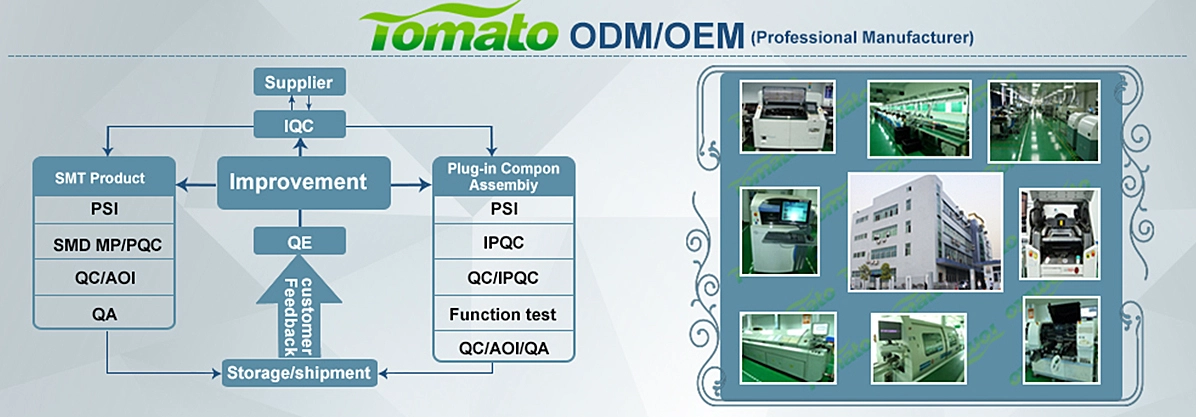
Mass Production and Supply Chain Reliability
RK3539 benefits significantly from Rockchip’s mature ecosystem, but production success depends on execution.
SZTomato provides:
- Stable large-scale manufacturing capability
- Multi-line production support
- Strict QA testing for 4K playback scenarios
- Burn-in testing for long-duration stability validation
- Export-ready compliance support for global markets
This ensures consistent product quality across batches, which is essential for OEM buyers.
OEM Market Strategy: How RK3539 Fits Global Demand
From a commercial perspective, RK3539-based products are positioned in:
1. Entry-to-Mid IPTV Market
- Cost-sensitive operators
- Mass deployment in emerging markets
- Subscription-based streaming platforms
2. Digital Signage Networks
- Retail chains
- Quick-service restaurants
- Transportation hubs
3. White-Label Android TV Boxes
- E-commerce brands
- Cross-border B2C sellers
- Regional distributors
4. Linux Embedded Media Devices
- Industrial gateways
- Lightweight edge terminals
- Smart content delivery nodes
RK3539’s strength lies in enabling high-volume standardized product lines with flexible customization layers.
Strategic Insight: Why OEM Capability Matters More Than Chip Performance
In 2026, the global TV box industry is no longer driven by chip race alone. It is driven by:
- Supply chain stability
- Firmware maturity
- Customization speed
- Brand differentiation capability
- Total cost of ownership
RK3539 provides a balanced hardware foundation, but OEM/ODM engineering determines whether a product succeeds in global markets.
SZTomato’s value lies in bridging this gap between silicon capability and commercial deployment.
