Set-Top Box (STB) OEM/ODM Guide
B2B Engineering Blueprint: Set-Top Box (STB) OEM/ODM Customization Guide
The international commercial streaming and managed media industry is navigating a critical hardware transition. Content delivery networks (CDNs) have broadly migrated to AV1 encoding to achieve up to a 30% reduction in bandwidth consumption compared to legacy H.264/H.265 streams. Furthermore, next-generation infrastructure deployments are beginning to introduce Versatile Video Coding (VVC/H.266). This shifting software landscape exposes severe bottlenecks in generic, off-the-shelf consumer hardware. When subjected to continuous, high-bitrate enterprise workloads, retail streaming boxes experience rapid component degradation, frame drops, and system freezes.
For telecom operators, hotel system integrators, and commercial digital signage engineers, mitigating these field failures requires abandoning retail supply lines. True commercial viability demands custom-engineered Set-Top Box (STB) hardware built on targeted silicon selection, hardened firmware architectures, and specialized physical board modifications.
1. Silicon Selection: Decoupling Compute Requirements from Unit Economics
The underlying System-on-Chip (SoC) defines the boundaries of an STB deployment, governing video decoding capabilities, thermal performance, and operating system longevity. Rather than purchasing over-engineered components or under-powered legacy silicon, commercial operators must audit target applications against clear hardware tiers.
The 2026 SoC Tier Landscape
- Mid-Range Utility Node (Amlogic S905X4): Built on a 12nm process, this quad-core Cortex-A55 processor remains a reliable, cost-controlled standard for mainstream 4K projects. It features native hardware-accelerated AV1 decoding up to 4K at 60 frames per second, making it ideal for stable, single-zone deployments where AI upscaling is unnecessary.
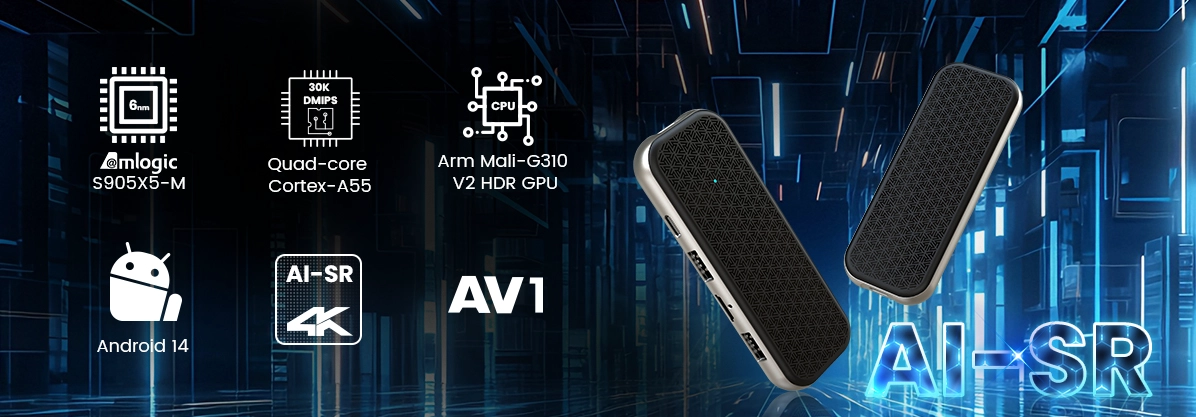
- Next-Gen Flagship Efficiency (Amlogic S905X5 / S905X5M): This platform represents the new benchmark for enterprise OTT and managed hospitality networks. Fabricated on an advanced 6nm FinFET process node, it provides superior power efficiency, reducing internal thermal emissions significantly. Crucially, it integrates AI Super-Resolution (AI-SR) to upscale 1080p source video streams to crisp 4K directly at the edge, alongside native hardware-accelerated H.266 decoding blocks.
- High-Compute Edge AI Tier (Rockchip RK3588): Designed for complex multi-display systems, interactive retail kiosks, and video walls. With an octa-core architecture (4× Cortex-A76 and 4× Cortex-A55) and an integrated 6 TOPS Neural Processing Unit (NPU), this chip handles simultaneous multi-channel 8K playback and local computer vision analytics.
| Technical Metric | Amlogic S905X4 | Amlogic S905X5 | Rockchip RK3588 |
|---|---|---|---|
| Primary Target | Budget 4K OTT | Premium IPTV / Hospitality | Edge AI / Multi-Display |
| Fabrication Node | 12nm | 6nm FinFET | 8nm LP |
| Max Decoding Ceil | 4K @ 60fps | 4K @ 60fps / 8K support | 8K @ 60fps / 4K @ 120fps |
| AI Super-Resolution | No | Integrated (Inline AI-SR) | Dependent on custom NPU code |
| Codec Architecture | AV1, H.265, VP9 | AV1, H.266 (VVC), H.265 | AV1, H.265, VP9 |
2. PCBA Architectural Customization & Hardware Modification
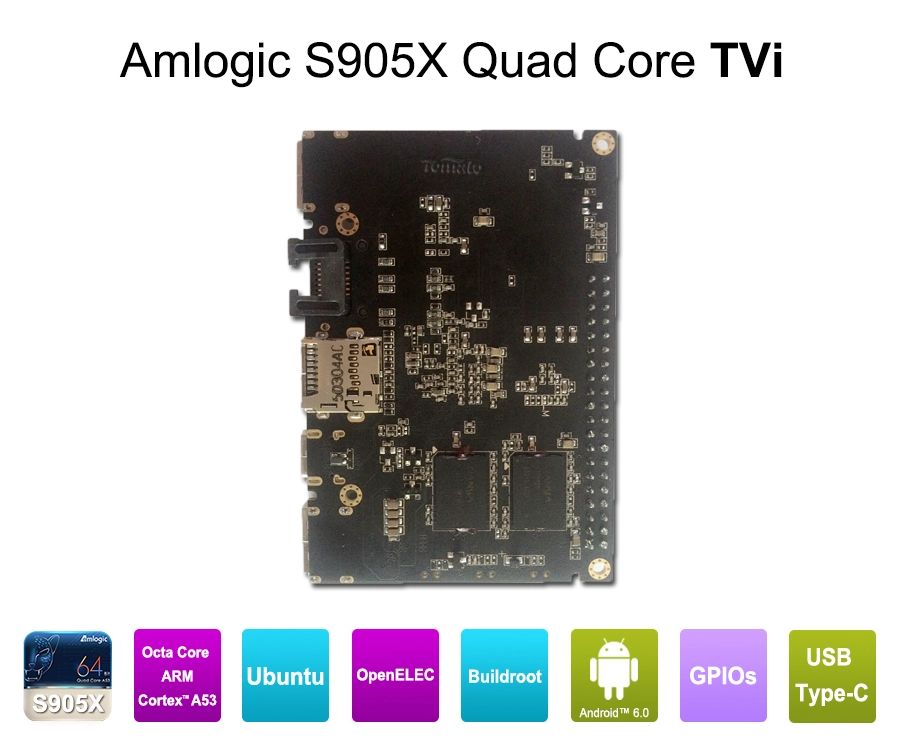
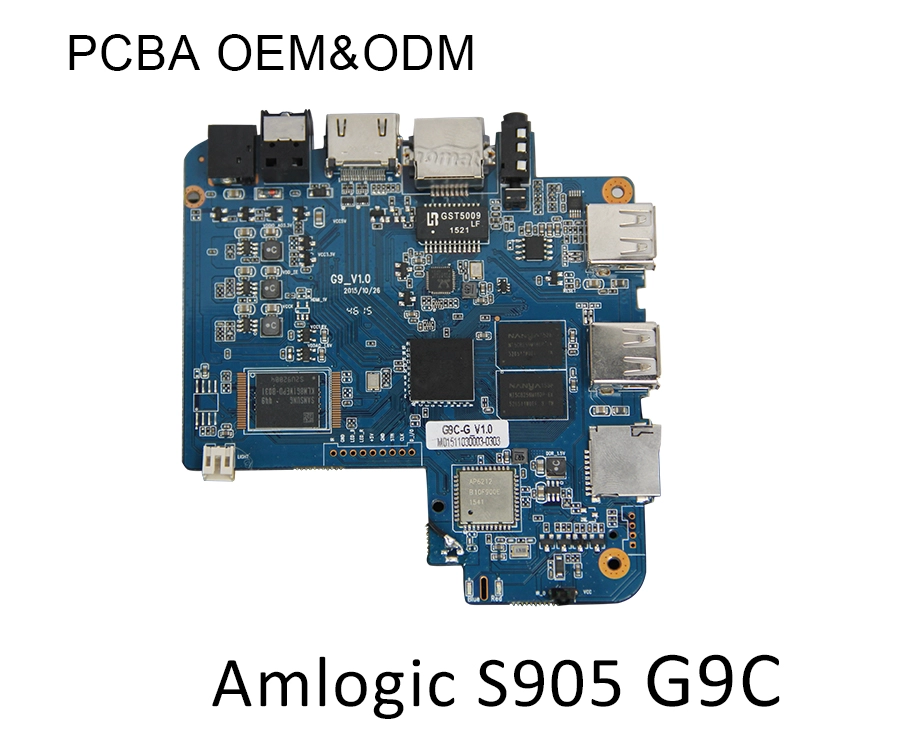
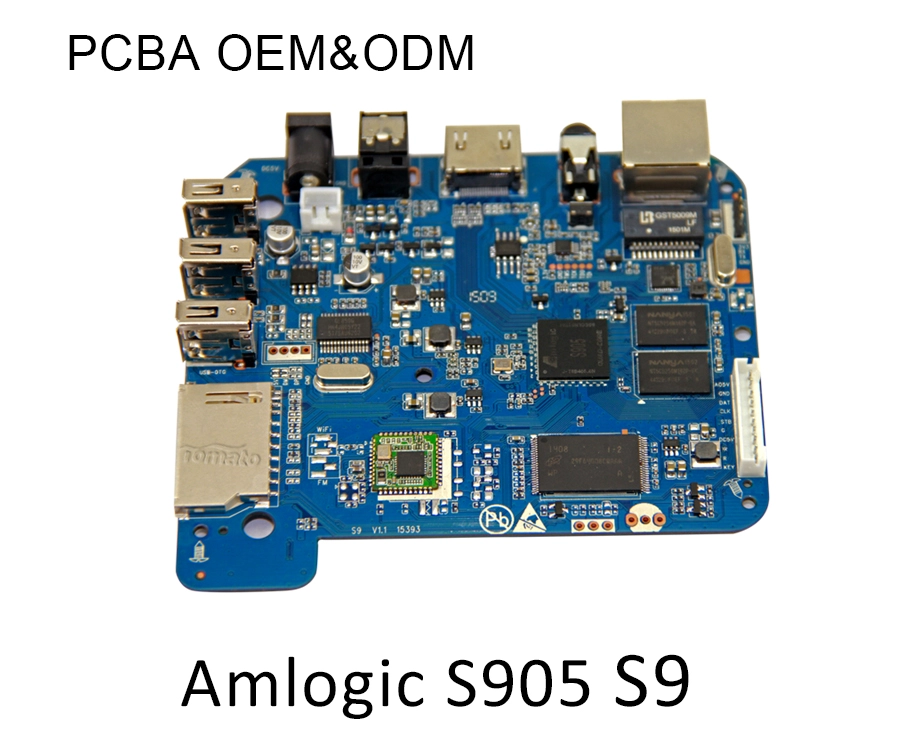
True ODM engineering begins at the Printed Circuit Board Assembly (PCBA) level. Off-the-shelf consumer electronics layouts prioritize minimal bill-of-materials (BOM) costs over long-term reliability. Commercial engineering requires upgrading components to survive continuous 24/7/365 operations.
Power Subsystems and Hardware Watchdogs
Consumer boxes use basic power inputs prone to failure under volatile commercial power grids. Industrial-tier ODM specifications replace these with wide-voltage DC input protection or integrated Power over Ethernet (PoE/PoE+) lines, routing up to 25.5W of power and high-speed data over a single Cat6 cable.
Furthermore, fields deployments cannot depend on human intervention for hard resets. True B2B hardware incorporates a dedicated physical hardware watchdog circuit on the PCBA. This independent integrated circuit (IC) continuously polls the operating system kernel via a custom GPIO ping; if a system freeze or kernel panic occurs, the watchdog cuts power to the SoC, executing an automated cold reboot within milliseconds.
Structural Thermal Engineering
Thermal throttling ruins content playback quality. Standard low-profile metal plates backed by cheap thermal tape fail when enclosed inside tight hospitality TV cavities or metal kiosk housings. Enterprise ODM configurations require thick-gauge aluminum or copper heatsinks mechanically secured directly to the PCBA using spring-loaded screws.
For high-demand edge computing or dense outdoor installations, the structural enclosure itself should be engineered as an active aluminum alloy heat dissipation block, maintaining critical junction temperatures well below 85°C.
3. Firmware Engineering: Custom Launchers, Security, and OTA Ecosystems
Consumer-facing operating systems present immediate security vulnerabilities and operational friction in commercial environments. An un-optimized Android Open Source Project (AOSP) or Android TV build allows end-users to alter core device configurations, connect unapproved peripherals, or exit critical application loops.
Deep OS Kernel Optimization
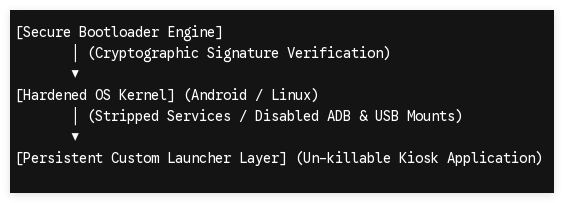
OEM/ODM engineering teams must restructure the compilation parameters of the target Android or Linux kernel image before deployment:
-
Service Stripping: Completely remove non-essential background daemons, system services, and diagnostic toolsets to minimize CPU cycles and memory usage.
-
Peripheral Hardening: Lock down external USB mount permissions and disable the Android Debug Bridge (ADB) over network and physical ports to block unauthorized firmware extraction.
-
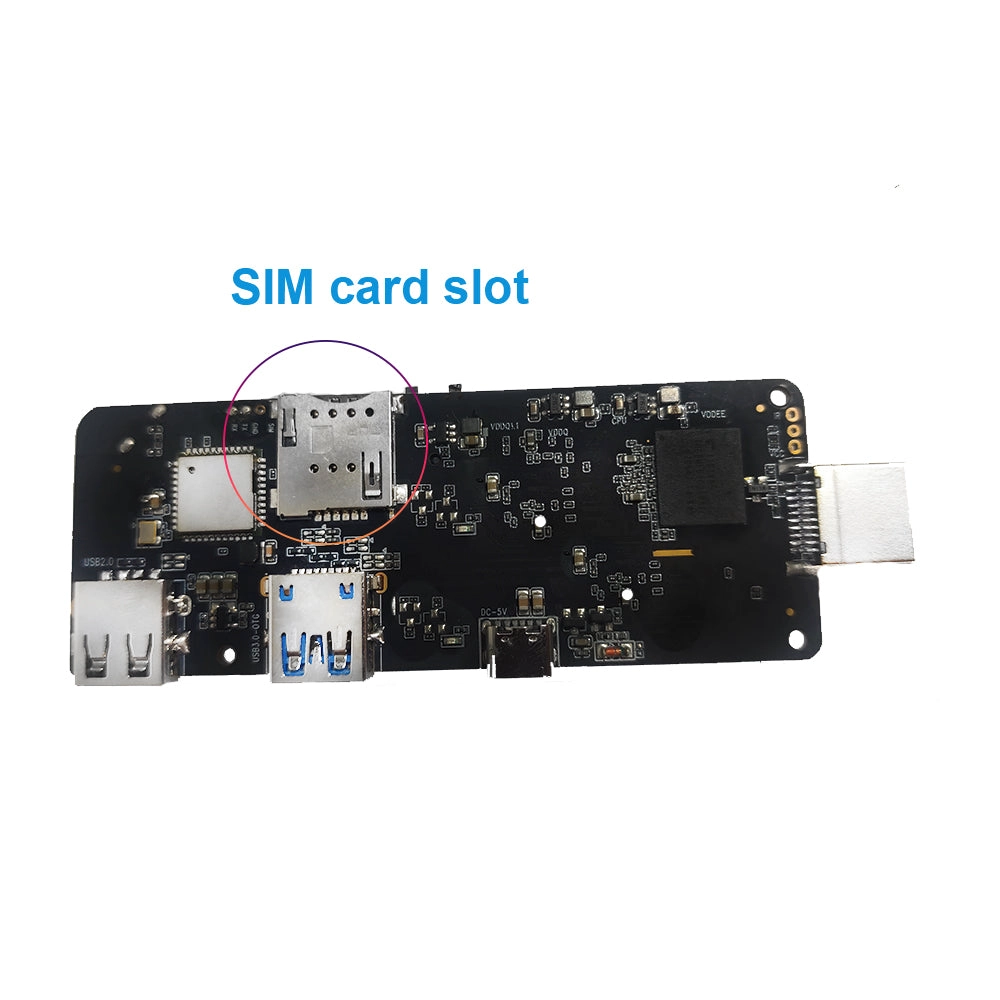
Driver Injection: Compile specialized drivers directly into the kernel to handle enterprise components, including RS-232/RS-485 serial ports, industrial touch panel controllers, and external 4G LTE/5G cellular modules with dual SIM configurations.
Custom UI/UX Launcher Integration
To protect the branding environment and prevent user tampering, the client’s custom user interface must be hardcoded directly into the system partition image as the default, un-killable system launcher. The operating system is structured to boot directly into this application loop in under 20 seconds from cold start, bypassing all native settings configurations.
Enterprise OTA System Infrastructure
Commercial networks cannot be manually updated using physical flash drives. System integrators require a private, enterprise-tier Over-The-Air (OTA) firmware update system. This infrastructure allows engineers to push delta updates (patching only changed blocks) silently to specific device clusters based on regional MAC addresses, preventing network congestion and maintaining absolute system uniformity.
Technical Security and Digital Rights Management (DRM)
Premium commercial content delivery—whether for hotel guest room entertainment systems or premium internal broadcasting networks—requires strict encryption compliance.
To stream high-definition 4K content from major global platforms, the hardware must feature factory-provisioned cryptographic keys that establish a verified Widevine L1 and PlayReady Digital Rights Management framework.
During the ODM manufacturing process, these specialized security certificates must be injected into a secure hardware enclave (TrustZone) at the silicon factory level. If the hardware layout lacks this hardware-enforced root-of-trust, stream quality will be capped at a low-resolution 480p standard, neutralizing the value of premium 4K display panels.
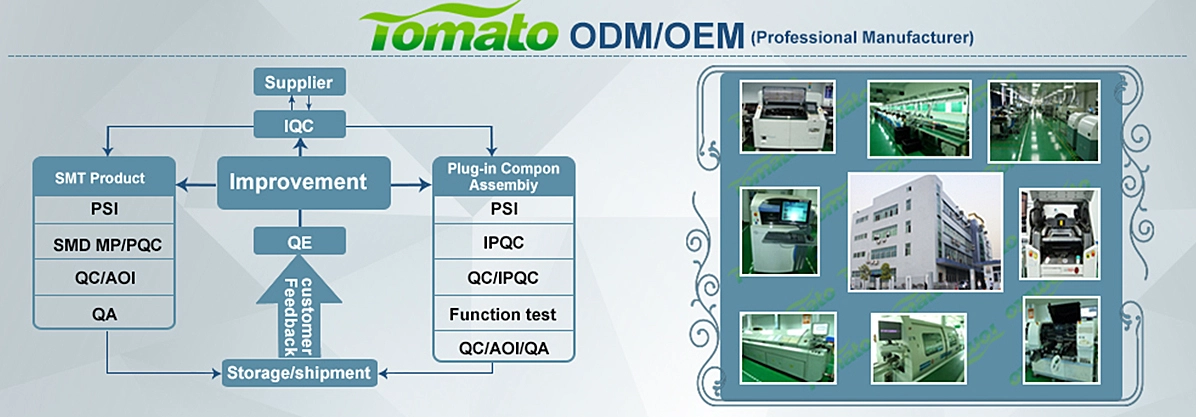
Choosing SZTomato for Enterprise OEM/ODM Hardware Execution
Transitioning from a prototype build to a massive global hardware deployment requires an experienced industrial manufacturing partner. Manual flashing, unverified silicon components, and un-optimized thermal designs create immediate field failures and ballooning maintenance costs.
SZTomato (www.sztomato.com) provides full-stack, comprehensive OEM/ODM Set-Top Box customization services optimized for the B2B cross-border electronics marketplace:
-
Full-Scale PCBA Re-Engineering: We modify consumer board footprints to introduce Gigabit Ethernet, hardware watchdogs, PoE modules, and integrated real-time clocks (RTC) with battery backups.
-
Firmware and Secure Kernel Development: Direct engineering access to the bootloader level. We deliver production units pre-flashed with your custom launcher applications, hardened kernel layers, private OTA update profiles, and secure factory-provisioned DRM keys.
-
Industrial Thermal Design: Every hardware casing is matched to its calculated thermal footprint, leveraging high-mass copper thermal paths to handle continuous 24/7 enterprise operation.
For B2B procurement managers, IPTV operators, and commercial system integrators requiring stable, scalable, and optimized hardware, contact the engineering team at SZTomato today to submit your product specification documentation and request tailored PCBA reference designs.