SoC-Based Signage vs Android TV Box
SoC-Based Signage vs Android TV Box: Which Architecture Fits Your Project?
The technical difference between SoC-based signage and an Android TV Box is no longer simply whether the media player is built into the display. The more important question is where the computing platform sits, who controls its firmware, and how much flexibility the deployment needs after installation.
A commercial SoC display integrates the processor, memory, storage and signage software directly into the panel. An Android TV Box places the computing platform outside the display and connects through HDMI. Both can decode 4K video, run cloud-based signage applications and support network content delivery, but they create very different procurement and engineering models.
For a single-brand retail deployment, integrated SoC signage can reduce installation complexity. For mixed-display fleets, interactive applications, customized firmware or projects requiring long-term hardware evolution, an external Android TV Box can provide substantially more engineering flexibility.
SoC Signage and Android TV Box Solve Different Hardware Problems
A SoC-based signage display combines the panel and media player into one commercial product. Samsung Tizen, LG webOS and Android-based commercial displays are examples of this architecture. There is no external player, HDMI cable or separate power adapter for the media engine.
An Android TV Box follows the opposite architecture:
Display + HDMI + external Android device + network
The display becomes largely independent of the computing platform. This distinction matters when a project has requirements beyond straightforward content playback.
| Technical factor | SoC-based signage | Android TV Box |
|---|---|---|
| Media player location | Integrated into display | External device |
| Display compatibility | Usually tied to display platform | Works with HDMI displays |
| Hardware replacement | Usually requires display service | Replace box independently |
| CPU/GPU selection | Determined by display manufacturer | Selectable by project |
| RAM/storage options | Usually fixed | Can be customized |
| Firmware control | Platform-dependent | High with OEM/ODM |
| Cooling design | Integrated into panel | Can be engineered separately |
| I/O expansion | Usually limited | HDMI, USB, LAN, RS-232, GPIO and others depending on design |
| Multi-brand deployment | More difficult | Straightforward |
| Hardware upgrade path | Tied to display generation | Box can be upgraded independently |
| Best fit | Standardized display fleets | Customized and scalable deployments |
The SoC approach reduces the number of physical components. The Android TV Box approach separates the display from the computing layer.
That separation is often valuable in B2B projects because the display lifecycle and computing lifecycle do not necessarily move at the same speed.
When SoC-Based Signage Makes More Sense
SoC signage is particularly practical when the project has a simple and standardized architecture.
Consider a retail chain deploying several hundred identical commercial displays. Every screen uses the same panel size, the same manufacturer, the same signage operating system and the same CMS. There is little need for custom hardware I/O or application-specific firmware.
In this environment, integrating the player into the display can simplify deployment.
There is no external enclosure to mount, no HDMI cable to secure and no separate media player that can be accidentally unplugged. Fewer external components also make the installation visually cleaner.
SoC signage becomes especially attractive when:
-
The display manufacturer is standardized.
-
Content requirements are primarily 2D graphics, video and HTML5.
-
The CMS already supports the display's operating system.
-
No specialized peripherals are required.
-
Hardware performance requirements are unlikely to increase.
-
The organization prefers a single display vendor.
The trade-off is platform dependency.
If the project standardizes on one display vendor's SoC architecture, the media-processing capability, memory configuration, OS version, firmware roadmap and application environment are largely determined by that vendor.
That may be acceptable for a fixed deployment. It becomes more restrictive when the project requires custom functionality.
The hidden cost of an integrated architecture
A display failure can also become a computing-platform problem.
With an external Android TV Box, the media player can usually be disconnected from one display and installed on another compatible HDMI display. With an integrated SoC display, the computing platform is physically part of the screen. Replacing the display may therefore also replace the media platform.
For a small installation, this may not matter.
For a long-life project involving multiple display sizes, different brightness levels or several display suppliers, the distinction becomes more important.
Why Android TV Box Architecture Gives Engineers More Control
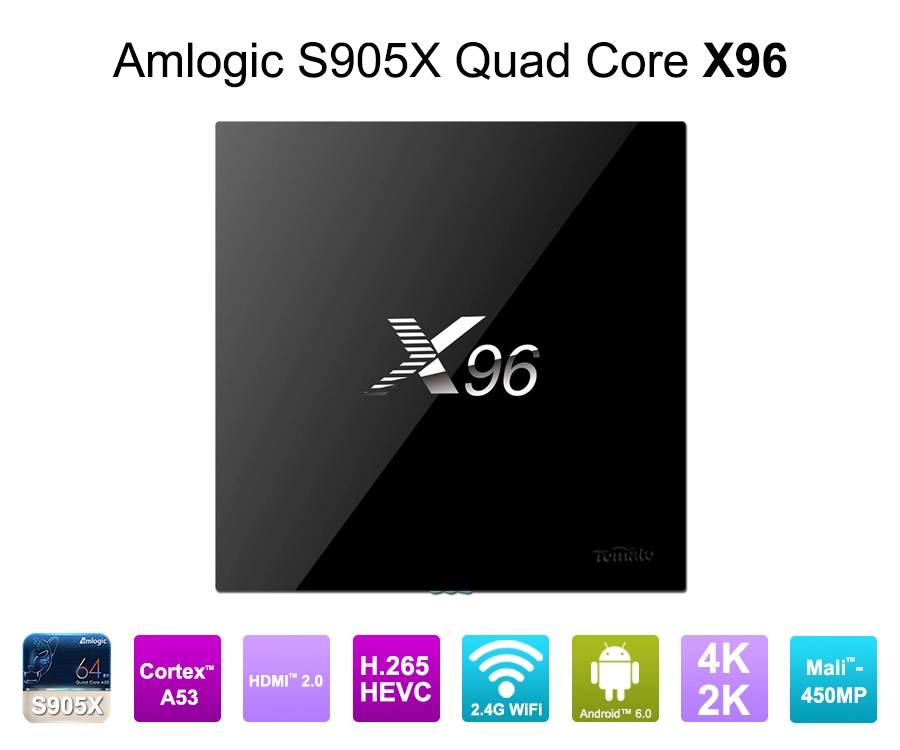
An Android TV Box should not be evaluated only as a consumer streaming device.
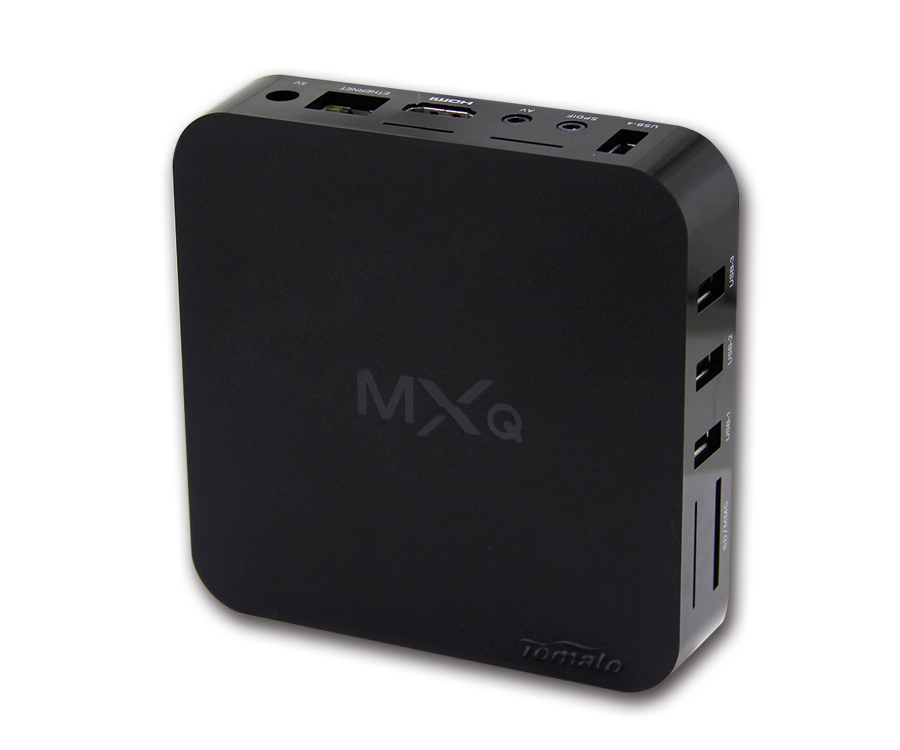
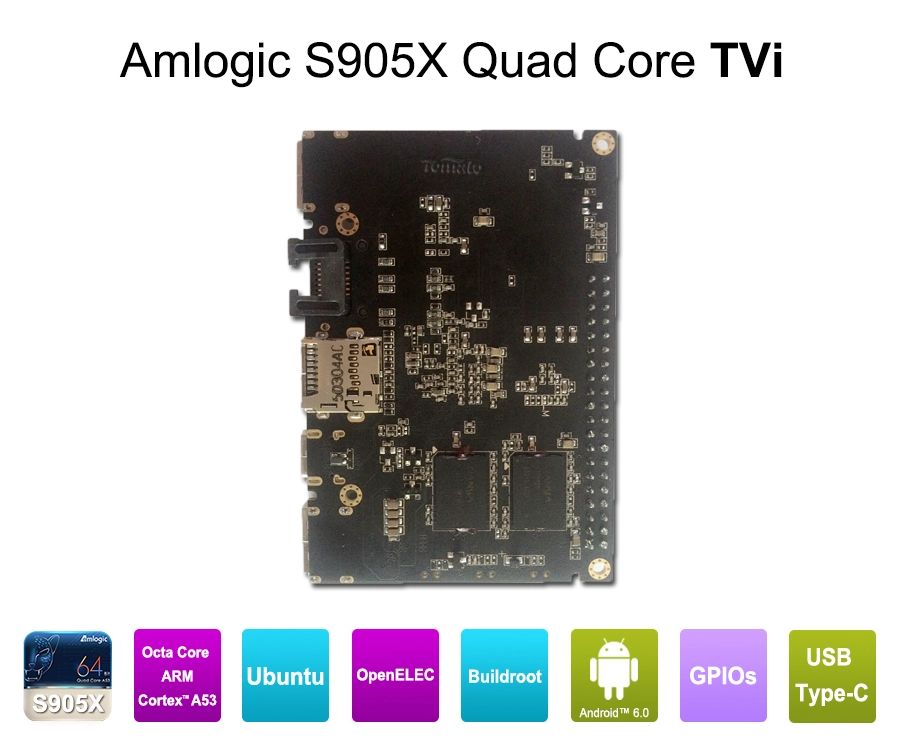
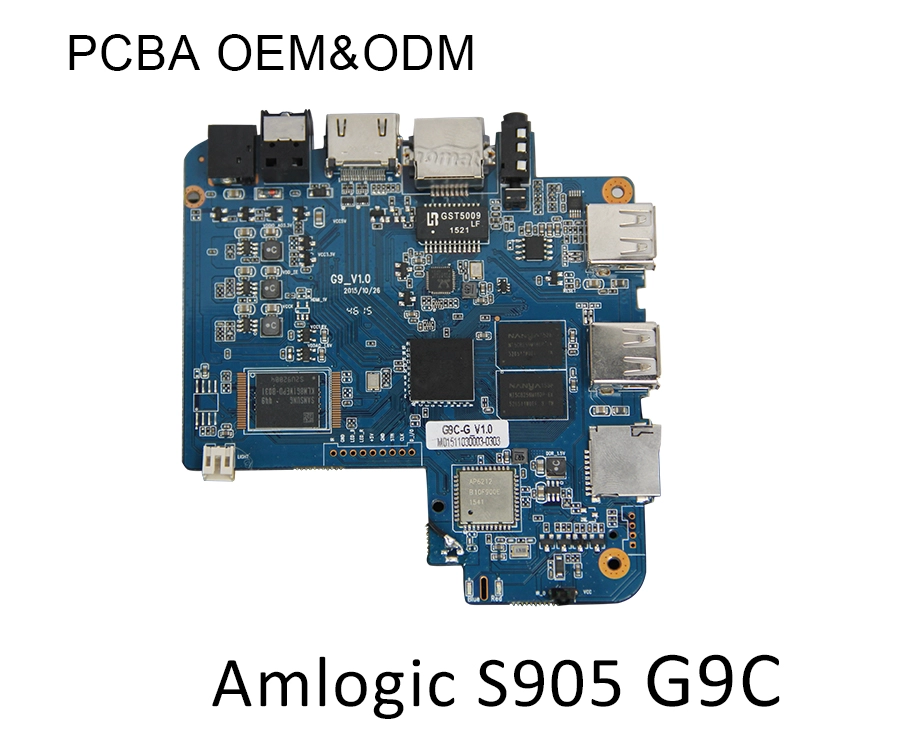
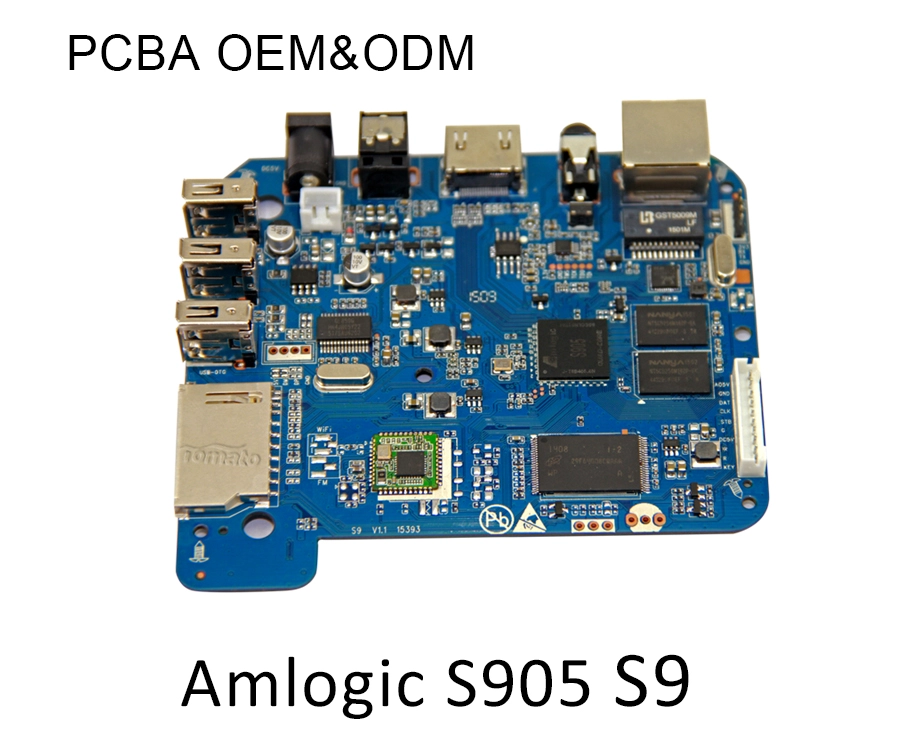
A properly engineered Android Box can function as a dedicated embedded computing platform for digital signage, kiosks, hospitality systems, IPTV, interactive displays and industrial multimedia applications.
The important question is therefore not:
“Can this Android TV Box play 4K video?”
Almost every current platform can.
The better question is:
“Can the hardware and firmware be modified around the actual application?”
That requires examining the complete system rather than the retail specification sheet.
1. SoC and PCBA selection
The SoC determines far more than CPU speed.
A project may need:
-
Hardware H.264/H.265 decoding
-
AV1 decoding
-
4K60 or 8K video processing
-
GPU acceleration
-
NPU-based AI processing
-
Multiple display outputs
-
MIPI-DSI or LVDS interfaces
-
High-speed USB
-
Gigabit Ethernet
-
Wi-Fi 6/6E
-
Bluetooth
-
RS-232
-
GPIO
-
PCIe or other expansion interfaces
For example, a simple advertising loop may require very little processing power, while an AI-enabled signage terminal could simultaneously decode video, render UI elements, process camera data and execute local inference.
Selecting the SoC first and designing the PCBA around the actual workload is therefore more reliable than selecting a generic Android TV Box and attempting to add functionality later.
2. Firmware and Android/Linux control
A consumer Android TV Box is normally optimized for entertainment applications.
A commercial signage device may need a completely different software stack.
The firmware can be configured for:
-
Automatic boot after power recovery
-
Boot-to-app behavior
-
Kiosk mode
-
Remote OTA updates
-
Device health monitoring
-
Scheduled reboot
-
Watchdog recovery
-
Local content caching
-
Offline playback
-
Network diagnostics
-
Custom launcher
-
Restricted user access
-
Custom UI/UX
-
CMS integration
-
Peripheral control
Commercial Android signage players commonly use controlled firmware rather than the uncontrolled update behavior associated with consumer devices. This distinction becomes important when hundreds of endpoints must maintain the same validated software environment.
For projects that require Linux, Android or a hybrid embedded environment, kernel-level optimization can also become part of the engineering scope.
A stable deployment may require optimization of the Android/Linux kernel, hardware drivers, GPU acceleration, video pipeline, network stack and power-management behavior rather than simply installing an APK.
The Real Decision: Content Playback or an Embedded Platform?
The strongest way to choose between SoC signage and an Android TV Box is to classify the workload.
Choose SoC-based signage when the project is:
Standardized
One display manufacturer, one OS and one CMS across the fleet.
Simple
The screen mainly plays scheduled videos, images, HTML5 pages and advertisements.
Installation-sensitive
The project prioritizes clean installation with minimal external hardware.
Vendor-controlled
The buyer is comfortable depending on the display manufacturer's firmware and hardware roadmap.
Consider an Android TV Box when the project requires:
Mixed displays
Samsung, LG, Philips, commercial monitors or standard HDMI displays may coexist in the same deployment.
Custom software
The project requires a dedicated launcher, customized UI/UX, kiosk workflow or proprietary application.
Specialized interfaces
RS-232, GPIO, USB peripherals, cameras, sensors or other industrial interfaces are part of the specification.
Higher processing requirements
Multi-zone 4K, 8K media, AI inference, computer vision or interactive applications require more CPU, GPU or NPU resources.
Long-term hardware flexibility
The customer wants to upgrade the computing platform without replacing every display.
OEM/ODM requirements
The buyer needs a custom enclosure, PCBA revision, memory/storage configuration, branding, firmware or production-specific hardware design.
This is where the difference between a generic Android TV Box supplier and an engineering-oriented OEM becomes significant.
How to Specify an Android TV Box for Commercial Signage
Procurement teams should avoid specifying the product only as “Android TV Box, 4GB RAM, 32GB ROM, 4K.”
That specification is too shallow for a commercial project.
A better technical specification should cover five layers.
Hardware layer
Define:
-
SoC model
-
CPU architecture
-
GPU
-
NPU performance where applicable
-
RAM type and capacity
-
eMMC/UFS capacity
-
HDMI version and output resolution
-
Ethernet speed
-
Wi-Fi generation
-
Bluetooth version
-
USB configuration
-
Serial interfaces
-
GPIO
-
Camera interfaces where required
Video layer
Define the actual workload rather than only maximum resolution.
Specify:
-
Codec support
-
AV1/H.265/H.264 requirements
-
Maximum decode resolution
-
Maximum frame rate
-
HDR requirements
-
Multi-stream requirements
-
Hardware encoding requirements
-
Video-wall requirements
AV1 support, for example, should be treated as a codec capability requirement rather than a marketing checkbox. The project should verify hardware decoding, supported profiles, resolution, frame rate and the software media pipeline before committing to a platform.
Software layer
Specify:
-
Android version or Linux distribution
-
AOSP or Android TV architecture
-
Kernel version requirements
-
Device-owner/kiosk requirements
-
Custom launcher
-
OTA mechanism
-
Remote device management
-
Application auto-start
-
Offline caching
-
Logging
-
Factory reset behavior
Security layer
Commercial deployments may also require consideration of secure boot, firmware signing, application permissions, encrypted communications and DRM requirements.
For content platforms involving protected streaming media, HDCP and DRM compatibility must be validated as part of the complete signal chain rather than assumed from the Android version alone.
Thermal and mechanical layer
24/7 signage is not the same workload as two hours of home entertainment.
Continuous decoding, networking and rendering can create sustained thermal load. A commercial Android Box may therefore require:
-
Larger thermal spreaders
-
Customized heatsinks
-
Optimized PCB component placement
-
Improved airflow
-
Thermal throttling control
-
Fanless industrial cooling
-
Enclosure ventilation
-
Temperature monitoring
Thermal design should be validated under the actual ambient temperature and continuous workload, not only during a short benchmark.
This is an area where PCBA engineering and enclosure engineering directly affect system reliability.
Where OEM/ODM Engineering Changes the Equation
For a standard consumer deployment, buying an off-the-shelf Android TV Box may be sufficient.
For a commercial project, the box itself can become part of the system architecture.
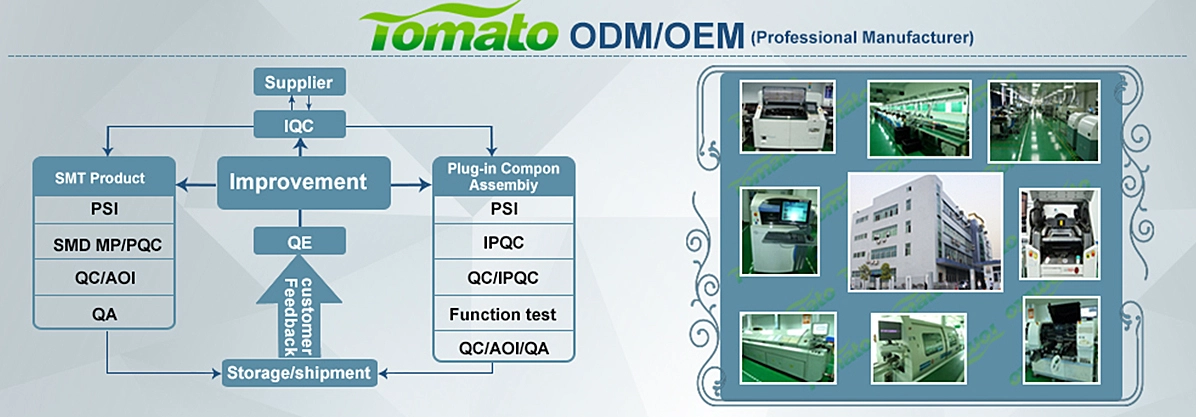
SZTomato supports customization at the hardware and firmware levels, including PCBA hardware modification, SoC/platform selection, memory and storage configuration, interface changes, custom enclosure development, SDK/API integration and custom UI/UX firmware.
That approach is useful when a project needs to combine several requirements that are difficult to satisfy with a retail Android TV Box.
For example, a system integrator may need an Android-based signage terminal with Gigabit Ethernet, multiple USB ports, RS-232 control, a custom boot interface, automatic OTA updates, a proprietary CMS API and enhanced thermal performance for continuous operation.
The correct solution is not necessarily a more expensive retail box.
It is an appropriately engineered embedded platform.
The same principle applies to specialized cooling. A device installed behind a high-brightness commercial display, inside a cabinet or in an industrial enclosure can face very different thermal conditions from a residential TV Box. Cooling architecture should therefore be part of the OEM design rather than an afterthought.
SoC Signage vs Android TV Box: The Procurement Decision
The choice should ultimately follow the architecture of the project.
If the project needs a standardized display with straightforward content playback and minimal installation complexity, an integrated SoC display can be an efficient architecture.
If the project requires hardware independence, custom firmware, mixed-display compatibility, specialized I/O, AI processing, higher performance or a longer hardware upgrade path, an Android TV Box provides a more modular foundation.
The important distinction is not “SoC versus Android.”
Both are based on SoC technology.
The real distinction is integrated computing versus modular computing.
For B2B procurement managers and system integrators, the specification should therefore begin with the application workload, deployment environment and five-year support strategy—not with a consumer product's RAM and storage numbers.
When the project requires a custom Android TV Box rather than another generic streaming device, SZTomato can support the engineering process from SoC and PCBA configuration through SDK/API integration, firmware customization, thermal design and production.
The objective is not simply to make an Android TV Box play content.
It is to build a stable computing platform around the customer's signage application.