
What are Android Mini PCs?
What Are Android Mini PCs? A Technical Guide to ARM Computing
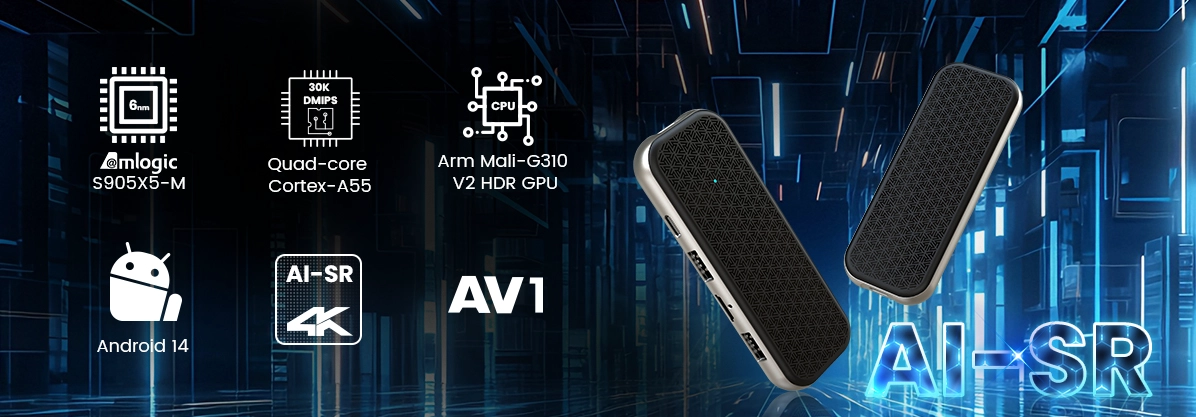
The definition of an Android Mini PC is changing as ARM SoCs move beyond basic media playback into edge AI, digital signage, industrial control, POS, smart retail, and managed enterprise computing. Current platforms such as Rockchip RK3588 combine octa-core ARM CPUs, Mali GPUs and dedicated NPU acceleration, while newer Amlogic platforms add hardware AV1 decoding and AI-oriented video processing.
That shift matters because an Android Mini PC is no longer simply a smaller Android TV Box.
For B2B applications, it is better understood as a compact ARM computing platform running Android or Linux, with configurable hardware, firmware, connectivity, and application interfaces.
The distinction becomes important when a deployment involves hundreds or thousands of devices. At that scale, CPU specifications are only one part of the engineering equation. PCBA architecture, thermal performance, kernel stability, firmware ownership, OTA infrastructure, peripheral interfaces, and long-term component availability determine whether the platform can operate reliably in the field.
What Is an Android Mini PC?
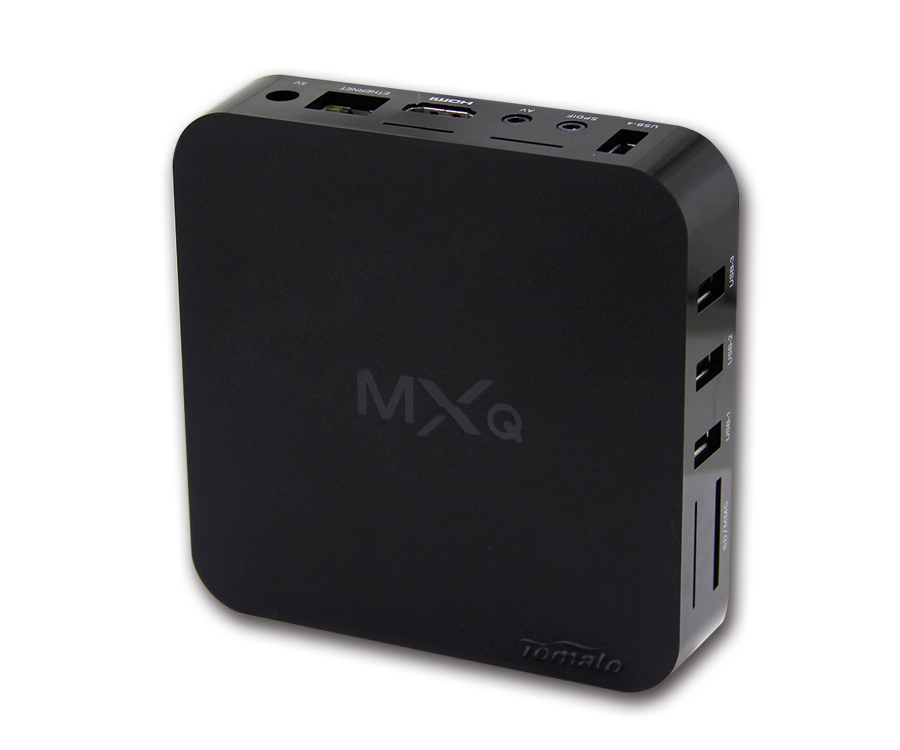
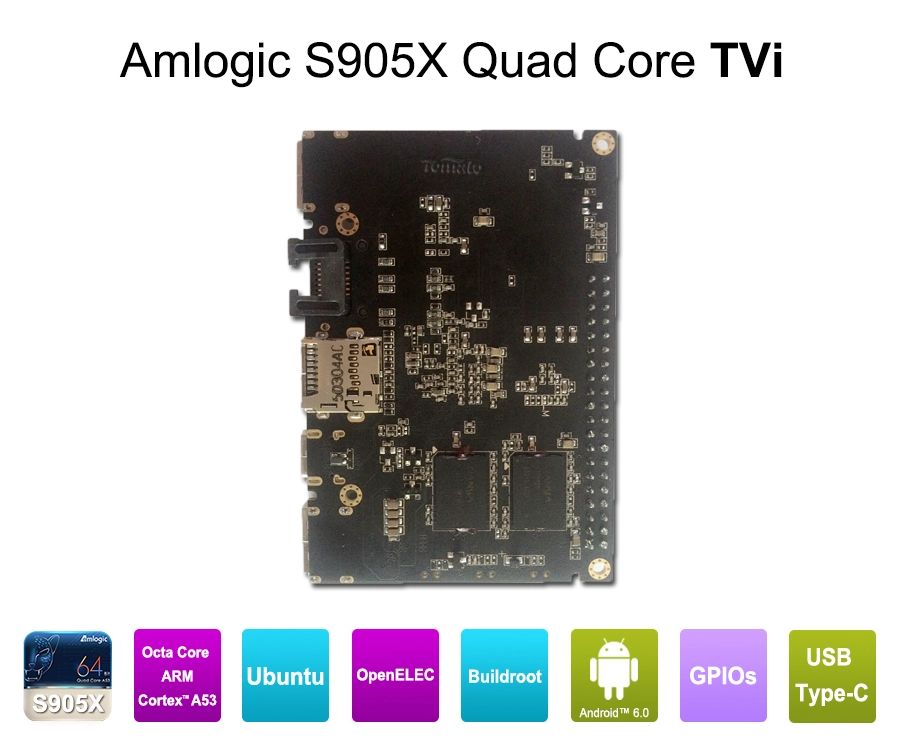
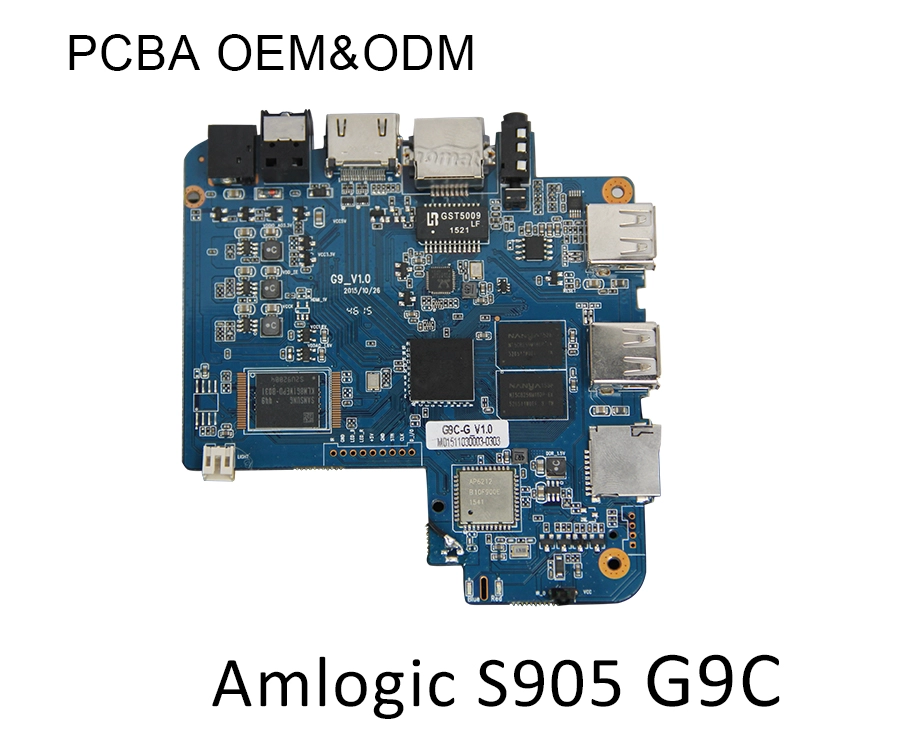
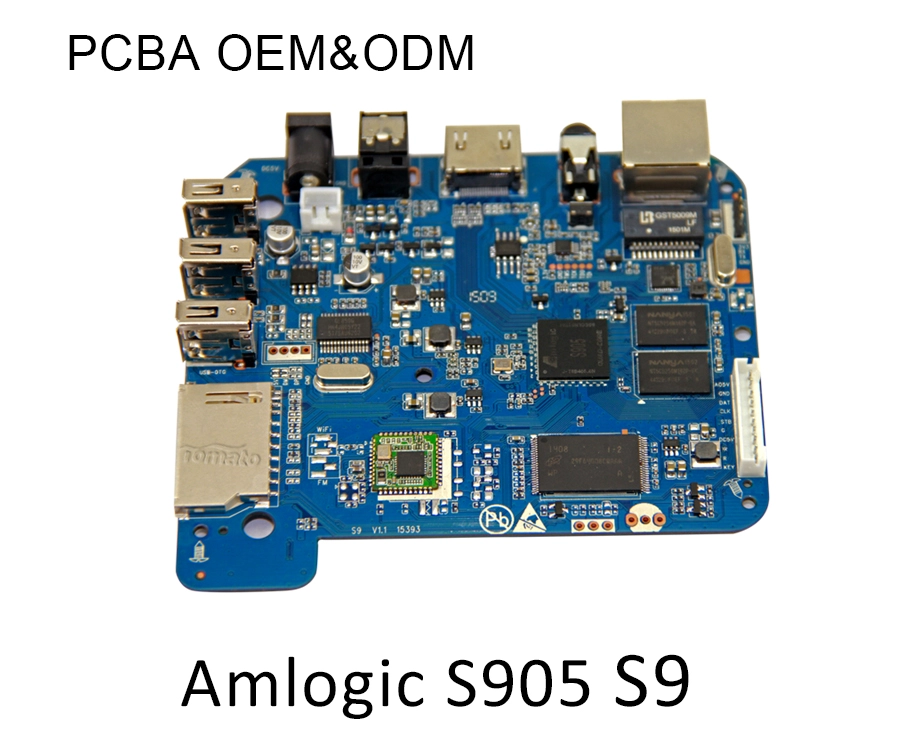
An Android Mini PC is a small-form-factor computer built around an ARM SoC and designed to run Android, AOSP, Linux, or a customized combination of these software environments.
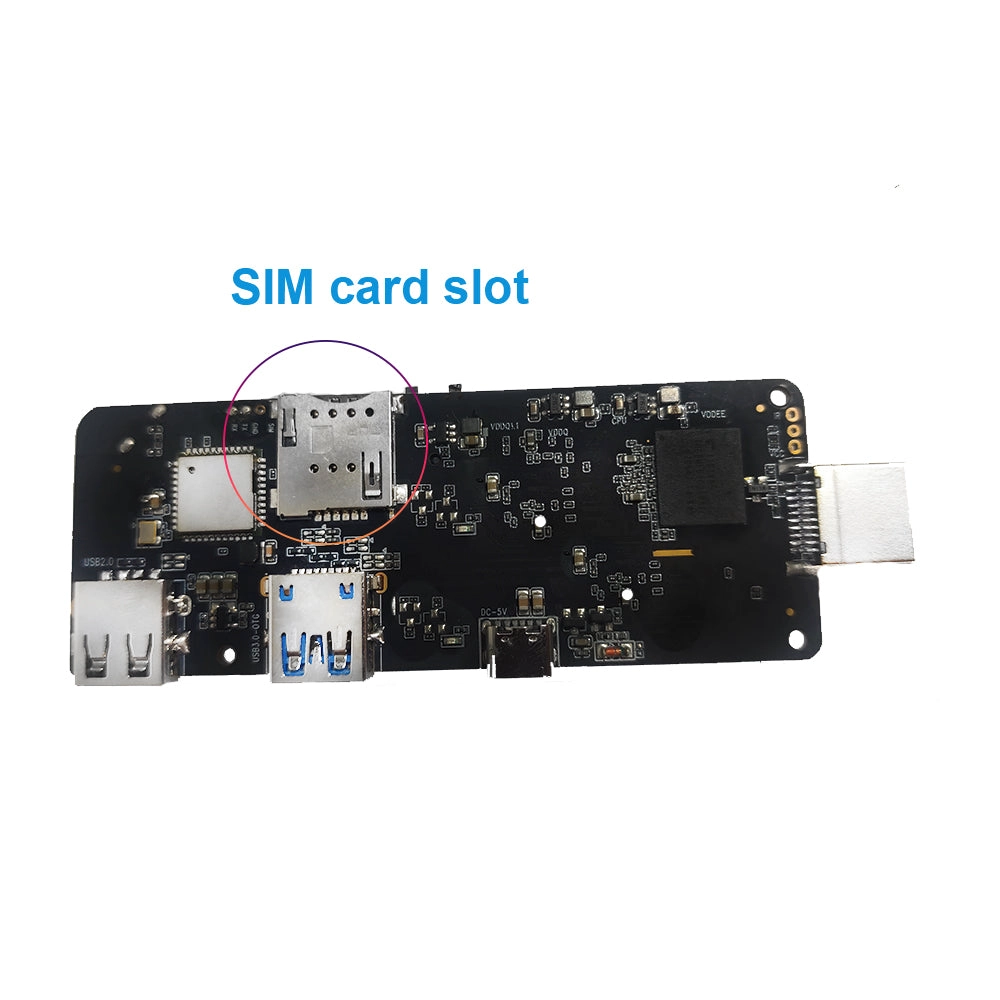
A typical architecture contains:
-
ARM CPU
-
Integrated GPU
-
Optional NPU for AI workloads
-
LPDDR4/LPDDR4X/LPDDR5 memory
-
eMMC or other flash storage
-
Ethernet and Wi-Fi
-
Bluetooth
-
HDMI display output
-
USB interfaces
-
Optional RS232/RS485/GPIO/CAN or other industrial interfaces
-
Power-management circuitry
-
Custom Android/Linux firmware
The critical difference from a conventional desktop PC is architectural.
An x86 Mini PC normally uses a CPU platform designed around general-purpose desktop or industrial computing. An Android Mini PC typically uses a highly integrated ARM SoC, where CPU, GPU, video engine, memory controller, display pipeline, and sometimes NPU acceleration are integrated into a single silicon platform.
That integration produces a smaller BOM, lower power consumption, compact PCB dimensions, and strong multimedia performance.
It also creates a dependency on the SoC vendor's BSP, SDK, device tree, kernel drivers, bootloader, and firmware ecosystem.
For B2B buyers, this software-hardware dependency is one of the most important characteristics of an Android Mini PC.
Android Mini PC vs. Android TV Box
The two products can share the same SoC.
Their intended architecture is different.
| Category | Android TV Box | Android Mini PC |
|---|---|---|
| Primary purpose | OTT/IPTV/media playback | General-purpose or dedicated edge computing |
| Typical interface | HDMI, USB, Ethernet, Wi-Fi | HDMI, USB, Ethernet + optional industrial I/O |
| Software | Streaming applications | Enterprise applications, CMS, POS, kiosk, AI, signage |
| User environment | Consumer/home | Commercial/industrial |
| Firmware | Consumer-oriented | Highly configurable |
| Peripheral integration | Limited | Application-specific |
| Thermal design | Consumer workload | Sustained workload |
| Remote management | Optional | Often essential |
| OEM requirement | Branding/configuration | Hardware + firmware engineering |
The overlap is substantial, but the engineering priorities are not.
A TV Box may spend most of its operating time decoding video.
An Android Mini PC deployed in a retail store may simultaneously render digital signage, communicate with a CMS, process peripheral data, maintain network connections, execute Java/Kotlin applications, and perform local AI inference.
That workload changes the hardware design.
How Does an Android Mini PC Work?
The basic data path is:
Application → Android/Linux Framework → Kernel → SoC → Memory/Storage/Peripheral Interface
The application layer determines what the machine actually does.
For example:
-
Digital signage software controls content scheduling.
-
POS software communicates with payment or peripheral hardware.
-
A hotel application controls guest services.
-
An industrial application communicates through RS232/RS485.
-
An AI application uses the NPU or GPU for local inference.
-
A CMS agent communicates with a cloud management platform.
The Android operating system provides the application framework, while the Linux kernel handles hardware resources, drivers, networking, storage, display, USB and other system functions.
This is why simply asking for “Android 14” or “8GB RAM” is insufficient when sourcing an Android Mini PC for a commercial project.
The actual engineering question is:
Can the OEM modify the BSP, kernel, drivers, bootloader, system applications and hardware interfaces required by the project?
That determines how much control the system integrator has after production.
The Role of the SoC
SoC selection should begin with workload rather than benchmark rankings.
For example, Rockchip RK3588 provides four Cortex-A76 cores and four Cortex-A55 cores, a Mali-G610 MC4 GPU, and a 6-TOPS NPU, with configurations supporting up to 32GB RAM according to SZTomato's current product specification.
That type of platform is more appropriate for workloads requiring substantial CPU/GPU/NPU resources, such as:
-
Edge AI
-
Computer vision
-
Multi-display applications
-
High-resolution video processing
-
Industrial automation
-
AI-assisted digital signage
-
Local data processing
By contrast, a lower-power Amlogic platform may be preferable for applications where the primary requirements are efficient media playback, 4K output, AV1 decoding, networking, and low BOM cost.
The correct selection is therefore not:
“Which SoC is fastest?”
It is:
“Which SoC delivers sufficient sustained performance at the required power, thermal, software, and cost envelope?”
Why PCBA Design Matters More Than the Product Datasheet
A retail specification sheet rarely shows the engineering decisions that determine long-term reliability.
The PCBA is where those decisions become physical.
For a commercial Android Mini PC, engineers may need to modify:
-
PCB layer structure
-
Power-delivery architecture
-
SoC thermal zones
-
Memory placement
-
USB configuration
-
Ethernet interface
-
Wi-Fi/BT module
-
RS232/RS485 interfaces
-
GPIO
-
Watchdog circuitry
-
Storage configuration
-
Power input protection
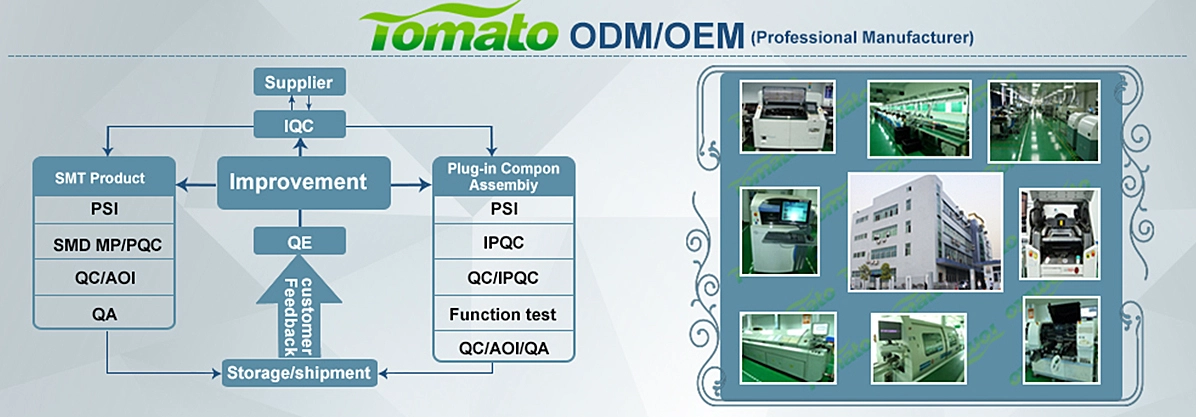
SZTomato's OEM/ODM process treats the PCBA as a configurable platform rather than a fixed retail board. Current engineering solutions include custom PCB layouts, peripheral modification, hardware watchdog integration and application-specific power and interface configurations.
Thermal Design Is Part of the Computing Architecture
A compact enclosure creates a difficult thermal problem.
When CPU, GPU, NPU, PMIC and memory operate continuously inside a small enclosure, heat concentration can cause:
-
CPU frequency reduction
-
GPU throttling
-
NPU performance degradation
-
Application instability
-
Reduced component lifetime
-
System freezes under sustained load
This is especially relevant for digital signage, AI inference and industrial applications operating 12–24 hours per day.
A consumer Mini PC can often rely on a basic heatsink.
A commercial deployment may require:
SoC → thermal interface → die-cast heatsink → aluminum enclosure → ambient environment
SZTomato's current OEM approach includes conduction-cooled aluminum enclosures, spring-mounted heatsinks, passive convection and application-specific thermal structures designed for sustained operation.
The goal is not simply to achieve a low peak temperature.
The objective is to maintain stable clock frequencies and predictable performance throughout the operating cycle.
What Can Android Mini PCs Be Used For?
The strongest commercial applications are those where a compact ARM computer needs to perform a dedicated function at relatively low power.
1. Digital Signage
An Android Mini PC can drive commercial displays while connecting to a cloud CMS.
Typical functions include:
-
Scheduled content playback
-
Remote screen management
-
Multi-zone layouts
-
Video playback
-
Advertising management
-
Device monitoring
-
Remote reboot
-
OTA firmware updates
For a signage integrator, the device can be locked into Kiosk Mode so the end user never sees the underlying Android interface.
2. Smart Retail and POS
The Android Mini PC can act as the local computing node for:
-
Interactive kiosks
-
Digital price tags
-
Self-service terminals
-
Customer displays
-
Advertising screens
-
Inventory interfaces
-
Local analytics
Additional RS232, RS485, USB, GPIO or network interfaces can connect the computing node to external equipment.
3. Industrial Edge Computing
This is where Android Mini PCs move furthest away from the traditional TV Box category.
A customized platform can interface with:
-
Industrial sensors
-
Serial devices
-
PLC-related equipment
-
Cameras
-
Local databases
-
Network controllers
-
Edge AI systems
A hardware watchdog can also provide automatic recovery when the operating system or application stops responding.
4. AI Edge Applications
Higher-end ARM SoCs with integrated NPUs allow AI workloads to run locally instead of sending every data stream to a cloud server.
Potential applications include:
-
Object detection
-
Face recognition
-
People counting
-
Video analytics
-
Image classification
-
Local vision inference
-
Smart retail analytics
For example, SZTomato's RK3588 platform combines eight ARM CPU cores with a 6-TOPS NPU and supports up to 8K-class multimedia workloads, making this class of hardware suitable for substantially more than conventional media playback.
Why Firmware Engineering Determines Commercial Reliability
Hardware is only half of an Android Mini PC.
A standard consumer firmware image may contain services, applications, permissions, background processes and system behavior that are unnecessary for an enterprise deployment.
For B2B applications, the firmware may need to be rebuilt around the actual use case.
Custom UI/UX and Kiosk Mode
A customized Android Mini PC can boot directly into the customer's application.
The standard Android launcher can be replaced with:
-
Proprietary launcher
-
Kiosk interface
-
Digital signage application
-
POS software
-
Industrial HMI
-
Hotel application
SZTomato supports factory-level custom UI/UX firmware and application integration, allowing the device to operate as a dedicated appliance rather than exposing the consumer Android environment.
SDK/API Integration
This is particularly important for system integrators.
A properly exposed SDK/API layer can allow enterprise software to control functions such as:
-
Scheduled reboot
-
Hardware watchdog
-
GPIO
-
Display orientation
-
HDMI-CEC
-
Peripheral status
-
Device diagnostics
-
Application lifecycle
-
Network configuration
Instead of treating the Android Mini PC as an isolated hardware endpoint, the integrator can make it part of a larger cloud-controlled system.
Android/Linux Kernel Optimization
Kernel optimization can remove unnecessary drivers and services while adding support for project-specific peripherals.
Depending on the architecture, engineering may involve:
-
Device-tree modification
-
Kernel driver integration
-
GPIO configuration
-
RS232/RS485 driver support
-
Display subsystem tuning
-
Power-management optimization
-
Bootloader customization
-
Watchdog integration
-
Secure boot configuration
SZTomato's current B2B engineering model includes Linux/Android kernel optimization, custom firmware, SDK/API exposure and system-level configuration.
For a 10,000-device deployment, this level of control can have a larger financial impact than a small difference in CPU benchmark scores.
OTA Management: The Difference Between a Product and a Fleet
One Android Mini PC can be updated manually.
10,000 cannot.
A commercial fleet requires an OTA architecture that supports controlled software distribution.
A robust system should provide:
Firmware Repository → Device Authentication → Staged Deployment → Installation → Verification → Rollback
An A/B partition architecture can allow new firmware to be written to an inactive system partition while the device continues operating from the active partition. If the update fails validation, the bootloader can fall back to the previous working image.
SZTomato provides client-specific OTA infrastructure for enterprise deployments, including private update servers and controlled firmware/application updates.
For B2B buyers, OTA should therefore be evaluated as part of the product architecture rather than treated as an optional software feature.
How to Choose an Android Mini PC for B2B Deployment
Procurement should use a technical specification matrix rather than a consumer product comparison.
Hardware
Confirm:
-
SoC model and process node
-
CPU architecture
-
GPU
-
NPU TOPS where AI is required
-
RAM type and capacity
-
eMMC/storage lifecycle
-
Ethernet speed
-
Wi-Fi generation
-
Bluetooth version
-
HDMI specification
-
USB configuration
-
Industrial I/O
-
Power input range
Software
Confirm:
-
Android/AOSP version
-
Linux support
-
BSP availability
-
Kernel source access
-
Device-tree customization
-
Bootloader customization
-
SDK/API availability
-
Kiosk Mode
-
Device Owner support
-
Application preinstallation
-
OTA architecture
Reliability
Confirm:
-
Continuous operating temperature
-
Thermal design
-
Burn-in testing
-
Watchdog recovery
-
Power-loss recovery
-
Component lifecycle
-
BOM control
-
Firmware maintenance period
Content Security
For systems handling licensed media, verify:
-
HDCP requirements
-
DRM requirements
-
Widevine level
-
PlayReady where applicable
-
Secure boot
-
Key provisioning
-
Protected video path
HDCP and DRM should be validated against the actual application and content-provider requirements. They should not be added to the specification as generic marketing terms.
What Is the Difference Between a Consumer Android Mini PC and an Enterprise Android Mini PC?
The physical difference can be surprisingly small.
The engineering difference is substantial.
A consumer product is usually optimized for:
Low BOM + mass production + standard software + short deployment cycle
An enterprise product is optimized for:
Application fit + thermal stability + firmware control + fleet management + lifecycle support
This distinction is central to SZTomato's OEM/ODM model.
The company does not limit customization to logos, packaging and boot animations. Its current Android Mini PC engineering services extend from PCBA modification and thermal engineering through firmware, kernel optimization, SDK/API integration and private OTA deployment.
For a system integrator, that means the hardware can be designed around the application instead of forcing the application to adapt to a fixed retail device.
The Strategic Value of an Android Mini PC
The strongest reason to choose an Android Mini PC is not its size.
It is the combination of:
ARM efficiency + multimedia acceleration + Android/Linux software ecosystem + compact hardware + OEM flexibility.
That combination makes Android Mini PCs suitable for a much broader range of applications than traditional streaming devices.
But B2B buyers should avoid one common mistake: selecting a retail Android Mini PC first and attempting to retrofit enterprise requirements afterward.
That approach usually creates compromises in thermal performance, peripheral interfaces, firmware control, OTA management and long-term BOM stability.
The better architecture is to define the application first.
Then define:
-
SoC performance requirements
-
Memory and storage
-
I/O architecture
-
Thermal envelope
-
OS and kernel requirements
-
Application and API requirements
-
Security and DRM requirements
-
OTA and fleet-management architecture
-
Manufacturing volume
-
Product lifecycle
The Android Mini PC should then be engineered around those constraints.
Build the Android Mini PC Around Your Application
For B2B procurement managers and system integrators, the right question is not “Which Android Mini PC has the highest specifications?”
It is:
“Which Android Mini PC can be engineered, controlled and maintained around our application for the next several years?”
That requires an OEM/ODM partner capable of working below the enclosure level.
SZTomato provides this engineering path from PCBA architecture and thermal design to Android/Linux firmware, kernel optimization, SDK/API integration, custom UI/UX and private OTA infrastructure.
If your project involves digital signage, smart retail, POS, hospitality, industrial control, edge AI, interactive kiosks or another managed computing application, provide the required SoC performance, interfaces, OS, workload, operating environment and deployment volume.
The objective is not to customize a retail box.
The objective is to build an Android Mini PC that becomes a stable hardware foundation for your software platform and commercial deployment.
