
What is the OTT TV Box that gets all the channels?
What Is the OTT TV Box That Gets All the Channels?
AV1 hardware decoding, stronger DRM requirements, and operator-controlled firmware are changing what buyers should expect from an OTT TV Box. The phrase “gets all the channels” is often used in consumer marketing, but technically it is misleading: no legitimate OTT TV Box automatically unlocks every TV channel worldwide. Channel availability depends on the licensed OTT/IPTV service, geographic rights, subscriptions, middleware, and the device's ability to run the required applications and DRM stack.
For B2B buyers, the more useful question is not “Which box gets all channels?” but “Which OTT TV Box can reliably deliver my licensed channel portfolio, applications, DRM requirements, and management architecture at scale?”
What Does “All Channels” Actually Mean on an OTT TV Box?
An OTT TV Box does not contain a universal database of television channels.
Instead, the box provides the computing, networking, operating-system, and video-decoding platform required to access services supplied by an OTT operator, IPTV provider, broadcaster, or streaming application.
A typical architecture looks like this:
Content Provider → CDN/Streaming Server → Internet → OTT TV Box → TV/Display
The channel list comes from the service platform rather than from the physical TV Box.
This distinction is critical for B2B procurement.
A box advertised as “all channels” may simply include an IPTV application, a preconfigured playlist, or access credentials supplied by a service provider. Whether those channels continue to work depends on the underlying content rights and service infrastructure.
A legitimate commercial OTT deployment therefore needs four independent layers:
-
Hardware platform — SoC, RAM, storage, Ethernet/Wi-Fi, HDMI and other I/O.
-
Operating system and firmware — Android TV, AOSP, Linux or another supported platform.
-
Application/middleware layer — IPTV client, OTT application, operator launcher, EPG, VOD and account management.
-
Content and licensing layer — The actual subscription, channel rights and geographic availability.
This is why simply purchasing a higher-RAM TV Box does not automatically provide more channels.
Why SoC Selection Matters
Modern OTT workloads increasingly depend on hardware video decoding rather than raw CPU performance.
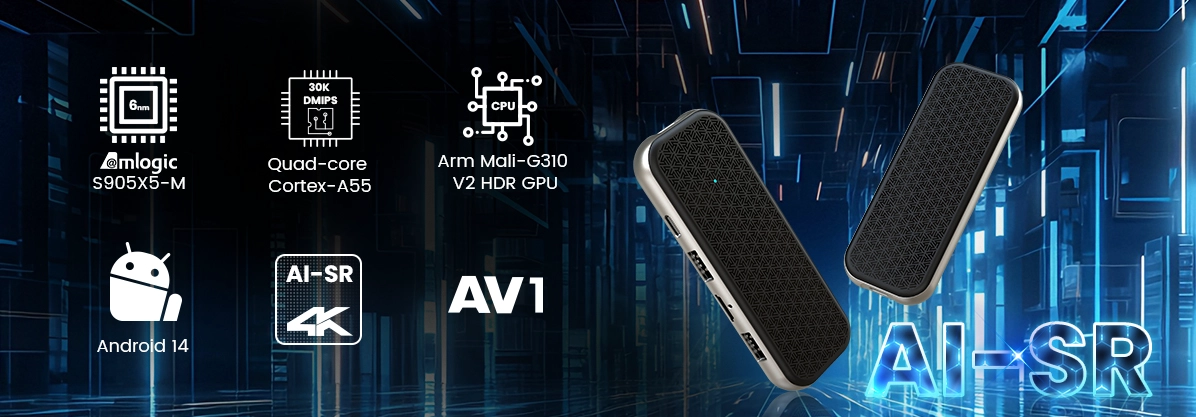
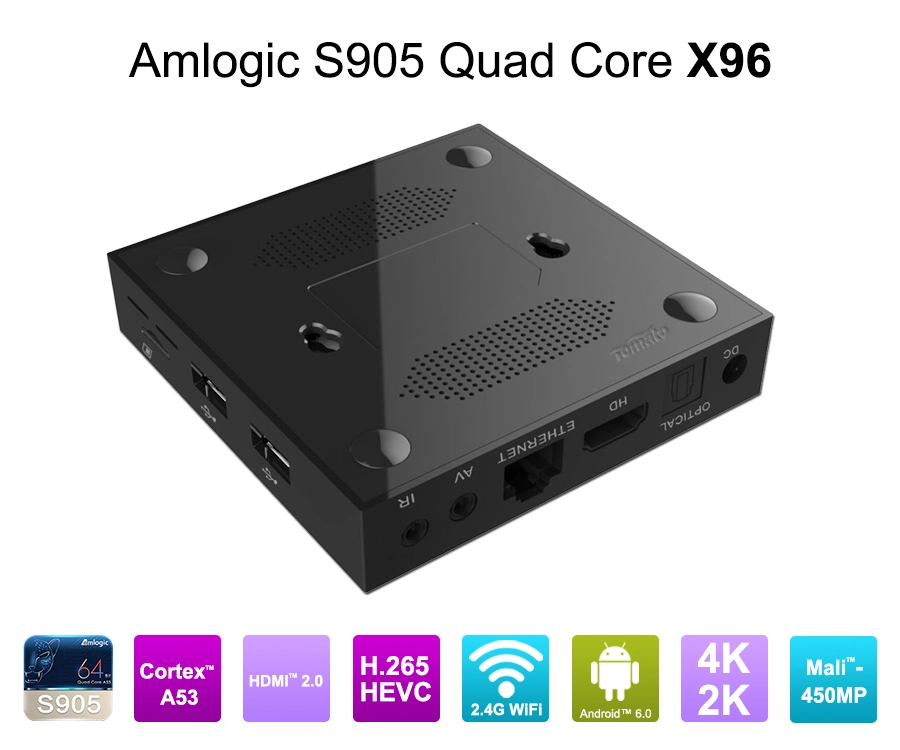
For example, current Amlogic-based platforms used in OTT applications can provide 4K playback, HDR support, Wi-Fi 6 connectivity and hardware AV1 decoding. SZTomato's S905Y5-based platform is positioned for OTT/IPTV deployments and supports AV1, 4K output and OEM/ODM customization.
For a B2B project, the engineering checklist should include:
| Technical Area | What Procurement Should Check |
|---|---|
| Video decoder | H.264, H.265/HEVC, VP9, AV1 |
| Output | 4K@60Hz where required |
| HDR | HDR10/HDR10+ or project-specific requirements |
| DRM | Widevine L1, PlayReady or required operator DRM |
| HDMI | Required HDMI generation and HDCP level |
| Network | Gigabit Ethernet, Wi-Fi 5/6 or project-specific wireless |
| Memory | 2GB/4GB/8GB according to application workload |
| Storage | eMMC/NAND/UFS capacity and lifecycle |
| OS | Android TV, AOSP, Linux or customized platform |
| OTA | Private server, A/B update and rollback requirements |
| Thermal | Passive/active cooling according to continuous workload |
The important point is that channel quantity is not a hardware specification.
The hardware must instead provide a stable execution environment for the services that legally supply those channels.
How an OTT TV Box Delivers Hundreds or Thousands of Channels
A commercial IPTV or OTT system can expose a large channel catalog through an application or middleware platform.
The box typically performs the following sequence:
1. Network connection
The device establishes connectivity through Ethernet or Wi-Fi.
2. Authentication
The application authenticates the subscriber or device against the operator's backend.
3. Channel discovery
The middleware supplies channel metadata, EPG information, VOD catalogs and stream URLs.
4. Stream acquisition
The OTT TV Box requests the appropriate video stream from the provider's CDN or streaming infrastructure.
5. DRM and content security
Protected services may require a hardware-backed DRM implementation and secure video path.
6. Hardware decoding
The SoC decodes H.264, H.265, VP9 or AV1 depending on the source stream.
7. HDMI output
The decoded video is rendered to the television or commercial display through the appropriate HDMI and HDCP chain.
This architecture explains why a technically strong OTT TV Box can support a broad channel portfolio without the hardware itself “containing” those channels.
DRM Is a Procurement Issue, Not an Afterthought
Premium OTT content introduces another major distinction between consumer-grade and operator-grade hardware.
A commercial device may need hardware-backed Widevine L1 or PlayReady, secure video processing and appropriate HDCP protection. SZTomato's OTT architecture specifically addresses hardware-level DRM integration and HDCP 2.2/2.3 requirements for protected 4K content.
Without the correct DRM provisioning, an application may install successfully while premium content remains unavailable or restricted to lower resolutions.
For procurement managers, this means the following questions should be answered before mass production:
-
Which DRM system does the content provider require?
-
Is hardware-backed DRM mandatory?
-
What HDCP version is required?
-
Does the SoC support the required secure video path?
-
Who provisions the DRM credentials?
-
Is certification required before commercial deployment?
-
Can the firmware preserve the required security chain after OTA updates?
These questions are more important than simply comparing CPU clock speeds.
Why Generic TV Boxes Often Fail in Commercial OTT Deployments
A retail OTT TV Box can be adequate for household streaming. That does not mean it is suitable for a telecom operator, hotel chain, IPTV provider or large digital signage network.
The problems become visible at scale.
1. Firmware Control
Generic retail firmware normally prioritizes consumer usability.
An operator may require the opposite:
-
Custom launcher
-
Kiosk mode
-
Restricted system settings
-
Application auto-start
-
Hidden navigation controls
-
Controlled ADB access
-
Device Owner configuration
-
Custom boot animation
-
Remote diagnostics
-
Silent APK installation
-
Private OTA updates
SZTomato supports custom UI/UX firmware and SDK/API integration so the device can boot directly into an operator application rather than exposing a generic Android desktop.
2. PCBA Modification
The enclosure is only the visible part of an OEM product.
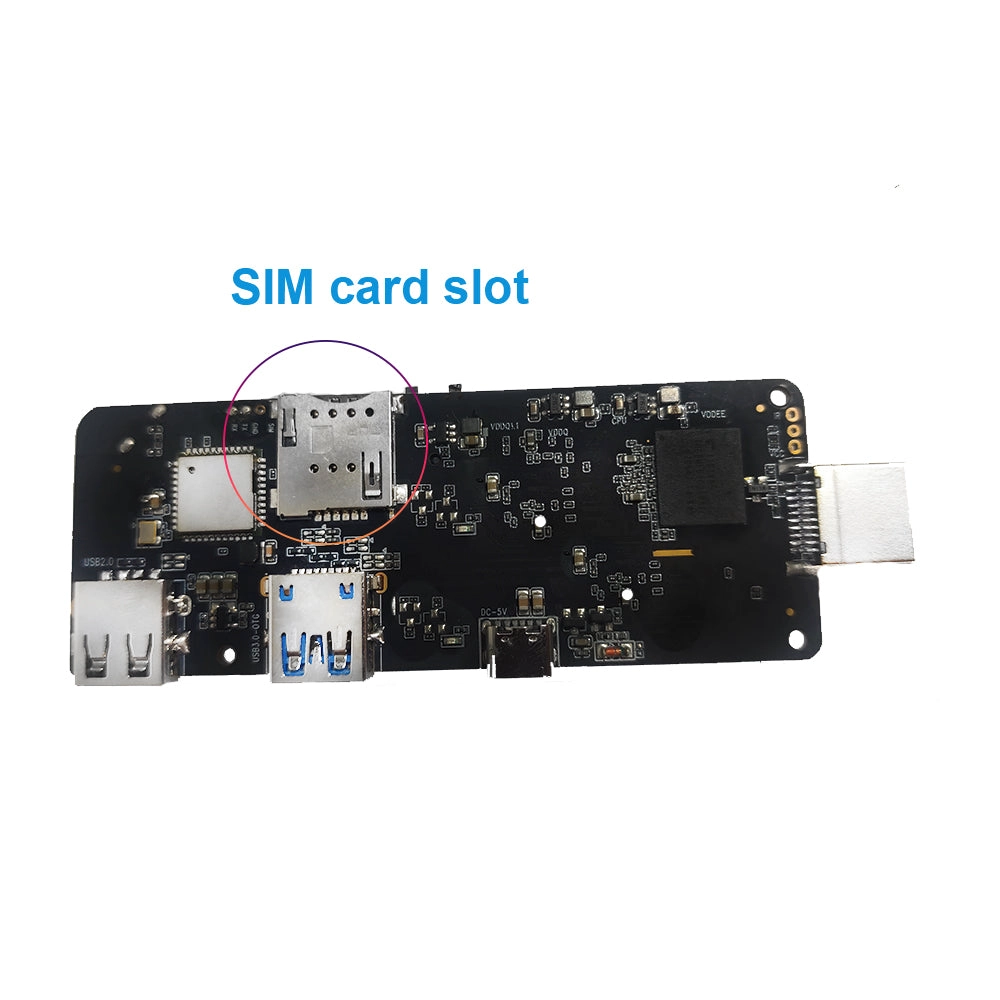
For a specialized deployment, the PCBA may require modification to accommodate:
-
RS232
-
GPIO
-
USB expansion
-
Ethernet configuration
-
Customized power management
-
Additional storage
-
Alternative Wi-Fi modules
-
Industrial connectors
-
Auto-power-on behavior
-
Watchdog circuitry
SZTomato provides PCBA layout modification for application-specific I/O and commercial deployment requirements.
This is the difference between logo customization and actual OEM engineering.
3. Thermal Engineering
A TV Box running a few hours per day has a different thermal profile from a device operating 16–24 hours every day.
Continuous 4K decoding, high network traffic, background applications and peripheral workloads can raise SoC temperature and trigger thermal throttling.
For industrial deployments, SZTomato can engineer specialized cooling solutions around the actual enclosure, SoC and workload rather than simply adding a larger heatsink.
The objective is not maximum peak benchmark performance.
It is sustained performance over the entire deployment lifecycle.
4. OTA Lifecycle Management
A fleet of 10,000 OTT TV Boxes cannot depend on USB firmware flashing.
A proper commercial architecture requires controlled OTA deployment, device grouping, version management and rollback capability.
SZTomato supports private OTA infrastructure and A/B update architectures that allow operators to deploy firmware updates without physically accessing every device.
This becomes particularly important when an operator needs to update:
-
IPTV applications
-
DRM components
-
Security patches
-
Custom launcher
-
Network configuration
-
Device-management software
-
Kernel components
-
Hardware-specific drivers
How to Choose the Right OTT TV Box for an IPTV or OTT Project
The correct procurement process starts with the service architecture, not the product catalog.
Step 1: Define the Content Platform
Determine whether the project uses:
-
Licensed IPTV middleware
-
OTT applications
-
Operator-developed applications
-
Android TV applications
-
AOSP applications
-
Linux-based streaming software
-
Hotel TV middleware
-
Digital signage software
The software stack determines the hardware requirements.
Step 2: Define the Video Requirements
Specify the maximum expected:
-
Resolution
-
Frame rate
-
Codec
-
HDR format
-
Bitrate
-
Simultaneous decoding workload
For mainstream 4K OTT applications, hardware-accelerated H.265/HEVC and AV1 support can reduce CPU workload and improve power efficiency.
Step 3: Define DRM and HDCP Requirements
Do not purchase hardware first and investigate DRM afterward.
Confirm the content provider's requirements before freezing the BOM.
The SoC, secure boot chain, firmware, DRM provisioning and HDMI security architecture must be treated as one system.
Step 4: Define Firmware Ownership
Ask the OEM:
Can you modify the BSP, kernel, launcher, system applications and OTA mechanism?
If the answer is only “we can change the logo and install an APK,” you are purchasing a customized retail product—not a true OEM/ODM platform.
SZTomato's engineering model covers deeper modifications, including PCBA architecture, Android/Linux kernel optimization, SDK/API integration and custom UI/UX firmware.
Step 5: Lock the BOM Before Mass Production
This is often overlooked.
A TV Box that passes engineering validation with one Wi-Fi module or NAND supplier can behave differently if the manufacturer silently substitutes components later.
For an operator deployment, the approved BOM should define the SoC, memory, storage, Wi-Fi/BT module, Ethernet controller, PMIC, display interfaces and other critical components.
BOM stability is therefore part of software compatibility—not merely a purchasing issue.
What Is the Best “All-Channel” OTT TV Box?
There is no single OTT TV Box that legitimately provides every channel.
The best OTT TV Box is the one that supports the specific licensed services you need, while meeting your requirements for video codecs, DRM, network performance, firmware control, thermal stability and lifecycle management.
For consumers, that may mean choosing a certified Android TV or Google TV device compatible with their streaming subscriptions.
For B2B operators, the selection criteria are fundamentally different.
A telecom operator may prioritize DRM, middleware compatibility and remote management.
A hotel may prioritize kiosk mode, centralized OTA and custom UI.
An IPTV provider may prioritize application integration, Ethernet stability and long-term BOM control.
A digital signage integrator may prioritize 24/7 thermal performance, RS232/GPIO expansion and automatic recovery.
The physical product can look similar in every case. The engineering specification is not.
The B2B Advantage: Build the OTT TV Box Around the Service
For system integrators and procurement managers, the strongest OTT TV Box strategy is to define the software and deployment requirements first, then engineer the hardware around them.
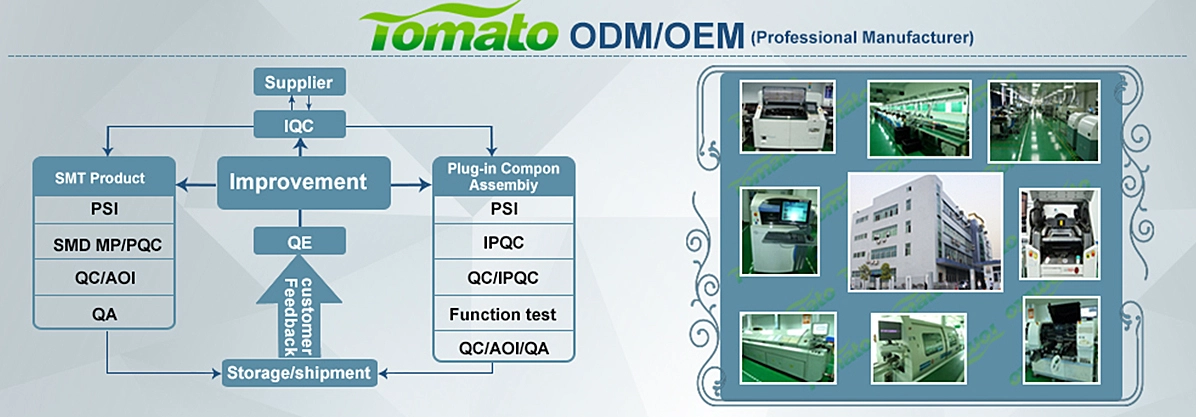
SZTomato provides this OEM/ODM path from PCBA modification to firmware engineering and production. The scope can include custom hardware layouts, SoC selection, SDK/API integration, Android/Linux kernel optimization, custom UI/UX, DRM integration, specialized cooling, private OTA systems and application preloading.
That approach matters because an OTT TV Box is not simply a small computer connected to HDMI.
It is the endpoint of an entire content-delivery architecture.
If your project requires a branded OTT TV Box for IPTV, hospitality, telecom, commercial display or another managed deployment, specify the channel platform, codec profile, DRM requirements, connectivity, operating system and fleet-management architecture before selecting the hardware.
For B2B procurement teams, the next step is not finding a box that claims to have “all channels.” It is engineering a reliable OTT endpoint that can deliver your licensed content portfolio today and remain maintainable throughout the product lifecycle.
