
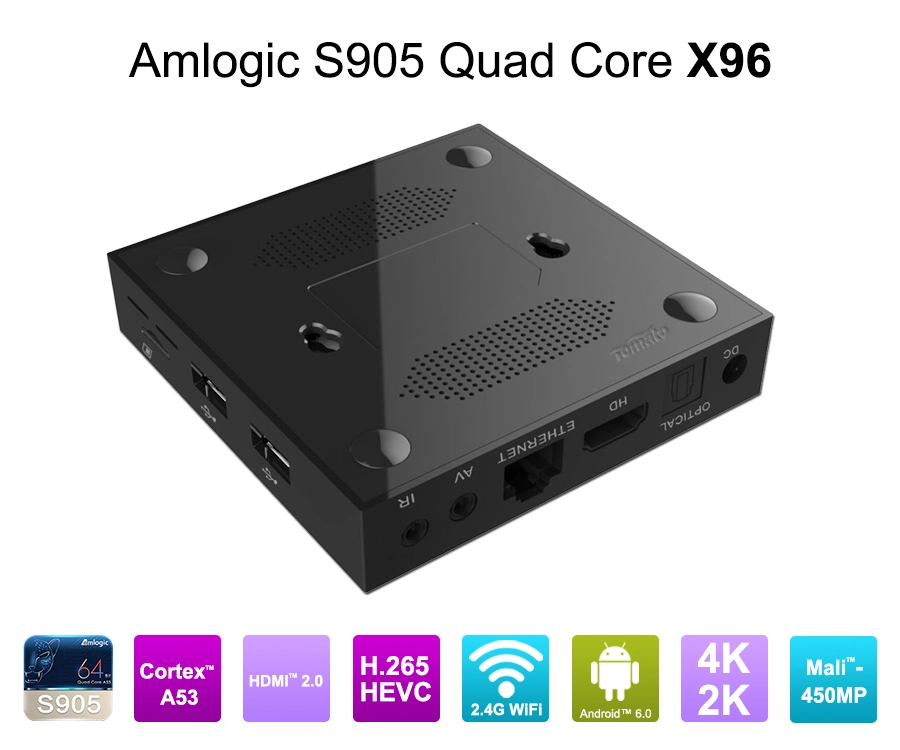
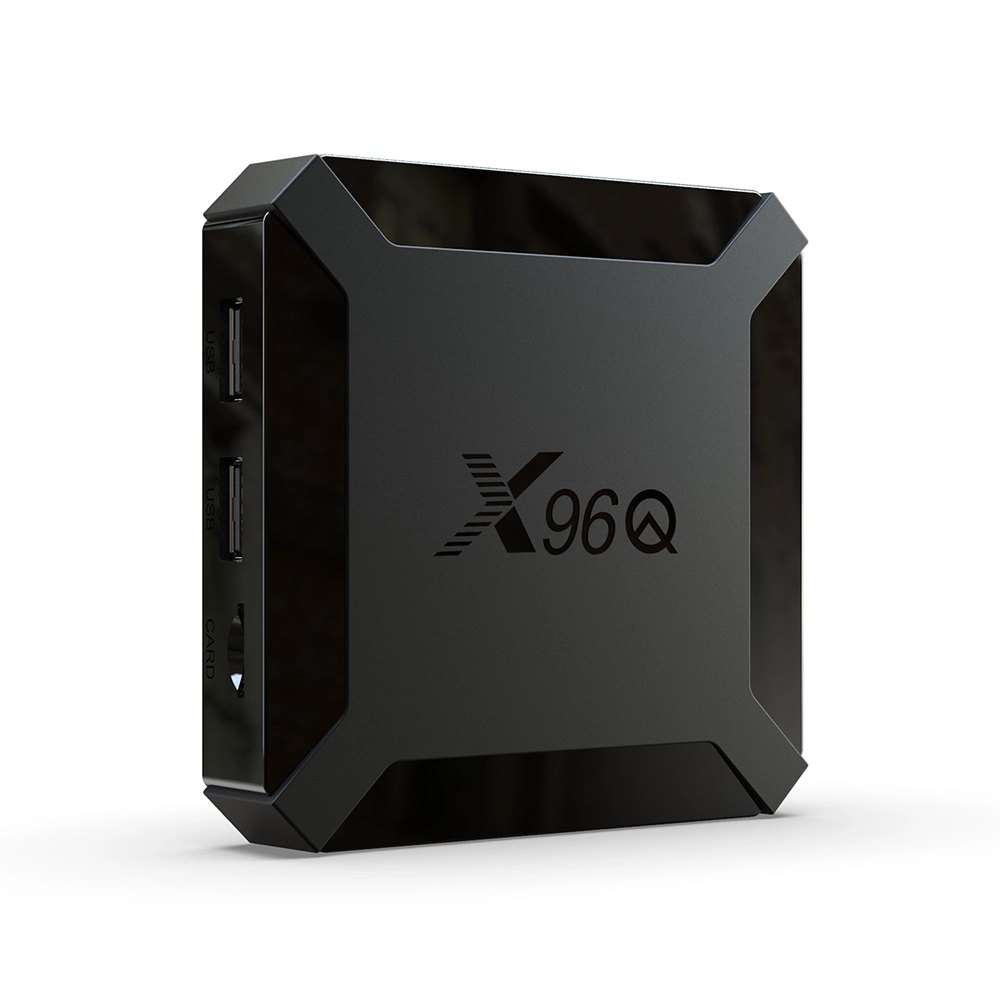
What are the connectivity options for a Set-Top Box (STB)?
Enterprise Set-Top Box (STB) Connectivity: Analyzing Physical, Wireless, and Control Interfaces
The migration of commercial video networks from legacy analog distribution to high-bitrate IP-based streaming has exposed a major vulnerability in display hardware: sub-optimal physical-layer connectivity. In enterprise IPTV, hospitality broadcast, and multi-screen digital signage networks, packet loss, HDMI clock desynchronization, and thermal throttling at the interface layer can paralyze entire multi-node deployments.
A commercial Set-Top Box (STB) serves as the physical hardware gateway between raw IP transport streams (multicast/unicast H.265, AV1, or MPEG-4) and the display panel. Selecting the proper hardware connectivity matrix requires examining data throughput, signal isolation, power delivery, and out-of-band device control.
1. Primary Video & Display Output Standards
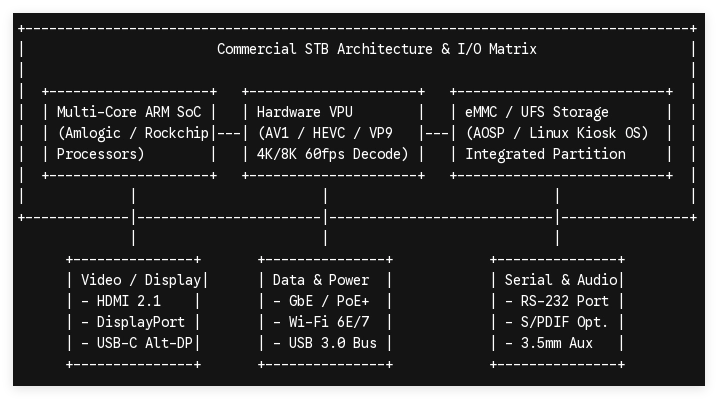
The video pipeline from the System-on-Chip (SoC) Video Processing Unit (VPU) to the display panel depends on high-throughput, low-jitter physical interconnects.
DISPLAY INTERFACE THROUGHPUT SPECS:
HDMI 2.0b  [======================>                     ] 18.0 Gbps (4K@60Hz 4:4:4)
HDMI 2.1   [===========================================>] 48.0 Gbps (8K@60Hz / 4K@120Hz FRL)
DP 1.4a    [=================================>          ] 32.4 Gbps (HBR3 Link Bandwidth)
HDMI 2.0b vs. HDMI 2.1 (Fixed Rate Link)
Commercial STBs transitioning to 4K60 and 8K video walls require HDMI 2.1 interfaces. While legacy HDMI 2.0b relies on Transition-Minimized Differential Signaling (TMDS) capped at 18.0 Gbps, HDMI 2.1 utilizes Fixed Rate Link (FRL) technology to achieve up to 48 Gbps bandwidth.
-
HDCP 2.3 Protection: Essential for decapsulating premium DRM-protected content streams in commercial hospitality or corporate IPTV networks.
-
eARC (Enhanced Audio Return Channel): Transmits uncompressed 24-bit/192kHz multi-channel audio (Dolby Atmos, DTS:X) from the STB directly to external audio processors or soundbars over the same HDMI connection.
-
CEC (Consumer Electronics Control): Allows programmatic power and input commands to pass between the STB and the display via low-level serial communication.
DisplayPort 1.4a & USB-C Alternate Mode
For industrial monitors and multi-display video wall controllers, native DisplayPort 1.4a or USB-C (DP Alt Mode) interfaces offer physical latching mechanisms that prevent accidental cable detachment caused by vibration or thermal expansion in embedded wall mounts.
2. High-Reliability Data & Network Transport Layers
A Set-Top Box is only as stable as its network ingress. Continuous 24/7 video streaming requires high-performance, shielded physical networking hardware.
Gigabit Ethernet (RJ45) & Magnetics Architecture
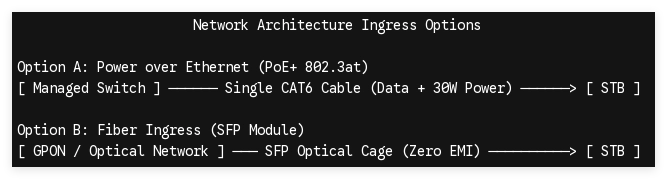
Enterprise STBs feature 10/100/1000Base-T RJ45 ports backed by integrated magnetic transformers (MagJacks). These transformers provide 1000Vrms galvanic isolation, suppressing common-mode noise, electromagnetic interference (EMI), and ground loops present in commercial buildings.
Power over Ethernet (PoE+ 802.3at)
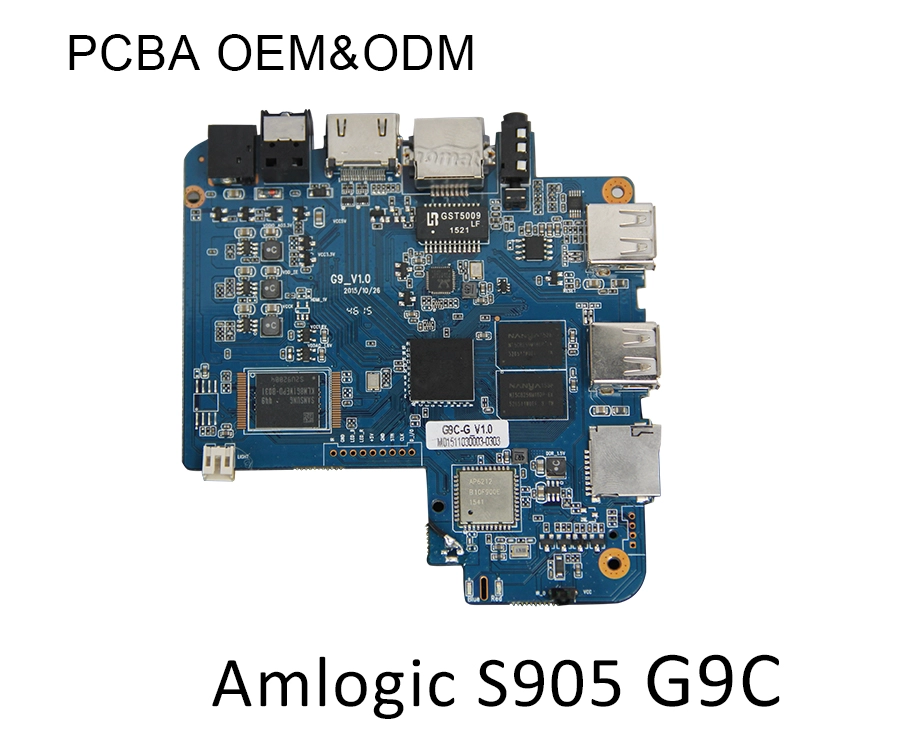
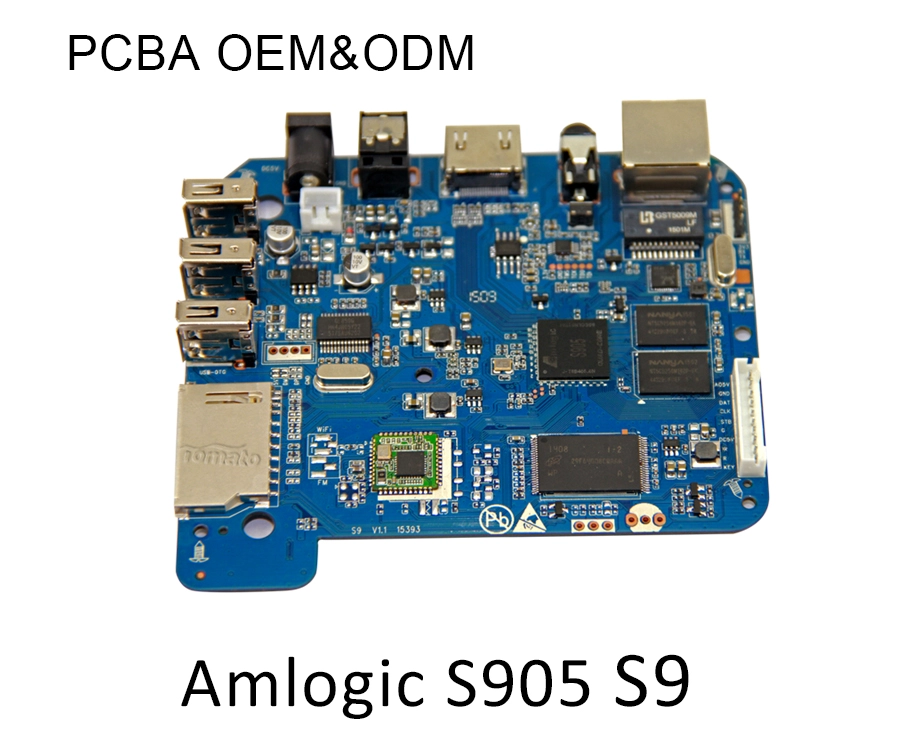
Integrating IEEE 802.3at (PoE+) modules directly onto the STB's printed circuit board assembly (PCBA) consolidates power delivery and 1Gbps data transport into a single CAT6 line. This eliminates the need for external 12V DC power bricks, reducing installation overhead in ceiling mounts, kiosks, and digital signage poles.
Wi-Fi 6E/7 & Bluetooth 5.3 Wireless Systems
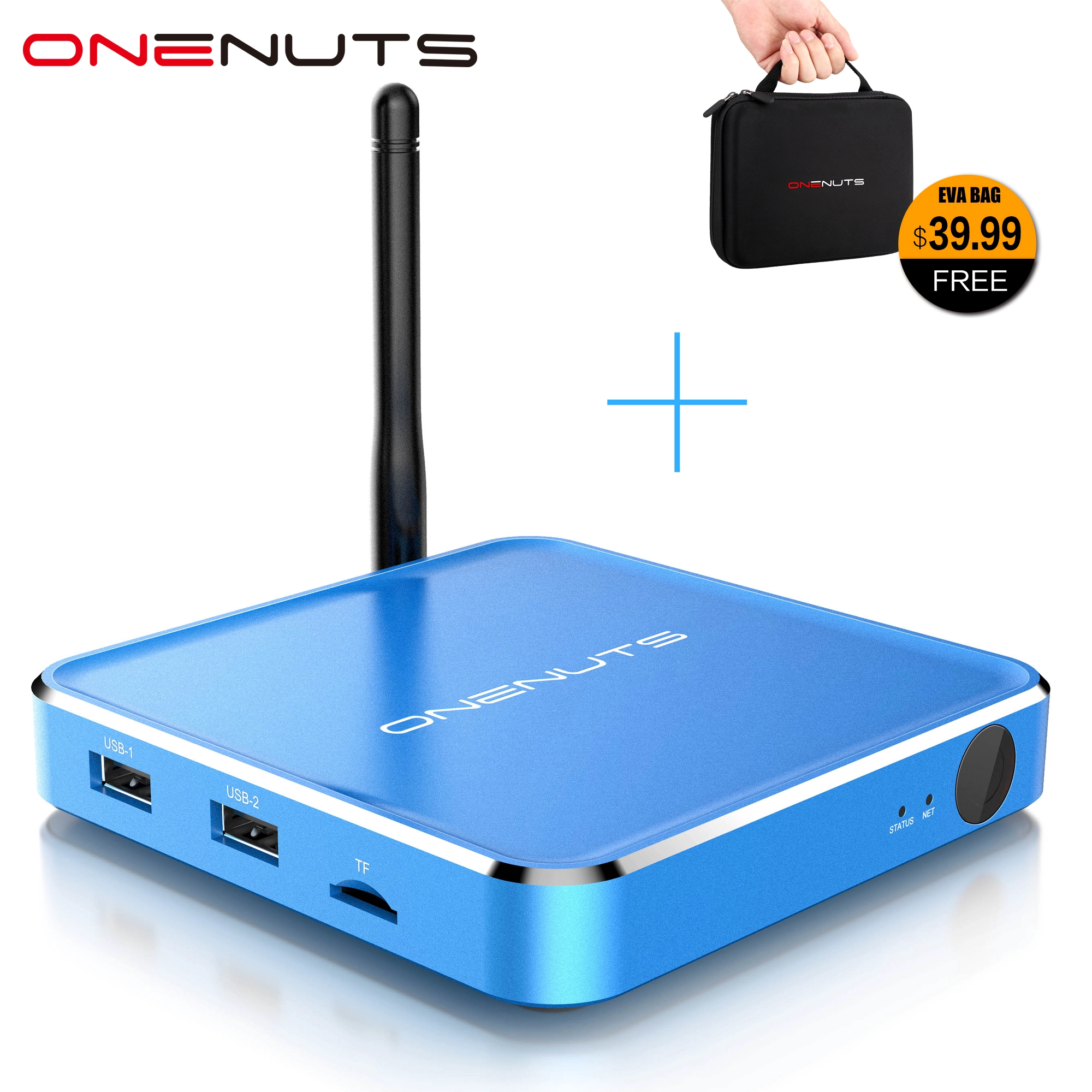
In retrofit environments where pull-through Ethernet cabling is cost-prohibitive, enterprise STBs utilize Wi-Fi 6E/7 modules operating on the uncrowded 6 GHz spectrum. Utilizing 160 MHz channel bandwidths and 4096-QAM modulation, these modules prevent frame dropping in high-density wireless environments. External SMA antenna connectors ensure optimal RF reception inside metal enclosure boxes.
3. Peripheral Control, Audio Pass-Through, and Out-of-Band Interfaces
| Interface Standard | Physical Connector | Primary B2B Operational Function |
|---|---|---|
| RS-232 Serial | DB9 or 3.5mm TRS | Out-of-band display power state, input switching, and hardware telemetry |
| S/PDIF Optical | TOSLINK / Coaxial RCA | Galvanically isolated digital audio routing to commercial amplifiers |
| USB 3.0 / USB-C | Type-A / Type-C Port | Local offline media caching, touch-screen USB HID input, and peripheral expansion |
| GPIO / Infrared In | Terminal Block / 3.5mm | Integration with motion sensors, external push buttons, or IR extender eyes |
STB REAR PANEL I/O CONFIGURATION:
+----------------------------------------------------------------------------------+
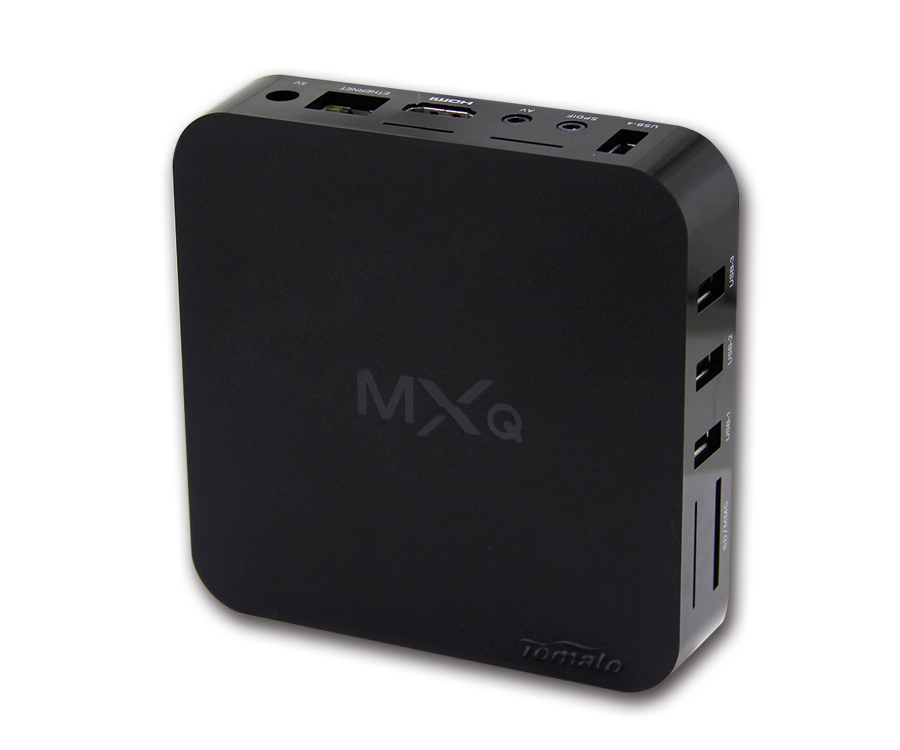
| [DC 12V]  [GbE / PoE+]  [HDMI 2.1 Out]  [RS-232]  [S/PDIF]  [USB 3.0]  [IR In]   |
+----------------------------------------------------------------------------------+
RS-232 Serial Protocol for System Control
Unlike consumer media players that rely exclusively on CEC, commercial STBs incorporate RS-232 serial interfaces. This enables bidirectional HEX command communication with commercial displays, allowing centralized control software to query panel power status, adjust backlight levels, and lock out local remote controls.
Optical Digital Audio (S/PDIF TOSLINK)
For commercial sound distribution in venues, sports bars, or auditoriums, the S/PDIF optical audio interface bypasses internal DAC degradation, sending clean Dolby Digital or PCM audio directly to external amplification racks without electrical noise coupling.
4. OEM/ODM Hardware Engineering & PCBA Customization Options
Commercial deployments rarely fit a standard retail template. Modifying the underlying hardware and firmware architecture ensures the STB meets exact operational parameters before field installation.
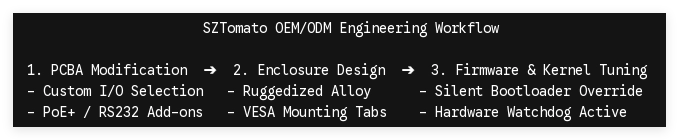
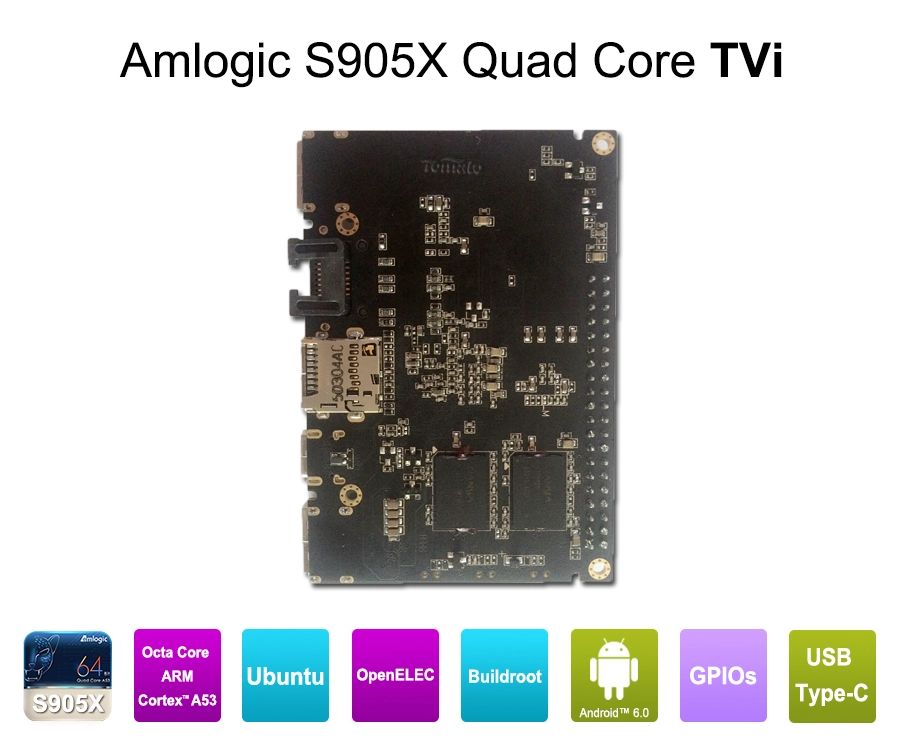
Board-Level Hardware Adaptations
-
Tailored Port Layouts: Eliminate redundant interfaces (e.g., analog AV jacks) to reduce unit costs and optimize thermal airflow, or add dual Ethernet ports for internal network segregation.
-
Watchdog IC & Auto Power-On (APO): Integrate a dedicated hardware Watchdog Timer to reset the system during kernel freezes, paired with U-Boot firmware modifications that ensure instant boot upon AC power recovery.
-
Enclosure Tooling: Replace plastic consumer casings with powder-coated aluminum chassis equipped with integrated VESA/wall-mount brackets and physical port locks.
Firmware & System Provisioning
Factory-level compilation allows for complete customization of the underlying Android Open Source Project (AOSP) or Linux image:
-
Pre-install proprietary IPTV or digital signage APKs directly into system partitions (/system/app).
-
Disable standard status bars, system pop-ups, and consumer settings menus to enforce strict kiosk mode operation.
-
Configure private OTA update server endpoints for controlled, silent background firmware rollouts across enterprise networks.
Optimize Your STB Network Architecture with SZTomato
Standard consumer streaming sticks and off-the-shelf set-top boxes introduce high failure rates, thermal instability, and software lockouts when deployed at scale. Enterprise display networks require rugged hardware built around industrial I/O standards, full firmware access, and long-term supply chain guarantees.
Consult with SZTomato’s B2B Engineering Group to customize your Set-Top Box hardware architecture, integrate specialized I/O interfaces, or compile custom AOSP builds tailored to your commercial infrastructure.
-
Website: www.sztomato.com
-
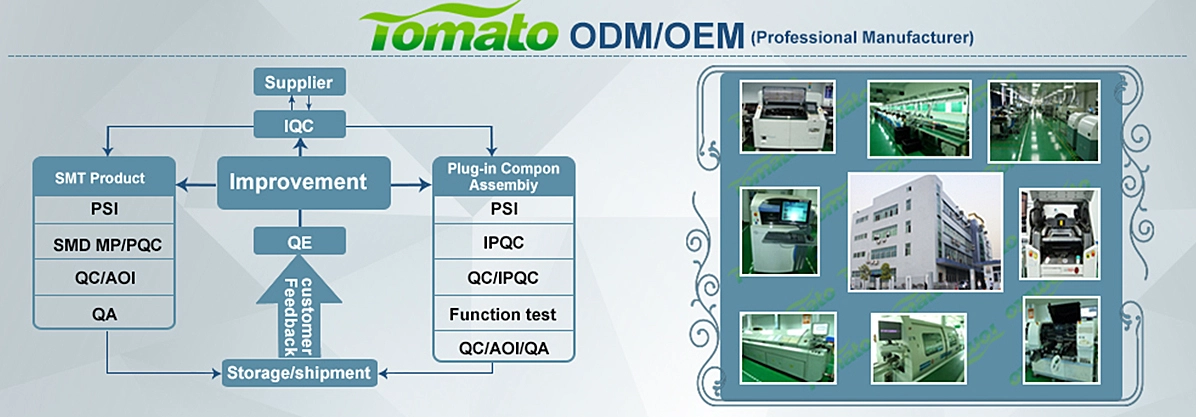
OEM/ODM Capabilities: Custom PCBA Layout, PoE+ & RS-232 Integration, AOSP Firmware Modification, Hardware Watchdog Implementation, Private OTA Systems.