What are the features of an Internet TV Box?
Commercial Internet TV Box Hardware: Core Features and Architectural Specifications
The transition across commercial OTT networks, hospitality IPTV systems, and digital signage fleets toward bandwidth-saving video compression has modified the hardware requirements for media endpoints. As content networks deploy hardware-decoded AV1 and next-generation VVC (H.266) streams to cut distribution overhead, consumer-grade media boxes fall short.
Generic consumer streaming hardware relies on 2-layer circuit boards, passive air cooling, and closed operating systems. Under 24/7 duty cycles, these devices experience thermal throttling, memory bus congestion, and bootloader lockouts that block remote fleet management. For B2B procurement managers and system architects, specifying an enterprise Internet TV Box demands evaluating silicon architecture, PCBA layout, low-level firmware access, and industrial thermal design.
1. Silicon Architecture & Codec Hardware Decoders
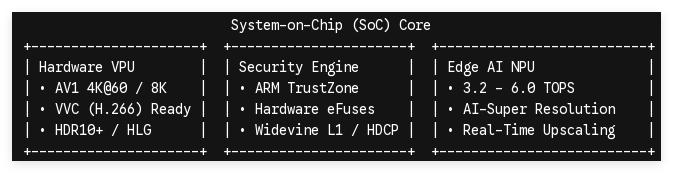
The System-on-Chip (SoC) dictates the processing headroom, memory access speeds, and decoding lifespan of an Internet TV Box. B2B deployment specs prioritize fixed-function hardware video processing units (VPUs) over raw CPU clock rates to maintain steady frame delivery without software-level decoding latencies.
Dedicated Hard-Macro Video Decoders
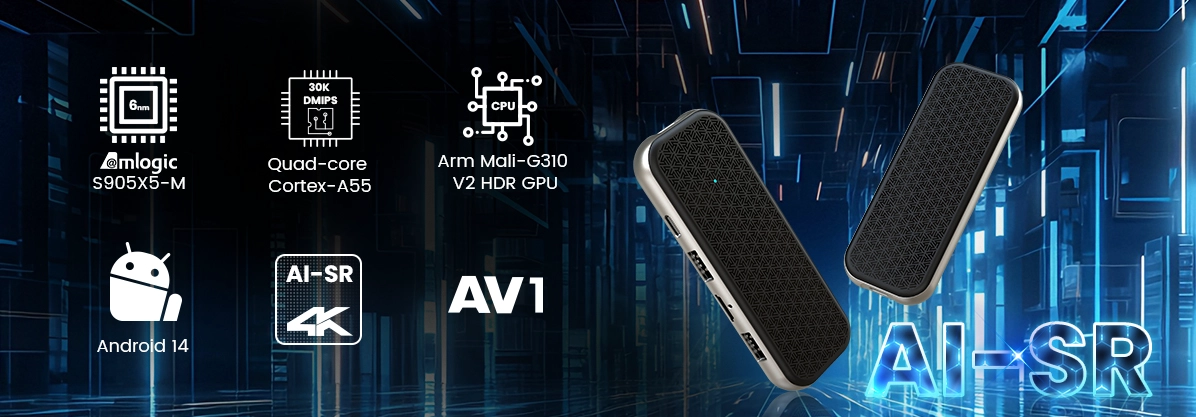
Deploying hardware-accelerated AV1 decoding achieves up to a 30% reduction in network bandwidth requirements compared to HEVC (H.265) at equivalent visual fidelity. Modern commercial SoCs—such as the 6nm Amlogic S905X5M—integrate dedicated VPUs that execute 4K@60fps AV1 playback natively while drawing minimal power.
For high-throughput industrial signage and multi-display hubs, processors like the Rockchip RK3588 supply dual-channel 8K decoding alongside multi-pipe H.265 parallel streams.
On-Chip Neural Processing Units (NPUs)
Enterprise media platforms leverage embedded NPUs (ranging from 3.2 to 6.0 TOPS) to execute AI-Super Resolution (AI-SR) algorithms at the edge. This capability allows system integrators to upscale legacy 1080p source streams to 4K output locally, lowering backbone CDN distribution costs without degrading display performance.
Cryptographic Security & DRM Infrastructure
Commercial content distribution requires hardware-enforced digital rights management (DRM):
-
ARM TrustZone Architecture: Isolates sensitive security keys and DRM cryptographic functions from the primary OS kernel.
-
Hardware eFuses: Stores immutable root keys for hardware-authenticated boot processes.
-
End-to-End Encryption Pipelines: Native silicon support for Google Widevine L1, Microsoft PlayReady, and HDCP 2.2/2.3 protocol protection across HDMI outputs.
2. PCBA Hardware Modification & Industrial Interface Options
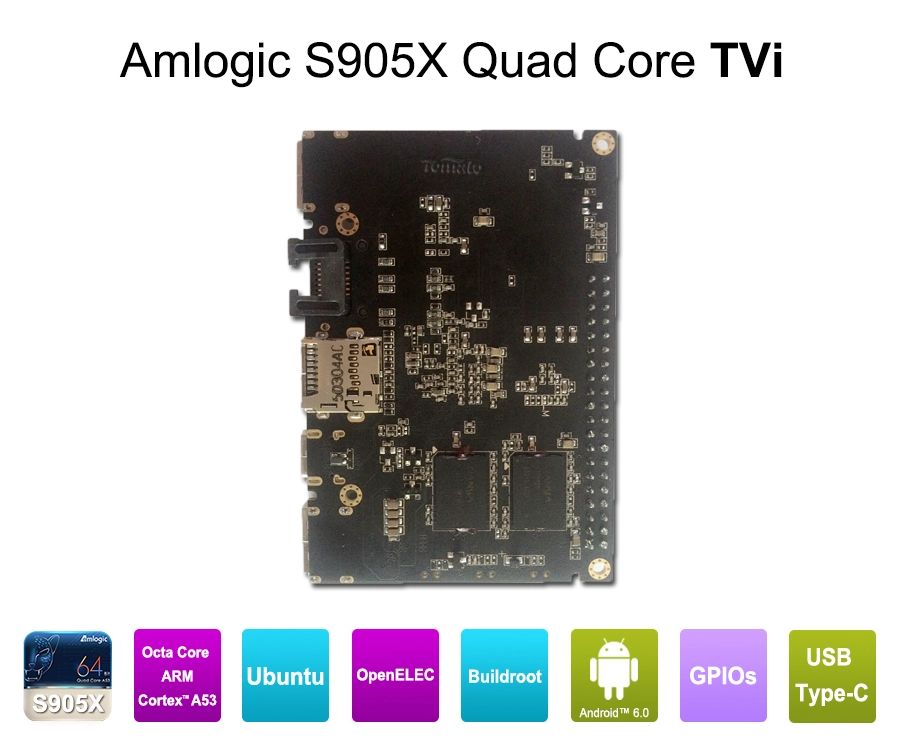
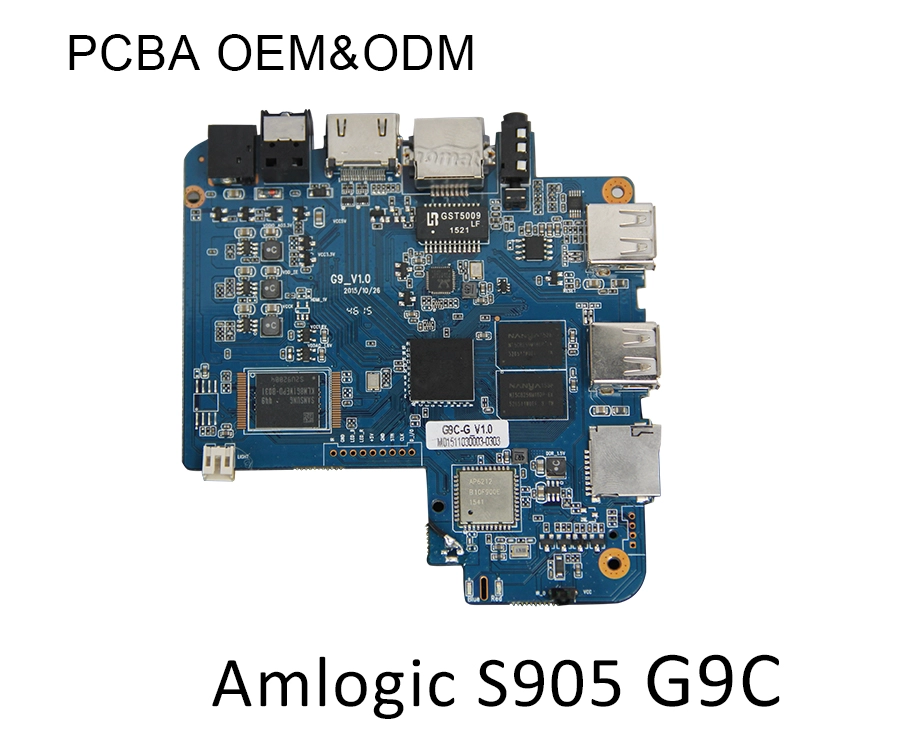
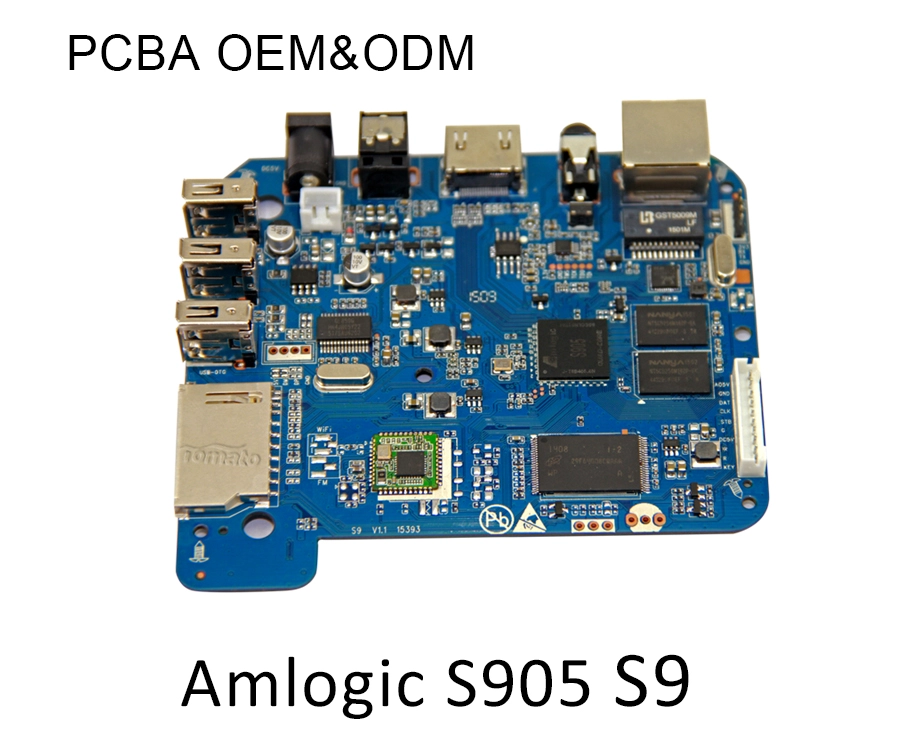
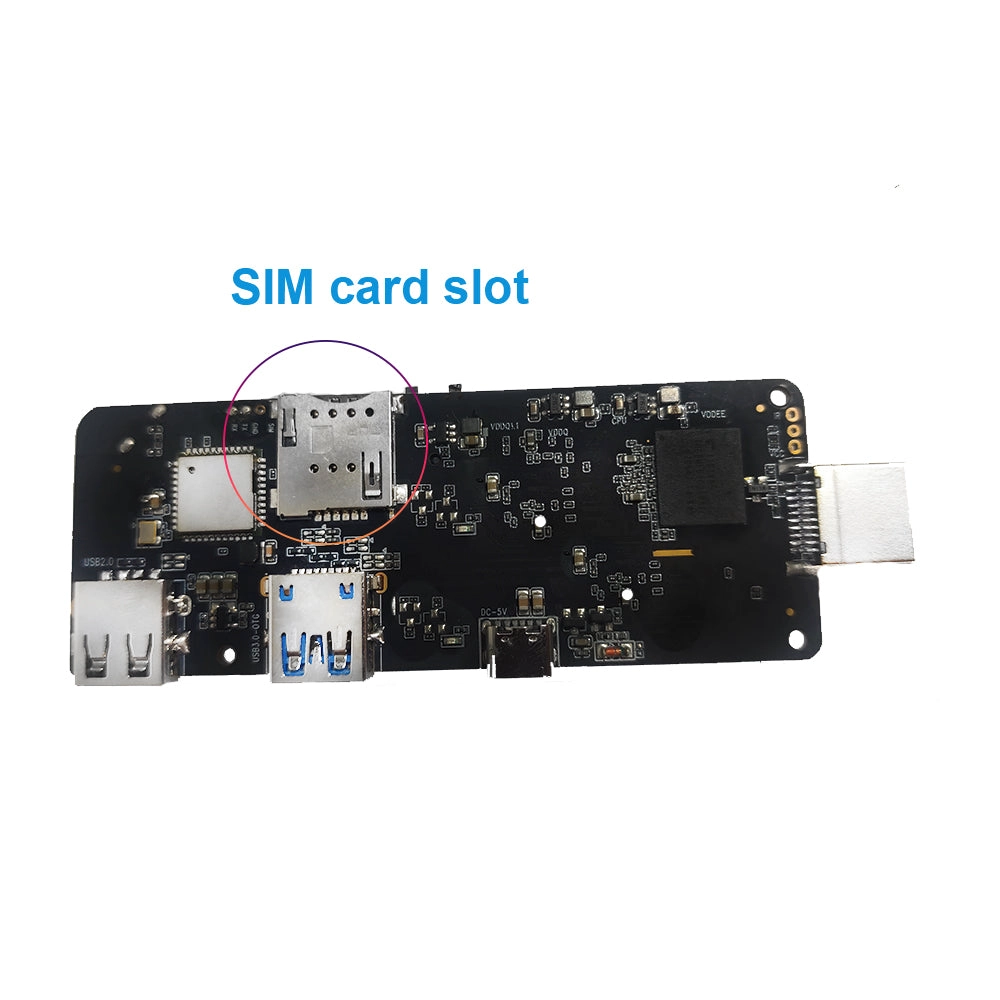
Consumer streaming boxes use cost-optimized 2-layer Printed Circuit Board Assemblies (PCBAs) with minimal power conditioning, rendering them prone to failure in commercial enclosures. Enterprise hardware requires board modifications built for electrical isolation and continuous uptime.
| Hardware Feature | Consumer-Grade Retail Box | SZTomato Industrial B2B PCBA Build |
|---|---|---|
| PCB Construction | 2-Layer or entry 4-Layer board | 6-Layer FR-4 PCB with dedicated power and ground planes |
| Storage Subsystem | Basic eMMC 5.0 flash | High-end eMMC 5.1 / UFS with wear-leveling control |
| System Memory | 2GB–4GB DDR3/DDR4 | Up to 8GB LPDDR4X / LPDDR5 wide-bus modules |
| Network Interfaces | 10/100 Mbps RJ45 + 1x1 Wi-Fi | Dual Gigabit Ethernet (1000M) + Wi-Fi 6 (2x2 MIMO) |
| Thermal Dissipation | Small stamped metal plate | Direct-contact thermal pad to extruded aluminum chassis |
| Expansion & Control I/O | Single HDMI + 1x USB 2.0 port | HDMI 2.1, RS-232 DB9, GPIO, USB 3.0, Optical SPDIF, SATA 3.0 |
Hardware Watchdog Timers (WDT)
To eliminate manual site visits when an unmonitored system locks up, enterprise PCBAs feature an independent hardware Watchdog Timer (WDT). If the OS kernel freezes or an application crashes, the hardware timer expires and cycles power to the board, forcing a cold boot to preserve 24/7 continuity.
Board-Level Power over Ethernet (PoE) & Industrial Expansion
For interactive self-service kiosks, healthcare displays, and digital menu walls, power management must be streamlined. SZTomato modifies standard PCBA designs by embedding IEEE 802.3at (PoE+) modules directly onto the board.
This allows a single Cat6 line to deliver both gigabit data and up to 25.5W of power, bypassing the need for dedicated AC drops. Integrated RS-232 DB9 serial ports and programmable GPIO headers enable direct command switching with external sensors, industrial display panels, and automated relays.
Conductive Aluminum Thermal Enclosures
High ambient operating temperatures inside sealed kiosks cause standard plastic media players to overheat, triggering CPU clock downthrottling and dropped video frames. Industrial hardware replaces fan-based setups—which fail due to dust accumulation—with fanless conductive cooling.
Custom CNC-machined aluminum alloy enclosures function as passive radiators, pulling heat off the SoC and PMIC via high-conductivity thermal pads to sustain operating ranges from -10°C to 60°C.
3. Kernel-Level Firmware Engineering & Fleet Management Protocols
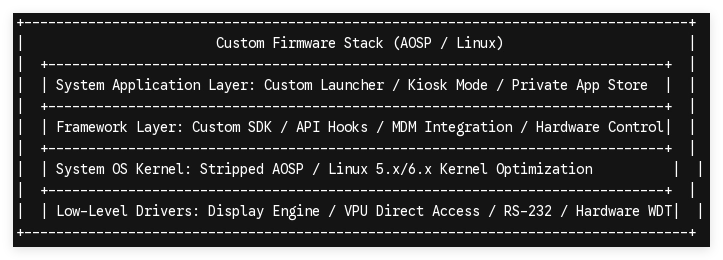
Deploying an Internet TV Box in a commercial network requires custom firmware. Standard consumer Android distributions run power-saving routines, background updates, and home screen launchers that conflict with enterprise control.
AOSP Kernel Optimization & System Streamlining
SZTomato customizes the Android Open Source Project (AOSP) or Linux kernel by stripping non-essential background daemons, consumer bloatware, and Google Mobile Services (GMS) dependencies. Streamlining the OS reduces system RAM utilization by up to 40%, leaving more memory available for local buffer pools, application data caching, and video rendering engines.
System Lockdown and Custom UI/UX Integration
Commercial endpoints must resist user tampering and power cycle disruptions:
- Kiosk Mode Boot Control: Bypasses standard setup screens to launch directly into the client's target APK within seconds of power application.
-
System UI Lockdown: Disables notification shades, navigation bars, pop-up overlays, and USB debugging access to prevent unauthorized access.
-
Custom Boot Animations & Branding: Replaces standard boot sequences with vendor-branded splash screens compiled directly into the system boot image.
Private Over-The-Air (OTA) Server Management
Managing thousands of hardware endpoints across multiple regions requires controlled firmware distribution. SZTomato configures custom SDKs and API endpoints that allow operators to point hardware update routines to private enterprise servers.
This allows network engineers to validate differential update packages, schedule deployments by subnet, and push security patches without relying on public cloud infrastructures or risking unverified updates in production environments.
Source Custom Internet TV Box Hardware with SZTomato
Specifying commercial Internet TV Box hardware requires evaluating the complete platform stack—from silicon selection and PCBA routing to thermal enclosures and kernel modifications. Consumer-grade media players lack the electrical stability, low-level access, and thermal design needed for long-term B2B operations.
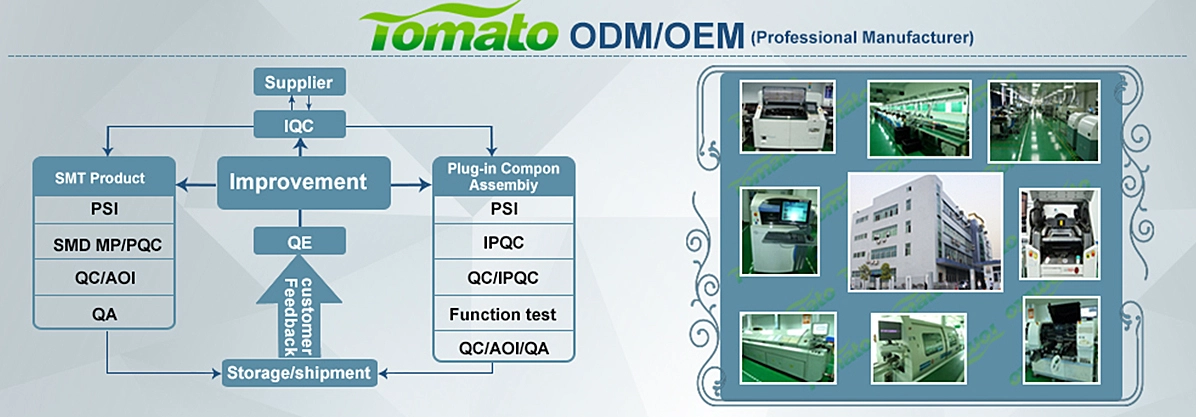
With 16+ years of expertise in cross-border B2B electronics manufacturing, SZTomato (Shenzhen Tomato Technology Co., Ltd.) delivers complete OEM/ODM solutions for system integrators, telecom providers, and digital signage network operators. Whether your project requires a custom 6-layer PCBA with PoE and RS-232 control, a stripped AOSP kernel, or a specialized fanless aluminum housing, SZTomato builds hardware platforms tailored to your operational specifications.
Ready to engineer your next media endpoint deployment? Contact the engineering team at SZTomato today to submit your design requirements, order PCBA evaluation samples, or schedule a technical firmware consultation.