What is the best way to Set-Top Box (STB)?
Architecting an Enterprise Set-Top Box (STB): The Complete B2B Hardware and Firmware Blueprint
The global migration of IPTV networks and digital signage environments toward bandwidth-efficient compression models has altered the baseline hardware requirements for commercial media endpoints. As telecom operators and commercial networks phase out legacy H.264/H.265 bitstreams in favor of hardware-decoded AV1 and VVC (H.266), consumer-grade streaming hardware fails under enterprise workloads.
Consumer dongles and retail media boxes suffer from memory bus saturation, thermal throttling under continuous duty cycles, and locked bootloaders that prevent Mobile Device Management (MDM) integration. For B2B procurement managers, telecom service providers, and system integrators, building a long-term deployment demands a purpose-built hardware platform engineered from the ground up.
1. Silicon Architecture & Codec Pipeline Optimization
The core System-on-Chip (SoC) defines the thermal boundaries, processing ceilings, and codec lifetimes of any Set-Top Box (STB). B2B hardware specs must prioritize dedicated macro-block decoders over raw CPU clock speeds to ensure frame-accurate playback without frame drops.
Next-Gen Codec Hardware Engines
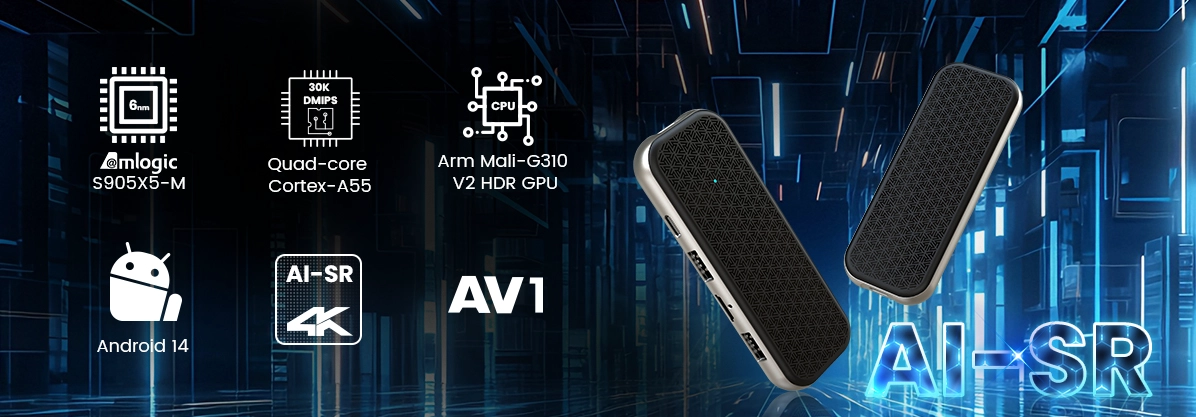
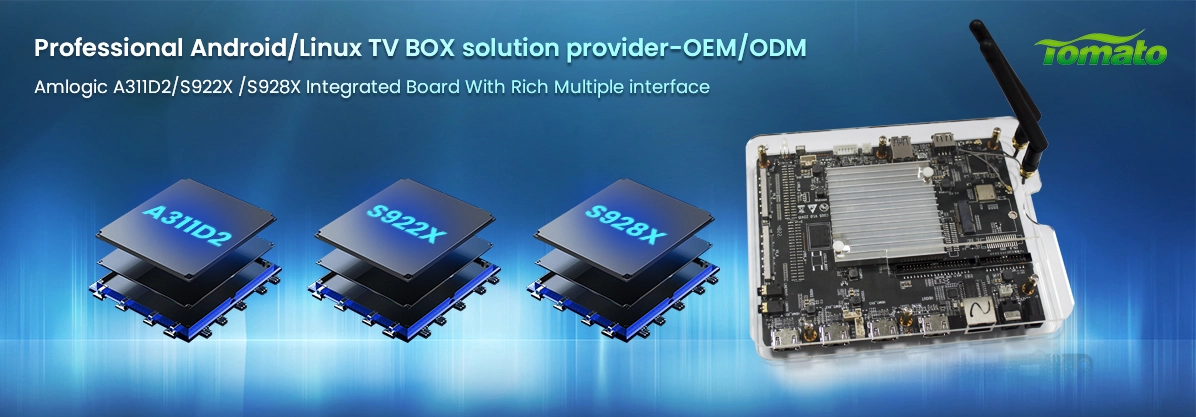
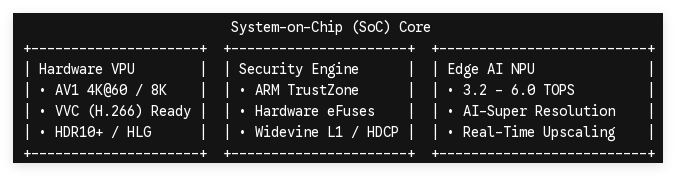
Deploying AV1 hardware decoding yields a 30% saving in network bandwidth compared to HEVC at equivalent visual quality. Modern commercial SoCs—such as the Amlogic S905X5M and high-throughput Amlogic S928X—integrate hard-macro VPUs capable of handling 4K@60fps AV1 and high-bitrate 1080p decoding natively. For industrial signage and multi-display hubs, chipsets like the Rockchip RK3588 extend this ceiling to dual 8K pipelines and multi-channel H.265 streams.
Hardware-Enforced Security Infrastructure
Commercial IPTV deployments require end-to-end Content Protection. Silicon selections must support hardware-level DRM pipelines:
-
ARM TrustZone Execution Environments: Isolating cryptographic keys from the primary OS.
-
Hardware eFuses: Permanently storing root keys for secure boot authentication.
-
DRM & HDCP Decryption: Native hardware support for Google Widevine L1, Microsoft PlayReady SL3000, and HDCP 2.2/2.3 over HDMI 2.1a outputs.
2. PCBA Hardware Engineering & Custom Thermal Topology
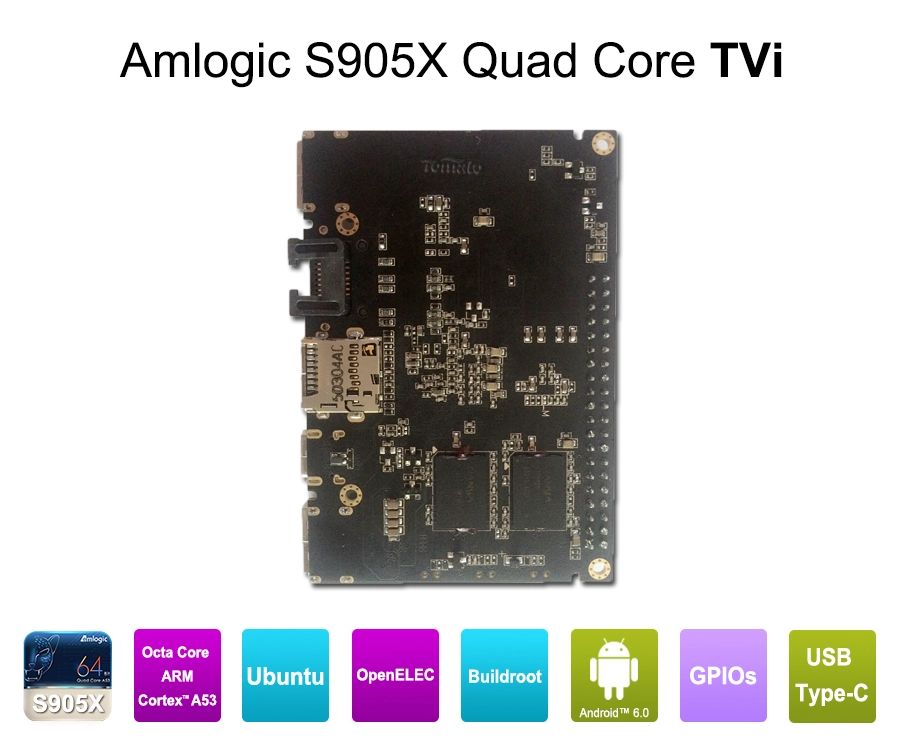
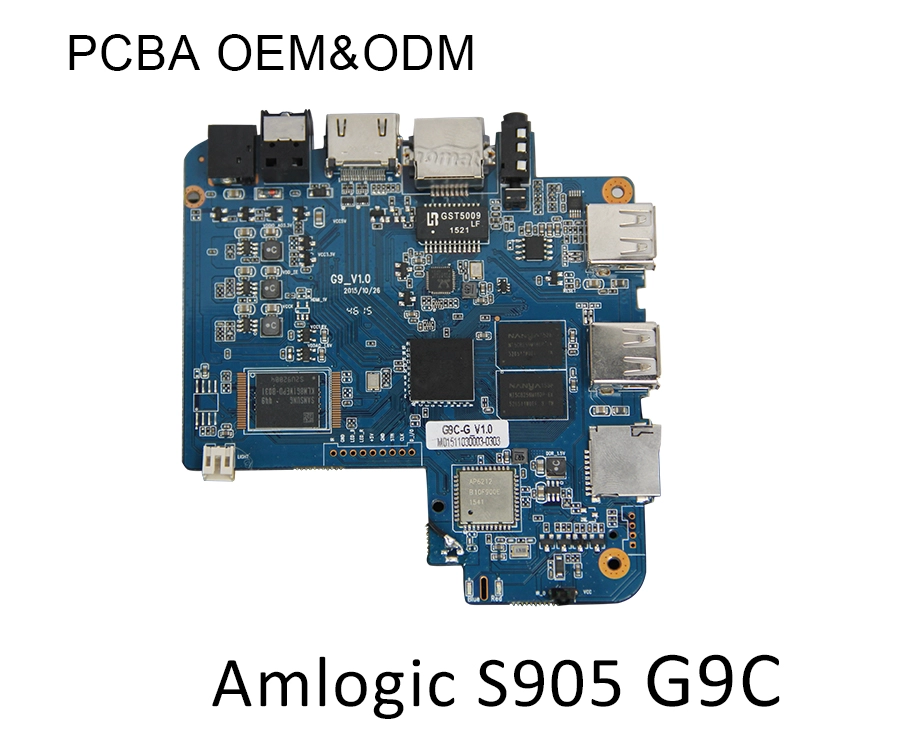
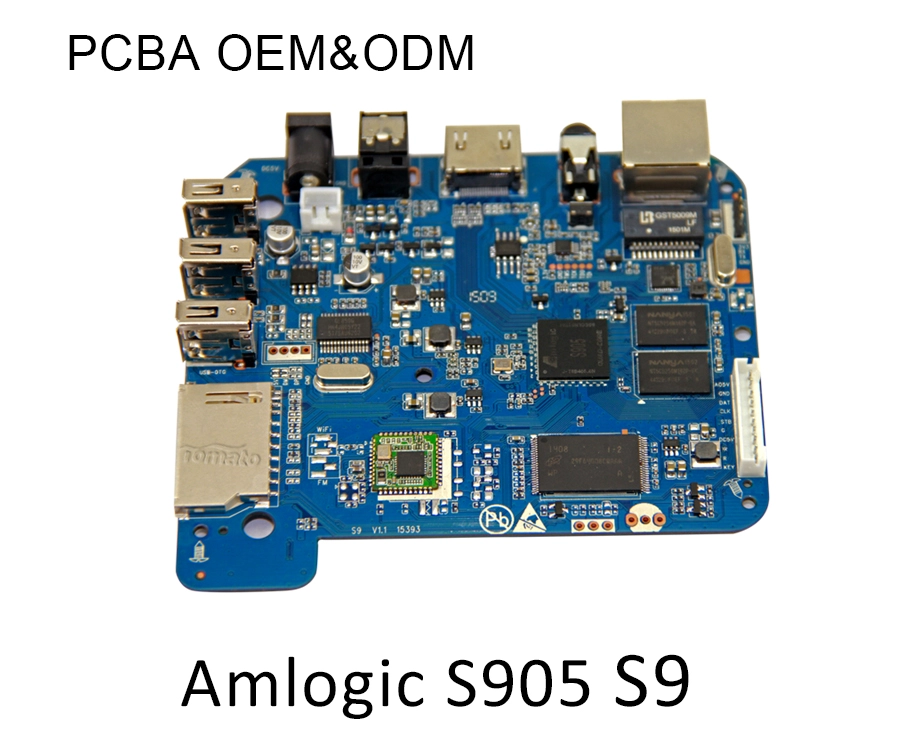
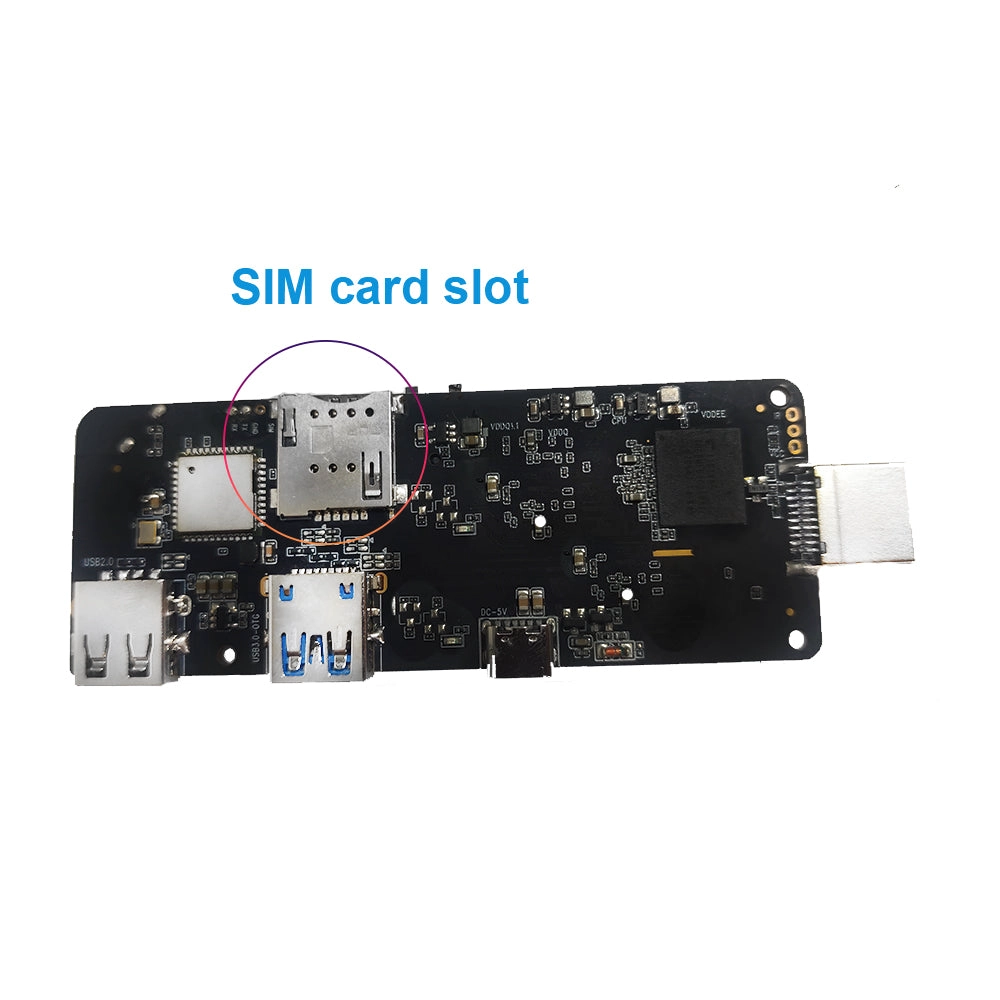
Consumer STBs rely on low-cost 2-layer Printed Circuit Board Assemblies (PCBAs) with minimal thermal buffers, leading to silicon degradation in enclosed kiosks. Enterprise hardware demands board modifications designed for continuous operations.
| Hardware Feature | Standard Retail Box | Industrial B2B PCBA Modification |
| PCB Layering | 2-Layer or basic 4-Layer | 6-Layer FR-4 PCB with dedicated power planes |
| Storage Architecture | Consumer eMMC 5.0 | High-speed eMMC 5.1 / UFS with wear-leveling algorithms |
| Memory Configuration | 2GB–4GB DDR3/DDR4 | Up to 8GB LPDDR4X/LPDDR5 high-bandwidth channels |
| Network Interfaces | 10/100 Mbps RJ45 + Basic Wi-Fi | Dual Gigabit Ethernet (1000M) + Wi-Fi 6 (2x2 MIMO) |
| Thermal Dissipation | Small stamped aluminum pad | Custom heatsink direct-bonded to aluminum chassis |
| Specialized I/O | Standard HDMI + USB 2.0 | RS-232 (DB9), GPIO, PoE module, USB 3.0, Optical |
Hardware Watchdog Timers (WDT)
System stability in unmonitored environments requires a hardware-level Watchdog Timer (WDT) integrated directly onto the PCBA. If kernel lockups or app crashes freeze the system, the WDT interrupts power delivery to trigger a clean cold reboot, maintaining 24/7 uptime without manual intervention.
Power over Ethernet (PoE) & Industrial I/O Integration
For digital signage and kiosk integration, SZTomato executes full PCBA redesigns. Integrating IEEE 802.3at (PoE+) modules directly onto the board delivers up to 25.5W of power over standard Cat6 cabling, eliminating the need for external AC adapters. Custom RS-232 serial interfaces and GPIO pins enable direct CEC/serial communications with commercial displays, video wall controllers, and industrial sensors.
Thermal Engineering for Enclosed Enclosures
When operating in ambient temperatures exceeding 45°C, standard passive cooling leads to CPU/GPU thermal throttling. Custom thermal architecture replaces thin thermal pads with CNC-machined aluminum heat sinks directly bonded to the SoC and Power Management IC (PMIC), conducting thermal energy into a extruded aluminum chassis acting as a passive radiator.
3. Low-Level Firmware Architecture and Kernel Optimization
Hardware customization is incomplete without firmware locking. Consumer Android builds contain background services, bloatware, and dynamic power management states that interfere with steady-state video rendering.
Kernel Optimization & Stripped AOSP Builds
SZTomato customizes the Android Open Source Project (AOSP) or Linux kernel to strip unused framework layers, Google Mobile Services (GMS) dependencies, and background telemetry. This cuts system memory footprint by up to 40%, freeing RAM for local media caching and high-bitrate buffering.
Custom UI/UX, Kiosk Mode, and System Locking
For enterprise control, system firmware is locked to prevent unauthorized user access:
-
Custom Launcher Integration: Defaulting directly into a proprietary user interface or signage application at boot.
-
Kiosk Locking: Disabling system status bars, quick settings, volume overlays, and USB debugging access.
-
Custom Boot Animations & Splash Screens: Injecting vendor branding directly into the bootloader partition for zero-latency branding display.
Private OTA Update Server Configuration
Managing fleets of deployment endpoints requires controlled updates. Rather than relying on public cloud servers, SZTomato integrates custom SDKs and API hooks allowing operators to point the hardware’s Over-The-Air (OTA) system to private enterprise servers. This ensures differential firmware updates can be tested, scheduled, and pushed across specific device subnets without risks of bricking remote endpoints.
Deploy Your Enterprise STB Infrastructure with SZTomato
Engineering a commercial Set-Top Box (STB) requires balancing silicon capabilities, PCBA component selections, thermal tolerances, and low-level firmware engineering. Off-the-shelf consumer devices cannot support long-term B2B deployments.
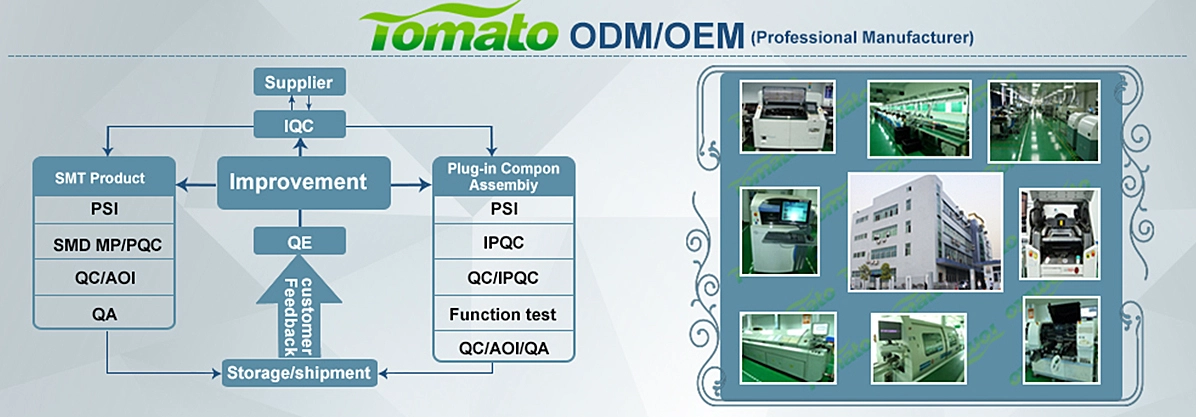
With 16+ years of expertise in cross-border B2B electronics, SZTomato (Shenzhen Tomato Technology Co., Ltd.) provides full-stack OEM/ODM services for system integrators, telecom operators, and enterprise network managers. From custom 6-layer PCBA layouts with PoE and RS-232 to stripped AOSP kernel builds and custom aluminum thermal enclosures, SZTomato delivers media hardware tailored to your technical requirements.
Ready to build your custom STB platform? Contact the engineering team at SZTomato today to submit your technical specifications, request PCBA samples, or consult on custom firmware development.