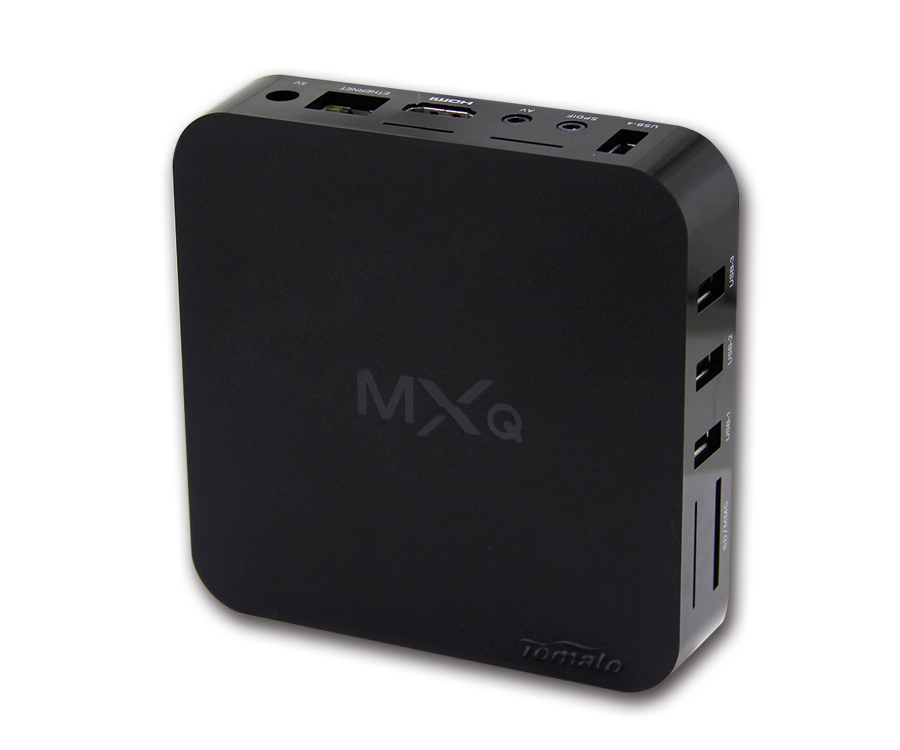
Why would you need an Android Mini PC?
Commercial Android Mini PC Hardware: Architecture, Edge AI, and Enterprise Integration
The total cost of ownership (TCO) for commercial endpoint computing is undergoing a structural shift. For decades, x86-based desktop hardware dominated digital signage networks, interactive self-service kiosks, and point-of-sale (POS) systems. However, high thermal dissipation, steep OS licensing overhead, and excessive power draw have created severe operational bottlenecks for large-scale hardware deployments.
Modern ARM System-on-Chip (SoC) platforms have redefined performance-per-watt metrics. By combining multi-core ARM CPUs with high-throughput Video Processing Units (VPUs), embedded Neural Processing Units (NPUs), and low-level Linux/Android kernel access, an Android Mini PC provides the processing power of legacy industrial PCs at a fraction of the power footprint. For B2B procurement managers, system integrators, and network operators, adopting ARM-based Android Mini PCs solves systemic hardware challenges.
1. Architectural Superiority: ARM Efficiency vs. Legacy x86 Hardware
Evaluating an Android Mini PC for enterprise environments requires assessing power efficiency, processing density, and hardware lifecycle longevity. While consumer-grade streaming sticks throttle under sustained loads and x86 mini PCs demand active fan cooling with 65W+ power draw, ARM-based platforms operate natively within 5W–15W thermal envelopes.
High-Throughput Processing & Edge AI Acceleration
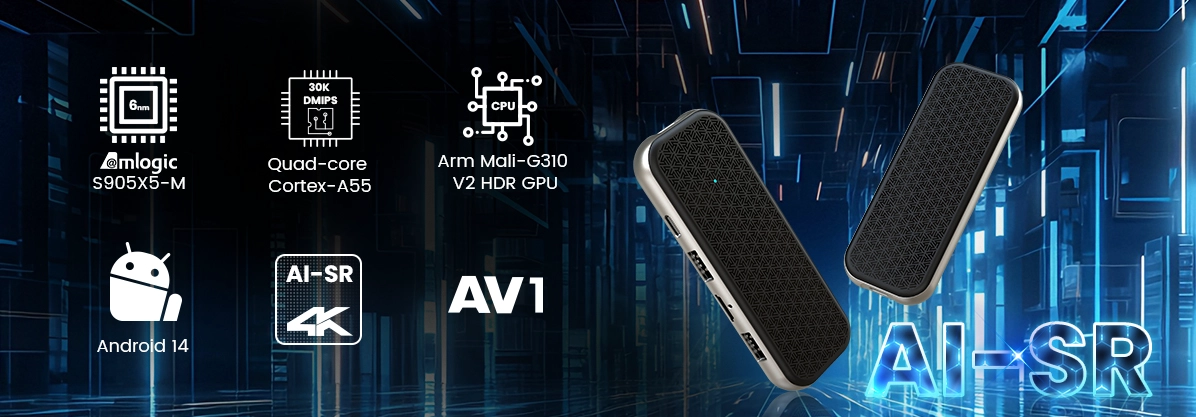
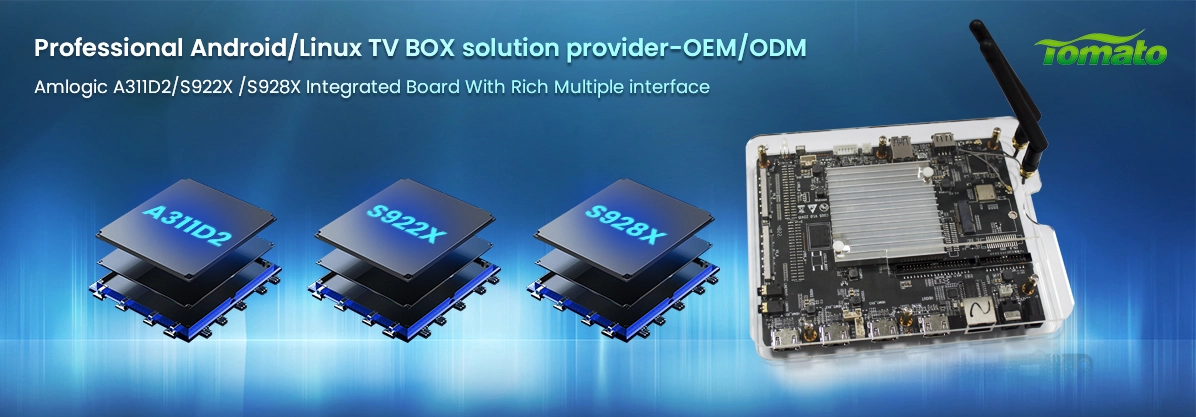
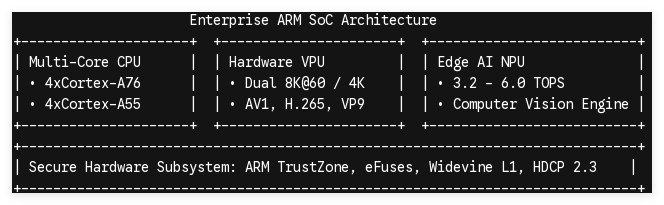
Modern flagship processors—such as the Rockchip RK3588 (4x Cortex-A76 + 4x Cortex-A55) and Amlogic S928X—deliver the compute performance required for parallel multitasking. The integration of onboard NPUs delivering 3.2 to 6.0 TOPS enables real-time edge processing. Systems can execute real-time facial recognition, audience telemetry analysis, and AI-driven resolution upscaling (AI-SR) directly on the local endpoint without pushing raw video streams back to cloud servers.
Hardware-Accelerated Multi-Display Decoding
For multi-screen digital signage arrays and commercial video walls, dedicated VPUs execute multi-channel decoding without overloading the primary CPU cores. A single RK3588-based Android Mini PC can drive dual 8K or quad 4K video outputs simultaneously over HDMI 2.1 and DisplayPort protocols, maintaining frame-accurate synchronization across all connected displays.
2. Industrial PCBA Customization & Enclosure Thermal Topology
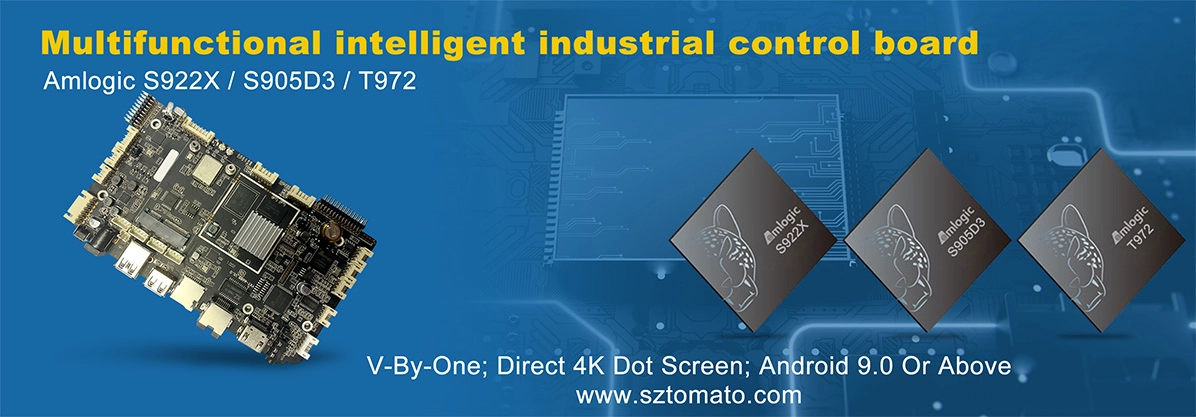
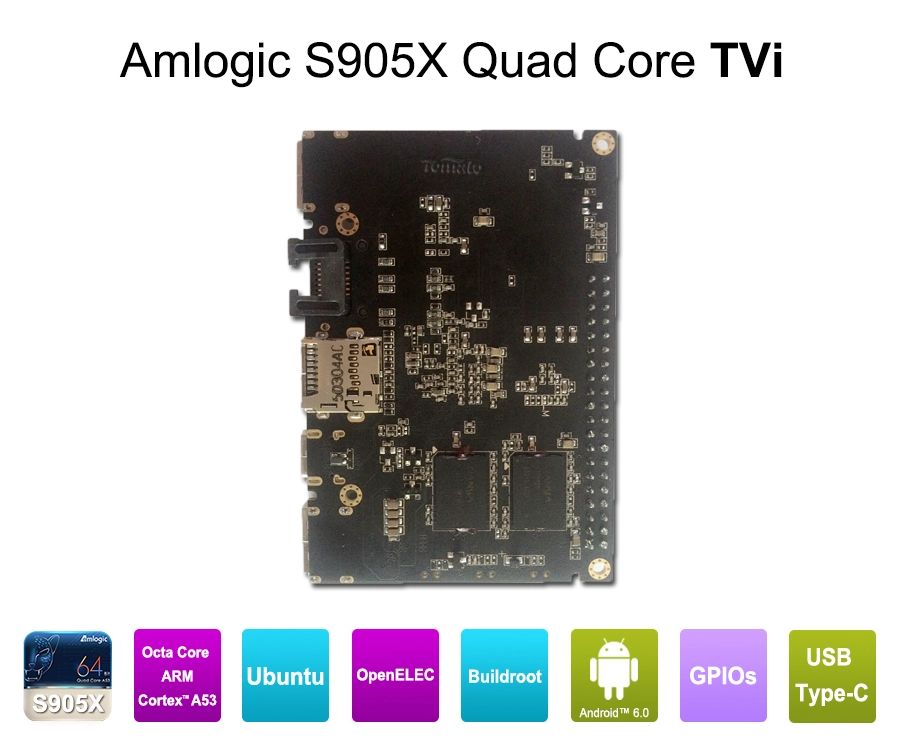
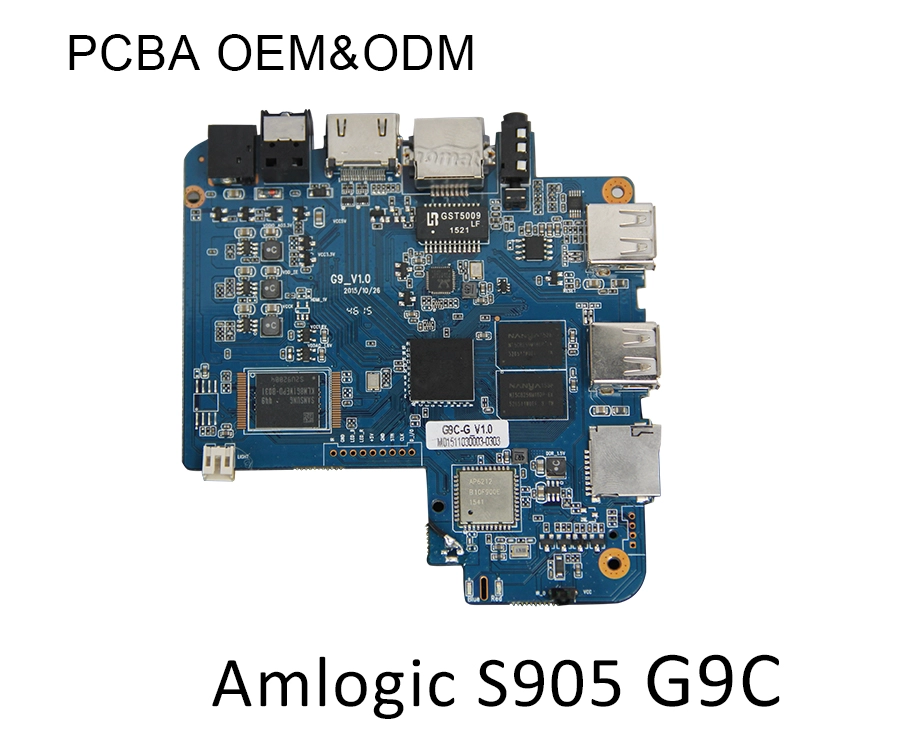
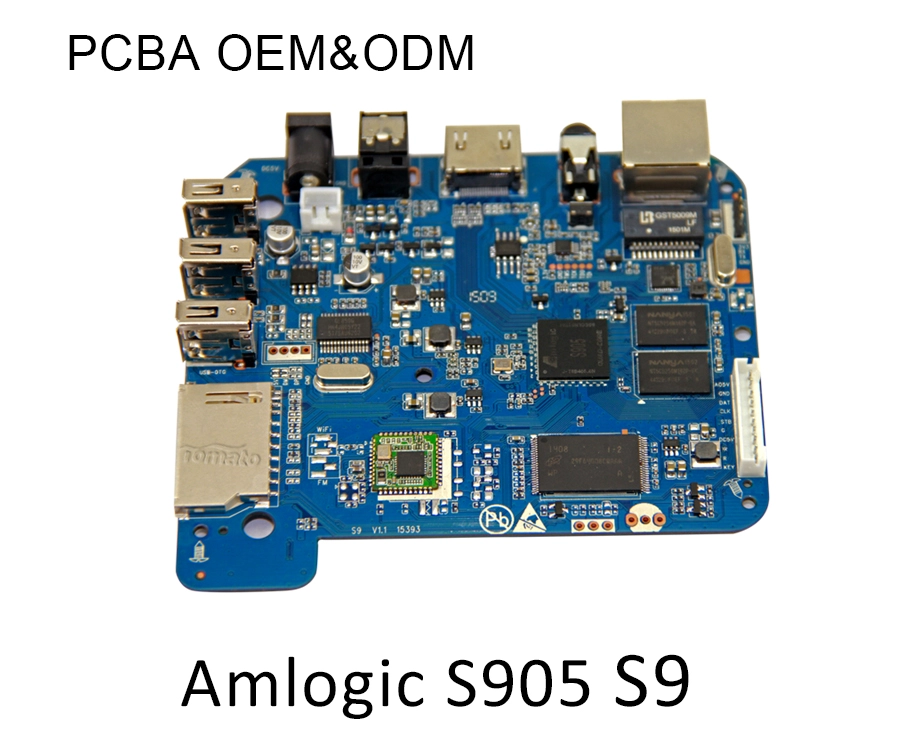
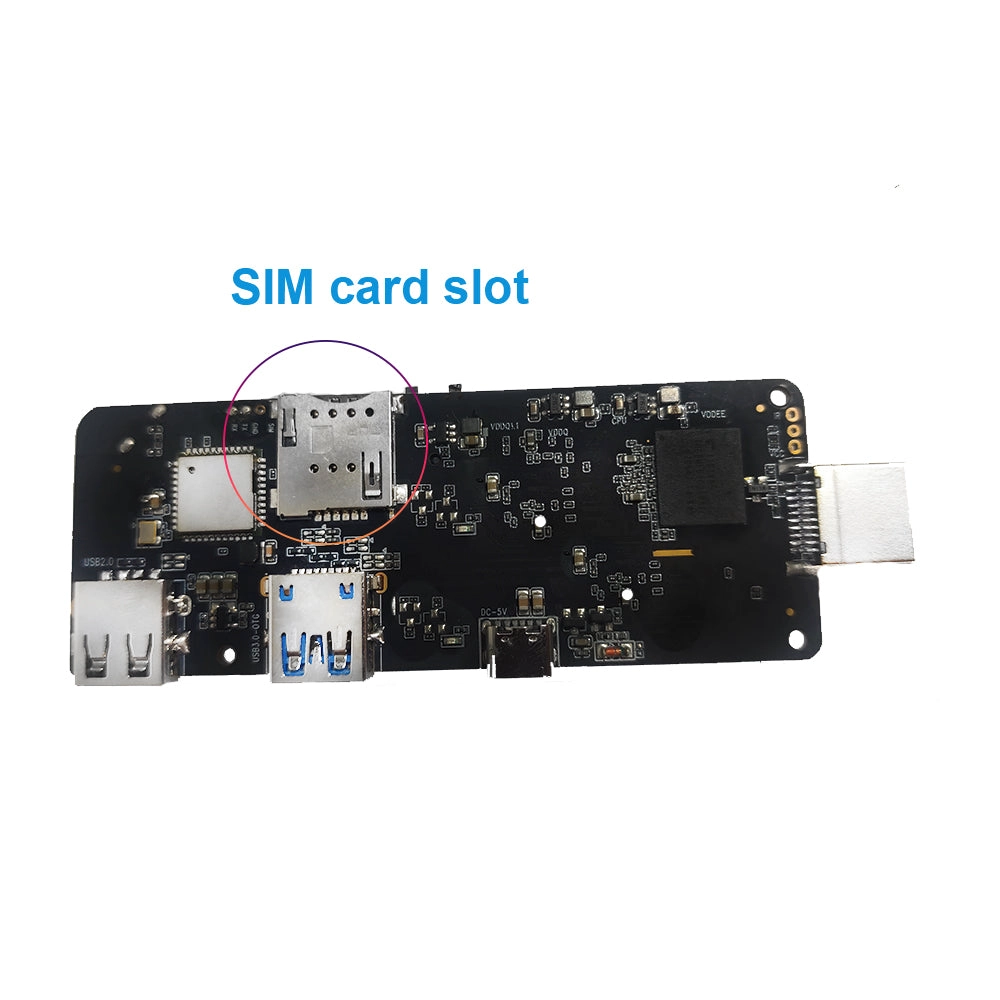
Standard off-the-shelf Android devices are manufactured using cost-optimized 2-layer Printed Circuit Board Assemblies (PCBAs) meant for light consumer usage. Deploying hardware behind sealed kiosk displays or inside factory-floor enclosures demands industrial-grade PCBA modification and passive thermal management.
| Hardware Parameter | Off-the-Shelf Consumer Unit | SZTomato B2B Industrial PCBA Build |
|---|---|---|
| PCBA Layering | 2-Layer or entry 4-Layer board | 6-Layer FR-4 PCB with isolated power planes |
| Flash & RAM | Consumer eMMC 5.0 | Industrial eMMC 5.1 / UFS with wear-leveling control |
| System Uptime | Software reboot only | Hardware Watchdog Timer (WDT) built onto PCBA |
| I/O Connectivity | Basic HDMI out + 1x USB 2.0 | HDMI In/Out, RS-232 DB9, GPIO, USB 3.0, Optical, SATA |
| Power Input | Standard 5V/2A DC Adapter | IEEE 802.3at (PoE+) / 12V–24V Wide Voltage Terminal |
| Thermal Design | Plastic casing + stamped plate | Fanless CNC aluminum chassis acting as radiator |
Hardware Watchdog Timers (WDT)
Unattended deployments in remote environments cannot rely on manual power-cycling. SZTomato integrates a dedicated hardware Watchdog Timer (WDT) on the PCBA. If an operating system lockup or kernel panic occurs, the WDT automatically interrupts power delivery and initiates a cold system reboot, maintaining 24/7 continuous operation.
Board-Level Power over Ethernet (PoE+) & Serial Control
To streamline installation in high-density environments, SZTomato customizes PCBAs to incorporate IEEE 802.3at (PoE+) modules directly on the board. This enables a single Cat6 Ethernet run to deliver both gigabit networking and up to 25.5W of system power. Furthermore, integrating physical RS-232 serial ports and programmable GPIO pins allows direct bi-directional communication with commercial displays, barcode readers, receipt printers, and external industrial sensors.
Passive Fanless Cooling Architecture
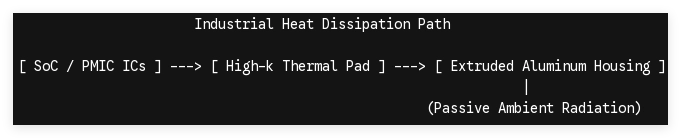
Active cooling fans in 24/7 commercial deployments inevitably accumulate dust, leading to bearing failure, thermal throttling, and hardware lockups. B2B Android Mini PCs utilize fanless conductive cooling. High-conductivity thermal interface materials transfer thermal energy directly from the SoC and PMIC to an extruded CNC-machined aluminum alloy chassis, allowing fanless operation across ambient temperature ranges from -20°C to 60°C.
3. Kernel Optimization, System Lockdown, and Private OTA Management
The hardware architecture of an Android Mini PC represents only half the equation; system stability is governed by the firmware stack. Consumer Android distributions contain background services, automatic updates, and consumer applications that interfere with enterprise application delivery.
Stripped AOSP & Linux Kernel Engineering
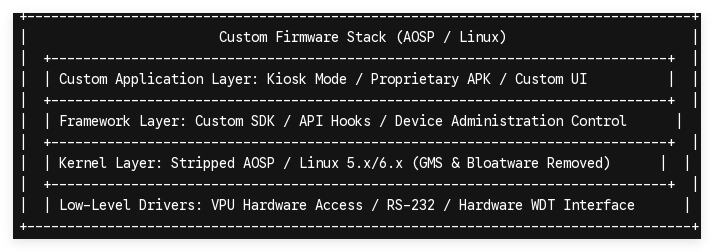
SZTomato customizes the Android Open Source Project (AOSP) and Linux kernel environments by removing Google Mobile Services (GMS), unnecessary background daemons, and consumer telemetry routines. Streamlining the core system footprint reduces operating system memory usage by up to 40%, leaving maximal RAM resources dedicated to local video buffering, web view rendering, and edge application execution.
System UI Lockdown & Kiosk Configuration
Enterprise hardware must be protected against end-user tampering and power supply drops:
-
Instant Auto-Boot & Launch: The system bypasses standard setup wizards and boots directly into the targeted client application within seconds of applying power.
-
Strict Kiosk Environment: Navigation bars, status pull-downs, volume pop-ups, and developer access points are completely disabled at the system firmware level.
-
Vendor-Specific Branding: System bootloaders are compiled with client splash screens and boot animations to maintain seamless corporate identity.
Private OTA Update Server Integration
Fleet management requires granular control over firmware updates. SZTomato embeds custom SDKs and configurable API endpoints into system builds, enabling enterprise administrators to direct device update routines to private local or cloud update servers. Network operators can validate differential firmware builds, schedule rollouts by device group, and patch vulnerabilities across remote networks without risking unverified updates or system bricking.
Partner with SZTomato for Enterprise Android Hardware
An enterprise Android Mini PC delivers power efficiency, hardware durability, edge processing capabilities, and complete software control. Off-the-shelf retail streaming boxes and standard consumer Mini PCs cannot provide the thermal engineering, I/O customization, or low-level kernel access required to support B2B infrastructure.
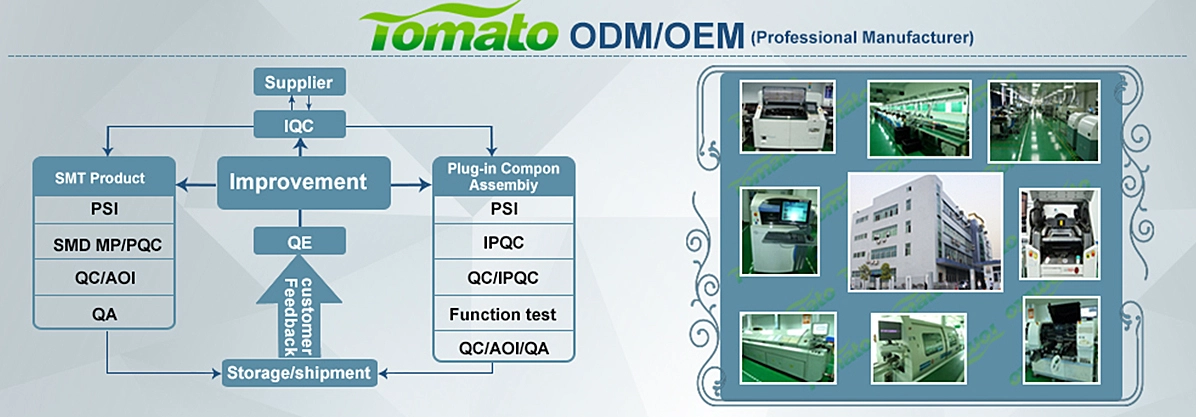
With 16+ years of specialized expertise in cross-border B2B electronics manufacturing, SZTomato (Shenzhen Tomato Technology Co., Ltd.) delivers custom OEM/ODM solutions for system integrators, telecom operators, and enterprise hardware vendors. From 6-layer PCBA layouts featuring PoE and RS-232 I/O to custom AOSP firmware lockdown, fanless aluminum thermal designs, and private OTA server integration, SZTomato builds hardware platforms engineered specifically for your technical environment.