
What channels are free on an OTT TV Box?
What Channels Are Free on an OTT TV Box? A B2B Guide to FAST, Free Streaming and Platform Architecture
The economics of OTT television are changing faster than the hardware cycle. In August 2026, Google TV Freeplay has expanded to more than 300 free live channels and more than 10,000 free on-demand titles in supported markets, while FAST services such as Tubi, Pluto TV and The Roku Channel continue to expand their advertising-supported libraries.
For an OTT TV Box manufacturer or system integrator, however, the question “What channels are free?” is more complicated than publishing a channel list.
Free channels depend on country, content rights, operating system, application availability, device certification, network access and the business model of the content provider. A box does not magically unlock premium television channels. It provides the hardware and software platform through which legitimate free or paid streaming services can be accessed.
For B2B procurement, the more useful question is:
Which free-content ecosystem can an OTT TV Box support, and can that platform be customized for long-term commercial deployment?
1. What Free Channels Can You Watch on an OTT TV Box?
The first distinction is between free-to-watch streaming channels and traditional broadcast channels.
An OTT TV Box normally receives television content through an IP network rather than a terrestrial, satellite or cable tuner. Free streaming channels generally fall into three categories:
FAST Channels
FAST means Free Ad-Supported Streaming Television.
These services provide scheduled linear channels without requiring viewers to pay a conventional monthly subscription. Advertising funds the service.
Typical FAST content includes:
-
News
-
Weather
-
Movies
-
Classic television
-
Reality programming
-
Sports highlights
-
Lifestyle
-
Food
-
Crime
-
Children's programming
-
Music
-
International programming
Google's current Android TV documentation confirms that free live channels can be available without app installation, registration or a subscription, while services including Haystack News, Plex, Pluto TV and Tubi can provide additional free live channels.
AVOD Services
AVOD means Advertising-Based Video on Demand.
Unlike a traditional linear TV channel, AVOD allows the viewer to select a movie or program from an on-demand library.
The commercial model is straightforward:
Content → advertising → viewer pays nothing
This is particularly relevant for OTT TV Box manufacturers because AVOD applications can be pre-integrated into a customized launcher or content portal, subject to the platform provider's commercial and technical requirements.
Free Ad-Supported Content Integrated Into the TV Platform
Google TV itself provides a free content section in supported regions. Google's documentation states that the Free section contains advertising-supported content at no charge, subject to availability.
Google also previously reported integrating free channels from providers such as Tubi, Plex, Haystack News and Pluto TV into its live-TV experience.
The important point for OEM buyers is that “free” does not mean globally identical.
A channel available on one OTT TV Box in the United States may not be available on the same hardware sold in Europe, Japan, Southeast Asia or Latin America.
Content licensing is regional.
2. Examples of Free OTT Channels and Services
The exact channel lineup changes continuously, so a manufacturer should avoid putting a permanent “500 free channels” claim on an OEM product page without specifying the market and platform.
Google's current U.S. Google TV documentation lists free channels from providers including Xumo and identifies channels such as:
-
AccuWeather NOW
-
America's Test Kitchen
-
BBC Earth
-
BBC Food
-
BBC Home & Garden
-
beIN Sports Xtra
-
Billiard TV
-
Boston 25
-
Bounce XL
-
BritBox Mysteries
-
DUST
-
Baby Shark TV
-
Bloomberg TV+
-
Yahoo! Sports Network
-
The Martha Stewart Channel
The exact lineup is subject to change and regional availability.
Other major free streaming ecosystems include:
| Platform / Service | Typical Free Content | Business Model |
|---|---|---|
| Google TV Freeplay | Live channels + VOD | Advertising |
| Tubi | Movies, TV, live channels | Advertising |
| Pluto TV | Linear channels + VOD | Advertising |
| Plex | Live channels + VOD | Advertising |
| Haystack News | News channels | Advertising |
| The Roku Channel | FAST + VOD | Advertising |
| Xumo | FAST channels | Advertising |
Google specifically confirms free live content from Haystack News, Plex, Pluto TV and Tubi on Android TV.
The broader market is moving in the same direction. A 2026 survey by Cord Cutters News found The Roku Channel, Pluto TV and Tubi among the leading free streaming services preferred by its surveyed audience.
What About Netflix, Disney+ and Prime Video?
These should not be placed in the same category.
They are primarily subscription-based services. Owning an OTT TV Box does not make their premium content free.
This distinction is critical for distributors.
A product description stating:
“Watch Netflix, Disney+ and thousands of free channels”
can be commercially misleading if the wording implies that premium services are included at no additional charge.
A technically accurate description should separate:
Free FAST/AVOD content
from
Subscription-based streaming applications.
3. Why an OTT TV Box Does Not Automatically Provide Free TV
This is where hardware specifications and content licensing are frequently confused.
An OTT TV Box is a computing and media platform.
It does not own the content rights.
The box provides:
-
Network connectivity
-
Video decoding
-
HDMI output
-
Application execution
-
DRM capability
-
User interface
-
Storage
-
Remote-control input
-
OTA update capability
The content provider controls whether a particular channel or application can be accessed.
Regional Availability Matters
Google's documentation states that live-TV availability varies by location and that Google TV Freeplay is currently a U.S.-specific service in the documented Google TV experience. Other regions can have different Live-tab partners.
For an international OEM project, this creates an important product-development requirement:
Do not design the hardware around a single country's content ecosystem unless the sales territory is fixed.
Instead, the platform should support regional application configuration and firmware variants.
A European distributor may require one application bundle.
A U.S. operator may require another.
A Japanese customer may need a completely different content stack.
That is a firmware architecture problem, not simply an APK installation problem.
4. What Hardware Does a Good OTT TV Box Need?
Free streaming does not mean low technical requirements.
A modern OTT TV Box should be designed around the video formats and application workloads expected over its deployment lifecycle.
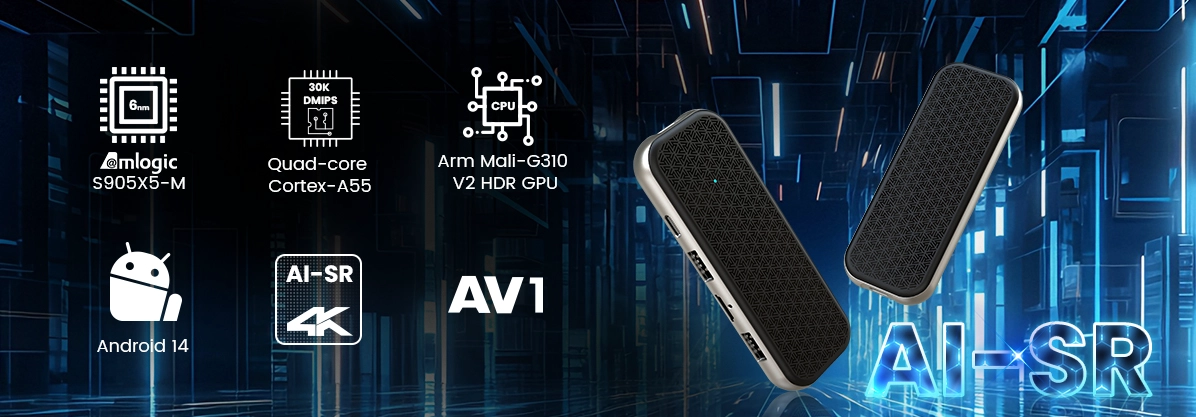
AV1 Hardware Decoding
AV1 is becoming increasingly important for streaming platforms because of its compression efficiency.
A capable SoC with dedicated AV1 decoding reduces the need for CPU-based video processing and can improve power efficiency during high-resolution playback.
For a new-generation OTT TV Box, the evaluation should therefore include:
-
AV1 hardware decode
-
H.265/HEVC decode
-
VP9 decode
-
4K@60fps capability
-
HDR support
-
HDMI output capability
-
Secure media path
-
DRM support
-
HDCP protection
The CPU benchmark alone tells very little about actual streaming performance.
SoC Selection
For a commercial OTT TV Box, platform selection should match the application.
A media-focused Amlogic platform can be appropriate for OTT and IPTV products where efficient 4K decoding and stable Android media pipelines are the priority.
A higher-performance Rockchip platform can make more sense where the same device also needs:
-
Digital signage
-
Multi-display output
-
AI inference
-
Industrial control
-
Edge computing
-
Linux workloads
This is why there is no universal “best” OTT TV Box chipset.
The correct SoC is the one that matches the workload and lifecycle requirements.
5. DRM and HDCP Are More Important Than the Channel List
A buyer can have an excellent 4K SoC and still encounter streaming limitations if the complete security and media stack is not properly engineered.
Commercial streaming environments may require:
-
DRM
-
HDCP
-
Secure boot
-
Secure media path
-
Trusted execution components
-
Platform certification
-
Application compatibility
These requirements become particularly important when integrating premium content services.
The engineering chain should be evaluated as:
SoC → BSP → Android framework → MediaCodec → DRM → HDCP → Application → OTA
not merely:
CPU → RAM → 4K
For system integrators, this distinction prevents a common procurement mistake: selecting a low-cost board based on specifications and discovering during deployment that required applications or protected content cannot operate as expected.
6. Where OEM/ODM Engineering Changes the Commercial Equation
An off-the-shelf OTT TV Box can be suitable for a consumer purchase.
A commercial operator may require a completely different architecture.
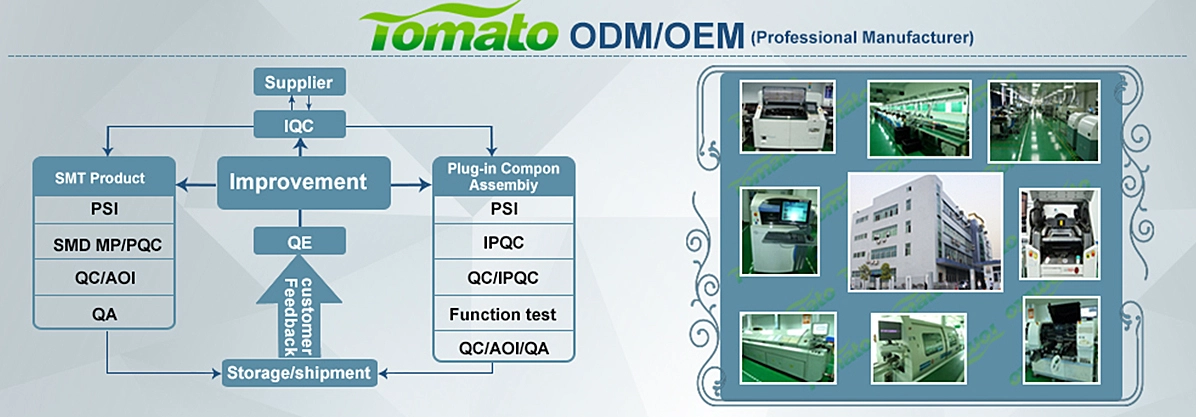
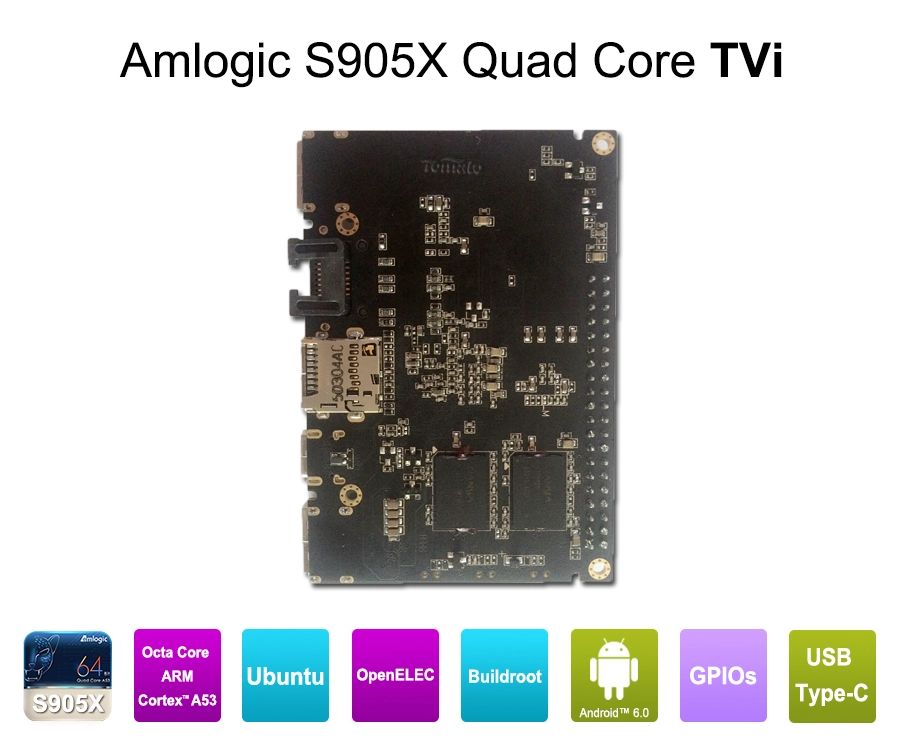
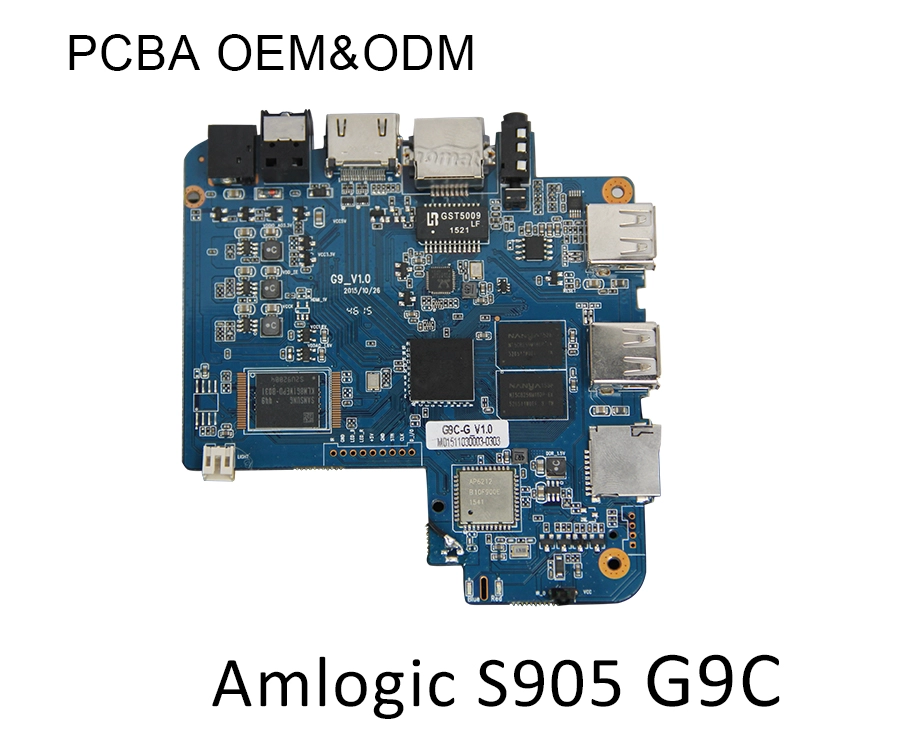
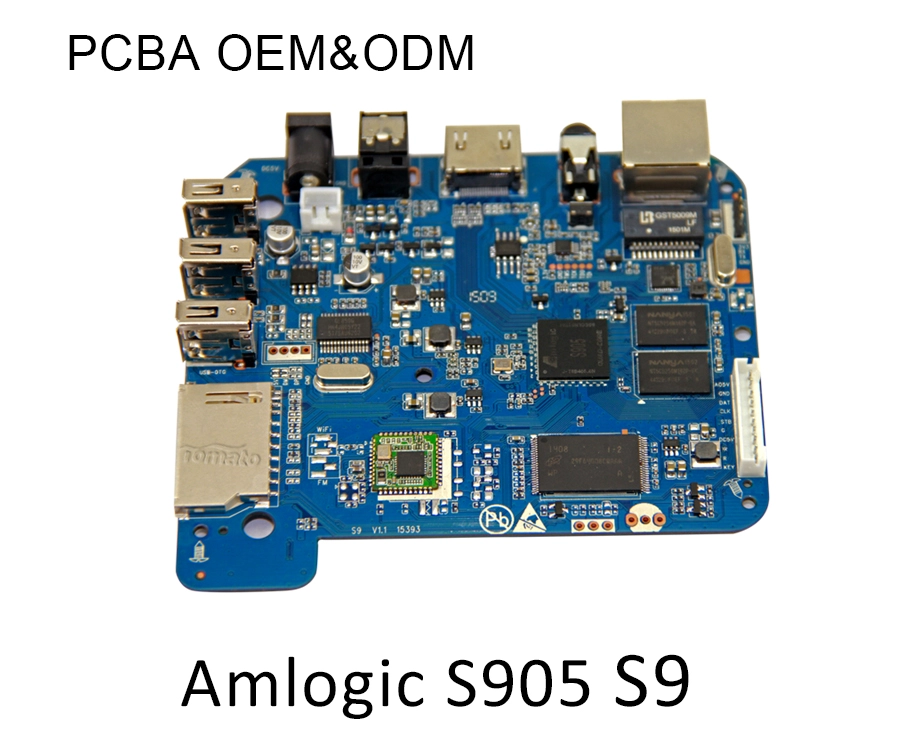
SZTomato's OEM/ODM approach can address the platform at both hardware and firmware levels.
PCBA Hardware Modification
A project may require:
-
Custom Ethernet configuration
-
Additional USB ports
-
RS232/RS485 interfaces
-
GPIO
-
Different Wi-Fi modules
-
Custom storage
-
Modified power architecture
-
Customized antenna design
These changes can transform a consumer-oriented board into a project-specific embedded platform.
Custom UI/UX Firmware
An OTT operator may want its own:
-
Home screen
-
Channel guide
-
Brand identity
-
Content categories
-
Application launcher
-
Parental controls
-
Kiosk mode
-
Promotional interface
A hotel may require room-service integration.
A telecom operator may require its own IPTV middleware.
A digital signage provider may require automatic application launch and device lockdown.
These requirements belong in the firmware architecture from the beginning.
SDK/API Integration
Commercial OTT TV Box deployments frequently need integration with:
-
IPTV middleware
-
CMS
-
CRM
-
Hotel PMS
-
Remote device management
-
Advertising platforms
-
Content recommendation engines
-
Cloud APIs
The ability to integrate these systems at the SDK/API level is more valuable than simply supplying a large storage configuration.
7. OTA Management Becomes Critical at Scale
Suppose an operator deploys 10,000 OTT TV Boxes.
A firmware bug affecting 1% of devices means approximately 100 devices require attention.
If the firmware architecture has no controlled OTA mechanism, support costs can escalate quickly.
A commercial OTA system should support:
-
Signed firmware
-
Version control
-
Staged rollout
-
Device grouping
-
Remote update
-
Automatic rollback
-
Update failure recovery
-
Logging
-
Diagnostic reporting
For operators, OTA is not an optional software feature.
It is part of the operational infrastructure of the OTT TV Box fleet.
8. Industrial OTT TV Box Projects Need Different Thermal Engineering
A consumer box may operate for several hours per day.
An industrial or commercial unit may operate continuously.
That changes the thermal design requirements.
High sustained SoC utilization can produce:
-
Thermal throttling
-
Wi-Fi instability
-
System crashes
-
Storage degradation
-
Reduced component lifespan
SZTomato can address these requirements through customized:
-
PCBA layouts
-
Heat spreaders
-
Aluminum heatsinks
-
Thermal pads
-
Enclosure structures
-
Airflow design
-
Power-stage optimization
For a 24/7 deployment, a slightly higher BOM cost for thermal engineering can be cheaper than repeated field replacements.
That is the type of calculation B2B procurement teams should make.
9. How to Choose an OTT TV Box for a Commercial Project
Instead of asking a supplier:
“How many free channels does this OTT TV Box have?”
ask:
-
Which free-content platforms are officially supported?
-
Which countries and regions are covered?
-
Are free channels provided by Google TV, third-party applications or both?
-
Are the channels FAST, AVOD or subscription-based?
-
What happens when content rights change?
-
Does the SoC support AV1 hardware decoding?
-
What DRM and HDCP capabilities are available?
-
Can the PCBA be modified?
-
Can the launcher and UI be customized?
-
Is SDK/API integration supported?
-
Is there a production-grade OTA system?
-
Can the hardware operate 24/7 under sustained load?
-
Who maintains the firmware after mass production?
These questions produce a much more accurate assessment of an OTT TV Box supplier.
Conclusion: Free Channels Are a Content Ecosystem, Not a Hardware Feature
The answer to “What channels are free on an OTT TV Box?” depends on the platform, country, content provider and licensing arrangement.
In supported markets, viewers can access substantial amounts of free advertising-supported content through Google TV and services such as Tubi, Pluto TV, Plex, Haystack News and Xumo. Google currently documents free live channels without an app installation, registration or subscription on compatible Android TV/Google TV experiences, while the actual lineup remains subject to regional availability.
For B2B buyers, however, the free-channel count should not be the primary procurement metric.
The stronger evaluation model is:
Content ecosystem + SoC + AV1 + DRM/HDCP + firmware + OTA + thermal design + customization + lifecycle support.
That is where an OTT TV Box becomes a commercial platform rather than a commodity streaming device.
For procurement managers, IPTV operators, OTT brands and system integrators, SZTomato can support projects requiring PCBA hardware modification, SDK/API integration, custom UI/UX firmware, Android/Linux kernel optimization, OTA infrastructure and specialized cooling solutions.
If your requirement is a branded OTT TV Box for a specific region, content ecosystem or deployment environment, the right approach is to define the content, hardware and firmware architecture together before mass production. That prevents the common mistake of selecting a low-cost box first and attempting to solve certification, application compatibility and fleet management after the hardware has already been locked.
