
What is Internet TV Box better than Roku?
Open Internet TV Box vs. Roku: Why Enterprise Integrators Reject Closed Ecosystems
Modern video distribution across commercial IP networks requires endpoints that operate as dedicated network nodes rather than passive consumer appliances. As network operators transition to the AV1 video codec to achieve 30% bandwidth savings on high-bitrate 4K streams, client-side hardware must handle intensive video decoding while simultaneously executing background telemetry, local database synchronization, and automated peripheral control.
Achieving this level of integration is impossible on closed, consumer-focused devices like Roku. While Roku serves retail users well, its proprietary architecture imposes strict operational constraints on B2B system integrators, hospital IT teams, and hotel network operators. B2B deployment teams consistently choose open-architecture Internet TV Box hardware over walled-garden retail streaming sticks for distinct structural reasons.
1. System Architecture: Root Access vs. Walled-Garden Sandboxing
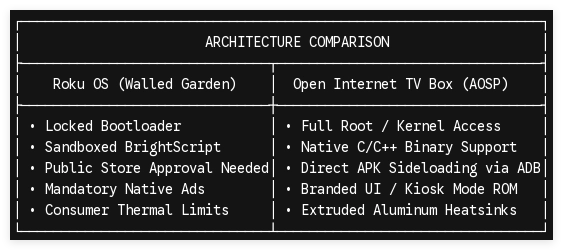
The primary bottleneck of Roku hardware in enterprise environments lies within its operating system kernel. Roku devices run Roku OS, a locked Linux distribution that sandboxes developer execution within its proprietary BrightScript scripting language and SceneGraph UI framework.
The Limits of BrightScript
Under Roku’s framework, developers cannot:
-
Execute low-level C/C++ system binaries or compiled background daemons.
-
Interface directly with physical serial peripherals (e.g., RS-232, UART, or custom GPIO arrays for sensors and touchscreens).
-
Bypass the native home screen interface, which actively displays third-party ads and competing content promotions.
-
Sideload proprietary corporate APKs without going through Roku's channel store validation or restricted developer channel limits.
The Open Internet TV Box Alternative
An enterprise-grade Internet TV Box built on the Android Open Source Project (AOSP) or optimized Android TV branches grants system architects total system-level control:
-
Firmware Root Sovereignty: Software teams retain root access to compile custom ROMs, modify Linux kernel parameters, and inject custom middleware directly into system binaries.
-
Kiosk Mode Boot-Locking: Custom firmware boots directly into your target IPTV app (e.g., Stalker, Xtream UI) or digital signage rendering engine, completely suppressing the underlying OS interface, Play Store, and third-party advertising.
-
Hardware API Access: Native Android SDKs allow direct communication with custom hardware interfaces, expansion boards, and connected serial equipment.
2. Hardware Agility & PCBA-Level Customization
Retail streaming sticks are engineered for cost-sensitive consumer markets, resulting in lightweight plastic housings, minimal board routing, and passive cooling designed for short, sporadic viewing sessions. In contrast, commercial deployments require sustained performance under continuous 24/7 operation.
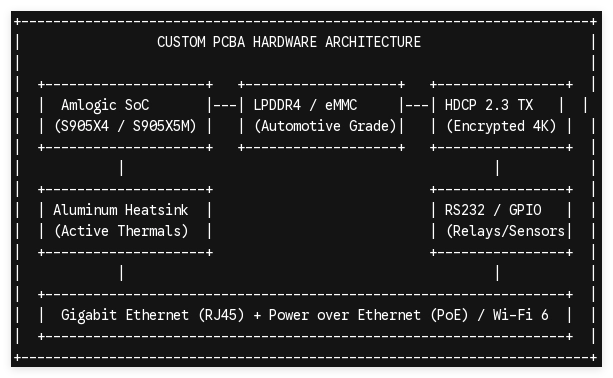
When building on an open Internet TV Box platform, hardware specs are driven entirely by system requirements rather than mass-market consumer trade-offs:
Industrial-Grade Silicon Selection
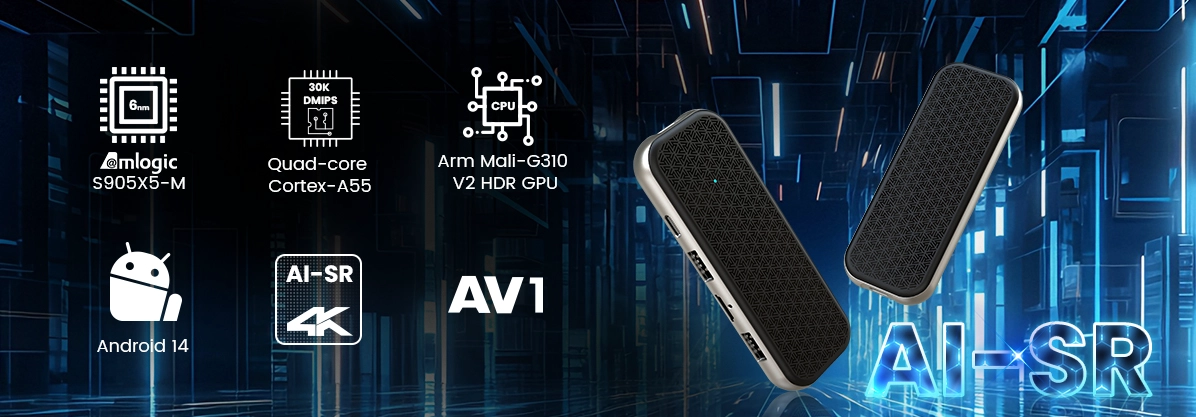
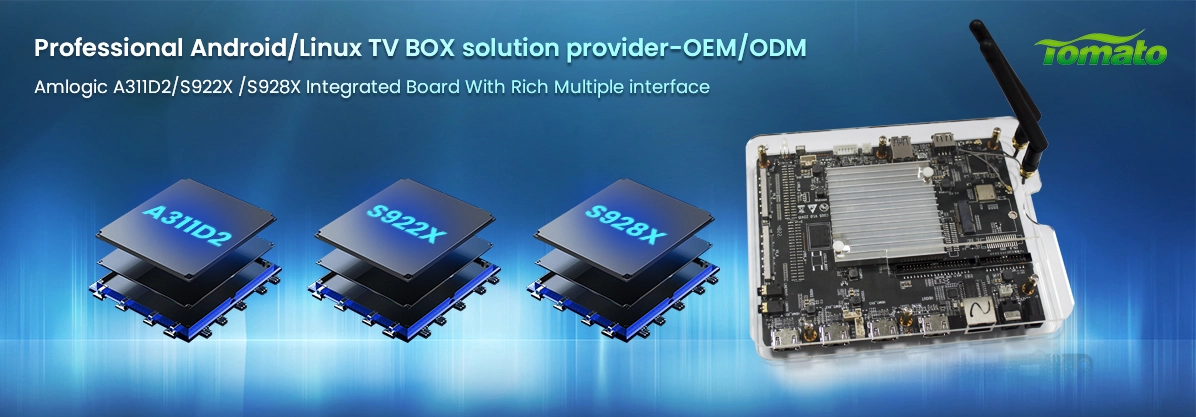
Instead of accepting fixed consumer SoCs, B2B hardware can be configured around high-throughput chipsets like the Amlogic S905X4 or next-generation S905X5M. These chips feature dedicated hardware decoding for AV1, VP9, and HEVC codecs alongside hardware-level HDCP 2.2/2.3 encryption pipelines.
Custom PCBA Layouts
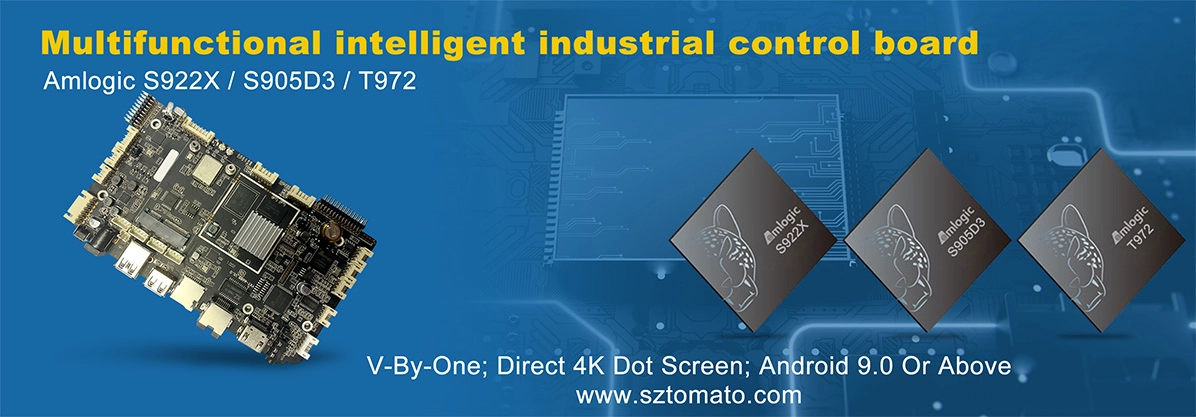
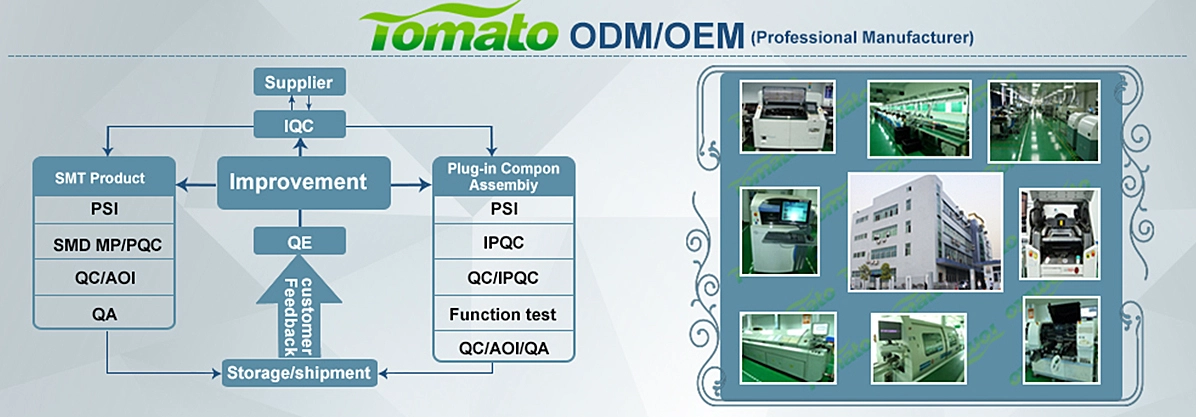
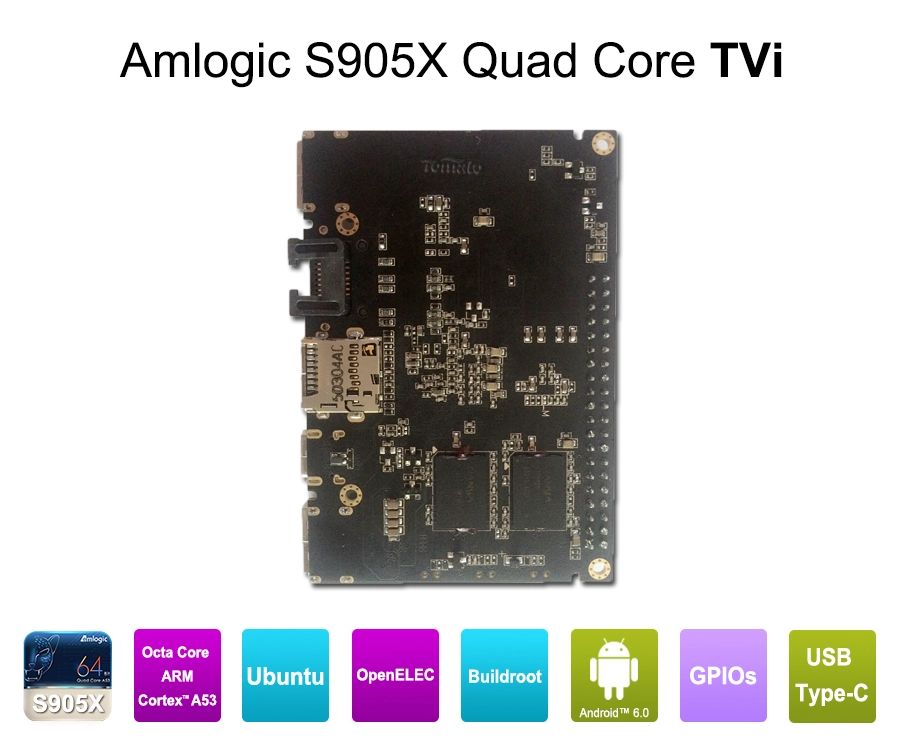
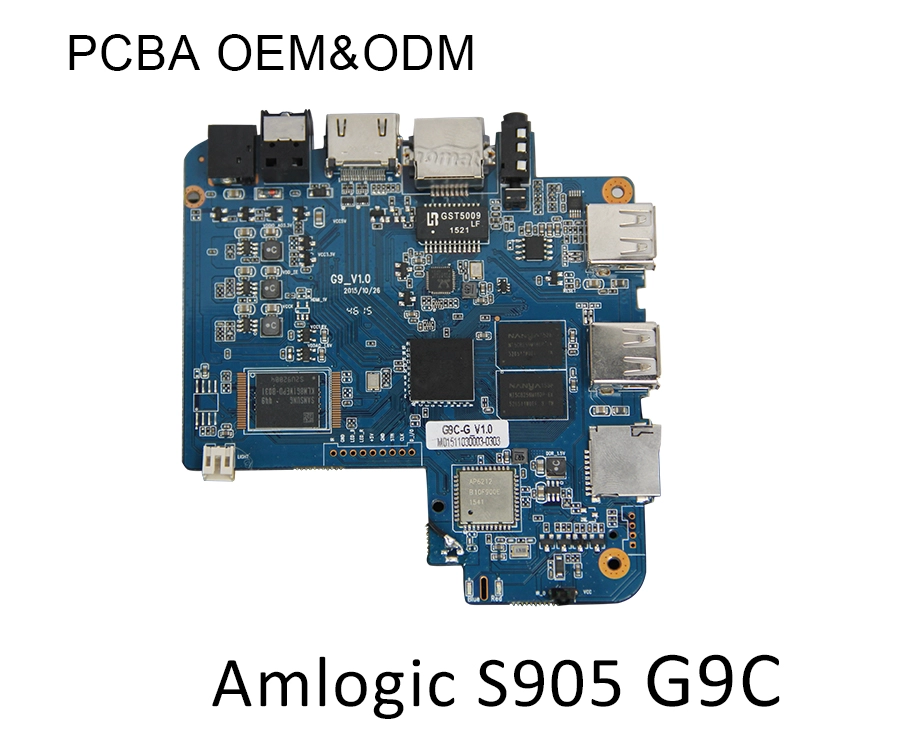
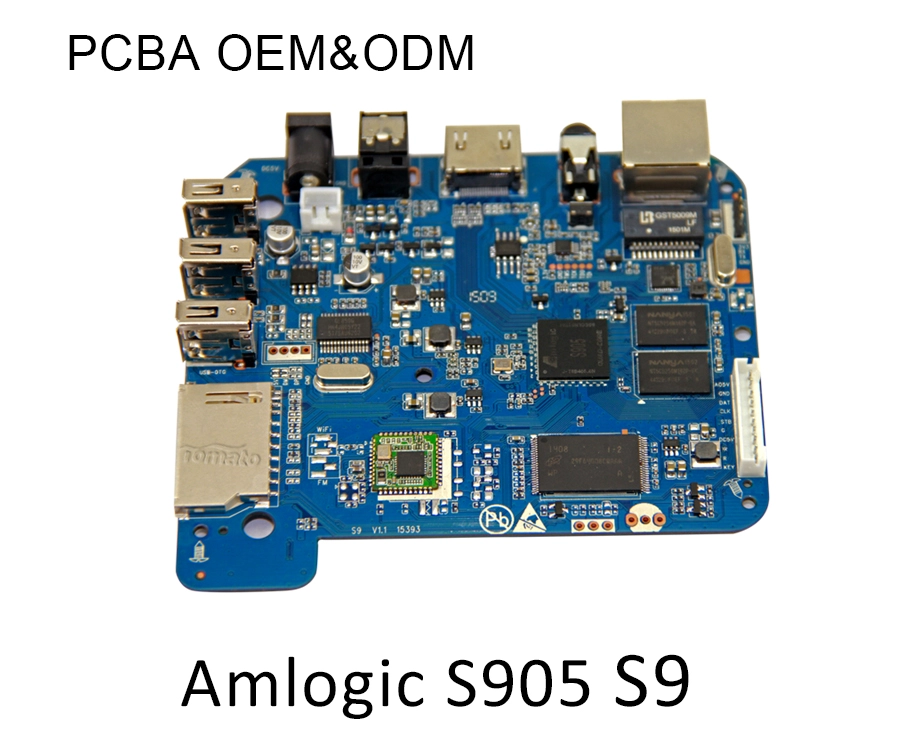
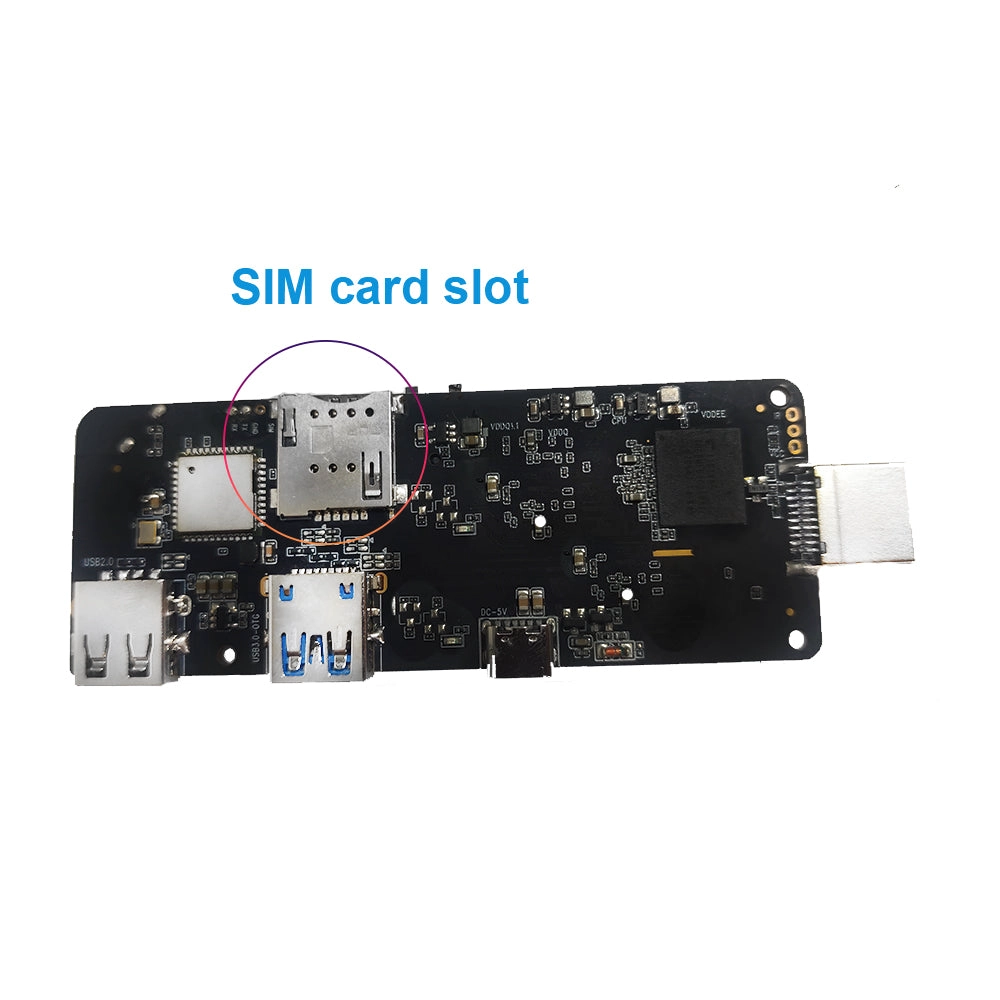
At SZTomato, hardware engineering extends down to the Printed Circuit Board Assembly (PCBA). If a hotel network requires physical Gigabit RJ45 ports to bypass congested 2.4 GHz Wi-Fi environments, or if a commercial display setup requires RS-232 passthrough and Power over Ethernet (PoE), the board layout is modified directly at the manufacturing level.
Thermal Management
Consumer streaming dongles frequently experience thermal throttling under continuous 4K decoding, dropping frame rates or triggering spontaneous reboots. Enterprise Internet TV Box hardware integrates heavy extruded aluminum heatsinks directly onto the SoC die, dissipating heat effectively across metal enclosure chassis to maintain 100% processing capacity indefinitely.
3. Remote Fleet Management & Private FOTA Infrastructure
Deploying 5,000 streaming endpoints across multiple hotel properties, healthcare facilities, or retail locations introduces severe long-term maintenance challenges if devices cannot be managed centrally.
| Management Domain | Roku OS (Consumer) | Open Internet TV Box (B2B Enterprise) |
|---|---|---|
| OS Updates | Public Roku cloud; mandatory consumer updates | Private FOTA server; scheduled operator-controlled rollouts |
| Fleet Protocol | None (Individual user management) | Native TR-069, TR-181, or MQTT agent integration |
| Remote Diagnostics | Limited to end-user UI feedback | Real-time kernel log streaming, CPU thermal data, network diagnostics |
| App Deployment | Public Channel Store approval pipeline | Silent background APK installation via Mobile Device Management (MDM) |
Silent Updates and Custom FOTA
Pushing an untested firmware update that breaks a proprietary video player across thousands of deployed client nodes can halt business operations. Roku manages device updates on its own schedule, occasionally deprecating APIs or altering platform requirements.
An enterprise Internet TV Box deployment utilizes Private Firmware Over-The-Air (FOTA) management servers. Software engineers can stage updates, conduct canary deployments across selected subnets, and execute silent background updates without requiring user interaction or dispatching field technicians.
Partnering with SZTomato for Enterprise Hardware Engineering
Choosing an Internet TV Box over a closed retail platform like Roku ensures total ownership over your software stack, user experience, and hardware lifespan.
SZTomato specializes in bridging the gap between raw ARM silicon and enterprise-ready commercial deployments. Our engineering teams deliver complete OEM/ODM solutions tailored to your operational specifications:
-
PCBA Board Engineering: Custom PCB layouts, specialized I/O ports, internal header customization, and industrial thermal architecture.
-
Firmware & ROM Customization: Custom boot animations, deep kernel optimization, complete bloatware removal, and hardlocked Kiosk Mode builds.
-
SDK & API Integration: Pre-integrated MDM agents, TR-069 stacks, custom player APIs, and private FOTA server deployment.
Ready to build your custom hardware platform? Contact the SZTomato engineering team today to review technical specifications, request PCBA schematics, or evaluate engineering sample units for your upcoming deployment.
