
Why would I need an Android Mini PC?
Why Would I Need an Android Mini PC? An Enterprise Architecture & Hardware Breakdown
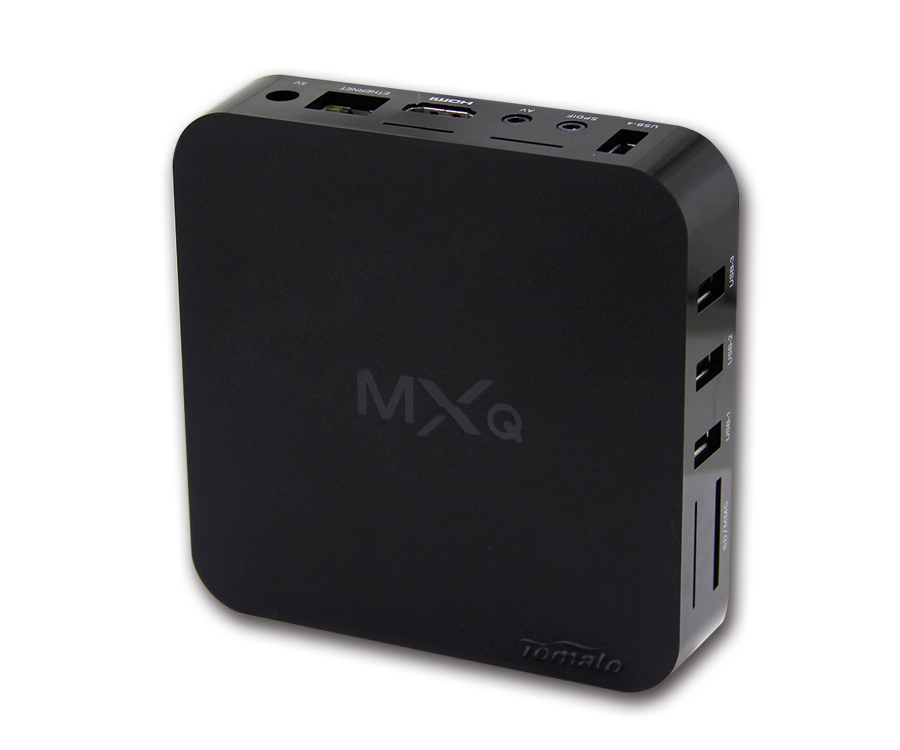
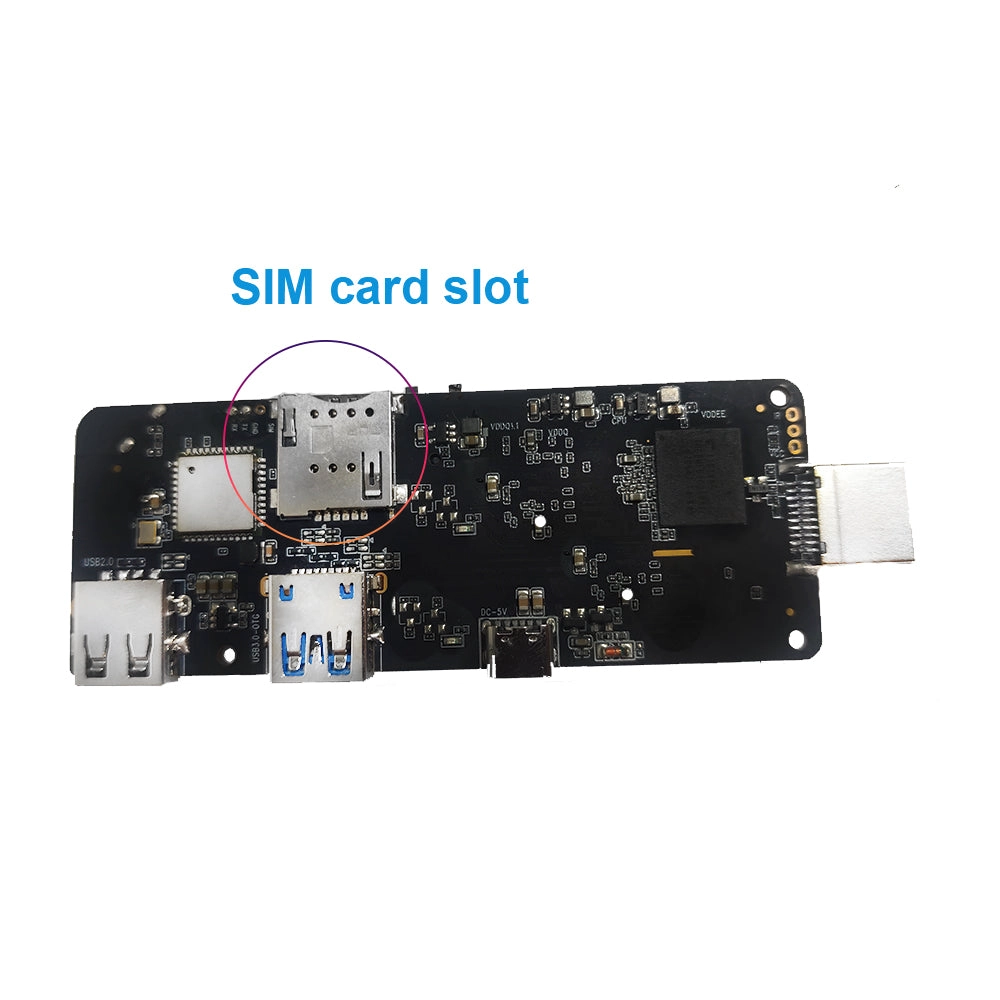
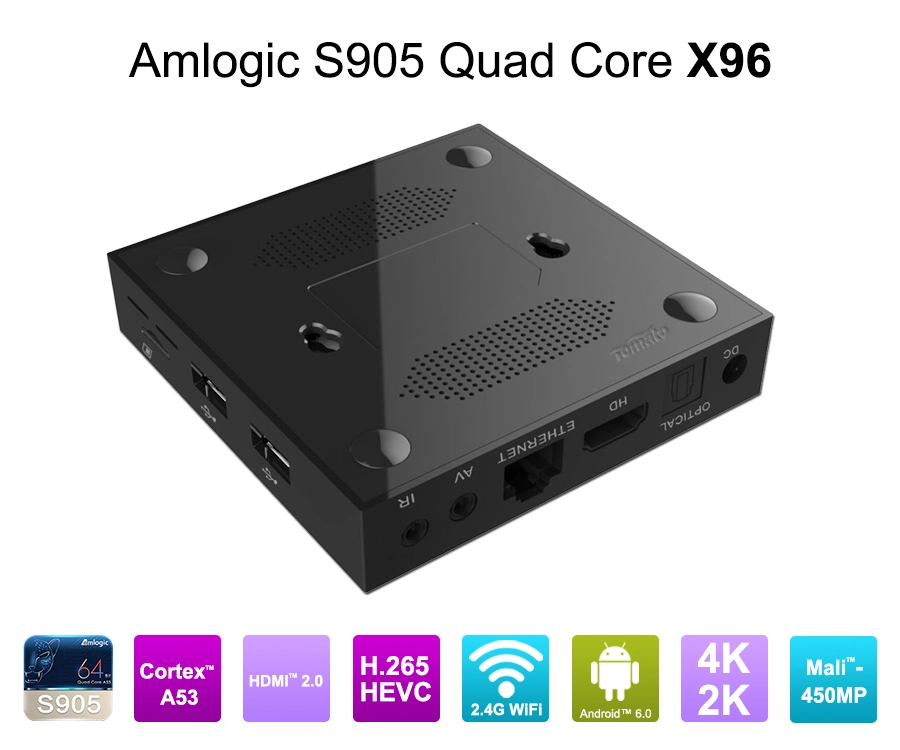
The transition from legacy x86 architectures to high-efficiency ARM silicon—specifically octa-core chipsets like the Amlogic A311D2 and Rockchip RK3588—has redefined edge computing for enterprise deployments. In commercial digital signage, smart retail self-service systems, and automated industrial control panels, a traditional x86 mini PC often introduces unnecessary overhead: high power consumption, costly operating system licensing, and mechanical fan failures.
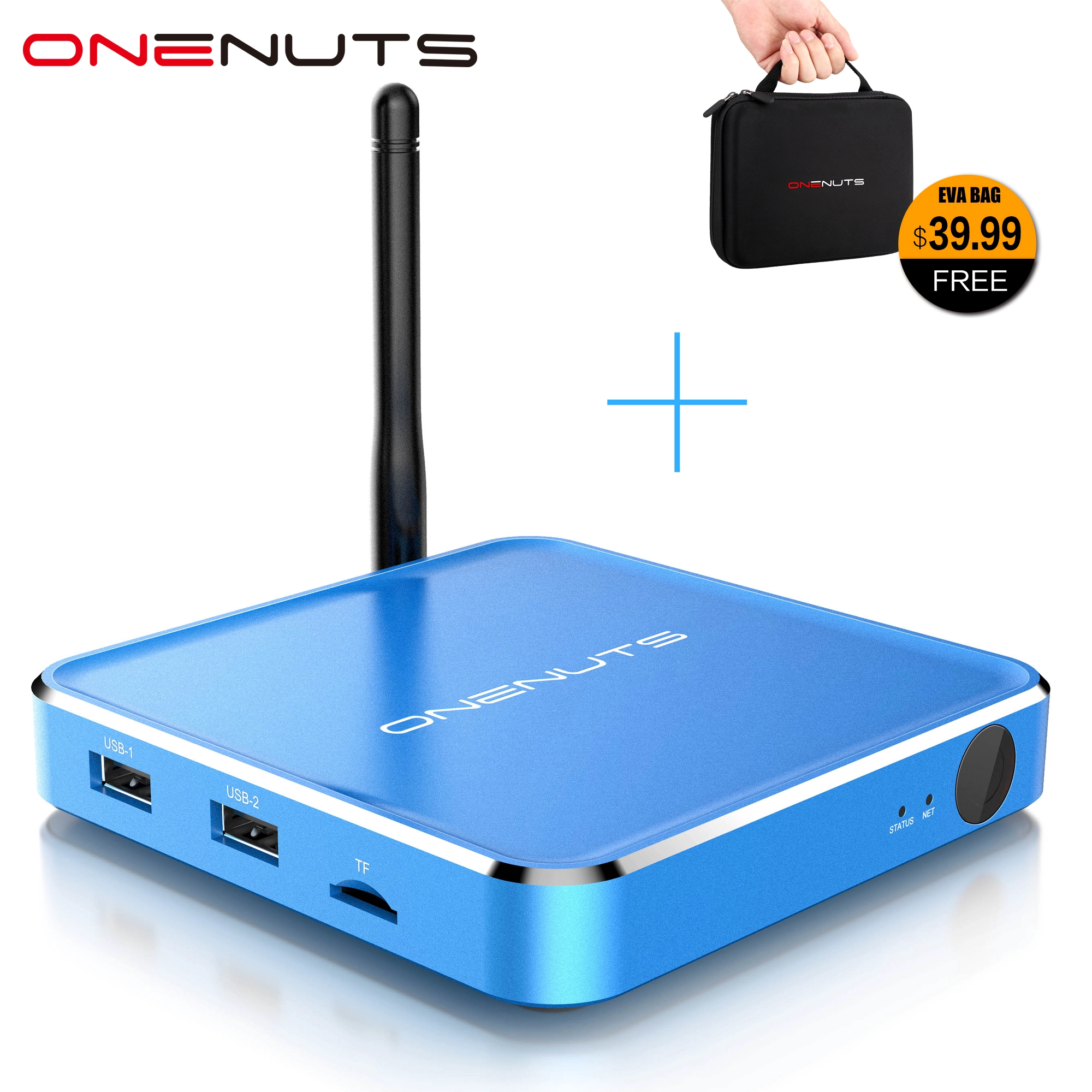
An Android Mini PC serves as an industrial-grade edge controller. It combines hardware-accelerated video processing units (VPUs), low-latency memory architectures, and dedicated neural processing units (NPUs) within a low-power, fanless footprint.
For B-suite decision-makers and system integrators, choosing an Android Mini PC isn't about replacing office desktops—it's about engineering a purpose-built, cost-effective edge infrastructure optimized for continuous 24/7/365 operational reliability.
1. TCO & Architectural Efficiency: ARM vs. Legacy x86 Edge Controllers
The primary driver behind deploying Android Mini PCs in commercial environments is the reduction of Total Cost of Ownership (TCO) without sacrificing computational or graphical bandwidth.
Thermal Efficiency & Silent 24/7 Operation
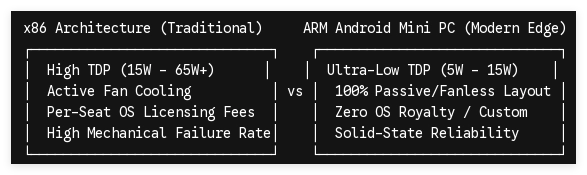
Standard x86 processors typically operate at thermal design powers (TDP) ranging from 15W to over 65W, requiring active cooling fans that draw in dust, grease, and moisture in commercial settings.
In contrast, ARM-based SoCs run between 5W and 15W under full load. This ultra-low thermal output enables totally sealed, fanless aluminum enclosure designs, eliminating mechanical moving parts and drastically extending mean time between failures (MTBF) in harsh environments.
Power Density and Bandwidth Optimization
Modern ARM SoCs integrate high-performance CPU clusters (such as quad-core Cortex-A73 paired with quad-core Cortex-A53) alongside multi-core GPUs and 64-bit LPDDR4/4X memory interfaces. This configuration enables native 4K UI rendering, multi-channel video decoding, and edge AI inferencing at a fraction of the power consumption required by traditional desktop hardware.
2. Hardware-Level Capability: Advanced I/O, AV1 Decoding, and Edge Processing
A purpose-built Android Mini PC handles demanding multimedia and data processing workloads directly at the edge, reducing reliance on cloud streaming and bandwidth.
[ IP Data / Local Sensors ] ➔ [ Hardware Demux & Encryption ] ➔ [ VPU (8K/4K AV1/HEVC Decoding) ] ➔ [ Multi-Display (HDMI / V-by-One / LVDS) ]
│
[ On-Board NPU Edge Computing ]
Hardware-Accelerated AV1 Codec & Multi-Screen Processing
Industrial Android Mini PCs leverage dedicated hardware VPUs to handle multi-stream video decoding natively:
- AV1 Codec Decoding: Supports up to 8K@24fps or 4K@60fps AV1 playback, yielding up to 30% bandwidth savings over HEVC/H.265 feeds.
- Multi-Display Output: Advanced motherboards support independent dual or quad-screen driving via HDMI 2.1, LVDS, V-by-One, and eDP interfaces for video walls and multi-zone commercial displays.
- Integrated NPU Inferencing: Onboard neural processing units (ranging from 3.2 to 6 TOPs) execute local computer vision models—such as audience analytics, foot-traffic tracking, and object detection—without uploading raw video streams to cloud servers.
Industrial I/O Bus Integration
Unlike consumer streaming boxes or standard mini PCs, enterprise Android hardware features rich, industrial-grade peripheral connectivity:
-
Serial Expansion: Dual RS232/RS485 and TTL serial ports for direct display power control (CEC/RS232) and industrial sensor polling.
-
Programmable GPIO & I2C: Enables direct communication with external pushbuttons, coin acceptors, touch controllers, and relay switches in kiosk builds.
-
Power over Ethernet (PoE+ / IEEE 802.3at): Delivers up to 25.5W of direct operational power alongside gigabit networking over a single Cat6 line, cutting installation and electrical wiring costs.
3. Firmware Customization: Bridging Hardware to Commercial Applications
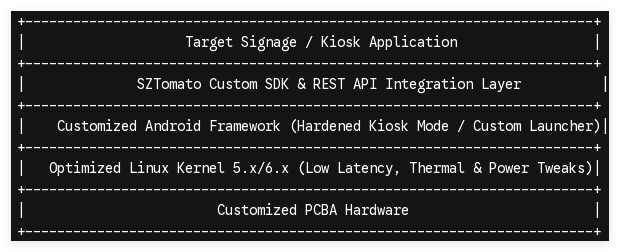
Standard off-the-shelf Android distributions are designed for mobile user interaction, containing retail bloatware, consumer power menus, and unstable application lifecycles. Enterprise deployments require deep kernel-level OS modifications to guarantee uptime and security.
Deep Kernel Hardening & Kiosk Mode
Commercial Android Mini PCs utilize customized Linux kernel layers tailored for dedicated single-application usage:
-
Direct-to-App Auto-Boot: Bypasses standard Android launcher workflows, executing the primary commercial app within seconds of power delivery.
-
Watchdog Timers & Auto-Recovery: Hardware watchdog circuits integrated with firmware daemons monitor application responsiveness, automatically power-cycling frozen processes or the entire OS without human intervention.
-
System Lockdown: API-level restriction disables notification shading, status bars, physical volume keys, and unauthorized USB mounting, preventing end-user tampering.
Enterprise Fleet OTA Systems
Managing distributed deployments across thousands of locations requires centralized control. A private Over-The-Air (OTA) update architecture allows administrators to push background delta packages, manage partition fallbacks (A/B dual-booting), and schedule silent software rollouts during off-peak hours.
4. B2B OEM/ODM Customization: Tailoring Hardware for Specialized Workloads
Commercial projects often present rigid physical constraints, specific thermal limits, and unique interface requirements that standard off-the-shelf devices cannot meet.
| Feature / Metric | Generic Retail Mini PC | B2B OEM/ODM Android Mini PC (e.g., SZTomato) |
|---|---|---|
| Operational Rating | 8–10 hours/day consumer usage | 24/7/365 continuous heavy-duty operation |
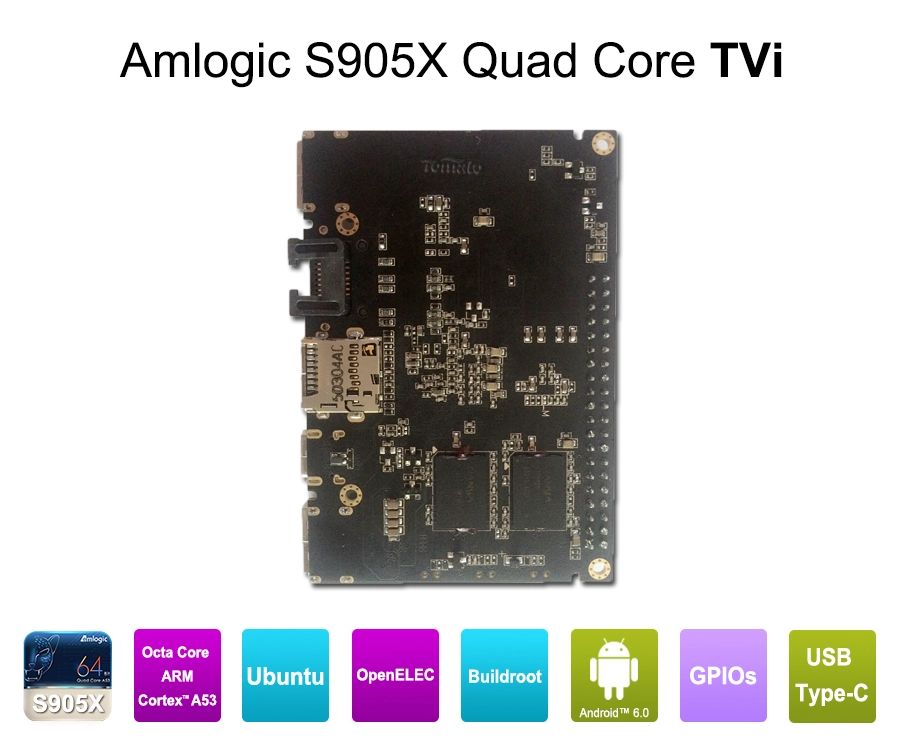
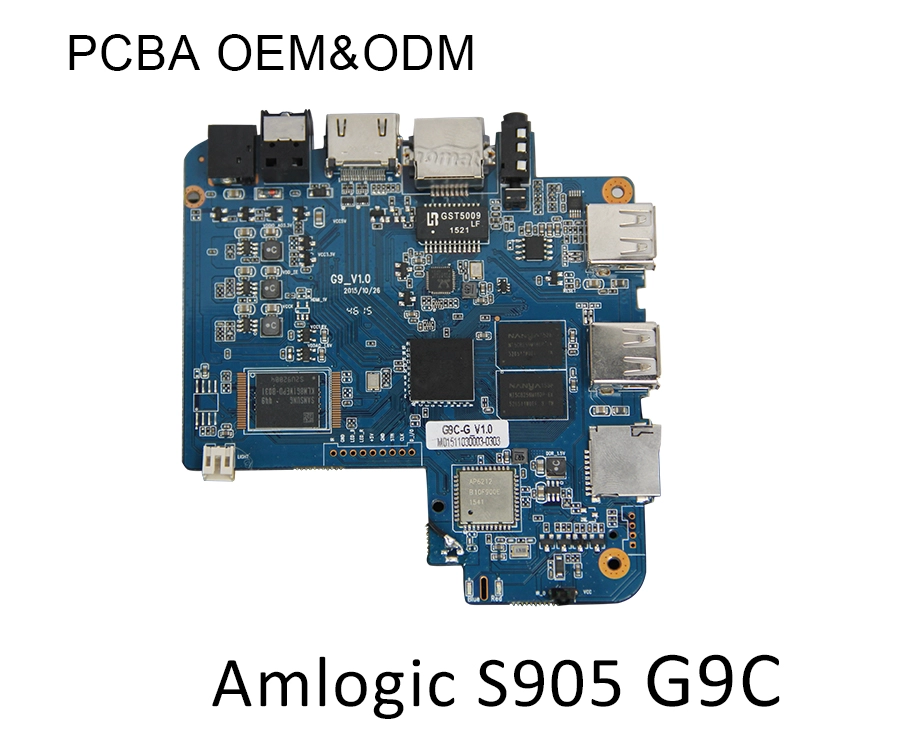
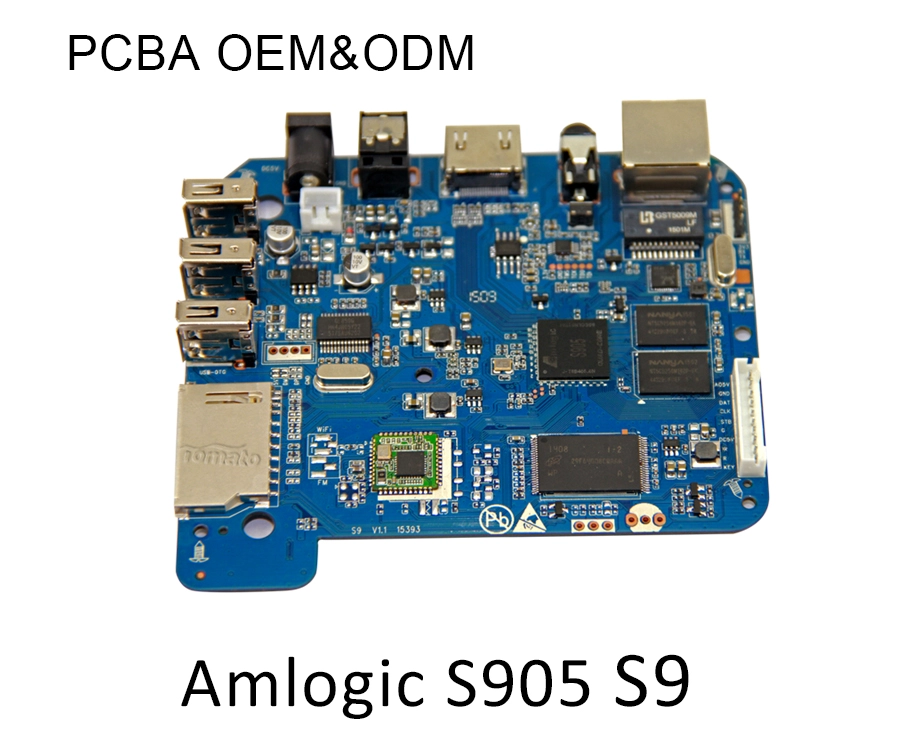
| Board Architecture | Fixed consumer layout | Custom PCBA footprint, multi-layer FR-4 engineering |
| Cooling Mechanism | Small active internal fan | Passive heavy aluminum heatsinks & thermal conduction |
| I/O Provisions | Standard USB + single HDMI | Dual HDMI, RS232, GPIO, LVDS, V-by-One, PoE+ |
| OS Control | Standard consumer Android | Pre-rooted, custom API/SDK hooks, locked OS framework |
| Supply Chain Lifecycle | 6–12 months availability | 3–5 year guaranteed component availability |
Specialized Thermal Engineering for Enclosed Spaces
Digital signage players mounted behind outdoor LCD panels or built into sealed metal kiosks operate under severe thermal stress. Customized PCBA layouts incorporate high-purity aluminum heat spreaders, phase-change thermal interface materials (TIM), and custom-extruded alloy chasses to dissipate heat efficiently, preventing CPU thermal throttling under continuous video decoding loads.
Partner with SZTomato for Engineered Edge Hardware Solutions
An Android Mini PC is not just an alternative to a traditional computer—it is a purpose-built, highly efficient hardware platform engineered to power modern digital displays, interactive kiosks, and industrial automation networks. Relying on consumer-grade hardware or generic off-the-shelf units introduces long-term risks: thermal throttling, unpatched OS vulnerabilities, and unexpected component changes that disrupt business operations.
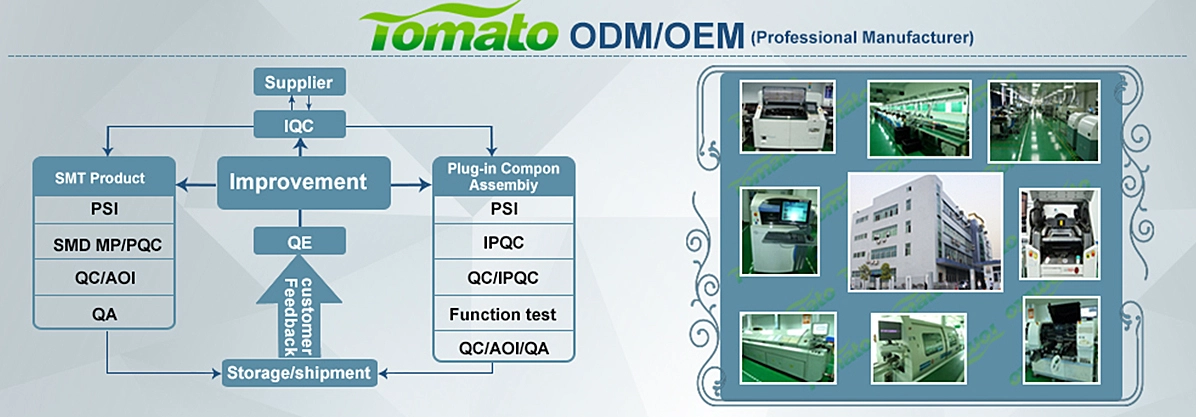
At SZTomato (Shenzhen Tomato Technology Co., Ltd.), we bridge the gap between raw ARM silicon capabilities and enterprise-grade hardware execution. Backed by 16 years of specialized OEM/ODM manufacturing expertise, we deliver tailored edge solutions for global system integrators and solution providers:
- Custom PCBA Design: Board layout modifications, custom form factors, PoE+ integration, RS232/GPIO routing, and specialized multi-display output routing (HDMI/LVDS/V-by-One).
-
Firmware & Kernel Engineering: Low-level OS customization, custom boot logic, system lockdown, root permission management, and custom REST API/SDK development.
-
Private Fleet Management Infrastructure: Secure, dedicated private OTA server configuration for silent software deployment.
Planning an enterprise digital signage rollout, smart kiosk deployment, or edge computing project? Contact the engineering team at SZTomato today to submit your technical requirements, request custom hardware samples, or evaluate our customized ARM motherboard solutions.
