
What is Set-Top Box (STB) better than Roku?
Why a Custom Set-Top Box (STB) Beats Roku for Commercial Deployments
Deploying enterprise media arrays, hospitality IPTV networks, or interactive digital signage environments on consumer-focused hardware like Roku devices introduces immediate operational risks. While Roku OS excels in a consumer living room by serving a locked-down, advertising-monitored streaming catalog, it limits commercial flexibility. Roku restricts developer access to application-layer BrightScript scripting, blocks low-level hardware communication, enforces automatic OS updates that can disrupt live displays, and offers no path for custom physical port integration.
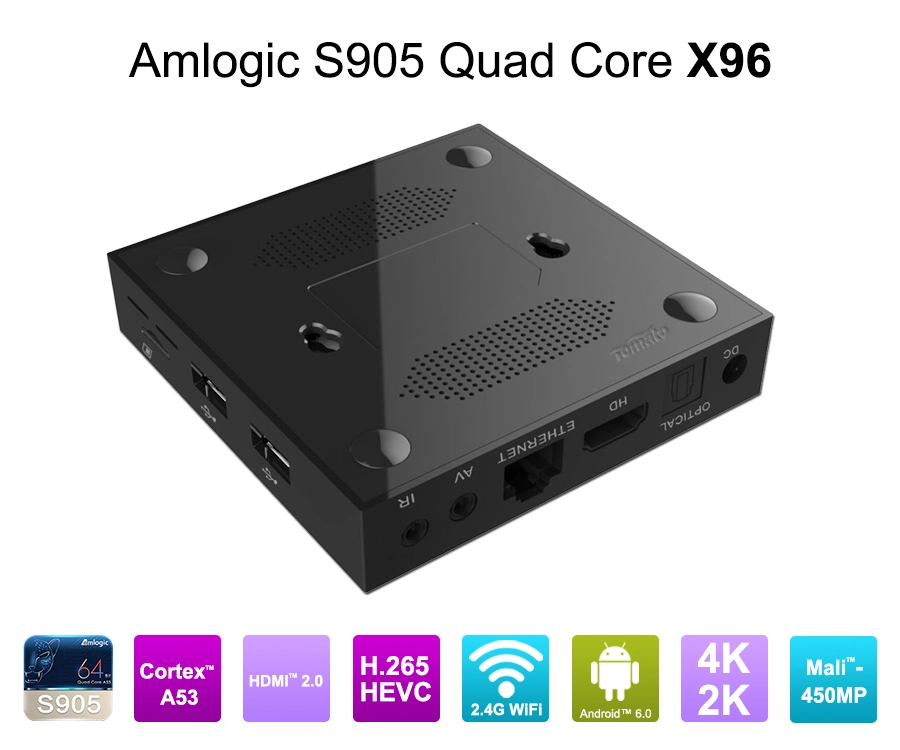
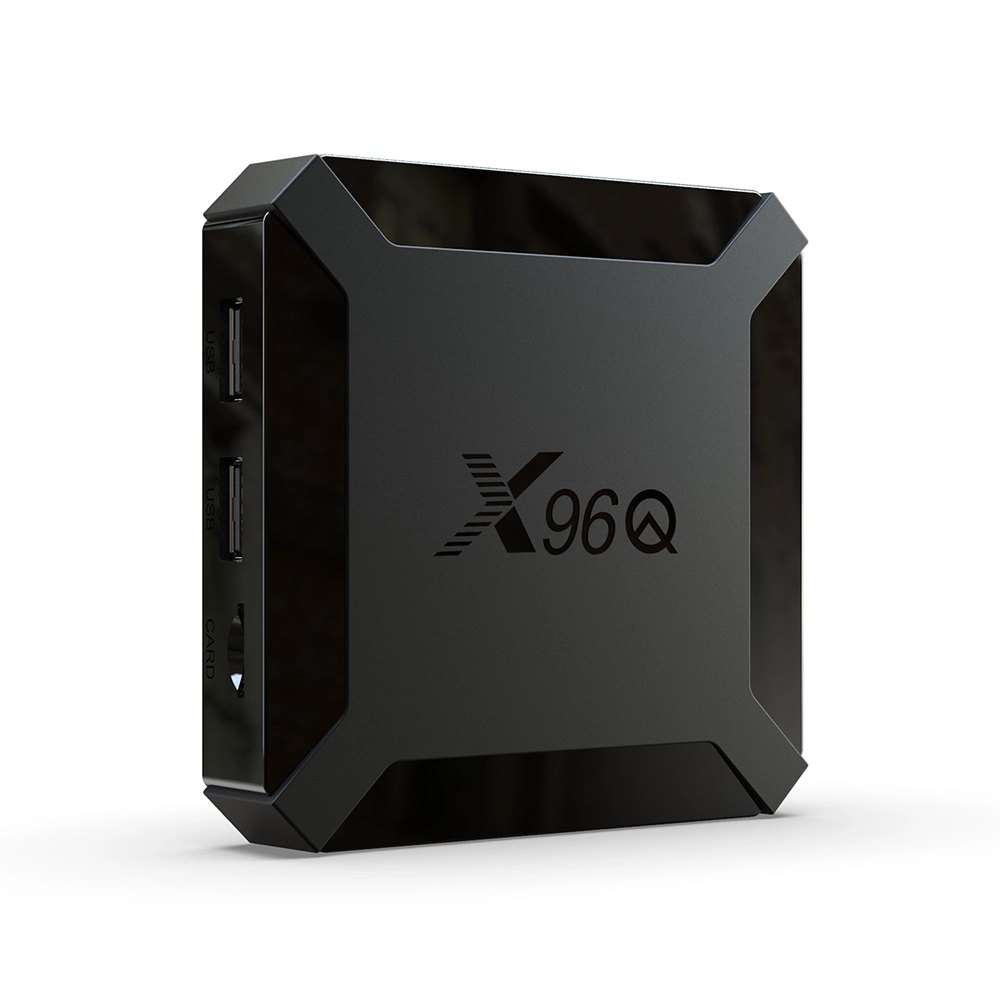
For B-Suite decision-makers and system integrators, scaling a dependable network requires shifting from standard retail hardware to a dedicated, open-architecture Set-Top Box (STB). Deploying an open Android or Linux STB allows hardware teams to customize the underlying silicon, optimize OS kernel performance, and control the physical interfaces to match enterprise demands.
1. Architectural Openness: Kernel-Level Control vs. Closed Subsystems
The primary limitation of consumer platforms like Roku is the sandboxed execution environment. B2B operators often need deep operating system access to implement system monitoring, persistent local data caching, and strict security profiles.
OS and Kernel Optimization
A professional Set-Top Box (STB) leverages an open Android Open Source Project (AOSP) or Linux kernel. This architecture allows engineers to modify the system/core components directly:
-
Disabled System Dialogs: Eliminates low-battery warnings, volume popups, or external storage prompts from appearing over commercial content.
-
Direct Hardware Scaling: Allows native display rotation (90°, 180°, 270°) at the VPU (Video Processing Unit) level, ensuring fluid vertical video rendering without sacrificing CPU cycles.
-
Boot-to-App Execution: Modifying the bootloader (U-Boot) allows the STB to initialize and launch a target application in under 15 seconds, skipping standard user dashboards entirely.
Granular System API Integration
Unlike Roku’s restricted API layer, an open-architecture STB exposes system-level permissions to MDM (Mobile Device Management) systems. System integrators can execute background application updates silently, toggle system parameters programmatically, and access remote debugging tools via Android Debug Bridge (ADB) over secure network tunnels—without needing user intervention on-site.
2. PCBA Modification and Mechanical Resilience
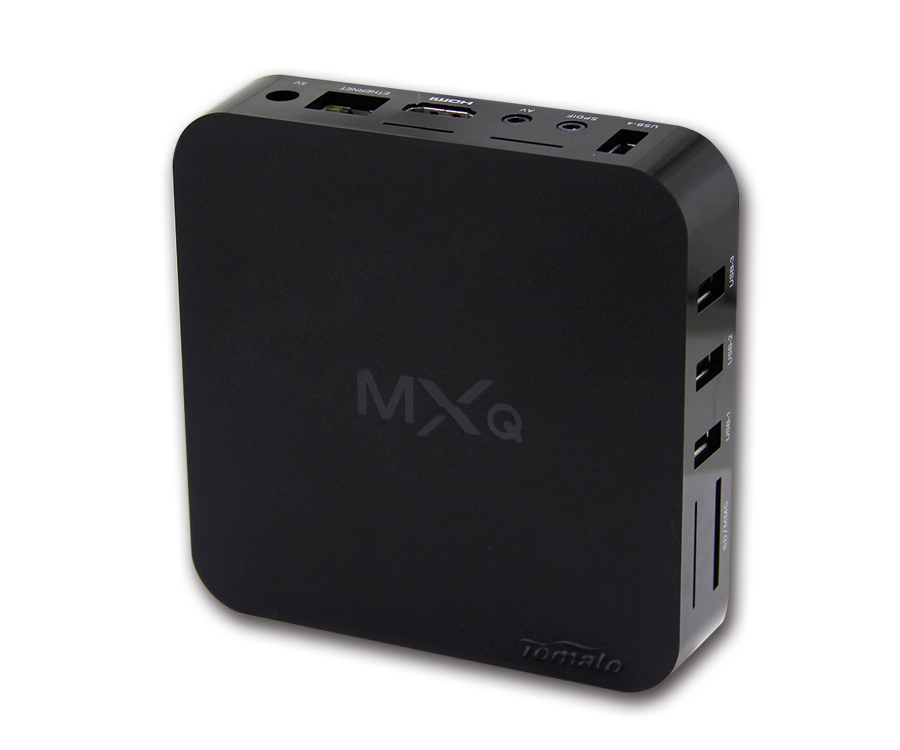
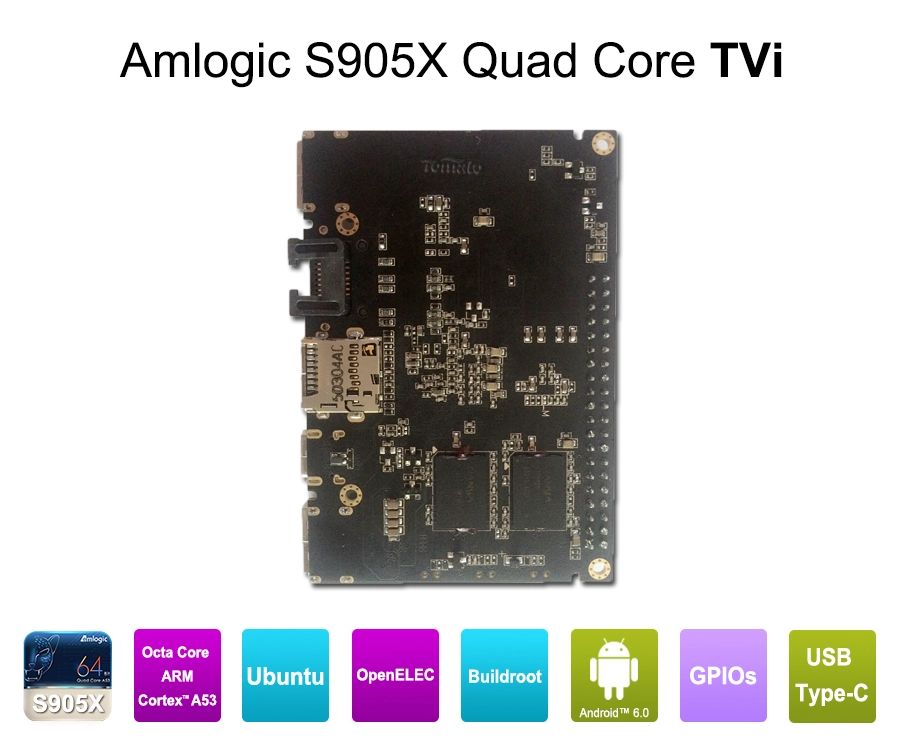
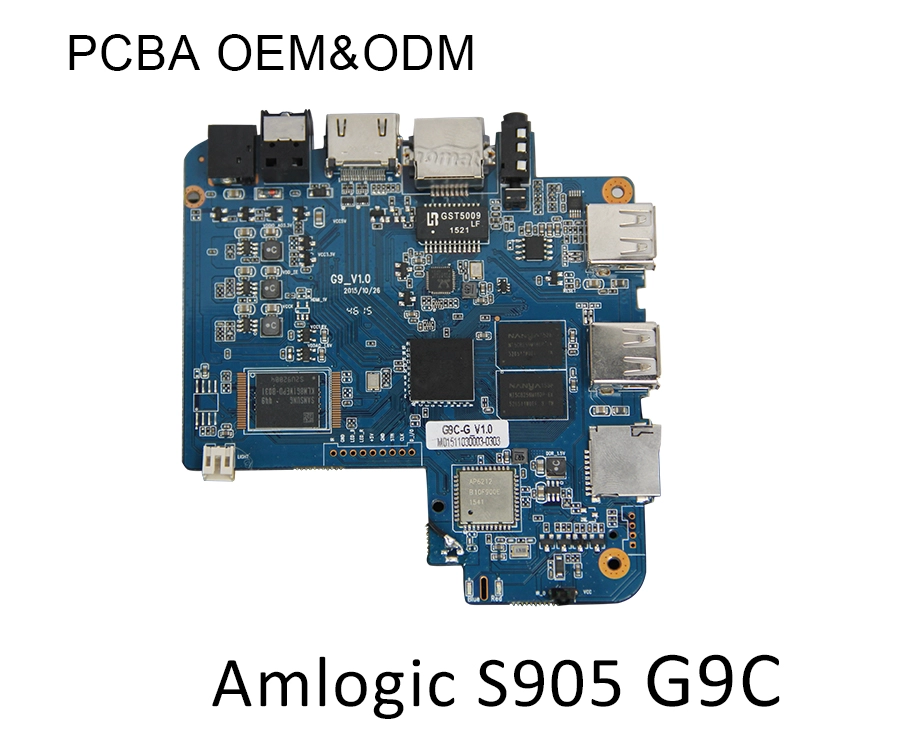
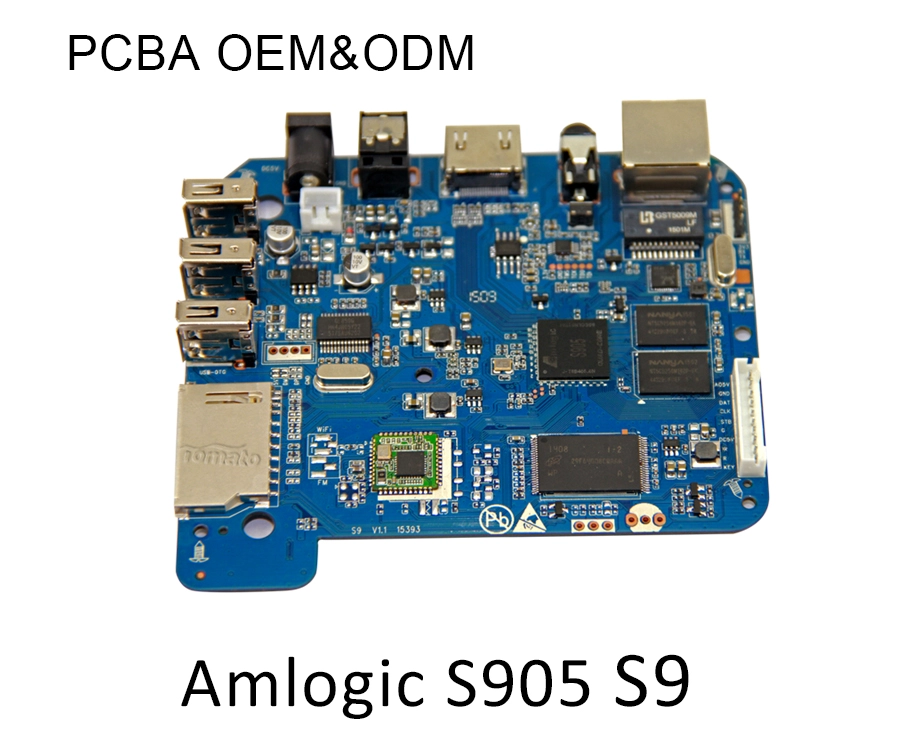
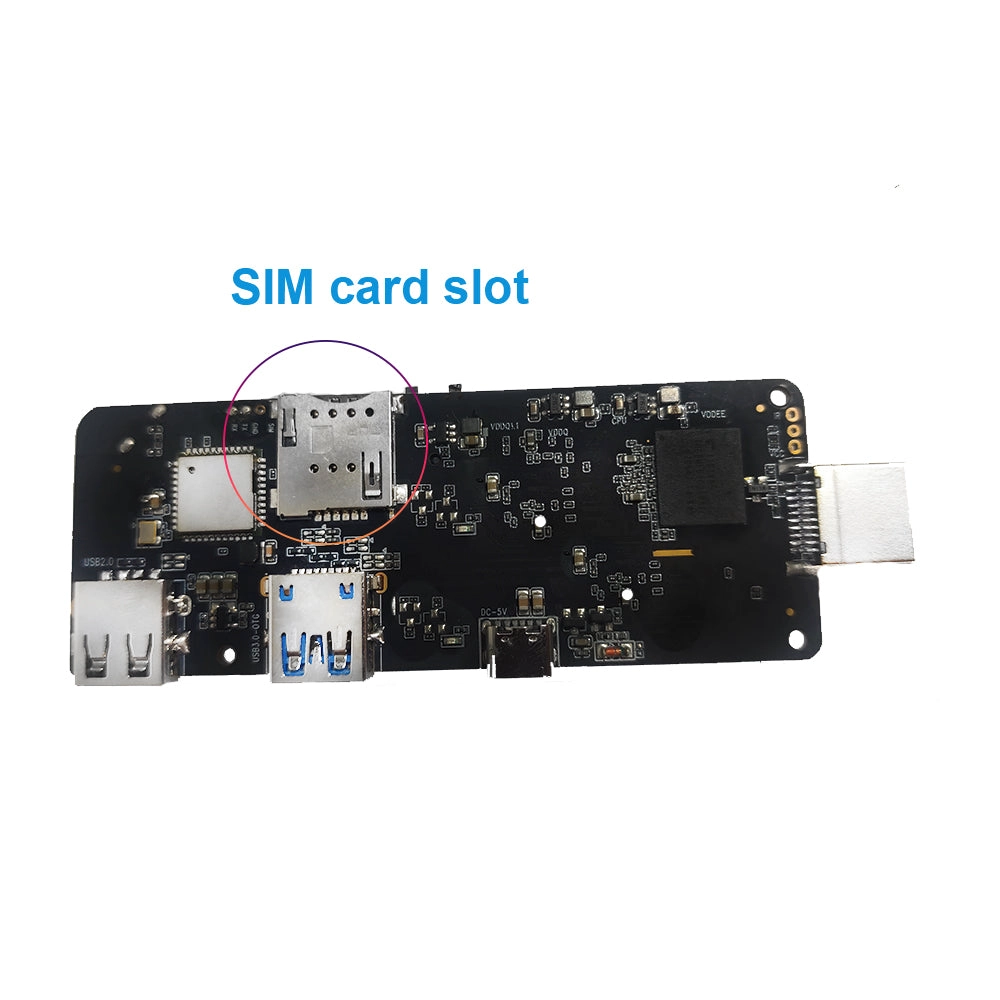
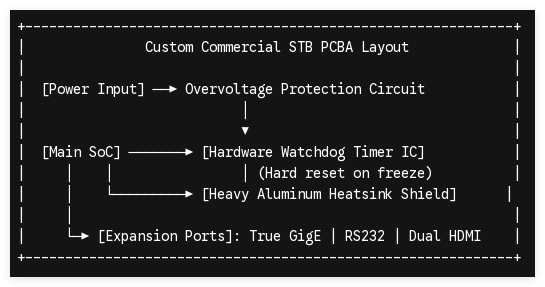
Commercial environments require hardware configurations that consumer streaming pucks cannot provide. A custom Set-Top Box (STB) allows for extensive modification of the printed circuit board assembly (PCBA) layout to meet physical and environmental demands.
Physical Interface Customization
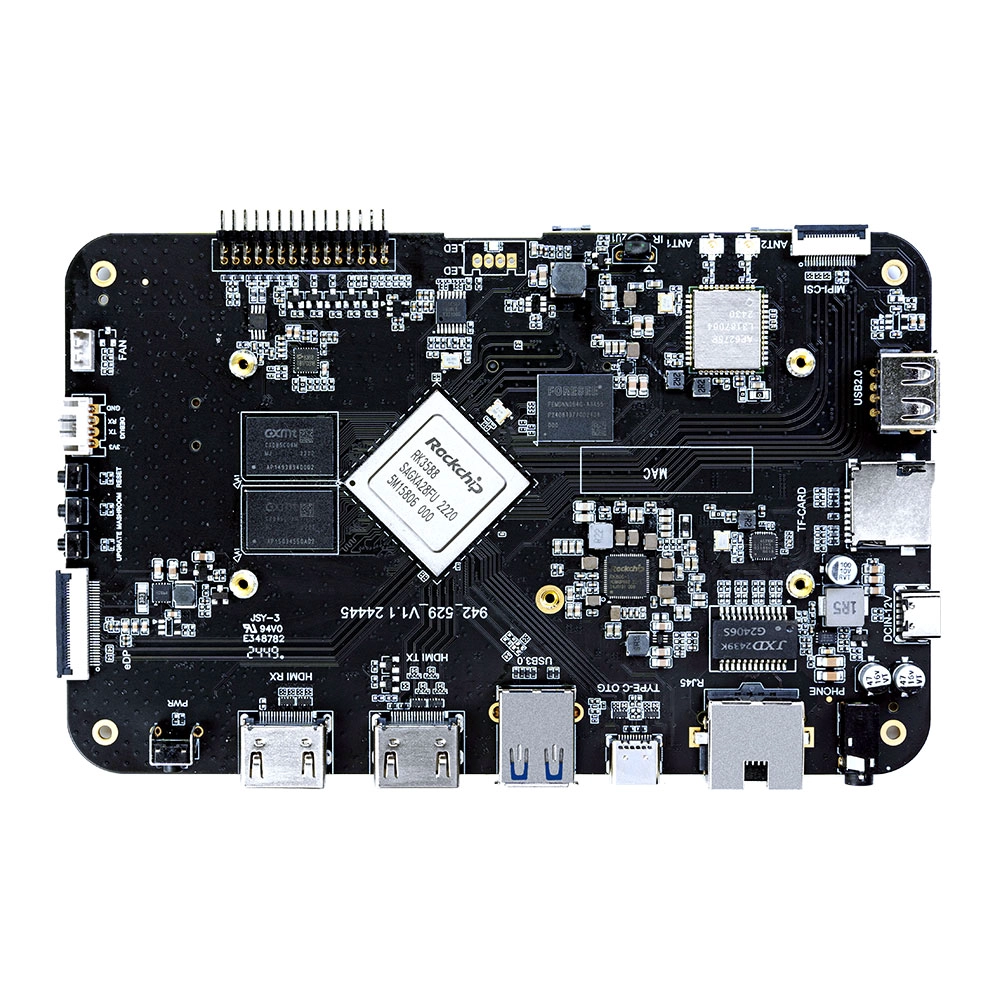
Consumer hardware is restricted to single HDMI outputs and basic Wi-Fi chipsets. An OEM/ODM manufacturer like SZTomato designs bespoke PCBA layouts to integrate vital enterprise connections:
-
True Gigabit Ethernet (RJ45): For high-bitrate, low-latency video distribution lines.
-
Dual HDMI Output / Input: Enables video pass-through configurations or multi-screen video wall arrays driven by a single Amlogic or Rockchip platform.
-
Industrial Expansion Busses: Integrated RS232 serial ports, GPIO pins, and internal PCIe slots for adding 4G/5G cellular modules in areas without reliable local networks.
Specialized Cooling Solutions and Power Subsystems
Roku devices rely on plastic enclosures with minimal passive cooling, leading to thermal throttling under 24/7 video processing loops. Industrial STBs integrate form-fitted aluminum heatsinks and heavy metal internal shielding that lower operating temperatures by up to 25°C.
Furthermore, while consumer devices use unstable 5V USB power adapters, commercial STBs feature wide-voltage DC inputs (9V–36V) paired with overvoltage and reverse-polarity protection circuits to survive building power fluctuations.
3. High-Uptime Reliability and Update Management Frameworks
Unscheduled downtime directly impacts commercial revenue. Consumer streaming platforms operate on uncoordinated update schedules, meaning a single forced OS update can break application compatibility globally.
Hardware Watchdog Timer (WDT) Integration
A major differentiator of a commercial Set-Top Box (STB) is the inclusion of an independent hardware Watchdog Timer IC on the PCBA.
How it works: The system software sends regular signal pulses to the WDT. If the OS encounters a hard freeze or a kernel panic due to power spikes, the WDT halts the power rail and executes a clean hard reboot within milliseconds, restoring the terminal to operation without manual on-site troubleshooting.
Enterprise Over-the-Air (OTA) Deployment
Custom STB architectures completely separate your fleet from consumer update loops. By pointing the firmware's OTA client to a private enterprise update server, deployment managers gain complete control over update rollouts:
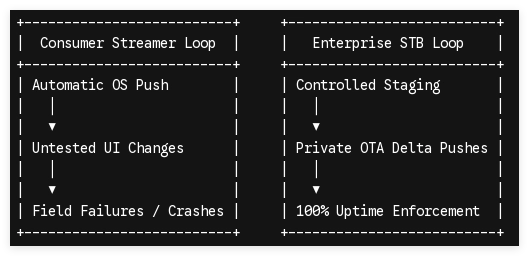
This infrastructure permits incremental delta updates, allowing deployment teams to update specific system partitions without rewriting the entire flash memory, saving valuable remote bandwidth.
4. Uncompromised Content Security and Decrypting Pipelines
Scaling digital signage or premium IPTV nodes requires meeting international content protection and digital rights management (DRM) standards without limiting performance.
| Deployment Attribute | Consumer Roku Subsystem | Customized Android/Linux STB |
|---|---|---|
| DRM Integration | Closed, pre-configured Widevine/PlayReady | Custom-injected Widevine L1 keys inside secure eFuses |
| HDCP Compliance | Fixed consumer negotiation loops | Programmable HDCP 2.2 / 2.3 fallback modes for legacy commercial panels |
| Secure Boot Profile | Controlled exclusively by Roku servers | Hardware Root of Trust managed via customer-owned cryptographic keys |
By utilizing custom STB silicon configurations, encryption keys are handled entirely within a hardware-insulated Trusted Execution Environment (TEE). This secure data pipeline decodes protected streams within protected memory banks, keeping content delivery secure from end to end.
Build Your Commercial Fleet with SZTomato Hardware
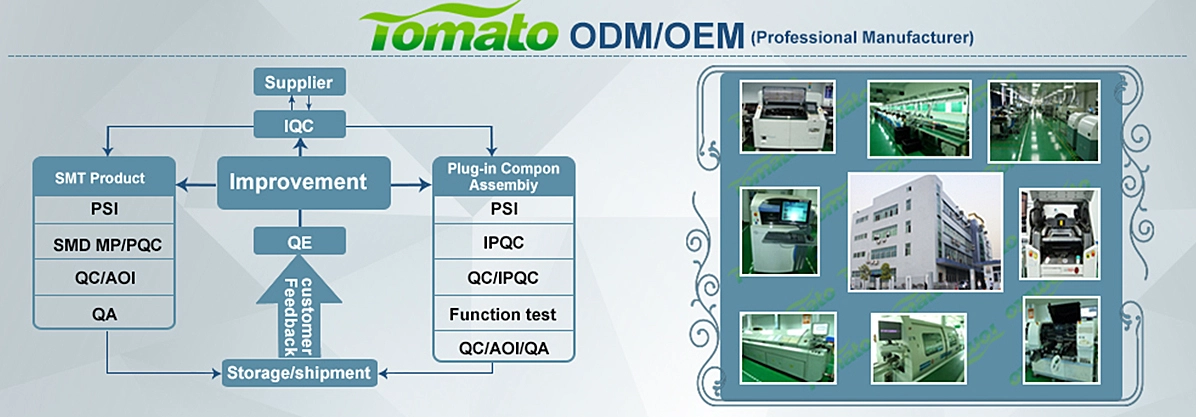
Scaling enterprise media deployments demands hardware built for durability, open customization, and absolute control. Shenzhen Tomato Technology provides 16 years of cross-border B2B engineering expertise, delivering purpose-built OEM/ODM Set-Top Box solutions that outpace restrictive consumer platforms.
SZTomato bypasses consumer-layer limitations to engineer systems built for long-term operational ROI:
-
Custom PCBA Prototyping: Integration of internal hardware watchdogs, PoE modules, custom enclosure configurations, and specialized physical interfaces.
-
Low-Level Firmware Tuning: Tailored Android/Linux kernel modifications, private OTA server routing, custom boot branding, and secure system API exposure.
-
Advanced Thermal Management: Rugged metal housings and specialized passive cooling paths built for continuous 24/7 operation.
To review circuit board schematics, receive custom firmware documentation, or secure evaluation units for your engineering team, contact our technical sales consultants.
