
What is better Internet TV Box than roku for tv?
What is a Better Internet TV Box Than Roku for TV? The Enterprise Case for Open-Architecture Hardware Node Architectures
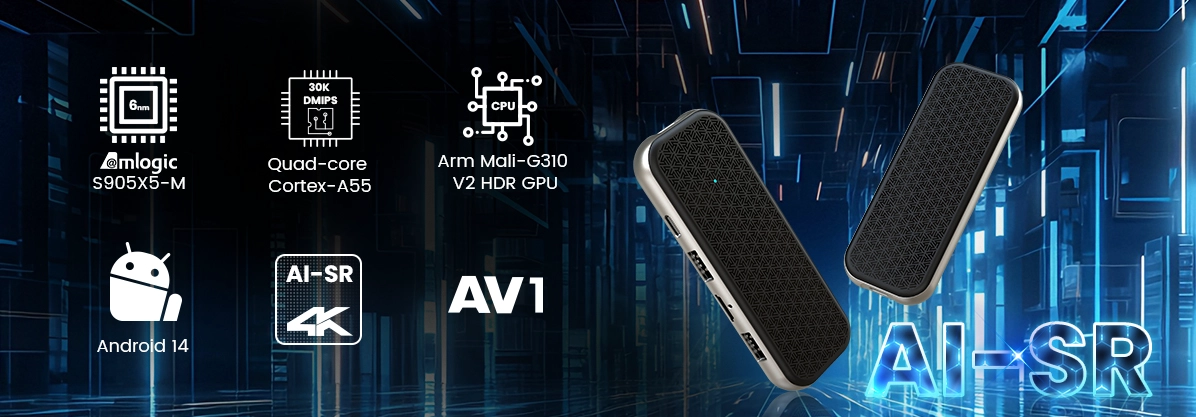
The architectural requirements for commercial video delivery networks have outgrown the capabilities of mass-market consumer devices. As global networks shift toward high-bitrate AV1 codec decoding and real-time AI Super-Resolution (AI-SR) to compress bandwidth demands by up to 30%, B2B operators face an integration bottleneck. Consumer-grade streaming sticks, specifically Roku platforms, run on a closed subsystem that restricts applications to a proprietary scripting language (BrightScript) and sandboxes hardware execution.
For system integrators, hospitality networks, and over-the-top (OTT) telecom operators, purchasing a superior Internet TV Box over a Roku is not about counting consumer app licenses. It requires moving to open-architecture hardware nodes built on flexible operating system layers, specialized printed circuit board assembly (PCBA) designs, and unrestricted kernel access.
1. Architectural Openness: Kernel-Level Control vs. Closed Consumer Sandboxes
Deploying enterprise media arrays or interactive digital signage on a closed system introduces high operational risk. Roku pushes mandatory, global operating system updates directly from its public cloud servers. These automated updates can alter memory allocation rules or change background rendering performance without warning, which can break custom enterprise configurations mid-operation.
Moving to an open-architecture Internet TV Box built around an Android Open Source Project (AOSP) or Linux kernel changes this completely. It gives network administrators full authority over the device lifecycle.
-
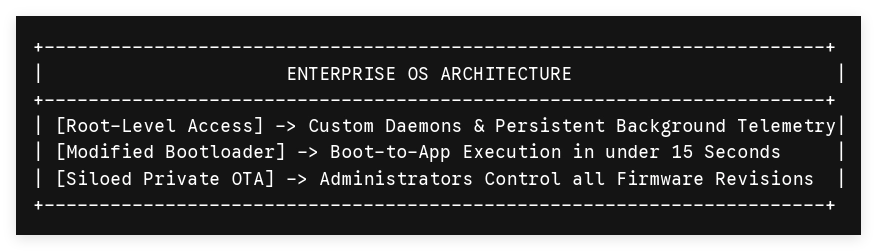
Siloed Private OTA Update Systems: Dedicated B2B deployments bypass public update streams entirely. Security patches and system updates are backported manually by an enterprise hardware partner and hosted on closed, private Over-The-Air (OTA) servers. Network administrators vet and schedule updates only after they are fully verified under lab conditions.
-
Deep Kernel Customization: System engineers can rewrite the core operating system components to disable standard system dialogs (such as low-battery indicators or external volume popups) from appearing over public content. Furthermore, display rotation (90°, 180°, 270°) can be locked directly at the Video Processing Unit (VPU) layer, allowing for fluid vertical video layouts without wasting CPU cycles.
-
Boot-to-App Execution: Modifying the bootloader (U-Boot) allows the media node to skip consumer dashboards entirely, initializing and launching a specific enterprise application in under 15 seconds from a cold electrical start.
2. Silicon Performance Metrics: Next-Gen SoCs Defeating Processing Bottlenecks
Consumer streaming pucks are built with low-power, cost-sensitive chipsets designed for intermittent home use. Enterprise infrastructure requires high-throughput application processors built on modern chip architectures to manage continuous data streams without lagging.
| Technical Parameter | Consumer Retail Hardware (e.g., Roku Ultra/Sticks) | Commercial Open Nodes (e.g., Amlogic S905X5 / S928X) |
| Silicon Architecture | Closed, proprietary low-tier architectures | Next-generation ARMv9 Cortex-A510 / Cortex-A76 clusters |
| Video Decoding Engine | Standard 4K compression profiles (H.265/VP9) | Native 8K@60fps AV1, H.266/VVC, and 4K AI-Super Resolution |
| Memory Infrastructure | Restricted RAM allocation (typically 1GB - 2GB) | Up to 8GB high-bandwidth LPDDR5 / LPDDR5X memory |
| System Diagnostics | No background telemetry or root access | Root-level system daemons, ADB debugging over network tunnels |
The Impact of Advanced Silicon
Transitioning to an elite multimedia platform like the Amlogic S905X5 introduces a massive performance upgrade. Moving from older ARMv8 designs to an ARMv9 instruction set paired with a Mali-G310 Valhall-architecture GPU yields up to a three-fold increase in raw processing capability. This extra headroom handles complex, multi-layered interfaces at a native 4K resolution while managing intensive background data collection, local database synchronization, and encryption handshakes smoothly.
3. Peripheral Engineering: Custom PCBA Modifications for Industrial Environments
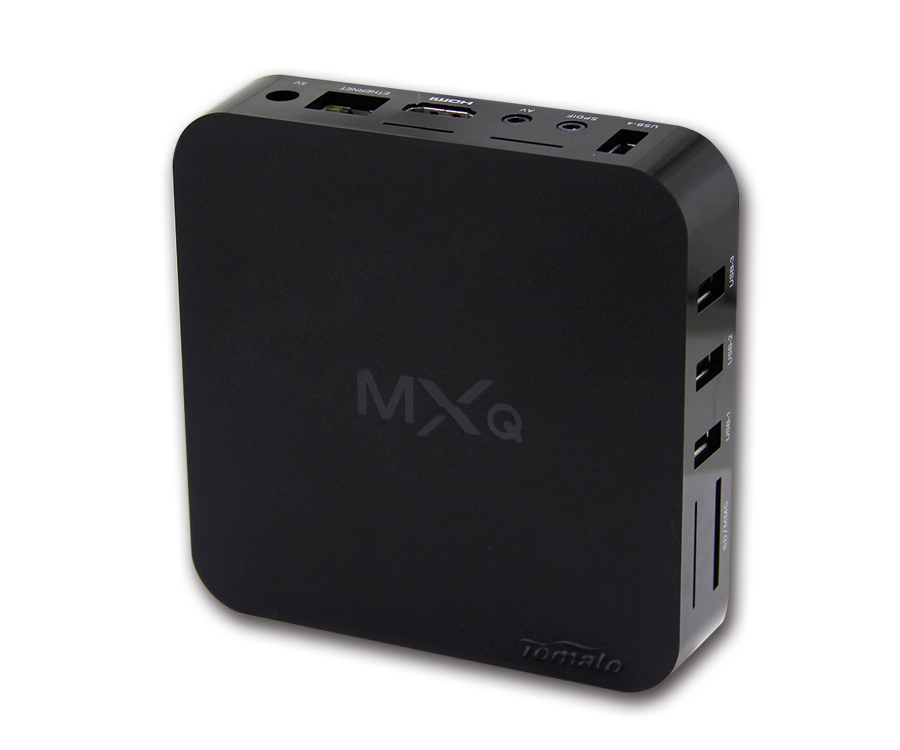
While a consumer stick contains only a basic HDMI interface and a small wireless antenna, commercial installations require robust physical and electrical connectivity to interface with external hardware.
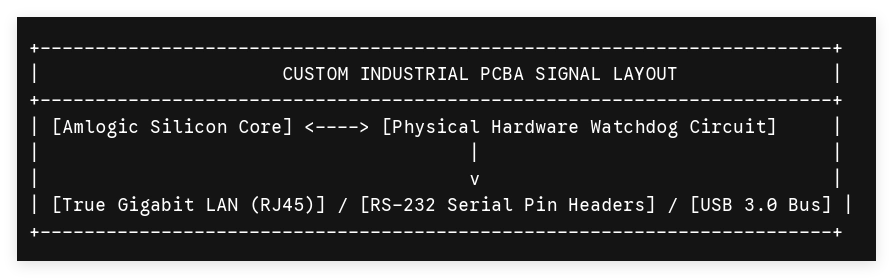
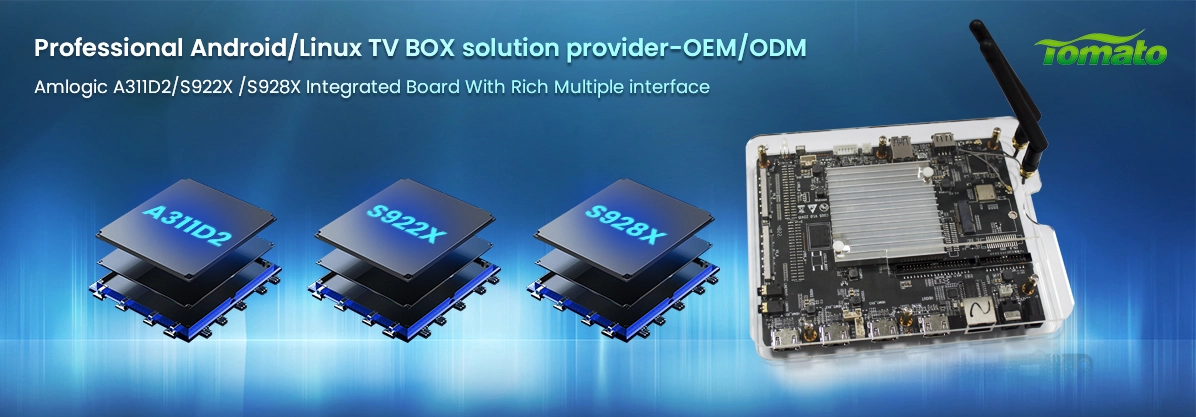
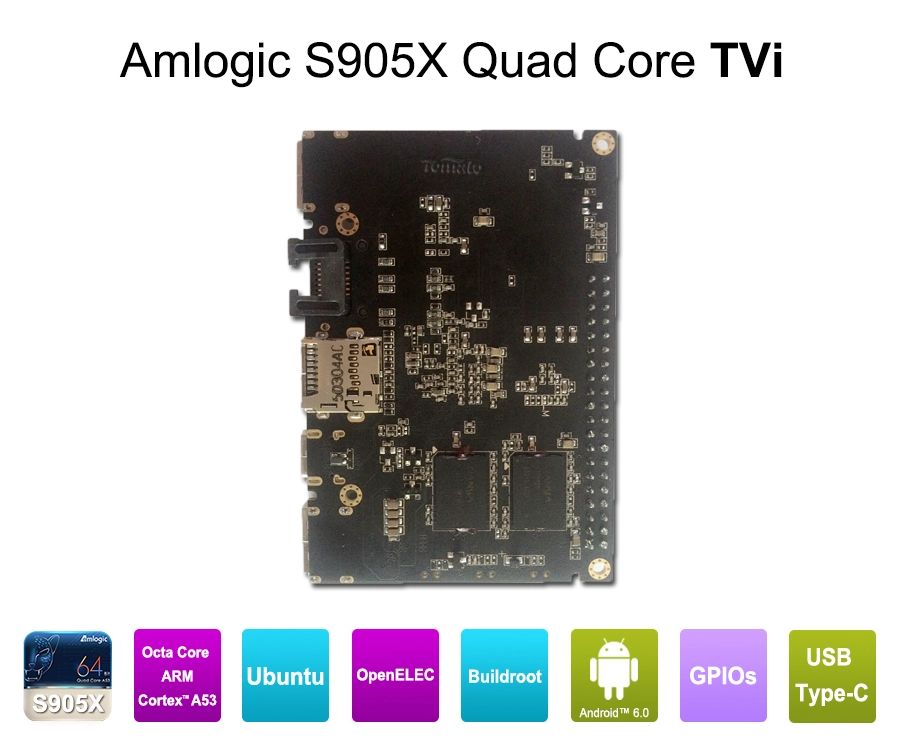
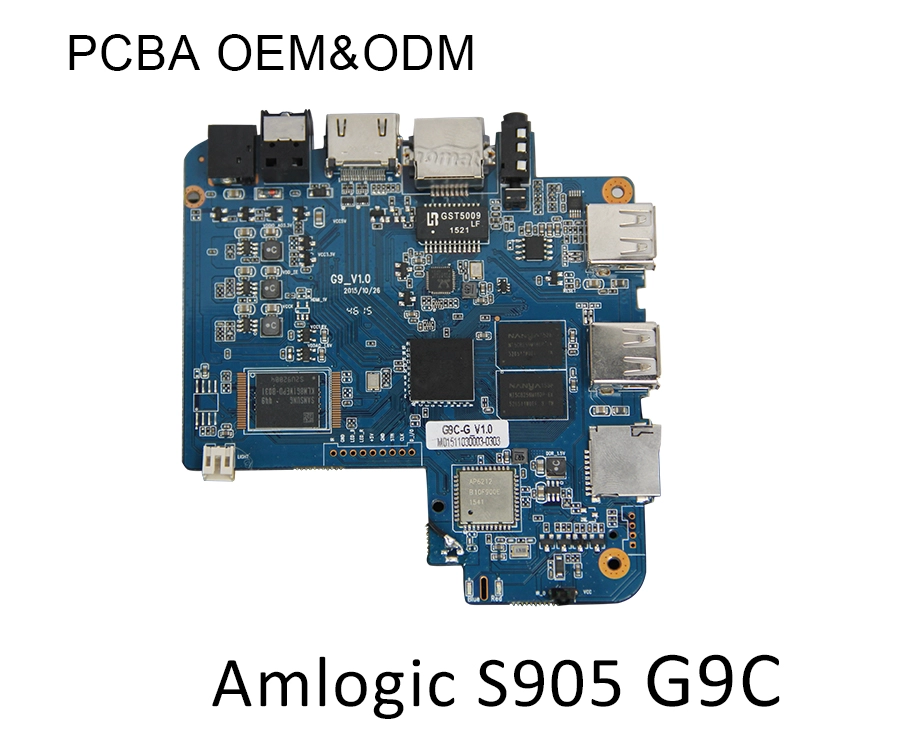
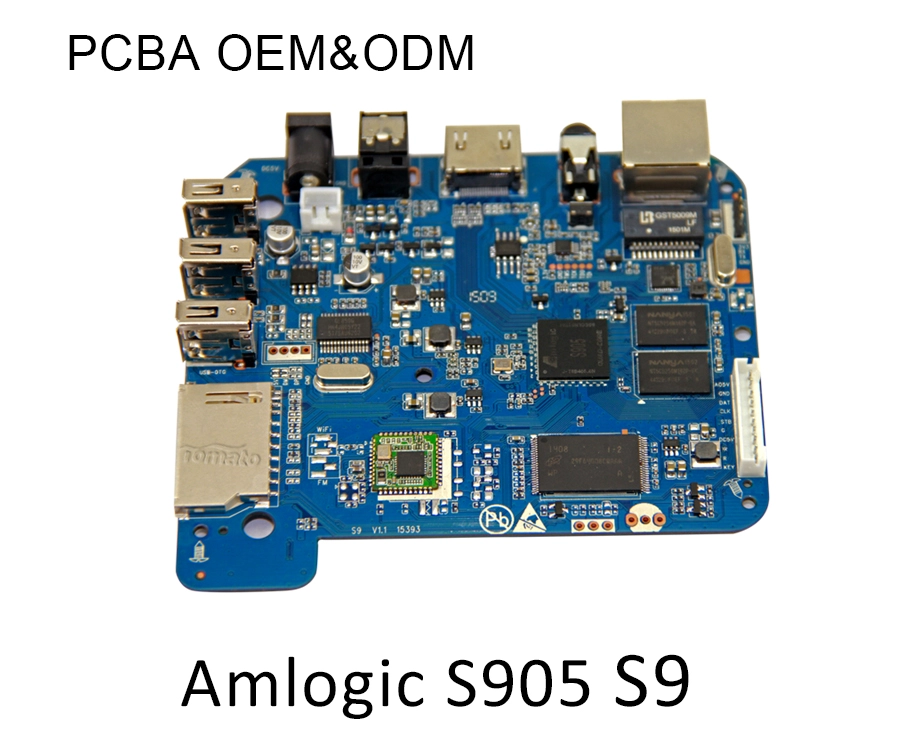
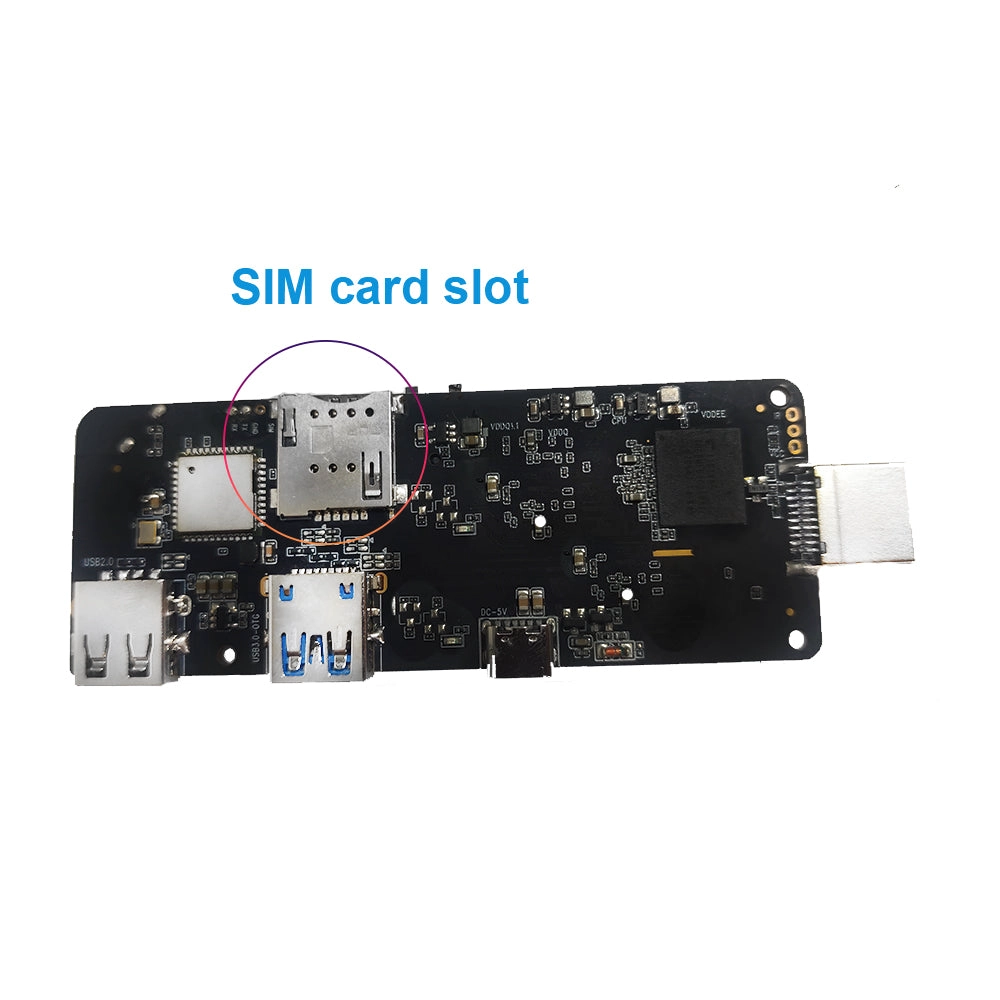
By working directly with an OEM/ODM manufacturing specialist, procurement managers can adjust the physical layout of the board to integrate critical business connections:
-
True Gigabit Ethernet (RJ45): Replaces unreliable Wi-Fi links with stable, hardwired lines for high-bitrate local IPTV distribution.
-
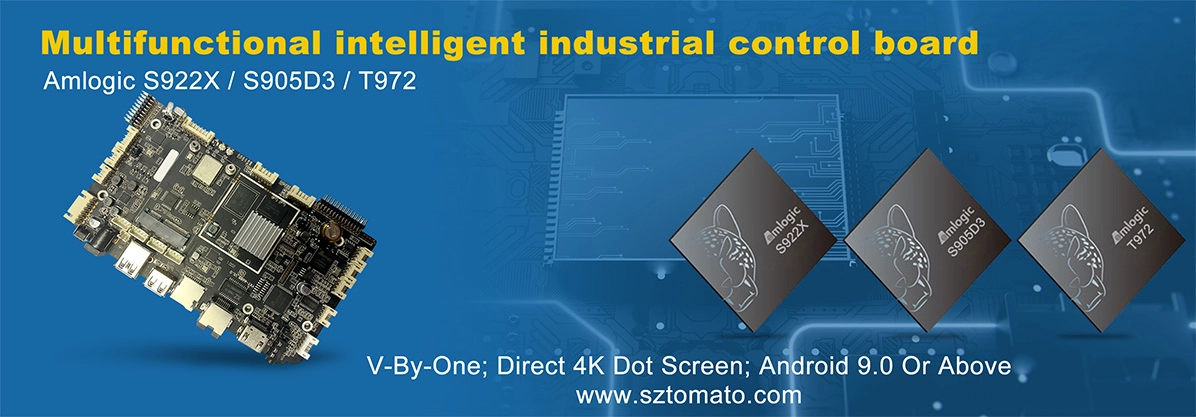
Industrial Expansion Busses: Integrating exposed physical pin headers directly onto the PCBA allows the processor to connect with RS-232 serial hardware, automated barcode scanners, or external telemetry devices.
-
Hardware Watchdog Timers: To prevent system freezes in distant or hard-to-reach installations, a dedicated physical watchdog circuit monitors system routines. If software execution hangs, the circuit forces an automated cold reboot at the power line, reducing on-site maintenance needs.
-
Advanced Thermal Architecture: While consumer plastic enclosures lead to rapid thermal throttling under heavy 24/7 playback loops, commercial enclosures use oversized extruded aluminum heatsinks and internal metal shields. This system conducts heat away from the processor, keeping device temperatures down even when mounted in unventilated spaces behind commercial displays.
B2B Procurement Strategy: Securing Your Network Infrastructure
Relying on retail devices for commercial infrastructure introduces severe long-term operational risks. The shifting corporate focus, locked-down software, and fast consumer product Lifecycles of retail systems like Roku restrict your ability to scale.
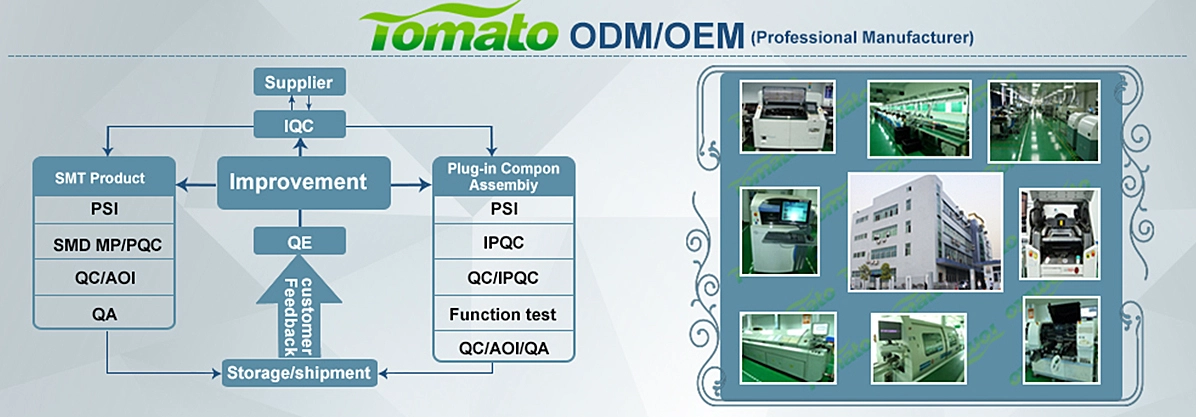
As a dedicated high-capacity OEM/ODM manufacturer in the Android TV Box and digital signage space, SZTomato creates hardware tailored directly to your commercial software applications. We provide customized PCBA layouts, robust industrial cooling systems, and unrestricted SDK access to help you build stable, long-lasting media networks.
Contact our engineering and procurement team today to access schematic source files, request hardware evaluation samples, and schedule a technical consultation for your custom operating system image.
