What is the Best Android Mini PC to buy?
What is the Best Android Mini PC to Buy? A Technical B2B Sourcing Guide
The shift toward AV1 hardware decoding and AI-assisted edge compute has exposed a critical vulnerability in the B2B interactive hardware supply chain: consumer-grade Android hardware cannot sustain enterprise workloads.
System integrators and digital signage operators regularly deploy off-the-shelf media players into unventilated mounting enclosures, only to face thermal throttling within hours, unexpected OS pop-ups, and unrecoverable app crashes. When selecting an Android Mini PC for commercial networks, interactive kiosks, or IoT edge processing, the core metric is not raw AnTuTu benchmarks—it is continuous thermal stability under 100% duty cycles and low-level system customization.
Choosing the "best" unit requires moving past retail Amazon specs and looking directly at board-level architecture, thermal engineering, and Board Support Package (BSP) flexibility.
1. Silicon Architecture: Matching the SoC to Your Deployment Strategy
The engine of any enterprise Android Mini PC is its System-on-Chip (SoC). Selecting the right platform depends on whether your software stack relies on pure multimedia streaming or heavy concurrent edge processing.

Pure Video & Signage Networks: Amlogic S928X
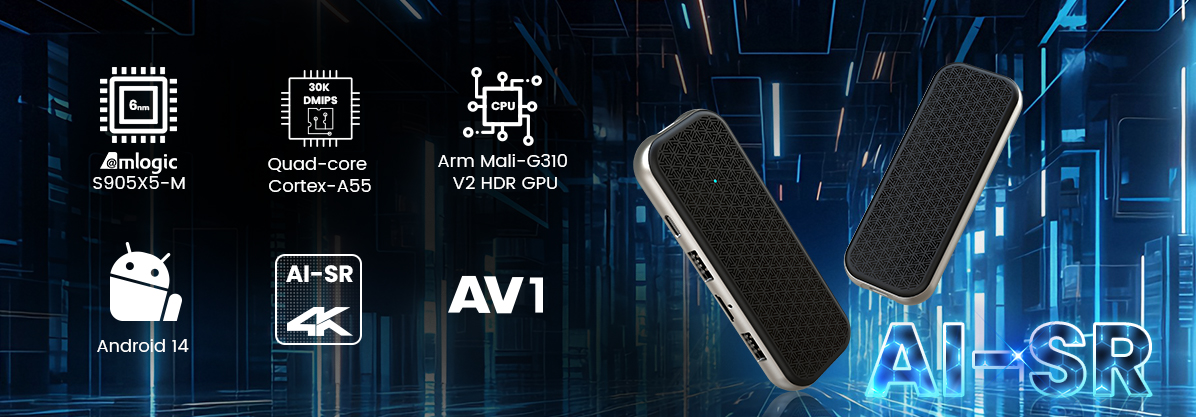
For 4K/8K video walls, high-bitrate streaming networks, and standard digital signage, the Amlogic S928X is the benchmark platform. Integrating a high-efficiency ARM Cortex-A76 core alongside quadruple Cortex-A55 cores, its primary advantage is native 8K @ 60fps AV1 decoding alongside HEVC, VP9, and AVS3 profiles.
Its integrated Neural Processing Unit (NPU) powers AI Super Resolution (AI-SR), dynamically upscaling 1080p legacy streams into crisp 4K outputs without overloading the primary CPU. This provides immediate operational savings in bandwidth consumption across massive display footprints.
Edge AI & Multi-Screen Processing: Rockchip RK3588
For deployments requiring concurrent workload processing—such as digital kiosks running computer vision for audience analytics while outputting to dual independent displays—the Rockchip RK3588 offers raw compute dominance. Featuring an 8-core topology (4x Cortex-A76 + 4x Cortex-A55) paired with a dedicated 6 TOPS NPU, the RK3588 handles real-time facial detection, local database indexing, and complex vector graphics rendering simultaneously.
| Feature / Metric | Amlogic S928X | Rockchip RK3588 |
|---|---|---|
| Target Deployment | High-Efficiency 8K Signage, IPTV, DOOH | Interactive Kiosks, Edge AI, Multi-Display |
| CPU Architecture | Penta-Core (1x A76 + 4x A55) | Octa-Core (4x A76 + 4x A55) |
| Codec Capabilities | 8K @ 60fps AV1, HEVC, VP9, AVS3 | 8K @ 60fps H.265/VP9, 8K @ 30fps H.264 |
| NPU Performance | Integrated AI-SR Acceleration | 6 TOPS (Vector & Tensor acceleration) |
| I/O Overhead | HDMI 2.1a, Gigabit/2.5G LAN, PCIe 2.0 | Dual HDMI 2.1, DP 1.4, PCIe 3.0, Dual LAN |
2. PCBA Layout, Power Delivery, and Thermal Engineering
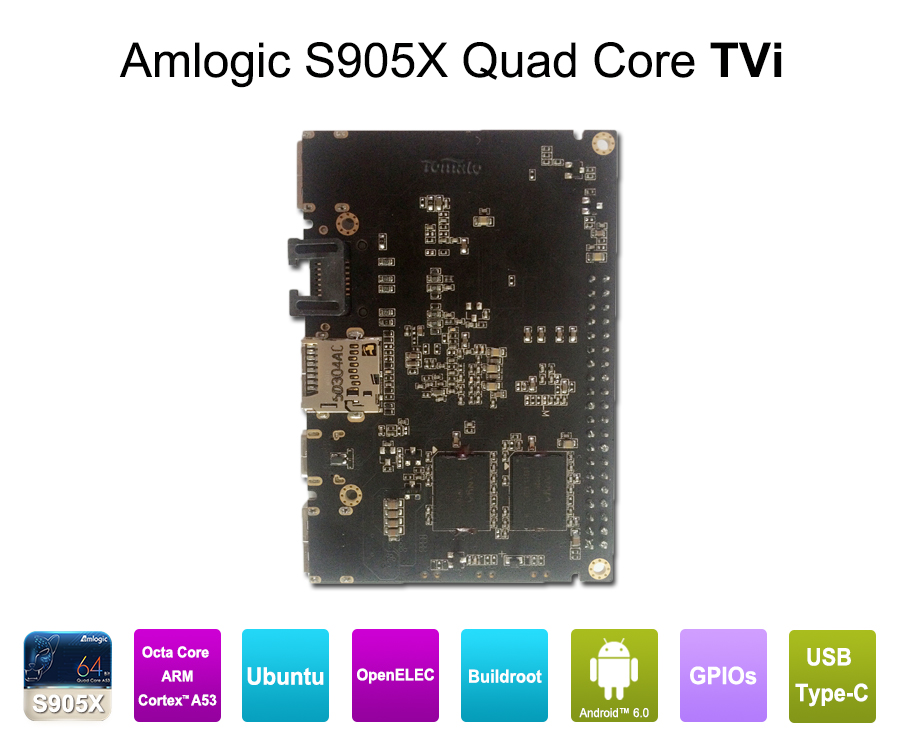
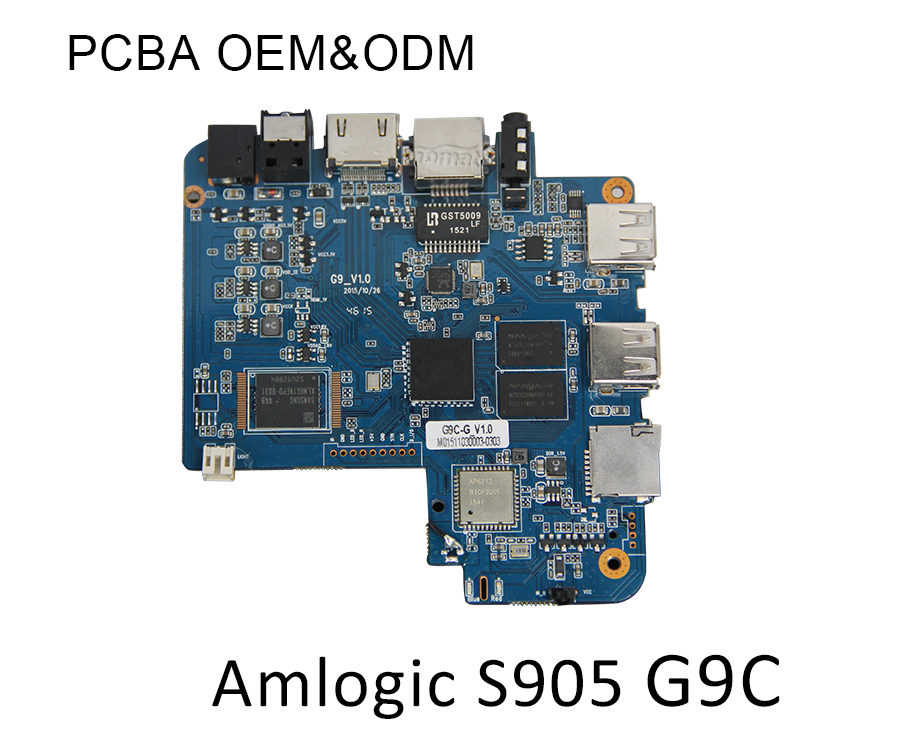
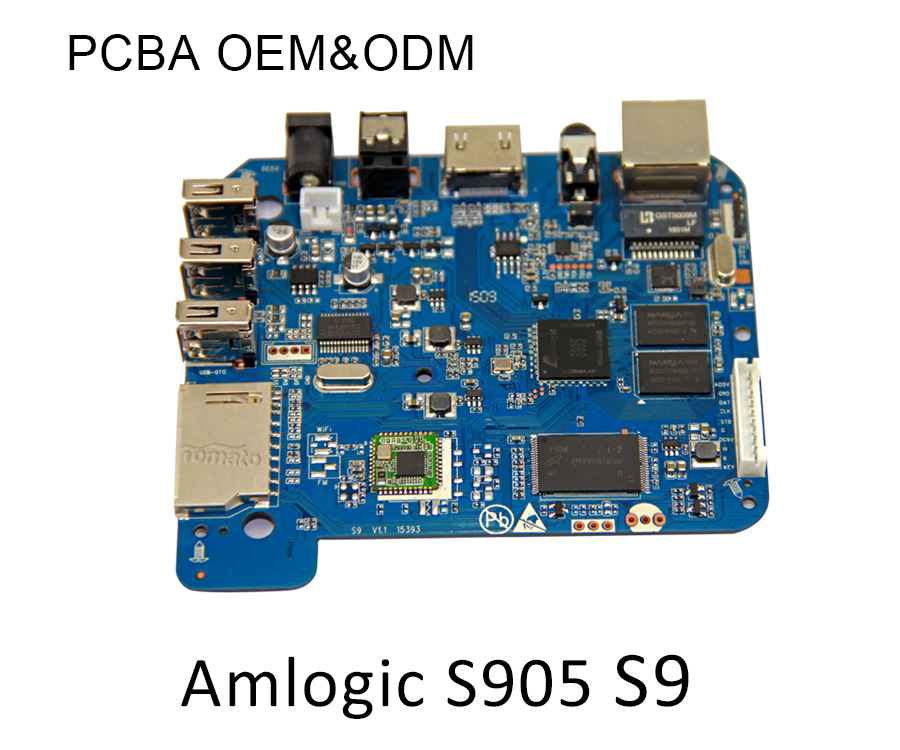
Commercial hardware failure rarely stems from software bugs; it stems from bad physical circuit design. Retail streaming sticks and cheap Android boxes group the SoC, Power Management IC (PMIC), and LPDDR RAM directly adjacent to one another on a 2-layer PCB. This creates concentrated heat pockets that trigger CPU thermal downclocking, leading to dropped frames and system freezes.

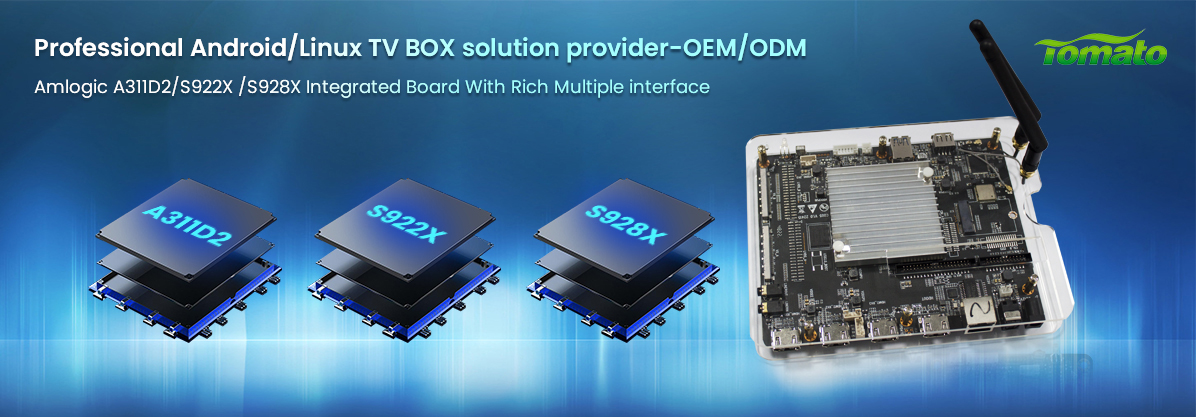
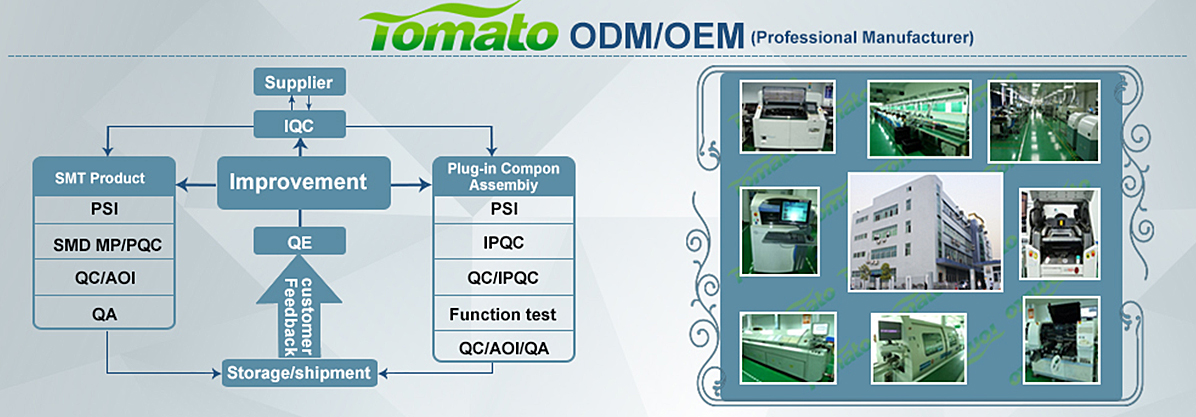
At SZTomato, our OEM/ODM PCBA architecture addresses heat dissipation at the layout level:
- Strategic Copper Pour & Component Separation: We separate the main SoC and the PMIC onto distinct thermal zones of a multi-layer (4-to-6 layer) PCB, utilizing dedicated copper planes to spread heat evenly across the entire board.
-
Conduction-Cooled Aluminum Chassis: Instead of relying on noisy mini-fans that collect dust and fail in commercial environments, we turn the exterior housing into a primary heat sink. Using high-conductivity thermal pads, heat transfers directly from the SoC and RAM into a fanless, extruded aluminum casing.
-
Hardware Watchdog Timers (WDT): Software will occasionally deadlock. Our customized hardware designs integrate a physical MCU-backed Watchdog Timer. If the OS stops sending heartbeats over GPIO, the WDT performs a full hardware power-cycle within seconds, eliminating costly site visits for physical reboots.
3. Firmware Customization & System-Level OS Optimization
Buying a commercial Android Mini PC without custom Board Support Package (BSP) access is a major liability. Stock consumer Android OS builds contain background apps, aggressive memory killers, and unpredictable system notifications that destroy the user experience on commercial displays.
Enterprise deployment requires full control over the underlying Linux kernel and Android source tree.
Modify Linux kernel parameters to disable unused peripheral buses, lower boot latency under 12 seconds, and embed custom hardware drivers for specialized peripherals like RS232, RS485, and CAN-bus interfaces.
Expose proprietary APIs to your software team for direct control over HDMI-CEC protocols, screen orientation rotation (0°/90°/180°/270°) at the hardware composer level, and GPIO state manipulation.
Strip out default Google Play services, status bars, and navigation pop-ups. Inject a custom bootloader image (boot logo/animation) and lock the device directly into your native APK via Android Kiosk Mode.
Configure private, secure Over-The-Air (OTA) update servers to push differential firmware patches silently in the background without user intervention or screen downtime.
Security & Content Rights: For secure media delivery networks, enterprise firmware must also support hardware-bound DRM encryption (Widevine L1, PlayReady) alongside HDCP 2.2/2.3 key protection on output interfaces to prevent media extraction and stay fully compliant with broadcast standards.
4. Hardware Customization: Beyond Off-the-Shelf Specs
No two enterprise deployments are identical. A digital signage board inside an airport needs different hardware inputs than an automated smart vending machine controller. A true B2B manufacturing partner must offer flexible OEM/ODM modifications at the hardware level.

-
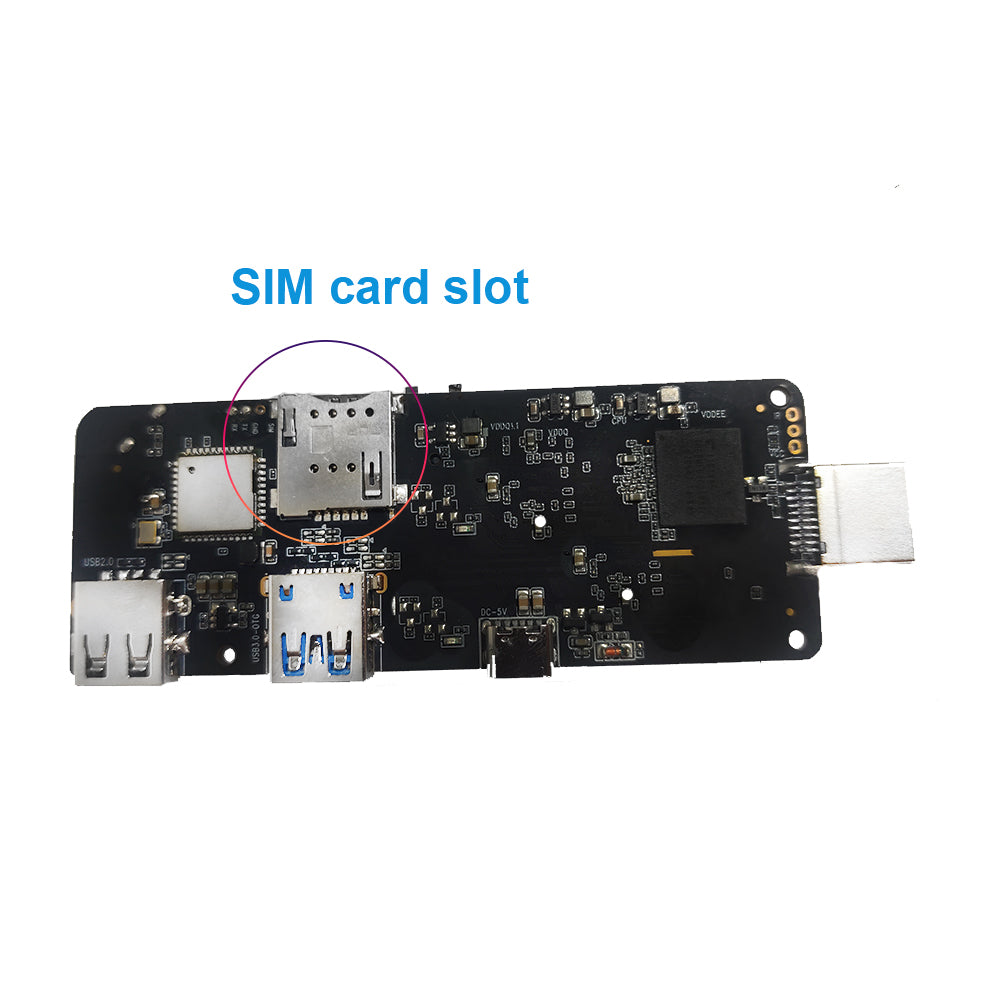
Cellular & Wide-Area Networking: Integrating onboard 4G-LTE or 5G modules via M.2/mini-PCIe slots with external high-gain SIM card readers for remote signage without reliant local Wi-Fi.
-
Industrial Bus Communications: Adding RS232/RS485 serial interfaces and opto-isolated GPIO connectors directly onto the mainboard to interface with external payment hardware, sensors, and PLCs.
-
Direct Panel Connectivity: For custom touch kiosks and smart mirrors, adding embedded DisplayPort (eDP) or LVDS headers directly onto the PCBA bypasses the need for costly external display driver boards.
Technical Hardware Checklist for Procurement Teams
Before placing a volume order for commercial Android Mini PCs, verify that your OEM partner meets these engineering standards:
- Thermal Validation: Hardware maintains over 95% peak CPU/GPU clock speeds during a continuous 48-hour burn-in test at 50°C ambient temperatures.
-
Storage Reliability: Industrial eMMC 5.1 or NVMe flash memory utilizing wear-leveling algorithms to prevent storage degradation from continuous log writes.
-
Power Management: Wide-voltage DC power input (e.g., 9V–36V) with reverse-polarity protection to handle unstable commercial power grids.
-
AOSP Source Access: OEM provides full Android Open Source Project (AOSP) source code, device tree configs, and compiled SDKs for your development team.
-
Long-Term Availability: Guaranteed silicon lifecycle supply (5–7 years) to prevent hardware fragmentation across multi-year rollout phases.
Engineer Your Next Enterprise Android Hardware with SZTomato
The best Android Mini PC for your business is not a pre-packaged box off a store shelf—it is a purpose-built system designed specifically for your software ecosystem, environmental conditions, and scale.
At SZTomato (Shenzhen Tomato Technology Co., Ltd.), we have spent over 16 years specializing in custom OEM/ODM Android hardware development. From PCBA circuit design and thermal engineering to low-level kernel driver development and system-level firmware customization, we help B2B system integrators build high-reliability hardware platforms tailored to their exact specifications.
Ready to bypass off-the-shelf limitations and engineer custom hardware for your deployment?
Contact our B2B engineering team to discuss specs, request sample units, or review OEM/ODM capabilities.