
What is the Best Android Mini PC?
Edge Computing & Signage Blueprint: What is the Best Android Mini PC for Enterprise Deployments?
The widespread adoption of high-bitrate AV1 hardware decoding, native PCIe 3.0 bus expansion, and on-chip Neural Processing Units (NPUs) delivering up to 6 TOPS of compute power has fundamentally transformed the role of the Android Mini PC. Rather than functioning merely as lightweight desktop replacements, modern commercial-grade Android Mini PCs serve as dedicated ARM-based edge nodes engineered to drive multi-screen display arrays, execute real-time machine vision analytics, and manage industrial IoT workloads in harsh operational environments.
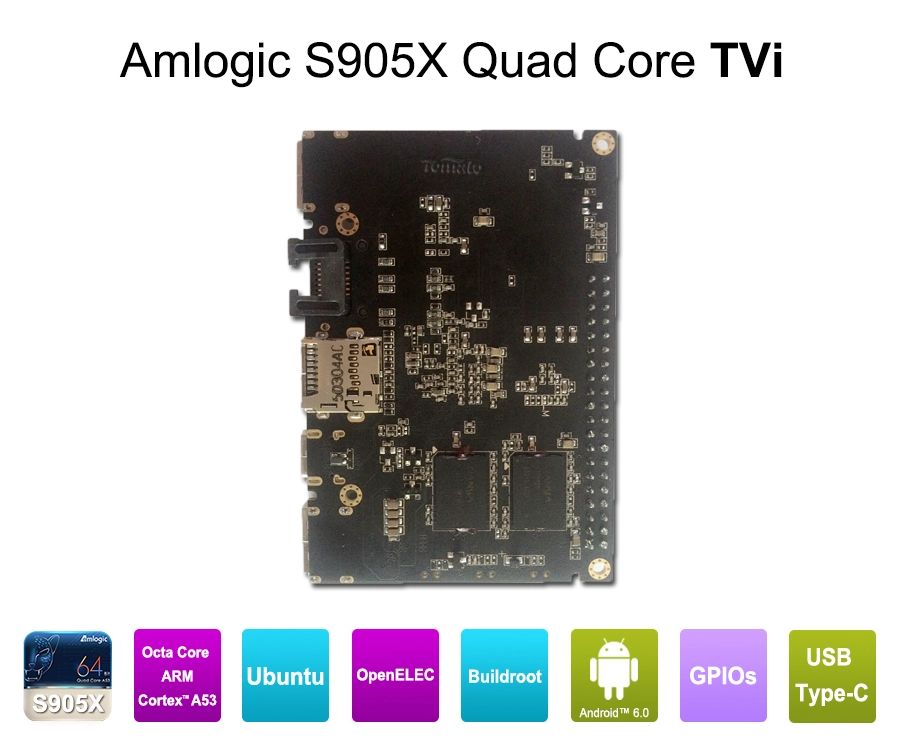
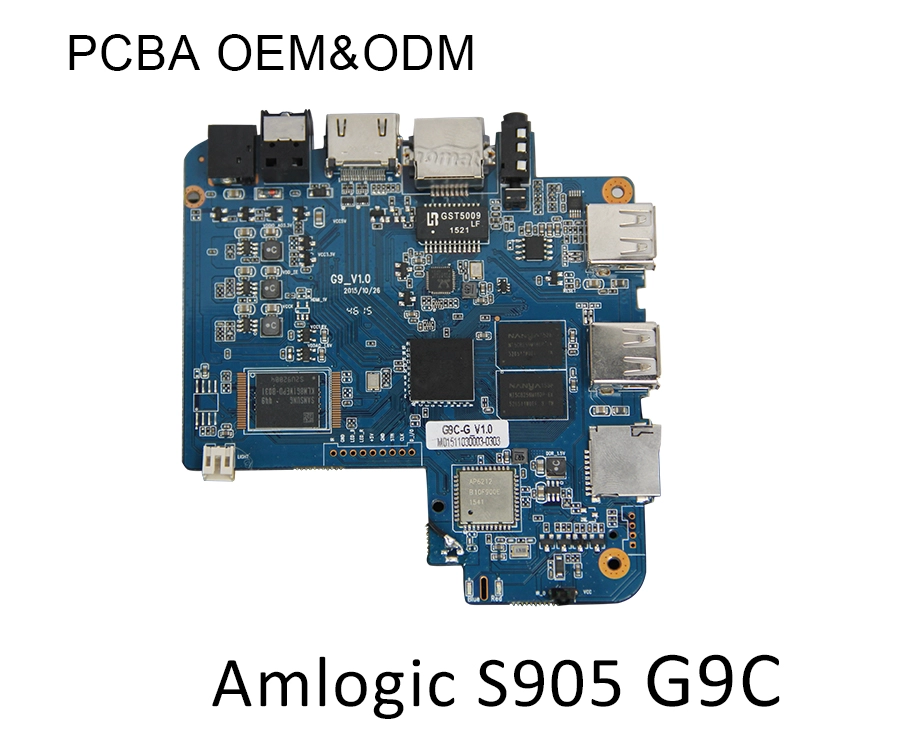
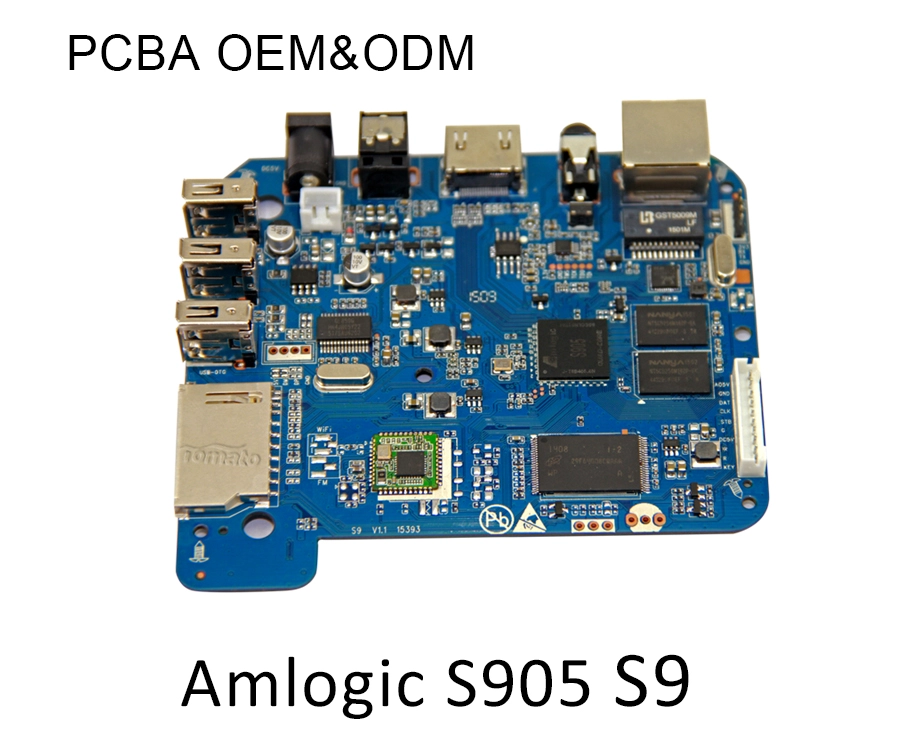
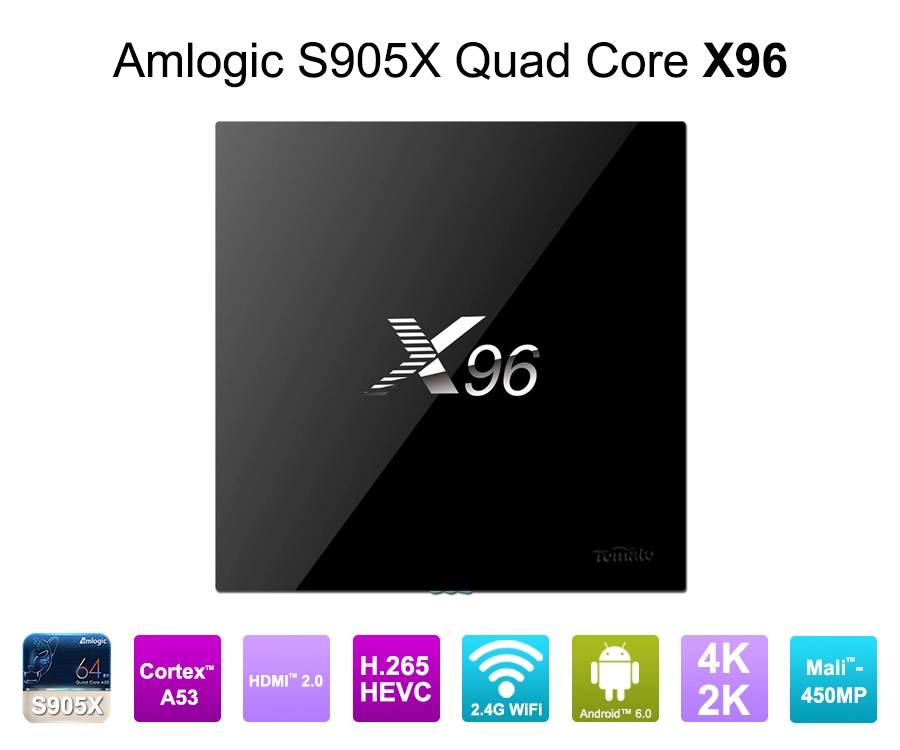
Deploying generic retail mini PCs or low-cost consumer sticks into commercial installations regularly results in thermal throttling, memory fragmentation, unauthorized end-user tampering, and costly truck rolls. For B2B procurement managers and system architects, the best Android Mini PC is a hardened, application-specific platform built on targeted silicon, tailored Printed Circuit Board Assembly (PCBA) routing, and customized AOSP kernel firmware.
1. Silicon Architecture: Matching Compute Workloads to Edge Hardware
The primary factor determining an Android Mini PC's processing ceiling and peripheral bandwidth is its System-on-Chip (SoC) microarchitecture. B2B deployment requirements dictate whether the hardware should prioritize specialized video decoding pipelines or high-concurrency multi-threaded application compute.
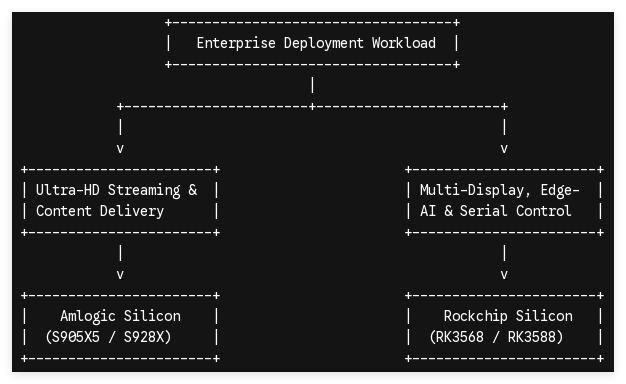
High-Throughput Video & Media Nodes: Amlogic Architecture
When the Android Mini PC is deployed as a dedicated streaming hub, IPTV gateway, or high-definition digital signage player, Amlogic silicon offers unmatched hardware-accelerated video pipelines.
-
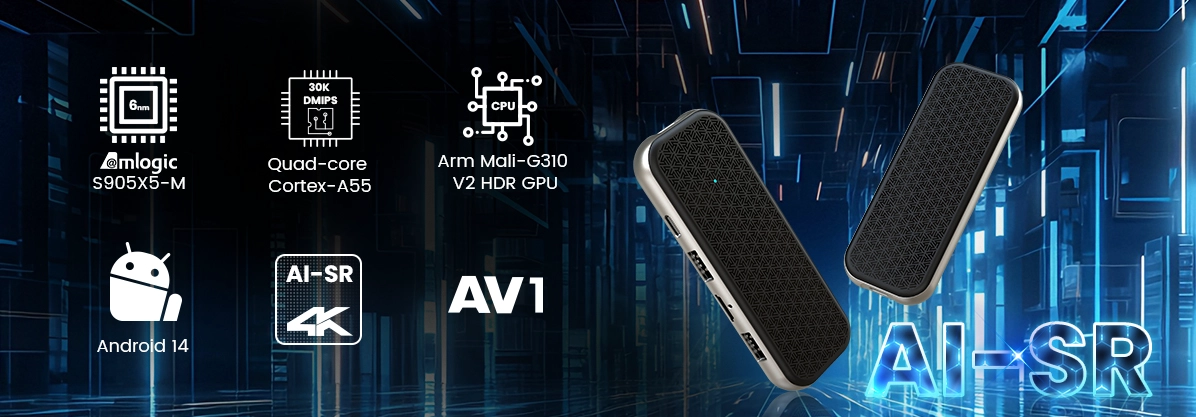
Next-Gen Commercial Standard (Amlogic S905X5): Built on a power-efficient 6nm process using Armv9 Cortex-A510 cores. It features an integrated NPU (3.2–4 TOPS) engineered for hardware-accelerated AI Super-Resolution (AI-SR), upscaling 1080p source video feeds to clear 4K output directly at the display edge.
-
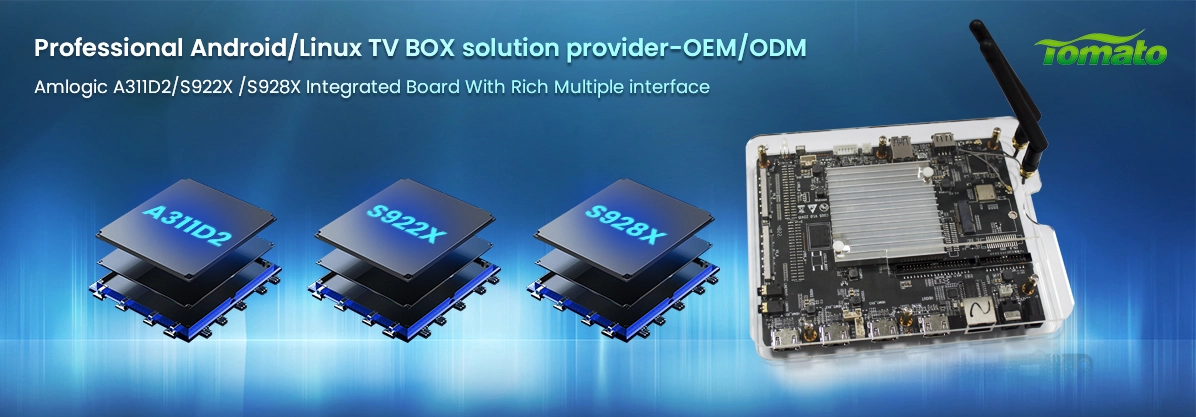
Ultra-HD Flagship (Amlogic S928X): Utilizes an ARMv8 penta-core architecture (Cortex-A76 + 4× Cortex-A55) paired with a specialized Video Processing Unit (VPU). It provides native 8K@60fps hardware decoding for AV1, HEVC, and VP9 codecs, making it the ideal choice for high-bitrate video walls and operator media distribution.
Network Bandwidth Impact: Native hardware AV1 decoding reduces network data consumption by approximately 30% compared to H.265 at identical visual quality. Across an enterprise network with hundreds of active endpoints, this significantly lowers egress cloud costs and network backhaul stress.
Edge-AI, Multi-Display & Peripheral Computing: Rockchip Architecture
For interactive kiosks, industrial automation terminals, or multi-camera smart retail deployments, Rockchip SoCs provide superior bus expandability, multi-screen output, and local machine-learning execution.
-
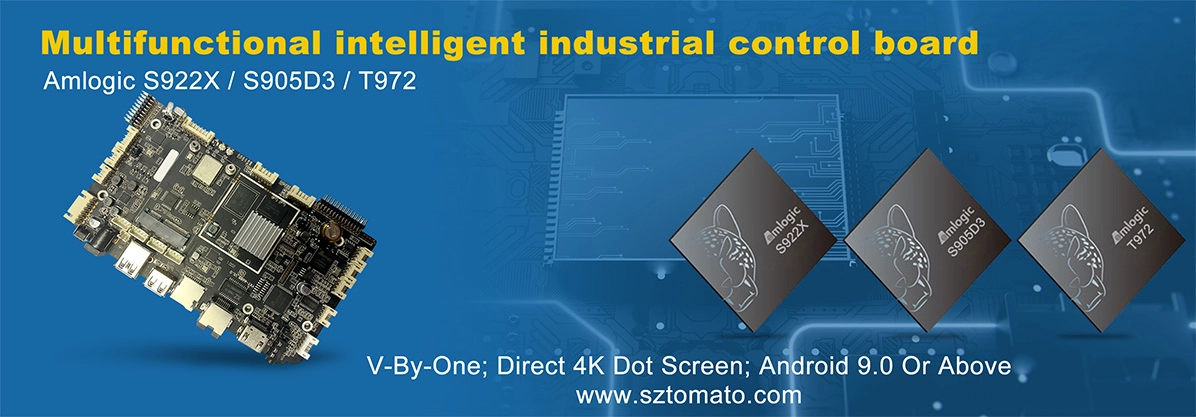
Industrial IoT & Dual Display (Rockchip RK3568): A quad-core Cortex-A55 processor equipped with a 1 TOPS NPU, dual Gigabit Ethernet ports, and native CAN bus / RS232 support. Excellent for smart building hubs, entry-level kiosks, and industrial machine interfaces.
-
High-Performance Edge AI (Rockchip RK3588): An 8nm octa-core big.LITTLE architecture (4× Cortex-A76 + 4× Cortex-A55) featuring an integrated 6 TOPS NPU and Mali-G610 MC4 GPU. The RK3588 natively drives up to four independent 4K display outputs or a single 8K screen while concurrently processing local computer vision algorithms for audience analytics or gesture recognition.
2. PCBA & Thermal Engineering: Designing for 24/7 Fanless Uptime
Consumer mini PCs rely on small, active cooling fans that gather dust, suffer mechanical bearing degradation, and fail in continuous commercial use. When an Android Mini PC is installed behind a commercial display or integrated into an unventilated outdoor enclosure, internal ambient temperatures often surpass 55°C. Under these conditions, unoptimized hardware drops CPU clock frequencies to prevent overheating, leading to UI latency, frame loss, and eventual system freeze.
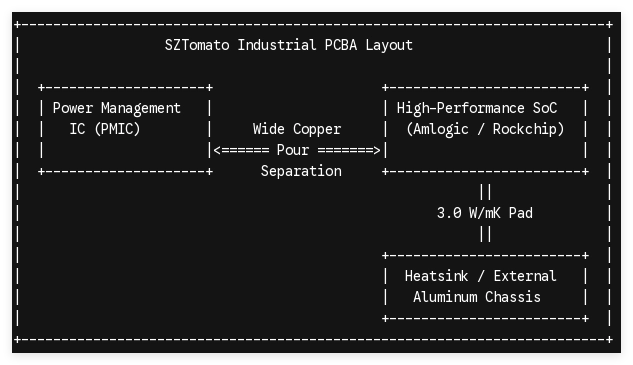
Achieving continuous 24/7/365 industrial reliability requires hardware engineering interventions at the board level:
-
Thermal Isolation & Passive Chassis Dissipation: High-reliability PCBAs physically segregate the main SoC die from the Power Management IC (PMIC) and eMMC/NVMe storage blocks to prevent localized heat accumulation. Utilizing oversized extruded aluminum heatsinks coupled directly to an aluminum outer housing via high-conductivity (3.0 W/mK) thermal pads converts the entire chassis into a passive heat sink. This passive cooling approach keeps core temperatures well within safe operational limits without moving mechanical parts.
-
Hardware Watchdog Timers (WDT): Software crash handlers cannot recover a system if the Linux kernel experiences a hard deadlock. Incorporating a dedicated hardware Watchdog IC directly on the PCBA establishes an independent hardware pulse monitor. If the main board fails to toggle the watchdog pin within a programmed interval, the hardware watchdog triggers an electrical power cycle to force a clean system boot.
-
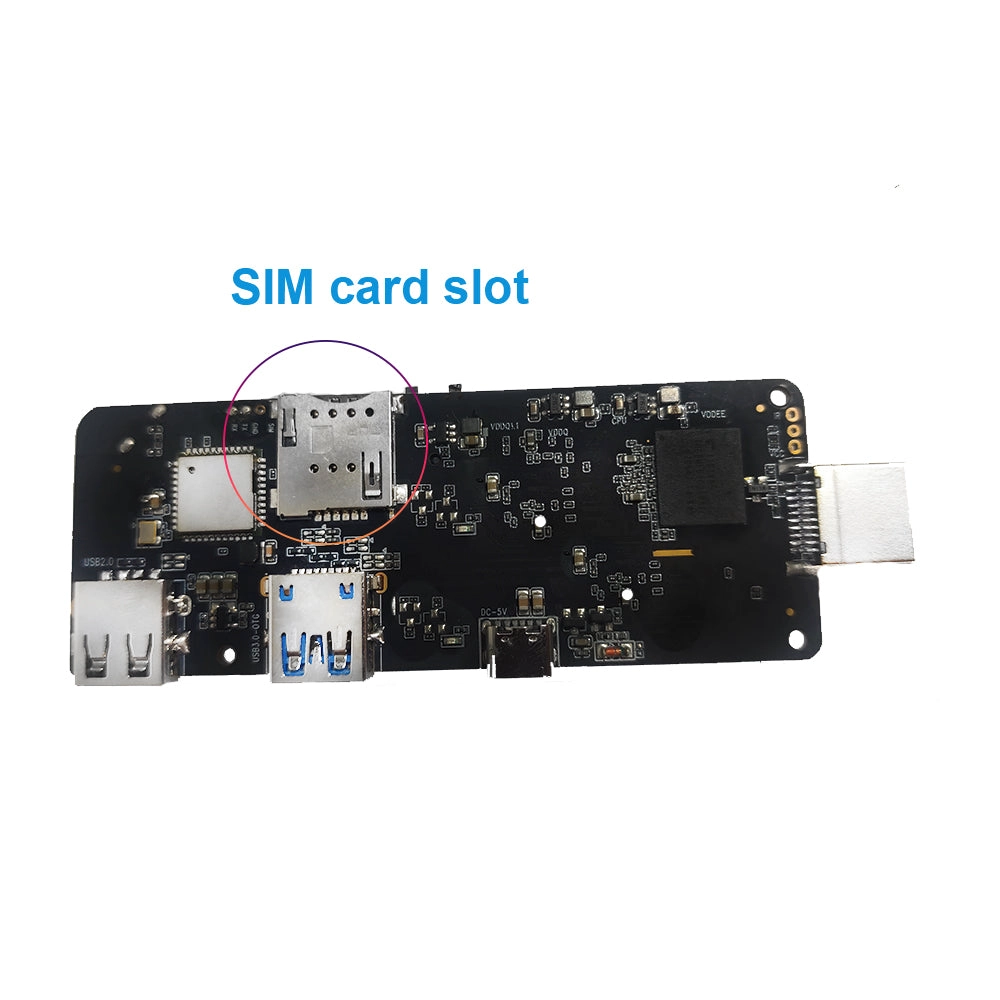
Industrial Interface & Power Flexibility: Industrial deployments demand robust, secure physical connectivity. Customized PCBA modifications integrate active Power over Ethernet (PoE+ IEEE 802.3at/bt) to supply up to 60W of power alongside network data over a single RJ45 cable. Tailored layouts also provide native RS-232/RS-485 DB9 connectors for serial control, GPIO terminal blocks for external sensor inputs, and M.2/Mini-PCIe slots for 4G/5G cellular modems with dual SIM failover.
3. Firmware Sovereignty: Deep AOSP Kernel Lockdown & Peripheral SDK Integration
Hardware durability is incomplete without complete operating system control. Stock Android desktop environments or consumer TV builds introduce unnecessary background daemons, store dependencies, and security vulnerabilities that complicate fleet management.
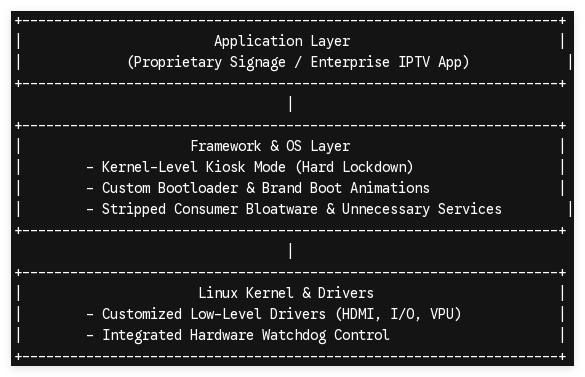
Kernel-Level Kiosk Lockdown and Peripheral Integration
For self-service terminals, interactive kiosks, and digital menu networks, the OS must be hardened against user intervention.
-
AOSP Build Optimization: Compiling a streamlined Android Open Source Project (AOSP) ROM removes consumer store frameworks, unnecessary network discovery services, and background telemetry. This reduces OS boot times to under 15 seconds and maximizes available system memory for local media buffering.
-
Bootloader-Level Application Pinning: Replacing the standard Android system launcher within the boot partition forces the device to boot directly into the client's proprietary application. Navigation bars, status menus, power options, and physical key combos are disabled at the system level to prevent unauthorized app exits.
-
System-Level SDK/API Integration: Standard Android OS builds often lack low-level HAL (Hardware Abstraction Layer) drivers for specialized commercial peripherals. Custom firmware engineering provides application-specific SDKs/APIs, giving client apps direct root-level communication with thermal receipt printers, magnetic card readers, RS-232 touch panels, and custom LED lighting arrays via onboard serial ports.
Private Over-The-Air (OTA) Fleet Management
Enterprise deployments cannot rely on manual, on-site USB updates across hundreds of remote locations.
-
Dedicated Private OTA Server Infrastructure: System managers require private update pipelines. Private OTA update server systems allow operators to push silent firmware builds, apply security patches, or update core APK packages across designated sub-fleets based on MAC address or device group filters.
-
A/B Partition Redundancy: Dual system partitions guarantee update reliability. If a power disruption occurs during an over-the-air firmware update, the bootloader automatically rolls back to the known-good secondary partition, preventing site downtime and device bricking.
Technical Comparison Matrix: Enterprise vs. Consumer Mini PC
| Technical Feature | Consumer Retail Mini PC | Commercial B2B Android Mini PC (SZTomato) |
| Primary SoC Selection | Standard Consumer Chipsets | Amlogic S905X5 / S928X or Rockchip RK3588 / RK3568 |
| Edge AI Acceleration | Unused / Software Only | Integrated NPU (Up to 6 TOPS for AI-SR & Vision) |
| Cooling Architecture | Active Fan (Dust & Failure Prone) | Fanless Milled Aluminum Housing / Chassis Coupling |
| System Crash Protection | Basic OS Watchdog Timer | Dedicated Hardware Watchdog IC (Board Level) |
| OS & Firmware State | Locked Retail Android / Google TV | Customized AOSP ROM / Hardened Kiosk Mode |
| Peripheral I/O Support | Standard USB & HDMI | RS232/RS485 Serial, GPIO Headers, Dual LAN, PCIe 3.0 |
| Power Input Infrastructure | Standard DC Power Adapter | Active Power over Ethernet (PoE+ 802.3at/bt) Options |
| Supply Chain Longevity | Rapid EOL (6–12 Month Cycles) | Guaranteed 5 to 7+ Year Component Availability |
Partner with SZTomato for Customized Android Mini PC Hardware
Identifying the "best Android Mini PC" for enterprise deployments comes down to selecting an agile OEM/ODM engineering partner capable of delivering targeted hardware and firmware customization. Deploying off-the-shelf consumer mini PCs in commercial installations routinely results in high failure rates, security risks, and unexpected field maintenance expenses.
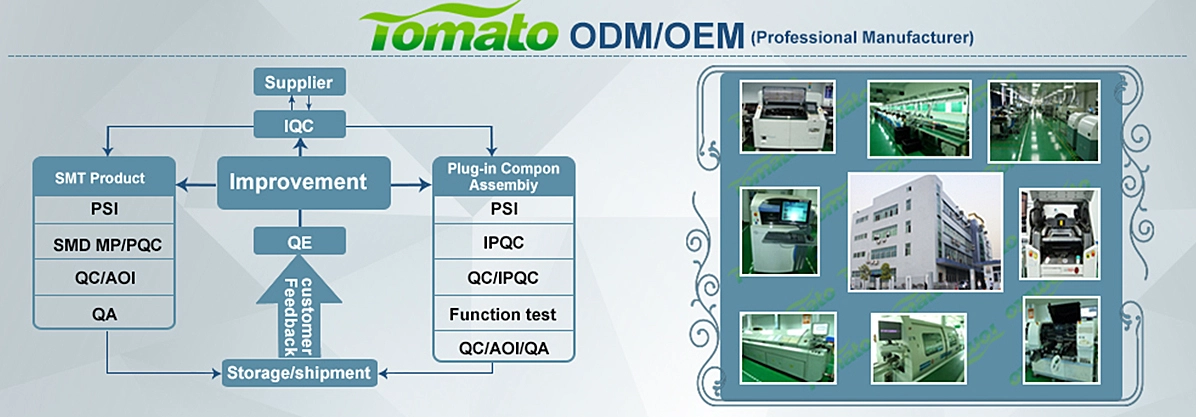
For over 16 years, SZTomato (Shenzhen Tomato Technology Co., Ltd.) has delivered tailored OEM/ODM hardware solutions for global system integrators, telecom operators, digital signage solution providers, and industrial automation firms. We bridge the gap between silicon suppliers and enterprise software platforms through specialized hardware and software engineering:
-
Board-Level PCBA Customization: Custom form factor designs, integrated PoE+ modules, specialized passive thermal cooling assemblies, and hardware watchdog timers.
-
Firmware-Level Engineering: Custom AOSP ROM compilation, kernel-level kiosk lockdown, customized SDK/API integration for serial peripherals, and branded boot animations.
-
Private Fleet Update Infrastructure: Deployment-ready private OTA server systems for complete control over firmware updates and software security.
Request Engineering Support from SZTomato
Contact our senior hardware architecture team to evaluate sample units, review custom PCBA schematics, or request technical support for your upcoming commercial hardware rollout.
-
Website: www.sztomato.com
-
Technical & Sales Inquiries: sales@sztomato.com
