
What is the Best Google TV Box to buy?
Best Google TV Box to Buy: The B2B Guide to Commercial-Grade Hardware Execution
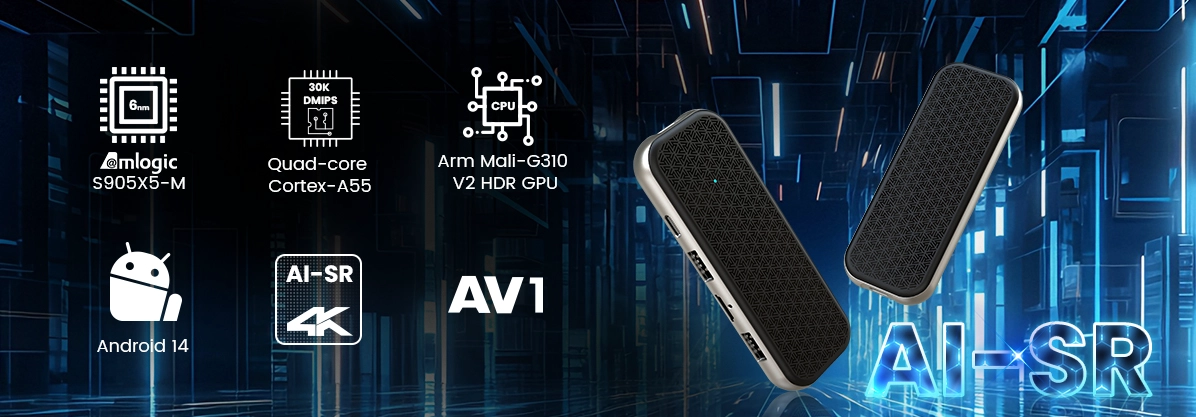
The landscape of hardware deployment for the Google TV and Android TV operating systems has reached a critical architectural inflection point. The commercial viability of streaming hardware is no longer judged by simple app compatibility, but by hardware-level efficiency, specifically the native acceleration of the AV1 video codec and structural stability at the system-on-chip (SoC) layer. As enterprise infrastructure shifts toward hardware-accelerated AV1 decoding to optimize network bandwidth by up to 30%, B2B procurement managers face a steep challenge: retail hardware options like the standard Chromecast or mass-market streaming pucks lack the physical structural interfaces, thermal dissipation systems, and firmware-level access necessary for sustainable commercial deployment.
For system integrators, hospitality networks, and over-the-top (OTT) operators, purchasing the best Google TV Box means looking past consumer-facing UI features. It requires looking deep into the component level—analyzing PCBA layouts, SDK/API availability, and the capacity for deep AOSP/Android kernel optimization.
1. The Architectural Divergence: Retail Limitations vs. Enterprise OEM/ODM Realities
When evaluating hardware platforms for commercial rollouts, consumer-grade boxes introduce immediate operational friction. Standard consumer devices are designed for transient, intermittent residential use within controlled thermal envelopes. They rely on tightly locked down bootloaders and proprietary, fixed launcher interfaces that natively block enterprise remote management tools and custom user experiences.
For enterprise scale, true commercial viability demands an industrial OEM/ODM manufacturing approach.
-
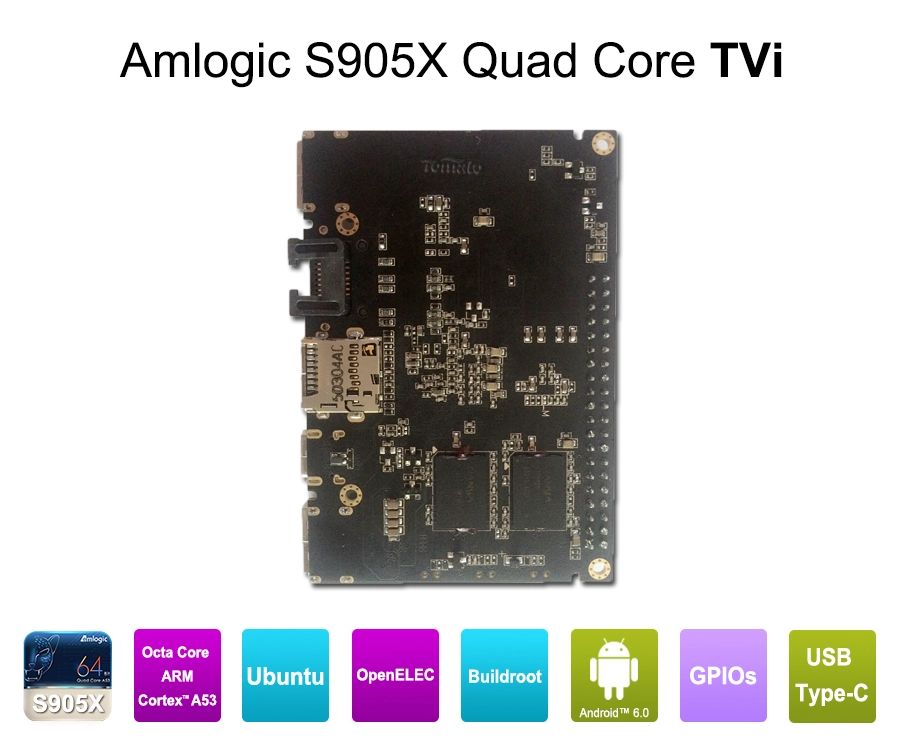
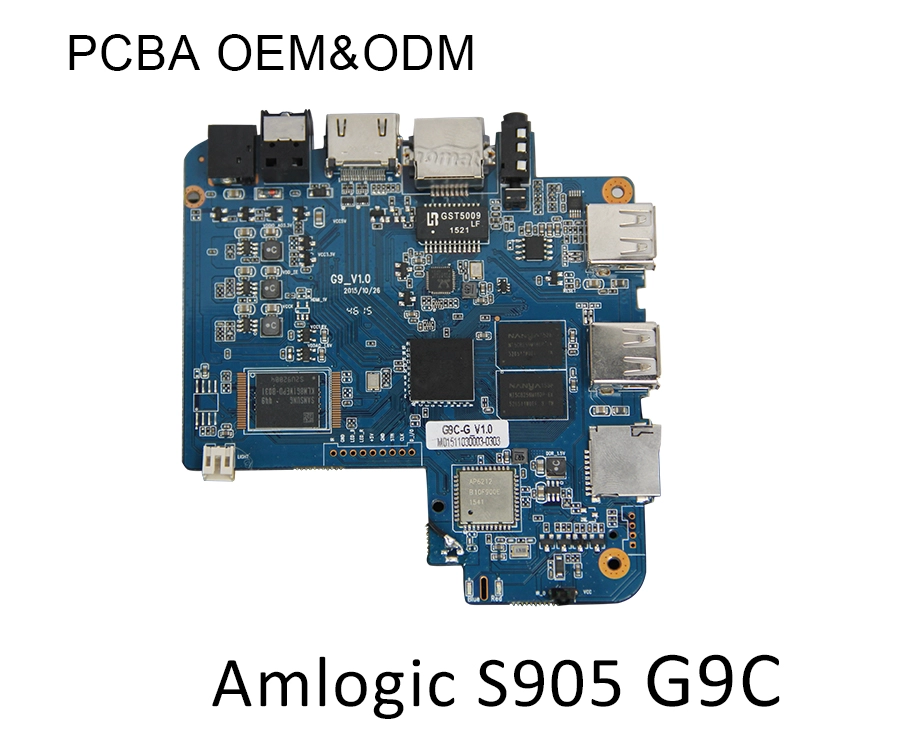
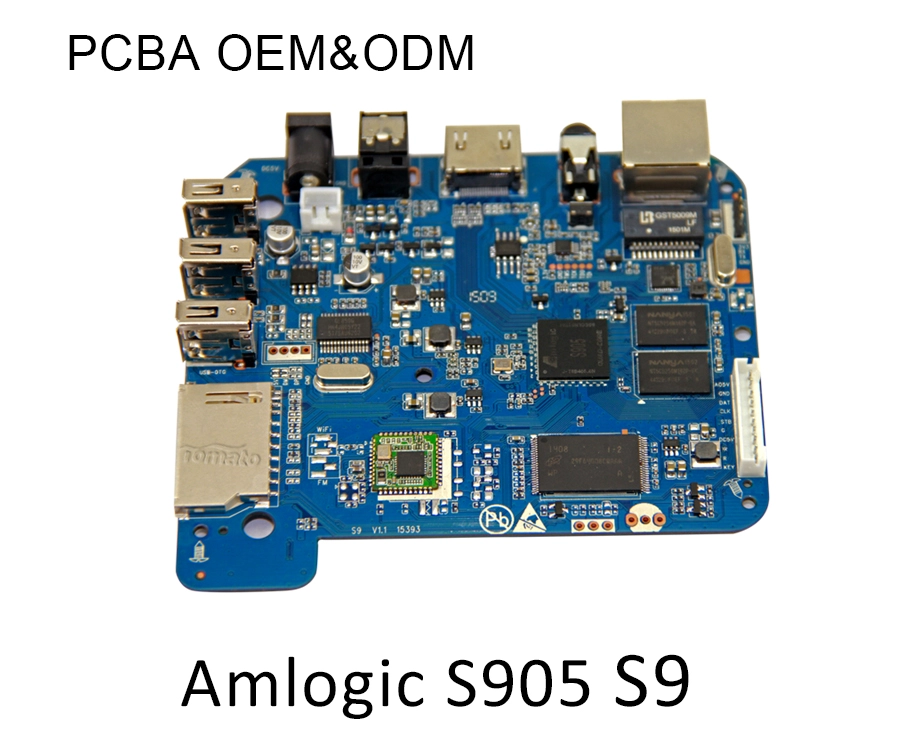
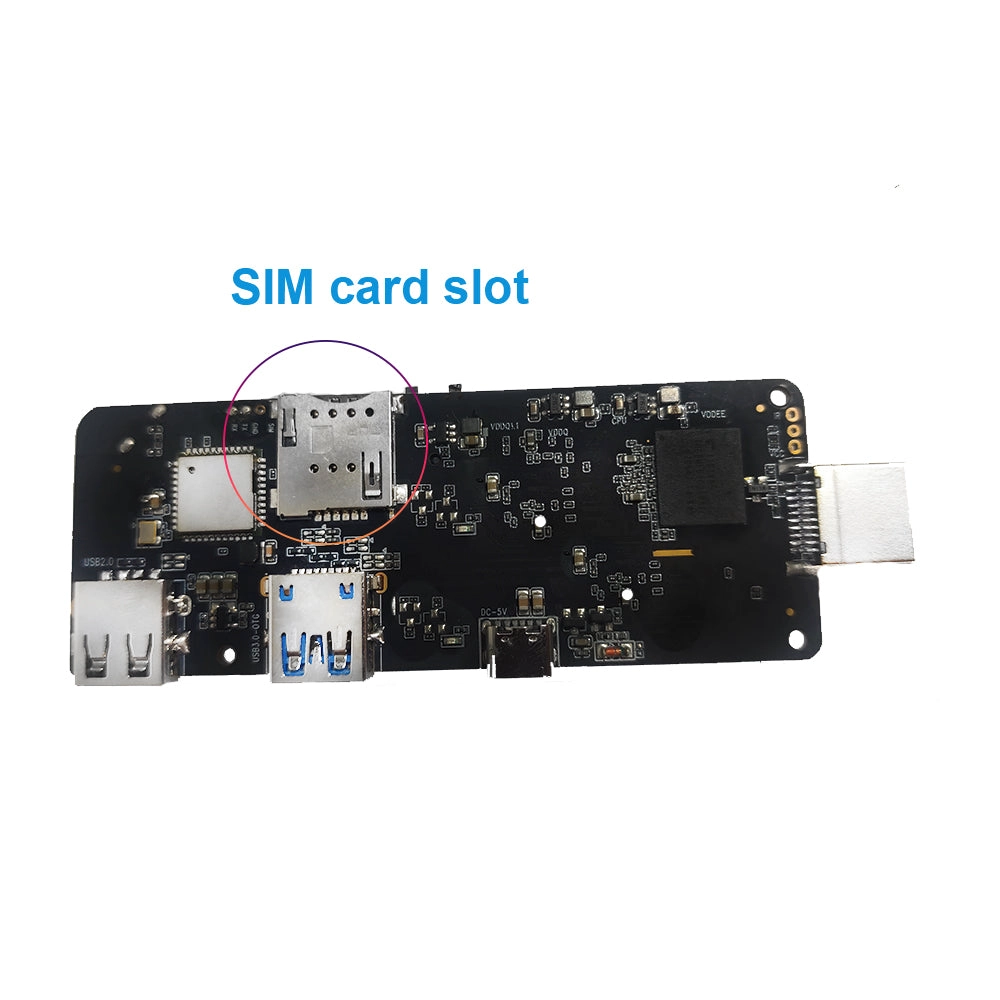
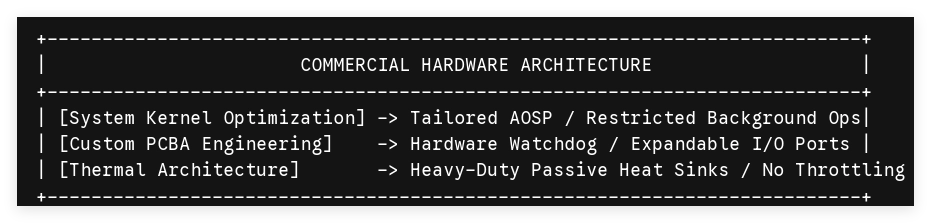
PCBA Hardware Modification: Commercial applications frequently require peripheral connectivity that retail boxes simply do not possess. Enterprise execution requires customized PCBA design, including dedicated RJ45 Gigabit Ethernet controllers for lag-free content delivery, physical RS-232 serial interfaces for display control integration, and multi-channel optical audio outputs (SPDIF).
-
Thermal Resilience & Specialized Cooling: Commercial media players running 24/7 in digital signage enclosures or behind hospitality displays generate continuous thermal stress. While consumer hardware undergoes thermal throttling—causing dropped frames and system crashes—commercial-grade designs use expanded surface-area passive aluminum heat sinks and heavy-duty thermal pads. This guarantees structural stability at high operating temperatures without relying on mechanical fans that present a high risk of dust accumulation and physical failure.
-
Hardware Watchdog Timers: To combat system freezes in remote locations, custom PCBA design incorporates a physical hardware watchdog circuit. If the software loop hangs for a specified interval, the hardware forces a cold electrical reboot of the SoC, reducing on-site maintenance costs to zero.
2. Silicon Performance Metrics: Decoupling SoCs and Media Decoders
Selecting the ideal platform requires deep analysis of the application's silicon architecture. The choice of application processor determines not only the longevity of the deployment, but also the security and content compliance of the system.
| Technical Parameter | Consumer-Grade Retail Dongles | Commercial OEM/ODM Platforms (e.g., Amlogic S905X4 / S905X5) |
| SoC Architecture | Low-power mobile variants (e.g., Amlogic S905Y4) | High-performance application processors (Cortex-A55 / A510 cores) |
| Video Decoding | Software-fallback or basic hardware decoding | Dual 4K@60fps or 8K@60fps hardware-accelerated AV1, VP9, H.265 |
| DRM / Encryption | Locked Widevine L1 (No modification possible) | Widevine L1 + PlayReady SL3000 + Custom HDCP 2.3 Integration |
| I/O Interfaces | Single USB-C (Power only, requires external hubs) | Multiple USB 3.0, MicroSD, True Gigabit LAN, GPIO Headers |
Codec Optimization and DRM Architecture
For premium OTT streaming deployments and IPTV networks, the hardware must feature complete security provisioning. This means matching Widevine L1 and PlayReady Digital Rights Management (DRM) schemes with strict HDCP 2.3 encryption layers embedded directly into the bootloader environment. Without firmware-level cryptographic key insertion during the factory assembly line process, premium high-definition and 4K content streams will fail to handshake, dropping resolutions down to standard definition or blocking playback entirely.
3. Firmware Customization: SDK Access and the Launcher Layer
The primary limitation of standard retail Google TV devices is the inability to bypass the standard consumer-centric user interface. For hospitality networks, medical facilities, and corporate environments, this interface introduces unnecessary distraction and data-security vulnerabilities.
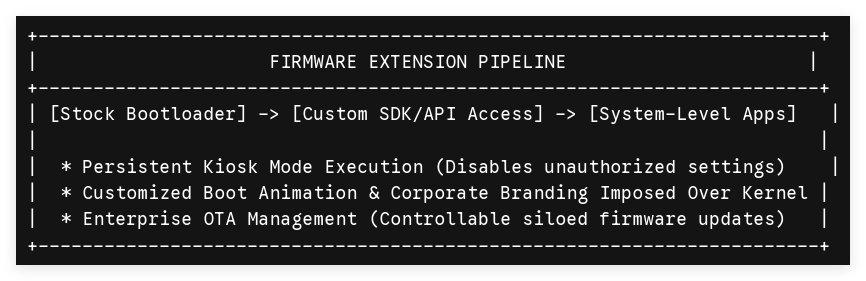
Deep Android Kernel Optimization
By partnering directly with a dedicated manufacturer like SZTomato, engineers gain access to the underlying platform SDKs. This allows for deep software customization that cannot be achieved through typical application-layer development:
-
Persistent Kiosk Mode: Disables user access to global Android settings, status bars, and navigation panels, locking the system into a single commercial application upon boot.
-
Custom Android TV Operator Tier Launchers: System integrators can deploy a proprietary corporate interface that handles user authentication, live IPTV streams, and localized content delivery directly at the system level.
-
Siloed OTA Update Systems: Retail boxes pull unpredictable global updates directly from Google's public servers, which can break corporate software configurations without warning. Commercial-grade deployments run on specialized, private Over-The-Air (OTA) servers. This gives network administrators the ability to vet, schedule, and push firmware revisions only when they have been fully verified under lab conditions.
B2B Procurement Strategy: Moving from Spec Sheet to Scaling
When sourcing the best hardware solution for your network deployment, purchasing random retail units or unbranded white-box inventory creates long-term deployment risks. Enterprise rollouts demand a manufacturing partner that can align physical board configurations and system firmware directly with your end-user applications.
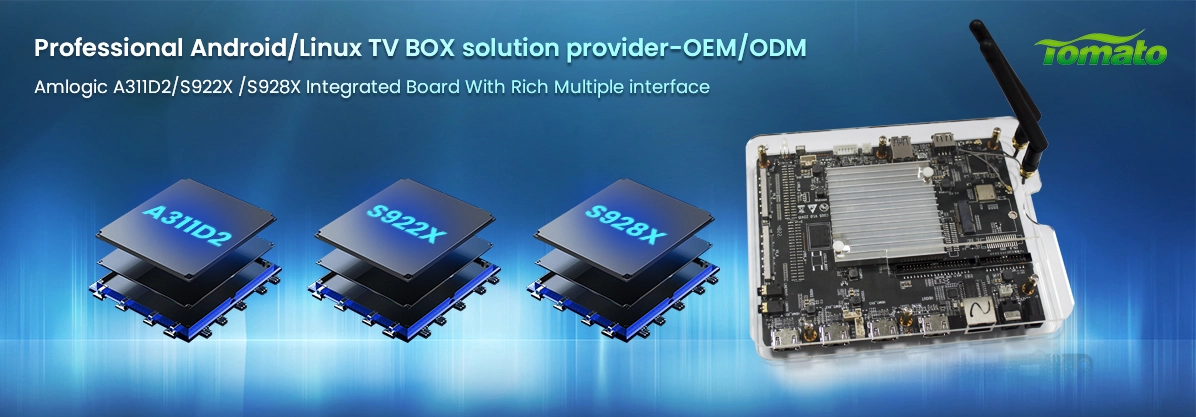
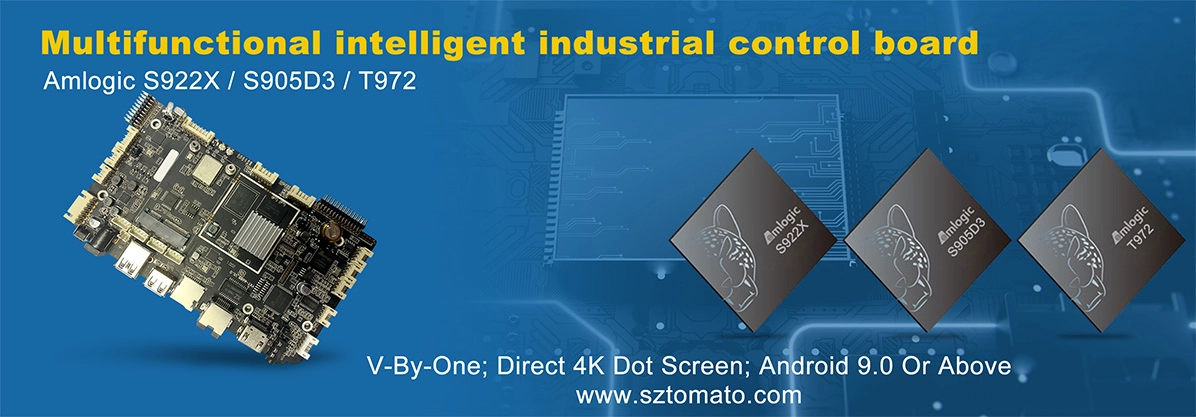
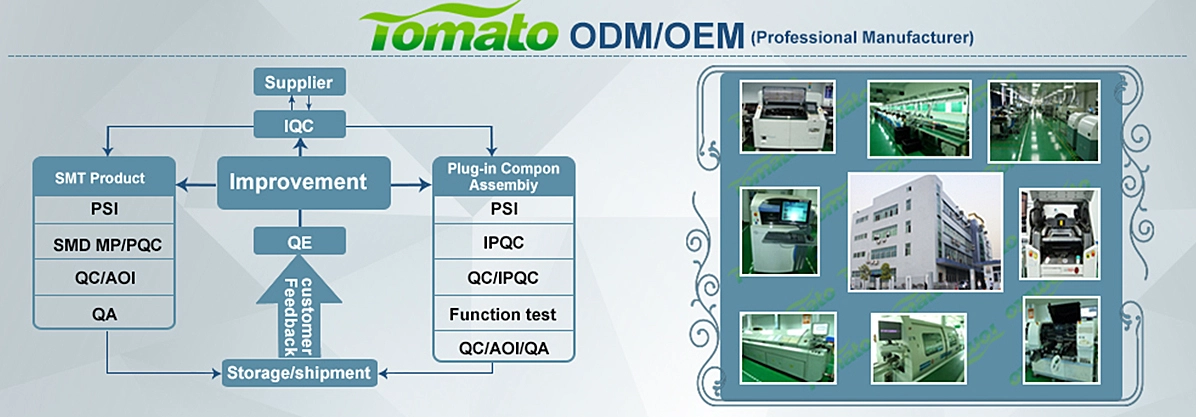
As a high-capacity OEM/ODM partner specializing in the Google TV Box and Digital Signage sector, SZTomato eliminates the compromises of consumer hardware. We deliver customized PCBA layouts, robust passive thermal engineering, and deep firmware-level SDK access designed precisely for your enterprise infrastructure.
Contact our engineering and procurement team today to receive detailed component schematics, arrange evaluation samples built on high-performance Amlogic reference architectures, and schedule a direct technical consultation for your custom firmware build.
