
What is the Best TV Box to buy?
Beyond Retail Specifications: A B2B Framework for Selecting the Optimal Media Terminal Architecture
When sourcing client-premises equipment (CPE) or media playback nodes at scale, procurement departments frequently fall into the trap of analyzing retail product listings. They base multi-thousand-unit orders on basic specifications like RAM capacity or arbitrary marketing labels. This approach introduces significant risk into enterprise rollouts. In commercial environments, field failures, software lifecycle depreciation, and thermal throttling are the primary drivers of total cost of ownership (TCO).
To determine the best commercial TV Box platform to buy, engineering teams must evaluate hardware through a lens of computational stability, deployment intent, and OS-level autonomy. The optimal hardware architecture does not merely stream video; it acts as a highly serviceable, programmable edge node capable of continuous 24/7 operation under demanding environmental conditions.
Technical Architecture: Segmenting Silicon by Enterprise Workload
The hardware selection process begins at the silicon level. The System-on-Chip (SoC) dictates the device's processing boundaries, hardware-accelerated codec capabilities, and peripheral expansion options. Modern B2B deployments generally split between two dominant chip processing paths based on application requirements.
[ ENTERPRISE WORKLOAD EVALUATION ]
│
┌───────────────────────────┴───────────────────────────┐
▼                                                       ▼
[ High-Efficiency Media Streams ]                     [ Interactive Compute / Edge AI ]
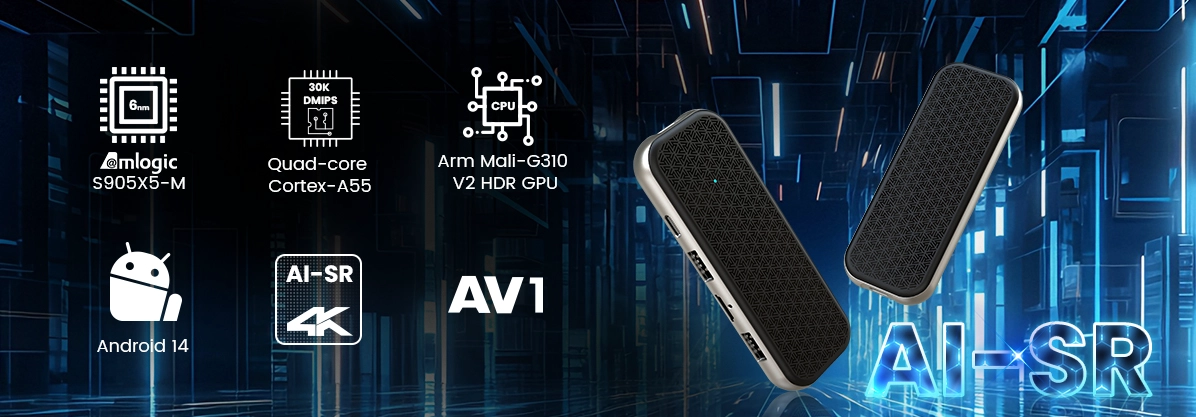
- Amlogic S905X5 (6nm Process)                         - Rockchip RK3588 (8nm Process)
- Quad Cortex-A510 / Mali-G310                         - Octa-core (4×A76 + 4×A55) / 6 TOPS NPU
- Low thermal profile, mass OTT deployment            - Multi-display video walls, local analytics
1. High-Efficiency Mass Media Rollouts: The Amlogic S905X5 Ecosystem
For deployments where video rendering efficiency and long-term codec compliance are the primary metrics—such as large-scale telecom IPTV networks or hospitality interactive TV systems—the newest Amlogic S905X5 platform represents the technical baseline.
Migrating from older 12nm processors (like the S905X4) to the S905X5’s 6nm lithography process yields a massive generational jump in compute density and power conservation. The integration of four ARM Cortex-A510 cores built on the ARMv9 architecture boosts raw CPU performance by over 90% in single-threaded tasks compared to standard Cortex-A55 alternatives.
More critically for infrastructure operators, its Video Processing Unit (VPU) integrates native AV1 and H.266 (VVC) hardware decoding up to 4K at 120fps. This configuration lowers content delivery network (CDN) bandwidth consumption by 30% relative to legacy H.265 streams, translating directly into lower operational overhead across massive subscriber bases.
2. High-Performance Interactive Compute: The Rockchip RK3588 Powerhouse
When the TV box must double as an industrial edge-computing hub—such as in smart retail kiosks, interactive multi-display video walls, or medical imaging carts—the Rockchip RK3588 is the industry standard.
Built on an 8nm node, this octa-core architecture combines four high-performance Cortex-A76 cores with four energy-efficient Cortex-A55 cores. The RK3588 does not just play media; it features an integrated 6 TOPS Neural Processing Unit (NPU) capable of running on-device AI inference models natively. This architecture processes localized tasks like real-time audience demographic mapping, object recognition, and touch-screen gesture tracking without offloading data to the cloud.
Technical Comparison Matrix: Enterprise Silicon Tiers
| Engineering Metric | High-Efficiency Tier (Amlogic S905X5) | High-Performance Tier (Rockchip RK3588) |
|---|---|---|
| CPU Architecture | 4× ARM Cortex-A510 (ARMv9-A) | 4× Cortex-A76 + 4× Cortex-A55 |
| GPU/Graphics API | ARM Mali-G310 V5 (Vulkan 1.2) | ARM Mali-G610 (OpenCL 2.0, Vulkan 1.1) |
| Max Decoding Density | 4K @ 120fps / 8K @ 60fps (H.266/AV1) | 8K @ 60fps / 4K @ 60fps Concurrent Multiplex |
| AI Acceleration | 3.2 to 4.0 TOPS NPU | 6.0 TOPS Dedicated NPU |
| Peripheral Buses | PCIe 3.0 (x1), USB 3.0, HDMI 2.1b | Dual PCIe 3.0, SATA 3.0, Dual Gigabit Eth, USB 3.1 |
| Primary Use Cases | Premium IPTV, OTT Telecom, Managed Hospitality | Interactive Kiosks, 8K Video Walls, Edge AI Vision |
Operational Problem-Solution Framework: Mitigating Field Failures
Commercial box selection must account for the physical realities of unmanaged environments. Below is an engineering framework addressing the three most frequent points of failure in commercial hardware lifecycles.
Problem 1: Thermal Throttling and Silent System Crashes
Consumer TV boxes utilize cheap, ultra-thin plastic enclosures with minimalist internal aluminum plates. When hidden behind commercial displays or inside unventilated retail kiosks, ambient temperatures cause the SoC to exceed its maximum safe junction temperature, forcing the CPU to throttle its clock speed and drop video frames.
-
B2B Solution: Specify custom OEM/ODM enclosures featuring passive cooling architecture. This entails pairing the processor with high-thermal-conductivity silicone gap pads linked directly to an aluminum chassis or heavy internal heatsinks, allowing the system to run at full utilization indefinitely in ambient temperatures up to 50°C.
Problem 2: Unauthorized End-User Interference
Standard retail Android TV deployments leave access to local system settings wide open, allowing end-users to change Wi-Fi networks, connect unapproved Bluetooth devices, or sideload insecure third-party APKs.
-
B2B Solution: Implement Firmware-level Kiosk Mode Lockdowns. By customizing the system ROM during the manufacturing phase, engineers disable the standard system UI launcher and hardcode the device to boot directly into a single, un-killable corporate application layer while masking the Android settings ecosystem behind encrypted supervisor passwords.
Problem 3: Fleet Maintenance and Patch Deprecation
Deploying devices built on dead-end software development kits (SDKs) creates immediate security vulnerabilities. If a hardware platform is locked permanently to an older Android baseline due to chip vendor driver abandonment, long-term application compatibility breaks.
- B2B Solution: Source platforms utilizing modern Android baselines with active Board Support Package (BSP) roadmaps. Integrating a lightweight Mobile Device Management (MDM) client directly into the /system/priv-app/ directory allows network administrators to execute zero-touch over-the-air (OTA) updates, clear system caches, and monitor hardware telemetry remotely.
Strategic Sourcing: Defining the Best TV Box to Buy Based on ROI Metrics
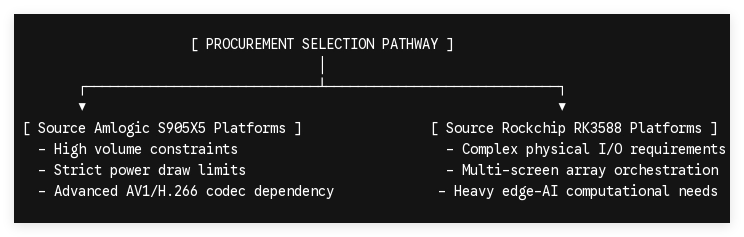
The definitive answer to "which TV box is best to buy" depends entirely on your system integration objectives.
If your deployment goal centers on expanding an IPTV network, launching an OTT subscriber service, or standardizing hotel room entertainment nodes, select an Amlogic S905X5 configuration. The 6nm efficiency minimizes power consumption across large deployments while ensuring full compatibility with future streaming compression standards.
If your project requires physical input versatility (e.g., dual Gigabit Ethernet for network separation, native SATA lines for local media storage, or multiple HDMI outputs to drive distinct screens simultaneously), choose a Rockchip RK3588 configuration. The raw compute headroom protects your software infrastructure investment against changing field demands over a five-to-seven-year deployment window.
Engineer Your Fleet Hardware with Expert Execution
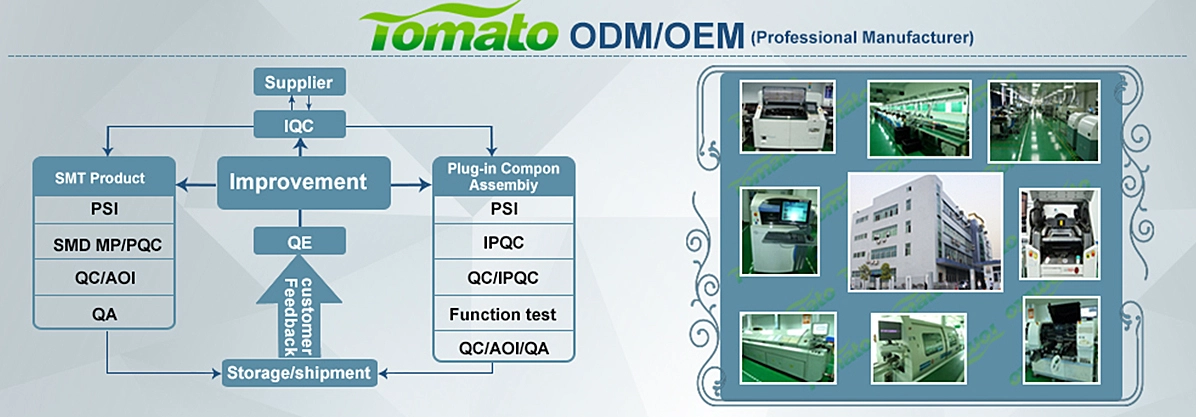
Do not leave your next hardware rollout vulnerable to consumer-grade failure rates. We specialize in engineering high-reliability, commercial Android TV Box and media player platforms tailored precisely to your operational requirements. From low-level kernel ROM customization and custom launcher integration to full-scale hardware PCBA redesigns utilizing advanced Amlogic and Rockchip chipsets, we deliver the structural durability your enterprise demands.
Contact our Senior Engineering and Architecture team today to schedule a technical configuration review, arrange for custom-compiled prototype firmware samples, or request high-volume contract pricing for your infrastructure deployment.
