
What is the best way to Streaming Media Player?
1. The Enterprise Paradigm Shift: Moving Beyond Consumer Silicon
Commercial streaming operations face immediate failure when relying on consumer-grade hardware architectures. In commercial environments, media players must withstand constant thermal stress, manage dynamic peripheral connectivity, and process highly efficient, modern codecs natively.
A critical inflection point has arrived with the rapid market acceleration of the AV1 codec, which has reached a 57% projected combined market reach. Enterprise operations deploying hardware without native AV1 hardware decoding face severe operational deficits, including prohibitive Content Delivery Network (CDN) bandwidth costs and high CPU overhead that triggers thermal throttling.
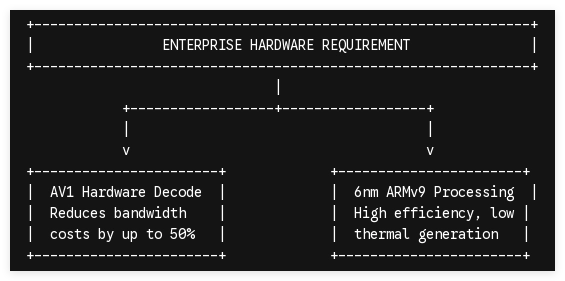
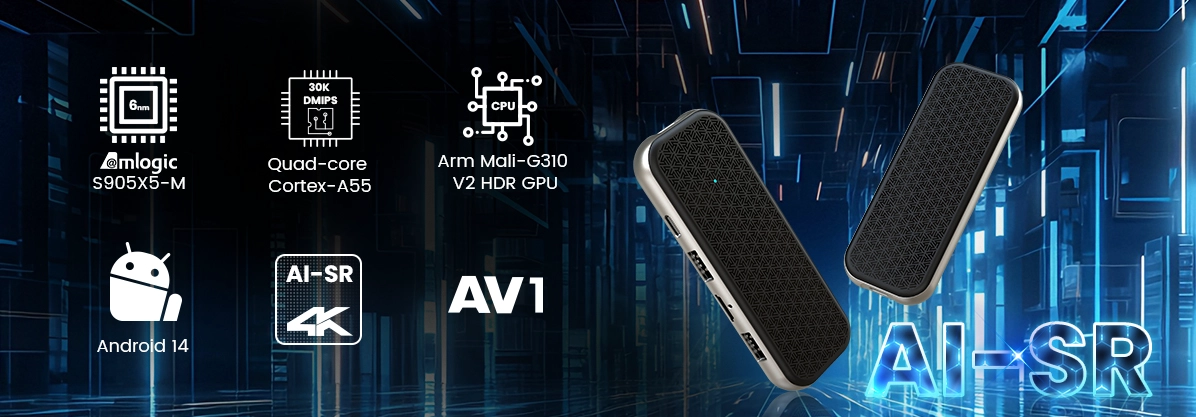
To counter these operational challenges, procurement architectures are moving toward specialized systems-on-chip (SoCs) like the Amlogic S905X5M. Fabricated on an advanced 6nm process node, this next-generation silicon delivers a 25% CPU performance uplift via ARM Cortex-A510 efficiency cores while reducing power consumption by up to 50% compared to legacy architectures. This transition provides the structural foundation for low-power, high-density edge deployments that can operate continuously without structural degradation.
2. Firmware-Level Kernel Optimization and AOSP/Linux Customization
The underlying operating system of a commercial streaming media player must be optimized to maximize uptime and eliminate extraneous consumer background tasks. A standard consumer launcher or unconfigured Android TV build introduces security vulnerabilities, unexpected automatic updates, and resource-heavy background processes that compromise rendering stability.
Stripping Bloat and Optimizing the Linux Kernel
Building an enterprise-grade streaming media player requires modifying the core Android Open Source Project (AOSP) or Linux kernel to create a highly streamlined environment. This optimization process involves:
-
Disabling non-essential system services (such as consumer location tracking, telephony stacks, and analytical logging).
-
Configuring the low-memory killer (LMK) thresholds to ensure absolute processing priority for the primary media engine.
-
Enforcing a native boot-to-app path, which launches the enterprise playback application directly from the bootloader without exposing a standard desktop UI.
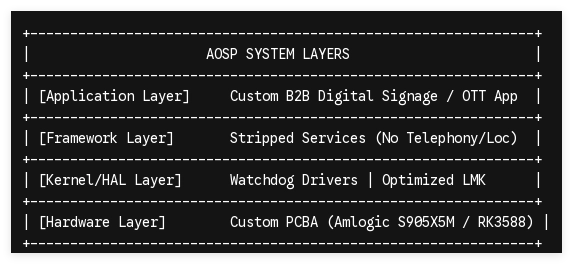
Advanced SDK/API and Security Integration
Industrial integrations require custom Software Development Kit (SDK) and Application Programming Interface (API) engineering. System architects need low-level access to GPIO (General-Purpose Input/Output) pins, UART channels, and I2C buses to communicate with local peripherals, touch overlays, or environmental sensors.
Furthermore, secure content loops require deep-level implementation of hardware-based High-bandwidth Digital Content Protection (HDCP) encryption alongside Google Widevine v1 or Microsoft PlayReady Digital Rights Management (DRM) keys injected directly into the secure zone (TrustZone/TEE) during the factory flashing process.
3. PCBA Modification and Industrial Cooling Engineering
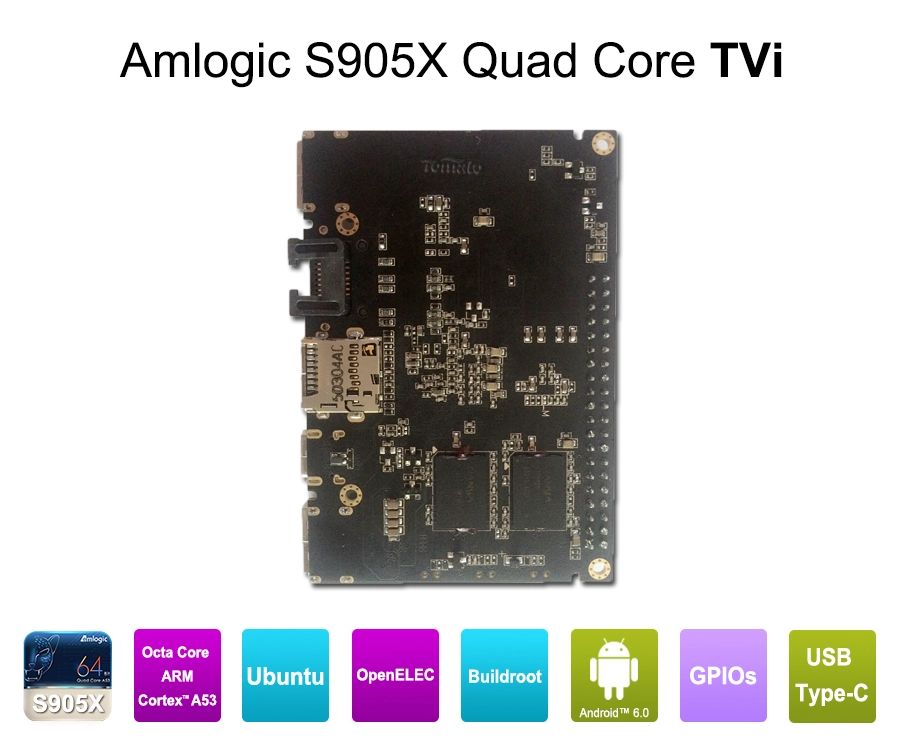
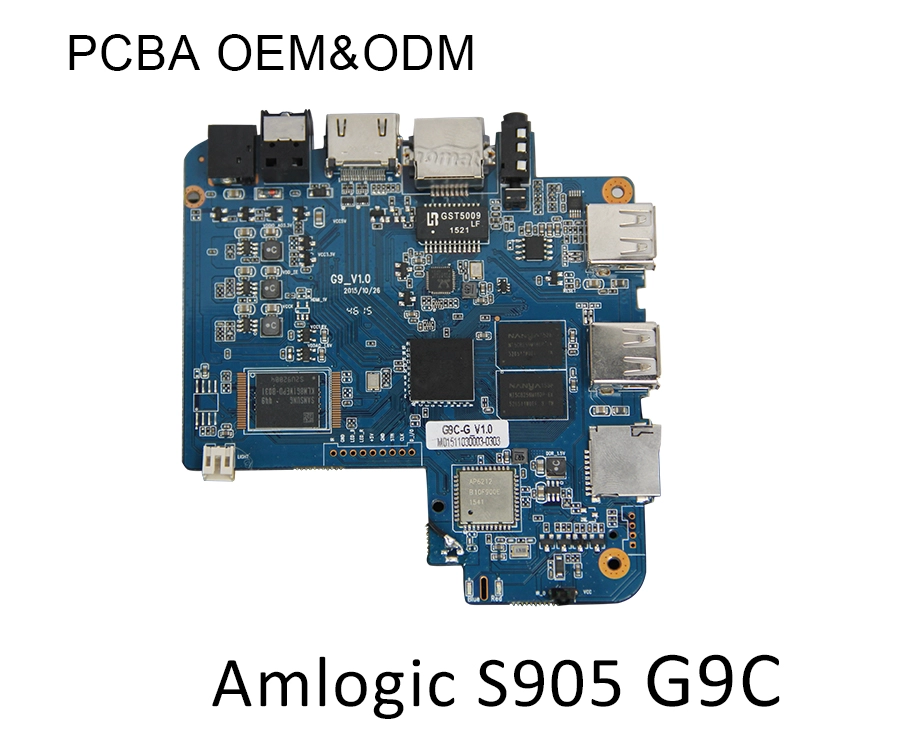
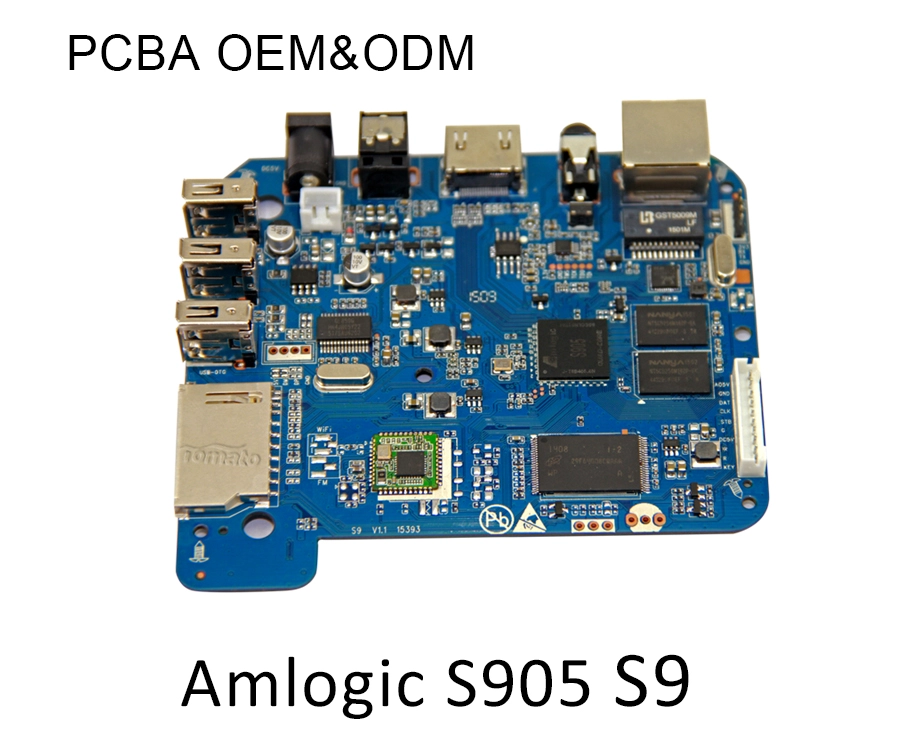
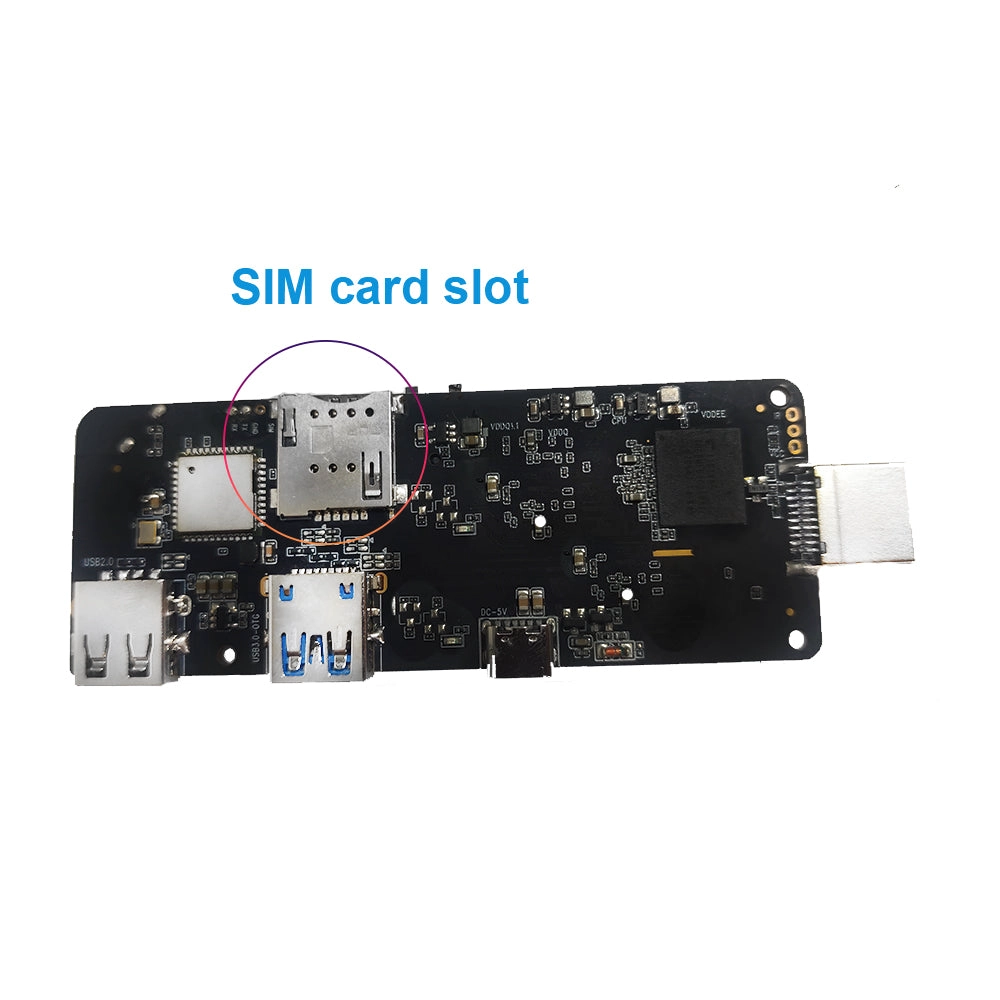
Standard retail media players utilize generic, tightly packed printed circuit board assemblies (PCBAs) enclosed in unventilated plastic housings. This approach is highly susceptible to heat entrapment, which slows down processor speeds and causes premature component failure.
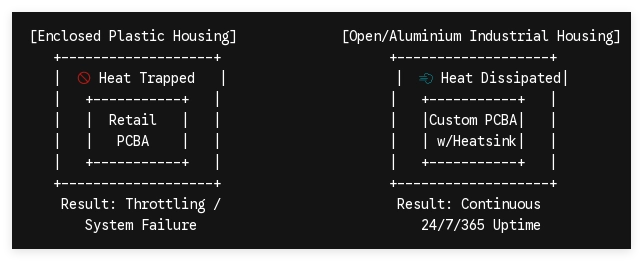
Custom PCBA Layout Design
For enterprise deployment, the physical PCBA layout must be engineered to match the specific structural requirements of the installation site. This includes:
-
Adding dedicated Ethernet ports with Power over Ethernet (PoE) functionality to eliminate the need for separate power runs.
-
Relocating I/O ports to line up with thin-profile mounting brackets.
-
Adding internal headers for physical, hardware-level watchdog timers that force a hard reboot if a firmware freeze is detected.
Specialized Thermal Dissipation
Industrial-grade streaming requires advanced thermal engineering. Replacing passive, low-surface-area metal plates with custom-milled aluminum heatsinks or structured thermal pads allows heat to transfer efficiently to the outer device chassis. By maintaining a stable internal component temperature below 65°C under constant 4K video rendering loads, devices avoid thermal throttling and significantly extend their operating lifespan.
4. Scalable Deployment: Automated OTA and Device Lifecycle Management
Deploying a network of thousands of media players requires an enterprise-grade infrastructure for remote management, diagnostics, and secure updates. Manual physical updates or reliance on consumer update methods is logistically impractical.
Enterprise Over-the-Air (OTA) Infrastructure
An enterprise deployment relies on a private, secure OTA update system linked to a centralized Mobile Device Management (MDM) server. This update pipeline must include:
-
Cryptographic Firmware Verification: Ensuring that only authorized, signed firmware images are executed by the bootloader.
-
Dual-Partition (A/B) System Configurations: Running the active OS on partition A while writing updates to partition B. If an unexpected power disruption occurs during an update, the system automatically rolls back to the stable partition, avoiding costly device downtime.
| Fleet Management Metric | Consumer Media Player | Enterprise Custom Player |
|---|---|---|
| OS Stability | Prone to consumer background lag | Stripped AOSP / Dedicated Kernel |
| Thermal Capacity | Automatic throttling under continuous load | Industrial Heatsinks (Continuous 24/7 Run) |
| Firmware Control | Closed consumer ecosystems | Full root/SDK/API access with custom OTA |
| Hardware I/O | Fixed retail port selection | Modified PCBA (PoE, GPIO, Watchdog) |
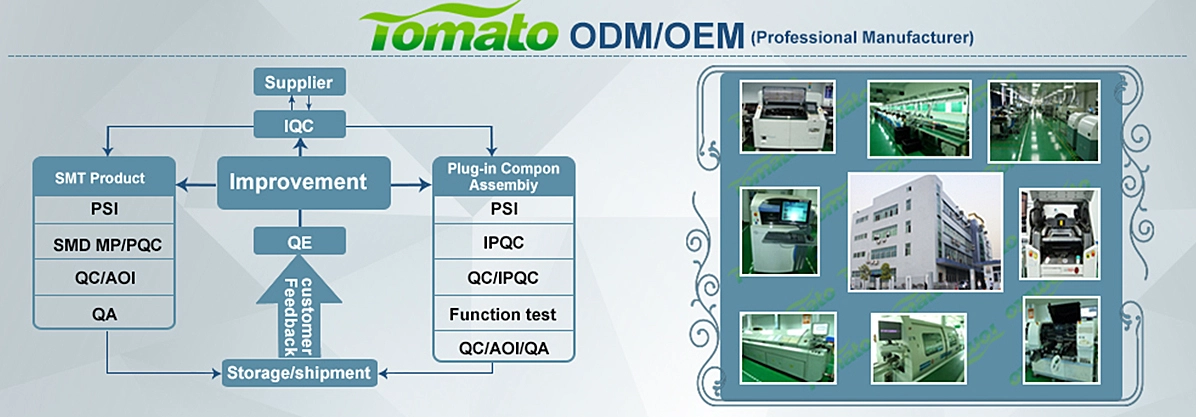
The SZTomato Advantage: Custom OEM/ODM Engineering
When configuring large-scale streaming deployments, partner with an engineering firm that prioritizes industrial customization over retail sales. SZTomato provides comprehensive OEM/ODM solutions tailored specifically for enterprise requirements:
-
Firmware and Kernel Customization: Custom boot animations, tailored system UIs, complete AOSP bloat removal, and deep API integrations.
-
PCBA Hardware Engineering: Custom circuit board layout design, PoE integration, component selection for extended lifespans, and specialized structural design.
-
Thermal Optimization: Custom-engineered heatsinks and thermal dissipation configurations designed for unventilated or high-temperature commercial environments.
-
Secure Logistics & Production: Direct injection of Widevine L1/PlayReady DRM keys at the factory level, accompanied by custom-packaged, white-labeled hardware.
Procurement Briefing: To discuss your project's technical specifications, request an engineering sample, or review custom PCBA and firmware layouts, contact our engineering team directly at www.sztomato.com.
