
What is the spec of Google TV Box?
What Is the Spec of a Google TV Box? A B2B Hardware Guide
The specification of a Google TV Box should not be judged by CPU frequency or the “4K” label on a product sheet. Google TV is a user experience running on Android TV OS, and the hardware must provide sufficient multimedia performance, secure content playback, connectivity and long-term software support to deliver that experience reliably. Google itself describes Google TV as a personalized experience built on Android TV OS, while some Android TV OS devices use a different interface.
For OEMs, distributors and system integrators, the more useful question is therefore: what hardware configuration provides a reliable foundation for a Google TV Box project?
1. What Are the Core Specifications of a Google TV Box?
There is no single universal hardware specification for every Google TV Box. Commercial devices vary by SoC, memory, storage, display capability, wireless connectivity and certification level.
However, a modern 4K Google TV Box should generally be designed around the following specification range:
| Component | Practical B2B Specification |
|---|---|
| SoC | Quad-core or octa-core ARM SoC with dedicated video engine |
| CPU | ARM Cortex-A55/A76-class architecture or newer |
| RAM | 2GB minimum for mainstream 4K projects; 4GB preferred for premium products |
| Storage | 16GB minimum for many projects; 32GB preferred for larger app ecosystems |
| Video Output | 4K UHD, typically up to 60fps |
| Video Codecs | H.264, H.265/HEVC, VP9, AV1 |
| HDR | HDR10/HDR10+; Dolby Vision where licensing and SoC support apply |
| HDMI | HDMI 2.0 or newer, with HDCP appropriate to the content platform |
| Wireless | Dual-band Wi-Fi 5 or Wi-Fi 6 |
| Bluetooth | Bluetooth 5.x |
| Ethernet | 10/100Mbps or Gigabit Ethernet for fixed installations |
| OS | Android TV OS / Google TV experience, depending on project qualification |
| DRM | Widevine security architecture, with L1 required for high-value HD/UHD content scenarios |
| OTA | Secure firmware update and rollback strategy |
| Remote | Bluetooth voice remote with D-pad, Home, Back and voice interaction |
Google's current Google TV Streamer provides a useful reference point for the premium end of the market: 4K HDR at 60fps, Dolby Vision/HDR10+/HLG support, 4GB RAM, 32GB storage, Wi-Fi 802.11ac, Bluetooth 5.1, HDMI 2.1 and Gigabit Ethernet.
That does not mean every Google TV Box must copy those specifications. It shows where the market is moving.
4K video decoding is only the starting point
For a commercial Google TV Box, the video engine deserves more attention than raw CPU performance.
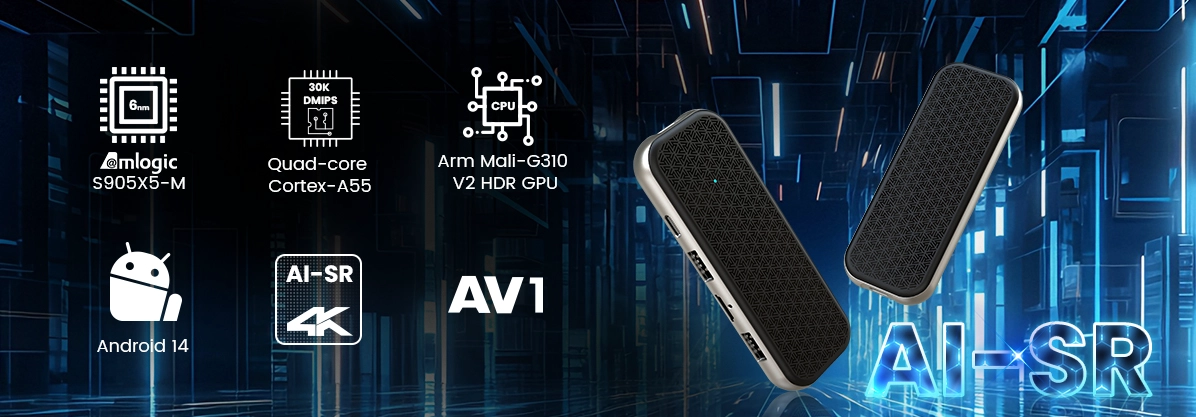
A suitable SoC should provide hardware acceleration for HEVC and VP9 and, for current-generation designs, AV1 decoding. Android's current TV compatibility requirements include AV1, H.264, H.265 and VP9 among the supported TV video formats.
AV1 is particularly important for new product development because streaming platforms increasingly use more efficient codecs to reduce bandwidth requirements while maintaining image quality.
For a 4K project, procurement teams should verify the complete codec profile rather than accepting a simple “AV1 supported” statement. Check:
-
AV1 profile and bit depth
-
Maximum decoding resolution
-
Maximum frame rate
-
HDR support
-
Hardware versus software decoding
-
Secure decoding path
-
Simultaneous decoder sessions
-
Performance with encrypted content
This distinction matters when a box needs to run multiple services, advertising layers, UI animation or background processes while decoding 4K content.
2. RAM, Storage and SoC Selection: Where Google TV Projects Often Go Wrong
A low-cost TV Box can boot Android with surprisingly modest hardware. That does not mean the same configuration is appropriate for a commercial Google TV product.
Google's Android TV development guidance identifies 2GB RAM as a meaningful threshold for regular TV devices targeting 2160p video, while 1.5GB configurations can fall into low-memory conditions depending on UI and video resolution.
For B2B development, a sensible starting point is therefore:
2GB + 16GB: entry-level 4K configuration
4GB + 32GB: stronger configuration for premium Google TV products
4GB + 64GB or higher: appropriate where applications, local content, digital services or additional system functions consume significant storage
The SoC should be selected together with RAM rather than independently.
An octa-core processor with poor memory bandwidth, weak GPU performance or an outdated VPU may deliver a worse user experience than a more balanced quad-core platform.
For example, a Google TV Box used in a hotel, telecom operator or branded OTT deployment may simultaneously handle:
-
4K video decoding
-
Animated launcher UI
-
Bluetooth remote input
-
Wi-Fi networking
-
DRM processing
-
OTA services
-
Analytics
-
Background applications
-
Custom operator applications
That workload places pressure on CPU, GPU, memory bandwidth, storage I/O and thermal management.
PCBA design affects the final specification
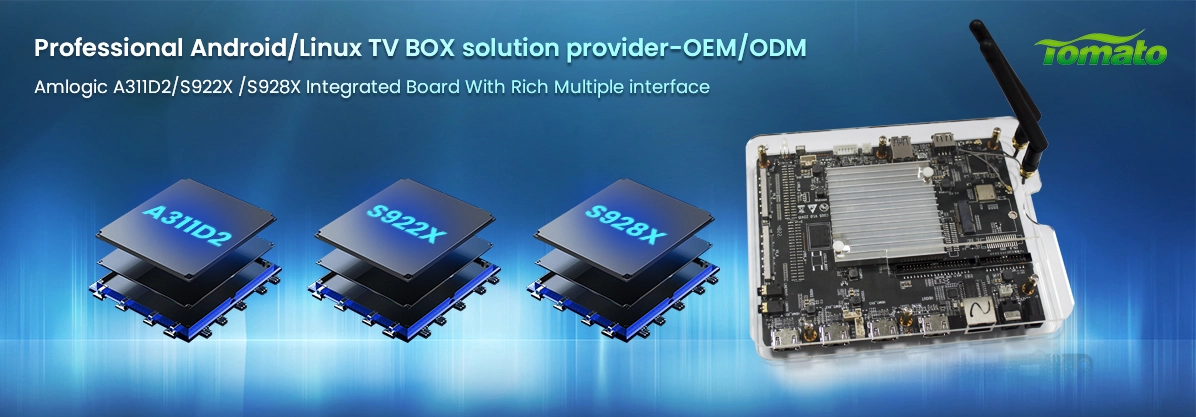
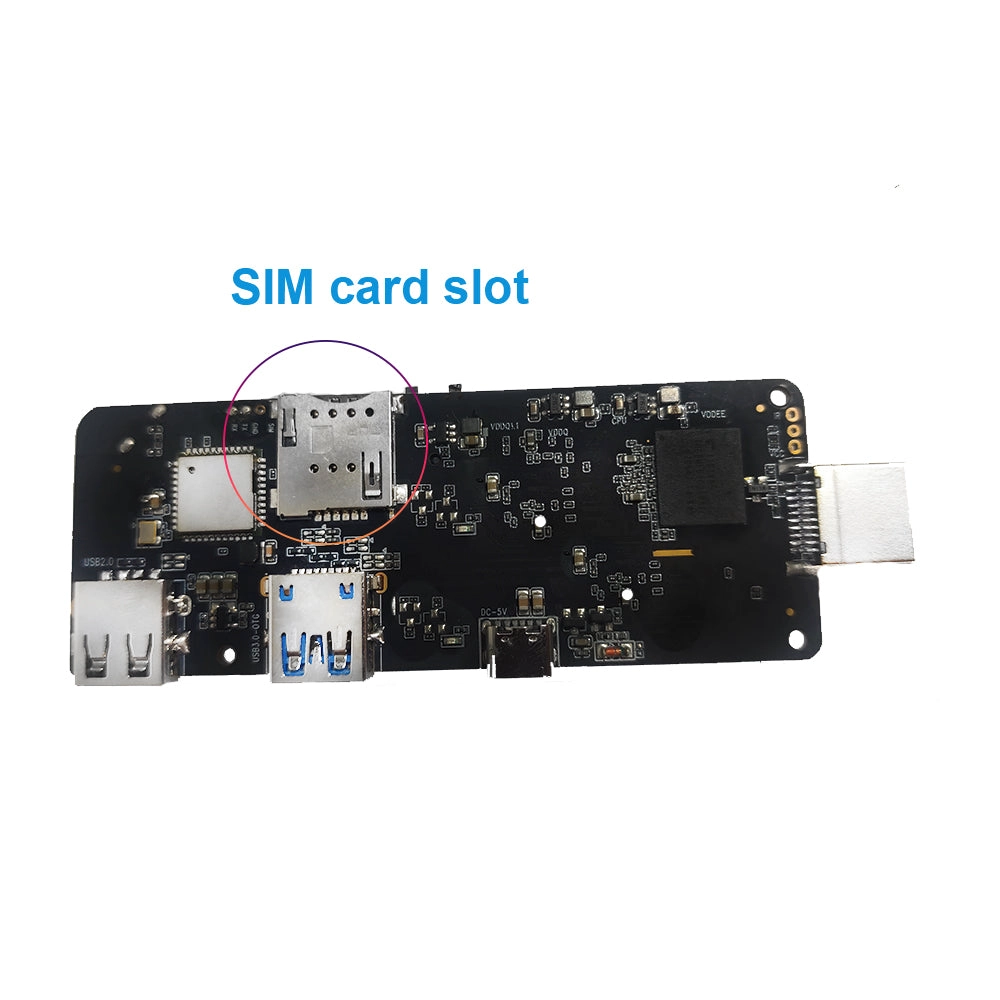
For an OEM project, the published specification should be the result of the PCBA architecture rather than simply the chipset vendor's reference design.
Memory routing, power delivery, RF placement, HDMI signal integrity, USB power output and thermal paths all affect actual product performance.
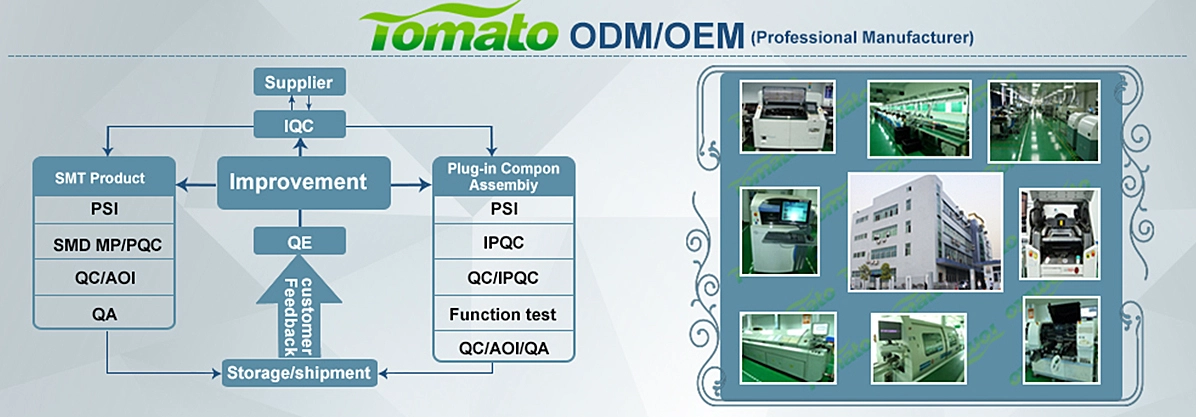
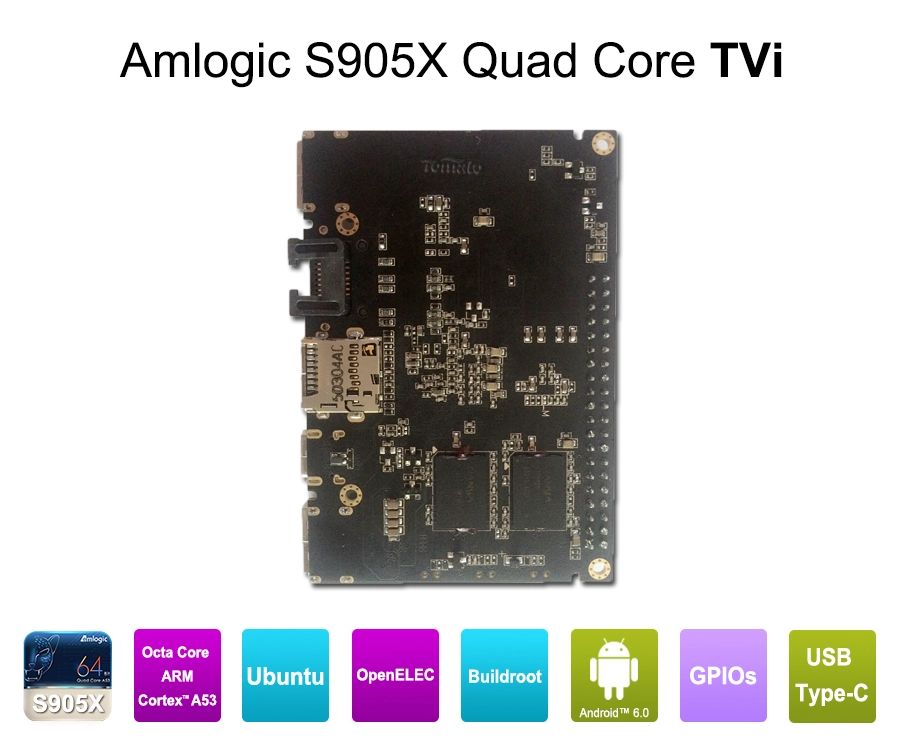
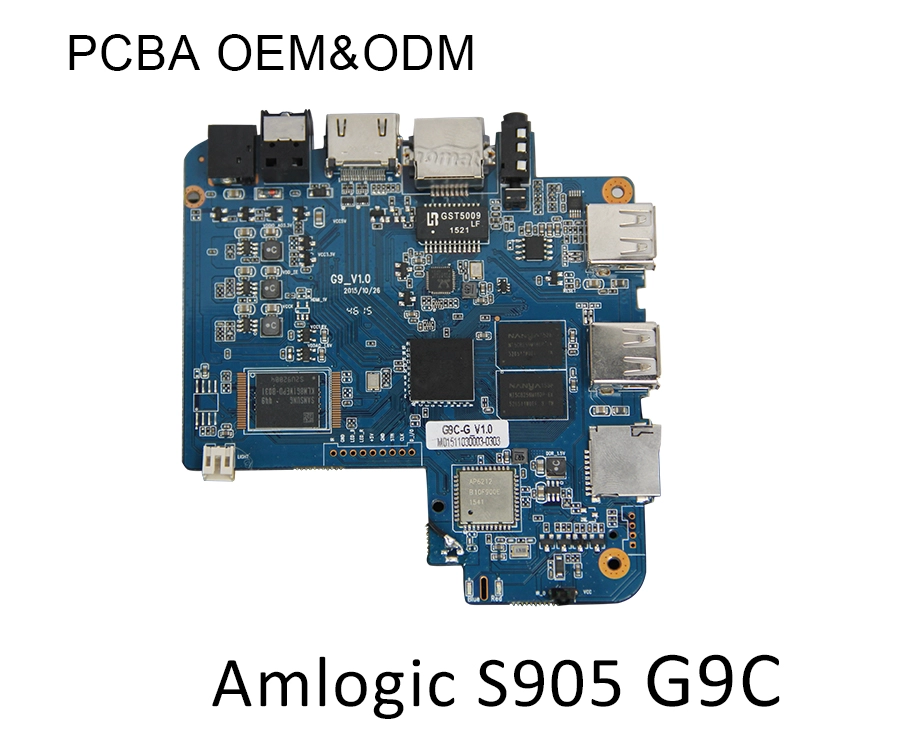
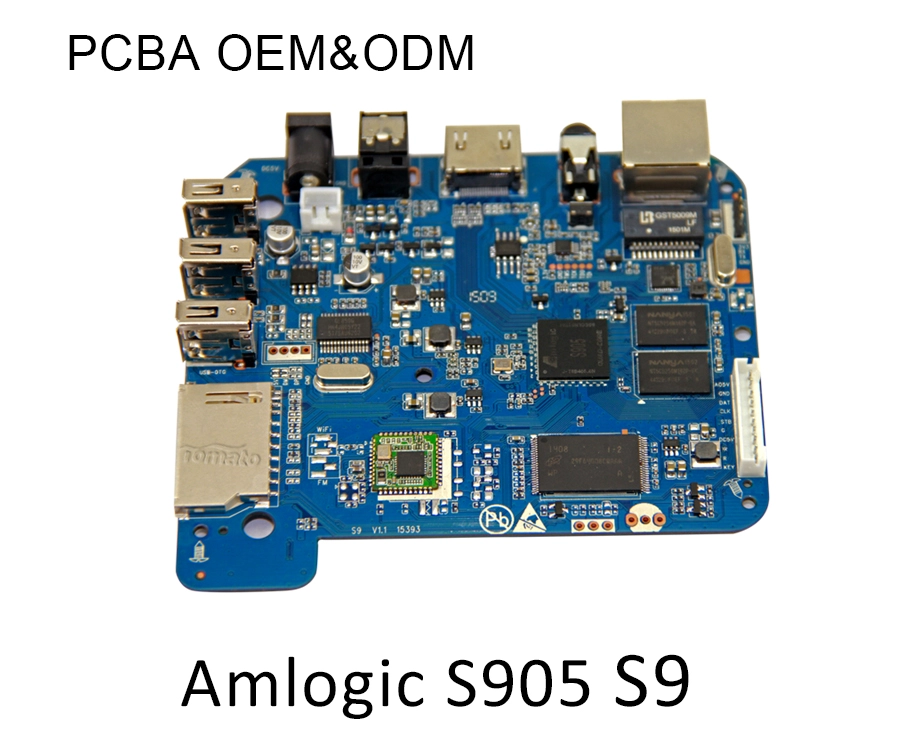
SZTomato supports PCBA hardware modification for projects that require changes to memory, storage, interfaces, wireless modules, power architecture or other board-level requirements.
This is particularly relevant when a standard retail board does not provide enough flexibility for an operator or system-integrator project.
3. DRM, HDCP and Firmware Are Part of the Google TV Box Specification
This is where a large number of apparently capable Android TV Boxes fail to meet commercial requirements.
A box can decode 4K video perfectly and still be unsuitable for premium streaming services if its content-protection architecture is incomplete.
HDCP is a key part of the HDMI output chain. Android TV compatibility requirements specify HDCP 2.2 for TV implementations using HDMI output where UHD content is supported.
DRM is equally important. Google's published living-room device requirements have specified Widevine Level 1 and secure hardware decoding for high-value content at 1080p and above.
For procurement teams, the verification list should include:
-
Widevine security level
-
Secure boot
-
Trusted execution environment
-
HDCP version
-
Secure video path
-
Key provisioning
-
Hardware-backed DRM
-
Netflix or other platform certification where required
-
Google Play Protect certification where applicable
-
OTA security and update mechanism
These are not cosmetic software features. They influence whether the final product can legally and technically deliver the content services that customers expect.
Android kernel and firmware optimization
A commercial Google TV Box also requires a stable software stack.
The hardware abstraction layer, Linux/Android kernel, device drivers, multimedia framework, display pipeline and power-management configuration need to work as one system.
For an OEM/ODM deployment, firmware work may include:
-
Custom boot animation
-
Custom launcher
-
UI/UX modification
-
System application integration
-
SDK/API integration
-
Remote-control mapping
-
OTA update systems
-
Device management APIs
-
Network configuration
-
HDMI-CEC behavior
-
Power-management tuning
-
Kernel and driver optimization
This is one reason an OEM/ODM partner with firmware engineering capability can be more valuable than a factory that only supplies an off-the-shelf TV Box.
4. Connectivity and Thermal Design Should Match the Deployment
Wi-Fi performance is another area where specification sheets can be misleading.
A Google TV Box designed for home use may operate adequately with Wi-Fi 5. A hotel, IPTV deployment, education project or commercial media network may require Wi-Fi 6, Gigabit Ethernet or both.
The correct configuration depends on the network architecture.
For fixed installations, Gigabit Ethernet can provide more predictable throughput than wireless connectivity. The Google TV Streamer, for example, includes 10/100/1000Mbps Ethernet alongside Wi-Fi and Bluetooth.
Bluetooth 5.x is also useful for modern voice remotes, wireless peripherals and installation flexibility.
Cooling becomes important in continuous-use applications
Thermal design is frequently underestimated because a TV Box has a relatively small enclosure.
A device that operates for several hours under 4K decoding, high Wi-Fi traffic and background application activity can experience sustained SoC temperatures. If thermal design is weak, the system may reduce clock frequency, increase application latency or become unstable.
For industrial and commercial projects, cooling should therefore be considered during PCBA design rather than after the enclosure is finished.
SZTomato can support customized thermal solutions, including heatsink selection, thermal interface optimization and enclosure-level airflow considerations for applications requiring sustained operation.
5. What Should a B2B Buyer Specify Before Ordering a Google TV Box?
A procurement specification should go beyond:
“Android 14, 4K, 2GB/16GB, Wi-Fi.”
That description is insufficient for an OEM project.
A stronger RFQ should define at least five layers.
Hardware
Specify:
-
SoC model
-
CPU architecture
-
GPU
-
NPU if AI functions are required
-
RAM type and capacity
-
eMMC or other storage
-
HDMI version
-
USB configuration
-
Ethernet speed
-
Wi-Fi generation
-
Bluetooth version
-
Optional cellular or industrial interfaces
Multimedia
Specify:
-
4K60 decoding
-
AV1 profile
-
HEVC profile
-
VP9 profile
-
HDR formats
-
Dolby Vision requirements
-
Audio passthrough
-
Dolby/DTS licensing requirements
Security
Specify:
-
Widevine level
-
HDCP version
-
Secure boot
-
TEE
-
Key provisioning
-
Encryption requirements
-
OTA security
Software
Specify:
-
Android TV OS version
-
Google TV experience requirements
-
Google Play requirements
-
Launcher customization
-
API/SDK integration
-
OTA architecture
-
Device management
-
Remote-control behavior
-
Application preloading
Mechanical and industrial requirements
Specify:
-
Enclosure dimensions
-
PCB dimensions
-
Operating temperature
-
Continuous operating hours
-
Thermal solution
-
Mounting method
-
Logo and housing customization
-
Connector position
-
EMC requirements
-
Regional certification requirements
This specification structure gives procurement teams a much clearer basis for comparing suppliers.
Google TV Box Specifications: What Matters Most for OEM/ODM Projects?
The best Google TV Box specification is not necessarily the one with the highest CPU frequency or the largest RAM capacity.
For a commercial product, the stronger design is the one in which the SoC, memory, video engine, DRM, HDMI, wireless connectivity, firmware and thermal system are matched to the intended workload.
Google's own current product illustrates this direction: the Google TV Streamer combines 4K HDR 60fps output, 4GB RAM, 32GB storage, HDMI 2.1, Gigabit Ethernet and Android TV OS rather than relying on a single headline hardware specification.
For distributors and system integrators, the next step is to define the application first and the hardware second.
A hotel IPTV deployment, telecom operator box, retail OTT product, digital-signage terminal and industrial multimedia device should not necessarily use the same configuration.
SZTomato supports Google TV Box and Android TV Box OEM/ODM development with PCBA hardware modification, SDK/API integration, custom UI/UX firmware, OTA systems and specialized cooling solutions. The objective is to turn a reference hardware platform into a deployable commercial product rather than simply place a brand logo on an existing retail box.
For B2B procurement managers, the right question is not “How many cores does this Google TV Box have?” It is “Can this platform meet our multimedia, security, software, thermal and deployment requirements for the full product lifecycle?”
That is the specification that determines whether an Android TV project can scale from prototype to commercial deployment.
