Which Google TV Box the best?
Evaluating System Architecture & Certification: Which Google TV Box Is the Best for Enterprise Deployment?
The accelerated transition across OTT platforms toward bandwidth-saving AV1 video compression, alongside stricter Widevine L1 content protection enforcement, has forced a critical re-evaluation of commercial media hardware. System integrators deploying retail signage, hospitality networks, or interactive kiosk endpoints frequently discover that retail-grade Google TV devices fail prematurely under continuous thermal load or restrict necessary low-level OS modifications.
Determining which Google TV Box is "the best" cannot be answered with a single consumer brand. For commercial procurement managers, the answer depends on balancing software certification constraints (Google GTVS vs. open AOSP) against hardware endurance, peripheral I/O requirements, and deep board-level customization.
1. GTVS Certification vs. Custom AOSP: Navigating Software Architecture
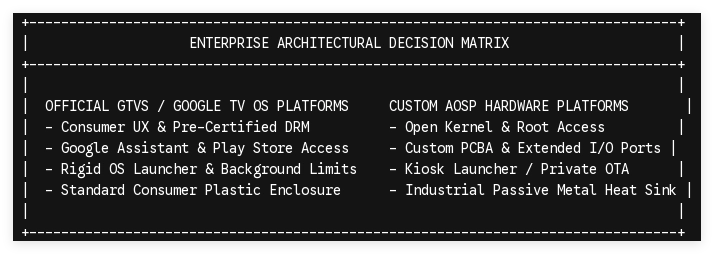
The primary fork in selecting a Google TV platform lies between official Google TV (GTVS certified) devices and Android Open Source Project (AOSP) platforms engineered for commercial use.
Official Google TV (GTVS / Google Certified)
-
Strengths: Out-of-the-box compliance with Google Play Services, built-in Google Assistant, integrated Chromecast capabilities, and native hardware key injection for Widevine L1 and HDCP 2.2. This is essential for streaming platforms requiring strict digital rights management (DRM).
-
Limitations: Highly restrictive Google TV reference launcher, strict background task termination policies, lack of system root privileges, and fixed stock firmware that cannot be modified for auto-boot kiosk modes or custom branding without re-certification.
Custom AOSP (Android Open Source Project) Architecture
-
Strengths: Complete kernel-level flexibility. Integrators can suppress system navigation bars, set custom auto-launch applications upon boot, bypass consumer setup wizards, and execute system-level APIs for peripheral control.
-
Limitations: Lacks official Google Play Store bundle by default (requiring private APK deployment or custom app stores) and requires OEM factory-level DRM key provisioning if premium streaming services are required.
| Feature Metric | Official GTVS Google TV Box | Enterprise AOSP Custom Box |
| Primary Use Case | Consumer Streaming & Hospitality OTT | Digital Signage, Kiosks, Edge Computing |
| OS Customization | Locked to Google TV Launcher | Full Custom UI / Kiosk Mode / Root Access |
| DRM Integrity | Widevine L1 / PlayReady pre-certified | Factory-injected options via TrustZone |
| Firmware Control | Standard Consumer OTA | Private/Local Server OTA Updates |
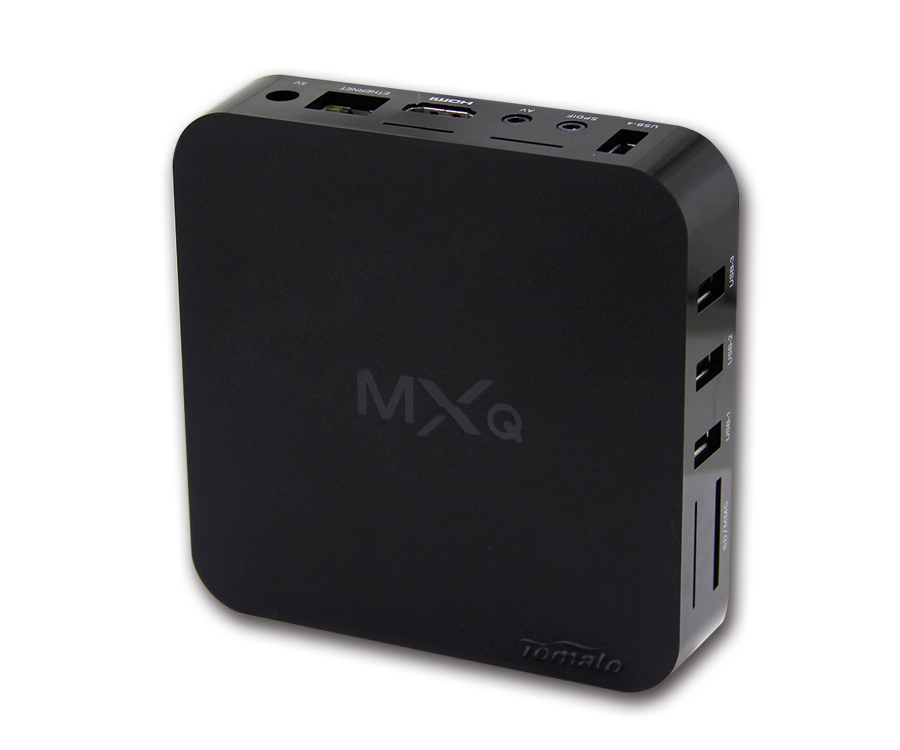
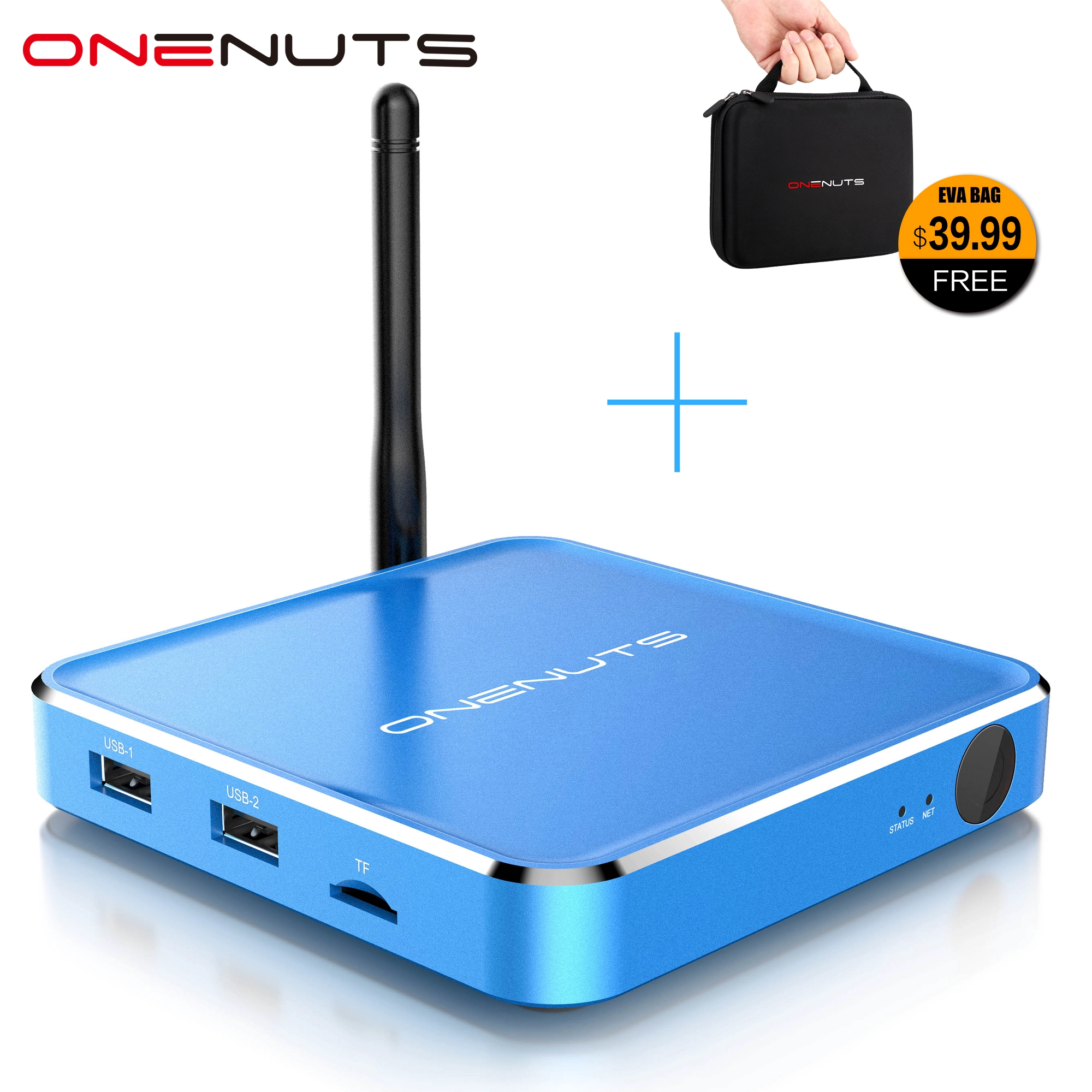
| I/O Flexibility | Minimal (Standard HDMI, 1x USB) | RS232, Dual GbE, GPIO, External Antenna |
2. Silicon Benchmarks: Processing Topologies & Codec Offloading
The underlying System-on-Chip (SoC) architecture determines whether a Google TV platform can handle multi-layer 4K rendering and sustained video playback without frame drops or thermal throttling.
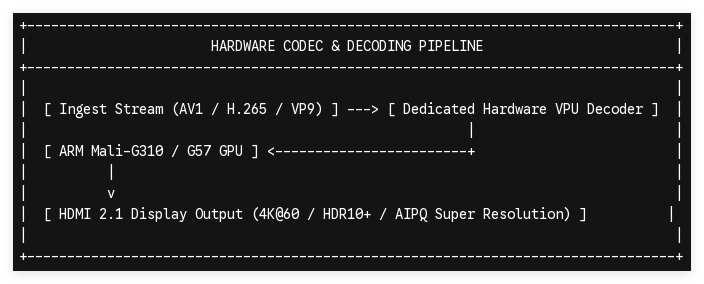
High-Efficiency Silicon Options
-
Amlogic S905X4: The established industry workhorse, utilizing a quad-core ARM Cortex-A55 setup. Features native 4K@60fps AV1 hardware video decoding and low power consumption (~3.5W idle).
-
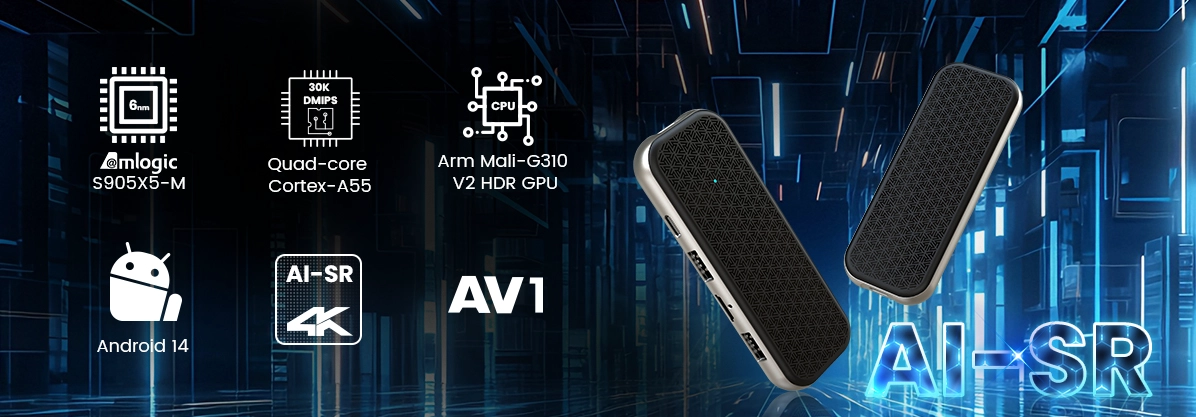
Amlogic S905X5 / S905X5M: Built on modern 6nm architecture with ARM Cortex-A510 efficiency cores and Mali-G310 graphics. Delivers lower power draw alongside hardware decoding for AV1, HEVC, and VVC (H.266) codecs. It integrates AI Picture Quality (AIPQ) and AI Super Resolution (AI-SR), making it ideal for upscaling legacy commercial video feeds on large 4K displays.
-
Rockchip RK3588 / RK3576: Geared toward heavy multi-display matrix setups and multi-channel video ingestion, offering octa-core processing, 6 TOPS NPU capabilities, and 8K decoding headroom.
3. Industrial Hardware Modification & Firmware-Level Engineering
Standard retail streaming devices are built for home living rooms with intermittent usage patterns. When deployed in unventilated outdoor enclosures or commercial environments operating 24/7, consumer devices frequently experience thermal throttling, memory degradation, or complete hardware failure.
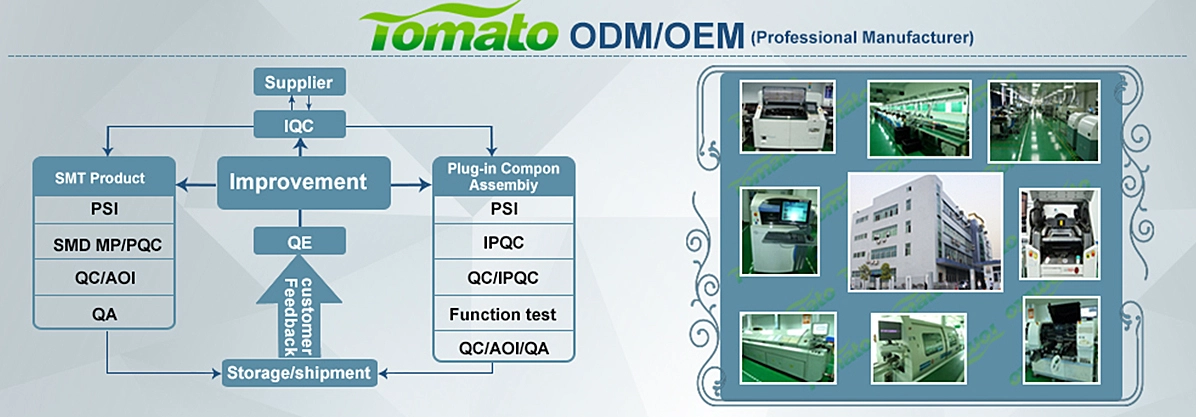
At SZTomato, we bridge the gap between media streaming capability and industrial durability through dedicated OEM/ODM hardware and firmware engineering:
-
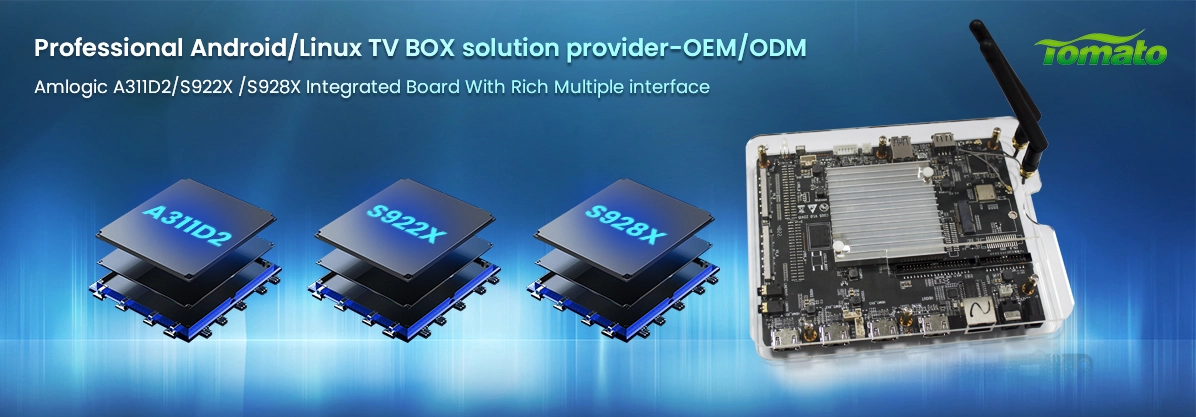
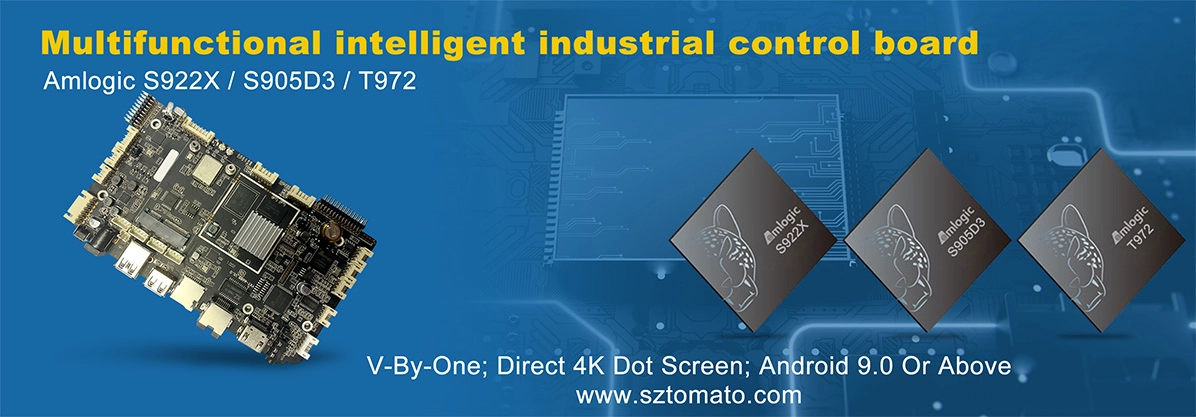
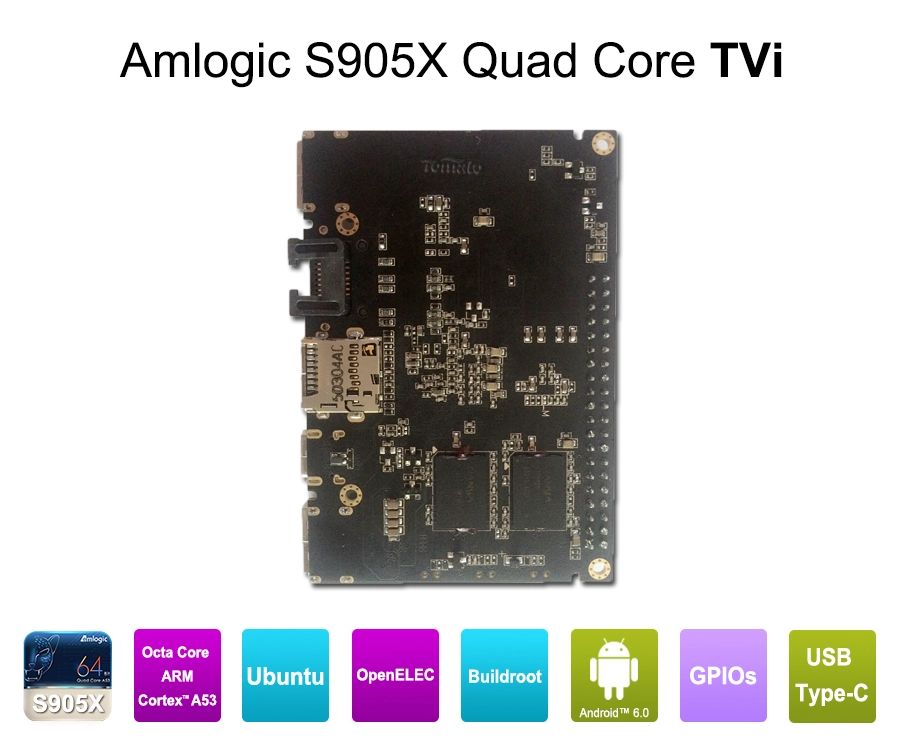
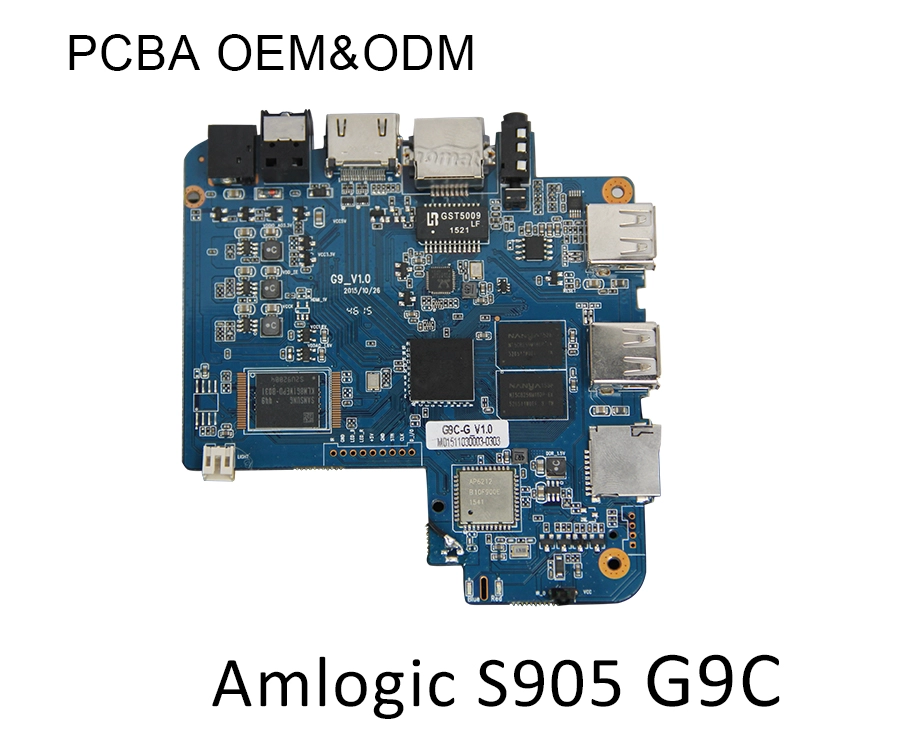
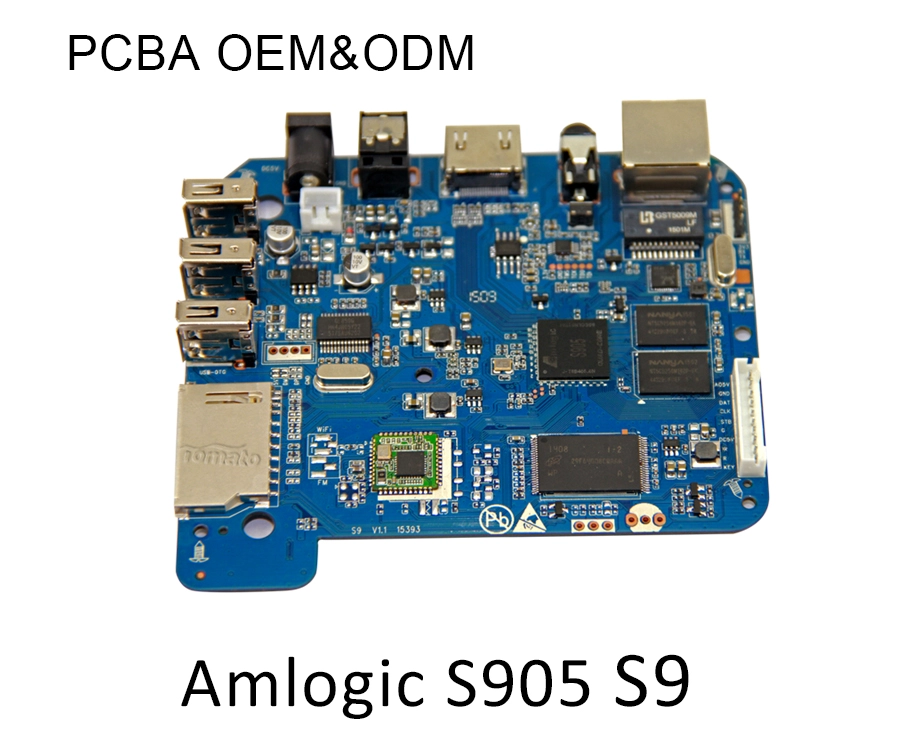
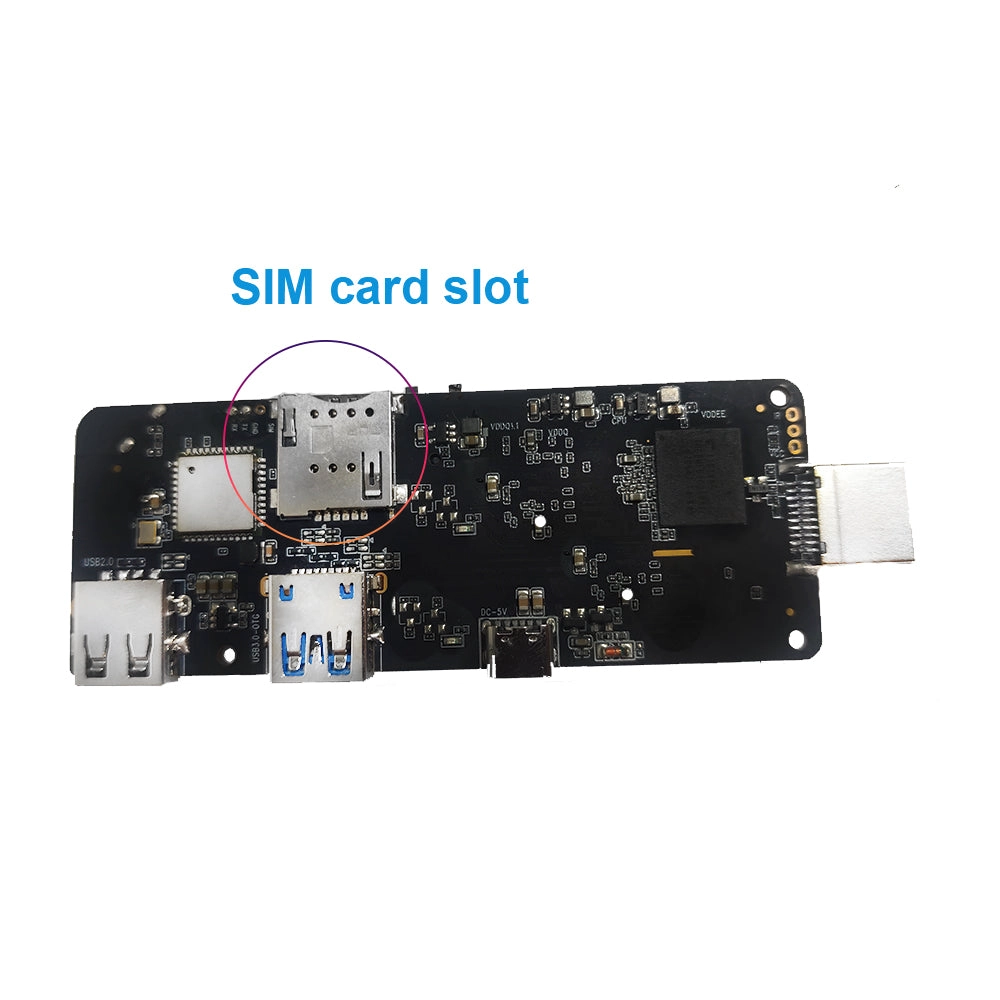
PCBA Hardware Modification: We engineer custom Printed Circuit Board Assemblies (PCBAs) tailored to operational environments. This includes adding physical RS232/RS485 serial communication headers for display control, dual Gigabit Ethernet ports for network isolation, external high-gain Wi-Fi/Bluetooth antenna mounts, and hardware watchdogs with real-time clocks (RTC) to ensure automatic recovery after power loss.
-
Specialized Industrial Thermal Design: Replacing active cooling fans with custom extruded aluminum heat sinks and high-conductivity thermal pads ensures complete passive cooling. This eliminates mechanical failure points and allows operating ambient temperatures ranging from -20°C to +70°C.
-
Firmware-Level Kernel Optimization: Our engineering team modifies the Linux and Android kernels to strip unnecessary background services, optimize LPDDR4X/LPDDR5 memory allocation, enable deep kiosk mode, lock down USB peripheral access, and provide custom system APIs for hardware control.
-
SDK/API Integration & Private OTA Systems: System integrators receive direct SDK access for controlling hardware GPIOs, display orientation rotation (0°/90°/180°/270°), and hardware status LEDs, alongside full setup support for private Over-The-Air (OTA) update servers.
B2B Sourcing & OEM/ODM Procurement
Determining the best Google TV Box requires selecting hardware that matches your software architecture and physical operational conditions. Off-the-shelf retail streaming sticks often fail in commercial environments due to locked firmware, lack of physical port expansion, and inadequate thermal management.
SZTomato provides fully customized OEM/ODM Android set-top box solutions, custom PCBA layouts, and firmware-level kernel development tailored specifically for B2B system integrators and commercial operators.
Ready to specify the ideal hardware platform for your deployment? Contact our engineering procurement team at www.sztomato.com to request sample hardware, review detailed SoC datasheets, or schedule a technical consultation with our Senior Firmware Architects.