
Which TV Box The Best?
Silicon Architecture and Engineering Realities: Evaluating the Best TV Box for Commercial Scale
When evaluating hardware platforms for commercial IPTV networks, digital signage deployments, or over-the-top (OTT) streaming fleets, asking "which TV Box is the best" requires a precise technical framework. In an enterprise environment, retail benchmarks and standard software interfaces are secondary to hardware stability, thermal dissipation parameters, and system-level customization options.
A commercial device must maintain high operational stability under continuous, 24/7 workloads. For business-to-business (B2B) procurement teams, identifying the right device means conducting a rigorous analysis of system-on-chip (SoC) architectures, memory bus widths, hardware-level video decoding pipelines, and long-term OS customization capabilities.
1. SoC Architecture: Matching Processor Silicon to the Application
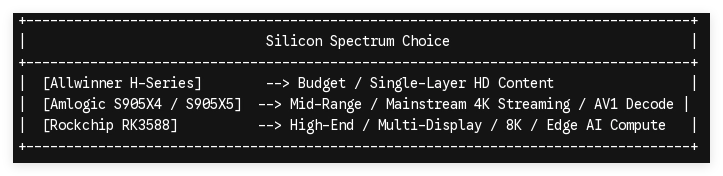
The overall performance and operational efficiency of a TV Box depend heavily on its core SoC selection. The industry's leading silicon options are engineered around distinct processing priorities, tailoring them to specific commercial applications.
Amlogic (S905X4 / S905X5 Series): Mainstream OTT & IPTV
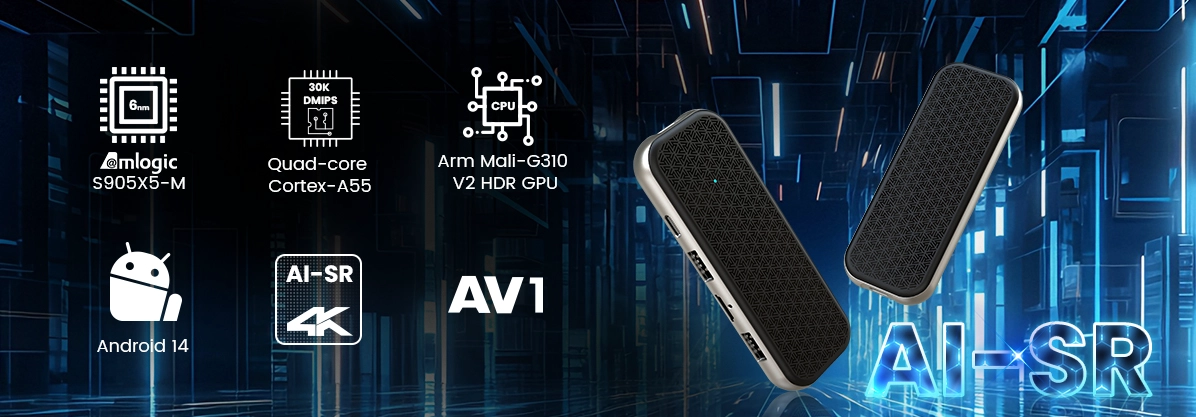
Amlogic processors serve as the industry baseline for media-centric applications. The S905X4 (utilizing a 12nm process node) and the newer S905X5 (built on an efficient 6nm architecture featuring Armv9 cores) are designed for highly efficient video playback. They offer excellent thermal characteristics and feature dedicated on-chip Neural Processing Units (NPUs) that enable edge features like AI Super Resolution (AI-SR).
Rockchip (RK3588 / RK3566 Series): Premium Edge & Multi-Display
Rockchip SoCs are built for raw computing horsepower and multi-layered processing environments. The flagship octa-core RK3588 features a 4x Cortex-A76 + 4x Cortex-A55 architecture coupled with a high-performance Mali-G610 GPU. Offering 6 TOPS of AI computing capability, this chipset is the ideal solution for premium deployments requiring 8K decoding, multi-screen video walls, or complex edge computer vision tasks.
Allwinner (H618 Series): Entry-Level, Single-Purpose Deployments
Allwinner provides highly cost-optimized options for price-sensitive projects. While unsuitable for high-bitrate multi-tasking or advanced rendering, these processors provide a stable, functional foundation for standard 1080p or basic single-layer 4K looping video systems.
2. Memory Bus and Storage Integrity: Preventing Field Stutter
Storage failures and memory bottlenecks are primary causes of device downtime in commercial networks. When applications continually write cache data to low-grade flash or bottleneck the system bus, the device will experience dropped frames, application crashes, and eventual component degradation.
| Chipset & Tier | System Memory Standard | Storage Bus Spec | Primary Hardware Video Codecs | Optimal Use Case |
|---|---|---|---|---|
| Allwinner H618 | 2GB DDR3 / DDR4 | eMMC 5.0 | H.265 / HEVC, H.264 | Entry-Level Loop Signage |
| Amlogic S905X4 / X5 | 2GB - 4GB LPDDR4 / LPDDR5 | eMMC 5.1 | AV1, HEVC, VP9, H.266 (VVC) | Premium IPTV / 4K OTT |
| Rockchip RK3588 | 4GB - 16GB Quad-Channel LPDDR4X / LPDDR5 | eMMC 5.1 / M.2 NVMe | 8K @ 60fps AV1, HEVC, Multi-Stream | Multi-Display / Edge AI |
Memory Bandwidth Allocation
Commercial systems running multi-window layouts or interactive HTML5 apps require wider bus profiles. Utilizing a minimum of a 32-bit memory bus width over LPDDR4X or LPDDR5 ensures that the GPU can rapidly compose complex visual layers without starving the core operating system of required processing speed.
Flash Endurance and Dual Partitioning
Continuous local media caching requires enterprise-grade eMMC 5.1 flash storage with high write endurance. Furthermore, custom hardware builds must leverage an A/B dual system partition scheme within the storage architecture. If a network disruption occurs during an over-the-air (OTA) system update, the TV Box automatically rolls back to the previous stable partition, preventing unbootable units across the field.
3. Peripheral Interface Topologies and Passive Thermals
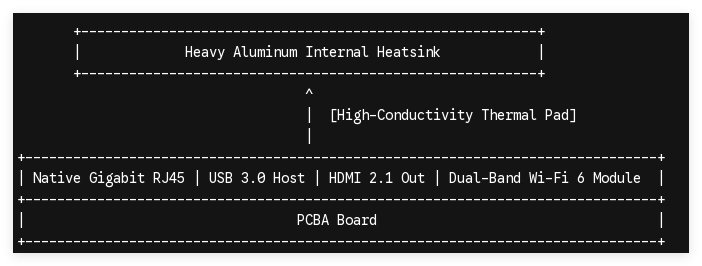
An optimized commercial TV Box requires specialized physical connectivity and thermal design elements seldom found in consumer retail devices.
-
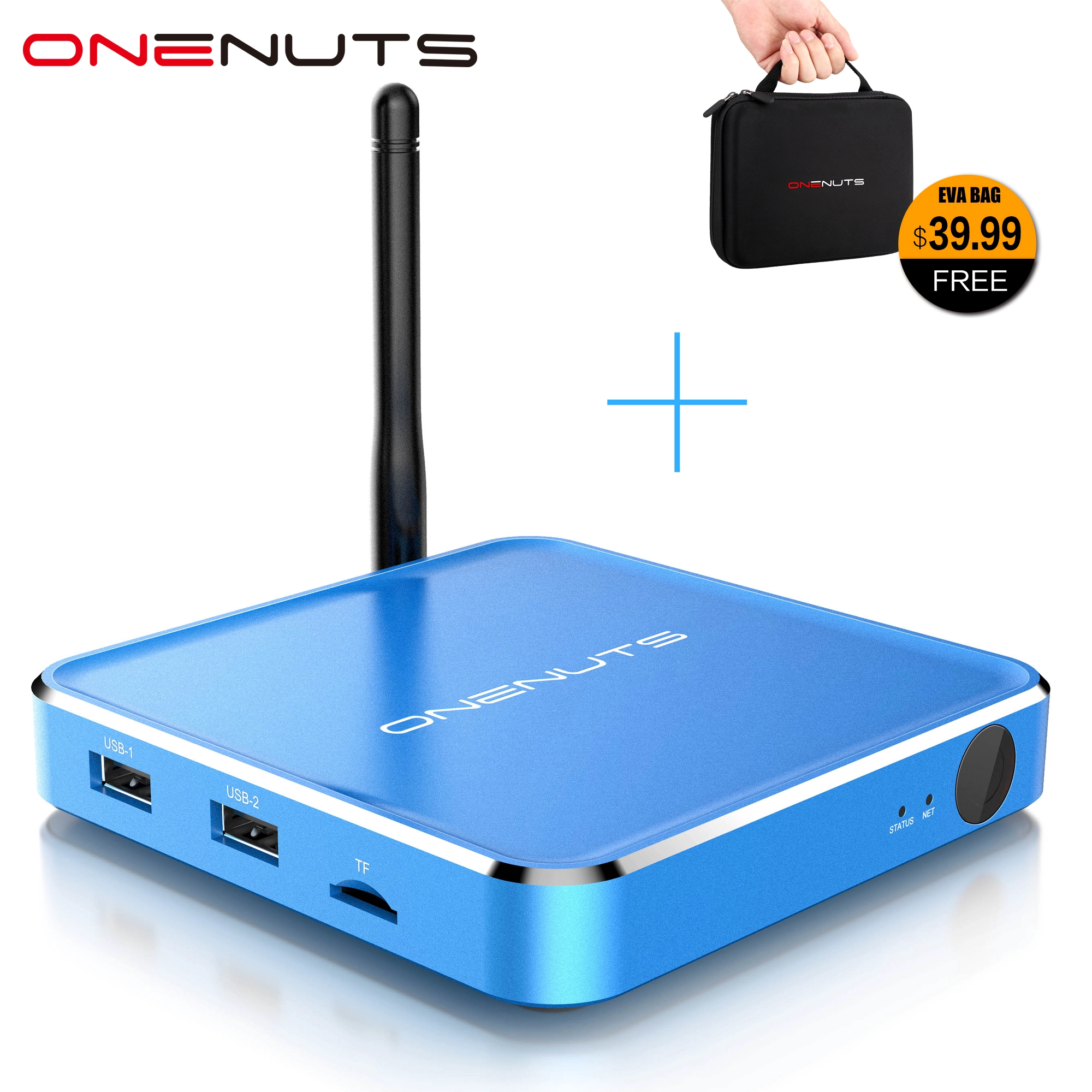
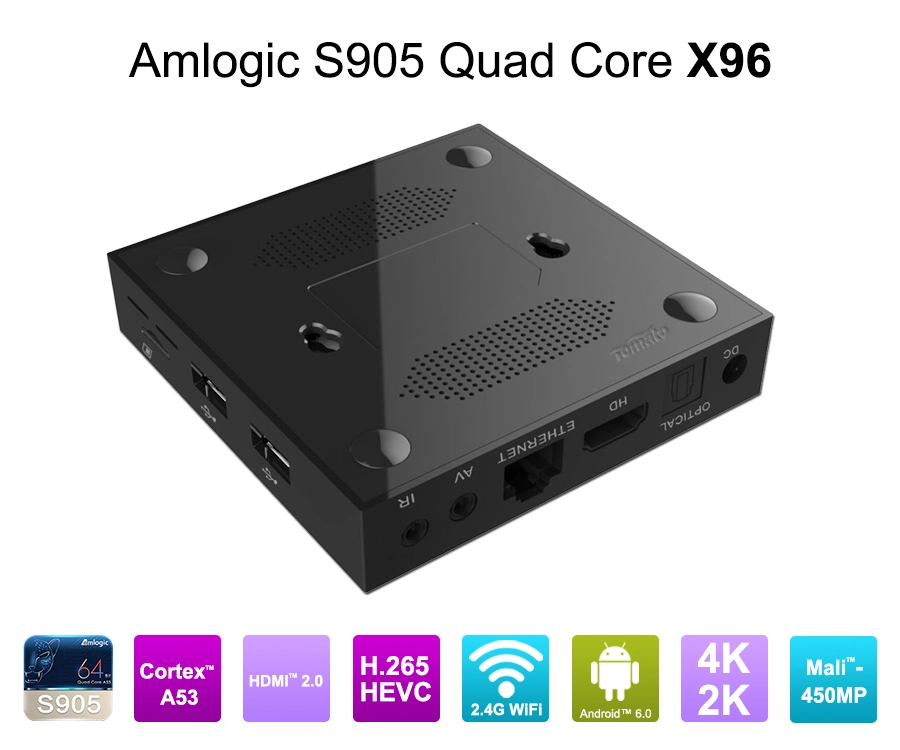
Network Infrastructure: Physical networking remains vital for high-bandwidth commercial streams. Hardware designs should feature a native, non-shared Gigabit Ethernet (10/100/1000 Mbps) port. For locations requiring wireless connectivity, using a Wi-Fi 6 (802.11ax) module paired with software-managed external antenna arrays delivers superior line-of-sight signal penetration compared to standard internal PCB trace components.
-
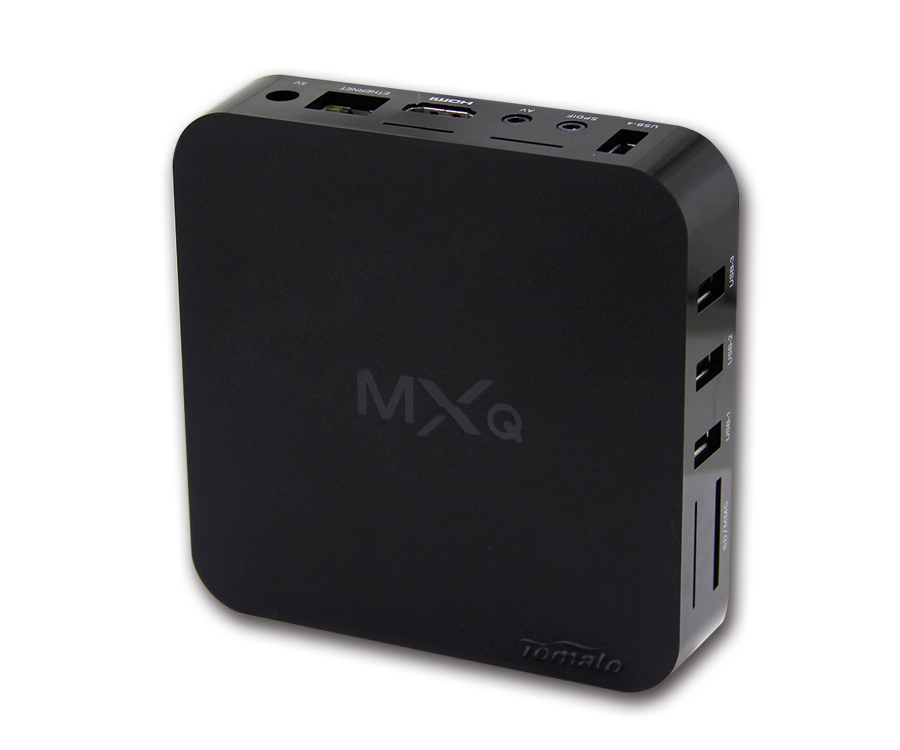
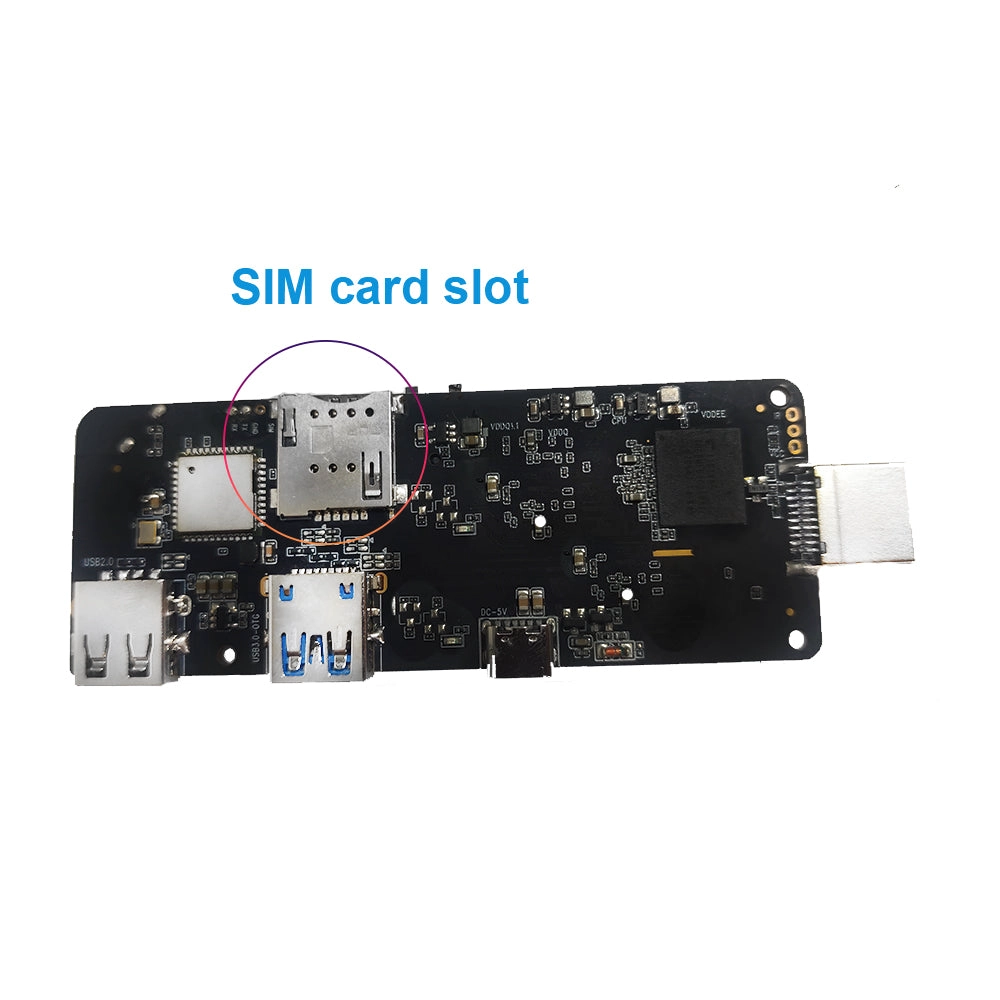
Expansion Interfaces: Industrial and commercial environments require specialized ports for peripheral interactivity. The hardware layout must supply dedicated USB 3.0 ports for local data arrays or touch-screen interfaces, an analog AV output for legacy video infrastructure, and an optical SPDIF output for clean audio routing.
-
Passive Cooling Designs: Moving mechanical cooling parts create vulnerability to fine dust accumulation and bearing freeze-outs. High-reliability TV Box engineering relies on passive thermal topologies. This approach couples an aluminum or copper heatsink directly to the processing units via high-conductivity thermal interface materials, safely radiating heat out through a metal alloy outer enclosure to keep internal operating temperatures below 65°C.
4. Firmware-Level Customization and OS Management
The ultimate performance of any TV Box architecture is bounded by the efficiency of its underlying software stack. Commercial networks typically run clean Android Open Source Project (AOSP) or custom Linux Board Support Packages (BSPs) rather than locked consumer interfaces.
Firmware Streamlining
By stripping out pre-installed retail bloatware, unneeded background tracking scripts, and heavy consumer launcher animations, engineers can recover up to 40% of available system memory. This customization allows the primary commercial application to run with optimal hardware access.
Uptime Preservation: Boot Configuration and Kiosk Integration
Enterprise installations require an automatic boot-on-power feature embedded directly into the bootloader, ensuring that devices immediately launch their primary application upon receiving power without manual interaction. Additionally, firmware-integrated hardware watchdog timers constantly monitor system behavior. If the core software application freezes, the system detects the anomaly and triggers an internal kernel-level reset, preserving overall network uptime without requiring manual on-site troubleshooting.
Technical Consultation: Specifying Your Fleet Architecture
Determining the best TV Box requires a balance between application performance requirements, deployment environments, and overall component costs. Selecting the optimal processor and component mix helps operators build highly reliable networks that function continuously for five-plus years in the field.
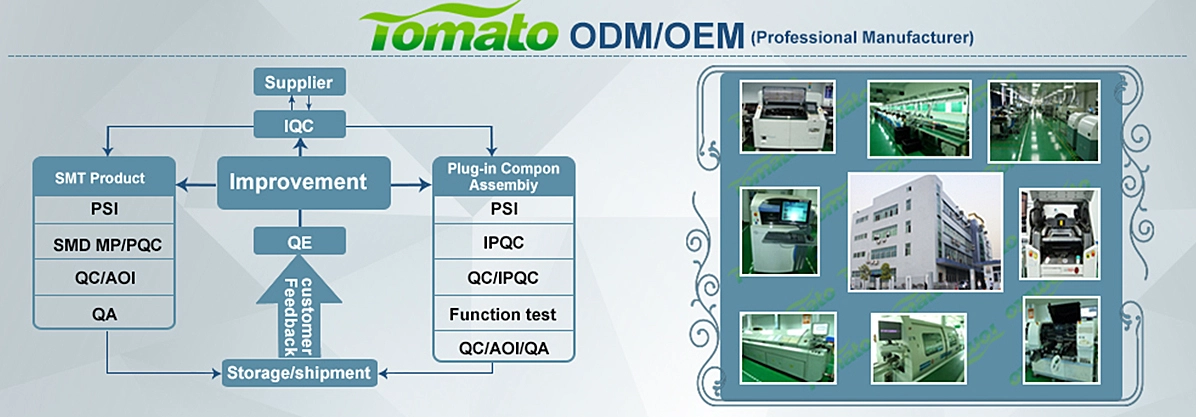
As a dedicated B2B OEM/ODM manufacturing partner, Shenzhen Tomato Technology offers custom PCBA layouts, specialized firmware development, and optimized passive thermal engineering tailored specifically to your project requirements. Contact our technical team today to request a complete technical blueprint and a factory-direct quote for your next deployment.
For an evaluation of premium hardware form factors and a physical breakdown of high-end internal components, the video NVIDIA Shield TV Pro Review details how advanced processing architecture, solid cooling design, and extensive software update lifecycles combine to maintain top-tier performance over long-term use.
