
Why would you need a Smart TV Box?
In the age of streaming, smart ecosystems, and connected life, many people still wonder: Why would you need a Smart TV Box? The answer lies in flexibility, performance, longevity, and branding advantages. In this article, we’ll explore in depth the real benefits of a Smart TV Box, how it compares to integrated smart TVs, and how SZTomato helps you bring custom smart media devices to market.
The Fundamental Reasons to Use a Smart TV Box
Extend Life of an Existing TV
If you already own a high-quality display, replacing it just to get “smart” capabilities can be wasteful. A Smart TV Box transforms your existing TV into a fully capable smart media center. You gain all the features of streaming, apps, casting, voice, and more—without buying a new screen.
Better Hardware & Performance
Many built-in smart TV platforms lag behind in CPU, GPU, memory, and update support. A dedicated Smart TV Box can provide superior hardware: faster processors, more RAM, efficient decoders, better WiFi, improved heat dissipation, and easier upgrades. That ensures smoother performance, more app compatibility, and longer usable life.
Upgradability & Modularity
Smart TV manufacturers often lock down software and infrequently issue updates. With a Smart TV Box, you can swap or upgrade hardware modules, replace a box without replacing the entire display, or push firmware updates via OTA (Over-The-Air). This modular approach offers future flexibility.
Customization & Branding Opportunities
If you are a business, retailer, or streaming service, a Smart TV Box gives you a clean canvas. You can customize the UI, preload regional or vertical apps, integrate your brand logos, and deliver a unified experience. SZTomato specializes in OEM/ODM custom boxes so your brand can differentiate itself.
Economic Efficiency
Producing or upgrading a standalone box is often far more cost-effective than redesigning or building full smart TVs. For many B2B or hospitality applications, it's cheaper to deploy smart boxes rather than sourcing smart TVs.
Portability & Flexibility
Smart TV Boxes are compact and portable. You can move them between rooms, take them on business trips, or use them in varied deployment settings (hotels, classrooms, exhibition halls). You don’t need to transport a heavy screen—just the box.
What Functionality Does a Smart TV Box Provide?
To understand why you need one, first let’s break down what a Smart TV Box does.
Streaming & On-Demand Content
A Smart TV Box connects to popular services—Netflix, Amazon Prime Video, Disney+, YouTube, Hulu, and many others—and streams at adaptive bitrates. Thanks to hardware video decoding (HEVC / AV1 / VP9), boxes support 4K HDR streaming with minimal buffering.
App Ecosystem & Third-Party Services
Smart TV Boxes include app markets (Google Play or customized stores), enabling installation of a wide range of services: video platforms, music, news, education, fitness, games. You can also install media server clients (Plex, Kodi, Emby) to access local or network content.
Local Media Playback & Storage
With USB ports, SD/microSD slots, or SATA/SSD interfaces, boxes allow playback of local files—videos, music, photos—without relying on internet. Many support DLNA, SMB / Samba sharing to stream from NAS, PCs, or other devices on your network.
Casting / Screen Mirroring
Modern boxes support Cast, Miracast, AirPlay, or proprietary protocols. That means your smartphone, tablet, or laptop can mirror content to your TV seamlessly. Some boxes also allow multi-screen or picture-in-picture modes.
Gaming & Emulation
Smart TV Boxes support casual Android games, Bluetooth controller input, and retro emulation (classic consoles). Some higher-end boxes also support cloud gaming (e.g. Xbox Cloud, NVIDIA GeForce Now). They turn your TV into a gaming hub.
Voice Control & Smart Home Integration
Many boxes integrate with voice assistants (Google Assistant, Alexa). You can issue voice commands to change apps, search content, or control smart devices. In smart home setups, the box can act as a hub controlling lights, thermostats, cameras, etc.
Remote Management, OTA Updates & Security
For commercial deployment, these boxes support remote device management, OTA firmware updates, secure boot, and error analytics. This is critical for service providers, hospitality systems, or signage networks.
Smart TV Box vs Smart TV — Which Should You Choose?
Built-In Smart TV: Pros & Cons
Smart TVs come with all the smart functionality built in. You don’t need an extra box. But they have drawbacks: limited hardware, slower OS, fewer updates, restricted customization, and a shorter lifecycle for software support.
Smart TV Box: Advantages
A Smart TV Box offers higher performance, flexibility, upgradeability, portability, and customization. You can deliver region- or vertical-specific solutions. Users and brands alike gain control. Many users prefer buying a good display and using a high-quality streaming box. As some in tech forums note: “It’s easier and cheaper to upgrade a box than a TV.”
Practical Decision
If you’re a consumer who wants longevity and flexibility, a box delivers more value per dollar. If you’re a brand or business, a box lets you deliver branded, controlled experiences across multiple displays without relying on TV manufacturers’ constraints.
Key Technical Criteria & Best Practices
SoC, Decoders & Hardware Video Capability
Choose a chipset with robust CPU, GPU, and dedicated video decoders supporting HEVC, AV1, VP9. That ensures smooth 4K HDR playback, efficient power use, and strong codec coverage.
Memory, Storage & Expansion
Provide adequate RAM (e.g. 4–8 GB) and fast storage (eMMC, UFS, SSD). Offer expansion options via microSD, USB, or SATA to support apps, cache, or user content.
Connectivity & Ports
Include HDMI (2.0 / 2.1), Gigabit Ethernet, dual-band WiFi (WiFi 5/6/6E), Bluetooth, USB 3.0, and optional IR or GPIO pins for external control or extension.
Thermal Design & Build Quality
Thermal management is key—passive heat sinks, good ventilation, or even small fans. Use quality materials and structural durability for continuous use in challenging environments.
Certifications & DRM
For deployment, compliance matters: Widevine DRM, HDMI CEC, DLNA, etc. Secure boot, encryption, OTA integrity, and security patches are essential.
UI / UX & Localization
Design a responsive UI, intuitive navigation, multi-language support, custom branding, and streamlined onboarding flows. For custom solutions, preload relevant apps, organize home screen logic, and optimize UX for your target users.
OTA & Remote Management
Implement a robust OTA update mechanism and management platform to push firmware, monitor device status, collect logs, and control fleets of boxes remotely. This is indispensable for B2B or operator use.
How SZTomato Empowers Your Smart TV Box Projects
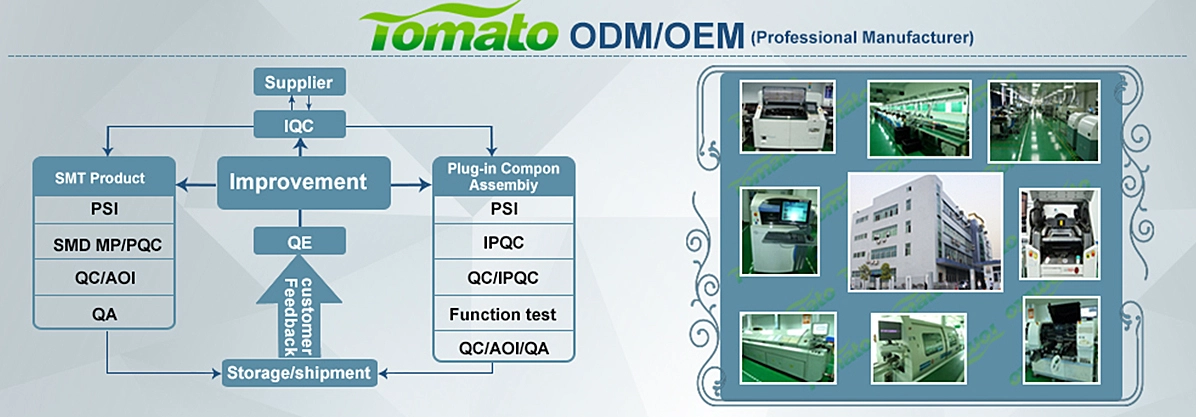
As a B2B OEM / ODM provider, SZTomato offers full support for brands, service providers, and vertical markets. Here’s how we help:
-
Custom Hardware Design
Tailor shell design, interface layout, cooling, port selection, and internal RF layout to meet your product vision. -
Software & UI Customization
Preload your chosen apps, design branded UI, integrate regional compliance and languages, add OTA frameworks, and restore firmware services. -
Certification & Compliance
Support you through implementing DRM (Widevine, others), CEC, safety, EMI, emissions, and regional regulatory certification. -
Scalable Deployment & Management
Remote management tools, device fleet monitoring, OTA updates, analytics, and life-cycle support. -
After-Sales & Logistics
Spare parts, repair, technical documentation, firmware version control, and customer support to maintain product continuity.
Whether you are entering the consumer streaming market, deploying in hotels, digital signage networks, classrooms, or gaming lounges, SZTomato’s custom smart box solutions give you the control, quality, and differentiation your brand needs.
Use Cases & Industry Scenarios
-
Consumer & Streaming Markets
Offer users a streaming box bundled with your brand, supporting your content service or preloaded apps. -
Hospitality & Hotel Chains
Use branded smart boxes in hotel rooms to deliver curated apps and remote management features. -
Digital Signage, Retail & Kiosks
Drive interactive displays, schedule content, mirror devices, and manage boxes centrally. -
Education & Training Spaces
Deploy in classrooms for content casting, training video delivery, or remote instruction. -
Gaming & eSports Lounges
Use smart boxes as compact gaming hubs with streaming, emulation, or cloud gaming support. -
IoT / Smart Home Integration
Leverage voice control and smart home protocols to make the TV central to home automation.
Practical Tips Before You Choose or Build a Smart TV Box
-
Map your target market and content requirements (video codecs, resolutions).
-
Prioritize support for DRM and certifications.
-
Design modularity so you can swap just the box if specs evolve.
-
Build a reliable OTA and remote management system from day one.
-
Focus on UI / UX and localization early.
-
Plan thermal, power, and mechanical constraints for 24/7 usage.
-
Consider after-sales support, firmware versioning, parts inventory.
Conclusion
You might think a smart TV is “good enough,” but a Smart TV Box gives you real advantages: better performance, flexibility, upgradeability, branding, and cost control. Whether you’re a consumer, brand, or service provider, a well-designed box is a smarter investment. At SZTomato, we’ve committed to helping clients build, customize, and scale smart TV box solutions—hardware, software, and support—so that your brand can truly shine.
