
Can a TV Box be customized for OEM projects?
The migration of enterprise digital signage, interactive kiosk networks, and IPTV operations toward high-efficiency AV1 hardware decoding and edge-AI compute has highlighted a structural issue: off-the-shelf consumer TV Boxes are fundamentally unsuited for commercial deployment. Standard retail streaming devices are crippled by background OS overhead, unpredictable automatic firmware updates, stock launchers that expose security vulnerabilities, and passive cooling assemblies designed strictly for light consumer use rather than continuous 24/7 operation.
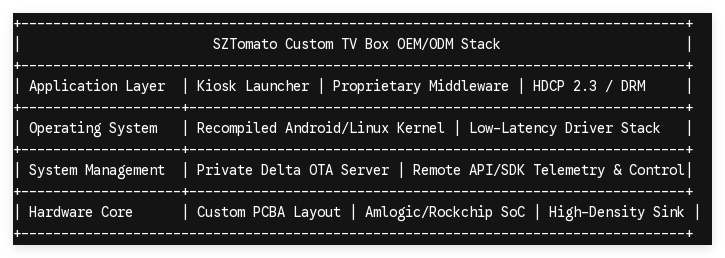
For enterprise procurement managers, telecommunications operators, and system integrators, asking whether a TV Box can be customized for OEM/ODM projects extends far beyond simply printing a logo on a plastic housing. Achieving operational stability requires bare-metal customization—where silicon selection, PCBA layout modifications, low-level kernel compilation, and custom launcher integrations operate as a single engineered platform.
1. Hardware Engineering: PCBA Modification and Thermal Architecture
Consumer-grade TV Box designs prioritize minimum bill-of-materials (BOM) cost over signal integrity and continuous thermal stability. Under sustained 4K/8K media playback or edge processing loads, unoptimized hardware suffers from thermal throttling, leading to frame drops, system latency, and eventual component failure. True OEM/ODM manufacturing resolves these points of failure at the circuit level.
Silicon Matching & SoC Architecture
Customization begins with selecting the appropriate System-on-Chip (SoC) family tailored to specific execution metrics:
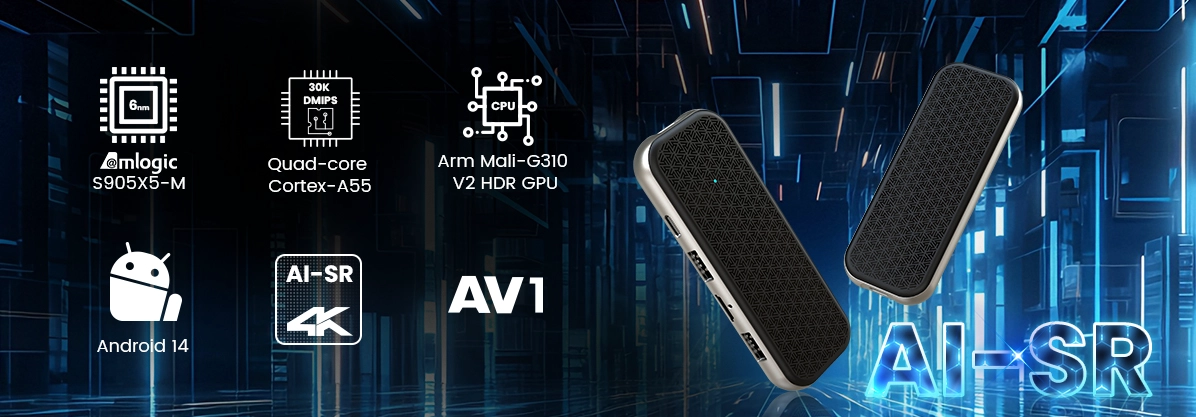
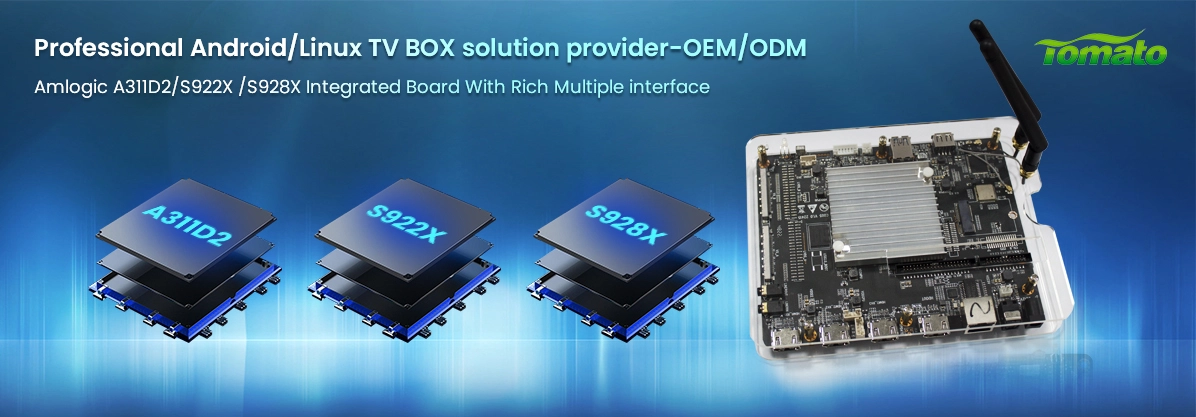
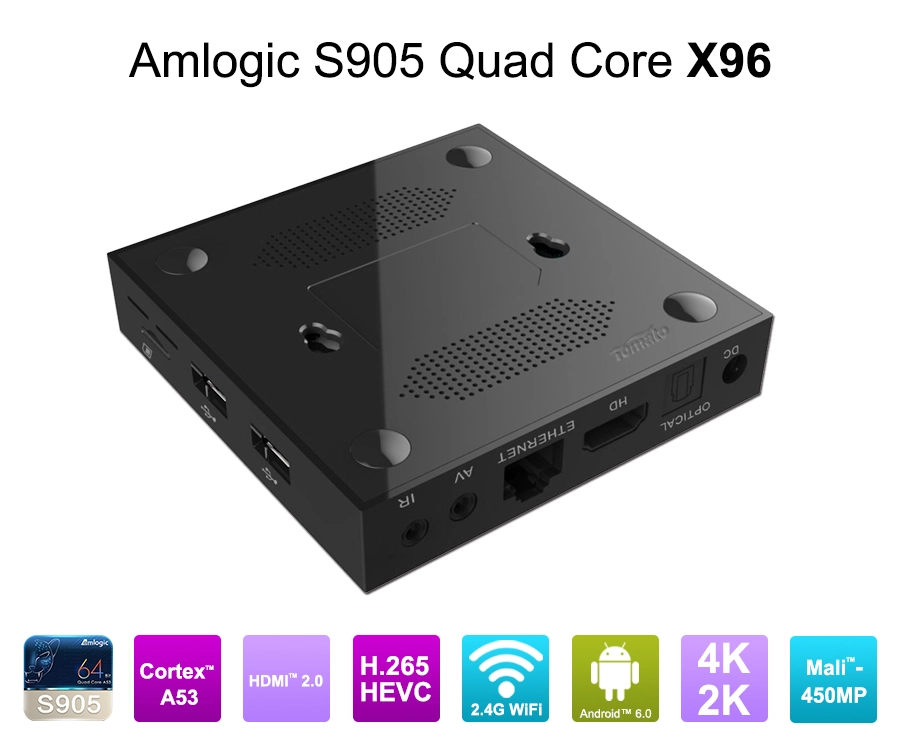
- Amlogic Series (e.g., S905X4 / S928X): Optimized for high-throughput video streaming, delivering native hardware decoding for AV1, VP9, and H.265 alongside low power consumption and high thermal efficiency.
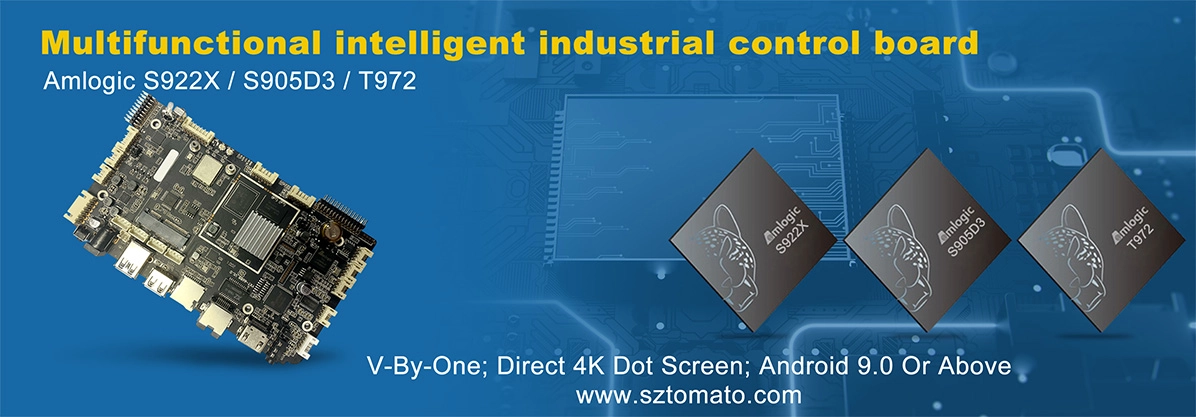
- Rockchip Series (e.g., RK3568 / RK3588): Selected for multi-display digital signage, industrial edge-AI compute, and high-I/O commercial installations requiring multi-channel HDMI, dual Ethernet, PCIe expansion, and native Linux/Ubuntu kernel execution.
Custom PCBA Layouts & Component Integration
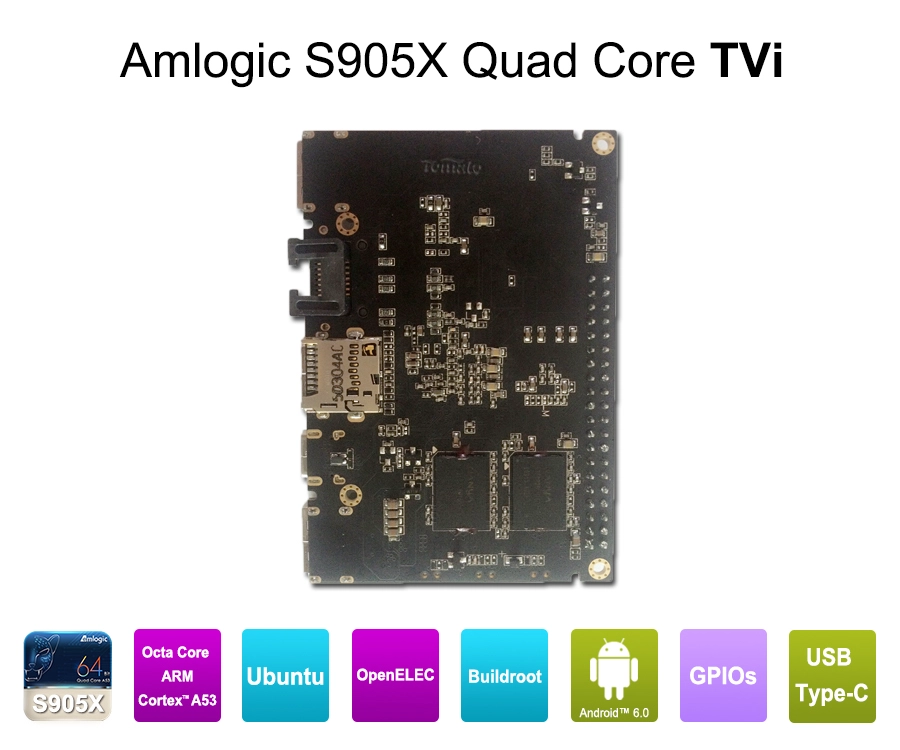
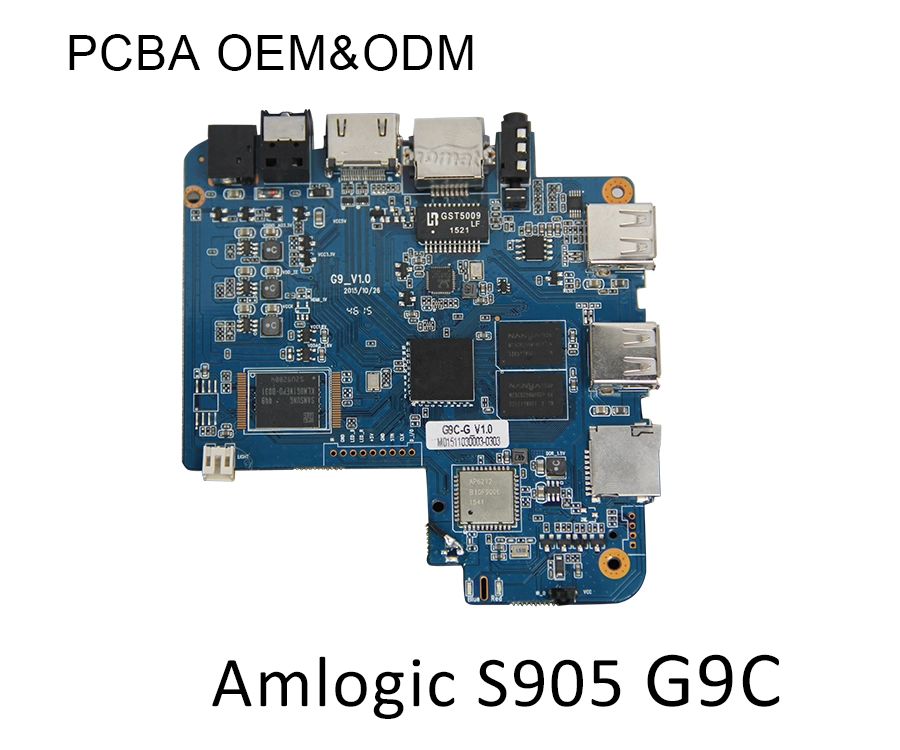
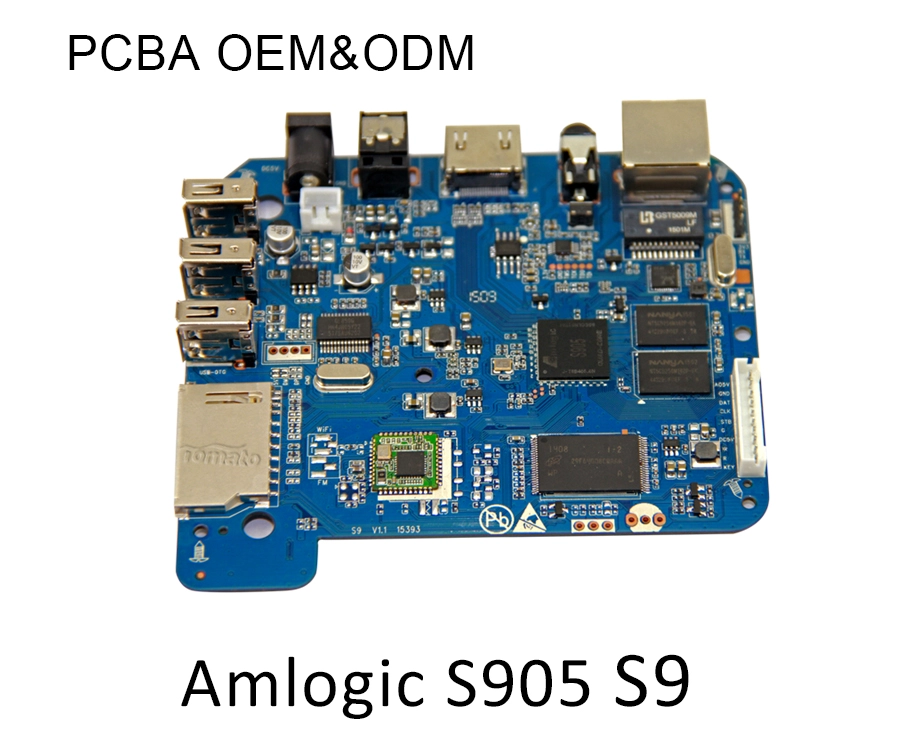
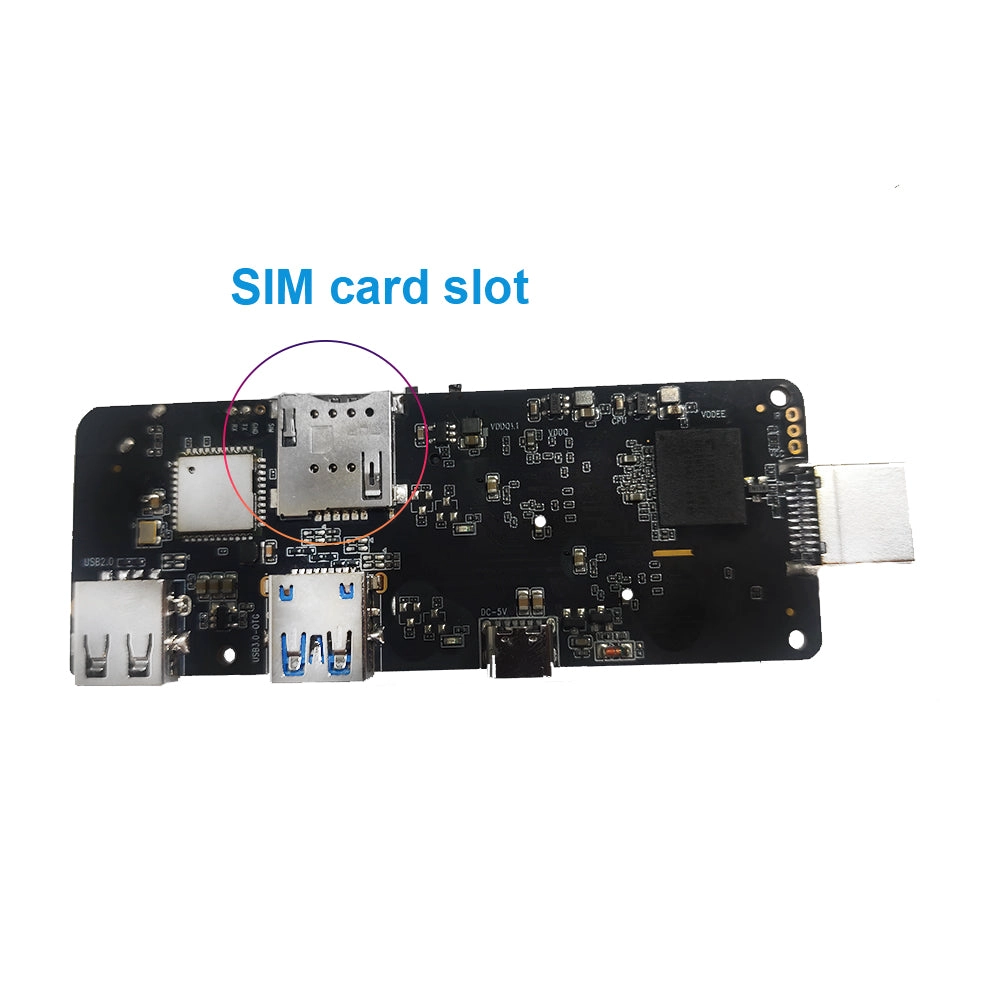
SZTomato’s in-house engineering modifies the Printed Circuit Board Assembly (PCBA) to meet precise physical and electrical requirements:
-
I/O & Interface Customization: Integrating specialized physical interfaces, including RS232/RS485 serial buses for industrial control systems, Power over Ethernet (PoE) modules to eliminate external power bricks, optical S/PDIF, real-time clocks (RTC) with battery backup, and hardware watchdog timers for automated power cycling.
-
Power Delivery & ESD Protection: Engineering wide-voltage DC power inputs (9V–36V) with surge suppression grids and Electrostatic Discharge (ESD) protection circuits to shield components against voltage spikes on unstable commercial power grids.
-
Industrial Cooling Configurations: Replacing stamped aluminum sheet-metal plates with custom-extruded aluminum alloy heat sinks and high-transfers graphite pads. This passive cooling configuration dissipates heat through designed chassis ventilation, ensuring 24/7 continuous operation in high-ambient environments (up to 50°C) without clock-rate throttling.
2. Low-Level Firmware Customization: OS Hardening and UI Lock-Down
A standard Android Open Source Project (AOSP) or stock Linux image contains hundreds of non-essential services, telemetry loggers, and consumer apps that consume CPU cycles and RAM. Deep firmware customization strips these dependencies away, dedicating all system resources directly to your enterprise application.
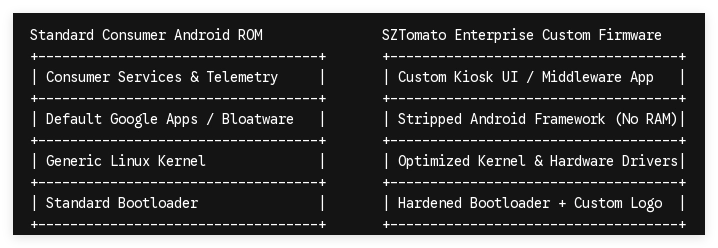
Kernel Optimization and Framework Trimming
By recompiling the Board Support Package (BSP) and tuning system-level drivers, engineering teams achieve minimal latency and maximum uptime:
-
Bloatware Removal & Boot Speed Acceleration: Eliminating background services reduces boot times from over 45 seconds to under 12 seconds, while freeing up to 40% of system RAM for buffer management.
- Peripheral & API Integration: Exposing system-level APIs and SDKs to allow proprietary client applications direct control over hardware interfaces, including HDMI-CEC power toggling, GPIO pins, screen orientation flags (0°/90°/180°/270°), and hardware status LEDs.
- Content Protection & DRM Integration: Hardening the Trusted Execution Environment (TEE) to support Widevine L1, PlayReady, and HDCP 2.3 encryption directly on the silicon pipeline, securing compliance for premium video content distribution.
Dedicated Kiosk UI/UX and Launcher Lock-Down
Commercial deployments demand a controlled user environment that prevents end-user access to underlying system settings:
- Custom Kiosk Launcher: Replacing the default Android launcher with a custom-branded user interface, locking the operating system into a single auto-boot application (Kiosk Mode).
-
Firmware-Level Branding: Flashing customer logos, splash screens, and custom boot animations directly into the non-volatile system read-only partition (/system) to prevent tampering or accidental overwrites during factory resets.
-
Disabled Control Vectors: Suppressing navigation bars, status bar pull-downs, notification pop-ups, and hardware remote-control combinations that could allow unauthorized access to the OS settings menu.
3. Remote Fleet Management: Enterprise OTA and Security Architectures
Deploying custom TV Box hardware across hundreds or thousands of scattered enterprise locations makes physical maintenance unviable. A secure, controlled Over-the-Air (OTA) update architecture is required to push system upgrades and security patches remotely.
Private OTA Server and Partitioning Framework
SZTomato integrates custom OTA update clients configured to communicate directly with private enterprise update servers:
| Infrastructure Component | Technical Implementation | Operational Advantage |
|---|---|---|
| A/B System Partitions | Seamless dual-slot (slot_a / slot_b) updating mechanism. | Updates flash in the background to the inactive slot. If validation fails, the bootloader rolls back automatically, preventing device bricking. |
| Delta Updating | Differential byte-level payload generation. | Pushes only modified code blocks, cutting update payload sizes by up to 80% to preserve network bandwidth. |
| Staged Batch Rollouts | Target grouping by device ID, geography, or client tier. | Enables canary testing across a small subset of hardware before executing network-wide updates. |
Hardware Root of Trust and Key Injection
To protect proprietary client software and sensitive data from physical extraction or unauthorized flashing:
-
Secure Boot Enablement: Burning RSA/ECC cryptographic keys into eFuse storage at the factory level, ensuring the bootloader executes only verified, digitally signed firmware images.
-
Pre-Injected Network Security Certificates: Installing private SSL/TLS enterprise certificates into the OS trust store during assembly, establishing encrypted MQTT/HTTPS communication channels right out of the box.
Custom Hardware vs. Off-the-Shelf Comparison
| Architectural Feature | Generic Retail TV Box | SZTomato OEM/ODM Custom TV Box |
|---|---|---|
| Operating System | Standard consumer Android with unneeded background services. | Recompiled, hardened AOSP or Linux kernel tuned for specific workloads. |
| User Interface | Stock consumer launcher with external app icons. | Locked-down Kiosk launcher auto-booting into custom middleware. |
| Thermal Design | Passive sheet-metal heat spreader prone to throttling. | Heavy-duty extruded aluminum sink engineered for continuous 24/7 operation. |
| System Updates | Public OTA servers with forced, unpredictable OS updates. | Private enterprise OTA infrastructure with dual-partition fallback protection. |
| Hardware Customization | Fixed ports, consumer plastics, and rigid PCB layouts. | Tailored PCBA, industrial I/O (PoE, RS232, RTC), wide-voltage input, custom tooling. |
Partnering with SZTomato for Your Enterprise TV Box Project
Transitioning an enterprise hardware project from concept to mass production requires an experienced engineering partner capable of managing both hardware circuit modifications and low-level firmware development.
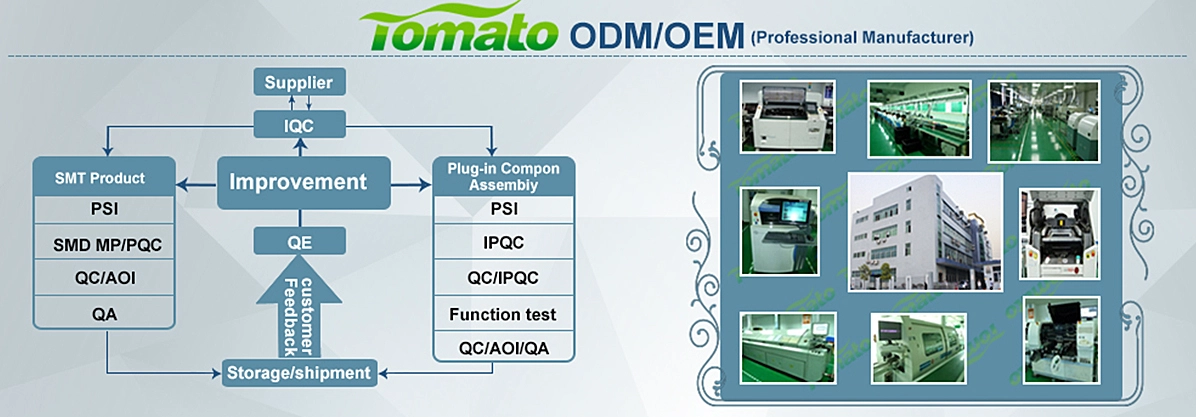
With over 16 years of expertise in cross-border B2B electronics manufacturing, Shenzhen Tomato Technology Co., Ltd. (SZTomato) delivers turnkey OEM/ODM services for TV Boxes, digital signage players, and edge streaming media devices. From initial SoC evaluation and PCBA layout design to custom kernel optimization and global logistics, SZTomato ensures your hardware deployment is reliable, secure, and fully under your brand’s control.
Ready to start your custom TV Box engineering project?
Visit www.sztomato.com to submit your hardware and firmware requirements, request reference evaluation units, or schedule a technical consultation with our engineering team.
