
Energy-Efficient TV Box: Multi-Core CPU/GPU and Advanced Thermal Design
1. Multi-Core CPU and GPU Architecture: Balancing Performance with Power Consumption
The first step in designing an energy-efficient TV Box is selecting a processor architecture that matches the actual application workload.
A common mistake in hardware procurement is choosing a chipset based primarily on CPU frequency or core count. More cores do not automatically translate into better energy efficiency. A processor that delivers excessive computing capacity for a basic IPTV application may increase the bill of materials and thermal design requirements without producing meaningful improvements in the user experience.
The engineering objective is to allocate workloads to the appropriate processing units.
1.1 CPU Core Architecture and Dynamic Frequency Scaling
Modern ARM-based SoCs use multi-core CPU architectures to distribute operating-system tasks, application execution, networking, and background services.
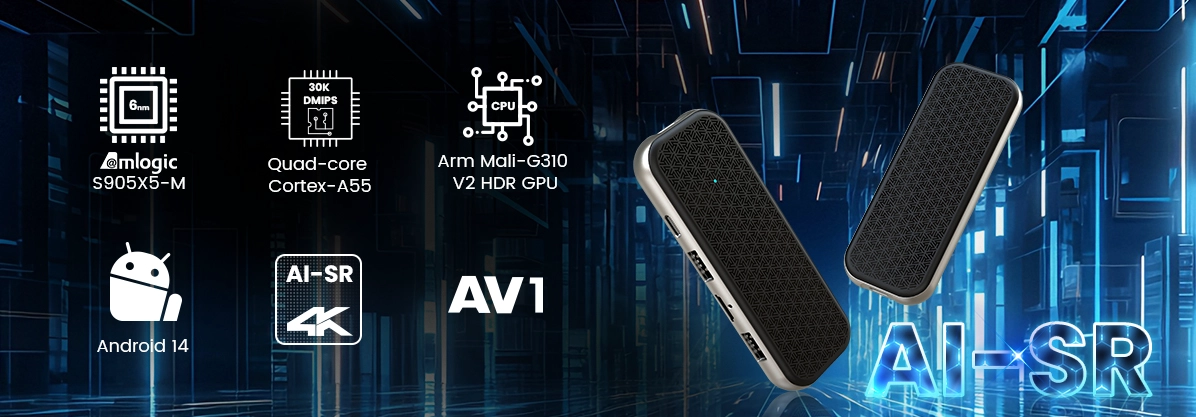
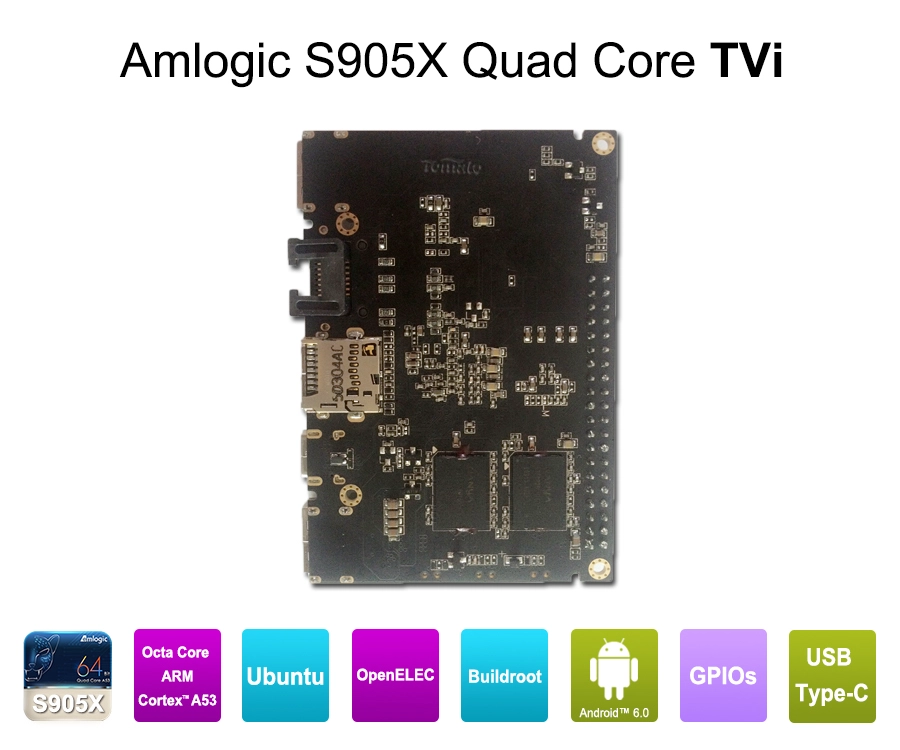
For example, ARM Cortex-A55-based platforms are suitable for many mainstream streaming and IPTV applications. More advanced ARMv9 platforms, such as the Amlogic S905X5, introduce newer CPU architecture and multimedia capabilities.
The S905X5 platform combines a quad-core Cortex-A510 CPU with an ARM G310-series GPU, providing a modern foundation for 4K multimedia applications.
SZ Tomato+1
However, processor selection should consider more than peak benchmark performance.
Three mechanisms are particularly important:
-
Dynamic Voltage and Frequency Scaling (DVFS): Adjusts CPU frequency and operating voltage according to workload demand.
-
CPU Idle States: Allow unused processing cores to enter lower-power states when the operating system has no immediate work.
-
Core Scheduling: Distributes application workloads across available CPU cores to avoid unnecessary high-frequency operation.
For an IPTV deployment, the CPU workload during continuous video playback is often relatively modest when the video decoder operates independently in dedicated hardware.
A well-optimized Android or Linux system should therefore avoid keeping every CPU core at maximum frequency during normal playback.
1.2 GPU Efficiency and Hardware Video Decoding
The GPU handles graphical rendering, interface animations, transitions, and other visual workloads.
For a commercial TV Box, the GPU must provide sufficient performance for the target interface without consuming unnecessary power.
There is also an important distinction between GPU processing and video decoding.
Dedicated video-processing hardware, commonly called a VPU or hardware video decoder, handles supported video streams independently of general-purpose CPU execution. This reduces the amount of software processing required for continuous playback.
Consider the following workload distribution:
|
Processing unit |
Primary responsibility |
Efficiency objective |
|---|---|---|
|
CPU |
Android/Linux, applications, networking |
Minimize unnecessary execution |
|
GPU |
UI rendering and graphics |
Match graphics capability to display requirements |
|
VPU |
H.264, H.265, AV1 and other supported codecs |
Offload video decoding |
|
NPU |
Supported AI inference workloads |
Accelerate AI tasks efficiently |
AV1 hardware decoding is particularly relevant to modern streaming platforms because it can reduce network bandwidth requirements compared with older codecs at comparable visual quality. Actual efficiency depends on encoding parameters, implementation, and network conditions.
For manufacturers, the critical requirement is to verify that the selected SoC supports the required codec, resolution, frame rate, and bit depth through its dedicated decoding engine.
1.3 Why Hardware Acceleration Matters for Continuous Playback
Software decoding can place a substantial workload on CPU cores, especially when handling high-resolution video.
Dedicated hardware decoding moves supported codec operations away from general-purpose CPU execution.
For a 4K streaming TV Box, the engineering team should verify:
-
H.264 and H.265 hardware decoding.
-
AV1 hardware decoding where required.
-
4K@60fps playback capability.
-
HDR10, HDR10+, or Dolby Vision support where applicable.
-
Secure video playback and Trusted Execution Environment integration.
-
HDMI output compatibility and HDCP protection.
HDCP encryption and DRM integration also require proper hardware and firmware implementation. These functions should be validated alongside video performance rather than treated as optional software additions.
The result should be a balanced multimedia architecture in which the CPU, GPU, and video decoder perform their respective tasks without unnecessary resource competition.
2. Advanced PCBA and Thermal Design: Controlling Heat at the Hardware Level
Power consumption and thermal performance are closely connected, but they are not interchangeable measurements.
A TV Box can consume relatively little power and still experience localized overheating if the SoC, memory, voltage regulators, or wireless components have inadequate heat dissipation.
This becomes especially important in compact enclosures and commercial environments where devices operate continuously.
2.1 PCBA Layout and Power Delivery Optimization
The PCBA design determines how electrical power reaches the SoC, memory, wireless modules, and peripheral interfaces.
An inefficient board layout can introduce unnecessary power losses, voltage instability, and localized heat concentration.
Important design considerations include:
Power Management IC selection
The PMIC and DC-DC converters should match the voltage and current requirements of the selected SoC and peripheral components.
High-efficiency switching regulators can reduce conversion losses compared with poorly matched power-delivery designs. Their actual performance depends on operating load, switching frequency, component selection, and PCB implementation.
PCB copper and power-plane design
Appropriate copper thickness, power-plane distribution, and ground-plane continuity help manage current density and thermal distribution.
Component placement
High-heat components should be positioned with consideration for airflow, enclosure geometry, and available heat-transfer paths.
Wireless modules, memory chips, and power regulators should not be placed without evaluating their combined thermal impact.
Signal integrity and power integrity
High-speed DDR interfaces, HDMI signals, USB 3.0, and Ethernet interfaces require careful routing and grounding.
Poor signal integrity can create system instability and additional engineering problems, even if the thermal design is adequate.
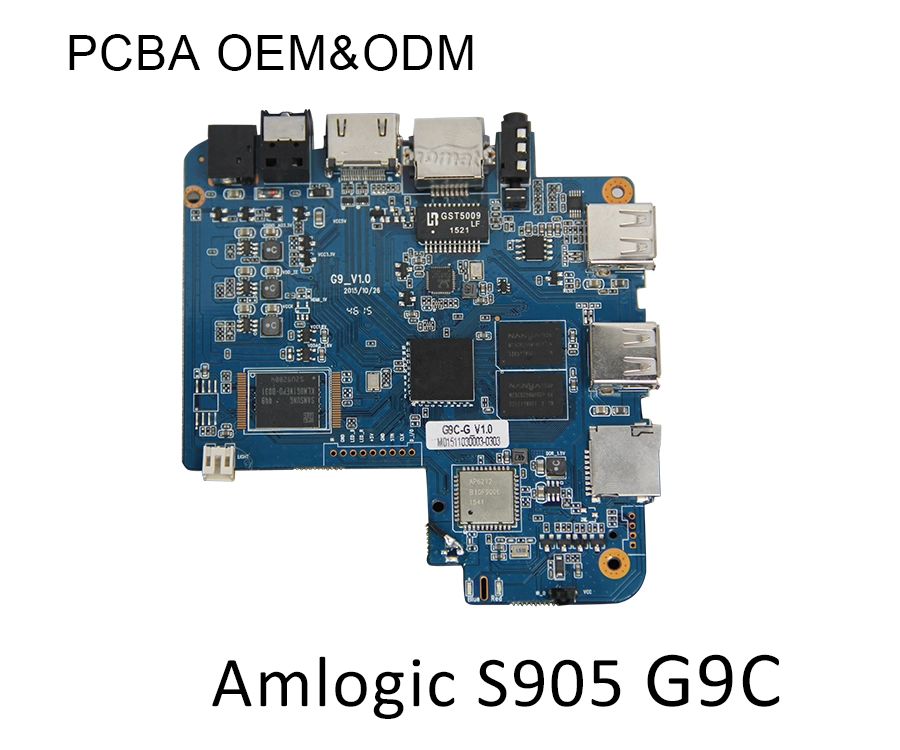
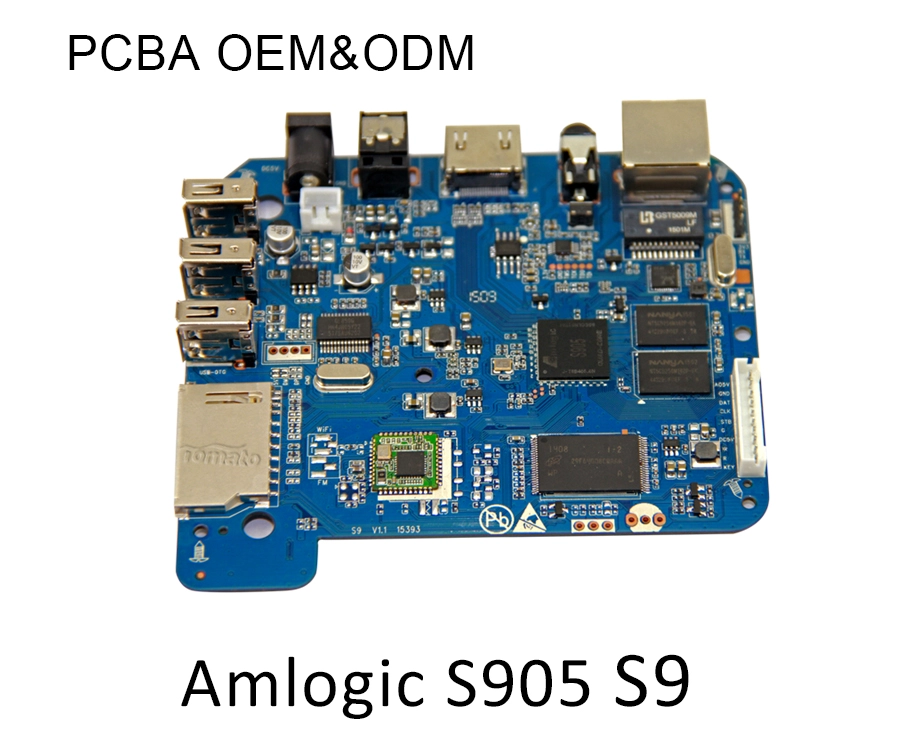
For OEM projects, PCBA modification provides an opportunity to optimize these elements around the actual application instead of relying on a generic reference board.
2.2 Passive Cooling: Heat Sinks, Thermal Pads, and Enclosure Design
Most compact TV Box products rely on passive cooling because it avoids fan noise, mechanical wear, and additional power consumption.
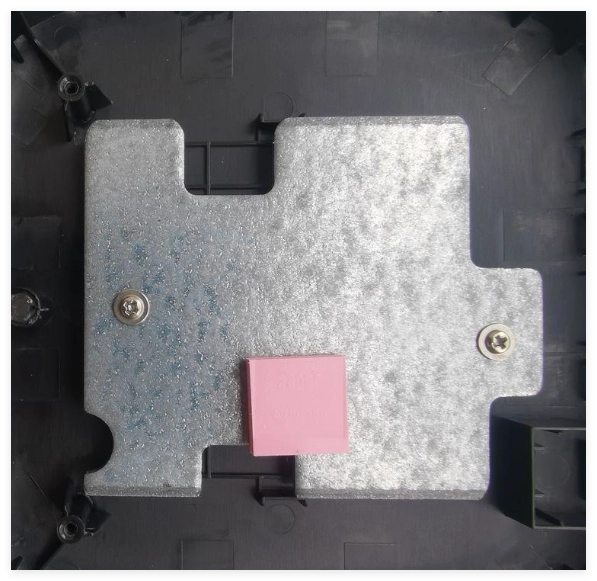
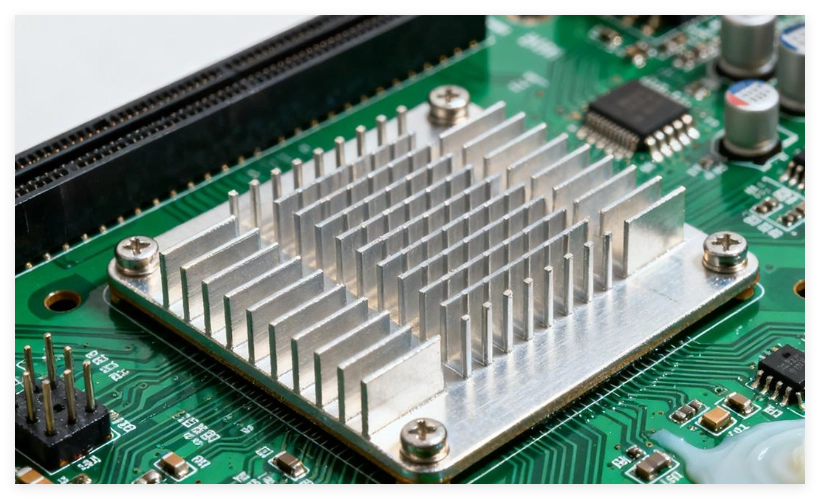
A typical passive cooling structure includes:
-
SoC package as the primary heat source.
-
Thermal interface material (TIM) to reduce contact resistance.
-
Aluminum or copper heat spreader.
-
Enclosure surface or dedicated heatsink for heat dissipation.
The thermal interface between the SoC and heatsink is particularly important. An unsuitable thermal pad thickness or uneven contact pressure can increase thermal resistance and reduce heat-transfer efficiency.
For industrial TV Box applications, the enclosure itself can become part of the thermal management system.
Aluminum housings provide a potential heat-spreading path, while carefully designed ventilation openings can improve natural convection. The appropriate solution depends on installation orientation, ambient temperature, enclosure size, and available airflow.
2.3 Thermal Throttling and Long-Term Reliability
When the SoC reaches its thermal limits, the operating system may reduce CPU or GPU frequency to prevent overheating.
This mechanism is called thermal throttling.
Although throttling protects hardware, frequent thermal intervention can produce:
-
Reduced sustained processing performance.
-
Inconsistent application response.
-
Video playback instability under combined workloads.
-
Increased temperature variation inside the enclosure.
-
Reduced reliability in demanding operating environments.
An effective thermal design should therefore be validated under sustained operating conditions rather than short benchmark tests.
For B2B procurement projects, recommended validation scenarios include continuous 4K video playback, simultaneous Wi-Fi and Ethernet activity, maximum display brightness where applicable, repeated application switching, and extended ambient-temperature testing.
The target is not simply to keep the processor cool during startup. It is to maintain stable performance throughout the intended operating period.
3. Firmware-Level Power Optimization: Making Android and Linux Work More Efficiently
Hardware establishes the power-efficiency ceiling, but firmware determines how effectively the platform operates under real workloads.
Two TV Box products using the same SoC can exhibit different power consumption because of differences in kernel configuration, background services, driver behavior, application scheduling, and peripheral management.
For commercial projects, firmware optimization should be part of the original engineering process.
3.1 Android and Linux Kernel Power Management
The Linux kernel provides several mechanisms for controlling processor and peripheral power consumption.
Key optimization areas include:
-
CPUFreq governors for dynamic CPU frequency management.
-
CPUIdle configuration for reducing idle-state power consumption.
-
Runtime Power Management for supported peripheral devices.
-
Suspend and resume mechanisms for standby operation.
-
Thermal framework configuration for temperature monitoring and frequency control.
-
Device driver optimization to prevent unnecessary background activity.
Android TV Box firmware builds on these mechanisms with additional system services, application management, and power policies.
For example, a digital signage TV Box may need to maintain an active Ethernet connection while keeping unnecessary background applications suspended. An IPTV terminal may prioritize fast wake-up, stable network connectivity, and uninterrupted video decoding.
These requirements should influence firmware architecture from the beginning.
3.2 Custom UI/UX Firmware and Background Process Management
The user interface also affects energy consumption.
An interface with excessive animation, continuously refreshing widgets, unnecessary background synchronization, and poorly optimized rendering can increase CPU and GPU activity.
A customized firmware solution should consider:
Launcher optimization: Reduce unnecessary animations and background rendering while maintaining a responsive interface.
Application control: Remove redundant services and restrict background processes that are not required by the deployment.
Display management: Configure appropriate screen refresh behavior, resolution, and display standby policies.
Network management: Prevent unnecessary polling and repeated connection attempts.
OTA update management: Schedule firmware downloads and updates according to deployment requirements, avoiding unnecessary network and processing activity during normal operation.
For operators managing thousands of devices, centralized OTA update systems are especially valuable. They provide controlled firmware deployment, version management, and remote maintenance without requiring technicians to visit every installation site.
3.3 SDK/API Integration for Application-Level Optimization
Standard firmware may not address the specific power requirements of every commercial application.
A digital signage integrator, for example, may require scheduled playback, remote monitoring, automatic reboot, display power control, and peripheral management.
An IPTV operator may prioritize secure content delivery, reliable network recovery, and fast channel switching.
SDK/API integration enables application developers to communicate with hardware-level functions and system services.
Depending on SoC and firmware support, customized APIs can expose:
-
Device temperature monitoring.
-
CPU and memory utilization.
-
Network connection status.
-
Display power and standby controls.
-
Hardware decoding status.
-
System reboot and recovery functions.
-
OTA update management.
This creates a more manageable relationship between application requirements and hardware behavior.
SZTomato supports custom UI/UX firmware, SDK/API integration, and firmware-level engineering for OEM/ODM TV Box projects. The objective is to align software behavior with the actual deployment rather than forcing every customer to use an identical reference firmware configuration.
4. Energy-Efficient TV Box Design for Commercial and Industrial Applications
Energy efficiency becomes more important when a device operates continuously or is deployed across a large installation network.
A small difference in average power consumption can accumulate into a meaningful operating-cost difference when multiplied by hundreds or thousands of units.
4.1 How to Calculate the Energy Consumption of a TV Box
Procurement managers should evaluate actual power consumption rather than relying exclusively on the adapter's rated output.
The basic calculation is:
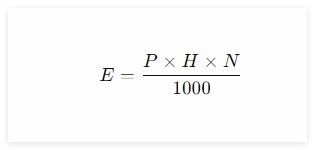
Where:
-
\(E\) = Total energy consumption in kWh.
-
\(P\) = Average measured power consumption in watts.
-
\(H\) = Operating hours per day.
-
\(N\) = Number of operating days.
Consider a deployment of 1,000 TV Box devices operating 24 hours per day.
The following example compares two hypothetical configurations.
|
Parameter |
Configuration A |
Configuration B |
|---|---|---|
|
Average power |
5 W |
4 W |
|
Daily operating hours |
24 |
24 |
|
Devices deployed |
1,000 |
1,000 |
|
Annual energy consumption |
43,800 kWh |
35,040 kWh |
Annual Energy Consumption Comparison
Illustrative calculation for 1,000 devices operating 24 hours daily.
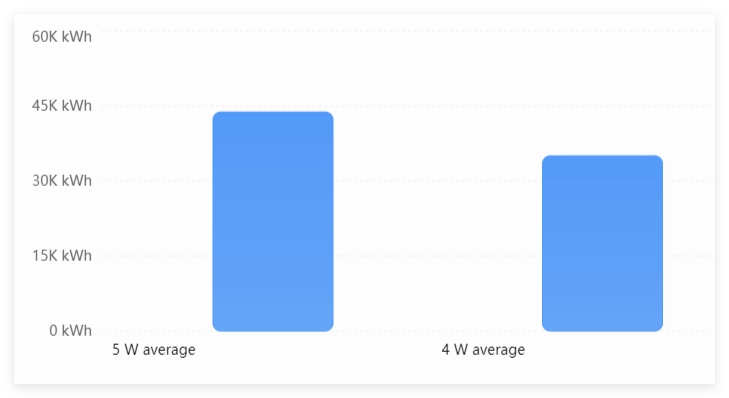
The difference is 8,760 kWh annually, representing a 20% reduction in this example.
The calculation uses average measured operating power, not the maximum power rating printed on the power adapter.
Actual results depend on workload, network activity, standby configuration, peripheral connections, and operating environment.
For large-scale procurement, this type of calculation helps evaluate the total cost of ownership (TCO), particularly when devices remain powered on around the clock.
4.2 Different Applications Require Different Energy Strategies
Not every TV Box should use the same hardware configuration or power-management policy.
|
Application |
Main engineering priority |
Recommended design approach |
|---|---|---|
|
IPTV and OTT streaming |
Stable 4K playback |
Hardware decoding and optimized CPU scheduling |
|
Digital signage |
24/7 operation |
Industrial thermal design and scheduled display control |
|
Hotel TV systems |
Reliable standby and fast wake-up |
Customized launcher and power-state management |
|
Education and conference rooms |
Multiple peripherals and display output |
Balanced SoC, efficient power delivery, and thermal validation |
|
Industrial multimedia |
Long operating periods |
Enhanced cooling, PCBA customization, and firmware monitoring |
|
AI multimedia terminals |
Sustained AI processing |
Appropriate NPU performance, memory bandwidth, and thermal headroom |
The selection process should begin with the application workload, not the highest available processor specification.
4.3 What B2B Buyers Should Evaluate Before Selecting a TV Box Manufacturer
An energy-efficient product requires coordinated engineering across hardware, software, and production.
Procurement teams should request technical evidence in the following areas:
1. SoC and multimedia capabilities
Confirm CPU architecture, GPU performance, hardware decoding support, memory bandwidth, and codec compatibility.
2. Power consumption measurements
Request measurements for idle, standby, application navigation, network streaming, and sustained 4K playback.
3. Thermal validation
Check SoC temperature, enclosure temperature, thermal throttling behavior, and long-duration operating stability under specified ambient conditions.
4. PCBA engineering capabilities
Determine whether the manufacturer can modify power circuits, component placement, PCB routing, and thermal interfaces according to project requirements.
5. Firmware customization
Evaluate support for Android/Linux kernel optimization, custom launchers, OTA update systems, peripheral management, and SDK/API integration.
6. Production consistency
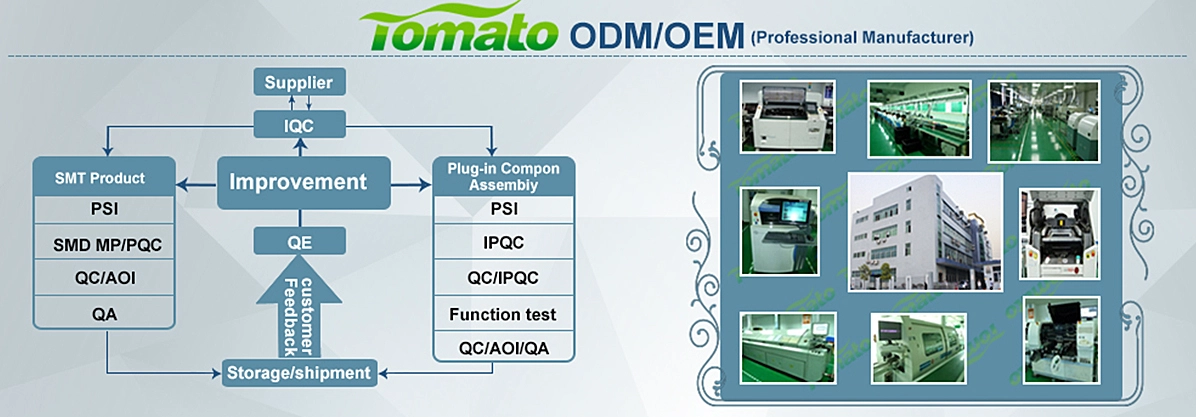
Verify that the validated engineering configuration is maintained during mass production through component control, PCBA inspection, functional testing, and multi-stage quality control.
These requirements help distinguish an engineering-oriented OEM/ODM manufacturer from a supplier that only offers standard TV Box configurations.
5. SZTomato OEM/ODM Engineering: Building a TV Box Around Your Application
An energy-efficient TV Box should be engineered around its intended operating environment, not simply assembled from a standard reference design.
For customers developing IPTV terminals, commercial streaming devices, digital signage players, or industrial multimedia equipment, hardware and firmware customization can make a measurable difference in long-term performance.
SZTomato, established in 2011 in Shenzhen, China, provides OEM/ODM development and manufacturing services for global B2B customers.
Its engineering capabilities cover several critical areas:
-
PCBA hardware modification: Customized power circuits, component selection, PCB layouts, and peripheral configurations.
-
Thermal engineering: Specialized cooling solutions for compact and industrial applications, including heatsink and enclosure optimization.
-
Firmware development: Customized Android/Linux firmware, kernel-level optimization, and tailored UI/UX.
-
SDK/API integration: Hardware control, application integration, device monitoring, and communication with external systems.
-
OTA maintenance: Firmware deployment, version management, and long-term software support.
-
Production quality control: Engineering validation, functional testing, and manufacturing consistency.
For projects requiring advanced multimedia capabilities, SZTomato also supports SoC platform evaluation and hardware configuration based on application requirements.
The objective is to deliver a TV Box that balances processing performance, power consumption, thermal stability, and product lifecycle requirements.
Conclusion: Energy Efficiency Starts with System-Level Engineering
The next generation of energy-efficient TV Box products will depend less on isolated processor specifications and more on the coordination of CPU/GPU architecture, dedicated video decoding, PCBA power management, thermal engineering, and firmware optimization.
A multi-core processor does not automatically produce an efficient device. The real advantage comes from matching processing resources to application workloads, minimizing unnecessary power consumption, and maintaining stable operating temperatures.
For IPTV operators, digital signage integrators, telecom brands, and hardware distributors, these engineering considerations directly influence operating costs, deployment reliability, and long-term product competitiveness.
Looking for an OEM/ODM TV Box manufacturer?
SZTomato provides customized TV Box development, PCBA modification, advanced thermal solutions, Android/Linux firmware customization, and SDK/API integration.
Contact the SZTomato engineering and sales team at www.sztomato.com to discuss your project requirements, target SoC platform, power budget, thermal specifications, and mass-production plans.
