
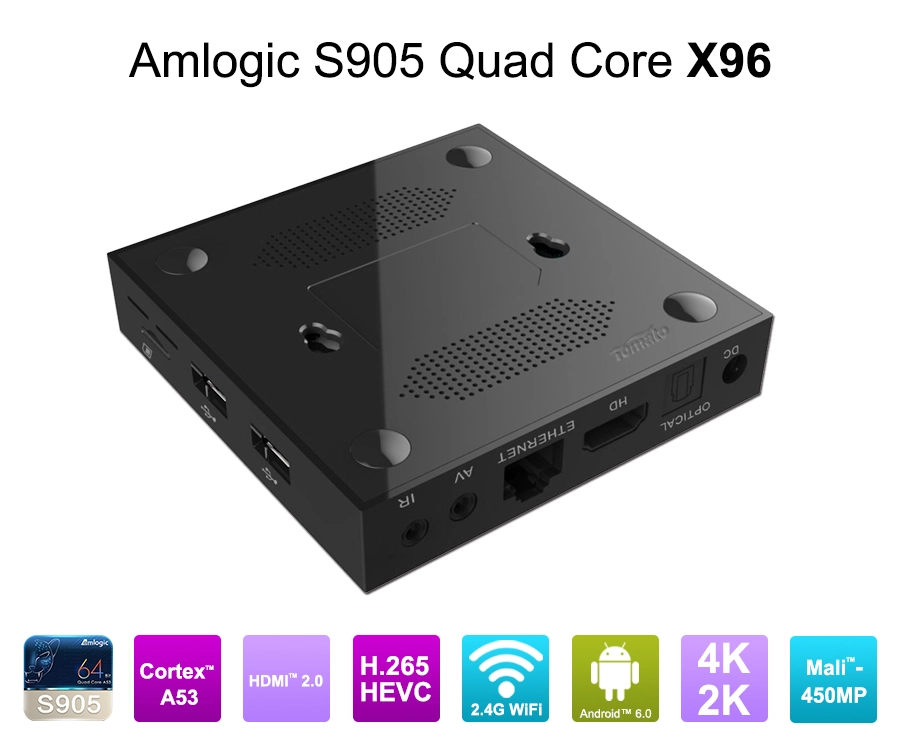
Smart TV Box Manufacturing Experience: Faster Sampling and Reliable Mass Production
A Smart TV Box project can lose weeks before the first production order is placed. The problem is rarely limited to component procurement. More often, delays originate from incomplete hardware specifications, incompatible peripheral interfaces, firmware adaptation, or repeated PCB modifications after initial testing.
For example, selecting an Amlogic SoC with AV1 decoding capability does not automatically guarantee a production-ready 4K streaming device. Memory configuration, DDR routing, power delivery, HDMI compatibility, HDCP implementation, Wi-Fi performance, and Android framework integration must work together.
This is where manufacturing experience becomes commercially important.
An experienced Smart TV Box manufacturer should be able to translate a product requirement into a validated engineering design, produce functional prototypes quickly, and transfer the approved design into repeatable mass production.
For distributors, IPTV operators, telecom providers, and system integrators, the objective is straightforward: shorten the development cycle without compromising product reliability.
1. Why Manufacturing Experience Determines Smart TV Box Sampling Speed
The sampling stage is often treated as a simple assembly exercise. In professional OEM/ODM projects, it is actually an engineering validation process.
A prototype must demonstrate that the proposed hardware architecture, software environment, and intended application can operate together.
1.1 Start with SoC and Hardware Architecture Selection
The first decision is selecting a suitable System-on-Chip (SoC).
Different Smart TV Box applications require different processor capabilities. A device designed for residential IPTV distribution has different requirements from a commercial multimedia player supporting continuous operation, customized interfaces, and multiple external peripherals.
Typical engineering considerations include:
-
CPU architecture: ARM Cortex-A55, Cortex-A76, or multi-core combinations.
-
GPU performance: Mali GPU configurations for graphical interfaces and multimedia rendering.
-
Video decoding: H.265, AV1, VP9, and H.264 compatibility.
-
Memory bandwidth: DDR4 or LPDDR4/LPDDR5 configuration according to processor requirements.
-
Connectivity: Gigabit Ethernet, Wi-Fi 5/6, Bluetooth, USB, and HDMI.
-
Operating system: Android, Linux, or a customized firmware environment.
A common mistake is choosing a processor based primarily on its advertised performance. The correct selection must consider the complete application environment, including codec requirements, peripheral interfaces, operating system support, and long-term component availability.
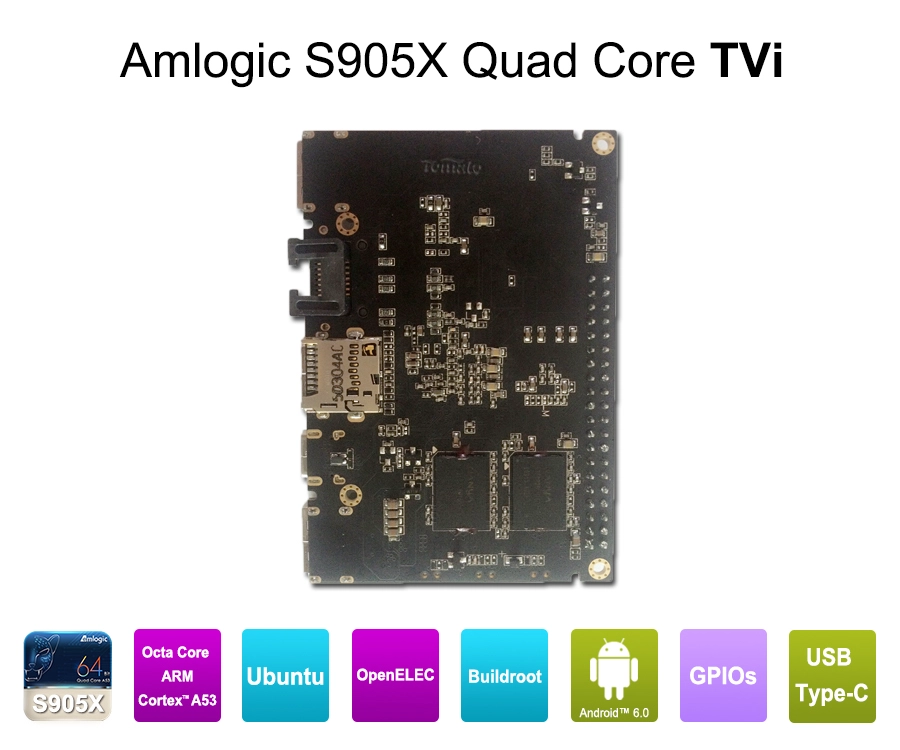
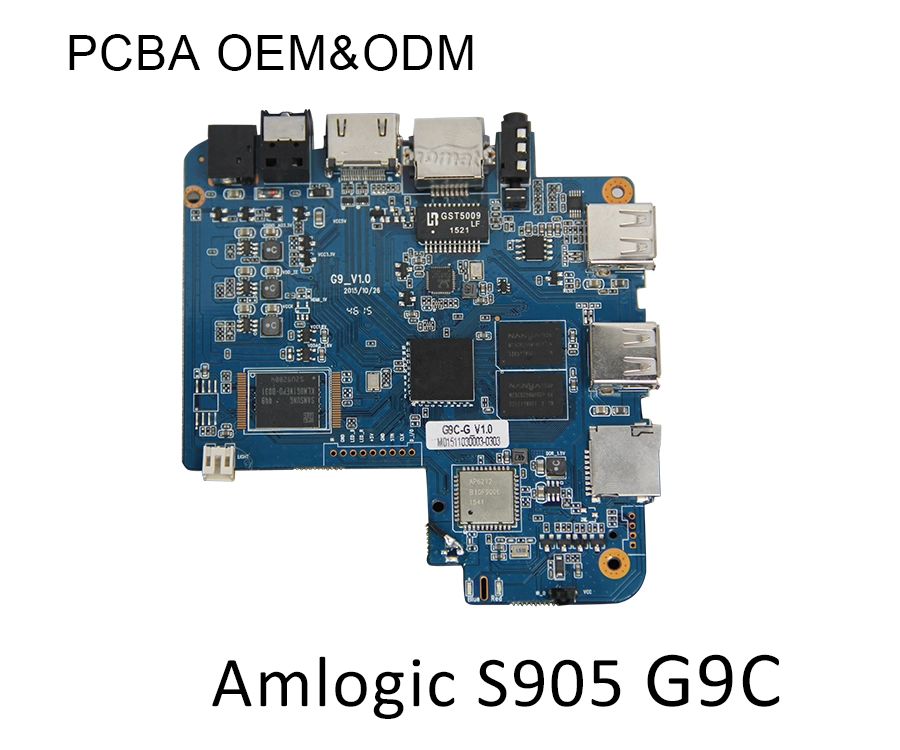
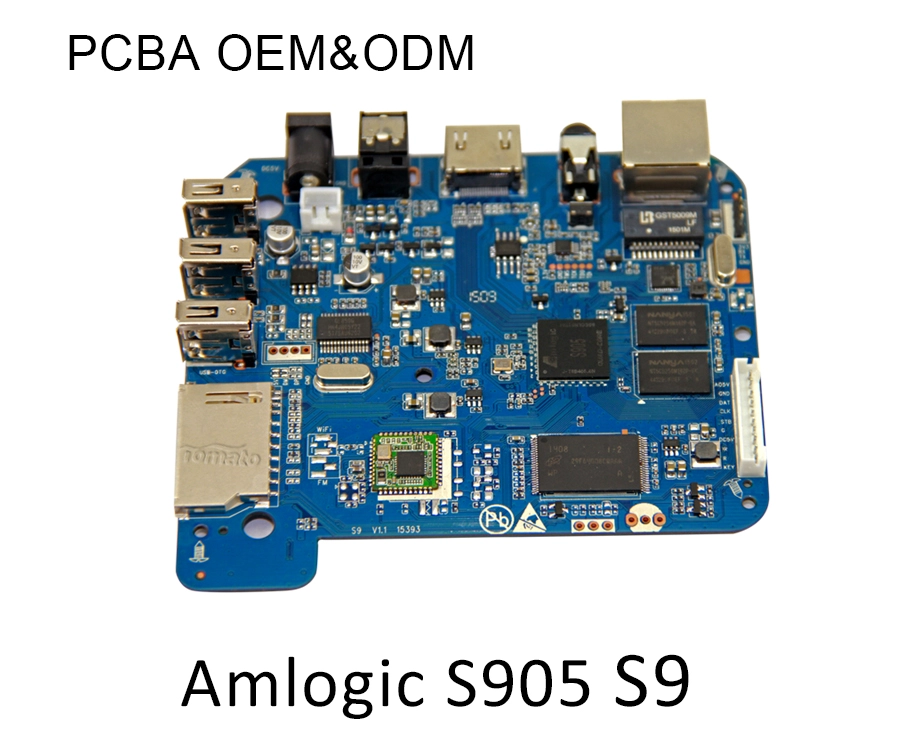
SZTomato supports hardware configuration and PCBA-level customization to align processor selection with actual project requirements.
1.2 Reduce Prototype Revisions Through PCBA Engineering
PCBA design has a direct influence on prototype success.
Poor component placement, insufficient power delivery, signal interference, and inadequate thermal management can cause problems that only become apparent during functional testing.
A properly engineered PCBA should address:
-
PCB layer structure and high-speed signal routing.
-
DDR memory routing and impedance control.
-
HDMI high-speed differential signal integrity.
-
Power management and voltage regulation.
-
RF antenna placement and Wi-Fi performance.
-
USB interface stability and peripheral compatibility.
-
Grounding strategy and electromagnetic interference.
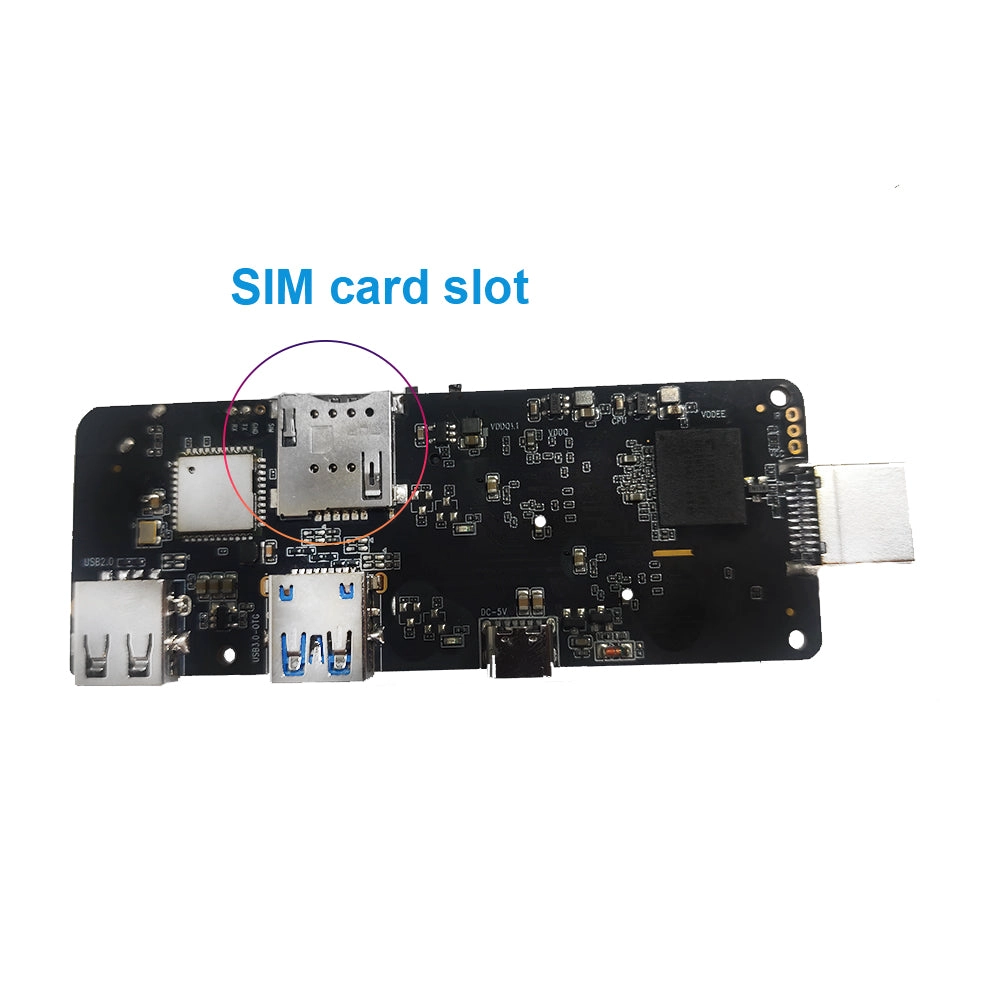
For customized Smart TV Box projects, PCBA modification may also involve adding or adjusting interfaces, changing memory configurations, adapting power inputs, and integrating customer-specific modules.
The advantage of working with an experienced manufacturer is that potential design conflicts can be identified before multiple prototype revisions consume development time.
1.3 Establish a Clear Prototype Validation Process
A functional prototype should be evaluated against a defined engineering checklist rather than subjective impressions.
|
Validation area |
Key testing requirements |
|---|---|
|
Hardware |
CPU, RAM, storage, power stability |
|
Video |
4K playback, codec compatibility, HDMI output |
|
Network |
Ethernet throughput, Wi-Fi stability |
|
Interfaces |
USB, Bluetooth, HDMI, IR, peripheral support |
|
Firmware |
Boot process, application compatibility, system stability |
|
Thermal |
Temperature under sustained workloads |
|
Security |
HDCP implementation and applicable content protection |
|
OTA |
Firmware update and recovery functionality |
Not every project requires every test at the initial sampling stage. However, defining the acceptance criteria early prevents disagreements between the manufacturer and buyer after sample delivery.
2. How to Accelerate Smart TV Box Prototype Development Without Sacrificing Quality
Faster sampling does not mean skipping engineering verification. It means reducing unnecessary development iterations.
The most effective approach is to establish a reusable hardware platform while keeping customization at the appropriate engineering layers.
2.1 Use a Proven Reference Design as the Starting Point
Developing every Smart TV Box from an entirely new hardware architecture is rarely necessary.
A proven reference design can provide a starting point for:
-
SoC and memory configuration.
-
Power management circuits.
-
HDMI output architecture.
-
Network interfaces.
-
Wi-Fi and Bluetooth modules.
-
PCB component placement.
The engineering team can then modify the existing architecture according to the buyer's application requirements.
For example, an IPTV operator may require a customized remote-control solution, additional USB connectivity, and a pre-installed middleware environment. A commercial signage integrator may prioritize stable Ethernet connectivity, scheduled playback, and continuous operation.
Both projects can start from an established hardware platform, but their final configurations should reflect different application requirements.
This approach reduces unnecessary redesign while preserving the flexibility required for OEM/ODM development.
2.2 Develop Firmware in Parallel with Hardware
Firmware development should not wait until the final PCBA is completed.
A more efficient development process allows hardware engineering and software engineering to proceed in parallel wherever the development boards and existing reference platforms permit.
Key firmware activities include:
Android system customization
-
Android framework adaptation.
-
Linux/Android kernel configuration.
-
Device driver integration.
-
Boot animation and startup optimization.
-
System permission and application management.
-
Customized launcher and user interface.
SDK/API integration
-
IPTV middleware integration.
-
Third-party application compatibility.
-
Remote management APIs.
-
Device monitoring and control interfaces.
-
Custom application startup behavior.
OTA update architecture
-
Firmware package management.
-
Version control.
-
Update verification.
-
Recovery mechanisms.
-
Remote deployment and update status monitoring.
For operators managing thousands of devices, OTA functionality is not simply a convenience. It is part of the product's long-term maintenance architecture.
A manufacturer should verify the complete update process, including interrupted downloads, power-loss recovery, firmware compatibility, and rollback strategies where supported.
SZTomato provides customized UI/UX firmware development and SDK/API integration to help customers adapt Smart TV Box products to their own software ecosystems.
2.3 Define What Must Be Customized Before Ordering Samples
Unclear customization requirements are one of the main causes of sampling delays.
Before prototype production, the buyer should provide a reasonably complete technical specification.
A practical requirement document should cover:
|
Category |
Information to confirm |
|---|---|
|
Processor |
Preferred SoC or performance requirements |
|
Memory |
RAM and eMMC capacity |
|
Connectivity |
Wi-Fi, Ethernet, Bluetooth |
|
Interfaces |
HDMI, USB, AV, TF card, other ports |
|
Firmware |
Android/Linux version and customization |
|
Applications |
IPTV middleware and third-party APKs |
|
Appearance |
Enclosure, dimensions, logo, color |
|
Accessories |
Remote control, power adapter, cables |
|
Certification |
Target-market regulatory requirements |
|
Production |
Estimated order quantity and delivery schedule |
This information allows the manufacturer to assess feasibility, identify engineering risks, and prepare a more accurate sampling plan.
3. From Prototype Approval to Reliable Smart TV Box Mass Production
A successful sample is not proof of manufacturing consistency.
The transition from a small prototype batch to thousands of production units introduces different challenges. Component sourcing, PCB assembly, firmware programming, mechanical tolerances, and final testing must follow controlled procedures.
3.1 Build Production Consistency Through BOM and Supplier Control
A stable Bill of Materials (BOM) is fundamental to mass production.
Every critical component should have a defined specification and approved sourcing channel.
Important components include:
-
Main SoC.
-
DDR memory.
-
eMMC storage.
-
Wi-Fi and Bluetooth modules.
-
Power management ICs.
-
HDMI and USB connectors.
-
Crystals and clock components.
-
Power adapters and other accessories.
Component substitutions should not be made casually.
Changing memory suppliers, wireless modules, or power components can affect firmware compatibility, electrical characteristics, thermal behavior, and product performance.
A professional manufacturing process should establish component verification and engineering approval procedures for BOM changes.
For long-term OEM projects, buyers should also discuss component lifecycle management and alternative sourcing strategies to reduce the risk of production interruptions.
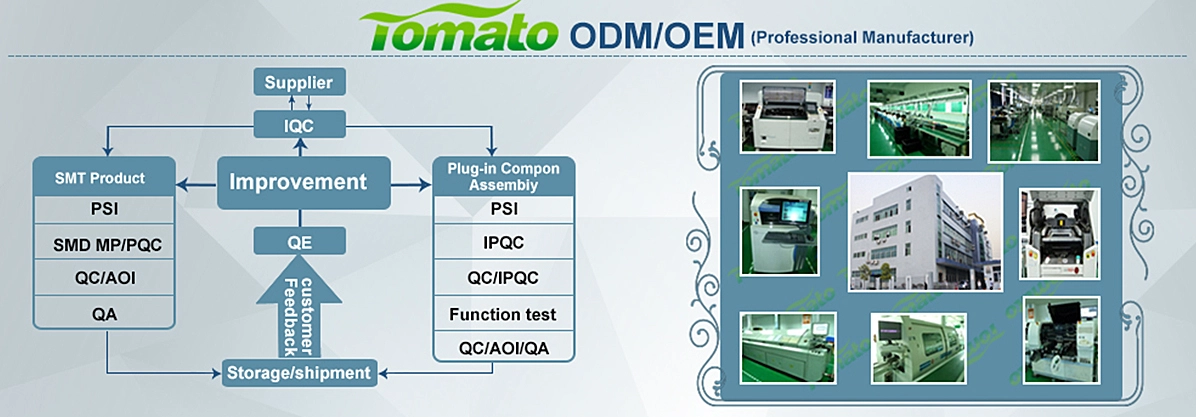
3.2 Implement Multi-Stage Quality Control
Quality inspection should cover the entire manufacturing process rather than relying exclusively on final product testing.
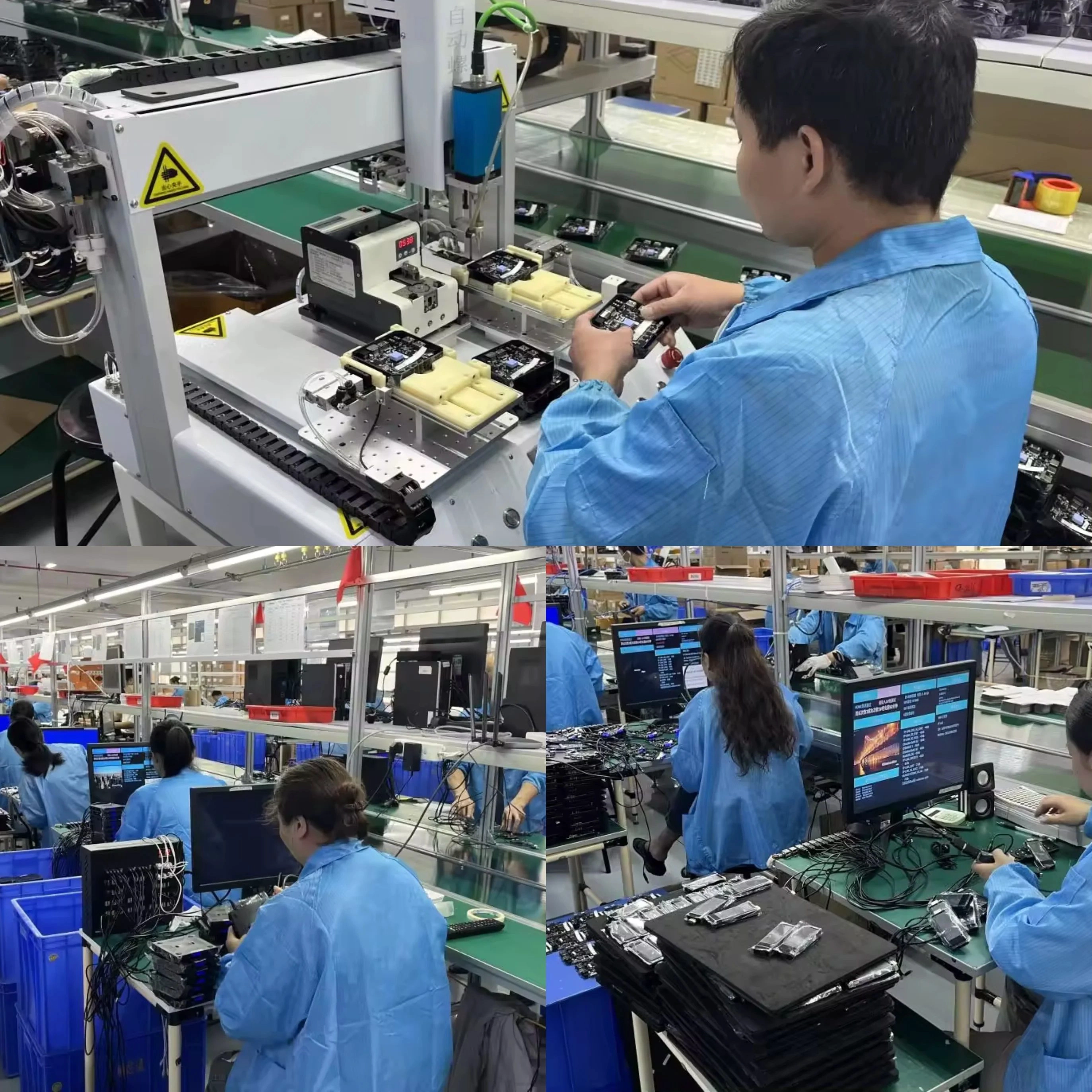
A practical Smart TV Box manufacturing quality-control process includes four stages.
Stage 1: Incoming Quality Control (IQC)
Inspect incoming components and materials, including PCB specifications, electronic components, memory modules, connectors, and enclosure materials.
Stage 2: In-Process Quality Control (IPQC)
Monitor SMT assembly, soldering quality, component placement, PCBA inspection, and assembly procedures.
AOI inspection can help identify soldering defects and component placement issues before the boards proceed to subsequent manufacturing stages.
Stage 3: Functional Quality Control (FQC)
Test assembled devices against the approved product specification.
Typical checks include:
-
Power-on and boot functionality.
-
HDMI output and display compatibility.
-
Wi-Fi and Ethernet connectivity.
-
USB peripheral recognition.
-
Bluetooth pairing.
-
Audio and video playback.
-
Remote-control functionality.
-
Firmware version verification.
Stage 4: Outgoing Quality Control (OQC)
Verify product appearance, accessories, packaging, labels, and final inspection records before shipment.
For commercial and industrial applications, additional burn-in testing and extended operation tests may be appropriate.
The inspection plan should be determined by the product's application, expected operating environment, and customer acceptance criteria.
3.3 Thermal Management Is Essential for Long-Term Reliability
Thermal problems can remain hidden during short prototype demonstrations.
A Smart TV Box operating continuously in a commercial environment may experience sustained CPU and GPU workloads, elevated ambient temperatures, restricted airflow, and enclosure heat accumulation.
These conditions can cause:
-
CPU frequency reduction.
-
Performance instability.
-
Unexpected system restarts.
-
Storage and component degradation.
-
Reduced operating lifespan.
Thermal design should therefore be considered during PCBA development rather than added as an afterthought.
Possible engineering solutions include:
-
Optimized PCB component placement.
-
Improved heat transfer from the SoC.
-
Customized aluminum heat sinks.
-
Thermal interface materials.
-
Enclosure ventilation optimization.
-
Dedicated cooling structures for industrial applications.
SZTomato supports specialized cooling solutions for industrial use, helping customers adapt Smart TV Box hardware to demanding operating conditions.
For projects requiring continuous playback or unattended operation, thermal validation should include sustained workloads rather than relying only on idle-temperature measurements.
4. What B2B Buyers Should Evaluate When Choosing a Smart TV Box Manufacturer
Manufacturing experience is difficult to evaluate through product photographs or quotations alone.
A supplier may offer an attractive unit price but lack the engineering resources required to support customized development and long-term production.
For procurement managers, brand owners, and system integrators, several factors deserve particular attention.
4.1 Engineering Capability Beyond Standard Product Assembly
Ask whether the manufacturer can modify the PCBA, integrate additional interfaces, optimize firmware, and support application-level development.
A genuine OEM/ODM partner should be able to discuss:
-
SoC selection and hardware architecture.
-
PCB layout and electrical design.
-
Android/Linux kernel adaptation.
-
Device driver integration.
-
SDK/API customization.
-
OTA update infrastructure.
-
Thermal engineering.
-
Hardware and software compatibility testing.
These capabilities determine whether a manufacturer can support a customized product or simply assemble an existing reference design.
4.2 Sampling Efficiency and Engineering Communication
A reliable supplier should provide a clear development schedule with identifiable milestones.
|
Development stage |
Expected deliverable |
|---|---|
|
Requirement analysis |
Confirmed technical specification |
|
Engineering assessment |
Hardware and firmware feasibility |
|
Prototype development |
Initial functional sample |
|
Engineering validation |
Test results and issue tracking |
|
Design refinement |
Updated hardware/firmware |
|
Sample approval |
Confirmed production configuration |
|
Pilot production |
Small-batch manufacturing validation |
|
Mass production |
Approved production and QC process |
Actual lead times depend on SoC availability, PCB complexity, firmware requirements, tooling, and certification.
Buyers should request a project-specific schedule rather than relying on generic promises of extremely fast sampling.
4.3 Long-Term Technical Support and Product Lifecycle Management
A Smart TV Box is not necessarily a one-time hardware purchase.
Telecom operators, IPTV service providers, and commercial deployment companies may need firmware maintenance, application updates, security patches, hardware revisions, and replacement component management throughout the product lifecycle.
A capable manufacturer should understand the importance of:
-
Firmware version management.
-
OTA maintenance.
-
Hardware revision control.
-
Component availability.
-
Production traceability.
-
Technical issue analysis.
-
Long-term engineering support.
These factors directly affect the total cost of ownership.
The lowest initial quotation does not always represent the lowest project cost. Repeated firmware failures, unstable hardware, and inconsistent production quality can create much greater expenses after deployment.
Conclusion: Choose a Smart TV Box Manufacturing Partner, Not Just a Supplier
Faster sampling and reliable mass production depend on coordinated engineering across hardware, firmware, component sourcing, testing, and manufacturing management.
A successful OEM/ODM project begins with an appropriate SoC architecture, a validated PCBA design, and clearly defined software requirements. It then moves through prototype verification, pilot production, and controlled mass manufacturing.
SZTomato, established in 2011, provides Smart TV Box OEM/ODM manufacturing services with capabilities covering PCBA hardware modification, Android/Linux firmware customization, SDK/API integration, customized UI/UX development, and specialized thermal solutions.
For B2B procurement managers, IPTV operators, telecom companies, brand owners, and system integrators, the objective is to build a product that meets application requirements and can be manufactured consistently at commercial scale.
Planning a customized Smart TV Box project?
Contact SZTomato at www.sztomato.com to discuss your SoC selection, PCBA requirements, firmware architecture, prototype development, and mass production plans.
Our engineering team can help assess your technical specifications and develop an OEM/ODM solution aligned with your target market, deployment environment, and production requirements.
