
Streaming Media Player SoC Comparison: Best Chips for 4K, 8K and OEM Projects
The adoption of AV1 decoding, VVC (H.266), AI-powered image enhancement and 8K video output is changing the requirements for professional Streaming Media Player hardware. For OEM manufacturers, the challenge is no longer simply selecting a processor with sufficient CPU performance. The real challenge is matching video decoding capabilities, memory bandwidth, display interfaces, software support and thermal performance to the requirements of the final product.
A chip that supports 8K decoding on paper may not deliver reliable 8K playback under sustained workloads. Similarly, two processors with comparable CPU specifications can have very different hardware video engines, DRM integration capabilities and peripheral configurations.
For B2B buyers, IPTV operators, digital signage integrators and hardware brand owners, selecting the right System-on-Chip (SoC) directly affects product cost, development time, certification requirements and long-term maintenance.
This comparison examines five relevant platforms: Amlogic S905X5M, S905X5, S928X-J, Rockchip RK3576 and RK3588. It also explains how to evaluate these processors from an OEM/ODM engineering perspective.
1. Streaming Media Player SoC Comparison: Amlogic vs. Rockchip
A useful SoC comparison starts with the hardware video decoder rather than the CPU clock frequency.
For streaming applications, hardware decoding determines which video formats a device can process efficiently. CPU and GPU performance remain important for application navigation, rendering, multitasking and additional workloads, but they cannot compensate for missing dedicated codec hardware.
The following table compares representative processors for different commercial applications.
1.1 Key SoC Specifications
| SoC | CPU / GPU | AI Capability | Video Decoding Capability | Recommended Application |
|---|---|---|---|---|
| Amlogic S905X5M | Quad Cortex-A55 / Mali-G310 V2 | Dedicated AI-SR | 4K UHD class | Mainstream 4K OTT/IPTV |
| Amlogic S905X5 | Quad Cortex-A510 / Mali-G310 V5 | Up to 4 TOPS NPU plus AI-SR | Up to 4Kp120 | Premium 4K streaming |
| Amlogic S928X-J | Cortex-A76 + quad Cortex-A55 / Mali-G57 MC2 | 3.2 TOPS | Up to 8Kp60 AV1, HEVC and VP9 | Premium 8K streaming |
| Rockchip RK3576 | Quad Cortex-A72 + quad Cortex-A53 / Mali-G52 MC3 | Up to 6 TOPS* | Up to 4Kp120 AV1 and HEVC | Commercial multimedia and AIoT |
| Rockchip RK3588 | Quad Cortex-A76 + quad Cortex-A55 / Mali-G610 MC4 | 6 TOPS | Up to 8Kp60 HEVC and VP9; AV1 up to 4Kp60 | AI media players and industrial systems |
*Rockchip's published RK3576 NPU rating uses sparsity-based performance specifications.
The figures above describe published SoC capabilities. Actual product performance depends on memory configuration, board design, software drivers and the implemented video-output pipeline.
For additional technical verification, refer to Amlogic's published SoC specifications, Rockchip's RK3576 datasheet and RK3588 technical documentation.
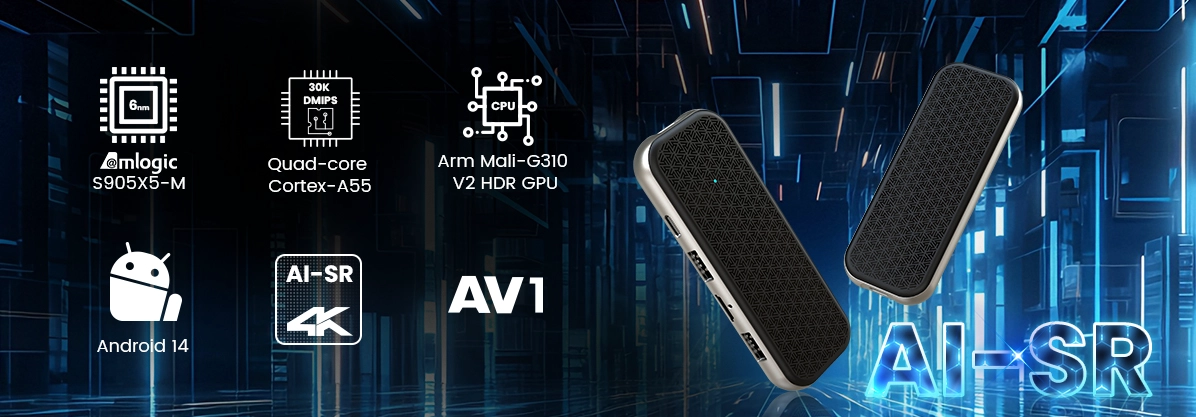
1.2 Amlogic S905X5M: A Practical Choice for Mainstream 4K Streaming
The Amlogic S905X5M is designed for mainstream UHD streaming applications where power consumption, hardware cost and stable 4K playback are major purchasing considerations.
Its key specifications include:
-
6nm manufacturing process.
-
Quad-core ARM Cortex-A55 CPU.
-
Mali-G310 V2 GPU.
-
Dedicated AI Super Resolution acceleration.
-
Hardware-assisted 4K video processing.
Amlogic's published product matrix identifies the S905X5M as a mainstream 4K platform, with a specified decoding capability of up to 4Kp75. Actual commercial configurations commonly target 4K60 output.
For operators deploying thousands of IPTV or OTT terminals, this platform offers a practical balance between performance and product cost.
Typical applications include:
-
IPTV set-top boxes.
-
Entry-level Android streaming devices.
-
Hotel television systems.
-
Residential broadband operator terminals.
-
Mainstream 4K OTT media players.
For OEM projects, the S905X5M is a sensible option when advanced edge computing, multiple independent display outputs or demanding application processing are not required.
1.3 Amlogic S905X5: A Stronger Platform for Premium 4K Projects
The S905X5 moves into a higher performance category.
It uses a 6nm manufacturing process and an ARM Cortex-A510 CPU architecture, paired with a Mali-G310 V5 GPU and an NPU rated at up to 4 TOPS.
Its multimedia capabilities include support for:
-
AV1 hardware decoding.
-
H.265/HEVC.
-
VP9.
-
H.266/VVC.
-
AVS3.
-
4K video processing up to 120fps under supported decoding configurations.
-
AI Super Resolution image enhancement.
One important distinction concerns decoding and HDMI output.
A processor may support 4K120 decoding while a particular product implementation only provides 4K60 HDMI output. The available resolution and refresh rate depend on the complete display pipeline, interface configuration and firmware.
The S905X5 is particularly suitable for:
-
Premium Android streaming players.
-
Advanced IPTV terminals.
-
Smart projectors.
-
High-quality 4K OTT devices.
-
Streaming products requiring newer video codec support.
For manufacturers planning a product lifecycle beyond the immediate 4K60 market, VVC and AI-assisted image processing make the S905X5 an attractive platform.
SZTomato's Amlogic S905X5 Smart TV Box platform provides a reference configuration for evaluating this product category.
1.4 Amlogic S928X-J: Dedicated Performance for 8K Streaming
When a project specifically requires 8K video playback, the Amlogic S928X-J deserves serious consideration.
The processor combines a high-performance Cortex-A76 core with four Cortex-A55 cores, a Mali-G57 MC2 GPU and an AI accelerator rated at approximately 3.2 TOPS.
Its published multimedia specifications include:
-
AV1 decoding up to 8K60.
-
H.265/HEVC decoding up to 8K60.
-
VP9 decoding up to 8K60.
-
AVS3 decoding up to 8K60.
-
HDMI 2.1a output supporting up to 8K60.
-
HDCP 2.2/2.3 interface support.
-
HDR10, HDR10+ and HLG processing, with optional Dolby Vision support.
These specifications make the S928X-J an appropriate candidate for premium 8K media players, high-resolution IPTV terminals and advanced multimedia systems.
However, 8K support should never be evaluated using resolution alone.
Procurement teams should verify:
-
Whether AV1 and HEVC are both supported at the required 8K profile.
-
Whether 10-bit HDR playback is supported throughout the pipeline.
-
Whether the HDMI output supports the required refresh rate and color format.
-
Whether the selected RAM and storage configuration can sustain the intended workload.
-
Whether the final firmware supports the required hardware decoding path.
A manufacturer must validate the complete hardware and software implementation rather than relying entirely on the processor specification.
1.5 Rockchip RK3576: A Balanced Platform for Commercial Multimedia
The Rockchip RK3576 occupies an interesting position between conventional streaming processors and more advanced industrial multimedia platforms.
Its architecture includes:
-
Four ARM Cortex-A72 cores.
-
Four ARM Cortex-A53 cores.
-
Mali-G52 MC3 GPU.
-
6 TOPS NPU rating under supported sparsity conditions.
-
32-bit LPDDR4/LPDDR4X/LPDDR5 memory support.
-
PCIe 2.1 and SATA 3.0 connectivity options.
-
Dual RGMII interfaces.
-
CAN FD industrial communication support.
Its multimedia engine supports AV1, H.265, VP9 and AVS2 decoding up to 4K120 in the published brief datasheet.
A particularly useful feature is its multiple-display capability. The display engine supports configurations reaching 4K120 + 2.5K60 + 2K60.
This makes RK3576 relevant to applications that combine video playback with additional display interfaces and AI processing.
Potential applications include:
-
Commercial information displays.
-
Multi-screen multimedia terminals.
-
Interactive kiosks.
-
Smart retail equipment.
-
Industrial HMI systems.
-
AI-assisted multimedia devices.
For OEM projects, the RK3576 offers flexibility beyond conventional OTT streaming hardware.
1.6 Rockchip RK3588: High-Performance Processing for AI and Industrial Media
The RK3588 is better understood as a high-performance AIoT processor with substantial multimedia capabilities rather than simply an 8K streaming chipset.
Its architecture includes:
-
4× ARM Cortex-A76 cores.
-
4× ARM Cortex-A55 cores.
-
Mali-G610 MC4 GPU.
-
6 TOPS NPU.
-
LPDDR4, LPDDR4X and LPDDR5 memory support.
-
PCIe 3.0.
-
Multiple USB 3.1 interfaces.
-
HDMI input.
-
Dual HDMI 2.1 display interfaces.
-
Multiple display and camera interfaces.
Its detailed video specifications are particularly important.
The processor supports H.265, VP9 and AVS2 decoding up to 8K60. Its specified AV1 Main Profile decoder capability is up to 4K60. It also supports H.264/H.265 8K30 video encoding.
This distinction matters because a generic statement such as "RK3588 supports 8K and AV1" does not mean AV1 decoding is supported at 8K60.
The RK3588 is particularly effective for projects involving:
-
AI digital signage.
-
Edge computing media players.
-
Multi-display advertising systems.
-
Industrial multimedia terminals.
-
Camera-based AI applications.
-
HDMI input and output processing.
-
Local video analytics.
Its computing resources and rich peripheral interfaces make it appropriate when the Streaming Media Player must perform additional processing beyond video playback.
Which SoC Should an OEM Buyer Choose?
The best choice depends on the intended product rather than the highest specification in a datasheet.
| Project Requirement | Recommended Platform |
|---|---|
| Cost-effective 4K IPTV player | S905X5M |
| Premium 4K AV1/VVC streaming player | S905X5 |
| Dedicated 8K AV1 streaming player | S928X-J |
| Commercial multimedia with AI and multiple displays | RK3576 |
| AI digital signage and industrial media processing | RK3588 |
For a conventional OTT or IPTV product, Amlogic is generally the more straightforward starting point. For projects requiring extensive peripheral integration, AI inference or industrial display functions, Rockchip deserves closer evaluation.
2. How to Select the Right SoC for a 4K or 8K OEM Project
Selecting a processor requires more than comparing CPU cores, memory capacity and video resolution.
An OEM engineering team should evaluate the complete system architecture before finalizing the chipset.
2.1 Evaluate Video Codec Compatibility
The first step is identifying the codecs used by the target content platform.
The most relevant formats include:
H.264/AVC
H.264 remains widely deployed in IPTV, live streaming and legacy video distribution. It is still important for compatibility with existing infrastructure.
H.265/HEVC
H.265 provides improved compression efficiency compared with H.264 and remains a major format for UHD television and 4K content distribution.
AV1
AV1 is increasingly relevant to modern streaming services because of its compression efficiency and support for high-resolution content.
For OEM developers, dedicated AV1 hardware decoding is preferable to relying on CPU-based decoding, particularly for sustained UHD playback.
VP9
VP9 remains relevant in online video distribution and should be included in compatibility testing when targeting platforms with existing VP9 content.
H.266/VVC
VVC represents another step in video compression development, particularly for high-resolution and bandwidth-sensitive applications. Hardware support must be verified at the specific SoC and firmware level.
The important engineering question is not simply whether the SoC supports a codec. It is whether the processor supports the required profile, bit depth, chroma format, resolution and frame rate.
For example, AV1 4K60 and AV1 8K60 are substantially different requirements.
2.2 Check HDMI Bandwidth and Display Compatibility
HDMI connectivity is another major selection factor.
A product marketed as an 8K Streaming Media Player must have a display pipeline capable of delivering the intended video signal.
The engineering team should check:
-
HDMI controller and PHY specifications.
-
Supported output resolutions.
-
Refresh rate limitations.
-
HDR metadata processing.
-
8-bit, 10-bit and higher color-depth requirements.
-
RGB and YCbCr output formats.
-
HDCP 2.2 or 2.3 implementation.
-
CEC and audio return requirements.
HDCP is especially important for commercial streaming products.
A device may decode a protected video stream correctly but still fail to display the expected content resolution if the connected television, AV receiver or HDMI signal chain does not satisfy the required content-protection conditions.
As explained in Roku's HDCP 2.2 technical guidance, every device in the HDMI chain must support the necessary protection level for the relevant 4K or HDR playback requirements.
For OEM projects, HDCP compatibility should be tested on the actual production PCBA, HDMI connector and firmware.
2.3 Evaluate RAM, Storage and Network Performance
A powerful SoC paired with insufficient memory can still produce a poor user experience.
Memory selection should consider application requirements, background processes, video buffers and operating-system overhead.
For standard IPTV products, 2GB or 4GB RAM configurations may be appropriate depending on the software platform.
For advanced streaming players with larger application packages, multitasking or additional AI functions, 4GB, 8GB or higher capacities may be justified.
Storage configuration also needs attention.
eMMC provides an established solution for mainstream Android devices, while faster storage options and PCIe-based SSD expansion can become relevant for advanced multimedia and industrial applications.
Network performance should be evaluated independently of the processor.
A high-end Streaming Media Player may require:
-
Gigabit Ethernet.
-
Wi-Fi 6 or newer wireless connectivity.
-
Stable 5GHz wireless operation.
-
Reliable network buffering.
-
Optional 4G/5G connectivity.
-
Advanced network management for operator deployments.
For commercial installations, wired Ethernet often provides a more predictable connection than relying entirely on wireless networking.
2.4 Consider Software Certification and DRM Requirements
This is one of the most frequently underestimated areas of Streaming Media Player development.
Hardware video decoding does not automatically provide access to every commercial streaming platform.
Premium content distribution may require Widevine DRM, hardware-backed security, secure boot, trusted execution environments and authorized device provisioning.
Google identifies Widevine as a content-protection system used by major streaming services. Its integration requires the appropriate licensing and platform implementation.
Reference: Google Widevine DRM documentation.
The distinction between AOSP-based firmware and certified Android TV OS is also important.
A customized Android interface does not automatically qualify as an officially certified Android TV device. Google has specifically addressed the differences between certified Android TV products and devices marketed using an AOSP-based implementation without the appropriate certification.
Reference: Google Android TV security and certification guidance.
For OEM customers, the software roadmap should therefore be determined before hardware development.
A good engineering specification identifies:
-
Android or Linux platform requirements.
-
Android version and BSP availability.
-
Widevine provisioning requirements.
-
Required streaming application compatibility.
-
HDCP implementation.
-
Secure boot and firmware signing.
-
OTA upgrade requirements.
-
Operator-specific SDK and API integration.
This approach reduces the risk of completing the hardware only to discover that the software platform cannot meet the intended commercial requirements.
3. The Engineering Factors Behind Reliable Streaming Media Player Hardware
An SoC determines the fundamental capabilities of a device, but the PCBA and mechanical design determine how effectively those capabilities are delivered.
For OEM/ODM development, three engineering areas deserve particular attention.
3.1 PCBA Design and Hardware Customization
A reference development board is useful for initial software evaluation, but it is rarely an ideal final production design.
Commercial products often require customized interfaces, different mechanical dimensions, specialized wireless configurations and additional peripheral connections.
PCBA modification should address the actual deployment environment.
Important considerations include:
Power management
The PMIC and voltage-regulation circuits must provide stable power for the CPU, GPU, memory and peripheral interfaces.
Power design should account for transient loads, startup behavior, USB current requirements and thermal dissipation.
High-speed signal integrity
DDR interfaces, PCIe, USB 3.0 and HDMI require careful PCB layout.
Trace impedance, differential-pair routing, grounding and electromagnetic compatibility affect signal stability.
Poor PCB layout can create problems that cannot be corrected through a firmware update.
Wireless connectivity
Wi-Fi and Bluetooth performance depend on antenna placement, RF isolation, component positioning and enclosure materials.
For compact streaming devices, the mechanical design can directly affect wireless performance.
Interface customization
OEM projects may require additional USB ports, HDMI input, optical audio output, Ethernet, RS-232, GPIO or specialized industrial connections.
The selected SoC must expose the necessary interfaces, and the final PCB must route them correctly.
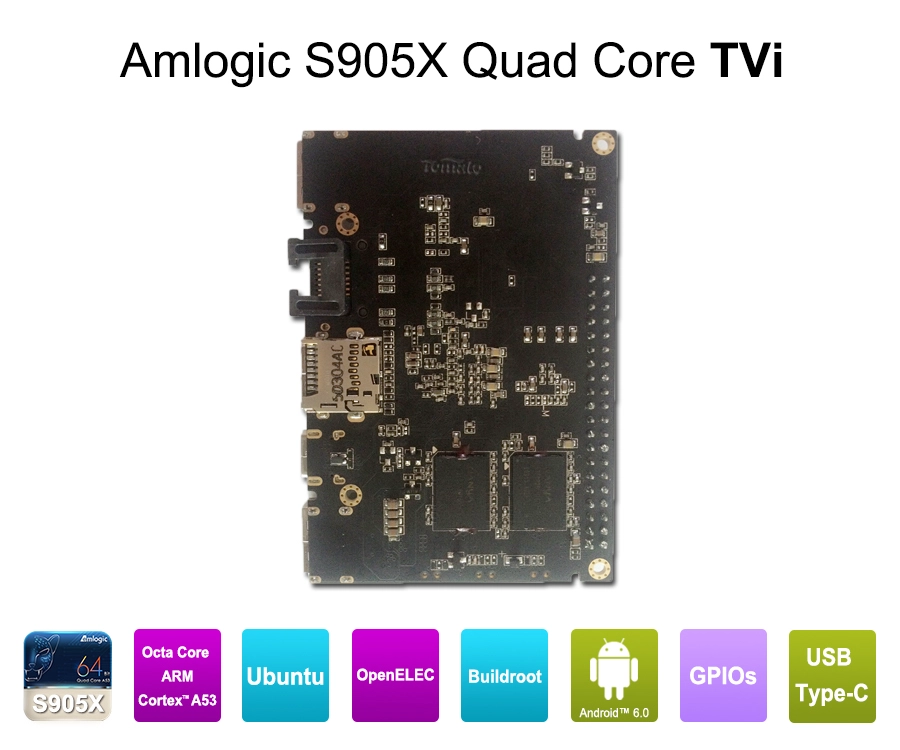
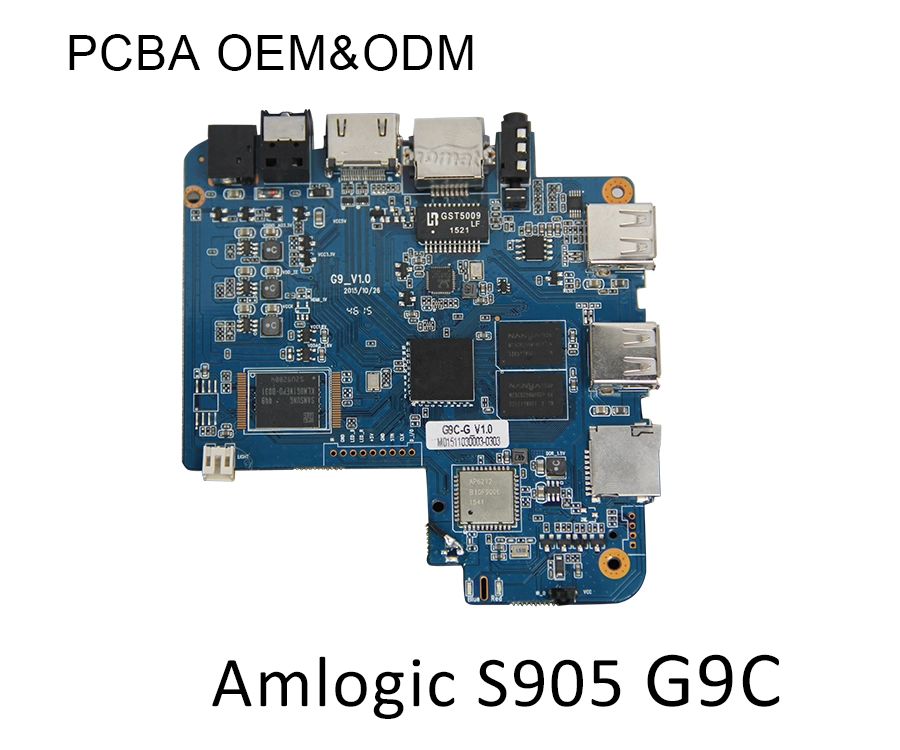
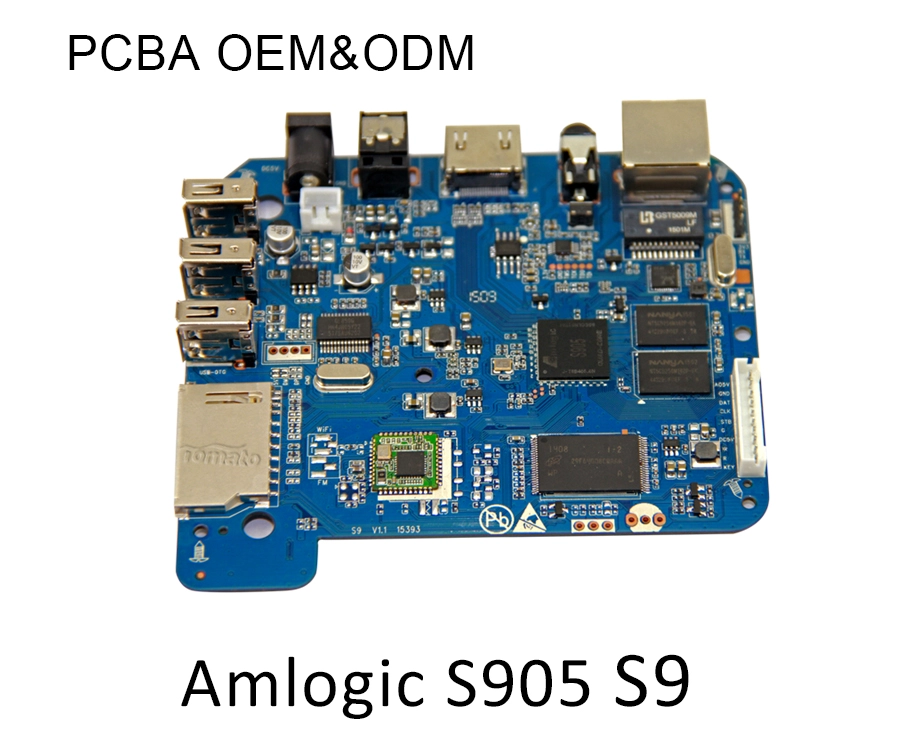
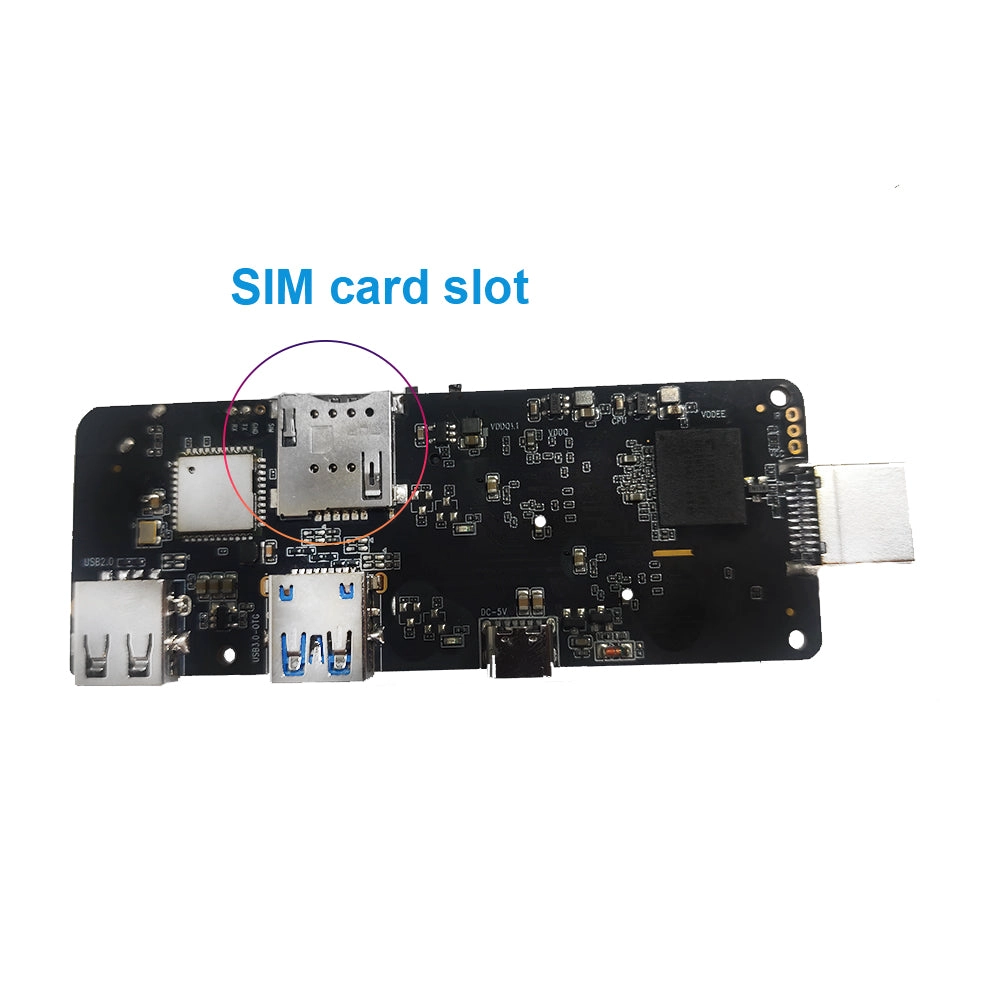
A manufacturer with PCBA-level development capabilities can adapt the reference design to the actual application instead of forcing the customer to redesign its product around a fixed board.
3.2 Thermal Design for Continuous Operation
Thermal management is often overlooked during the selection of a high-performance Streaming Media Player SoC.
A processor may operate correctly during short laboratory tests but experience performance instability during prolonged playback, multiple application execution or AI inference.
This is particularly relevant to 8K media players, fanless industrial equipment and digital signage systems operating continuously.
Thermal engineering should consider:
-
SoC package power dissipation.
-
PCB copper area and thermal spreading.
-
Heatsink dimensions and material.
-
Enclosure airflow.
-
Ambient operating temperature.
-
Memory and PMIC heat generation.
-
Sustained decoding and CPU workloads.
For industrial deployment, specialized cooling solutions may include aluminum heat spreaders, custom thermal pads, optimized chassis structures and active cooling where required.
Fanless designs require particular attention because thermal performance depends heavily on the PCB and enclosure working together.
The objective is not simply to keep the processor below its maximum rated temperature. It is to maintain stable performance throughout the intended operating environment.
3.3 Firmware and Kernel-Level Optimization
Hardware optimization is only one part of the engineering process.
The operating system must communicate efficiently with the SoC's hardware video engine, GPU, audio subsystem and peripheral controllers.
Linux and Android platforms have different development and maintenance considerations.
For Android-based Streaming Media Players, the engineering team should optimize:
-
Android BSP integration.
-
MediaCodec hardware decoding.
-
Audio HAL configuration.
-
GPU rendering.
-
Hardware acceleration.
-
Memory allocation.
-
Background application management.
-
Secure boot and DRM integration.
For Linux-based media players, attention should be given to kernel drivers, V4L2 media pipelines, GStreamer integration, device-tree configuration and display subsystem compatibility.
The quality of the vendor BSP is an important selection criterion.
A processor with excellent published hardware specifications can become a difficult OEM platform if the available kernel, decoder drivers or long-term software support are inadequate.
This is why software availability should be evaluated alongside hardware specifications, not after the PCB has been finalized.
4. Building a Production-Ready Streaming Media Player: OEM/ODM Considerations
For a brand owner, telecommunications operator or system integrator, selecting a chip is only the beginning of product development.
The final product must satisfy performance, reliability, software, mechanical and commercial requirements.
A structured OEM/ODM workflow can help reduce development risks.
4.1 Define the Product Architecture
Before starting hardware development, establish the product's intended application.
For example:
| Product Category | Hardware Focus | Software Focus |
|---|---|---|
| Consumer 4K Streaming Player | S905X5M / S905X5 | Android streaming UI |
| Operator IPTV Terminal | Amlogic SoC | IPTV middleware and OTA |
| Premium 8K Media Player | S928X-J | Advanced codec and HDR integration |
| Commercial Signage Player | RK3576 / RK3588 | Signage CMS and remote management |
| AI Edge Media Player | RK3588 | AI inference and SDK/API integration |
This product definition helps prevent unnecessary hardware costs and avoids selecting a processor that cannot satisfy the customer's actual application requirements.
4.2 Develop Customized Firmware and UI/UX
Different operators and brands have different software requirements.
A standard Android interface may not provide the necessary functionality for an operator-specific IPTV deployment or commercial signage network.
Custom firmware development can include:
-
Branded boot animations and startup screens.
-
Custom launcher and UI/UX.
-
Preinstalled and managed applications.
-
IPTV middleware integration.
-
SDK/API integration.
-
System-level application control.
-
Device configuration interfaces.
-
Remote diagnostics.
-
OTA firmware update systems.
For large-scale deployments, OTA functionality is particularly important.
An effective OTA architecture should support signed firmware packages, staged deployment, installation verification, recovery procedures and controlled version management.
This allows operators and system integrators to maintain a deployed device fleet without manually updating every terminal.
4.3 Establish a Proper Validation and Quality-Control Process
A production-ready Streaming Media Player needs more than a successful boot test.
The validation process should include:
Video performance testing
Verify H.264, H.265, AV1 and other required formats using actual content files, target profiles, bit depths and sustained playback conditions.
Display compatibility testing
Test HDMI handshake behavior, resolution switching, HDR output, HDCP authentication and compatibility with different televisions and professional displays.
Network stability testing
Evaluate Ethernet throughput, Wi-Fi stability, network interruptions, buffering and recovery behavior.
Thermal and reliability testing
Run continuous playback and application workloads while monitoring processor temperature, thermal throttling, system stability and memory utilization.
Firmware and OTA testing
Verify firmware installation, interrupted updates, recovery behavior, application compatibility and remote device management.
For commercial and industrial projects, validation must also reflect the intended operating environment rather than relying exclusively on laboratory conditions.
4.4 Why OEM/ODM Engineering Experience Matters
A capable Streaming Media Player manufacturer should provide more than a list of available chipsets and standard product models.
The manufacturer should understand how to coordinate SoC selection, PCBA layout, firmware architecture, thermal design and mass-production quality control.
This is especially important when developing products for:
-
Telecommunications operators.
-
IPTV service providers.
-
International electronics brands.
-
Wholesale distributors.
-
Digital signage integrators.
-
Industrial multimedia system developers.
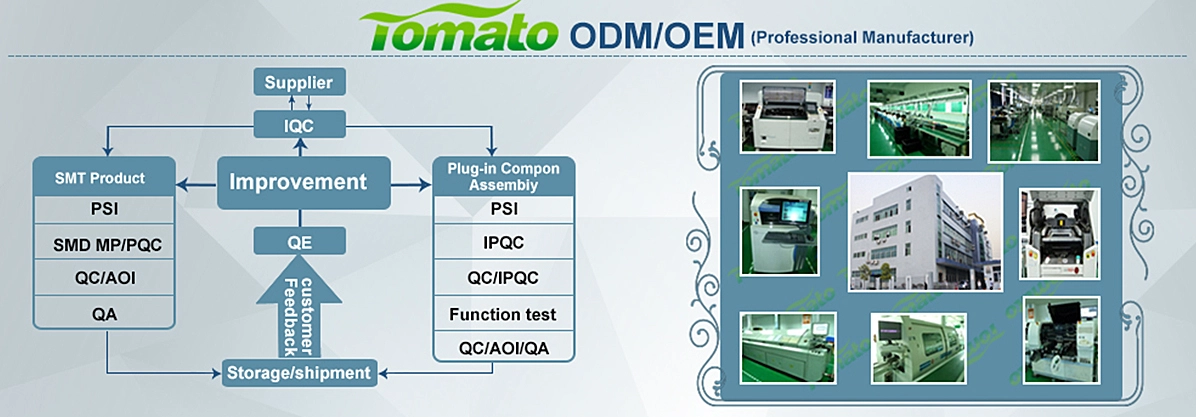
SZTomato has provided Android TV Box, OTT, IPTV and multimedia hardware development solutions since 2011.
Its OEM/ODM development approach covers several engineering levels:
Hardware and PCBA customization: Adapt processor platforms, memory configurations, connectivity and peripheral interfaces to project requirements.
Firmware engineering: Customize Android and Linux firmware, system functions, startup behavior and OTA upgrade architecture.
SDK/API integration: Integrate third-party applications, IPTV middleware, device-management platforms and customer-specific software.
UI/UX customization: Develop branded interfaces and application experiences for different operators and hardware brands.
Industrial thermal engineering: Develop specialized cooling solutions for continuous operation and demanding installation environments.
This combination allows hardware manufacturers and system integrators to develop products around their actual business requirements rather than relying entirely on generic reference designs.
Conclusion: Select the Right SoC, Then Engineer the Complete Product
The best Streaming Media Player SoC depends on the application's technical requirements, target market and expected product lifecycle.
For mainstream 4K IPTV and OTT products, the Amlogic S905X5M provides a practical balance of cost and performance. The S905X5 offers a stronger option for premium 4K projects requiring VVC, AV1 and AI Super Resolution. For dedicated 8K AV1 applications, the S928X-J is a relevant platform.
Rockchip RK3576 and RK3588 are especially attractive for commercial multimedia systems requiring multiple displays, AI computing, industrial connectivity and greater hardware flexibility.
However, choosing the right processor is only one part of successful product development.
Reliable production hardware requires coordinated SoC selection, PCBA design, signal integrity, power management, thermal engineering, firmware customization and ongoing software support.
Looking for an experienced Streaming Media Player OEM/ODM manufacturer?
SZTomato supports international brand owners, IPTV operators, procurement managers and system integrators with customized streaming hardware and complete product development services.
Whether your project requires a cost-effective 4K IPTV box, a premium 8K Streaming Media Player, a customized Android media device or an RK3588-based industrial multimedia platform, SZTomato can support the development process from chipset evaluation and PCBA customization to firmware engineering and mass production.
Discuss your project requirements with the SZTomato engineering team to identify the right SoC architecture, hardware configuration and software solution for your next Streaming Media Player product.
