
What Is the Latest TV Box? Technology, Chipsets, and OEM/ODM Trends
AV1 decoding, AI acceleration, and longer software support cycles are changing how manufacturers design the latest TV Box platforms. Yet a chipset that performs well in a reference design can still fail in a commercial deployment because of insufficient memory, poor thermal management, unstable peripheral drivers, or firmware that cannot support the customer's application.
For procurement managers, telecom operators, IPTV service providers, and system integrators, the question is not simply which TV Box has the highest specifications. It is which hardware and software platform can meet deployment requirements, maintain stable performance, and remain supportable throughout the product lifecycle.
The answer depends on the application, chipset architecture, operating system, interface configuration, and degree of OEM/ODM customization.
1. What Defines the Latest TV Box Technology?
A modern TV Box combines a multimedia processor, memory, storage, network interfaces, video output, operating-system software, and application-level services. The newest generation of devices is moving toward more efficient video decoding, higher display resolutions, improved wireless connectivity, and application-specific computing.
However, individual features must be evaluated against actual implementation rather than marketing terminology.
AV1, 4K, and 8K Video Processing
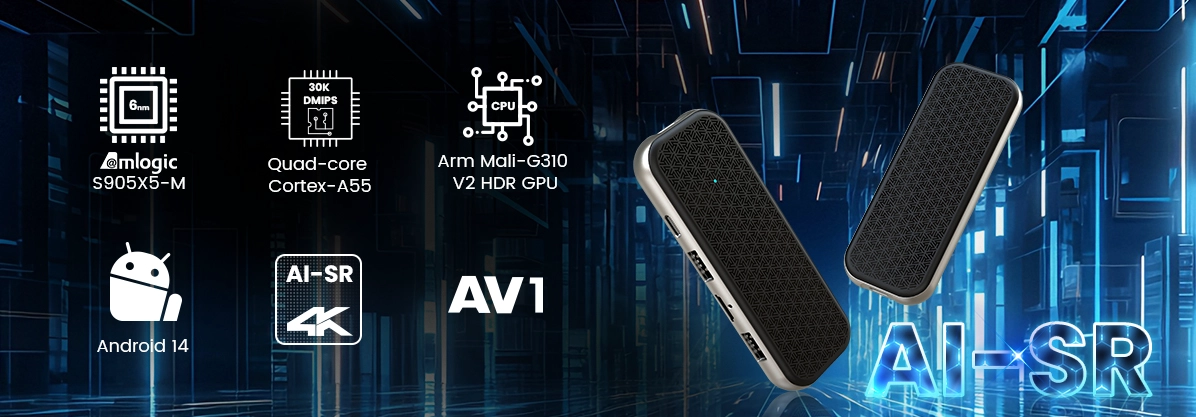
AV1 is increasingly important for streaming platforms seeking improved compression efficiency. Hardware-based AV1 decoding can reduce dependence on CPU-based software decoding and help maintain playback performance at supported resolutions and bitrates.
For a commercial TV Box project, buyers should verify:
-
Whether AV1 decoding is implemented in dedicated hardware.
-
Which resolutions, frame rates, bit depths, and profiles are supported.
-
Whether the complete playback pipeline supports the required HDR formats.
-
Whether the operating system and application framework expose the hardware decoder correctly.
-
Whether the target streaming service imposes additional DRM, certification, or content-protection requirements.
A product advertised as an 8K TV Box does not necessarily support every 8K codec, frame rate, or HDR format. Video decoding, HDMI output, display compatibility, and application support are separate engineering considerations.
For most IPTV deployments, hospitality systems, and digital signage networks, reliable 4K playback may deliver greater commercial value than 8K capability. An 8K platform makes more sense when the display resolution, content source, processing workload, and customer requirements justify the additional cost.
Connectivity and Memory Architecture
Wireless performance, wired networking, memory capacity, and storage configuration can determine whether a TV Box remains stable under sustained workloads.
Wi-Fi 6 may improve network efficiency in supported environments, but it does not automatically guarantee higher application throughput. Antenna placement, RF layout, enclosure materials, access-point capacity, and interference remain important.
Ethernet is often preferable for IPTV operators and commercial installations where predictable connectivity matters. USB, UART, GPIO, MIPI, and other interfaces may also be necessary for integration with peripherals, touch displays, sensors, or industrial control systems.
Memory selection requires similar care. A configuration that works for a lightweight launcher may become inadequate when the device runs multiple applications, browser-based dashboards, digital signage software, or local AI inference.
Buyers should evaluate the complete platform rather than selecting RAM and storage based on price alone.
2. How to Choose the Right TV Box Chipset for Your Project
The SoC determines much of a TV Box's multimedia performance, CPU capability, GPU performance, memory interface, peripheral support, and available acceleration. Nevertheless, there is no universally best chipset. The correct choice depends on the workload and software ecosystem.
Amlogic: Streaming and IPTV Applications
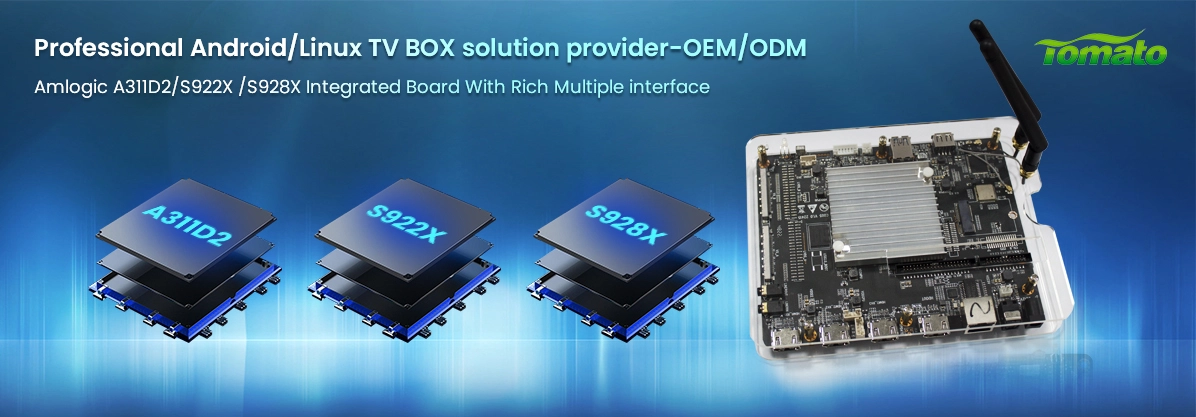
Amlogic platforms are commonly considered for Android-based streaming devices, IPTV terminals, and multimedia products. Depending on the specific SoC, they may provide dedicated video decoding, display processing, hardware security features, and interfaces suited to compact consumer or operator devices.
When evaluating an Amlogic TV Box, procurement teams should check the exact decoder capabilities, Android BSP availability, DRM requirements, Wi-Fi and Ethernet configuration, and expected firmware maintenance period.
For operator deployments, middleware integration and remote device management may matter more than marginal differences in benchmark performance.
Rockchip: Flexible Multimedia and Edge Computing
Rockchip platforms are relevant to projects that combine multimedia processing with broader computing requirements, including commercial displays, embedded systems, and AI-enabled devices.
Higher-performance platforms such as RK3588 can support demanding workloads involving multiple display outputs, high-resolution media, and supported AI inference operations. Actual capability depends on the board design, memory configuration, software stack, and the application using the available acceleration.
Rockchip is worth evaluating when a project requires more flexible peripheral integration, Linux support, custom applications, or computing headroom beyond conventional video playback.
However, buyers must distinguish silicon capability from production-ready software. An available NPU does not guarantee that a target AI model will run efficiently without compatible drivers, runtime libraries, operator support, and application optimization.
Allwinner: Cost-Sensitive Multimedia Deployments
Allwinner platforms can be appropriate for cost-sensitive Android TV Box and embedded multimedia projects, depending on the required codec support, interfaces, performance, and software availability.
For example, an H626-based design may be worth evaluating for mainstream 4K applications where the confirmed hardware and software capabilities meet the project requirements. It should not be selected solely because the platform supports a particular Android version or video resolution.
Buyers should confirm the exact board-level implementation, decoder support, networking options, memory compatibility, peripheral requirements, and software maintenance arrangements.
A Practical Chipset Selection Framework
| Project requirement | Primary evaluation criteria |
|---|---|
| IPTV and OTT streaming | Hardware decoding, DRM, middleware compatibility, network stability |
| Hospitality and managed TV systems | Remote provisioning, OTA updates, application control, lifecycle support |
| Digital signage | Continuous-operation stability, display interfaces, scheduling software, thermal performance |
| AI-enabled media devices | NPU capability, supported AI frameworks, memory bandwidth, sustained performance |
| Linux-based embedded systems | Kernel and driver support, BSP maturity, peripheral compatibility |
| Cost-sensitive 4K products | Total bill of materials, codec support, memory configuration, software availability |
A sound procurement process starts with a requirements matrix and a verified SoC capability list. The engineering team can then compare candidate platforms against real application workloads instead of relying on headline specifications.
3. Which TV Box Trends Matter Most for OEM/ODM Buyers?
The most important market shift is the move from standardized multimedia hardware toward application-specific platforms. Customers increasingly need devices that integrate with proprietary software, existing infrastructure, and centralized management systems.
Custom PCBA and Interface Engineering
A reference board may be sufficient for basic playback, but commercial products frequently require hardware changes.
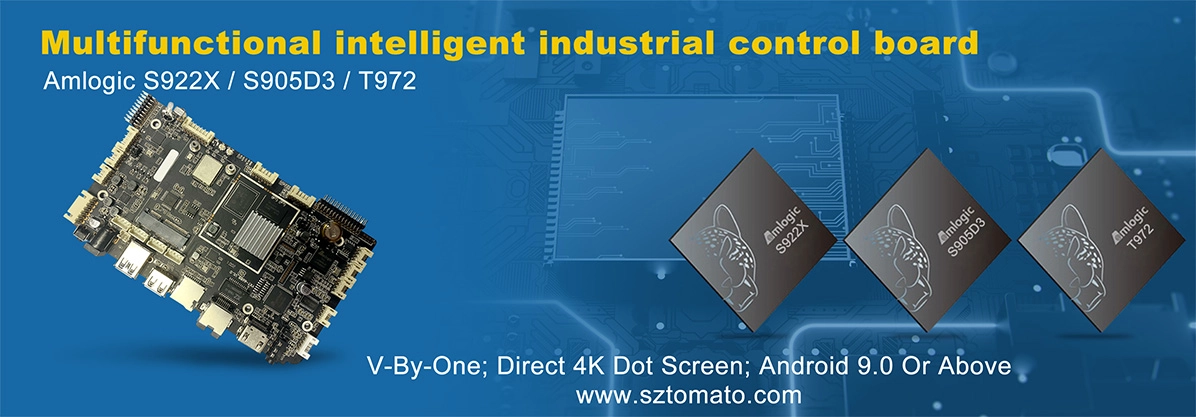
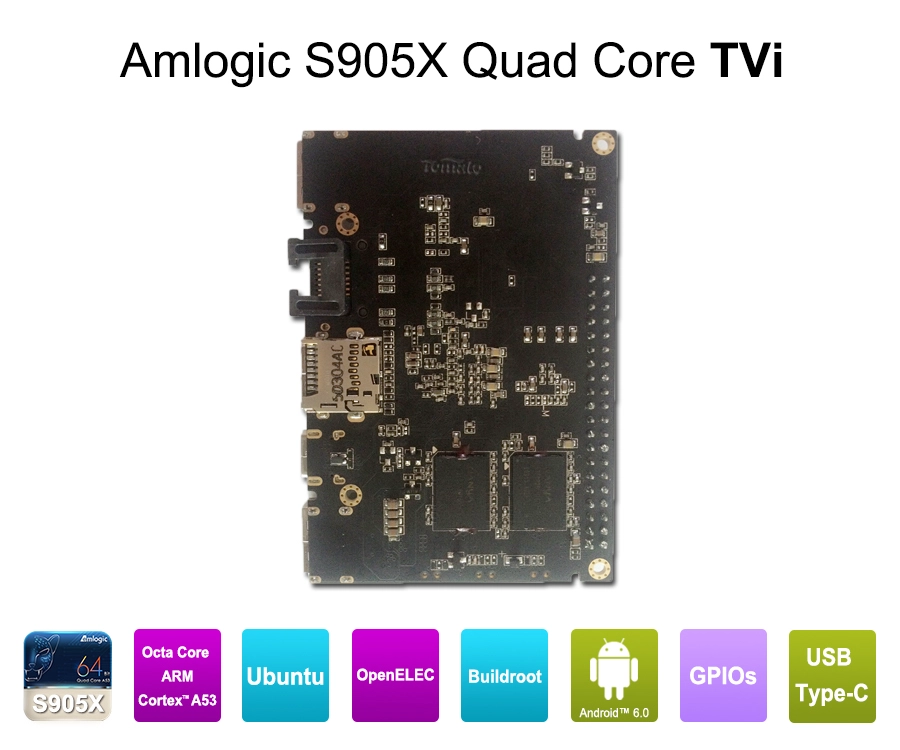
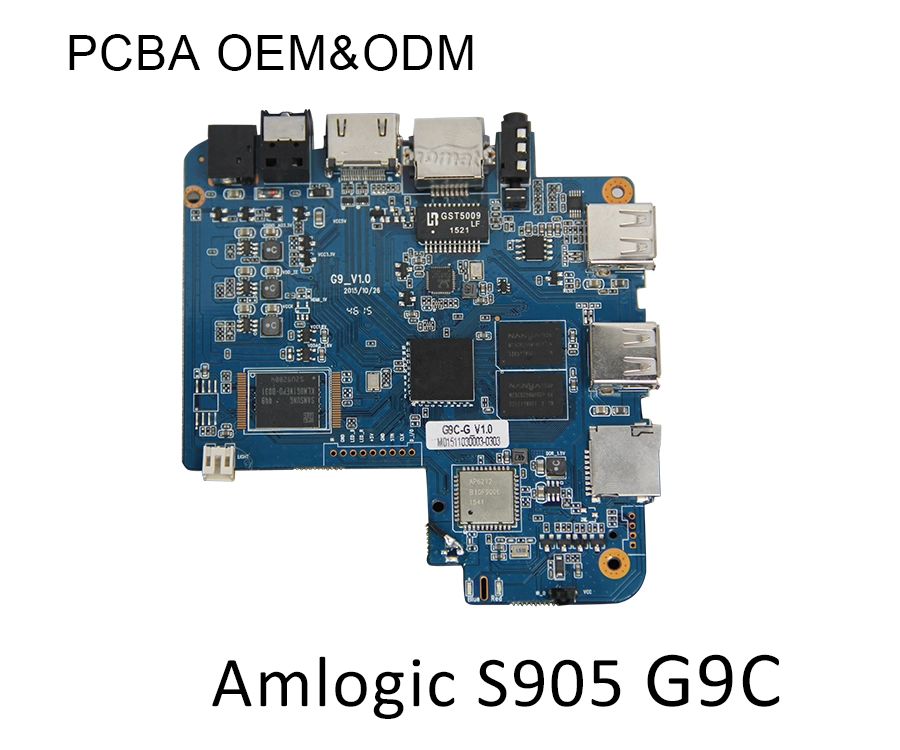
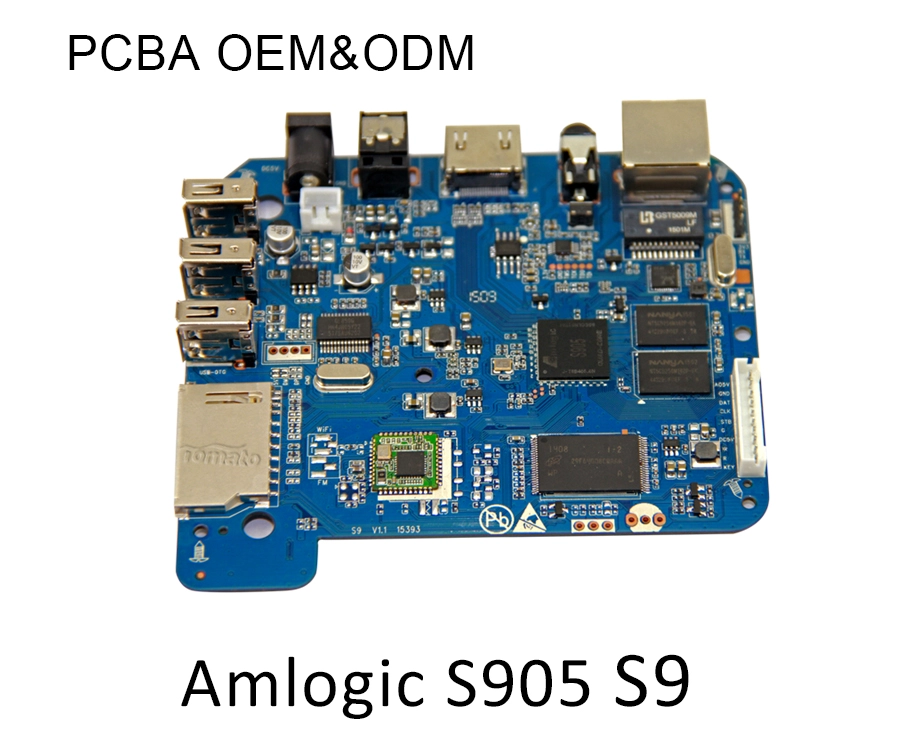
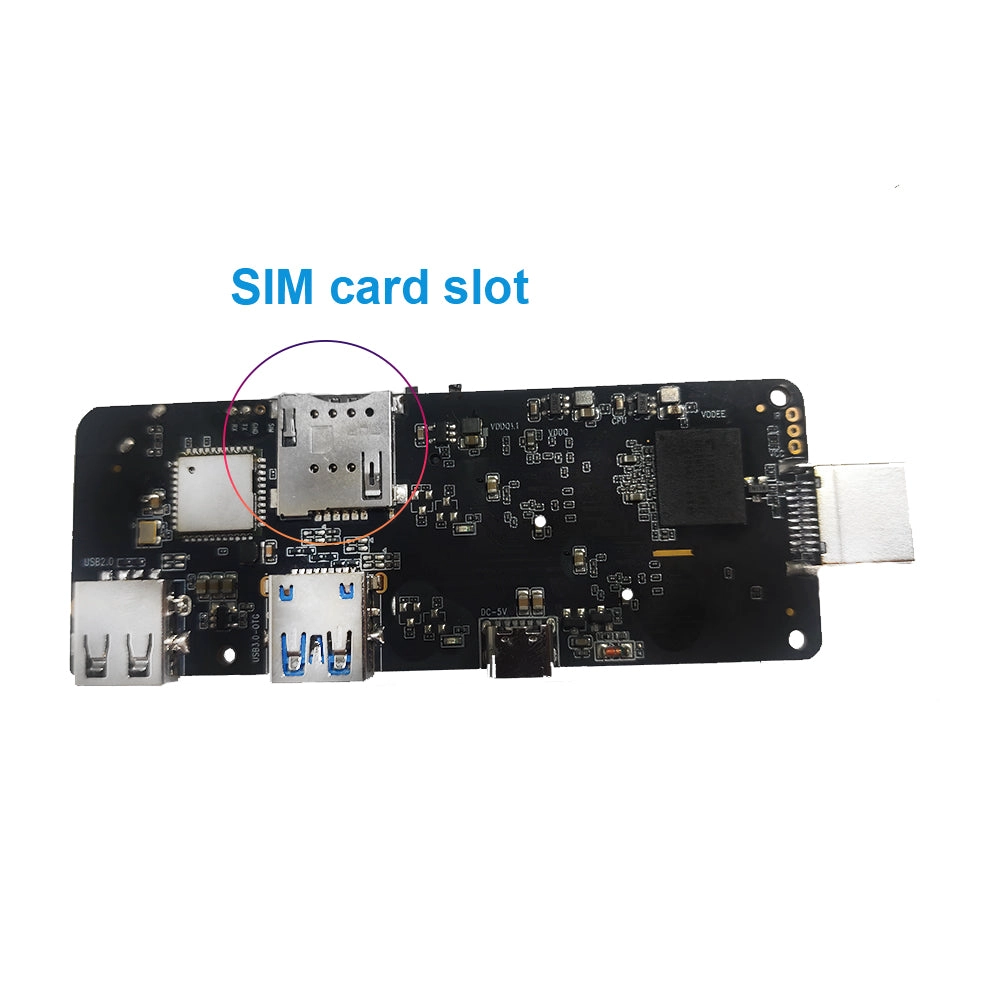
Examples include adjusting Ethernet or USB configurations, adding UART or GPIO connections, integrating specialized display interfaces, modifying power delivery, improving EMC performance, and adapting board dimensions to an existing enclosure.
PCBA modification must account for signal integrity, power budgets, thermal constraints, component availability, and manufacturing testability. A connector cannot always be added simply because the SoC supports the corresponding interface; the PCB routing, power circuitry, pin multiplexing, and software drivers must also support it.
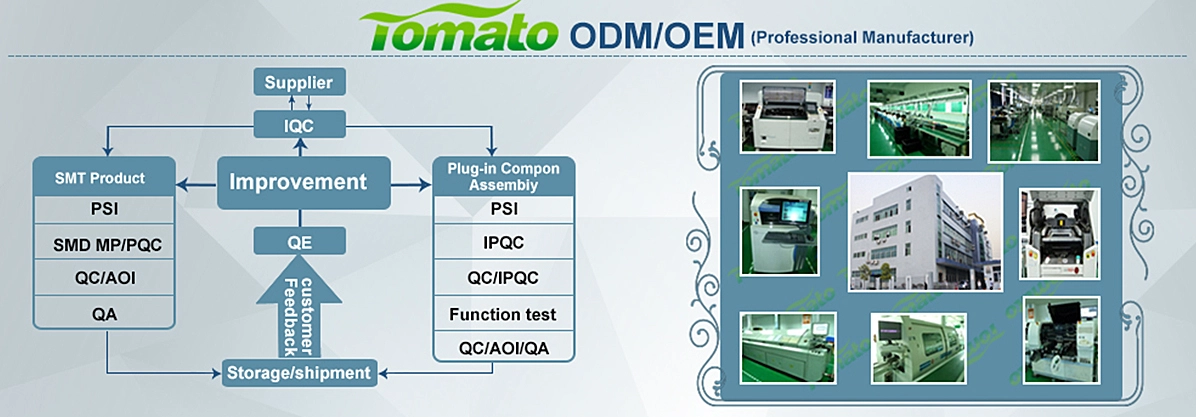
SZTomato supports OEM/ODM development involving PCBA hardware modification and application-specific configurations. This approach helps buyers align the hardware with the final deployment instead of forcing the application to fit a generic reference design.
Firmware Customization and SDK/API Integration
Hardware compatibility is only one part of a deployable TV Box. The software stack determines how reliably the device boots, launches applications, communicates with peripherals, receives updates, and recovers from faults.
Depending on the project, firmware engineering may include:
-
Custom UI/UX and branded launcher development.
-
Android BSP adaptation and Linux kernel or driver optimization.
-
SDK/API integration with IPTV middleware, management platforms, and enterprise applications.
-
System-level configuration and unnecessary-service removal.
-
Secure provisioning, device identity management, and controlled application deployment.
-
OTA update systems with staged releases, integrity checks, failure recovery, and rollback where supported.
A commercial firmware plan should also define ownership of source code, access to build environments, supported software versions, update responsibilities, and the process for handling security vulnerabilities.
These details are particularly important for operators deploying thousands of devices. An inexpensive TV Box can become costly if every field update requires manual intervention or if a firmware change causes widespread downtime.
Thermal Design for Industrial and 24/7 Operation
A TV Box intended for continuous commercial use requires more than a short playback test.
Sustained CPU, GPU, video-decoding, and AI workloads can raise internal temperatures, particularly in compact enclosures with limited airflow. Excessive heat may trigger thermal throttling, reduce performance, or shorten component life.
An engineering assessment should consider enclosure geometry, heat-transfer paths, component placement, ventilation, ambient temperature, and the intended mounting position. Depending on the workload, the solution may involve a revised PCBA layout, heat spreaders, thermal pads, improved ventilation, or other specialized cooling measures.
Validation should include extended operation under representative workloads, thermal measurements, network stress, and repeated boot and recovery tests. For signage installations, the test environment should reflect the actual enclosure and ambient conditions rather than an open laboratory bench.
SZTomato can support specialized cooling solutions for industrial applications as part of an OEM/ODM development program.
Security and Content Protection
Commercial streaming products must account for software security and content-protection requirements from the beginning.
HDCP compliance, DRM integration, secure boot, protected key storage, and application certification may affect both hardware selection and firmware architecture. Requirements vary by content provider and deployment model, so buyers should verify the specific licenses, certifications, and implementation obligations before committing to a platform.
A chipset's technical support for a security feature does not mean the finished product automatically satisfies every service provider's certification requirements.
4. How to Evaluate an OEM/ODM TV Box Before Mass Production
The best way to reduce deployment risk is to treat TV Box sourcing as a platform-development process rather than a simple hardware purchase.
Step 1: Define the Deployment Requirements
Document the required resolution, codecs, network interfaces, operating system, peripheral connections, enclosure constraints, target applications, and operating environment.
Specify whether the device will run a single streaming application, an IPTV middleware stack, a digital signage platform, or additional AI and edge-computing workloads.
Also establish the expected product lifetime, update frequency, certification requirements, and deployment volume.
Step 2: Validate the Hardware and Software Together
Request a working sample using the intended chipset, memory, storage, network configuration, and firmware branch.
Test the actual application, not just the factory launcher. Verify video playback, peripheral operation, startup time, network recovery, system stability, thermal behavior, and performance under sustained load.
For Linux-based projects, confirm kernel versions, driver availability, BSP maintenance, and the compatibility of required libraries. For Android projects, verify API levels, application compatibility, security patch arrangements, and any Google or streaming-service certification requirements relevant to the product.
Step 3: Establish Production and Lifecycle Controls
Before mass production, agree on the bill of materials, approved component alternatives, PCBA revision control, factory test procedures, firmware version identification, and quality acceptance criteria.
For devices deployed remotely, define how OTA updates are authenticated, staged, monitored, and recovered if an update fails. Where practical, establish a pilot deployment before rolling out the full production quantity.
Long-term supply planning should also account for chipset availability, component substitutions, software maintenance, and the impact of hardware revisions on certification.
Step 4: Calculate Total Cost of Ownership
The lowest unit price does not always produce the lowest project cost.
A more useful comparison includes hardware cost, customization engineering, certification, firmware maintenance, remote support, replacement logistics, and the cost of operational failures.
For a large IPTV or signage deployment, reliable remote management and predictable firmware behavior can outweigh a small initial hardware saving.
SZTomato works with B2B customers on OEM/ODM requirements spanning PCBA modification, custom firmware, SDK/API integration, and hardware adaptation. Early technical alignment helps determine whether a project can use an existing platform with limited changes or requires a more substantial engineering program.
Conclusion: Select a TV Box Platform Built for the Deployment
The latest TV Box is not defined by a single processor, Android version, or maximum resolution. It is defined by the balance between multimedia capability, software maturity, connectivity, thermal design, security, and long-term maintainability.
For B2B buyers, the most effective approach is to select the SoC according to the workload, validate the complete hardware and software stack, and establish lifecycle requirements before production.
SZTomato supports OEM/ODM projects for brand owners, IPTV operators, distributors, and system integrators that need more than a standard TV Box. From PCBA hardware modification and specialized cooling to custom UI/UX firmware and SDK/API integration, the objective is to develop a platform that fits the customer's application and deployment model.
If your next TV Box project requires a customized hardware configuration, a managed firmware platform, or integration with an existing IPTV or digital signage system, define the technical requirements first and work with an engineering partner capable of supporting the product beyond the initial shipment.
