
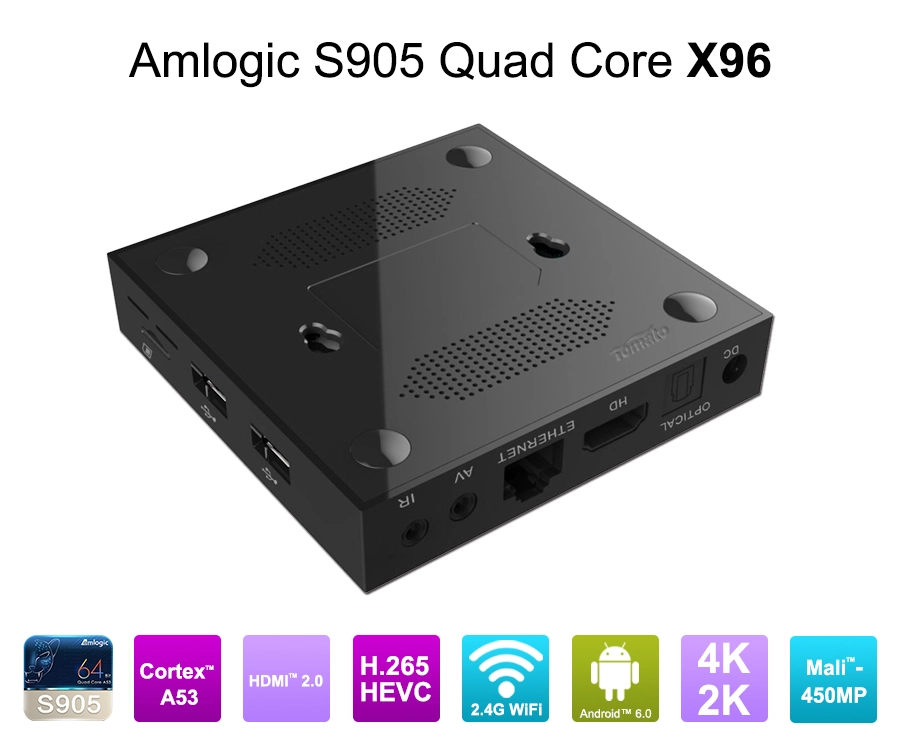
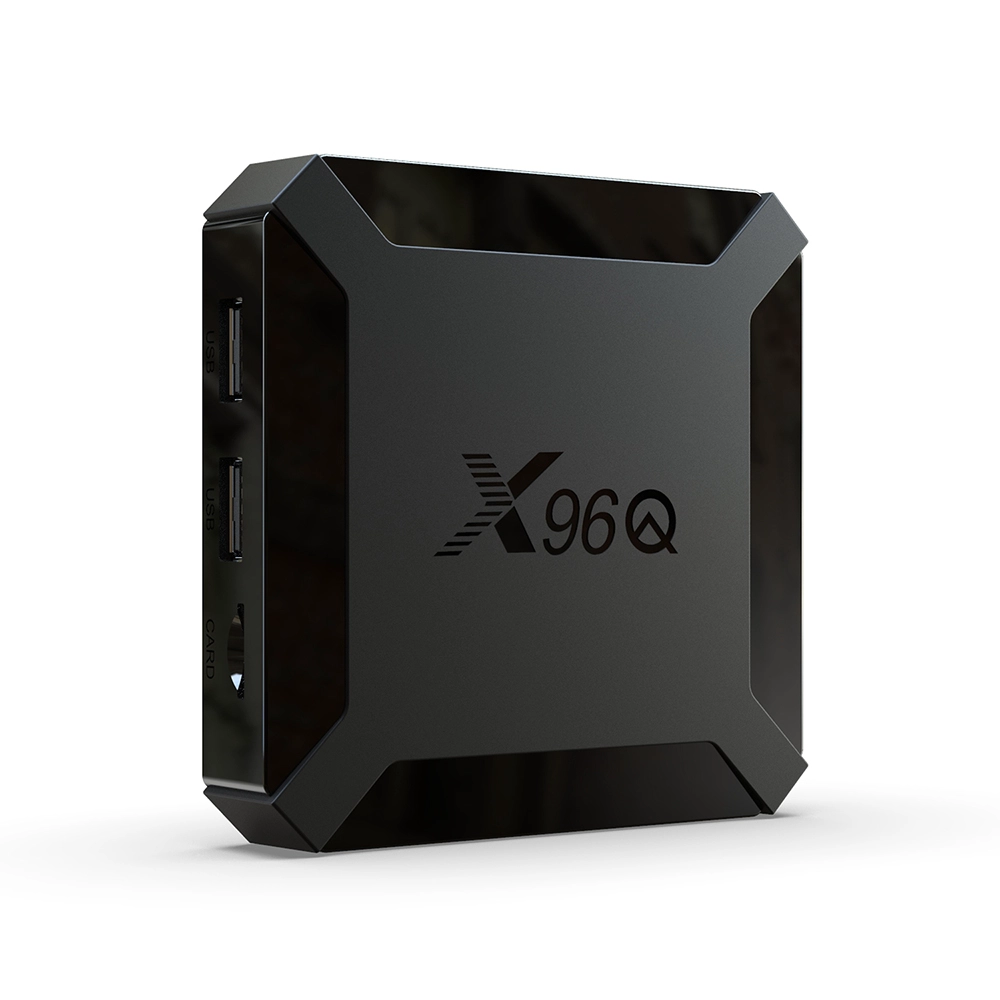
Wholesale Factory price Custom TV Box with low MOQ for bulk orders
The transition from conventional H.264 streaming to AV1 and increasingly demanding 4K HDR applications is changing the technical requirements of wholesale TV Box procurement. A device that meets the initial purchase price target may still create significant costs through firmware instability, insufficient memory, thermal throttling, or incompatible network interfaces.
For distributors and brand owners, the challenge is finding a TV Box manufacturer that can deliver competitive factory pricing without sacrificing hardware consistency or software compatibility.
The traditional wholesale model focuses primarily on standardized products, fixed configurations, and large minimum order quantities. However, B2B buyers increasingly require a different approach: flexible procurement, customized hardware, controlled firmware, and the ability to scale production as market demand develops.
SZTomato addresses these requirements through factory-direct TV Box manufacturing, supporting wholesale orders, low MOQ projects, and comprehensive OEM/ODM customization.
1. How to Reduce TV Box Wholesale Costs Without Compromising Hardware Quality
Factory price is important, but the lowest quotation does not necessarily represent the lowest total procurement cost.
A wholesale TV Box project involves several cost components:
-
System-on-Chip (SoC) selection.
-
RAM and eMMC configuration.
-
Wi-Fi and Ethernet connectivity.
-
PCB design and component sourcing.
-
Enclosure and thermal management.
-
Android or Linux firmware development.
-
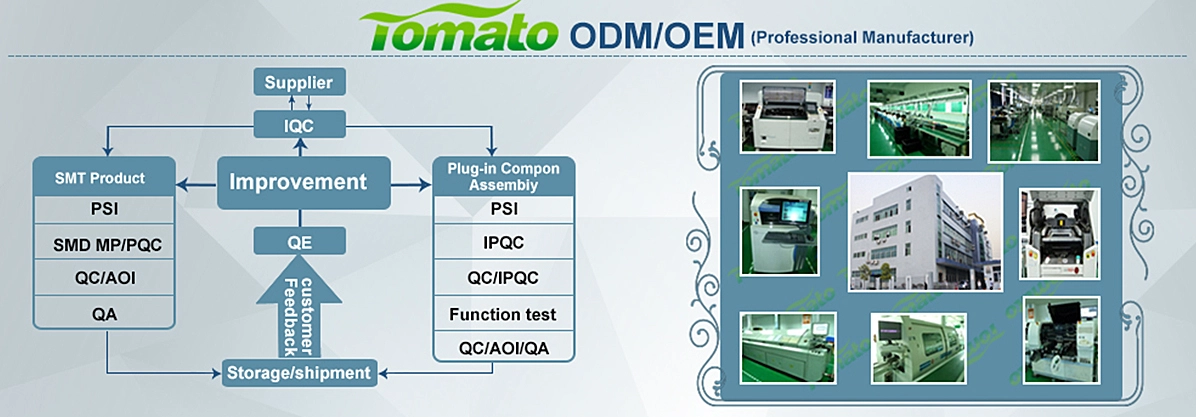
Product testing and quality control.
-
Packaging, certification, and logistics.
A mismatch in any of these areas can increase the actual cost of ownership.
Select the Right SoC for the Target Application
The processor is one of the most important factors affecting TV Box performance and manufacturing costs.
Different wholesale markets require different hardware configurations. A budget IPTV deployment does not necessarily need the same processing capability as a premium 4K HDR streaming platform.
For example:
|
Application |
Recommended Hardware Direction |
Key Considerations |
|---|---|---|
|
Entry-level IPTV |
Quad-core ARM Cortex-A53/A55 |
Cost efficiency, stable decoding |
|
Mainstream Android TV Box |
Cortex-A55/A76-class platforms |
4K playback, memory, connectivity |
|
Premium streaming |
Higher-performance Amlogic or Rockchip SoCs |
AV1, HDR, DRM compatibility |
|
Commercial applications |
Industrial-grade SoC configurations |
Continuous operation, thermal stability |
|
Customized multimedia systems |
Application-specific SoC selection |
SDK/API support, peripheral integration |
The correct chipset depends on the required codecs, operating system, application workload, and peripheral interfaces.
For example, AV1 hardware decoding can reduce bandwidth requirements for supported streaming services. However, AV1 support alone does not guarantee compatibility with every commercial streaming platform. DRM, HDCP, certification, and application-level requirements must also be evaluated.
SZTomato helps buyers select suitable SoC platforms rather than simply recommending the most expensive processor.
Optimize Memory and Storage Configurations
Memory configuration directly affects the purchasing cost of a wholesale TV Box.
Typical configurations include:
-
2GB RAM + 16GB eMMC for entry-level applications.
-
4GB RAM + 32GB eMMC for mainstream deployments.
-
4GB–8GB RAM with larger storage for more demanding applications.
These are configuration examples rather than universal performance recommendations.
Buyers should evaluate actual application memory consumption, background services, firmware size, OTA update requirements, and storage write endurance before finalizing specifications.
A carefully selected memory configuration can reduce unnecessary hardware expenditure while maintaining acceptable system responsiveness.
Evaluate Total Cost Instead of Unit Price
A low factory quotation can become expensive if the product requires repeated firmware corrections, additional testing, or replacement shipments.
A more reliable procurement evaluation considers:
-
Initial unit manufacturing cost.
-
Engineering and customization expenses.
-
Sample development costs.
-
Certification and compliance requirements.
-
Defect rates and after-sales support.
-
Long-term component availability.
For wholesale buyers, a stable manufacturing process is often more valuable than a marginal reduction in the initial unit price.
2. Low MOQ Custom TV Box: A More Flexible Wholesale Procurement Strategy
Traditional TV Box wholesale procurement often requires buyers to select existing configurations and purchase substantial quantities.
This approach creates problems for emerging brands, regional distributors, IPTV operators, and system integrators.
A large MOQ increases inventory exposure before actual market demand has been established. It can also make product differentiation difficult when multiple suppliers offer nearly identical reference designs.
A low MOQ manufacturing strategy provides a more practical alternative.
Why Low MOQ Matters for B2B Buyers
Low MOQ is particularly useful in four situations.
New market entry
Distributors can introduce a new TV Box product, evaluate customer response, and collect market feedback before expanding their purchasing volume.
Private-label product development
Brand owners can test customized enclosures, logos, packaging, and firmware interfaces without immediately committing to large-scale production.
Regional IPTV deployment
Telecom operators and IPTV service providers can validate network compatibility, middleware integration, and user experience through an initial deployment.
Industrial and commercial projects
System integrators can develop application-specific TV Box configurations for hotels, digital signage, education, and commercial multimedia installations.
What Can Be Customized Under a Low MOQ Project?
Low MOQ does not automatically mean unlimited customization at the same cost as standard production.
The practical customization scope depends on tooling, component availability, engineering workload, certification requirements, and production arrangements.
SZTomato supports several levels of customization.
|
Customization Area |
Available Solutions |
|---|---|
|
Branding |
Logo printing, enclosure appearance, packaging |
|
Hardware |
RAM, eMMC, Wi-Fi, Ethernet, interfaces |
|
PCBA |
Component changes, PCB layout adjustments, circuit optimization |
|
Firmware |
Boot animation, system settings, custom launcher, UI/UX |
|
Software integration |
SDK/API, middleware, application integration |
|
Connectivity |
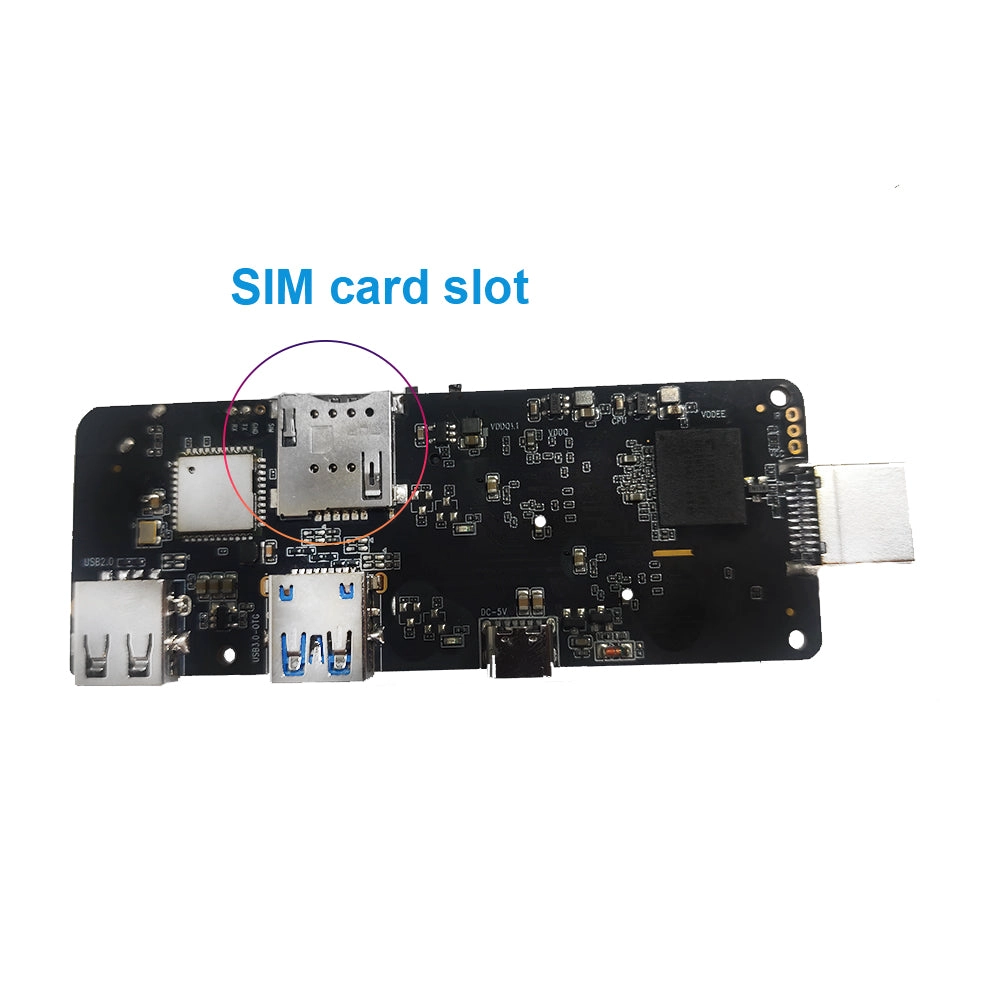
Wi-Fi, Bluetooth, Ethernet, selected 4G LTE configurations |
|
Thermal management |
Heat sinks, enclosure optimization, specialized cooling |
|
Production |
Sampling, pilot orders, bulk manufacturing |
For buyers with application-specific requirements, PCBA-level modification offers more flexibility than simply changing the external appearance of a standard TV Box.
For example, a project requiring additional USB interfaces, customized GPIO connections, or different power-management circuitry may need changes to the PCB layout and component selection.
This is where a manufacturer's engineering capability becomes a critical procurement factor.
3. OEM/ODM Customization: From Standard TV Box to Application-Specific Hardware
A wholesale TV Box should be evaluated as a complete hardware and software platform.
Two products using the same SoC can deliver very different results because of differences in PCB design, memory implementation, firmware configuration, cooling, and peripheral integration.
For brand owners and professional buyers, OEM/ODM manufacturing should therefore cover more than logo printing.
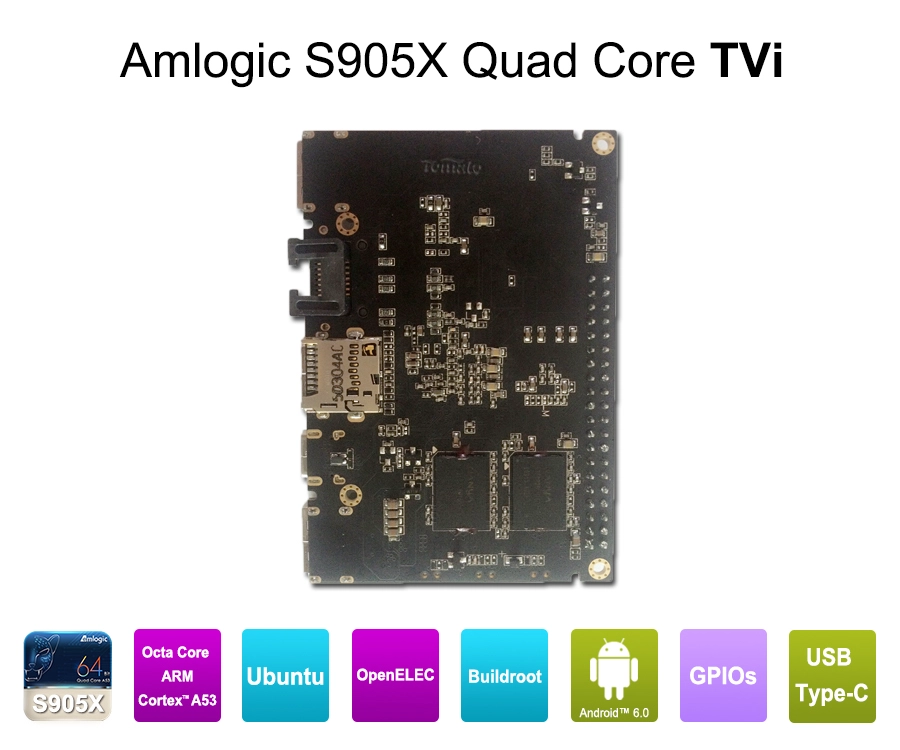
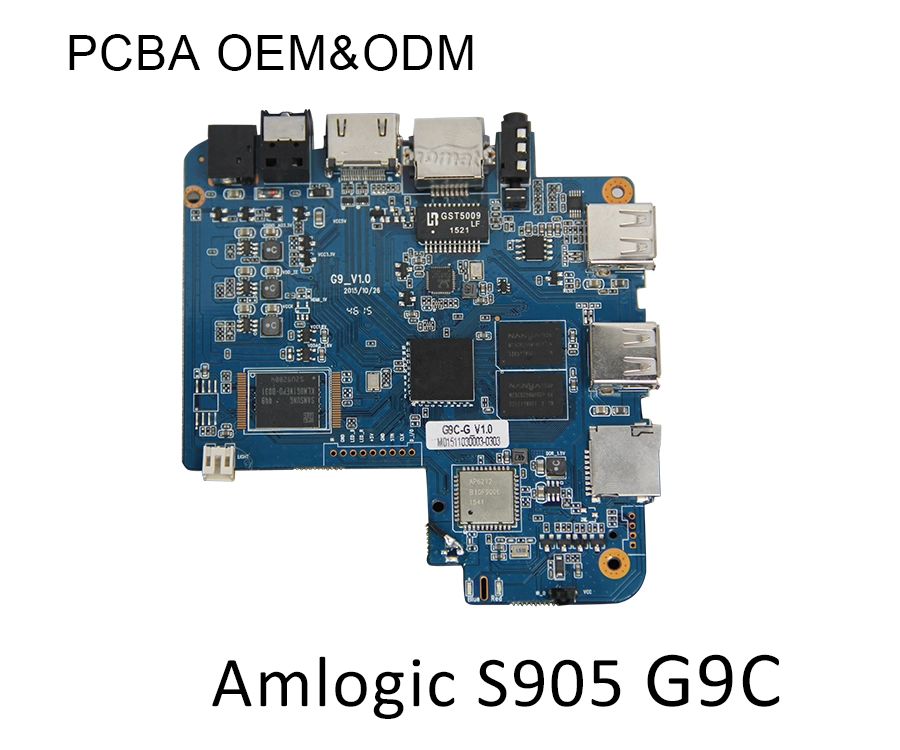
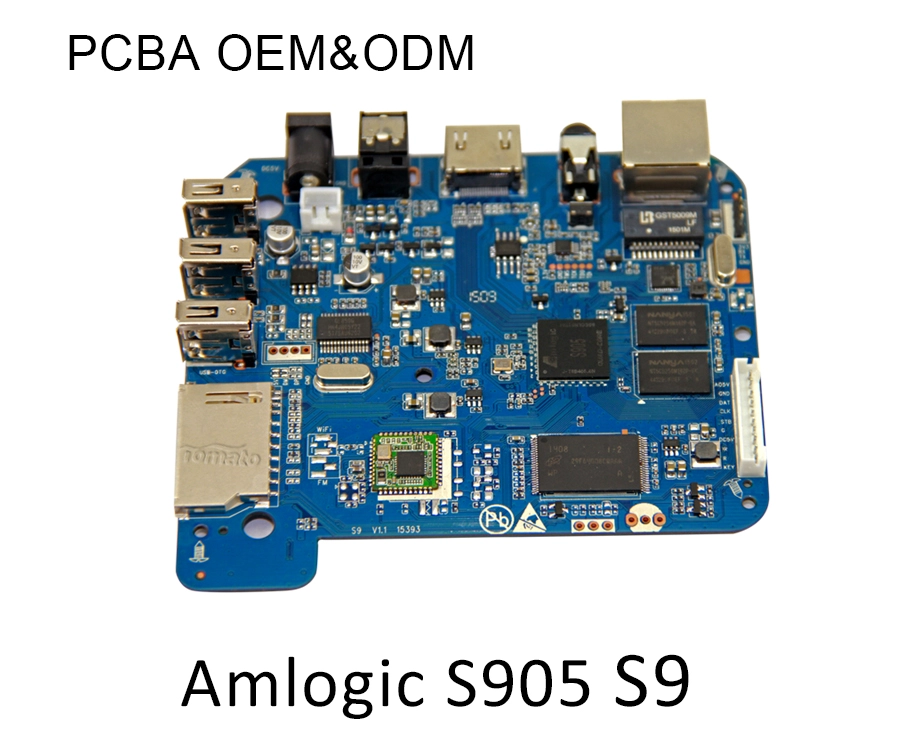
PCBA Hardware Modification and Interface Integration
The PCBA determines how the processor, memory, power supply, networking components, and external interfaces work together.
SZTomato supports PCBA hardware modification for projects that require more than a standard reference design.
Engineering considerations include:
-
PCB layout and signal integrity.
-
Power delivery and voltage regulation.
-
DDR memory routing.
-
HDMI signal integrity.
-
USB interface configuration.
-
Ethernet and wireless module integration.
-
EMI and thermal considerations.
For example, a TV Box intended for commercial deployment may require additional USB ports, a customized power input, or a different network interface.
These changes should be assessed during the engineering stage because they can affect PCB routing, enclosure dimensions, component availability, and certification.
Custom Firmware and UI/UX Development
Firmware is another major factor separating a standard wholesale TV Box from a professional OEM product.
A default Android interface may be sufficient for retail applications, but it is often unsuitable for IPTV operators, hospitality providers, and branded streaming services.
SZTomato supports firmware customization that can include:
-
Custom boot logos and animations.
-
Branded launcher interfaces.
-
Preinstalled applications.
-
Application permissions and system configuration.
-
Default network settings.
-
Device startup behavior.
-
OTA update systems.
-
System-level configuration adjustments.
For commercial deployments, OTA update capability is particularly important.
A properly designed OTA update system allows operators to distribute firmware improvements, security patches, and application updates across deployed devices without manually servicing every unit.
Update mechanisms should incorporate version management, package verification, recovery procedures, and staged deployment wherever the project requirements justify them.
Linux and Android kernel optimization can also help address hardware compatibility, peripheral drivers, boot performance, and system stability.
The objective is not simply to change the appearance of Android. It is to create a controlled software environment that supports the buyer's business model.
SDK/API Integration for IPTV and Commercial Applications
For IPTV operators and system integrators, hardware compatibility is only one part of the project.
The TV Box may also need to communicate with middleware platforms, content management systems, authentication servers, or third-party applications.
SZTomato supports SDK/API integration according to project requirements.
Potential integration areas include:
-
IPTV middleware.
-
Video-on-demand platforms.
-
Device management systems.
-
Remote configuration services.
-
Application launch interfaces.
-
Custom control functions.
-
Network provisioning systems.
A critical point is that application compatibility must be verified against the actual SDK, API documentation, Android version, hardware platform, and service architecture.
Buyers should provide their software requirements early in the development process. This reduces integration risks during sample testing and mass production.
Specialized Cooling for Industrial Applications
Thermal management is frequently underestimated in wholesale TV Box projects.
A device operating continuously in a commercial environment experiences different thermal conditions from one used intermittently in a home.
High ambient temperatures, limited ventilation, continuous video decoding, and enclosure restrictions can increase component temperatures.
SZTomato can evaluate specialized cooling solutions, including:
-
Optimized aluminum heat sinks.
-
Thermal interface materials.
-
Improved internal airflow.
-
Enclosure heat dissipation.
-
Component placement adjustments.
-
Thermal performance validation.
The appropriate solution depends on processor power consumption, enclosure geometry, operating temperature, and workload.
For industrial and commercial applications, thermal validation should be part of the product development process rather than an afterthought.
4. How to Choose a Reliable TV Box Wholesale Factory for Bulk Orders
Selecting a TV Box factory is a long-term supply-chain decision.
A supplier may offer an attractive initial quotation but lack the engineering resources to maintain product consistency or support customization after the first shipment.
B2B procurement managers should assess five essential areas.
1. Manufacturing and Engineering Capability
Confirm whether the supplier can handle:
-
Hardware configuration and PCBA development.
-
Firmware customization.
-
Android and Linux platform adaptation.
-
SDK/API integration.
-
Sample development and engineering validation.
-
Production quality management.
A manufacturer with in-house engineering capabilities can generally coordinate hardware and firmware changes more effectively than a trading company that outsources every technical requirement.
2. Product Consistency and Quality Control
Bulk production must reproduce the approved sample configuration.
A practical quality control process should include:
|
Quality Stage |
Main Inspection Focus |
|---|---|
|
Incoming material inspection |
SoC, memory, PCB, connectors |
|
PCBA inspection |
Soldering, component placement, electrical performance |
|
Assembly inspection |
Enclosure, ports, connectors, fit |
|
Firmware verification |
Boot, system version, applications |
|
Functional testing |
Wi-Fi, Ethernet, Bluetooth, HDMI, USB |
|
Playback testing |
Resolution, codecs, audio and video output |
|
Final inspection |
Appearance, accessories, packaging |
For commercial streaming projects, additional checks may cover HDCP behavior, DRM compatibility, OTA recovery, and extended operating stability.
Testing criteria should be agreed upon before mass production.
3. Certification and Market Compliance
A TV Box intended for international distribution may require different regulatory approvals depending on its destination market and wireless configuration.
Relevant requirements can include:
-
FCC requirements for applicable US-market products.
-
CE requirements for applicable European-market products.
-
RoHS material restrictions.
-
Radio equipment compliance.
-
Applicable HDMI and HDCP licensing or implementation requirements.
-
Platform-specific certification where required.
Buyers should distinguish between regulatory compliance, technology licensing, and platform certification. These are not interchangeable.
A manufacturer should clearly identify which approvals are already available and which require additional project-specific testing.
4. Supply Chain and Mass Production Capacity
A reliable factory should have a clear procurement and production management process.
Important questions include:
-
Are key components sourced through established suppliers?
-
Can the factory maintain the approved chipset and memory configuration?
-
Are alternative components qualified before substitution?
-
Can production capacity scale with demand?
-
Are lead times and quality standards documented?
Unauthorized component substitutions can create performance differences between production batches.
Procurement managers should request a documented bill of materials and establish an engineering change approval process for critical components.
5. Communication and After-Sales Engineering Support
OEM/ODM projects require ongoing communication between the buyer's technical team and the factory.
A qualified supplier should be able to discuss chipset selection, PCB changes, firmware compatibility, API integration, and production issues using clear engineering documentation.
This becomes especially important when the TV Box is part of a larger IPTV or commercial multimedia system.
A factory that understands the entire product architecture can help reduce integration problems before they become expensive field issues.
Why Choose SZTomato for Wholesale Custom TV Box Orders?
SZTomato is a Shenzhen-based TV Box manufacturer established in 2011, providing OEM/ODM manufacturing and engineering services for international B2B customers.
Rather than focusing exclusively on standardized retail products, SZTomato supports customers who require customized hardware, firmware, and multimedia integration.
Its manufacturing and engineering capabilities cover several areas:
Factory-direct manufacturing
Support for wholesale procurement, private-label projects, sampling, and bulk production.
Low MOQ project support
Flexible project evaluation for distributors, emerging brands, and customers validating new product configurations. MOQ depends on the selected platform, customization scope, and production requirements.
PCBA-level customization
Hardware modification, component selection, interface adaptation, and PCB engineering for application-specific requirements.
Firmware engineering
Customized Android and Linux configurations, branded UI/UX, launcher development, OTA update systems, and system-level optimization.
SDK/API integration
Technical support for IPTV platforms, middleware, device management, and third-party application integration.
Industrial thermal solutions
Cooling and enclosure optimization for products designed for continuous operation and demanding commercial environments.
With more than 15 years of industry experience, SZTomato works with brand owners, wholesalers, distributors, telecom operators, and system integrators seeking a manufacturing partner capable of supporting both product development and long-term supply.
The goal is straightforward: deliver a TV Box that meets the customer's technical specifications, target market requirements, and commercial objectives.
Start Your Wholesale Custom TV Box Project with SZTomato
Choosing the right TV Box wholesale factory requires more than comparing quotations.
The most competitive sourcing strategy combines appropriate SoC selection, optimized memory configuration, reliable PCBA design, stable firmware, and a production process capable of maintaining consistent quality across bulk orders.
For distributors, low MOQ procurement can reduce initial inventory exposure. For established brands and IPTV operators, OEM/ODM customization can create meaningful product differentiation and improve control over the end-user experience.
SZTomato welcomes inquiries from international procurement managers, TV Box distributors, brand owners, IPTV operators, and system integrators.
Share your target chipset, RAM and storage configuration, operating system, connectivity requirements, branding preferences, and estimated order quantity.
SZTomato can help evaluate your requirements, recommend a suitable hardware platform, develop customized samples, and support the transition from initial testing to bulk manufacturing.
Visit www.sztomato.com to discuss your wholesale TV Box requirements and request an OEM/ODM quotation.
