
Industrial-Grade Custom Android TV Box with Strict QC Inspection
Repeated power interruptions, elevated enclosure temperatures, unstable network connections, and extended playback can expose weaknesses that ordinary consumer testing does not reveal. For a commercial Android TV Box deployed across hundreds or thousands of locations, a single recurring firmware or hardware fault can generate substantial support costs and disrupt the service delivered to end users.
The solution is not simply to select a higher-performance system-on-chip (SoC). Reliable commercial hardware requires coordinated engineering across component selection, PCBA layout, power delivery, thermal management, Android/Linux firmware, manufacturing inspection, and long-term product maintenance.
For B2B procurement managers, IPTV operators, brand owners, and system integrators, a custom Android TV Box should be evaluated as a complete deployment platform. Its performance must be repeatable across production batches, and its hardware and software must match the actual operating environment.
1. Engineer the Custom Android TV Box Around the Deployment Environment
Industrial-grade stability begins with a clear definition of operating conditions. A media player installed in a ventilated equipment cabinet has different thermal requirements from one sealed behind a commercial display. A hospitality device may experience daily power interruptions, while a digital signage player may need to run continuously for extended periods.
The hardware specification should reflect these differences before the PCB and enclosure designs are finalized.
Select the right SoC, memory, and interfaces
The SoC determines the platform's processing capability, video-decoding support, peripheral options, and power characteristics. However, a suitable chipset must be matched with adequate memory, storage, power delivery, and software support.
A custom Android TV Box specification should define:
-
SoC architecture: Required CPU performance, GPU capability, hardware decoding, supported codecs, and the intended application workload.
-
Memory and storage: RAM capacity for the application stack, eMMC or other supported storage for firmware and applications, and sufficient write endurance for the expected workload.
-
Connectivity: Ethernet, Wi-Fi, Bluetooth, USB, HDMI, and optional RS232 or GPIO interfaces where the application requires them.
-
Power delivery: Input-voltage range, PMIC configuration, transient behavior, and protection appropriate to the installation.
-
Operating system: Android or Linux version, driver availability, required SDKs, and long-term software maintenance requirements.
For an IPTV deployment, codec compatibility, network stability, display output, and conditional-access or DRM requirements may dominate the specification. For digital signage, automatic startup, remote management, peripheral integration, and sustained operation may matter more than peak CPU performance.
The right platform is the one that satisfies the application's verified requirements without introducing unnecessary cost or thermal load.
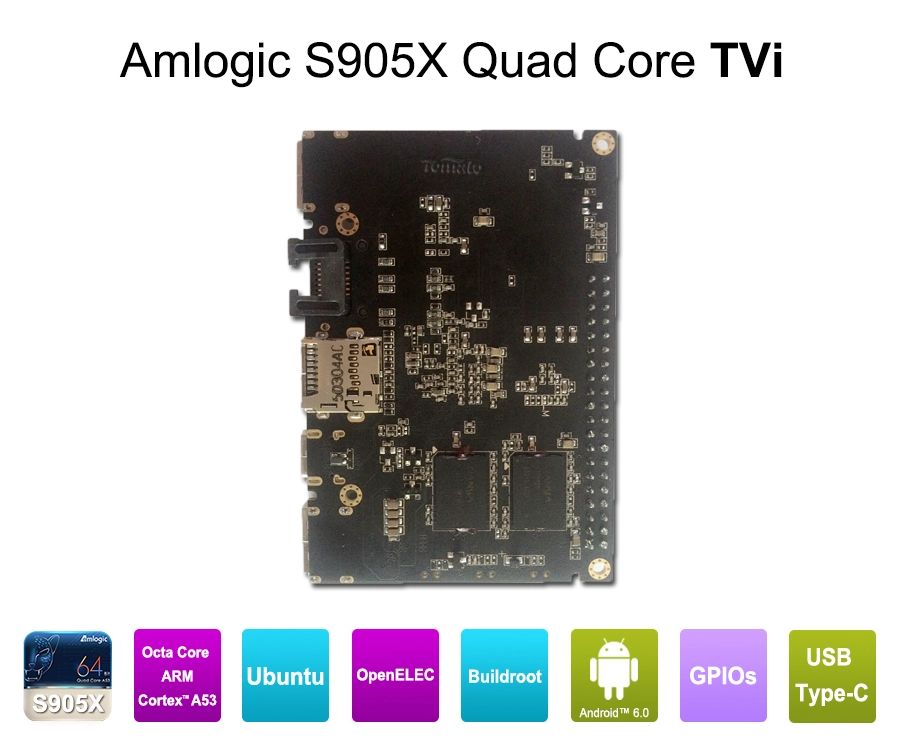
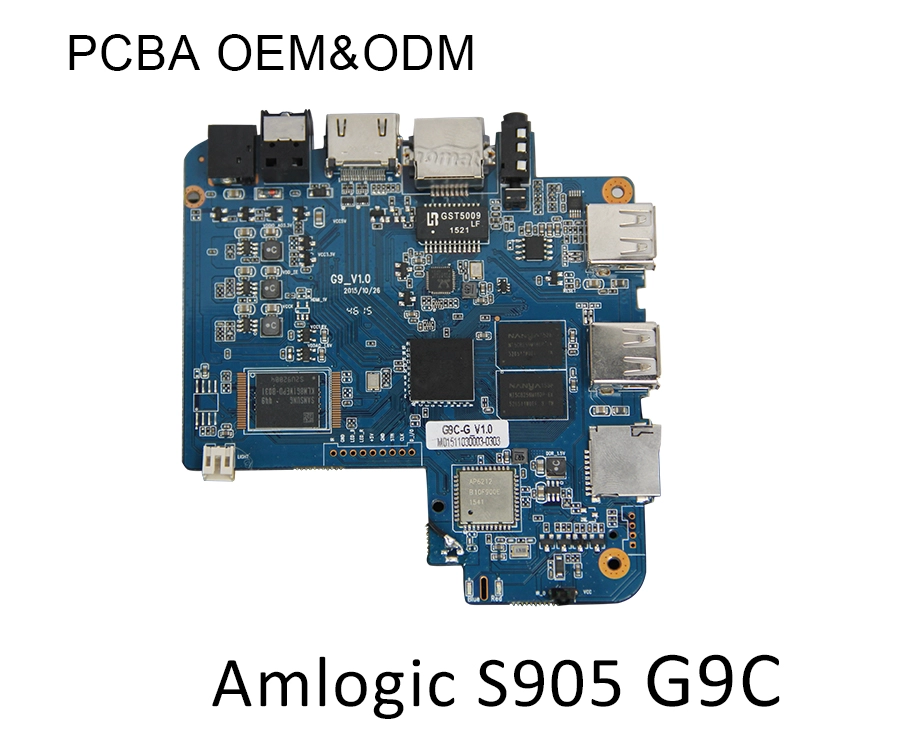
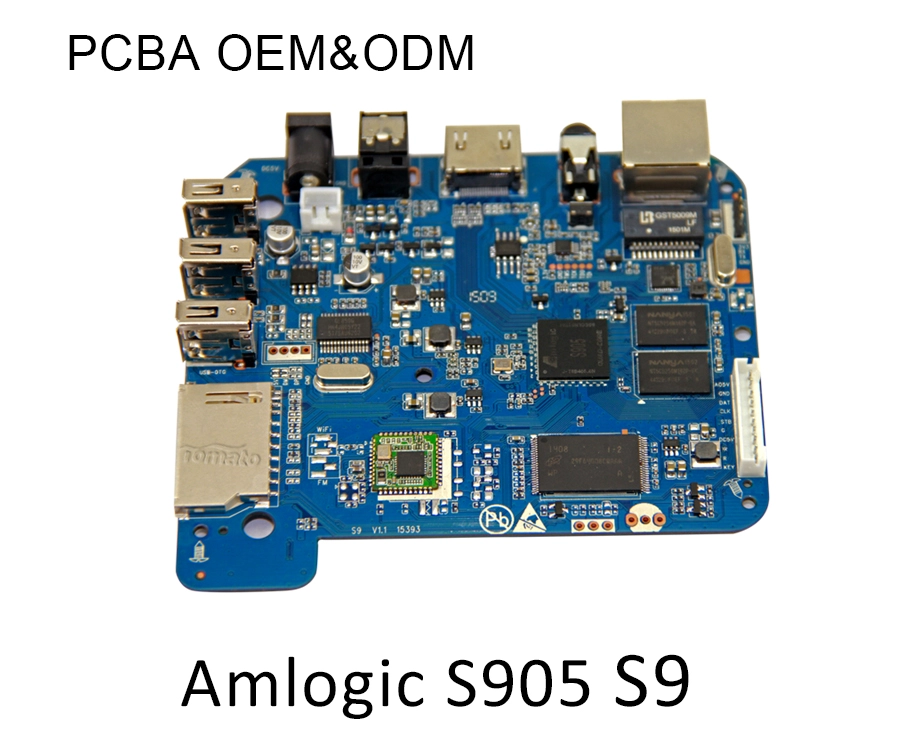
Modify the PCBA for the actual application
An off-the-shelf board may not provide the interfaces, placement, power configuration, or mechanical dimensions required by a commercial project.
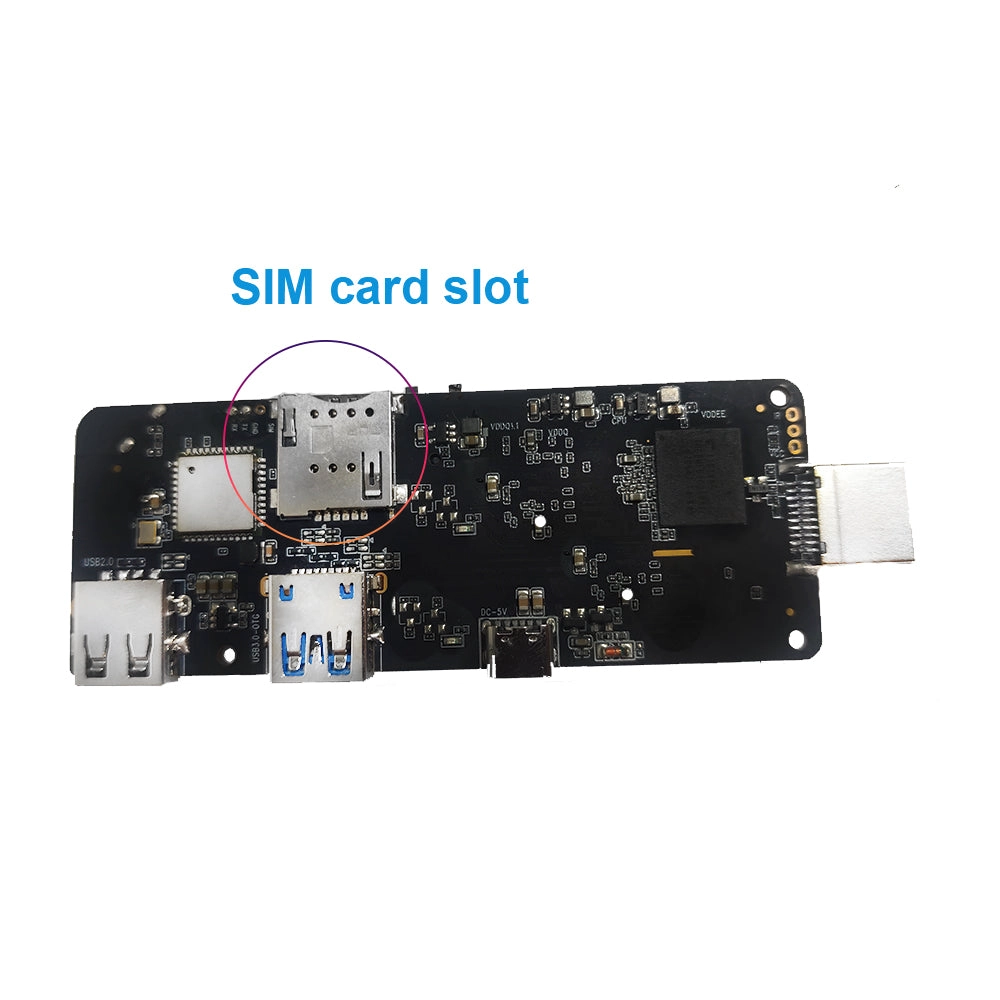
PCBA modification can address these limitations through connector changes, revised component placement, interface expansion, power-circuit adjustments, and layout optimization. Depending on the platform, an OEM/ODM design may also require additional serial interfaces, GPIO, external antenna connections, or dedicated circuitry for a specialized peripheral.
Every modification should be reviewed for its effect on signal integrity, electromagnetic compatibility, power distribution, manufacturing yield, and serviceability.
Particular attention should be given to HDMI output and HDCP handling when the device distributes protected video content. The selected SoC, interface circuitry, firmware, and any required licensing or certification must support the intended application.
SZTomato provides PCBA hardware modification and OEM/ODM customization for commercial media-player projects. The engineering scope should be defined against the required interfaces, target SoC, enclosure, production volume, and operating conditions.
Design cooling around sustained workloads
A device can pass a short functional test and still suffer thermal throttling during prolonged playback or high CPU utilization.
Thermal engineering should consider the SoC, DDR memory, storage, PMIC, networking components, enclosure material, mounting position, and ambient temperature. Heat must be transferred efficiently from critical components to the heatsink or enclosure, where the mechanical design permits.
Depending on the application, suitable measures may include:
-
Optimized heatsink geometry and thermal-interface materials.
-
Improved thermal contact between the SoC and heat spreader.
-
Revised PCBA component placement to reduce localized heat accumulation.
-
Passive cooling or controlled airflow appropriate to the enclosure.
-
Firmware-level power management and temperature monitoring.
The engineering team should test sustained decoding, network streaming, and representative application workloads at the specified environmental limits.
Industrial suitability should be expressed through documented operating-temperature ranges, power-input requirements, installation conditions, and validation results. The term “industrial-grade” alone does not establish a particular environmental rating or guarantee continuous operation.
2. Build Stability Into Android/Linux Firmware and Long-Term Maintenance
Hardware reliability cannot compensate for unstable firmware. A well-designed PCBA can still produce an unreliable device if the operating system leaks memory, a driver fails after extended use, background processes interfere with playback, or the device cannot recover from a failed update.
Commercial Android TV Box projects should treat firmware engineering as part of the product architecture rather than a final-stage configuration task.
Optimize the operating system for the intended workload
A generic Android image may contain applications, background services, settings, or user functions that are unnecessary for a managed commercial device.
A tailored firmware build can reduce unnecessary processes, configure system permissions, prioritize the required application, and improve startup and recovery behavior.
Depending on the target platform, the work may include:
-
Android Open Source Project (AOSP) configuration and system-image customization.
-
Linux kernel, device-driver, and peripheral compatibility optimization.
-
Custom boot animation, launcher, and UI/UX development.
-
Application preinstallation and kiosk-mode restrictions.
-
Watchdog configuration and application recovery mechanisms.
-
SDK/API integration for customer applications or device-management systems.
-
System logging, diagnostic interfaces, and update-recovery procedures.
For example, a digital signage player should be able to launch its designated application after a power interruption without requiring an operator to reconnect a mouse or access system settings.
An IPTV device may need different recovery logic to preserve service configuration, reconnect to its platform, and restore playback after a network interruption.
Custom firmware should be validated against the precise hardware revision and application version intended for mass production. A firmware change that works on one SoC configuration should not be assumed to work identically on another.
Establish a controlled OTA update strategy
Over-the-air (OTA) updates allow a commercial fleet to receive security patches, application updates, and approved firmware releases without technicians visiting every installation.
However, an update system can itself become a source of failure if devices lose power during installation, receive incompatible images, or cannot restore a functioning system after an unsuccessful update.
A suitable OTA architecture should define:
-
How update packages are authenticated and checked for integrity.
-
Which device models and hardware revisions are eligible for each release.
-
How updates are deployed to pilot devices before wider distribution.
-
How installation progress, failures, and firmware versions are recorded.
-
How interrupted updates are recovered from and whether rollback is supported.
-
How administrators authorize releases and restrict update privileges.
For larger deployments, staged rollout policies can reduce the impact of a faulty release. Fleet management should also distinguish devices that are offline from devices that are online but have failed to install an update.
SZTomato supports customized firmware, UI/UX development, and SDK/API integration for OEM/ODM projects. OTA implementation, remote-management compatibility, and recovery capabilities should be confirmed against the selected platform and required service architecture.
Define maintenance requirements before production
A commercial media player may remain deployed long after the initial software release. Procurement specifications should therefore establish the expected maintenance period, security-update process, application compatibility requirements, and availability of engineering support.
A practical lifecycle plan identifies the approved hardware revision, firmware baseline, software dependencies, and change-control process. It also defines how component substitutions or operating-system changes are evaluated before entering production.
These controls help ensure that replacement units behave consistently with the devices already installed in the field.
3. Implement Strict QC Inspection From Incoming Components to Final Assembly
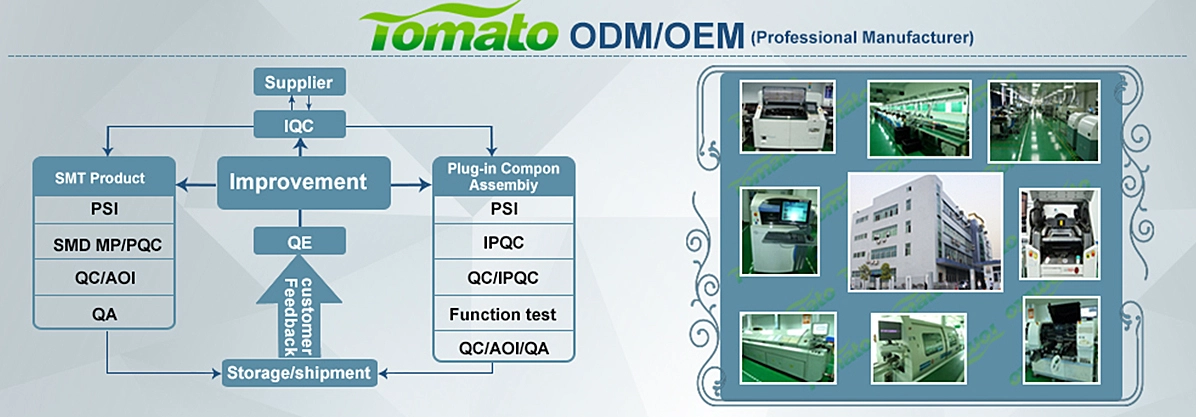
Strict quality control is not a single inspection at the end of production. It is a series of verification stages that identify defects before they reach the next manufacturing step.
For a custom Android TV Box, the inspection plan should cover the component supply chain, PCBA assembly, firmware programming, functional performance, thermal behavior, final packaging, and batch traceability.
Stage 1: Incoming quality control and BOM management
Incoming quality control (IQC) verifies that components and supplied materials conform to the approved bill of materials (BOM) and purchasing specifications.
Important checks can include:
-
Component identity, part number, and supplier documentation.
-
PCB dimensions, finish, and revision.
-
SoC, memory, storage, connector, and power-component specifications.
-
Approved Wi-Fi/Bluetooth modules and antenna configurations.
-
Enclosure dimensions, material consistency, and mechanical fit.
-
Power-adapter specifications and required safety documentation.
The BOM should identify approved components and authorized alternates. Substituting an eMMC device, memory component, wireless module, or PMIC without an engineering review can affect boot behavior, signal compatibility, power consumption, firmware support, or thermal performance.
For long-running commercial programs, changes should follow a documented engineering change process. Revised components should be evaluated for functional compatibility and, where relevant, EMC or regulatory implications.
Stage 2: PCBA assembly inspection
PCB assembly quality influences electrical reliability and manufacturing consistency.
Depending on the board design and production process, suitable inspection methods may include automated optical inspection (AOI), solder-paste inspection, X-ray inspection for appropriate hidden joints, and electrical tests.
The selection of inspection methods should reflect component packages, board complexity, risk analysis, and process capability rather than relying on one universal checklist.
Additional checks may verify connector alignment, solder-joint quality, polarity, component placement, and visible signs of contamination or board damage.
Where required, a dedicated test fixture can verify defined power rails, reset behavior, interface signals, and other measurable electrical parameters before the board enters full-system assembly.
A detected defect should be documented, classified, and traced through corrective action. Reworking a failed board without recording the failure mode makes it harder to detect recurring process problems.
Stage 3: Firmware programming and functional inspection
The assembled Android TV Box should be programmed with an approved firmware image and tested against the production specification.
A functional test can verify:
| Inspection area | Verification target |
|---|---|
| Power and boot | Startup sequence, input power behavior, and successful boot |
| Processor and memory | Device identification, memory detection, and basic stability |
| Storage | Capacity, read/write functionality, and firmware integrity |
| Network | Ethernet, Wi-Fi, Bluetooth, or other specified interfaces |
| HDMI | Display detection, required output modes, and stable video output |
| USB and serial ports | Connectivity and peripheral recognition for supported interfaces |
| Audio | Output function, synchronization, and specified audio modes |
| Firmware | Correct version, launcher behavior, permissions, and required applications |
| OTA | Update eligibility, installation behavior, and recovery where supported |
| Mechanical assembly | Port accessibility, enclosure fit, fastener installation, and external finish |
Automated test fixtures can improve repeatability by applying the same test sequence to each unit. The inspection system should record the device identifier, hardware revision, firmware version, test results, and relevant failure codes.
For products that support HDCP-protected content, authorized content-protection behavior should be validated as part of the applicable system requirements. A general HDMI output test alone does not prove every required content-protection mode is functional.
Stage 4: Aging, stress testing, and final QC
Aging tests and stress tests can help identify early failures that would not appear during a short functional check. Their effectiveness depends on the selected conditions, test coverage, and criteria for accepting or rejecting a unit.
A project-specific test plan may include:
-
Extended video playback and network activity.
-
Repeated power-on and power-off cycles.
-
Operation at defined temperature limits.
-
Network reconnection and application-recovery tests.
-
Repeated startup, shutdown, and interface switching.
-
Storage and memory checks under representative workloads.
-
Inspection after aging for mechanical, thermal, or functional abnormalities.
The duration, sample size, ambient conditions, and pass/fail limits should be specified according to product risk, operating conditions, and customer acceptance requirements.
Not every product requires the same burn-in duration, and a longer burn-in test does not automatically guarantee a lower field-failure rate. The quality plan should combine meaningful stress testing with repeatable functional inspection and analysis of actual defect data.
Before shipment, final quality control should confirm the approved configuration, external condition, accessory completeness, labels, packaging, and traceability records.
4. Establish Measurable Reliability Criteria for OEM/ODM Production
The final objective of strict QC is not to generate a large collection of inspection records. It is to demonstrate that the production units meet agreed functional and environmental requirements consistently.
B2B buyers should define these requirements before approving the engineering sample.
Use objective acceptance criteria
The following framework helps procurement and engineering teams turn general reliability expectations into testable specifications.
| Reliability dimension | Recommended acceptance requirement |
|---|---|
| Hardware consistency | Production BOM matches the approved configuration or an authorized revision |
| Electrical performance | Power rails and interfaces operate within documented limits |
| Thermal behavior | Sustained workloads remain within specified component operating limits |
| Functional stability | Defined playback, networking, and application tests complete without prohibited failures |
| Firmware control | Approved build, security configuration, and application versions are recorded |
| Update reliability | OTA testing meets documented installation, recovery, and compatibility requirements |
| Manufacturing traceability | Unit or batch records link QC results to the relevant hardware and firmware revision |
| Defect management | Failure classification, corrective action, and retest procedures are documented |
| Shipment inspection | Final units meet agreed cosmetic, accessory, labeling, and packaging requirements |
For a customized Android TV Box, acceptance targets should be appropriate to the actual use case. An IPTV operator, a digital signage integrator, and an industrial display-system supplier may require different interface combinations, environmental limits, update policies, and recovery behavior.
The approved golden sample should provide a reference for mass production, but it must be supported by test procedures and revision records. A sample that passes once is not sufficient evidence of consistent manufacturing quality.
Connect QC results to production traceability
A mature quality process should make it possible to identify which hardware and firmware configuration was shipped to a particular customer or deployment.
Where appropriate, records should associate the unit serial number or batch identifier with its PCB revision, BOM revision, firmware release, inspection results, and relevant rework history.
This information helps engineers investigate recurring failures and determine whether an issue originates from components, assembly, firmware, environmental conditions, or an external system.
It also provides a controlled basis for corrective actions. If a wireless module changes or a firmware release introduces a regression, traceability allows the team to identify potentially affected production batches instead of treating every field report as an isolated problem.
Align customization with manufacturing capability
True ODM customization involves more than branding a standard enclosure. It can require changes to the PCBA, interfaces, thermal solution, firmware, application integration, or mechanical structure.
Each change should pass through an engineering review that evaluates its technical feasibility, manufacturing impact, test coverage, cost, and schedule.
SZTomato supports OEM/ODM development involving PCBA hardware modification, customized Android firmware, UI/UX development, SDK/API integration, and thermal-design adjustments for commercial deployments. The specific scope should be confirmed during technical review against the target chipset, interface requirements, enclosure, and intended use environment.
For procurement managers, agreeing on the customization boundary before tooling and mass production helps prevent the common mismatch between a sales specification and the delivered hardware.
Conclusion: Choose a Custom Android TV Box Built Around Verifiable Quality
Industrial-grade stability is the result of engineering decisions that can be specified, tested, and repeated. It depends on suitable components, a well-designed PCBA, controlled thermal behavior, validated Android/Linux firmware, a reliable update strategy, and strict manufacturing inspection.
For OEM brands, IPTV operators, telecom providers, and system integrators, the right custom Android TV Box supplier should demonstrate how requirements are translated into a verified design and how production consistency is maintained after the first approved sample.
SZTomato supports OEM/ODM Android TV Box projects through PCBA customization, firmware-level engineering, SDK/API integration, custom UI/UX development, and specialized cooling solutions tailored to project requirements.
When evaluating a project, provide the target SoC or performance requirements, operating-temperature range, daily operating hours, required interfaces, firmware and application requirements, target-market certifications, and projected order volume. These details establish a practical basis for defining the hardware architecture, quality inspection plan, reliability tests, and long-term support requirements before mass production begins.
