

Universal multimedia audio solutions compatible with diverse display terminals
Universal Multimedia Audio Solutions for Diverse Display Terminals
HDMI has simplified video distribution, but it has not eliminated the audio integration problems behind commercial display projects. A television, digital signage screen, commercial monitor, projector, video wall controller, and interactive display can all accept the same video source while requiring different audio paths, output interfaces, amplification methods, and software controls.
This becomes more complex when an Android TV Box, IPTV Set-Top Box, media player, or digital signage player is integrated into the system. The audio architecture must account for HDMI audio extraction, codec compatibility, PCM and compressed audio paths, ARC/eARC where applicable, S/PDIF, USB audio, analog output, Bluetooth, amplifier interfaces, volume control, synchronization, and operating-system behavior.
For B2B projects, a universal multimedia audio solution is therefore not a single audio module. It is a configurable hardware and software architecture designed to work across different display terminals and deployment environments.
Why Display-Terminal Diversity Creates Audio Integration Problems
The same media player can be connected to several types of display equipment, but the audio requirements are rarely identical.
A typical commercial deployment may contain:
-
Smart TVs
-
Commercial monitors
-
LED displays
-
LCD video walls
-
Projectors
-
Interactive flat panels
-
Digital signage screens
-
Hospitality displays
-
IPTV terminals
-
Industrial displays
-
External soundbars
-
Powered speakers
-
AV receivers
-
Professional amplifiers
Each terminal may expose different audio capabilities.
A display may receive video through HDMI while sending audio through its internal speakers. Another installation may require HDMI audio extraction to an external amplifier. A projector may need independent audio output. A video wall may rely on an external DSP or centralized amplifier.
The media player therefore needs an audio architecture that can adapt to the actual system.
HDMI Is Not the Entire Audio Architecture
HDMI is often treated as a simple video-and-audio connection, but commercial integration can require several additional considerations.
Depending on the platform and application, engineers may need to evaluate:
-
HDMI audio formats
-
PCM channel configuration
-
Compressed audio pass-through
-
EDID behavior
-
HDCP authentication
-
ARC/eARC compatibility
-
Audio sample rates
-
Lip-sync behavior
-
HDMI hot-plug detection
-
CEC interaction
-
Audio extraction requirements
EDID is particularly important in mixed-display environments.
The source device reads display capabilities through EDID and adjusts its output accordingly. If different display terminals report different audio capabilities, the same firmware configuration may behave differently across installations.
A universal multimedia audio platform therefore needs predictable audio negotiation rather than relying on one fixed display profile.
Build a Modular Audio Architecture Instead of a Fixed Output
A practical universal audio design separates the audio pipeline into several layers:
Source → Decoder → Audio Framework → Processing → Output Selection → Amplification → Speaker
The output stage can then be adapted to the target display.
Common interfaces include:
HDMI Audio
HDMI is suitable when audio travels together with the video signal to a compatible television, monitor, projector, or AV system.
For Android-based products, the audio framework needs to coordinate with HDMI display detection and system audio policies.
S/PDIF
S/PDIF remains useful for installations that require digital audio transmission to an external receiver or amplifier.
It can provide a clean digital connection without forcing the media player to use an analog audio stage.
Analog Audio
3.5 mm or other analog interfaces remain useful for legacy commercial equipment, powered speakers, and cost-sensitive installations.
However, analog output requires attention to:
-
DAC quality
-
Signal-to-noise ratio
-
Output impedance
-
Grounding
-
Electromagnetic interference
-
PCB trace routing
-
Power-supply noise
Poor PCBA layout can introduce audible noise even when the selected audio codec and DAC are technically capable.
USB Audio
USB audio can provide flexibility when a project uses an external audio interface, USB DAC, conference speaker, or specialized audio device.
The Android/Linux driver stack and USB power budget must be validated as part of the system design.
Bluetooth Audio
Bluetooth can support wireless speakers and other peripherals, but commercial deployments need to consider latency, reconnection behavior, codec support, RF interference, and long-term connection stability.
For applications requiring tight audio-video synchronization, Bluetooth should not automatically be treated as equivalent to a wired digital audio path.
Audio Synchronization Is a System-Level Problem
Audio quality is only one part of the deployment.
Audio-video synchronization can become more difficult when the system contains:
-
Android video decoding
-
External audio DSP
-
Bluetooth transmission
-
HDMI conversion
-
Video processing
-
External amplifiers
-
Long signal paths
-
Multiple displays
A visible lip-sync error can result from processing latency in either the video or audio chain.
For professional deployments, engineers should establish measurable latency targets and test the complete signal chain rather than evaluating the media player independently.
The firmware may also need configurable audio delay or synchronization controls.
This is particularly important for interactive displays, conference systems, education terminals, hospitality applications, and digital signage installations where audio and video are expected to remain synchronized during continuous operation.
One Audio Architecture Should Support Multiple Display Scenarios
A universal multimedia audio solution becomes commercially valuable when the same core platform can be adapted to different projects.
For example:
| Display environment | Typical audio architecture |
|---|---|
| Smart TV | HDMI audio + internal TV speakers |
| Commercial monitor | HDMI + external audio |
| Projector | HDMI video + independent audio output |
| Digital signage | HDMI + powered speakers |
| Video wall | HDMI/video distribution + centralized audio |
| Interactive display | HDMI/embedded speakers + external interfaces |
| Hospitality TV | HDMI + customized audio control |
| IPTV terminal | HDMI + S/PDIF/analog audio |
| Industrial display | HDMI + specialized external amplifier |
This modularity reduces engineering duplication.
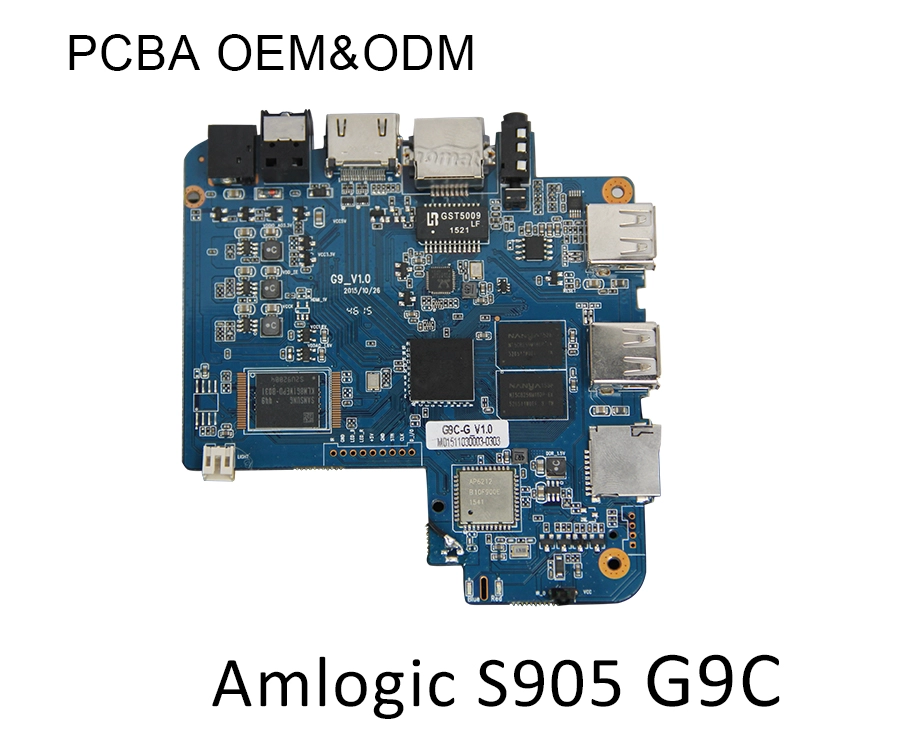
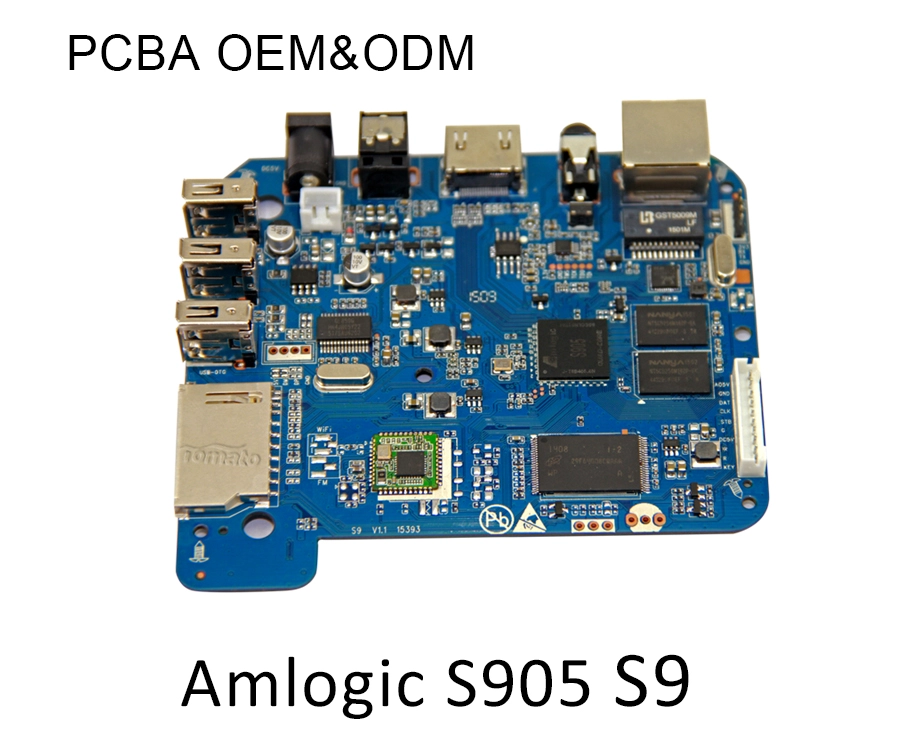
Instead of designing a completely different media player for every terminal, the manufacturer can maintain a common SoC and software platform while modifying the audio interface, firmware configuration, connector definition, amplifier stage, or enclosure according to the project.
That is a more scalable OEM/ODM model.
PCBA Engineering Determines Real Audio Performance
Audio integration cannot be separated from PCBA design.
Digital interfaces, switching power supplies, Wi-Fi modules, SoCs, amplifiers, and analog audio circuits can generate electromagnetic interference.
For products combining multimedia processing and analog audio, the PCB design should consider:
-
Analog/digital ground strategy
-
DAC placement
-
Audio trace routing
-
Power filtering
-
Switching regulator noise
-
Amplifier placement
-
RF isolation
-
Thermal distribution
-
Connector positioning
-
Shielding requirements
The audio section should not simply be added to an existing board after the main hardware has been completed.
A high-performance Android TV Box or digital signage player can have sufficient CPU and GPU resources while still producing poor audio because of inadequate power filtering or PCB routing.
For customized B2B products, PCBA hardware modification allows the audio architecture to be designed around the actual terminal and deployment requirements.
Firmware Determines How the Audio Hardware Behaves
Hardware interfaces alone do not create a universal audio solution.
The Android/Linux software stack needs to control how the system detects, routes, processes, and manages audio.
Relevant software layers may include:
-
Linux kernel audio drivers
-
Android Audio HAL
-
AudioFlinger
-
Codec drivers
-
HDMI audio configuration
-
ALSA configuration
-
USB audio support
-
Bluetooth audio stack
-
Volume-control logic
-
Audio focus management
-
Audio routing
-
Lip-sync configuration
-
Device detection
-
OTA update mechanisms
Kernel and firmware optimization becomes particularly important when the same platform must support several hardware variants.
One product version may use HDMI audio only. Another may require analog output. A third may add an amplifier or external audio processor.
A well-designed firmware architecture can use configurable profiles instead of maintaining completely independent software branches for every hardware revision.
SDK/API Integration Connects Audio to the Application Layer
Commercial multimedia systems often require audio behavior beyond basic volume control.
An integrator may need APIs for:
-
Volume adjustment
-
Mute control
-
Audio-source switching
-
External amplifier control
-
Scheduled playback
-
Alarm audio
-
Multi-zone audio
-
Device monitoring
-
Remote diagnostics
-
Power-state management
-
Content-triggered audio
This is where SDK/API integration becomes valuable.
For a digital signage deployment, for example, the CMS may need to trigger a video advertisement together with a specific audio track. In a hospitality project, the system may need centralized volume control. In an IPTV deployment, operators may require remote configuration and diagnostics.
The audio subsystem therefore becomes part of the overall device-management architecture.
Custom UI/UX Can Simplify Audio Management
A commercial device should not expose unnecessary consumer-level settings to operators or end users.
A customized UI can provide project-specific controls such as:
-
Master volume
-
Maximum volume limitation
-
Audio output selection
-
Speaker enable/disable
-
Audio delay
-
Bluetooth pairing
-
External amplifier mode
-
Installation diagnostics
-
Remote-management status
The interface can also hide configuration parameters that should remain locked by the system integrator.
This is particularly useful for hotel TVs, public displays, educational terminals, retail signage, and industrial multimedia equipment.
Thermal and Power Design Still Matter for Audio
Audio hardware adds its own thermal and power requirements.
An integrated amplifier can generate significant heat under sustained output. When combined with a high-performance SoC, Wi-Fi module, storage, and power-management circuitry, the thermal load can become concentrated inside a compact enclosure.
A reliable design therefore evaluates:
SoC heat + amplifier heat + PMIC heat + enclosure thermal resistance + ambient temperature
rather than testing each component separately.
For industrial or continuously operating deployments, SZTomato can integrate specialized cooling solutions into the hardware architecture. Depending on the application, this can include improved thermal interfaces, heatsink structures, airflow considerations, and PCB-level thermal optimization.
The objective is stable operation under the actual workload, not simply a low temperature during an idle test.
Universal Audio Solutions Should Be Designed for Product Variants
A major advantage of an OEM/ODM platform is the ability to create several product variants from a common architecture.
For example, one core multimedia platform can be developed into:
Variant A: HDMI audio for standard commercial displays
Variant B: HDMI + S/PDIF for external AV equipment
Variant C: HDMI + analog audio for powered speakers
Variant D: HDMI + amplifier + integrated speakers
Variant E: HDMI + customized audio control for digital signage
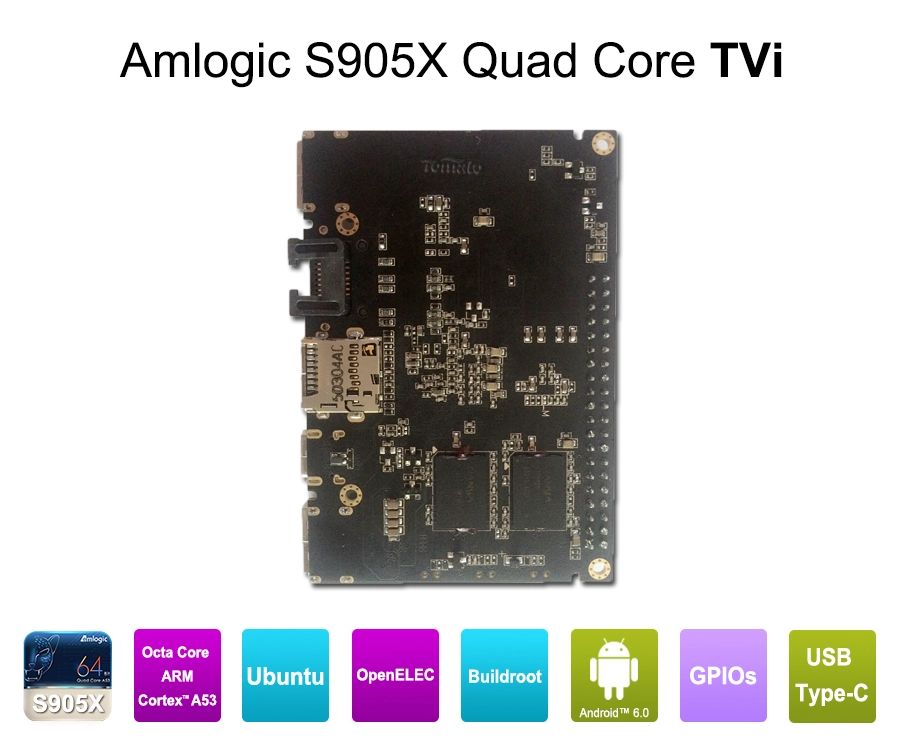
The common platform can retain the same core SoC, memory architecture, Android/Linux software base, and management framework while changing selected PCBA components, interfaces, firmware profiles, and mechanical structures.
This reduces development time and simplifies long-term software maintenance.
Why OEM/ODM Engineering Is Critical for Universal Multimedia Audio
A catalog multimedia player is designed around a fixed configuration.
A project-oriented multimedia platform starts with the terminal requirements.
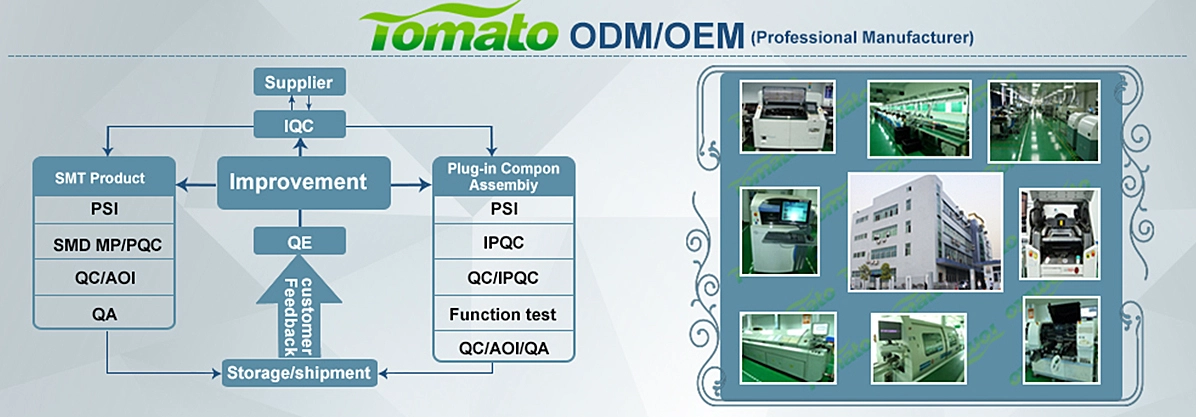
SZTomato supports customization across the hardware and software stack, including PCBA hardware modification, SDK/API integration, custom UI/UX firmware, and specialized cooling solutions for commercial and industrial deployments.
The engineering workflow can cover:
Display analysis → audio architecture → SoC selection → PCBA design → audio interface implementation → firmware integration → application/API integration → thermal validation → OTA deployment → production
This model is particularly useful when a buyer needs the same multimedia platform to support different display terminals across several markets.
Instead of purchasing separate hardware for every application, system integrators can develop a configurable platform with controlled hardware and firmware variations.
Conclusion: Design the Audio Architecture Around the Display System
A universal multimedia audio solution is not defined by the number of output connectors on a media player.
It is defined by how effectively the complete platform adapts to different display terminals, audio interfaces, software environments, and deployment conditions.
HDMI, S/PDIF, analog audio, USB audio, and Bluetooth each have specific advantages and limitations. The correct implementation depends on the display, amplifier, speaker system, latency requirement, operating environment, and software architecture.
For B2B projects, the most scalable approach is a modular platform combining configurable PCBA hardware, audio routing, Android/Linux firmware, SDK/API integration, custom UI/UX, thermal engineering, and OTA management.
For procurement managers and system integrators developing commercial displays, IPTV terminals, digital signage players, interactive displays, or customized multimedia devices, SZTomato provides OEM/ODM engineering support to adapt the hardware and firmware architecture to the actual audio and display requirements.
The result is not simply a media player with audio output. It is a configurable multimedia platform designed to operate consistently across diverse display terminals.
