Android Mini PC OEM/ODM Full Guide
Android Mini PC OEM/ODM Full Guide: Architecting Enterprise-Grade Hardware for Global Deployments
Mass-market consumer TV boxes consistently fail when deployed in enterprise environments. Commercial digital signage networks, edge AI compute hubs, and interactive smart kiosks require non-stop operational uptime, specialized peripheral connectivity, and hardened operating systems. Field failures in these deployments rarely stem from lack of raw computing power; instead, they originate from thermal throttling under continuous 4K/8K workloads, eMMC flash corruption during abrupt power outages, and unoptimized Android kernels running unnecessary background services.
Executing a successful B2B Android Mini PC project requires shifting the procurement strategy from off-the-shelf consumer devices to full-stack OEM/ODM engineering. This guide details the hardware, software, and manufacturing workflows required to design, customize, and deploy industrial-grade Android Mini PCs.
1. Silicon Architecture & PCBA Engineering Selection
The underlying System-on-Chip (SoC) defines the thermal boundaries, video processing capabilities, and physical I/O routing of an Android Mini PC. B2B system architects must select silicon based on specific operational requirements rather than superficial clock-speed metrics.
                 [ B2B Android Mini PC Silicon Ecosystem ]
                                     |
         +---------------------------+---------------------------+
         |                                                       |
  [ Efficiency & Media Tier ]                           [ Heavy Compute & Edge AI Tier ]
  Amlogic S905X5 / S905X5M                              Rockchip RK3588 / RK3576
  • Quad Armv9 (Cortex-A510) | 6nm                      • Octa-Core (4x A76 + 4x A55) | 8nm
  • ARM Mali-G310 GPU | 4 TOPS NPU                        • ARM Mali-G610 GPU | 6 TOPS NPU
  • Hardware AV1 & H.266 Decode                         • 8K60 Decoding & Multi-Display
  • TDP: ~3.5W - 5W (Ultra-Low Power)                   • TDP: 8W - 15W (High Performance)
  • Primary Use: 24/7 Digital Signage & POS             • Primary Use: Video Walls & Vision AI
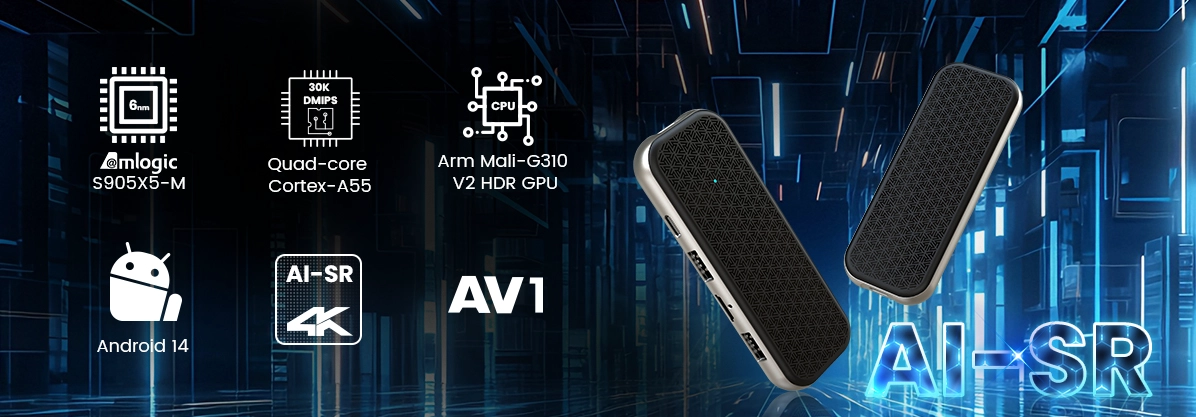
Mainstream Efficiency: Amlogic S905X5 Series
For high-density media streaming, single-display menu boards, and point-of-sale (POS) terminals, the Amlogic S905X5 provides an optimal balance of energy efficiency and video decoding capability.
-
Architecture: 6nm FinFET process utilizing Armv9 Cortex-A510 cores and an ARM Mali-G310 GPU.
-
Video Pipeline: Native hardware decoding for AV1, H.265, and H.266/VVC codecs up to 4K@60fps.
-
AI Upscaling: Integrated 4 TOPS NPU driving AI-Super Resolution (AI-SR), converting 1080p source feeds into clear 4K display output in real time.
-
Thermal Envelope: Operates within a 3.5W–5W TDP, allowing complete integration into sealed, fanless aluminum enclosures.
Multi-Display & High-Compute: Rockchip RK3588
For complex multi-screen video walls, multi-camera edge nodes, and interactive kiosks, the Rockchip RK3588 serves as the benchmark ARM compute platform.
-
Architecture: 8nm octa-core big.LITTLE configuration (4x Cortex-A76 @ 2.4GHz + 4x Cortex-A55 @ 1.8GHz) with up to 32GB LPDDR4x/LPDDR5 memory support.
-
Multi-Display PHY: Drives up to four independent displays (HDMI 2.1 8K@60fps, DisplayPort 1.4, MIPI-DSI) simultaneously.
-
Edge Inferencing: Integrated 6 TOPS NPU for running local deep learning frameworks (TensorFlow, PyTorch, ONNX) without cloud dependency.
Board-Level Customization (PCBA Layout)
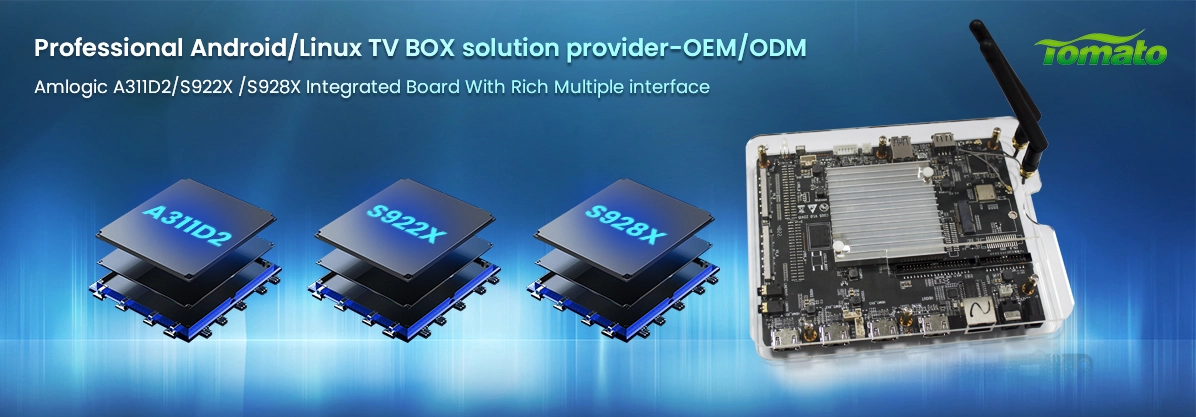
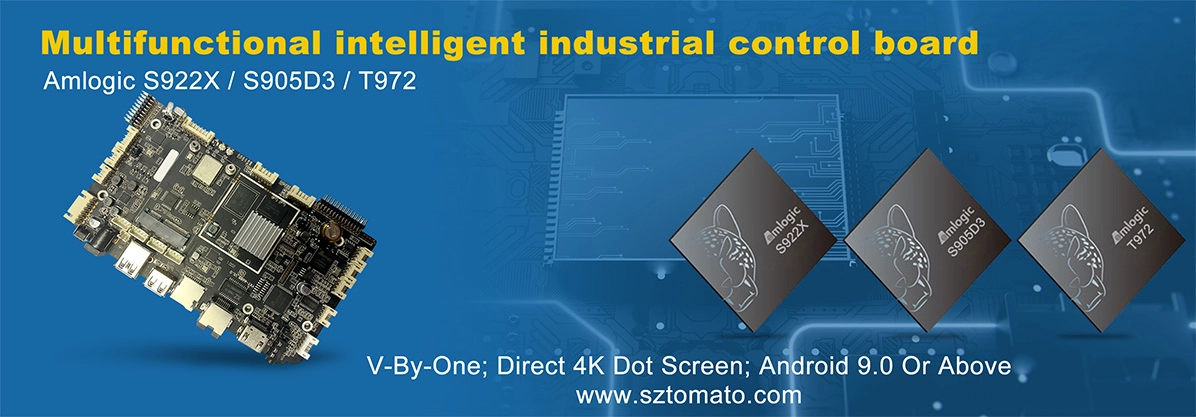
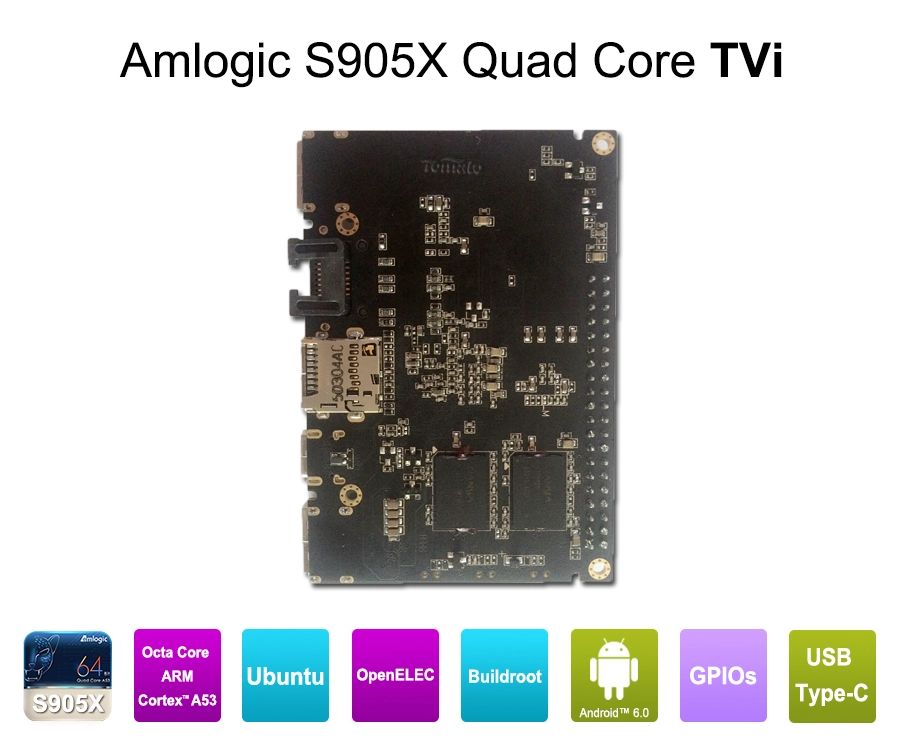
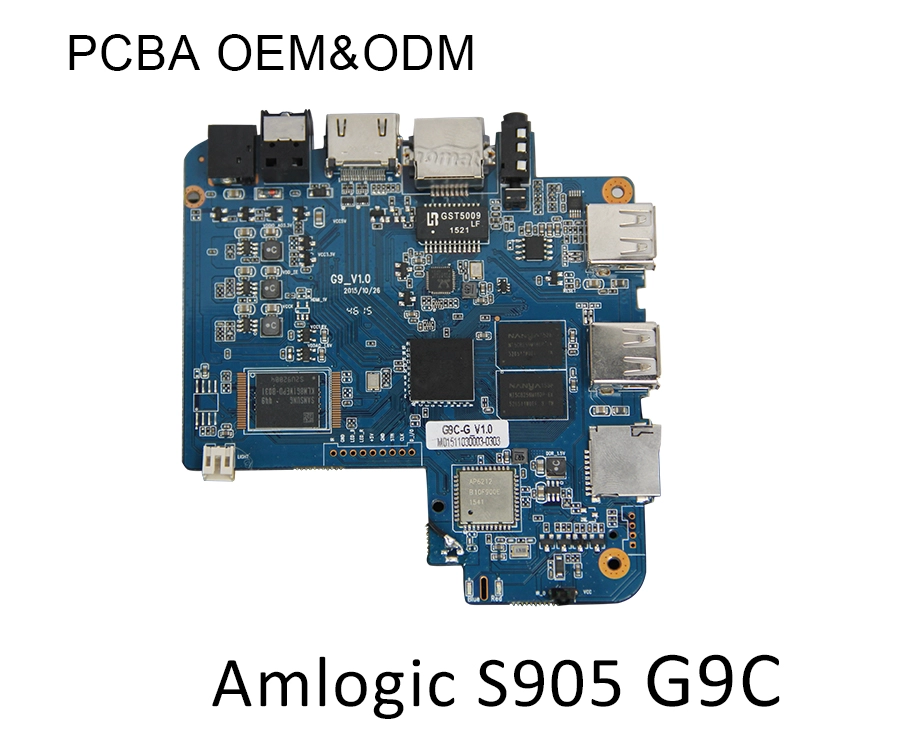
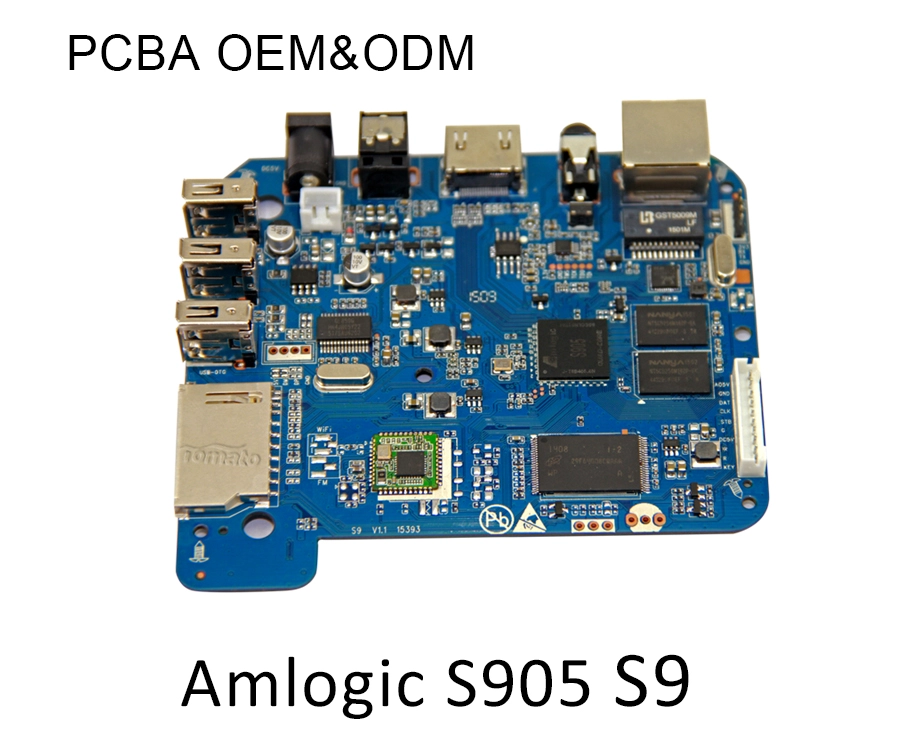
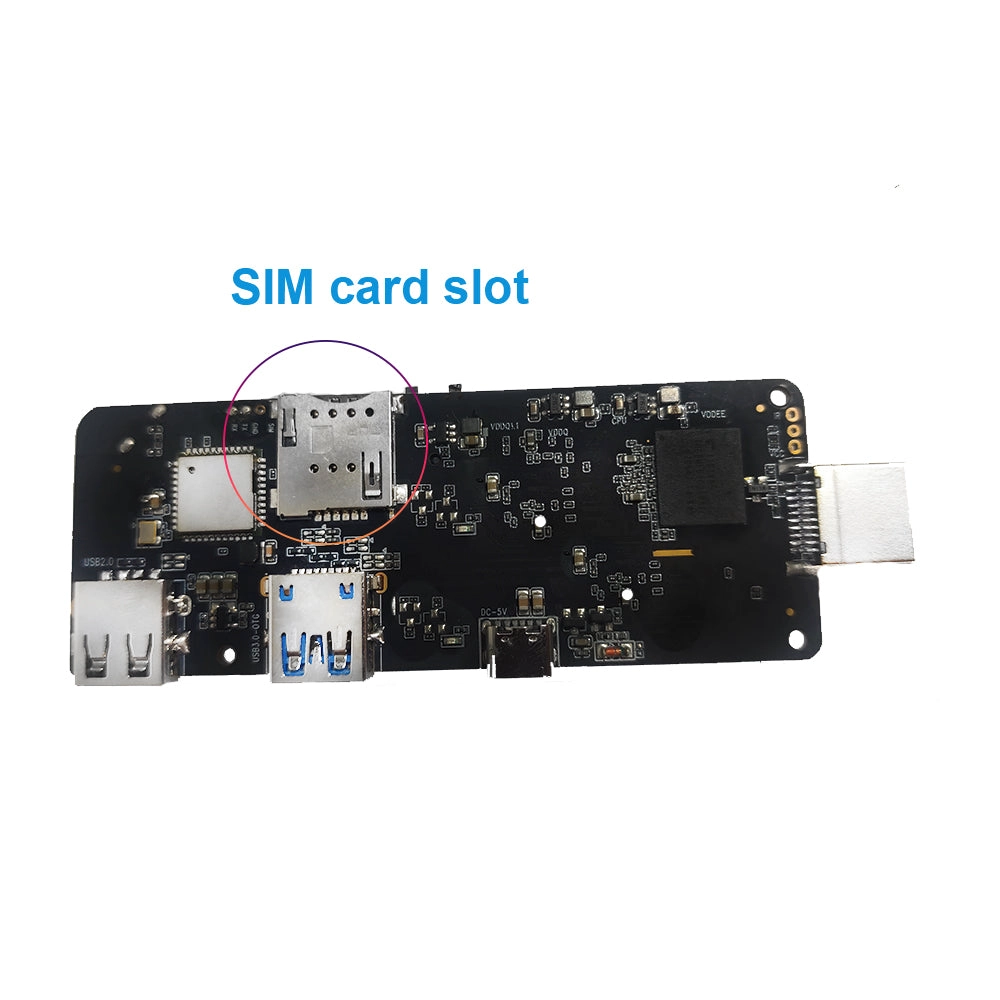
Generic retail motherboards lack industrial I/O interfaces. Through SZTomato's PCBA engineering services, enterprise clients modify component positioning and bus routing:
-
Industrial Connectivity: Integration of RS232/RS485 serial headers, CAN Bus interfaces for automotive/machinery telemetry, and programmatic GPIO ports.
-
Network Infrastructure: Dual Gigabit Ethernet (RJ45) controllers for network bridging/isolation, Power over Ethernet (PoE) IEEE 802.3at/bt modules, and M.2 Key-B slots for 5G/4G LTE cellular modems with dual SIM failover.
-
Storage Expansion: Onboard NVMe M.2 (PCIe 3.0) slots replacing standard eMMC flash to support intensive write operations in local media caching.
2. Industrial Thermal Engineering & Hardware Reliability Systems
Heat is the primary cause of hardware degradation in sealed commercial environments. When an SoC reaches its thermal limit, internal throttling circuits drop CPU multiplier states, resulting in UI lag, dropped video frames, and eventual system locks.
Fanless Passive Cooling Mechanics
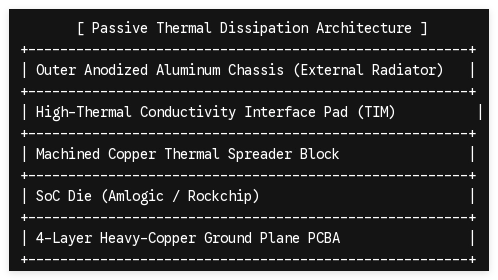
Active cooling fans contain mechanical bearings that attract dust and fail prematurely in 24/7 environments. SZTomato engineers fully passive cooling systems designed around:
-
Direct TIM Bonding: High-transmissivity thermal interface materials (TIM) bridge the gap between the SoC package and a CNC-machined copper heat spreader.
-
Structural Chassis Dissipation: Internal copper spreaders couple directly with heavy-duty anodized aluminum outer enclosures, transforming the entire exterior housing into a primary heat sink.
-
Continuous Duty Validation: Systems undergo continuous burn-in testing at ambient temperatures up to 60°C under full compute load without incurring thermal throttling.
Hardware-Level Fault Recovery Mechanisms
Unscheduled power interruptions in commercial venues frequently corrupt non-volatile flash memory. Commercial-grade PCBA designs mitigate this through dedicated hardware circuits:
| Reliability Feature | Technical Implementation | Operational Benefit |
|---|---|---|
| Physical Hardware Watchdog (WDT) | Dedicated timer IC linked directly to the Power Management IC (PMIC) boot line. | Automatically initiates a hard system reboot if the application or OS kernel halts heartbeats for a set interval. |
| Power Hold-Up Supercapacitors | Tantalum capacitor arrays on the main 12V/5V DC power rail. | Provides critical milliseconds of backup power during voltage drops, enabling the kernel to safely complete eMMC cache flushes. |
| Auto Power-ON Logic | Hardware jumper/bios-level boot pin configured to bypass manual power button states. | Guarantees the Mini PC automatically reboots immediately upon AC utility power restoration. |
3. Low-Level OS Engineering: Board Support Package (BSP) & Firmware Optimization
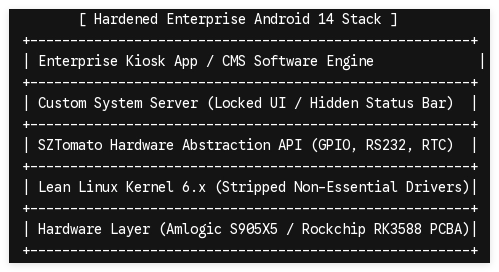
Hardware capability is limited by the quality of its underlying software stack. Generic Android TV firmware contains consumer bloatware and unneeded background daemons that consume memory and CPU capacity.
Kernel-Level Optimization
SZTomato’s software engineering team modifies Board Support Packages (BSP) at the Linux kernel level:
-
Driver Removal: Stripping out unused kernel modules (such as consumer camera drivers, unnecessary cellular protocols, and debug logs) to reduce memory consumption and accelerate cold boot times.
-
Kiosk Lockdown: Hardening the Android Framework to enforce Kiosk Mode. System navigation bars, status notifications, and factory reset combinations are disabled at the system level to prevent unauthorized end-user tampering.
-
Orientation Locking: Native framework modification ensuring fixed boot-time screen rotation (0°, 90°, 180°, 270°) for vertical digital signage displays, eliminating post-boot UI orientation shifts.
Custom SDK/API Integrations & Content Protection
To enable enterprise applications to control physical board peripherals, custom system libraries are compiled into the Android OS image:
-
Hardware Control APIs: Direct software hooks for controlling onboard GPIO relays, reading RS232/RS485 serial data, and managing real-time clock (RTC) boot schedules.
-
DRM & HDCP Licensing: Factory burning of Widevine L1 encryption keys and HDCP 2.3 security certificates into secure OTP memory blocks, enabling playback of protected 4K commercial media streams.
-
Private OTA Infrastructure: Configuration of custom Over-The-Air (OTA) update client software linked directly to the client’s private cloud servers, enabling controlled, encrypted firmware updates across remote device fleets.
4. End-to-End OEM/ODM Manufacturing Workflow
Transitioning from an initial product concept to a mass-produced commercial Android Mini PC requires a structured hardware lifecycle.
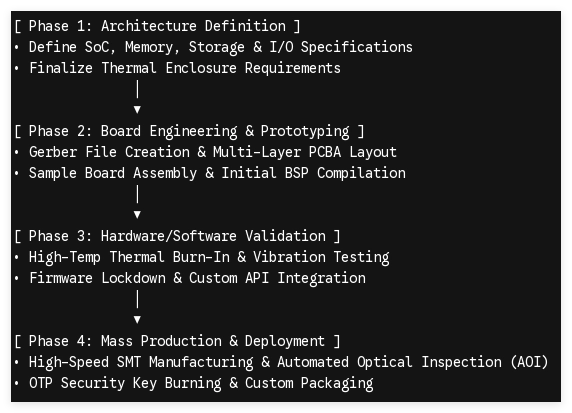
Phase 1: Hardware Architecture & Schematic Layout
Engineering teams define the hardware schematic based on application requirements. Engineers determine memory configurations (2GB to 32GB), flash memory type (eMMC vs. NVMe SSD), and physical board dimensions to fit specified enclosure constraints.
Phase 2: Board Fabrication & Prototyping
PCBA designers layout a 4-to-8 layer high-density circuit board. High-speed signal routing for HDMI 2.1, PCIe, and LPDDR memory buses undergoes impedance matching and signal integrity simulation prior to physical prototyping.
Phase 3: Validation, Stress Testing, and Certification
Sample prototypes undergo environmental testing:
-
Thermal Stressing: Operating continuously inside thermal chambers at elevated temperatures to verify heat dissipation stability.
-
Power Cycling Test: Thousands of forced power interruptions to confirm hardware Watchdog recovery and flash memory resilience.
-
Regulatory Compliance: Pre-testing for CE, FCC, RoHS, and electrostatic discharge (ESD) immunity standards required for global distribution.
Phase 4: Mass Production & Firmware Provisioning
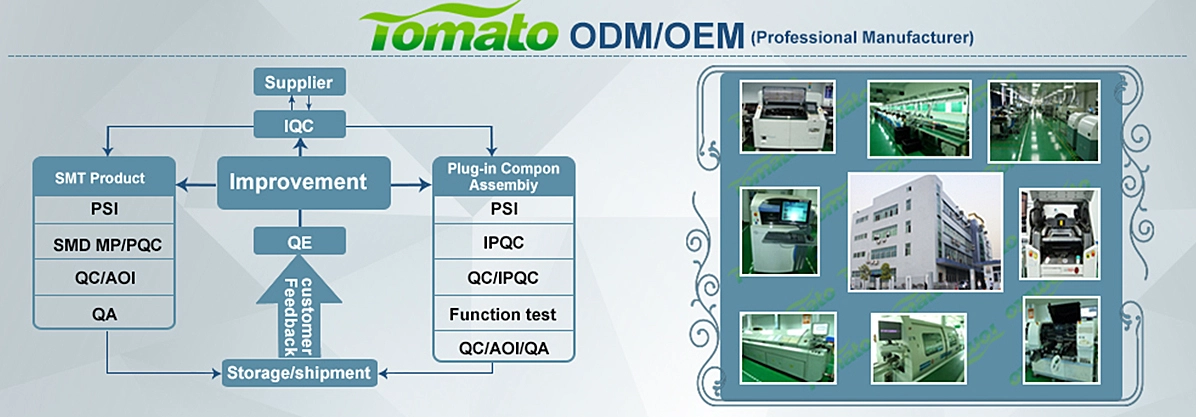
During Surface Mount Technology (SMT) production, automated optical inspection (AOI) verifies component placement accuracy. At the final testing station, customized firmware builds, MAC addresses, and DRM security keys are flashed onto each unit simultaneously.
Technical Sourcing Checklist for B2B Hardware Buyers
When evaluating custom Android Mini PC manufacturers, ensure your engineering and procurement teams verify the following requirements:
-
SoC Selection: Is the chipset optimized for your specific video decoding demands (e.g., native AV1) and thermal budget?
-
Thermal Construction: Does the design use direct copper-to-aluminum heat spreading for fanless operation in ambient temperatures exceeding 45°C?
-
Hardware Watchdog Integration: Is an external physical Watchdog IC mounted on the board to handle automated freeze recovery?
-
Firmware Source Access: Will the manufacturer provide full BSP source code, customized kernel drivers, and dedicated API hooks for your software application?
-
Supply Chain Longevity: Does the supplier guarantee a 3-to-5 year component availability lifecycle for long-term commercial deployments?
Partner with SZTomato for Enterprise Hardware Solutions
Designing and deploying commercial-grade Android Mini PCs requires deep expertise across silicon architecture, board-level hardware design, and Android OS kernel tuning. With 16 years of specialized experience in cross-border B2B electronics manufacturing, SZTomato provides end-to-end OEM/ODM services tailored strictly for system integrators, solution providers, and enterprise network operators.
Whether you require cost-effective Amlogic S905X5 fanless players for a global digital signage network or high-performance Rockchip RK3588 industrial Mini PCs with multi-display outputs and custom board interfaces, SZTomato translates your hardware specifications into production-ready platforms.
Contact SZTomato's Engineering & Sourcing Team:
-
Official Portal: www.sztomato.com
-
Technical Consultations: Reach out directly through our engineering division to submit your project requirements, request custom PCBA schematics, or evaluate sample hardware.