
- Release on:2026-08-31
- A Smart TV Box specification extends far beyond CPU cores, RAM and 4K output. B2B buyers must evaluate the complete platform, including SoC architecture, GPU/NPU capability, AV1 and H.265 decoding, HDMI and HDCP, network interfaces, Android/BSP maturity, DRM, OTA infrastructure, thermal performance and customization potential. The correct configuration depends on whether the device serves OTT, IPTV, hospitality, digital signage, AI edge computing or industrial applications. This guide provides a practical framework for selecting Smart TV Box hardware and firmware that can deliver stable performance and manageable lifecycle costs at commercial deployment scale....Read More>>
- Release on:2026-08-31
- The latest Android TV Box is defined by more than a new SoC or higher RAM capacity. In 2026, serious B2B buyers should evaluate AV1 hardware decoding, CPU/GPU/NPU architecture, HDMI and HDCP capability, Android framework maturity, DRM, OTA infrastructure, thermal performance, and firmware customization. For IPTV, OTT, hotel, digital signage, and industrial deployments, platform flexibility can matter more than peak benchmark scores. This guide explains how to evaluate current Android TV Box platforms and when an OEM/ODM solution with PCBA modification and custom firmware provides a stronger commercial advantage than an off-the-shelf device....Read More>>
- Release on:2026-08-31
- Google TV Box and Smart TV Box are often treated as interchangeable product categories, but they serve different technical and commercial requirements. Google TV is a Google-defined TV experience built on Android TV and typically requires certified hardware, Google services, application compatibility, and controlled DRM implementation. Smart TV Box is a broader category that can use AOSP, Android TV, Linux, or customized embedded software. For B2B buyers, the decision should be based on application ecosystem, certification, DRM, OTA management, hardware requirements, customization depth, and deployment scale—not simply processor performance or 4K/8K output....Read More>>
- Release on:2026-08-28
- TV Box specifications should be evaluated as a complete hardware and software architecture rather than a list of CPU, RAM, and storage numbers. The SoC determines CPU, GPU, video decoding, encoding, and AI capabilities, while memory, eMMC, Ethernet, Wi-Fi, HDMI, USB, and thermal design determine practical system performance. For commercial deployments, DRM, HDCP, OTA infrastructure, firmware stability, and remote management are equally important. B2B buyers should match specifications to the intended workload and lifecycle. OEM/ODM engineering further enables PCBA modification, custom firmware, API integration, and industrial thermal optimization....Read More>>
- Release on:2026-08-28
- The latest Smart TV Box platforms combine high-efficiency ARM processors, 4K/8K video pipelines, AV1 decoding, faster wireless connectivity, AI acceleration, and longer software support. For commercial deployments, however, chipset specifications are only the starting point. PCBA design, thermal management, DRM and HDCP implementation, OTA infrastructure, Android or Linux kernel optimization, and middleware integration determine deployment reliability. B2B buyers should select a platform based on workload, lifecycle, firmware control, and customization requirements rather than benchmark numbers alone. An experienced OEM/ODM manufacturer can adapt the hardware and software stack to specific operator, hospitality, signage, and industrial requirements....Read More>>
- Release on:2026-08-27
- Operator-grade Set-Top Box (STB) platforms require more than 4K decoding and HDMI output. IPTV, OTT, and telecom operators need hardware that supports their video roadmap, middleware, DRM, network architecture, remote management, and long-term firmware lifecycle. The right platform combines an appropriate SoC, optimized PCBA, reliable thermal design, custom Android/Linux firmware, secure OTA infrastructure, and SDK/API integration. SZTomato provides OEM/ODM STB engineering for operators and system integrators, enabling customized hardware and firmware designed around specific services, network requirements, deployment scales, and commercial lifecycles....Read More>>
- Release on:2026-08-27
- Hotel streaming media player projects require more than 4K playback. Operators need stable hardware, secure HDMI content delivery, reliable networking, customized hotel interfaces, remote OTA updates, and centralized fleet management. A properly engineered platform can combine OTT entertainment, hotel applications, casting, digital signage, and edge services in one managed device. SZTomato supports B2B hotel deployments through PCBA modification, Android/Linux firmware development, custom UI/UX, SDK/API integration, thermal engineering, and OEM/ODM manufacturing. This approach helps procurement teams and system integrators build scalable hospitality platforms with better lifecycle control and lower operational overhead....Read More>>
- Release on:2026-08-26
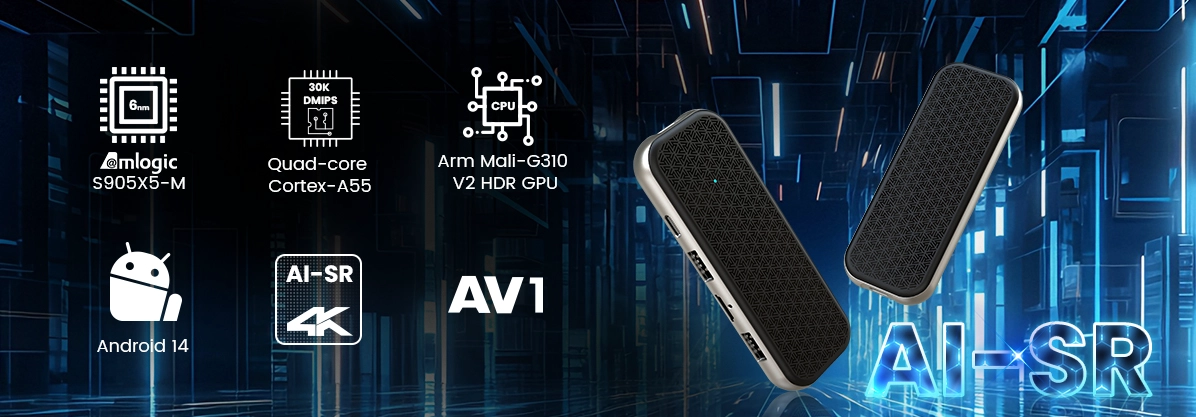
- The best TV Box CPU in 2026 depends on the application rather than a single performance ranking. Amlogic S905X5 is a strong mainstream 4K platform, combining a 6nm architecture with modern video and display capabilities. S928X remains suitable for 8K playback and premium multimedia products. Rockchip RK3576 adds 6 TOPS AI capability and 4K120 multimedia performance, while RK3588 provides substantially more CPU, GPU, NPU, I/O, and multi-display headroom. For OEM/ODM projects, the correct platform must also satisfy PCBA constraints, thermal design, DRM/HDCP requirements, firmware architecture, OTA strategy, and lifecycle objectives....Read More>>
- Release on:2026-08-26
- Smart TVs have absorbed many functions once handled by a dedicated Streaming Media Player, but built-in smart functionality does not automatically make external hardware unnecessary. For consumers, an integrated TV platform may be sufficient for basic streaming. For B2B deployments, hospitality, IPTV, digital signage, managed entertainment, and branded OTT services, the decision is different. A dedicated player provides control over firmware, codecs, security, connectivity, lifecycle management, and application behavior. The real question is not whether a Smart TV can stream content, but whether its embedded platform can meet your operational, commercial, and integration requirements....Read More>>
- Release on:2026-08-25
- Connectivity determines whether an Android Mini PC can function as a reliable commercial platform or remains a basic consumer device. B2B buyers must evaluate HDMI bandwidth, USB architecture, Gigabit Ethernet, Wi-Fi 6, Bluetooth, industrial interfaces, RF design, and firmware support as one system. Interface selection also affects PCBA layout, thermal performance, kernel drivers, OTA reliability, and long-term maintenance. For digital signage, IPTV, hospitality, and industrial edge applications, the correct connectivity architecture reduces deployment risk and simplifies system integration. OEM/ODM engineering provides the flexibility to modify interfaces, firmware, and hardware around the actual application....Read More>>
- Release on:2026-08-25
- Smart TV boxes and streaming media players overlap in video playback, but their engineering objectives differ. A streaming media player typically operates within a controlled content ecosystem, while a Smart TV box can provide a customizable hardware, operating system, firmware, and application platform. For B2B deployments, the distinction affects PCBA design, codec support, DRM, HDCP, OTA management, UI customization, API integration, thermal performance, and lifecycle support. Procurement teams should evaluate the complete platform rather than comparing RAM, Android versions, or 4K claims alone. For OEM/ODM projects, firmware control and hardware customization can determine long-term deployment success....Read More>>
- Release on:2026-08-24
- An Android Mini PC is worth considering when a project needs compact computing, low power consumption, 4K multimedia processing, Android application compatibility, and flexible hardware integration without the cost or physical footprint of a conventional PC. ARM-based SoCs can deliver strong multimedia performance while reducing power and cooling requirements. However, Android Mini PC is not a universal replacement for x86. B2B buyers should evaluate CPU architecture, GPU/NPU capability, RAM, storage, I/O, firmware control, thermal design, OTA infrastructure, and lifecycle support against the actual workload before selecting the platform....Read More>>
- Release on:2026-08-24
- A Google TV Box is not a single type of device. It is a dedicated streaming set-top box engineered around an ARM SoC capable of running Google TV or a compatible Android TV platform. For commercial projects, hardware selection must account for CPU/GPU performance, AV1 decoding, memory bandwidth, HDMI and HDCP requirements, DRM security, wireless connectivity, thermal design, and OTA support. B2B buyers should evaluate the complete hardware-software platform rather than selecting a chipset based on CPU cores alone. For OEM/ODM projects, PCBA modification, firmware customization, API integration, and certification planning should be considered from the beginning....Read More>>
- Release on:2026-08-21
- An Android Mini PC is a compact ARM-based computer that combines an SoC, memory, storage, networking, display output, operating system, and application environment inside a small enclosure. Unlike a conventional TV Box focused primarily on media playback, an Android Mini PC can function as an edge-computing node for digital signage, POS, kiosks, industrial interfaces, AI applications, smart retail, hospitality, and enterprise automation. For B2B deployments, the critical specification is not the retail feature list but the level of hardware and firmware control available to the integrator. SZTomato provides PCBA modification, thermal engineering, Android/Linux kernel optimization, SDK/API integration, custom firmware and private OTA infrastructure....Read More>>
- Release on:2026-08-21
- A high-quality OTT TV Box is a hardware-and-software platform, not a channel-unlocking device. It receives licensed OTT or IPTV streams through applications, middleware, or operator platforms and renders them using the SoC's video pipeline, network interface, DRM architecture, and display output. For commercial deployments, buyers should evaluate AV1/H.265 decoding, 4K output, Widevine or PlayReady requirements, HDCP compliance, Wi-Fi/Ethernet performance, thermal design, OTA management, and firmware control. SZTomato takes this further through PCBA modification, SDK/API integration, custom UI/UX firmware, kernel optimization, private OTA infrastructure, and application-specific thermal engineering....Read More>>
- Release on:2026-08-20
- A Streaming Media Player is an embedded computing platform designed to receive, decode, process, and output digital media from network or local sources. For commercial projects, selecting one requires more than checking 4K resolution or Android version. SoC architecture, AV1/H.265 hardware decoding, RAM, storage, HDMI/HDCP, DRM, Ethernet/Wi-Fi, Linux or Android kernel support, OTA infrastructure, thermal design, and application integration all affect deployment reliability. B2B procurement teams should define these requirements before requesting quotations. OEM/ODM manufacturing becomes valuable when standard hardware cannot satisfy custom interfaces, firmware, middleware, enclosure, cooling, or lifecycle requirements....Read More>>
- Release on:2026-08-20
- An OTT TV Box connects a conventional television or display to internet-based video services through an operating system, application layer, network interface, and HDMI output. Modern platforms can support 4K or higher video, AV1/H.265 decoding, HDR, DRM, Wi-Fi 6, Gigabit Ethernet, and customized applications. For B2B projects, however, consumer specifications are only the starting point. SoC selection, PCBA layout, thermal design, Android/Linux kernel optimization, OTA infrastructure, HDCP compliance, UI customization, and middleware integration determine whether an OTT TV Box can operate reliably at scale. OEM/ODM engineering is therefore critical when standard retail hardware cannot meet project requirements....Read More>>
- Release on:2026-08-19
- The best OTT TV Box depends on the deployment rather than a universal hardware ranking. A retail streaming box may prioritize certified applications and consumer usability, while an IPTV operator, hotel group, or digital signage integrator may require custom firmware, DRM integration, controlled OTA updates, Ethernet, USB peripherals, and long-term hardware availability. The right platform should therefore be selected from the SoC and video pipeline upward—not from the enclosure downward. For commercial projects, PCBA design, Android framework customization, HDCP/DRM compatibility, thermal engineering, and fleet management can have greater business impact than adding another 2 GB of RAM....Read More>>
- Release on:2026-08-19
- The best OTT TV Box depends on the deployment rather than a universal hardware ranking. A retail streaming box may prioritize certified applications and consumer usability, while an IPTV operator, hotel group, or digital signage integrator may require custom firmware, DRM integration, controlled OTA updates, Ethernet, USB peripherals, and long-term hardware availability. The right platform should therefore be selected from the SoC and video pipeline upward—not from the enclosure downward. For commercial projects, PCBA design, Android framework customization, HDCP/DRM compatibility, thermal engineering, and fleet management can have greater business impact than adding another 2 GB of RAM....Read More>>
- Release on:2026-08-19
- The Android Mini PC is increasingly being used as a compact computing and media platform behind TVs, commercial displays, and digital signage screens. Unlike a conventional streaming stick, an Android Mini PC can combine HDMI output, local storage, high-performance SoCs, USB expansion, Ethernet, Wi-Fi, AI acceleration, and a customizable operating system in one embedded platform. For B2B buyers, the real value is not simply turning a TV into a smart screen. It is the ability to build a controlled hardware-and-firmware platform around specific applications, content management systems, APIs, peripherals, and remote-device management requirements....Read More>>
