
- Release on:2026-06-15
- In commercial OTT, hospitality IPTV, and premium digital signage deployments, a Google TV Box serves a fundamentally different purpose than consumer streaming sticks. This whitepaper analyzes the use cases of Google TV Box hardware from a technical, B2B architecture perspective. We isolate why official Google TV licensing—specifically regarding Widevine L1 Digital Rights Management (DRM) and Netflix/Prime Video certification—is critical for commercial compliance. Additionally, we contrast the consumer-centric Google TV launcher with underlying Android TV Open Source Project (AOSP) firmware modifications required for dedicated enterprise hardware control....Read More>>
- Release on:2026-06-15
- For B2B enterprise deployments, evaluating the lifespan of a streaming media player extends far beyond consumer warranty windows. Industrial-grade digital signage networks and hospitality IPTV systems require hardware capable of $24/7/365$ continuous operation. This article dissects the critical hardware failure points—specifically thermal degradation, eMMC flash endurance, and SoC architecture longevity—that separate consumer-grade dongles from commercial-grade OEM/ODM hardware platforms, providing CTOs and procurement officers with a data-driven framework to maximize hardware ROI....Read More>>
- Release on:2026-06-12
- The commercial utility of a Set-Top Box (STB) fleet has evolved from a simple pass-through decryption receiver for premium pay-TV into a powerful system-level aggregator of zero-licensing-fee content. For B2B operators, hotel integrators, and telecom distributors, provisioning hardware to source "free channels" is an exercise in managing protocol compatibility. This whitepaper details the architectural layers—spanning physical RF tuners, Digital Rights Management (DRM) requirements, and Free Ad-Supported Streaming TV (FAST) aggregators—necessary to deliver legal, unencrypted, high-definition content streams at zero content-acquisition cost to the deployment operator....Read More>>
- Release on:2026-06-12
- Selecting system-on-chip (SoC) platforms for enterprise TV Box deployments requires moving past synthetic retail benchmarks and examining silicon architecture. System integrators, commercial distributors, and B2B procurement officers must align specific processing engines with deployment profiles—balancing hardware-accelerated codec blocks against edge computational capacities. This 2026 whitepaper evaluates the core architectures dominating the B2B marketplace—Amlogic, Rockchip, and Allwinner—analyzing raw throughput, thermal footprints, and peripheral I/O constraints to optimize your next hardware rollout....Read More>>
- Release on:2026-06-12
- Commercial deployments of Android TV Box fleets in digital signage, hospitality, and enterprise IPTV systems face acute network congestion when scaled across legacy wireless infrastructure. This guide provides B2B procurement officers, systemic integrators, and wholesalers with a technical framework to evaluate WiFi 6 (802.11ax) Android TV Box hardware. By moving past retail marketing metrics, this whitepaper analyzes raw hardware throughput, custom firmware-level network stack optimizations, and PCBA-level component choices necessary to guarantee sustained uptime and low-latency data transmission in high-density enterprise environments....Read More>>
- Release on:2026-06-11
- For hospitality procurement officers, regional telecom operators, and OTT middleware providers, provisioning cost-effective content ecosystems is a core operational hurdle. Deploying a commercial Smart TV Box fleet relies heavily on integrating compliant, license-free, or ad-supported media streams to lower total cost of ownership (TCO). This whitepaper analyzes the technical architecture of Free Ad-Supported Streaming TV (FAST) protocols, over-the-air (OTA) tuner integration, and firmware-level provisioning required to deliver legal, high-availability free channels across enterprise-grade Android media players without escalating recurring licensing fees....Read More>>
- Release on:2026-06-11
- For hospitality procurement officers, regional telecom operators, and OTT middleware providers, provisioning cost-effective content ecosystems is a core operational hurdle. Deploying a commercial Smart TV Box fleet relies heavily on integrating compliant, license-free, or ad-supported media streams to lower total cost of ownership (TCO). This whitepaper analyzes the technical architecture of Free Ad-Supported Streaming TV (FAST) protocols, over-the-air (OTA) tuner integration, and firmware-level provisioning required to deliver legal, high-availability free channels across enterprise-grade Android media players without escalating recurring licensing fees....Read More>>
- Release on:2026-06-11
- For enterprise network architects and digital signage integrators, deploying a commercial Internet TV Box fleet involves infrastructure challenges that extend far beyond residential plug-and-play setups. Scaling these devices across commercial networks requires a deep understanding of hardware interfaces, network topology optimization, and firmware-level provisioning. This technical brief details the precise deployment protocols for integrating enterprise-grade Android media players into complex network ecosystems, mitigating latency, securing data streams, and ensuring maximum uptime for high-availability signage and IPTV architectures....Read More>>
- Release on:2026-06-10
- When implementing high-density digital signage or enterprise IPTV hospitality systems, the mechanical physical layer connecting a commercial streaming media player to a display panel determines final system stability. While consumer-grade deployments rely on plug-and-play assumptions, enterprise multi-screen environments face real risks from data packet loss, corrupted handshakes, and signal attenuation. This whitepaper defines the current engineering baseline for physical interface execution, confirming why specific uncompressed digital video pipelines are essential to eliminate field blackouts and preserve dynamic content delivery....Read More>>
- Release on:2026-06-10
- Evaluating the best TV box to buy for commercial deployment requires moving past consumer-grade retail metrics like simple UI aesthetics or basic streaming applications. For B-suite decision-makers, system integrators, and telecom operators, the ideal hardware architecture is defined by processing scalability, codec longevity, and firmware-level customization. This whitepaper establishes a data-driven procurement framework, comparing the latest silicon platforms—including the 6nm Amlogic S905X5 and the octa-core Rockchip RK3588—to guide high-volume procurement strategies for digital signage, hospitality, and IPTV networks....Read More>>
- Release on:2026-06-10
- For enterprise buyers, sourcing streaming hardware extends far beyond UI preferences. The choice between a traditional Set-Top Box (STB) and an Android TV Box dictates your entire operational architecture—influencing firmware control, application scalability, and total cost of ownership (TCO). While traditional STBs lock operators into rigid, proprietary broadcast ecosystems, enterprise-grade Android TV Boxes offer an open-source, programmable framework. This guide analyzes the core architectural differences in processing, middleware, and hardware customization, enabling procurement officers and product managers to make data-driven infrastructure decisions....Read More>>
- Release on:2026-06-09
- For commercial operators deploying hardware at scale, relying on stock firmware is an expensive operational vulnerability. Standard consumer software configurations lack the mandatory controls needed to prevent user tampering, manage remote updates securely, and guarantee $24/7$ uptime. Real competitive advantage requires ownership of the software stack. This technical whitepaper addresses how custom firmware engineering on a customized Smart TV Box platform resolves enterprise pain points—focusing on Board Support Package (BSP) optimization, Android Debug Bridge (ADB) hardening, custom Over-the-Air (OTA) server architecture, and hardware-level stability design....Read More>>
- Release on:2026-06-09
- Hospitality in-room entertainment is moving away from legacy linear coax distribution toward agile, IP-driven architectures. For system integrators and hotel operations executives, launching a premium OTT TV Box infrastructure requires addressing specific enterprise vulnerabilities: tenant data leaks, Wi-Fi multi-cast bottlenecks, and fractured Property Management System (PMS) communication. This whitepaper analyzes the deployment criteria for hotel OTT set-top boxes, detailing secure token-clearing mechanisms, API-driven PMS integrations, and the network load balancing required to handle peak concurrent 4K streaming loads without operational failure....Read More>>
- Release on:2026-06-09
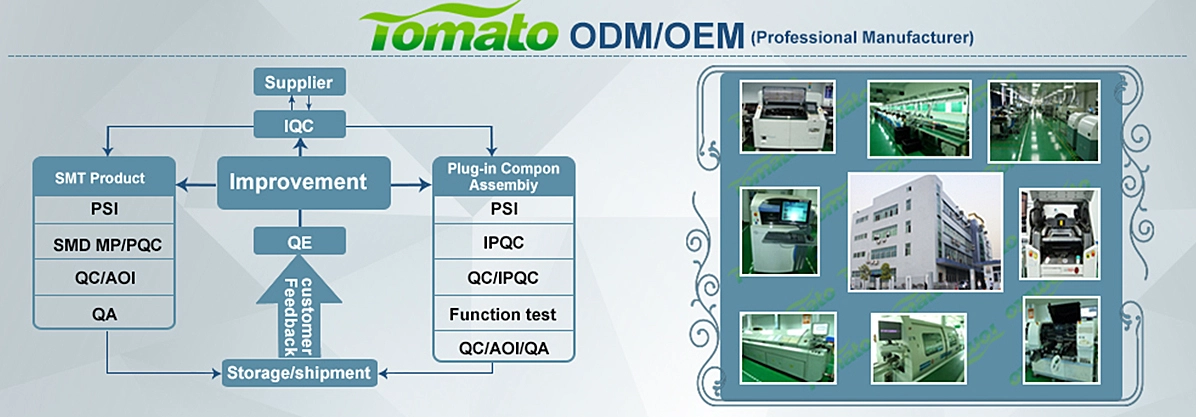
- For B2B enterprises, digital signage operators, and telecom carriers, deploying generic retail OTT hardware is a recipe for high churn and operational failure. True scalability requires deeper infrastructure control: custom PCBA design, specialized thermal management, and BSP (Board Support Package) firmware engineering. This technical guide outlines the architecture of professional TV Box OEM/ODM procurement. It breaks down the critical decisions across chipset selection, bootloader locking, peripheral integration, and supply chain validation required to launch high-availability video delivery systems globally....Read More>>
- Release on:2026-06-08
- For telecom operators, hospitality property managers, and retail network system integrators, understanding the monetization mechanics of unencrypted media delivery is critical to reducing subscriber churn. The consumer question regarding what channels are free on a TV Box directly translates to a B2B architectural decision: how to effectively leverage Free Ad-Supported Streaming TV (FAST) and Advertising Video on Demand (AVOD) frameworks. This whitepaper analyzes the underlying protocols, system applications, and hardware-level configurations required to deliver zero-subscription content arrays while maintaining operational profitability....Read More>>
- Release on:2026-06-08
- For Tier-2 ISPs, hospitality networks, and system integrators, the financial architecture of media deployment dictates long-term profitability. While consumer pay-TV legacy models rely on perpetual hardware lease fees, modern B2B deployments leverage white-label Android TV or RDK-based hardware to transition from an OPEX-heavy subscription model to a CAPEX-owned infrastructure. This guide dissects the technical mechanisms behind recurring box fees, evaluating how custom middleware integration, private FOTA management, and unbundled DRM configuration allow operators to completely eliminate third-party licensing fees and maximize subscriber lifetime value....Read More>>
- Release on:2026-06-08
- For B-suite decision-makers managing digital signage networks or hospitality deployments, the interface between a streaming media player and the commercial display is a critical failure point. Selecting the wrong connection protocol impacts EDID handshake stability, hardware longevity, and content security compliance (HDCP). This guide analyzes HDMI 2.1, legacy AV, and USB-C DisplayPort Alt Mode interfaces from a firmware-level engineering perspective, providing the technical frameworks necessary to eliminate field downtime and optimize OEM/ODM hardware configurations....Read More>>
- Release on:2026-06-05
- For B2B operators, digital signage integrators, and hospitality tech providers, deploying a TV box to stream broadcast or interactive content goes far beyond plug-and-play retail apps. Successfully watching TV through an Android TV Box at scale requires a robust architecture combining secure IPTV/OTT protocols, optimized middleware, and hardware-level stability. This technical guide breaks down the core pipeline—from UI/UX lockdown to hardware decoding and multicast streaming—ensuring your commercial displays deliver high-uptime, low-latency playback while safeguarding your intellectual property and network infrastructure....Read More>>
- Release on:2026-06-05
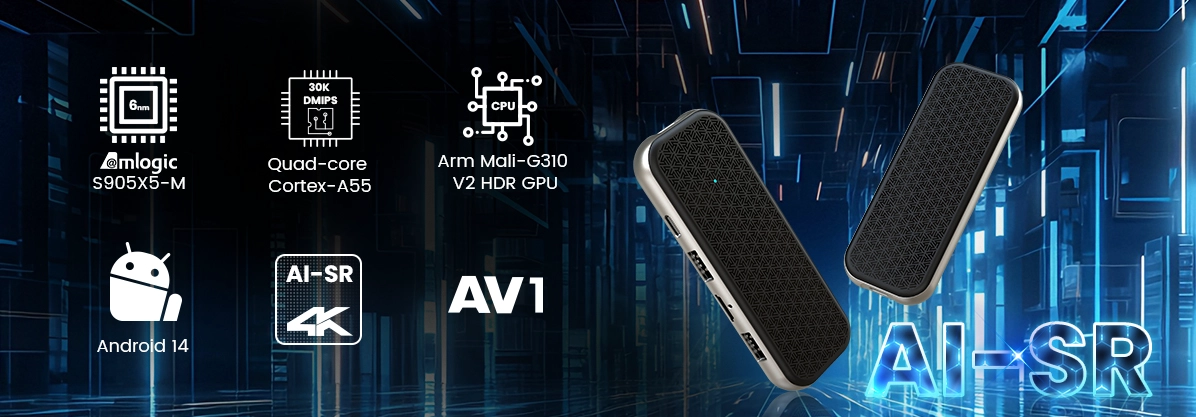
- The Amlogic S905X5 marks a significant advancement in the Smart TV Box industry, combining a 6nm manufacturing process, ARMv9 Cortex-A510 CPU architecture, Mali-G310 GPU, 4 TOPS AI acceleration, AV1 and H.266 decoding, Wi-Fi 6 connectivity, and Android 14 support. More than a traditional streaming processor, the S905X5 enables a new generation of AI-powered OTT devices, digital signage systems, hospitality TV solutions, educational terminals, conference display systems, and edge computing applications. For OEM and ODM buyers seeking future-ready hardware platforms, the S905X5 offers an exceptional balance of performance, efficiency, scalability, and customization flexibility....Read More>>
- Release on:2026-06-05
- The newly introduced RK3572 processor from Rockchip brings together 8K multimedia processing, 4TOPS AI computing, LPDDR5X memory support, and extensive industrial interfaces in a single platform. Designed for next-generation Android TV Boxes, IPTV systems, digital signage, AI-powered media players, and edge computing devices, RK3572 offers an ideal balance between performance, flexibility, and cost efficiency. For OEM and ODM manufacturers seeking to differentiate their products in increasingly competitive markets, RK3572 provides a powerful foundation for creating advanced AI-enabled solutions....Read More>>
