
- Release on:2026-09-18
- A standard TV can become a Digital Signage display by connecting it to a dedicated media player and CMS. For simple installations, an Android TV Box may be enough. Commercial networks require more: 4K video decoding, reliable HDMI output, network connectivity, kiosk-mode firmware, CMS integration, OTA updates and sustained thermal performance. This guide explains the hardware and software architecture behind TV-based Digital Signage and shows when a standard player is sufficient and when OEM/ODM customization is more appropriate for hotels, retail, education, enterprise and other multi-screen deployments....Read More>>
- Release on:2026-09-18
- Selecting a Set-Top Box (STB) for IPTV, telecom, hospitality or commercial deployment requires more than comparing CPU, RAM and storage. Buyers need to evaluate SoC video capabilities, AV1 support, HDMI and HDCP compatibility, network interfaces, PCBA flexibility, Android/Linux firmware, SDK/API integration, OTA management and thermal performance. This guide provides a technical framework for B2B procurement managers and system integrators evaluating STB platforms for long-term deployment. It also explains why OEM/ODM engineering capability can determine whether a customized STB remains maintainable after mass production....Read More>>
- Release on:2026-09-18
- Android TV Box OEM/ODM projects increasingly depend on platform engineering rather than enclosure customization. B2B buyers need to evaluate SoC capability, PCBA flexibility, firmware architecture, SDK/API integration, thermal performance, OTA infrastructure and production validation before selecting a manufacturing partner. This guide explains the engineering factors behind a reliable Android TV Box project, from chipset selection and PCB modification to Android/Linux optimization and mass-production testing. For distributors, IPTV operators, system integrators and brand owners, the objective is to build a product platform that can support specific applications, deployment environments and long-term software requirements....Read More>>
- Release on:2026-09-17
- Not every Digital Signage installation needs a separate media player. Commercial displays with integrated SoCs can handle basic video, image and scheduled content when their built-in operating system and CMS meet project requirements. A dedicated Android or Linux media player becomes more valuable when deployments require mixed displays, custom applications, specialized I/O, AI processing, centralized management or long-term firmware control. B2B buyers should evaluate SoC capability, codec support, RAM, storage, HDMI and HDCP requirements, networking, OTA updates, thermal design and software customization before choosing between an integrated signage platform and an external media player....Read More>>
- Release on:2026-09-17
- A supermarket promotional screen is a simple example of Digital Signage, but commercial deployments are complete hardware-software systems rather than standalone displays. A typical architecture combines a commercial screen, Android or Linux media player, CMS, network connection, local storage and remote device management. Hotels, airports, corporate offices, schools and public facilities use similar architectures for different workflows. For B2B projects, SoC performance, 4K/AV1 decoding, PCBA design, thermal management, firmware control, OTA updates and SDK/API integration can determine long-term reliability. The right Digital Signage platform should therefore be specified around workload, deployment environment and fleet-management requirements....Read More>>
- Release on:2026-09-17
- SoC-based signage and Android TV Box architectures both support modern digital signage, but they solve different engineering problems. Integrated SoC displays simplify installation by combining the media player with the panel, while Android TV Boxes provide hardware independence, configurable performance and greater firmware control. For standardized retail deployments, SoC signage can reduce installation complexity. For mixed-display fleets, interactive applications, specialized interfaces, AI workloads and OEM/ODM projects, an Android TV Box provides a more modular architecture. Procurement teams should evaluate SoC capability, PCBA design, thermal performance, firmware control, OTA management and long-term upgradeability before selecting the platform....Read More>>
- Release on:2026-09-16
- Smart TV Boxes combine an ARM-based SoC, hardware video decoder, GPU, operating system, networking and display interfaces to transform streaming or local media into content a television can display. Modern platforms increasingly support AV1, 4K/8K video, AI acceleration and advanced connectivity. For B2B deployments, however, the hardware is only one part of the system. Firmware, DRM, HDCP, OTA updates, thermal design, PCBA architecture and API integration can determine long-term reliability. Understanding this architecture helps procurement managers and system integrators select a Smart TV Box that matches the actual application....Read More>>
- Release on:2026-09-16
- A TV Box can deliver 4K streaming, IPTV, local media playback and commercial display functions, but performance depends on far more than processor speed. SoC architecture, hardware video decoding, AV1 support, networking, DRM, HDCP, thermal design and firmware quality determine whether a TV Box performs reliably in real deployments. For B2B buyers, the evaluation should also cover PCBA customization, SDK/API integration, OTA updates, security and long-term software support. This guide explains how to assess a TV Box from an engineering and procurement perspective and when an OEM/ODM platform is preferable to a generic retail device....Read More>>
- Release on:2026-09-16
- Choosing an Android Mini PC for a commercial project requires more than comparing CPU cores, RAM and storage. Buyers need to evaluate SoC architecture, AV1 and H.265 decoding, display interfaces, NPU performance, connectivity, thermal design, Android/Linux software support, OTA capability and security. For system integrators and procurement teams, the supplier's engineering capability can be just as important as the hardware specification. PCBA modification, SDK/API integration and firmware customization determine whether a platform can adapt to a project's actual requirements and remain supportable throughout its deployment lifecycle....Read More>>
- Release on:2026-09-15
- Choosing an OEM partner for an OTT TV Box requires more than comparing unit prices and factory capacity. The right partner must understand SoC selection, AV1 decoding, DRM, HDCP, Android/Linux firmware, PCBA modification, thermal design and OTA lifecycle management. For OTT brands, these engineering capabilities directly affect product stability, certification, differentiation and long-term support. This guide provides a practical framework for evaluating OEM manufacturers, covering hardware architecture, firmware development, customization, security, thermal performance and post-production support. The goal is to help procurement teams and system integrators select an OEM partner capable of supporting the entire product lifecycle....Read More>>
- Release on:2026-09-15
- A Smart TV can handle most consumer streaming requirements, but its integrated operating system is not always suitable for commercial applications. A dedicated TV Box can provide an independent computing platform, allowing businesses to standardize hardware, customize Android firmware, control OTA updates and upgrade processing capabilities without replacing the display. This distinction matters for IPTV operators, hotels, digital signage companies, telecom providers and system integrators. This guide explains when a TV Box adds real technical value, which specifications matter, and why PCBA, firmware and OEM/ODM engineering capabilities should be considered before selecting a supplier....Read More>>
- Release on:2026-09-15
- An Android Mini PC is defined by far more than CPU speed and RAM capacity. For B2B deployments, SoC architecture, GPU/NPU performance, hardware video decoding, memory, eMMC storage, HDMI, Ethernet, Wi-Fi, thermal design and firmware architecture must be evaluated together. A 4GB quad-core platform may be sufficient for basic signage, while AI, multi-display, IPTV and industrial applications can require octa-core processing, 8GB+ RAM, advanced video engines, NPU acceleration and customized I/O. This guide explains the specifications procurement managers and system integrators should evaluate before selecting an Android Mini PC OEM/ODM partner....Read More>>
- Release on:2026-09-14
- An Android Mini PC can access a growing range of free legal TV content through Google TV Freeplay and FAST services such as Tubi, Pluto TV, Plex and Haystack News. However, channel availability depends on region, operating system, application compatibility and content licensing. For B2B buyers, the hardware platform also matters: AV1 and H.265 decoding, 4K output, DRM, HDCP, RAM, networking and thermal stability determine the real streaming experience. This guide explains how free channels work on Android Mini PCs and what procurement managers should consider when developing commercial or customized devices....Read More>>
- Release on:2026-09-14
- A modern Set-Top Box (STB) specification extends far beyond CPU, RAM and 4K output. B2B buyers must evaluate the complete platform, including SoC architecture, AV1 decoding, video pipeline, DRM, HDCP encryption, Ethernet, Wi-Fi, PCBA interfaces, operating system, OTA management and thermal stability. The right configuration depends on whether the device serves IPTV, OTT, hospitality, digital signage or industrial applications. This guide explains how procurement managers and system integrators can define an STB specification that supports customization, long-term maintenance and scalable commercial deployment....Read More>>
- Release on:2026-09-14
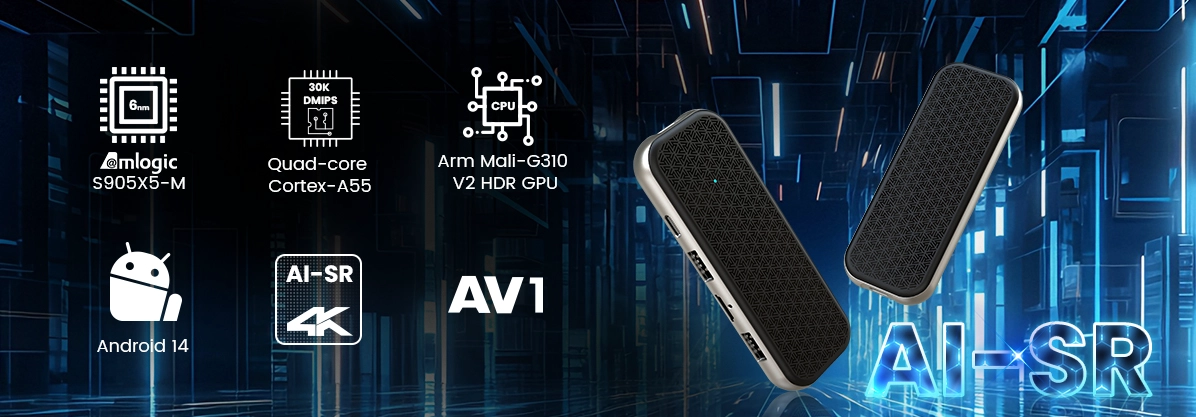
- The latest TV Box generation is defined less by CPU clock speed and more by SoC architecture, AV1 hardware decoding, GPU performance, connectivity, DRM, HDCP, thermal stability and firmware control. In 2026, Amlogic S905X5 and S905X5M are among the key platforms for new 4K TV Box development, with S905X5 positioned for next-generation 4K UHD set-top boxes and S905X5M already appearing in commercial OTT products. For B2B buyers, the critical decision is not simply which TV Box has the newest chip, but which platform can support the required hardware interfaces, customized firmware, certification and long-term OTA maintenance....Read More>>
- Release on:2026-09-11
- Choosing a Google TV Box OEM partner requires more than comparing factory prices, RAM configurations and production capacity. A successful branded product depends on Android TV platform expertise, Google ecosystem requirements, SoC and BSP engineering, DRM, HDCP, secure boot, OTA infrastructure and long-term firmware support. This guide provides a practical framework for evaluating OEM suppliers across hardware customization, PCBA engineering, SDK/API integration, UI/UX firmware, thermal design and mass production. For B2B brand owners and system integrators, the objective is to select an engineering partner capable of supporting the product from prototype through commercial deployment and lifecycle maintenance....Read More>>
- Release on:2026-09-11
- The most powerful Android Mini PC depends on the workload rather than a single benchmark. In 2026, Amlogic A311Y3 and Rockchip RK3588 represent two strong approaches: A311Y3 emphasizes newer Cortex-A78 processing, 8 TOPS edge AI and 6nm efficiency, while RK3588 delivers powerful graphics, 8K multimedia and extensive I/O. For B2B buyers, SoC selection must also account for memory, PCBA design, thermal performance, firmware, OTA updates and Linux/Android support. This guide compares both platforms and explains which architecture is better suited to AI terminals, digital signage, multimedia systems and industrial Android Mini PC projects....Read More>>
- Release on:2026-09-11
- A Google TV Box is more than an Android device with 4K output. For B2B projects, the specification must cover SoC performance, RAM, storage, AV1 and HEVC decoding, HDR, HDMI and HDCP, Widevine DRM, Wi-Fi, Bluetooth, OTA architecture and thermal design. Google TV runs on Android TV OS, so certification, secure content playback and firmware quality are as important as CPU performance. This guide explains the hardware and software specifications procurement managers, OEMs and system integrators should evaluate before selecting a Google TV Box platform for OTT, IPTV, hospitality or commercial multimedia deployments....Read More>>
- Release on:2026-09-10
- The Amlogic A311Y3 Industry Box is a customizable edge AI computing platform designed for government projects, system integrators, engineering contractors, smart displays, digital signage, industrial terminals, healthcare, education, retail, and hotel applications. Built around an octa-core CPU and 8 TOPS NPU, the platform supports advanced 4K video processing, multiple display and camera interfaces, rich peripheral connectivity, Android 16 and Linux environments. SZTomato supports OEM/ODM customization covering PCBA, firmware, Launcher, AI integration, peripheral adaptation, enclosure design, prototype development, and mass production....Read More>>
- Release on:2026-09-09
- An Android TV Box does not have one universal specification. The right configuration depends on the intended workload, software platform and deployment environment. A B2B buyer should evaluate the complete architecture: ARM SoC, RAM, storage, 4K/8K video decoding, AV1 and H.265 hardware acceleration, HDMI, HDCP, DRM, Wi-Fi, Ethernet, Android/AOSP, firmware, OTA and thermal design. For IPTV, OTT, hotel TV and digital signage, the optimal specification can differ substantially. This guide explains the major Android TV Box specifications and shows how OEM/ODM engineering can turn standard hardware into a deployment-ready commercial platform....Read More>>
