
- Release on:2026-10-15
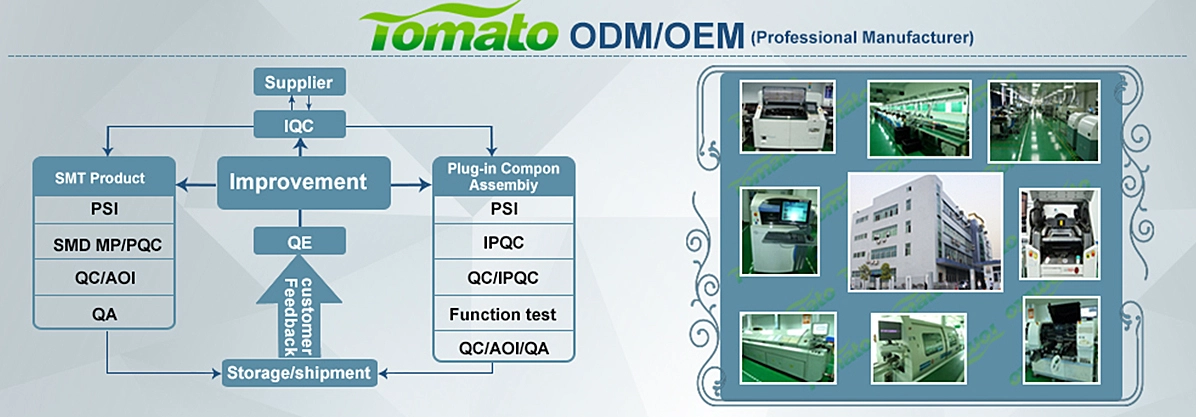
- For B2B electronics buyers, the gap between a promising prototype and a stable mass-production product often determines whether a project meets its launch window. In Android TV Boxes, IPTV Set-Top Boxes, Streaming Media Players, and Digital Signage devices, delays can arise from PCBA revisions, SoC availability, firmware integration, thermal validation, and certification requirements. Since 2011, SZTomato has focused on OEM/ODM manufacturing and product engineering for international brands, distributors, telecom operators, and system integrators. By coordinating hardware development, firmware customization, sample validation, and production planning, SZTomato helps customers shorten development cycles while maintaining technical consistency and manufacturing quality....Read More>>
- Release on:2026-10-14
- An Android TV Box can remain physically functional long after its firmware becomes a commercial liability. Outdated security patches, discontinued SoC vendor support, incompatible application updates, and failed OTA installations can disrupt entire device fleets. For telecom operators, IPTV providers, hospitality brands, and hardware distributors, long-term firmware maintenance must be planned before production—not negotiated after deployment. This whitepaper examines secure OTA architecture, Android/Linux kernel maintenance, firmware version control, hardware-software compatibility, and recovery testing. It also explains how OEM/ODM engineering partnerships help brands manage product evolution while protecting deployment stability and lifecycle costs....Read More>>
- Release on:2026-10-14
- Digital signage failures rarely begin with the screen; they often stem from a player that overheats, loses network connectivity, mishandles a codec, or cannot recover cleanly after an interrupted update. For multi-site retail, hospitality, transportation, and corporate deployments, the playback box must be engineered as part of a managed ecosystem—not purchased as a generic HDMI accessory. This whitepaper outlines how SoC selection, PCBA and thermal design, Android/Linux firmware, CMS integration, and secure OTA workflows work together to improve deployment consistency and simplify fleet operations....Read More>>
- Release on:2026-10-14
- Telecommunication brands need more than a branded streaming device: they need a Smart TV Box platform that fits their middleware, network policies, content-protection obligations, and fleet-management model. This article explains how operator-grade hardware selection, PCBA modification, Android/Linux firmware engineering, SDK/API integration, and controlled OTA updates reduce deployment friction across IPTV and OTT services. It also outlines validation priorities for codecs, HDMI/HDCP, thermal behavior, connectivity, and long-term component consistency. SZTomato supports OEM/ODM projects that require tailored hardware and software, helping procurement teams translate service requirements into a manufacturable device specification....Read More>>
- Release on:2026-10-13
- Selecting an OEM/ODM consumer electronics manufacturer requires more than comparing unit prices and production capacity. For B2B buyers, product reliability depends on chipset selection, PCBA design, thermal management, firmware stability, interface compatibility, and long-term engineering support. Since 2011, SZTomato has focused on consumer electronics manufacturing and customized hardware and software solutions for international brands, distributors, telecom operators, and system integrators. Its capabilities cover Android TV Boxes, IPTV Set-Top Boxes, Streaming Media Players, Digital Signage devices, and Android Mini PCs. By combining hardware engineering, firmware customization, and production support, SZTomato helps businesses develop products aligned with specific application requirements and commercial objectives....Read More>>
- Release on:2026-10-13
- Integrating third-party IPTV middleware and streaming applications into a Set-Top Box requires more than installing an Android image or connecting an application programming interface. Hardware resources, operating system compatibility, DRM provisioning, network performance, certification requirements, and long-term firmware maintenance must work together. For telecom operators, IPTV service providers, brand owners, and system integrators, these dependencies determine deployment reliability and total cost of ownership. SZTomato supports OEM/ODM Set-Top Box development, including PCBA hardware modification, SDK/API integration, customized UI/UX firmware, and application integration planning to align device architecture with commercial service requirements....Read More>>
- Release on:2026-10-13
- A Google TV or Android TV OS set-top box with integrated 4G LTE requires coordinated hardware, software, connectivity, and certification engineering. For telecom operators, IPTV providers, distributors, and system integrators, successful deployment depends on more than cellular connectivity or Android application support. SoC selection, LTE band compatibility, antenna design, DRM implementation, HDMI output protection, and OTA firmware management must be validated as a complete system. This whitepaper outlines the critical compatibility checks, integration risks, and customization options that help B2B buyers develop reliable streaming platforms for markets where fixed broadband access is limited or inconsistent....Read More>>
- Release on:2026-10-12
- For Android TV Box brand owners, firmware customization is a product engineering challenge, not simply a branding exercise. Uncontrolled flashing procedures, incompatible device trees, bootloader restrictions, and fragmented software branches can delay product launches and increase after-sales costs. At the same time, a custom user interface must remain compatible with system services, hardware acceleration, OTA updates, and security requirements. This article examines practical methods for securing firmware deployment, streamlining UI customization, and controlling software revisions across OEM/ODM projects. SZTomato supports hardware adaptation, firmware engineering, and SDK/API integration for commercial streaming devices....Read More>>
- Release on:2026-10-12
- Sourcing a Streaming Media Player for international distribution requires more than competitive factory pricing. B2B buyers must verify product performance, market-specific compliance, manufacturing consistency, and long-term firmware support before approving a supplier. CE, FCC, and RoHS requirements address different regulatory concerns, and their applicability depends on the product configuration and destination market. SZTomato supports OEM/ODM development for IPTV operators, distributors, brand owners, and system integrators, combining PCBA hardware modification, firmware customization, SDK/API integration, and application-specific engineering. A structured sourcing process helps buyers reduce qualification risks and build a scalable product portfolio....Read More>>
- Release on:2026-10-12
- An energy-efficient Smart TV Box must balance processing performance, sustained thermal stability, and power consumption throughout its operating life. For B2B buyers, selecting a multi-core CPU/GPU platform is only the first step. SoC architecture, PCBA layout, heat dissipation, memory configuration, video decoding, and firmware optimization all influence real-world performance. This article explains how manufacturers can engineer Smart TV Box solutions for continuous 4K streaming, IPTV/OTT services, and commercial deployments. SZTomato supports OEM/ODM customization, including PCBA hardware modification, specialized cooling solutions, Android/Linux firmware adaptation, and SDK/API integration for application-specific requirements....Read More>>
- Release on:2026-10-10
- An industrial deployment can expose weaknesses that a retail-oriented Android TV Box never encounters: repeated power cycles, restricted airflow, continuous playback, changing network conditions, and years of firmware maintenance. A reliable custom Android TV Box starts with a controlled bill of materials, a PCBA designed for the installation environment, validated Android/Linux software, and a quality plan that verifies production consistency. For OEM brands, IPTV operators, and system integrators, the objective is repeatable performance—not a vague “industrial-grade” label. SZTomato supports OEM/ODM hardware and firmware customization aligned with project requirements....Read More>>
- Release on:2026-10-10
- Hotel digital signage must do more than display branded content. It needs to keep lobby welcome screens, meeting-room schedules, restaurant menus, wayfinding, and promotional messages accurate across changing guest and event conditions. A reliable solution combines commercial displays, Android media players, a centrally managed CMS, secure API connections, and firmware designed for unattended operation. For hotel groups and system integrators, hardware selection should account for decoding performance, network resilience, remote updates, thermal limits, and property-specific integrations. SZTomato supports OEM/ODM player customization to align these technical requirements with each hospitality deployment....Read More>>
- Release on:2026-10-10
- A 4K/8K HDR Set-Top Box is only as reliable as the signal path between its decoder, HDMI input, output transmitter, power rails, and thermal design. Adding HDMI IN to HDMI OUT is not a connector-level change: it can require a receiver or crossbar, HDCP-compliant routing, EDID management, high-speed PCB layout, and coordinated kernel and firmware support. This article explains the key architecture choices, signal-integrity considerations, and validation tests B2B teams should define before production. SZTomato supports PCBA modification, SDK/API integration, custom UI/UX firmware, and thermal engineering tailored to project requirements....Read More>>
- Release on:2026-10-09
- For IPTV operators, digital signage integrators, telecom providers and electronics brands, a turnkey OEM/ODM project is successful only when hardware, firmware, thermal design and production controls are engineered as one system. Shenzhen Tomato Technology Co., Ltd. (SZTomato) supports customized Android TV Boxes, IPTV Set-Top Boxes, media players and related platforms through PCBA modification, SDK/API integration, UI/UX firmware customization and cooling design. This article outlines how to define requirements, validate integration risks and qualify a Chinese manufacturing partner before committing to tooling, pilot production and scale-up....Read More>>
- Release on:2026-10-09
- Low-latency streaming requires more than a fast network interface. Telecom operators, IPTV providers, digital signage integrators and enterprise AV teams need a Streaming Media Player engineered to minimize network delays, buffering, decoding overhead and application response time. Gigabit Ethernet provides a dependable wired connectivity option, while Wi-Fi 6 improves wireless efficiency in environments with many connected devices. SZTomato supports OEM/ODM customization across PCBA hardware modification, SDK/API integration, custom firmware and thermal engineering, enabling B2B buyers to align hardware and software with their streaming workloads, deployment conditions and long-term maintenance requirements....Read More>>
- Release on:2026-10-09
- Telecom operators and ISPs need more than a retail streaming box: they need a managed endpoint that fits their CDN, middleware, conditional-access, subscriber-management and support workflows. A well-designed IPTV/OTT Streaming Media Player combines a suitable SoC and hardware video decoding with a stable network stack, protected HDMI output, long-term firmware maintenance and thermal design for continuous operation. SZTomato supports OEM/ODM development across PCBA modification, SDK/API integration and custom UI/UX firmware, helping operators define hardware interfaces, provisioning, update policies and branding before mass production rather than retrofit them after deployment....Read More>>
- Release on:2026-10-08
- Stable 4K streaming depends on more than internet bandwidth. Network congestion introduces packet loss, latency, jitter and throughput fluctuations that can quickly exhaust playback buffers. In commercial IPTV, hospitality, digital signage and multi-device deployments, the Android TV Box must coordinate Ethernet or Wi-Fi performance, SoC video decoding, memory bandwidth, adaptive bitrate logic, Linux/Android networking, thermal management and firmware behavior. A reliable platform therefore requires congestion testing under realistic workloads rather than peak-speed benchmarking alone. Hardware PCBA design, kernel optimization, customized firmware and controlled OTA infrastructure can significantly improve sustained 4K playback quality....Read More>>
- Release on:2026-10-08
- Wholesale buyers increasingly need more than a low-cost Android TV Box. IPTV operators, distributors, digital signage integrators, and private-label brands require configurable hardware, controlled firmware, reliable OTA updates, suitable thermal performance, and a realistic path from low-MOQ sampling to bulk production. A Custom Android TV Box should therefore be evaluated as an OEM/ODM platform rather than a rebranded retail device. The right supplier can modify PCBA layouts, integrate SDKs and APIs, customize Android/Linux firmware, optimize cooling, and maintain the product across multiple production cycles while keeping BOM and engineering costs under control....Read More>>
- Release on:2026-10-08
- Linux and Android dual-OS support has become a practical requirement for TV Box development boards used in IPTV, digital signage, industrial displays, edge computing, and embedded multimedia projects. The critical specification is no longer processor performance alone. Engineers must evaluate SoC architecture, RAM and eMMC configuration, video codec capability, I/O bandwidth, boot architecture, kernel support, thermal design, OTA infrastructure, DRM/HDCP requirements, and long-term firmware maintainability. A well-designed Development Board gives system integrators a controlled platform for validating hardware, optimizing Linux/Android software, and transitioning from prototype to customized PCBA production without redesigning the entire platform....Read More>>
- Release on:2026-09-30
- Commercial display projects rarely share the same audio architecture. Smart TVs, projectors, digital signage screens, video walls, interactive displays, and IPTV terminals may require different combinations of HDMI, S/PDIF, analog, USB, Bluetooth, amplification, and audio-control functions. A universal multimedia audio platform must therefore combine flexible hardware with configurable Android/Linux firmware. This article explains how PCBA design, audio routing, SDK/API integration, custom UI/UX, synchronization, thermal engineering, and OTA management can create a scalable audio architecture for diverse display terminals while reducing repeated hardware development across B2B projects....Read More>>
